Maduro

How the US captured Maduro

Watch: How the US attack on Venezuela unfolded

For months, US spies had been monitoring Venezuelan President’s Nicolas Maduro’s every move.

A small team, including one source within the Venezuelan government, had been observing where the 63-year-old slept, what he ate, what he wore and even, according to top military officials, “his pets”.

Then, in early December, a plan dubbed “Operation Absolute Resolve” was finalised. It was the result of months of meticulous planning and rehearsals, which even included elite US troops creating an exact full-size replica of Maduro’s Caracas safe house to practise their entry routes.

The planned mission – an extraordinary US military intervention in Latin America not seen since the Cold War – was closely guarded. Congress was not informed or consulted ahead of time. With the precise details set, top military officials simply had to wait for the optimal conditions to launch.

They wanted to maximise the element of surprise, officials said on Saturday. There was a false start four days earlier when President Trump gave approval but they opted to wait for better weather and less cloud cover.

“Over the weeks through Christmas and New Year, the men and women of the United States military sat ready, patiently waiting for the right triggers to be met and the president to order us into action,” General Dan Caine, the nation’s highest-ranking military officer, told a news conference on Saturday morning.

‘Good luck and Godspeed’

The order from the president to begin the mission finally came at 22:46 EDT on Friday. “We were going to do this four days ago, three days ago, two days ago, and then all of a sudden it opened up. And we said: Go,” Trump himself told Fox & Friends on Saturday in the hours after the overnight raid.

“He said to us, and we appreciate it… good luck and Godspeed,” Gen Caine said. Trump’s order came shortly before midnight in Caracas, giving the military most of the night to operate in darkness.

What followed was a two-hour and twenty-minute mission by air, land and sea that stunned many in Washington and around the world. In terms of scale and precision, it was virtually unprecedented. And it drew immediate condemnation from several regional powers, with Brazil’s President Lula da Silva saying the violent capture of Venezuela’s leader set “yet another extremely dangerous precedent for the entire international community”.

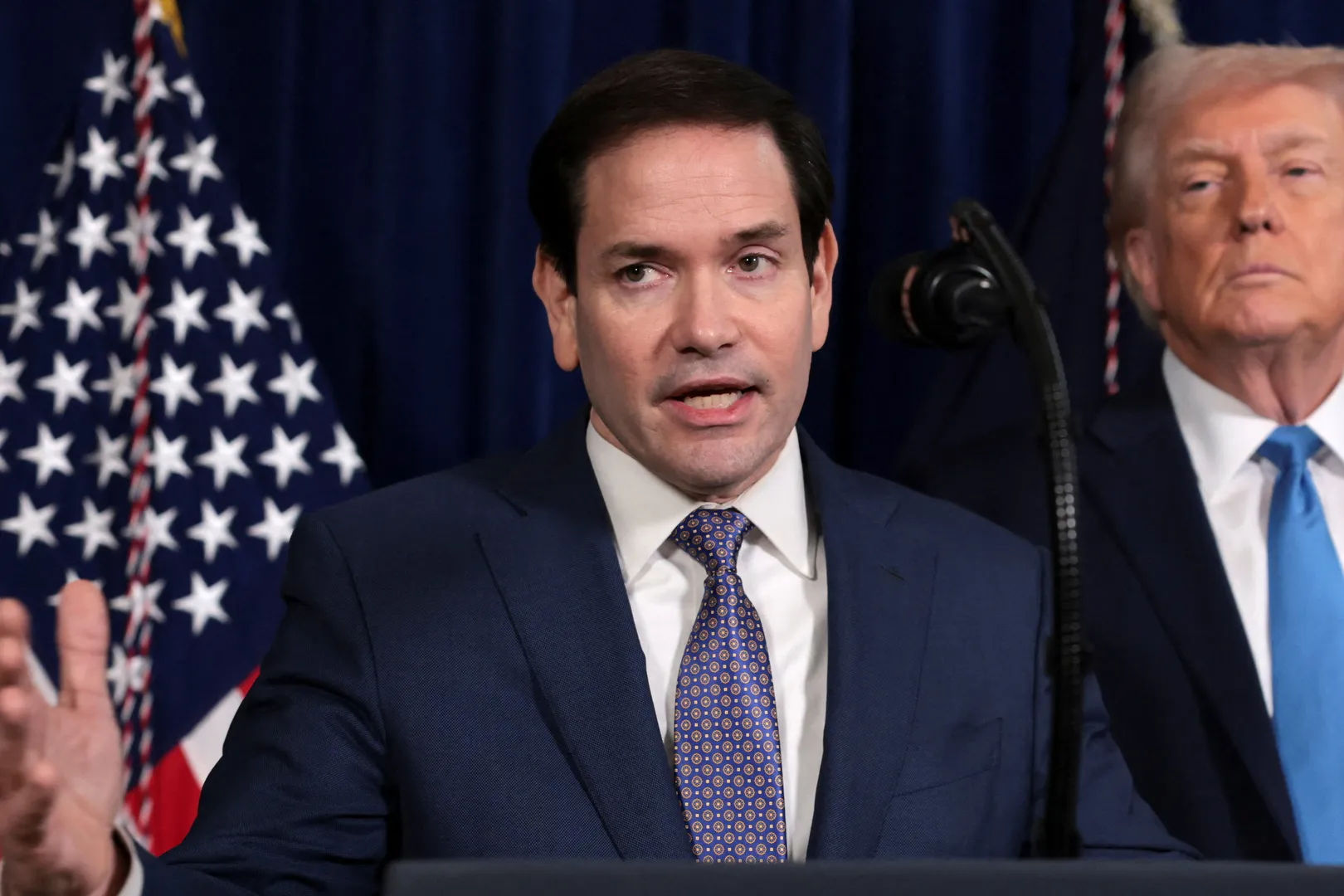
Trump did not follow the mission from the White House situation room. Instead, he was surrounded by his advisers at his Mar-a-Lago club in Palm Beach, Florida, where he watched a live stream of the operation flanked by CIA Director John Ratcliffe and Secretary of State Marco Rubio.

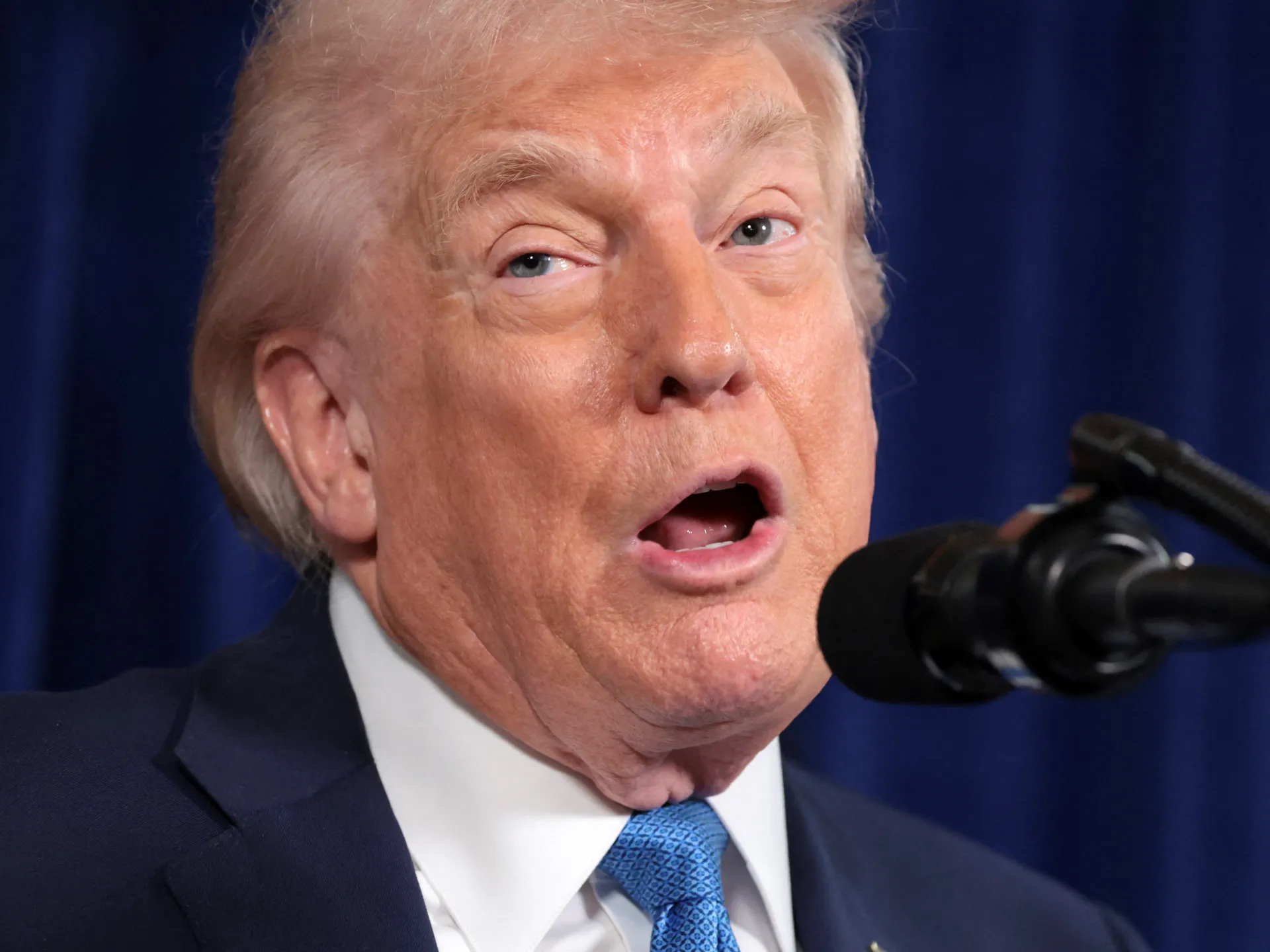
“It was an incredible thing to see,” Trump said on Saturday. “If you would have seen what happened, I mean, I watched it literally like I was watching a television show. And if you would’ve seen the speed, the violence… it’s just, it was an amazing thing, an amazing job that these people did.”

Donald Trump / TruthSocial Image shows CIA Director John Ratcliffe, President Donald Trump and Secretary of State Marco RubioDonald Trump / TruthSocial

Trump watched a live stream of the operation from his Florida estate

In recent months, thousands of US troops have deployed to the region, joining an aircraft carrier and dozens of warships in the largest military build-up in decades as President Trump has accused Maduro of drug-trafficking and narco-terrorism, and blown up dozens of small boats accused of ferrying drugs through the region.

But the first signs of Operation Absolute Resolve were in the skies. More than 150 aircraft – including bombers, fighter jets and reconnaissance planes – were ultimately deployed through the course of the night, according to US officials.

“It was very complex, extremely complex, the whole manoeuvre, the landings, the number of aircraft,” Trump told Fox News. “We had a fighter jet for every possible situation.”

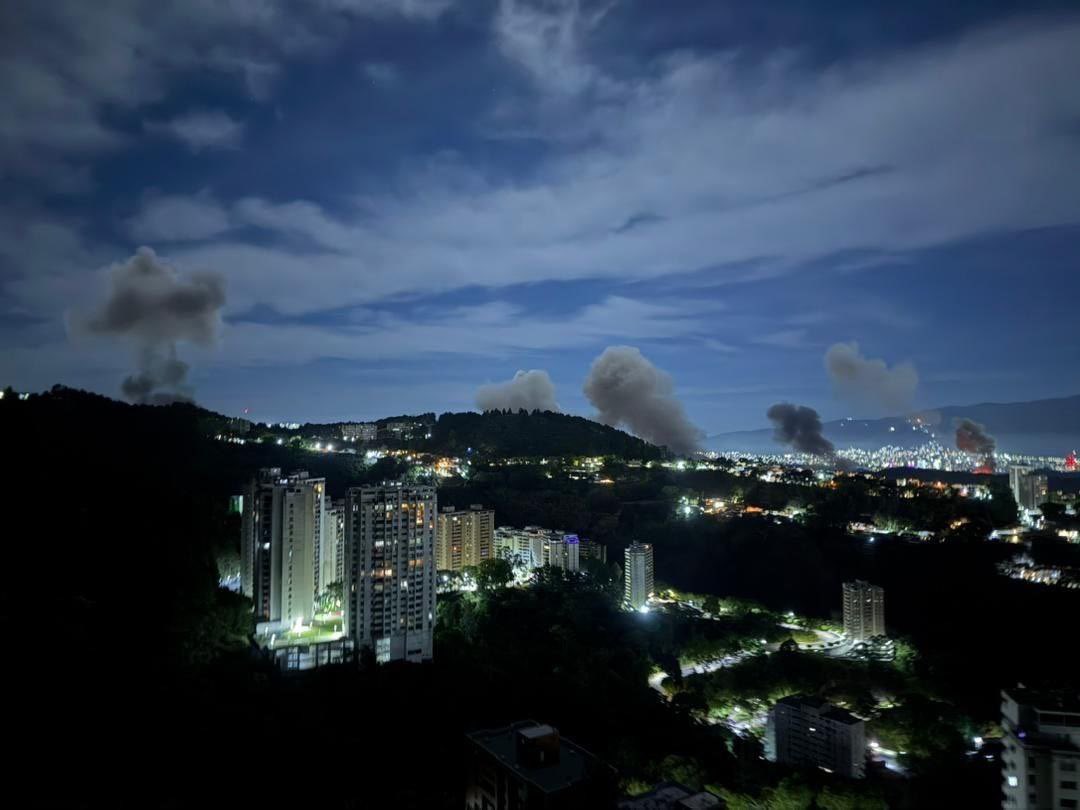
Loud explosions were heard in Caracas at about 02:00 local time, and plumes of smoke were seen rising over the city. “I heard a huge sound, a loud bang,” reporter Ana Vanessa Herrero told the BBC. “It moved all the windows. Immediately after I saw a huge cloud of smoke that almost blocked the entire view.”

“Planes and helicopters were flying all over the city,” she said.

Watch: Smoke, bangs and helicopters in Caracas

Soon videos showing numerous aircraft in the skies – and others showing the apparent aftermath of explosions – began to circulate widely on social media. One showed a convoy of helicopters flying at low altitude over Caracas as smoke rose from apparent detonations.

BBC Verify has examined a number of videos showing explosions, fire and smoke in locations around Caracas to identify exactly which sites were targeted.

So far, it has confirmed five locations including Generalissimo Francisco de Miranda Air Base, an airfield known as La Carlota and Port La Guaira, Caracas’ main conduit to the Caribbean Sea.

Map showing locations of US air strikes in and around Caracas, Venezuela. Highlighted sites include Port La Guaira to the north, Fuerte Tiuna and La Carlota in Caracas, and Higuerote Airport to the east.

Some of the US strikes targeted air defence systems and other military targets, officials said. Trump also suggested the US cut the power in Caracas before the mission began, although he did not specify how.

“The lights of Caracas were largely turned off due to a certain expertise that we have,” he said. “It was dark and it was deadly.”

‘They knew we were coming’

As strikes rang out around Caracas, US forces made their way into the city. They included members of the elite Delta Force, the US military’s top special mission unit, sources told the BBC’s US partner CBS. They were heavily armed – and carried a blowtorch in case they had to cut through the metal doors of Maduro’s safe house.

The troops arrived at Maduro’s location shortly after the strikes began at 02:01 local time, according to Gen Caine. Trump described the safe house as a heavily fortified military “fortress” in the heart of Caracas. “They were in a ready position waiting for us. They knew we were coming,” he said.

The troops took fire when they arrived, and one of the American helicopters was hit but was still able to fly. “The apprehension force descended into Maduro’s compound and moved with speed, precision and discipline,” Gen Caine said.

“They just broke in, and they broke into places that were not really able to be broken into, you know, steel doors that were put there for just this reason,” Trump said.

It was only as the operation – which also saw Maduro’s wife, Cilia Flores, seized – was unfolding that Secretary of State Rubio began notifying lawmakers about the action, a decision which has since prompted anger from some in Congress.

“Let me be clear: Nicolas Maduro is an illegitimate dictator. But launching military action without congressional authorisation and without a credible plan for what comes next is reckless,” said top Democrat Chuck Schumer, the party’s leader in the Senate.

Briefing Congress ahead of time would have endangered the mission, Rubio told reporters during the news conference on Saturday. “Congress has a tendency to leak,” Trump added. “This would not be good.”

Getty Images Fire at Fuerte Tiuna, Venezuela's largest military complex, is seen from a distance after a series of explosions in Caracas Getty Images

The US struck several locations around Caracas, including Fuerte Tiuna, Venezuela’s largest military complex

In Maduro’s compound, as elite US troops flooded in, Trump said the Venezuelan president – who has reportedly increased his reliance on Cuban bodyguards in recent months – attempted to flee to a safe room. “He was trying to get to a safe place, which wasn’t safe, because we would have had the door blown up in about 47 seconds,” he said.

“He made it to the door. He was unable to close it,” Trump said. “He got bum rushed so fast that he didn’t get into that [room].”

When asked if the US could have killed Maduro, an authoritarian leader who took over the presidency in 2013, if he had resisted arrest, Trump said: “It could have happened.” On the US side, “a couple of guys were hit”, he said, but no US service members were killed. The Venezuelan authorities have not confirmed any casualties.

The US had previously offered a $50m reward for information leading to Maduro’s arrest. But by 04:20 local time on Saturday, helicopters were leaving Venezuelan territory with Maduro and his wife on board, in custody of the Department of Justice and en route ultimately to New York, where they are expected to face criminal charges.

Almost exactly an hour later Trump announced the news of his capture to the world. “Maduro and his wife will soon face the full might of American justice,” he said.
Source link

U.S. capture of Maduro in Venezuela criticized as violation of international, U.S. law

President Trump’s decision to send U.S. forces into Venezuela to capture President Nicolás Maduro and his wife and return them to the U.S. to face drug charges elicited condemnation from legal experts and other critics who argued that the operation — conducted without congressional or United Nations approval — clearly violated U.S. and international law.

Such criticism came from Democratic leaders, international allies and adversaries including Mexico, France, China and Russia, United Nations Secretary-General Antonio Guterres and experts on international law and wartime powers.

“Nicolás Maduro was a thug and an illegitimate leader of Venezuela, terrorizing and oppressing its people for far too long and forcing many to leave the country. But starting a war to remove Maduro doesn’t just continue Donald Trump’s trampling of the Constitution, it further erodes America’s standing on the world stage and risks our adversaries mirroring this brazen illegal escalation,” Sen. Adam Schiff (D-Calif.) wrote on X.

A U.N. spokesman said Guterres was “deeply alarmed” by the U.S. operation and “deeply concerned that the rules of international law have not been respected.”

China’s foreign ministry said “such hegemonic acts of the U.S. seriously violate international law and Venezuela’s sovereignty,” while France’s foreign minister said the U.S. operation “contravenes the principle of the non-use of force that underpins international law.”

Republicans largely backed the president, with both House Speaker Mike Johnson (R-La.) and Senate Majority Leader John Thune (R-S.D.) defending the operation as “decisive” and legally justified. However, other Republicans questioned Trump’s authority to act unilaterally, and raised similar concerns as Schiff about other world leaders citing Trump’s actions to justify their own aggression into neighboring nations.

Rep. Don Bacon (R-Neb.) defended Trump’s actions as “great for the future of Venezuelans and the region,” but said he was concerned that “Russia will use this to justify their illegal and barbaric military actions against Ukraine, or China to justify an invasion of Taiwan.”

Trump defended the operation as a legitimate law enforcement action necessary to combat threats to the U.S. from Maduro, whom he accused of sending violent gang members and deadly drugs across the U.S. border on a regular basis.

“The illegitimate dictator Maduro was the kingpin of a vast criminal network responsible for trafficking colossal amounts of deadly and illicit drugs into the United States,” Trump said at a news conference. “As alleged in the indictment, he personally oversaw the vicious cartel known as Cartel de los Soles, which flooded our nation with lethal poison responsible for the deaths of countless Americans.”

However, Trump also made no secret of his interest in Venezuela’s oil. He said U.S. officials would be running Venezuela for the foreseeable future and ensuring that the nation’s oil infrastructure is rebuilt — to return wealth to the Venezuelan people, but also to repay U.S. businesses that lost money when Maduro took over the industry.

Atty. Gen. Pam Bondi announced that Maduro, who had previously been indicted in the U.S. in 2020, is now the subject of a superseding indictment charging him, his wife and several others with narco-terrorism conspiracy, cocaine importation conspiracy, possession of machine guns and destructive devices and conspiracy to possess such weapons and devices.

“They will soon face the full wrath of American justice on American soil in American courts,” Bondi wrote on X.

Secretary of State Marco Rubio also framed the operation as a law enforcement effort, and defended the lack of advance notice to Congress.

“At its core, this was an arrest of two indicted fugitives of American justice, and the Department of War supported the Department of Justice in that job,” Rubio said. “It’s just not the kind of mission that you can pre-notify, because it endangers the mission.”

Trump said Congress could not be notified in advance because “Congress will leak, and we don’t want leakers.”

Michael Schmitt, an international law professor at the University of Reading in the United Kingdom and a professor emeritus of international law at the U.S. Naval War College, said Trump’s actions were a “clear violation” of international law.

He said the U.S. had no authority from the U.N. Security Council to conduct military operations in Venezuela, nor any legitimate justification to act in self-defense against an armed attack — which drug trafficking does not amount to.

Schmitt said the operation in Venezuela went far beyond a normal law enforcement action. But even if it were just a law enforcement action, he said, the U.S. would still lack legal authority under international law to engage in such activity on Venezuelan soil without the express permission of Venezuelan authorities — which it did not have.

“International law is clear. Without consent, you cannot engage in investigations or arrest or seizure of criminal property on another state’s territory,” he said. “That’s a violation of that state’s sovereignty.”
Because the operation was illegitimate from the start, the resulting occupation and interference in Venezuela’s oil industry are also unlawful, Schmitt said — regardless of whether the country’s nationalizing of U.S.-tied oil infrastructure was also unlawful, as some experts believe it was.

“That unlawfulness — of seizing U.S. business interests, nationalizing them, in a way that was not in accordance with the required procedures — is not a basis for using force,” Schmitt said.

Matthew Waxman, chair of the National Security Law Program at Columbia Law School, said that in the days ahead, he expects the Trump administration to try to justify its actions not just as a law enforcement operation, but “as part of a larger campaign to defend the United States against what it has characterized as an attack or invasion by Maduro-linked drug cartels.”

“All modern presidents have claimed broad constitutional power to use military force without congressional authorization, but that is always hotly contested. We’ll see if there’s much pushback in Congress in this case, which will probably depend a lot on how things now play out in Venezuela,” Waxman said. “Look at what happened last year in Iran: The president claimed the power to bomb nuclear program infrastructure, and when the operation didn’t escalate, congressional opponents backed off.”

Already on Saturday, some members of Congress were softening their initial skepticism.

Within hours of posting on X that he was looking forward “to learning what, if anything, might constitutionally justify this action in the absence of a declaration of war or authorization for the use of military force,” Sen. Mike Lee (R-Utah) had posted again, saying Rubio told him that the military action was “to protect and defend those executing the arrest warrant” for Maduro.

Such action “likely falls within the president’s inherent authority under Article II of the Constitution to protect U.S. personnel from an actual or imminent attack,” Lee added.

Others remained more skeptical.

Rep. Thomas Massie (R-Ky.) said Trump’s remarks about taking over the country and controlling its oil reserves did not seem “the least bit consistent” with Bondi’s characterization of the operation as a law enforcement effort.

Source link

Venezuelan, International Popular Movements Condemn US Bombings, Maduro Kidnapping

Caracas, January 3, 2026 (venezuelanalysis.com) – Venezuelan popular movements and international solidarity organizations have taken to the streets to condemn a US military attack against the country and the kidnapping of President Nicolás Maduro.

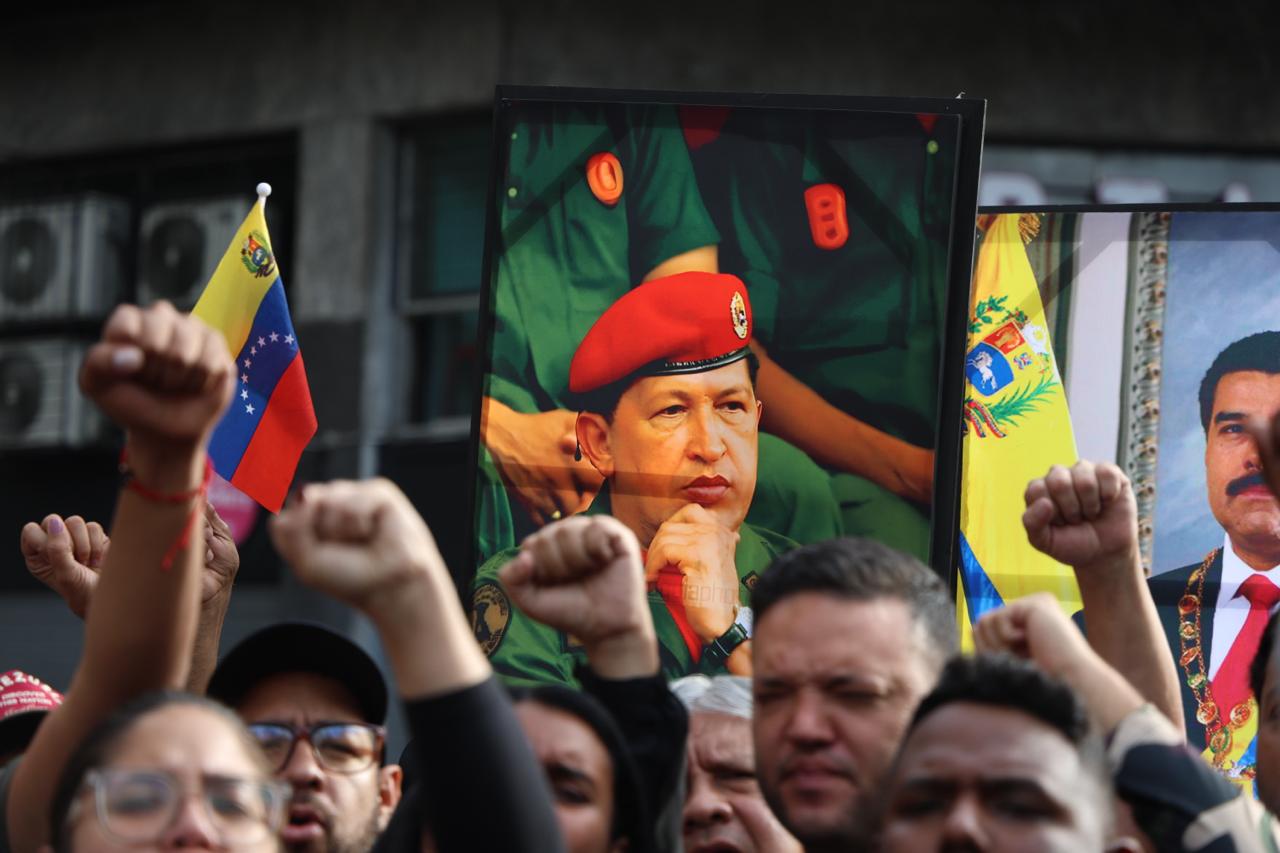
Following the bombings and special operations raid in the early hours of January 3, pro-government collectives began to concentrate in Caracas near Miraflores Presidential Palace. Demonstrations were likewise registered in many other Venezuelan cities.

“Long live a free and revolutionary Venezuela,” grassroots leader Mariela Machado told press in the Caracas demonstration. “International institutions must stop being accomplices and take a stance because our people are being massacred.”

She went on to state that “the US government is not the world’s police” and demanded the safe return of the Venezuelan President.

Venezuelan Interior Minister Diosdado Cabello and Defense Minister Vladimir Padrino López published statements in the early morning hours, urging the international community to take a stance against the US actions and calling for popular mobilization.

International solidarity organizations also set up emergency rallies in dozens of cities, including London, New York and several Latin American capitals.

US forces began the attack at 2 am local time with missiles fired against a number of Venezuela military installations in the capital and surrounding areas. Social media users broadcast fires and large columns of smoke emerging from Fuerte Tiuna, the main military installation in Caracas.

The port in La Guaira, an airbase in Higuerote, Miranda State, and a radar facility in El Hatillo, Eastern Caracas, were among the targets reportedly struck. Venezuelan authorities have not disclosed information concerning damages and casualties.

A few hours after the first bombings, US President Donald Trump announced that a special operations raid had kidnapped Maduro and first lady Cilia Flores and that the two were “flown out of the country.” The pair was reportedly taken aboard the USS Iwo Jima warship.

US Attorney General Pam Bondi stated that Maduro and Flores were indicted in a New York District Court on charges including “narco-terrorism conspiracy.” In recent years, US officials have repeatedly accused Maduro and other Venezuelan high-ranking officials of “flooding” the US with drugs. However, they have not presented any court-tested evidence, while UN and DEA reports have shown Venezuela to be a marginal player in global drug trafficking.

In a Saturday press conference, Trump stated that the US will “run” Venezuela until there are conditions for a “safe, proper and judicious transition.” He added that Secretary of State Marco Rubio and other officials will be charged with “running the country.”

The US president reiterated claims to Venezuelan oil resources and threatened that Venezuela would have to “reimburse” the US for oil nationalizations and damages from alleged drug trafficking. Trump went on to say that Rubio had held talks with Venezuelan Vice President Delcy Rodríguez, alleging that she had been sworn in and had vowed to accept US dictates.

Trump dismissed the idea of María Corina Machado taking power in the South American nation, affirming that the far-right leader lacks on-the-ground support. 

Washington’s military attack and special operations raid followed months of buildup and escalating regime-change threats against Caracas. US forces have amassed the largest military deployment in decades in the Caribbean Sea while also conducting dozens of bombings against small boats accused of narcotics trafficking.

The military operation drew widespread international condemnation from Latin America and elsewhere.

“The US bombings and Maduro’s capture are unacceptable,” Brazilian President Lula da Silva wrote on social media. “These actions are an affront to Venezuelan sovereignty and set an extremely dangerous precedent for the international community.”

Colombian, Mexican and Cuban leaders were among those to strongly reject US actions and demand respect for international law.

Russian Foreign Minister Sergei Lavrov reportedly held a phone conversation with Vice President Rodríguez, reiterating Moscow’s support for the Venezuelan government and a call for dialogue.

For its part, the Chinese foreign ministry issued a statement “fiercely condemning the use of force against a sovereign nation.” Beijing urged Washington to cease its violations of international law and respect other countries’ sovereignty.

Venezuelan Foreign Minister Yván Gil held multiple phone conversations with counterparts from different countries who expressed their condemnation of the US attacks as violations of international law.

Caracas has likewise requested an emergency meeting of the United Nations Security Council. Two prior meetings called by Venezuela saw China, Russia and other countries criticize the US’ military actions but ultimately no resolutions were put forward.


Source link

Trump: US ‘captures’ Maduro in ‘dead of night’ | Nicolas Maduro

NewsFeed

US President Donald Trump says the US “successfully captured” Venezuela President Nicolas Maduro and his wife “in the dead of night” and they will “face American justice” for alleged narcoterrorism. Trump said the US will run Venezuela until there is a “safe… and judicious” transition of power.

Source link

Trump says U.S. will ‘run’ Venezuela after capturing Maduro in audacious attack

An audacious overnight raid by elite U.S. forces that seized Venezuelan President Nicolás Maduro from his bedroom in Caracas plunged the country into turmoil on Saturday, prompting international concern about Venezuela’s future and President Trump’s decision to take control of a sovereign nation.

Trump justified the stunning attack by accusing Maduro of sending “monsters” into the United States from Venezuelan prisons and claiming his involvement in the drug trade. But Trump focused more on Venezuela’s vast oil reserves, accusing the Venezuelan government of stealing U.S. oil infrastructure in the country decades prior and vowing that, under new U.S. government control, output would increase going forward.

The president spoke little about democracy in Venezuela, dismissing a potential role for its longstanding democratic opposition in running the country in the immediate aftermath of the operation. Instead, Trump said his team was in touch with Maduro’s hand-picked vice president, Delcy Rodriguez, whom he called “very gracious” and said was “essentially willing to do what we think is necessary to Make Venezuela Great Again.”

“We’re going to run the country until such time as we can do a safe, proper and judicious transition,” Trump said. “We’re going to have our very large United States oil companies, the biggest anywhere in the world, go in, spend billions of dollars, fix the badly broken infrastructure, the oil infrastructure and start making money for the country.”

“We’re not afraid of boots on the ground,” he added.

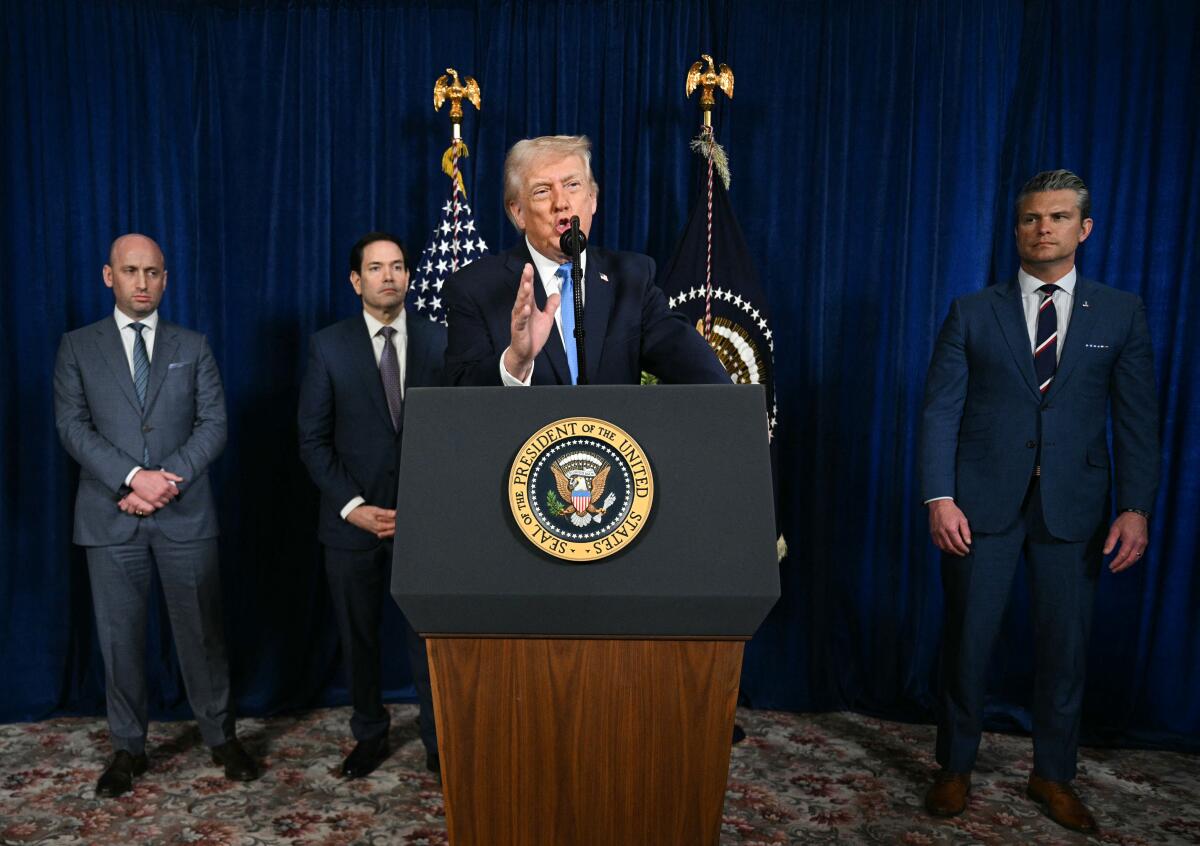
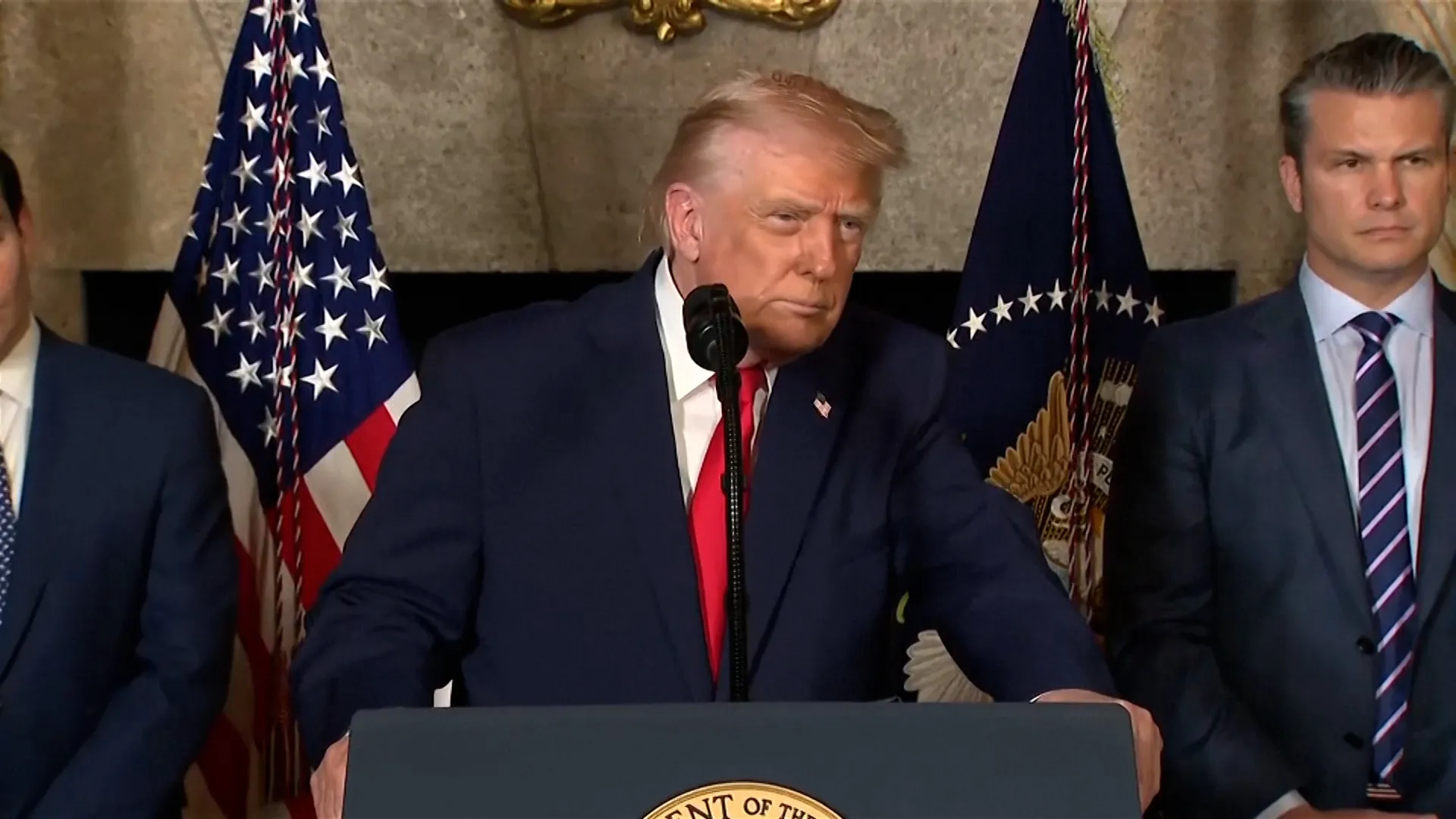
President Trump, alongside others, speaks at a lectern.

President Trump, alongside Deputy Chief of Staff Stephen Miller, Secretary of State Marco Rubio, and Defense Secretary Pete Hegseth, speaks to the media on Saturday following U.S. military actions in Venezuela.

(Jim Watson / AFP via Getty Images)

The president did not offer a timeline for how long a transition would take, or which Venezuelan factions he would support to assume leadership.

Maria Corina Machado, a leader of the Venezuelan opposition and a recipient of the Nobel Peace Prize, said Saturday that she and her team were prepared to assume control of Venezuela.

“The hour of freedom has arrived,” she wrote on social media. “We are prepared to assert our mandate and take power.”

But in a surprising statement, Trump told reporters on Saturday that he did not believe Machado had the “respect” needed to run the country.

Trump instead focused on how the United States intends to run Venezuela in the immediate aftermath, saying American oil companies are ready to descend on the oil-rich country and begin “taking out tremendous amount of wealth out of the ground.”

“That wealth is going to the people of Venezuela and people from outside of Venezuela that used to be in Venezuela, and it goes to the United States of America, in the form of reimbursement for the damages caused to us by that country,” Trump said.

The operation began with explosions throughout Caracas, as more than 150 U.S. aircraft, including F-35 fighter jets, B-1 bombers and remotely piloted drones, cleared away Venezuelan air defenses to make way for the interdiction team, which included U.S. law enforcement officers. Electricity was cut throughout much of the city as the assault unfolded, Dan Caine, chairman of the Joint Chiefs of Staff, told reporters.

A Delta Force unit penetrated Maduro’s heavily fortified compound at 2:01 a.m. local time, capturing him and his wife as they attempted to escape into a safe room, U.S. officials said. Only one helicopter in the U.S. fleet was hit by Venezuelan fire, but was able to continue flying through the mission. No U.S. personnel were killed, Caine said.

Trump, who had ordered the CIA to begin monitoring Maduro’s movements months ago, watched as the operation unfolded from a room at his Mar-a-Lago estate in Florida, “literally like I was watching a television show,” the president said in an interview with Fox News on Saturday morning.

From there, Maduro and his wife, Cilia Flores, were taken to the USS Iwo Jima, stationed in the Caribbean alongside a third of the U.S. naval fleet, before the ship set course for New York, where Atty. Gen. Pam Bondi said Maduro will face “the full wrath of American justice” over his alleged ties to illicit drug trafficking.

“If you would’ve seen the speed, the violence,” Trump told Fox. “Amazing job.”

In Caracas on Saturday, the mood was tense. Long lines formed at supermarkets and pharmacies as shoppers, fearful of uncertainty, stocked up on essentials.

Maduro’s supporters gathered throughout the city, many bearing arms, but seemed unsure of what to do next. Across Latin America, reaction to the U.S. operation was mixed. Right-leaning allies of Trump including Argentina’s Javier Milei and Ecuador’s Daniel Noboa backed the U.S. attack, while leftists broadly condemned it.

Colombian President Gustavo Petro criticized an “aggression against the sovereignty of Venezuela and Latin America” and said he was ordering the deployment of the Colombian armed forces along his nation’s 1,300-mile-long border with Venezuela.

Brazilian President Luiz Inácio Lula da Silva said that the U.S. “crossed an unacceptable line” and compared the action to remove Maduro to “the darkest moments of [U.S.] interference in Latin America and the Caribbean.”

Trump, meanwhile, boasted that the U.S. operation in Venezuela would help reassert U.S. dominance in Latin America.

“American dominance in the Western Hemisphere will never be questioned again,” he said. “We are reasserting American power in a very powerful way in our home region.”
Source link

Venezuela’s Maduro Flown To USS Iwo Jima Amphibious Assault Ship After Capture

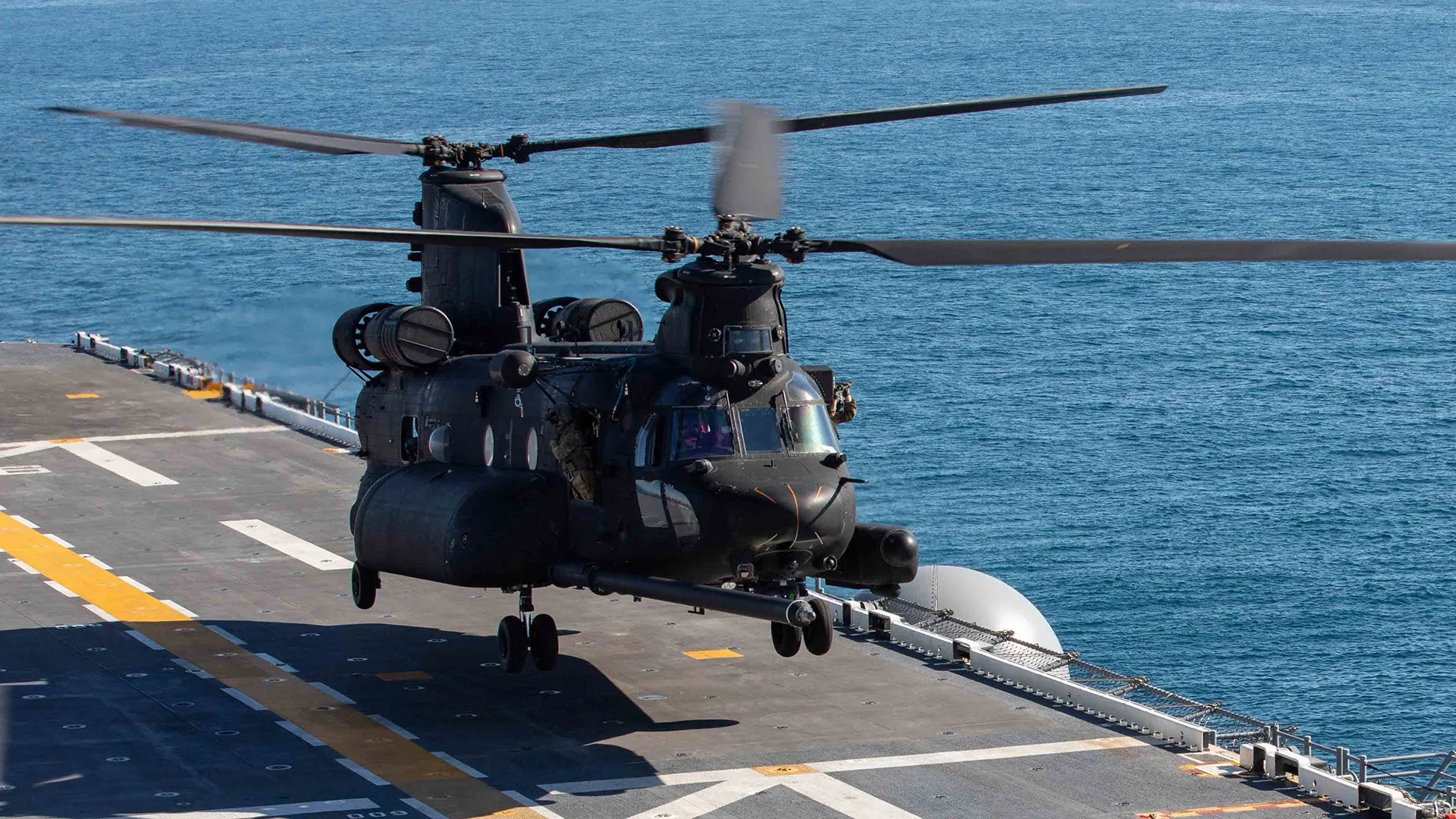
U.S. President Donald Trump has confirmed that Venezuelan dictator Nicolas Maduro and his wife were flown first to the U.S. Navy’s Wasp class amphibious assault ship USS Iwo Jima following their capture overnight. TWZ had highlighted the high likelihood that the Iwo Jima had played a central role in last night’s operation in our initial reporting, where readers can otherwise first get up to speed on the details that are known so far.

Trump shared new details about the operation while speaking by phone earlier this morning with Fox News.

“Yes, the Iwo Jima,” Trump said when asked if Maduro and his wife had been taken first to a ship. “They’re on a ship, and they’ll be heading into New York.”

.@POTUS says Maduro and his wife were first taken to the USS Iwo Jima:

“They’re on a ship, and they’ll be heading into New York… They went by helicopter on a nice flight. I’m sure they loved it.” pic.twitter.com/SlV3x3HOcM

— Rapid Response 47 (@RapidResponse47) January 3, 2026

As TWZ previously wrote:

“With what appears to be a very large contingent of 160th SOAR [the U.S. Army’s 160th Special Operations Aviation Regiment] helicopters spearheading this operation, it seems likely that the USS Iwo Jima would be used to support them, especially as much of this ship’s air wing has been moved ashore. The special operations mothership M/V Ocean Trader is also a critical part of this effort as it has been in the region for months and sailing with the Iwo Jima, but its ability to support many helicopters is much more limited than an amphibious assault ship.”

Would imagine that USS Iwo Jima is also acting as special operations mothership for this. Much of its air wing has been redeployed ashore. Ocean Trader of course is in the mix as well.

— Tyler Rogoway (@Aviation_Intel) January 3, 2026

“He was in a house that was more like a fortress than a house. It had steel doors, it had what they call a safety space, where it’s solid steel all around,” according to Trump. “He was trying to get into it, but he got bum rushed so fast that he didn’t.”

Trump noted that U.S. forces had “blowtorches” and other equipment they were prepared to use if Maduro had been able to make it into that secure space. It has previously been reported that members of the U.S. Army’s Delta Force were in the lead on the ground.

.@POTUS on the moment Maduro was captured:

“He was in a house that was more like a fortress than a house. It had steel doors, it had what they call a safety space where it’s solid steel… He was trying to get into it, but he got bum rushed so fast that he didn’t.” pic.twitter.com/xtYh1Jo8wX

— Rapid Response 47 (@RapidResponse47) January 3, 2026

“I think we had nobody killed … [but] a couple of guys were hit” and a helicopter was hit “pretty hard,” Trump added, but did not elaborate. Details about casualties on either side of the operation remain limited.

President Trump tells Fox & Friends “I think we had nobody killed” in the operation to capture Maduro, but “a couple of guys were hit.” A helicopter was hit “pretty hard,” Trump added.

— Lucas Tomlinson (@LucasFoxNews) January 3, 2026

“I’ve never seen anything like this. I was able to watch it in real time, and I watched every aspect of it.” Trump also told Fox News. “We were prepared to do a second wave. We were all set — and this was so lethal, this was so powerful, that we didn’t have to.”

“I’ve never seen anything like this. I was able to watch it in real time, and I watched every aspect of it,” says @POTUS on the U.S. capture of Venezuelan dictator Nicolás Maduro.

“It was amazing to see the professionalism — the quality of leadership… Amazing.” 🇺🇸 pic.twitter.com/VZvRxZRgab

— Rapid Response 47 (@RapidResponse47) January 3, 2026

.@POTUS: “We were prepared to do a second wave. We were all set — and this was so lethal, this was so powerful, that we didn’t have to… We were out there with an armada like nobody’s ever seen before.” pic.twitter.com/lBAvGDtO63

— Rapid Response 47 (@RapidResponse47) January 3, 2026

Other details about the full U.S. force package involved in the operation in Venezuela are still emerging. This includes a picture now circulating online showing a new addition to U.S. forces in Puerto Rico, U.S. Air Force F-22 Raptors. The U.S. military has been building up a large array of air, naval, and ground assets in the region for months now, which TWZ has been tracking closely.

Members of the Federal Bureau of Investigation (FBI) also took part in the operation, and other law enforcement agencies may have participated, as well.

A team of FBI agents were with the US special operation forces who carried out the operation to capture Venezuela President Nicolas Maduro, people briefed on the matter tell @evanperez @ZcohenCNN, and plans are now in the works to take Maduro to New York where he will face…

— Alayna Treene (@alaynatreene) January 3, 2026

ABC News had separately reported that the Central Intelligence Agency (CIA) had been able to pinpoint Maduro’s exact location prior to his capture, citing individuals familiar with the operation, but did not elaborate on where that intelligence came from. The New York Times and CBS News have reported that a source inside the Venezuelan government was a key source of information for the CIA.

🚨 A CIA source inside the Venezuelan govt helped the US closely track Maduro’s location, @CBSNews‘s @OliviaGazis reports, confirming NYT. Drones and other intel also used over months of planning by White House, CIA, Pentagon.

— Jennifer Jacobs (@JenniferJJacobs) January 3, 2026

The Venezuelan leader and his wife were still asleep at the time and were literally dragged from their bed, according to CNN, citing additional anonymous sources.

Citing anonymous U.S. officials, CBS News had also reported that American authorities had discussed launching the operation on Christmas Day, but that plans for separate strikes targeting ISIS’ franchise in Nigeria led to it being postponed. Poor or at least suboptimal weather then led to it being pushed back further.

“Nicolas Maduro and his wife, Cilia Flores, have been indicted in the Southern District of New York,” U.S. Attorney General Pamela Bondi had also written earlier in a post on X. “Nicolas Maduro has been charged with Narco-Terrorism Conspiracy, Cocaine Importation Conspiracy, Possession of Machineguns and Destructive Devices, and Conspiracy to Possess Machineguns and Destructive Devices against the United States.”

Nicolas Maduro and his wife, Cilia Flores, have been indicted in the Southern District of New York. Nicolas Maduro has been charged with Narco-Terrorism Conspiracy, Cocaine Importation Conspiracy, Possession of Machineguns and Destructive Devices, and Conspiracy to Possess…

— Attorney General Pamela Bondi (@AGPamBondi) January 3, 2026

Questions have been raised about the legality of the operation to capture Maduro and his wife. There is something of a past precedent in America’s intervention in Panama between December 1989 and January 1990, also known as Operation Just Cause, which ostensibly centered on the arrest of then de facto leader Gen. Manuel Noriega on drug trafficking charges. Noriega surrendered to American forces on January 3, 1990, 36 years ago to the day. Noriega was tried and convicted in the United States, where he was subsequently imprisoned. He was later extradited to France and then back to Panama, where he ultimately died under house arrest in 2017.

“The president [Trump] offered multiple off ramps, but was very clear throughout this process: the drug trafficking must stop, and the stolen oil must be returned to the United States. Maduro is the newest person to find out that President Trump means what he says,” Vice President J.D. Vance wrote on X earlier this morning. “And PSA for everyone saying this was “illegal”: Maduro has multiple indictments in the United States for narcoterrorism. You don’t get to avoid justice for drug trafficking in the United States because you live in a palace in Caracas.”

And PSA for everyone saying this was “illegal”:

Maduro has multiple indictments in the United States for narcoterrorism. You don’t get to avoid justice for drug trafficking in the United States because you live in a palace in Caracas.

— JD Vance (@JDVance) January 3, 2026

“This action likely falls within the president’s inherent authority under Article II of the Constitution to protect U.S. personnel from an actual or imminent attack,” Senator Mike Lee, a Utah Republican, had also written on X after speaking with Secretary of State and acting National Security Advisor Marco Rubio about the overnight operation. “He [Rubio] anticipates no further action in Venezuela now that Maduro is in U.S. custody.”

He anticipates no further action in Venezuela now that Maduro is in U.S. custody

— Mike Lee (@BasedMikeLee) January 3, 2026

In the meantime, the country’s Foreign Minister, Yvan Gil, has insisted that Maduro officially remains President and has called for his immediate return from U.S. custody, in an interview today with Telesur. The Venezuelan government has otherwise condemned the U.S. operation.

Foreign Minister of Venezuela Yván Gil:

“Venezuela’s Constitution is clear: the constitutional president is Nicolás Maduro Moros, whose physical presence in Venezuela must be restored immediately. Institutions are functioning fully, the Armed Forces and police are deployed, and… pic.twitter.com/uUbJeGum6l

— Camila (@camilapress) January 3, 2026

OFFICIAL STATEMENT
BOLIVARIAN REPUBLIC OF VENEZUELA

The Bolivarian Republic of Venezuela rejects, condemns, and denounces before the international community the extremely grave military aggression carried out by the current Government of the United States of America against… pic.twitter.com/Z0LOvI4zp3

— Embajada de Venezuela en el Reino Unido (@EmbaVenezUK) January 3, 2026

Delcy Eloína Rodríguez Gómez, currently Vice President of Venezuela, would technically be next in line to take over for Maduro, even if it were to be in an acting capacity. However, there are reports that she may not presently be in the country to immediately assume that role.

Delcy Rodríguez, next in line to assume Venezuela’s presidency, is currently in Moscow, not Venezuela, according to The Objective, a Spain-based news outlet.

— Faytuks Network (@FaytuksNetwork) January 3, 2026

At least two other key figures in Maduro’s regime, Defense Minister Vladimir Padrino Lopez and Interior Minister Diosdado Cabello Rondon, have also appeared publicly in the wake of last night’s operation. It’s interesting to note here that Padrino and Cabello are also under indictment in the United States on charges related to drug trafficking.

Venezuelan Defense Minister is alive and speaks:

We will not negotiate, we will not surrender, and we will ultimately triumph.

NOTE: Maduro has been captured by U.S. forces. pic.twitter.com/7Dgk2JOauI

— Clash Report (@clashreport) January 3, 2026

Venezuelan Minister of Interior Diosdado Cabello:

Trust the leadership and remain calm. Do not fall into despair or aid the enemy.

This is not our first struggle—we have faced attacks before and endured.

Beyond any individual, there is an organized people who know what must… pic.twitter.com/GqJZaUSk7F

— Clash Report (@clashreport) January 3, 2026

“We’re making that decision now,” President Trump had said during his interview with Fox News when asked about what might happen next, leadership-wise, in Venezuela. “We can’t take a chance on letting somebody else run it and just take over where he [Maduro] left off.”

Trump also claimed that Maduro had been close to being convinced to voluntarily “surrender.” There had been reports that Maduro’s capture was part of a preplanned arrangement with the United States, but there are no indications currently that this was the case.

“What do you think is next for the Venezuelan people now that you have removed Maduro so that he can face American justice?”@POTUS: “We’re making that decision now. We can’t take a chance on letting somebody else run it and just take over where he left off.” pic.twitter.com/Rh64xxtkpc

— Rapid Response 47 (@RapidResponse47) January 3, 2026

.@POTUS on his discussions with Maduro in recent weeks: “I said, ‘You have to give up. You have to surrender’ — and he was close, but in the end, we had to do something that was really much more surgical, much more powerful… This was a very important symbol.” https://t.co/PMXAq3k4ht pic.twitter.com/f4KmwzWabk

— Rapid Response 47 (@RapidResponse47) January 3, 2026

President Trump is still scheduled to speak later today about last night’s operation, where more details are expected to be announced. In the meantime, the situation in Venezuela continues to be very fluid.

Contact the author: joe@twz.com

Joseph has been a member of The War Zone team since early 2017. Prior to that, he was an Associate Editor at War Is Boring, and his byline has appeared in other publications, including Small Arms Review, Small Arms Defense Journal, Reuters, We Are the Mighty, and Task & Purpose.


Howard is a Senior Staff Writer for The War Zone, and a former Senior Managing Editor for Military Times. Prior to this, he covered military affairs for the Tampa Bay Times as a Senior Writer. Howard’s work has appeared in various publications including Yahoo News, RealClearDefense, and Air Force Times.


Source link

U.S. captures Venezuela’s president Nicolas Maduro

The United States early Saturday morning staged a mission to apprehend Venezuelan President Nicolás Maduro, pictured in November, and his wife, both of whom have been indicated in the United States for narco-terrorism. File Photo by Venezuelan President Office/UPI | License Photo

Jan. 3 (UPI) — The United States early Saturday morning staged a daring “large strike against Venezuela,” during which the country’s president, Nicolas Maduro, was captured and flown out of the country.

President Donald Trump announced on Truth Social that Maduro and Maduro’s wife had been captured, with the New York Times reporting that they were flown by helicopter to the USS Iwo Jima and that both will eventually face charges in the Southern District of New York.

“The United States of America has successfully carried out a large scale strike against Venezuela and its leader, President Nicolas Maduro, who h as been, along with his wife, captured and flown out of the country,” Trump said in the Truth Social post. “This operation was done in conjunction with U.S law enforcement.”

Trump said that a news conference will be held at 11 a.m. EST from Mar-a-Lago, his golf club in Florida.

This is a developing story. Please check back for updates.

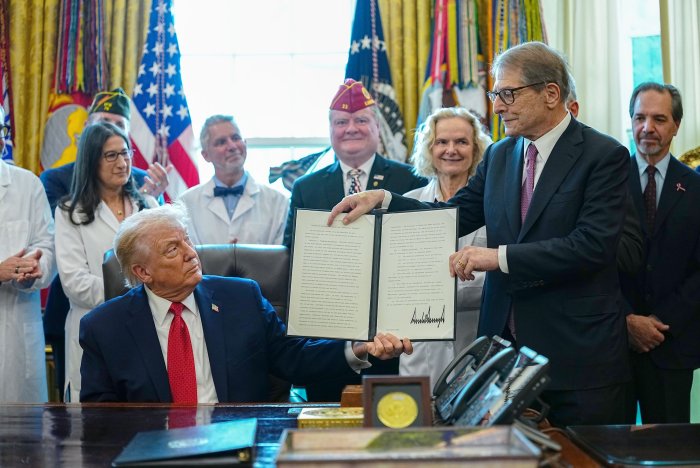
President Donald Trump holds a signed executive order reclassifying marijuana from a schedule I to a schedule III controlled substance in the Oval Office of the White House on Thursday. Photo by Aaron Schwartz/UPI | License Photo

Source link

Colombia braces with alarm after Maduro’s removal in Venezuela by US | Nicolas Maduro News

Medellin, Colombia – The shock removal of Venezuelan leader Nicolas Maduro by the United States military has triggered alarm in bordering Colombia, where analysts warn of the possibility of far-reaching repercussions.

The Colombian government condemned Washington’s early Saturday morning attacks on Venezuela – which included strikes on military targets and Maduro’s capture – and announced plans to fortify its 2,219-kilometre (1,378-mile) eastern land border, a historic hotbed of rebellion and cocaine production.

Recommended Stories

list of 3 itemsend of list

Security analysts also say Maduro’s deposition could aggravate an already deteriorating security situation in Colombia, while refugee advocacy groups warn the country would bear the brunt of possible migration waves triggered by the fallout from the intervention.

The Colombian government held an emergency national security meeting at 3am (09:00GMT), according to President Gustavo Petro.

“The Colombian government condemns the attack on the sovereignty of Venezuela and Latin America,” wrote the president in an X post, announcing the mobilisation of state forces to secure the border.

The ELN factor

The National Liberation Army (ELN), a left-wing group and the largest remaining rebel force in the country, have been vocal as recently as December in its preparations to defend the country against “imperialist intervention”.

Security analysts say the primary national security risk to Colombia following the attacks stems from ELN, which controls nearly the entire border with Venezuela.

“I think there is a high risk now that the ELN will consider retaliation, including here in Colombia, against Western targets,” said Elizabeth Dickinson, deputy director for Latin America at Crisis Group International.

The rebel group is heavily involved in cocaine trafficking and operates on both sides of the border; it has benefited from ties with the Maduro government, and US intervention threatens the group’s transnational operations, according to analysts.

The ELN, which positions itself as a bastion against US imperialism in the region, had already stepped up violence in response to the White House’s threats against Colombia and Venezuela. In December, it ordered Colombians to stay home and bombed state installations across the country, an action it described as a response to US aggression.

The Colombian government has ramped up security measures in anticipation of possible retaliatory action by the ELN following Maduro’s removal.

“All capabilities of the security forces have been activated to protect the population, strategic assets, embassies, military and police units, among others, as well as to prevent any attempted terrorist action by transnational criminal organisations, such as the ELN cartel,” read a statement on Saturday morning issued by Colombia’s Ministry of Defence.

‘Mass influx of refugees’

In addition to fears of increased violence, Colombia also stands to bear the brunt of any migration crisis initiated by a conflict in Venezuela.

In an X post on Saturday morning, Petro said the government had bolstered humanitarian provisions on its eastern border, writing, “all the assistance resources at our disposal have been deployed in case of a mass influx of refugees.”

To date, Colombia has received the highest number of Venezuelan refugees worldwide, with nearly 3 million of the approximately 8 million people who have left the country settling in Colombia.

The previous wave of mass migration in 2019 – which followed opposition leader Juan Guaido’s failed attempt to overthrow Maduro – required a massive humanitarian operation to house, feed, and provide medical attention to refugees.

Such an operation is likely to prove even more challenging now, with Colombia losing roughly 70 percent of all humanitarian funds after the Trump administration shuttered its USAID programmes in the country last year.

“There is a real possibility of short-term population movement, both precautionary and forced, especially if instability, reprisals, or power vacuums emerge,” said Juan Carlos Viloria, a leader of the Venezuelan diaspora in Colombia.

“Colombia must prepare proactively by activating protection mechanisms, humanitarian corridors, and asylum systems, not only to respond to potential arrivals, but to prevent chaos and human rights violations at the border,” added Viloria.

A further collapse in US-Colombia relations

Analysts say Maduro’s removal raises difficult questions for Petro, who has been engaged in a war of words with Trump since the US president assumed office last year.

The Colombian leader drew Trump’s ire in recent months when he condemned Washington’s military buildup in the Caribbean and alleged a Colombian fisherman had been killed in territorial waters. In response, the White House sanctioned Petro, with Trump calling him a “thug” and “an illegal drug dealer”.

“Petro is irascible at the moment because he sees Trump and his threats no longer as empty, but as real possibilities,” said Sergio Guzman, Director at Colombia Risk Analysis, a Bogota-based security consultancy.

Indeed, Trump has on multiple occasions floated military strikes against drug production sites in Colombia. However, experts say it is unlikely the White House would take unilateral action given their historic cooperation with Colombian security forces.

Despite Petro condemning Washington’s intervention in Venezuela, he previously called Maduro a “dictator” and joined the US and other nations in refusing to recognise the strongman’s fraudulent re-election as president in 2024.

Rather than supporting Maduro, the Colombian leader has positioned himself as a defender of national sovereignty and international law.

On Saturday, Petro called for an emergency meeting of the United Nations Security Council, which Colombia joined as a temporary member just days ago.

“Colombia reaffirms its unconditional commitment to the principles enshrined in the Charter of the United Nations,” wrote the president in an X post.

This story has been published in conjunction with Latin America Reports.

Source link

Trump bombs Venezuela, US ‘captures’ Maduro: All that we know | Nicolas Maduro News

United States President Donald Trump announced on Saturday morning that his country’s forces had bombed Venezuela and captured the South American nation’s president, Nicolas Maduro, and First Lady Cilia Flores in a dramatic overnight military attack that followed months of rising tensions.

Venezuela’s government said that the US had struck three states apart from the capital, Caracas, while neighbouring Colombia’s President Gustavo Petro released a longer list of places that he said had been hit.

The operation has few, if any, parallels in modern history. The US has previously captured foreign leaders, including Iraq’s Saddam Hussein and Panama’s Manuel Noriega, but after invading those countries in declared wars.

Here is what we know about the US attacks and the lead-up to this escalation:

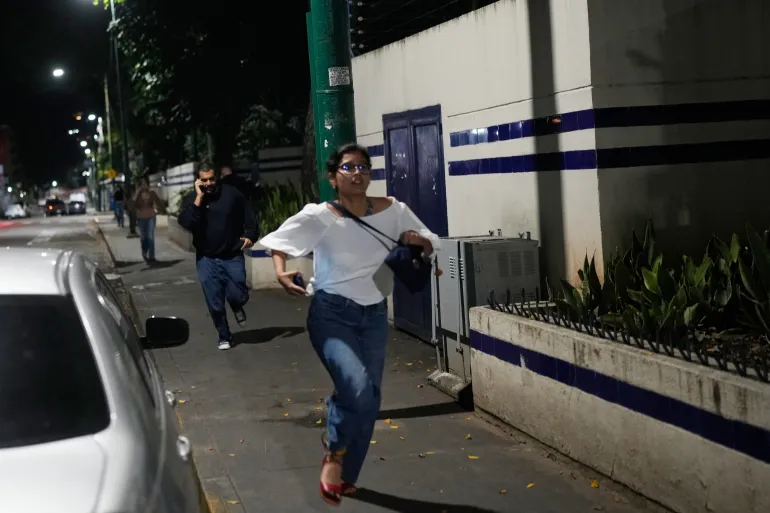
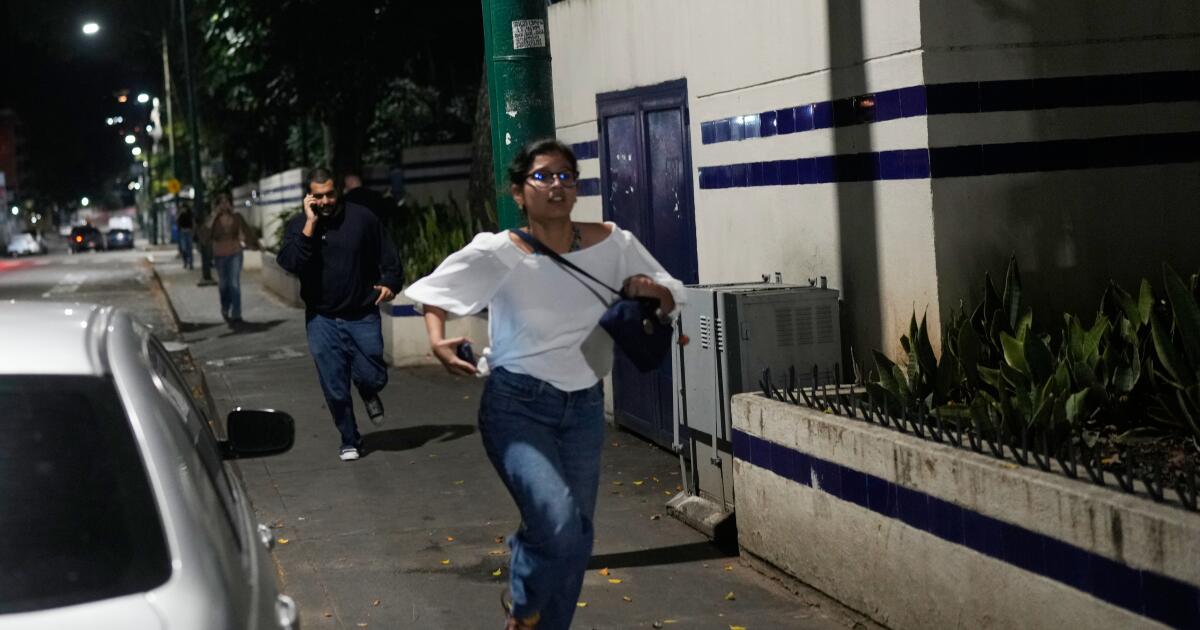
Pedestrians run after explosions and low-flying aircraft were heard in Caracas, Venezuela, Saturday, Jan. 3, 2026. (AP Photo/Matias Delacroix)
Pedestrians run after explosions and low-flying aircraft were heard in Caracas, Venezuela, on Saturday, January 3, 2026 [Matias Delacroix/ AP Photo]

How did the attack unfold?

At least seven explosions were reported from Caracas, a city of more than three million people, at about 2am local time (06:00 GMT), as residents said they heard low-flying aircraft. Lucia Newman, Al Jazeera’s Latin America editor, reported that at least one of the explosions appeared to come from near Fort Tiuna, the main military base in the Venezuelan capital.

Earlier, the US Federal Aviation Administration had issued instructions to American commercial airlines to stay clear of Venezuelan airspace.

Within minutes of the explosions, Maduro declared a state of emergency, as his government named the US as responsible for the attacks, saying that it had struck Caracas as well as the neighbouring states of Miranda, Aragua and La Guaira.

The US embassy in Bogota, Colombia, referred to the reports of the explosions and asked American citizens to stay out of Venezuela, in a statement. But the diplomatic mission did not confirm US involvement in the attacks. That came more than three hours after the bombings, from Trump.

Supporters of Venezuelan President Nicolás Maduro embrace in downtown Caracas, Venezuela, Saturday, Jan. 3, 2026, after U.S. President Donald Trump announced that Maduro had been captured and flown out of the country. (AP Photo/Cristian Hernandez)
Supporters of Venezuelan President Nicolas Maduro embrace in downtown Caracas, Venezuela, on Saturday, January 3, 2026, after US President Donald Trump announced that Maduro had been captured and flown out of the country [Cristian Hernandez/ AP Photo]

What did Trump say?

In a post on his Truth Social platform, Trump said, a little after 09:00 GMT that the US had “successfully carried out a large scale strike against Venezuela and its leader, President Nicolas Maduro, who has been, along with his wife, captured and flown out of the Country”.

Venezuela has not yet confirmed that Maduro was taken by US troops — but it also has not denied the claim.

Trump said that the attack had been carried out in conjunction with US law enforcement, but did not specify who led the operation.

Trump announced that there would be a news conference at his Mar-a-Lago resort in Florida at 11am local time (16:00 GMT) on Friday, where more details would be revealed.

INTERACTIVE - US attacks on Venezuela map-1767437429

Where did the US attack in Venezuela?

While neither the US nor Venezuelan authorities have pinpointed locations that were struck, Colombia’s Petro, in a social media post, listed a series of places in Venezuela that he said had been hit.

They include:

  • La Carlota airbase was disabled and bombed.
  • Cuartel de la Montana in Catia was disabled and bombed.
  • The Federal Legislative Palace in Caracas was bombed.
  • Fuerte Tiuna, Venezuela’s main military complex, was bombed.
  • An airport in El Hatillo was attacked.
  • F-16 Base No 3 in Barquisimeto was bombed.
  • A private airport in Charallave, near Caracas, was bombed and disabled.
  • Miraflores, the presidential palace in Caracas, was attacked.
  • Large parts of Caracas, including Santa Monica, Fuerte Tiuna, Los Teques, 23 de Enero and the southern areas of the capital, were left without electricity.
  • Attacks were reported in central Caracas.
  • A military helicopter base in Higuerote was disabled and bombed.
The U.S. Navy’s Gerald R. Ford Carrier Strike Group, including the flagship USS Gerald R. Ford, USS Winston S. Churchill, USS Mahan and USS Bainbridge, sail towards the Caribbean Sea under F/A-18E/F Super Hornets and a U.S. Air Force B-52 Stratofortress, in the Atlantic Ocean November 13, 2025.
The US Navy’s Gerald R Ford Carrier Strike Group, including the flagship USS Gerald R Ford, USS Winston S Churchill, USS Mahan and USS Bainbridge, sail towards the Caribbean Sea, in the Atlantic Ocean, on November 13, 2025  [US Navy/Petty Officer 3rd Class Tajh Payne/Handout via Reuters]

What led to these US attacks on Venezuela?

Trump has, in recent months, accused Maduro of driving narcotics smuggling into the US, and has claimed that the Venezuelan president is behind the Tren de Aragua gang that Washington has proscribed as a foreign terrorist organisation.

But his own intelligence agencies have said that there is no evidence that Maduro is linked to Tren de Aragua, and US data shows that Venezuela is not a major source of contraband narcotics entering the country.

Starting in September, the US military launched a series of strikes on boats in the Caribbean Sea that it claimed were carrying narcotics. More than 100 people have been killed in at least 30 such boat bombings, but the Trump administration is yet to present any public evidence that there were drugs on board, that the vessels were travelling to the US, or that the people on the boats belonged to banned organisations, as the US has claimed.

Meanwhile, the US began its largest military deployment in the Caribbean Sea in at least several decades, spearheaded by the USS Gerald Ford, the world’s largest aircraft carrier.

In December, the US hijacked two ships carrying Venezuelan oil, and has since imposed sanctions on multiple companies and their tankers, accusing them of trying to circumvent already stringent American sanctions against Venezuela’s oil industry.

Then, last week, the US struck what Trump described as a “dock” in Venezuela where he claimed drugs were loaded onto boats.

INTERACTIVE - Crude oil reserves vs exports-1756989578

Could all this be about oil?

Trump has so far framed his pressure and military action against Venezuela and in the Caribbean Sea as driven by a desire to stop the flow of dangerous drugs into the US.

But he has increasingly also sought Maduro’s departure from power, despite a phone call in early December that the Venezuelan president described as “cordial”.

And in recent weeks, some senior aides of the US president have been more open about Venezuela’s oil: the country’s vast reserves of crude, unmatched in the world, amounted to an estimated 303 billion barrels (Bbbl) as of 2023.

On December 17, Trump’s top adviser Stephen Miller claimed that the US had “created the oil industry in Venezuela” and that the South American country’s oil should therefore belong to the US.

But though US companies were the earliest to drill for oil in Venezuela in the early 1900s, international law is clear: sovereign states — in this case Venezuela — own the natural resources within their territories under the principle of Permanent Sovereignty over Natural Resources (PSNR).

Venezuela nationalised its oil industry in 1976. Since 1999, when socialist President Hugo Chavez, Maduro’s mentor and predecessor, came to power, Venezuela has been locked in a tense relationship with the US.

Still, one major US oil company, Chevron, continues to operate in the country.

The Venezuelan opposition, led by Nobel Peace Prize laureate Maria Corina Machado, has publicly called for the US to intervene against Maduro, and has pointed to the oil reserves that American firms could tap more easily with a new dispensation in power in Caracas.

Oil has long been Venezuela’s biggest export, but US sanctions since 2008 have crippled formal sales and the country today earns only a fraction of what it once did.

Venezuelan Vice President Delcy Rodriguez speaks to the press at the Foreign Office in Caracas, Venezuela, Monday, Aug. 11, 2025. (AP Photo/Ariana Cubillos)
Venezuelan Vice President Delcy Rodriguez speaks to the media at the Foreign Office in Caracas, Venezuela, on August 11, 2025 [Ariana Cubillos/AP Photo]

How has Venezuela’s government reacted?

While Venezuela has not confirmed Maduro’s capture, Vice President Delcy Rodrigues told state-owned VTV that the government had lost contact with Maduro and First Lady Flores and did not have clarity on their whereabouts.

She demanded that the US provide “proof of life” of Maduro and Flores, and added that Venezuela’s defences were activated.

Earlier, in a statement, the Venezuelan government said that it “rejects, repudiates and denounces” the attacks.

It said that the aggression threatens the stability of Latin America and the Caribbean, and places the lives of millions of people at risk. It accused the US of trying to impose a colonial war, and force a regime change — and said that these attempts would fail.

(COMBO) This combination of pictures created on August 07, 2025 shows US President Donald Trump (L) in Washington, DC, on July 9, 2025, and Venezuelan President Nicolas Maduro (R) in Caracas on July 31, 2024. The United States doubled its bounty on Venezuelan President Nicolas Maduro -- who faces federal drug trafficking charges -- to $50 million on August 7, 2025, a move Caracas described as "pathetic" and "ridiculous". (Photo by Jim WATSON and Federico PARRA / AFP)
This combination of pictures created on August 7, 2025 shows US President Donald Trump in Washington, DC, on July 9, 2025, and Venezuelan President Nicolas Maduro, right, in Caracas on July 31, 2024 [Jim Watson and Federico Parra/AFP]

What happens to Maduro next?

In a statement posted on X, Trump’s Attorney General Pam Bondi announced that Maduro and his wife have been indicted in the Southern District of New York.

Maduro has been charged with “Narco-Terrorism Conspiracy, Cocaine Importation Conspiracy” among other charges, Bondi said. It was unclear if his wife is facing the same charges, but she referred to the Maduro couple as “alleged international narco traffickers.”

“They will soon face the full wrath of American justice on American soil in American courts,” she added.

Mike Lee, a Republican senator from Utah, earlier posted on X that he had spoken to US Secretary of State Marco Rubio, who had told him that Maduro had been “arrested by US personnel to stand trial on criminal charges in the United States, and that the kinetic action we saw tonight was deployed to protect and defend those executing the arrest warrant.”

In 2020, US prosecutors had charged Maduro with running a cocaine-trafficking network.

But US officials remain silent on the illegality of Maduro’s capture and the attacks on Venezuela, which violate UN charter principles of sovereignty and territorial integrity of nations.

Russia and Cuba, close Maduro allies, condemned the attack. Colombia, which neighbours Venezuela and has itself been in Trump’s crosshairs, said that it “rejects the aggression against the sovereignty of Venezuela and of Latin America” – even though Bogota itself does not recognise Maduro’s government.

Most other nations have been relatively muted in their response to the US aggression so far.

Venezuela's Interior Minister Diosdado Cabello, left, Defense Minister Vladimir Padrino Lopez, second from left, Vice President Delcy Rodriguez, center, and Russian Ambassador to Venezuela Sergey Melik-Bagdasarov, second from right, inaugurate a monument commemorating the 80th anniversary of the Soviet Union's victory over Nazi Germany in World War II in Caracas, Venezuela, Tuesday, May 13, 2025.(AP Photo/Cristian Hernandez)
Venezuela’s Interior Minister Diosdado Cabello, left, Defence Minister Vladimir Padrino Lopez, second from left, and Vice President Delcy Rodriguez, centre, seen here at a ceremony commemorating the 80th anniversary of the Soviet Union’s victory over Nazi Germany in World War II in Caracas, Venezuela, on Tuesday, May 13, 2025. Rodriguez, Cabello and Lopez are among the leaders widely seen as Maduro’s closest aides [Cristian Hernandez/AP Photo]

What’s next for Venezuela?

Constitutionally, Rodriguez, the vice president, is next in line to take charge if Maduro indeed has been plucked out of Venezuela by the US.

Other senior leaders seen as close to Maduro and influential within the Venezuelan hierarchy include Interior Minister Diosdado Cabello, National Assembly President — and Delcy’s brother — Jorge Rodriguez, and military chief General Vladimir Padrino López.

But it is unclear whether the state apparatus that Chavez and Maduro carefully built over a quarter century will last without them.

“Maduro’s capture is a devastating moral blow for the political movement started by Hugo Chavez in 1999, which has devolved into a dictatorship since Nicolas Maduro took power,” Carlos Pina, a Venezuelan analyst based in Mexico, told Al Jazeera.

If the US does engineer — or has already engineered — a regime change, the opposition’s Machado could be a front-line candidate to take Venezuela’s top job, though it is unclear how popular that might be. In a November poll in Venezuela, 55 percent of participants were opposed to military intervention in their country, and an equal number were opposed to economic sanctions against Venezuela.

Trump might be mistaken if he thinks the US can stay out of the chaos that’s likely to follow in a post-Maduro Venezuela, suggests Christopher Sabatini, a senior research fellow for Latin America, the US and North America programme at Chatham House.

“Assuming even if there is regime change – of some sort, and it’s by no means clear even if it does happen that it will be democratic – the US’s military action will likely require sustained US engagement of some sort,” he said.
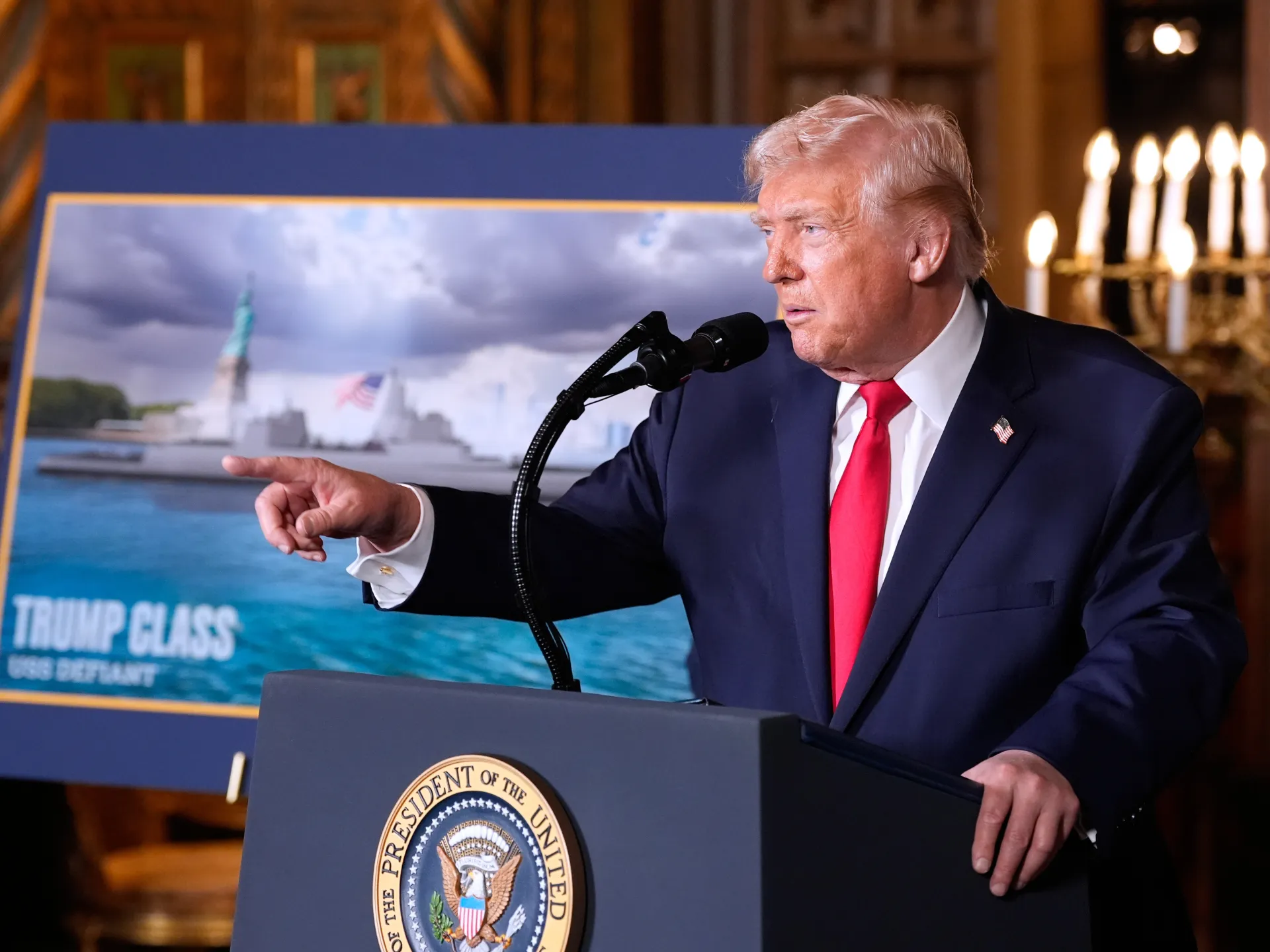
“Will the Trump White House have the stomach for that?”

Source link

Venezuelan President Nicolás Maduro denies drug trafficking

Jan. 2 (UPI) — Venezuelan President Nicolás Maduro said claims that his government engages in drug trafficking are lies, and he is willing to meet with President Donald Trump amid rising tensions.

Maduro on Thursday accused the Trump administration of knowingly making false claims of drug trafficking, including recent comments by Trump saying Venezuela’s alleged drug trafficking is akin to using weapons of mass destruction

“Since they cannot accuse me, since they cannot accuse Venezuela of having weapons of mass destruction, since they cannot accuse us of having nuclear rockets, of preparing a nuclear weapon, of having chemical weapons, they invented an accusation that the United States knows is as false as that accusation of weapons of mass destruction, which led them to an eternal war,” Maduro said while referencing the Iraq War.

The Venezuelan president offered to work with U.S. officials to oppose drug trafficking and repeated his prior offers to meet with Trump to discuss the U.S. military targeting alleged drug vessels, seizing oil tankers and blockading Venezuelan ports.

“The U.S. government knows, because we’ve told many of their spokespeople that, if they want to seriously discuss an agreement to combat drug trafficking, we’re ready,” he said in a taped interview on Venezuela’s state-owned channel teleSUR.

The Venezuelan president also suggested his country and the United States could work together to enable U.S. firms to invest in Venezuela’s oil industry “whenever they want it, wherever they want it and however they want it.”

Maduro refused to comment on a recently reported U.S. strike on an alleged drug-processing facility located among docks on Venezuela’s Caribbean coastline.

The CIA also has refused to comment on the strike, which Trump announced on Monday and said “knocked out” a drug facility on Saturday night.

The president in October announced he authorized the CIA to undertake operations in Venezuela but did not say what kind.

The Defense Department also sent a carrier strike group to the Caribbean to stop alleged drug-trafficking fast boats from transporting drugs intended for the United States and Europe and more recently to blockade Venezuelan ports amid seizures of sanctioned vessels.

The White House has said the strikes on the alleged drug boats are intended to stop South American drug cartels from sending drugs to the United States, which has some U.S. officials questioning the legality of such strikes.

The U.S. Southern Command announced two more boat strikes that killed five in international waters on New Year’s Eve.

The United States began striking the alleged drug boats in September and has sunk at least 36 and killed at least 115.

Most of the drug boat strikes, 23, have occurred in the eastern Pacific Ocean and away from Venezuela, while 11 others occurred in the Caribbean Sea, with another two in undisclosed locations.

The United States also has placed a $50 million bounty on Maduro and recently sanctioned some of his family members for their alleged roles in drug trafficking.

Trump also has accused Maduro of intentionally sending criminals and others to the United States during the Biden administration, including members of the Venezuela-based Tren de Aragua gang that he has designated as a foreign terrorist organization.

Source link

Maduro joins Iraq’s Saddam, Panama’s Noriega as latest leader taken by US | News

The reported capture of Venezuelan president evokes previous eras when other leaders were seized by the US.

President Donald Trump’s claim that the United States has captured his Venezuelan counterpart Nicolas Maduro and his wife amid “large scale” attacks on Venezuela, has stunned the world.

Venezuela’s Vice President Delcy Rodriguez says the government does not know the whereabouts of Maduro and his wife, Cilia Flores.

Recommended Stories

list of 4 itemsend of list

In an audio message broadcast on state television on Saturday, Rodriguez said the government was demanding proof that Maduro and Flores are still alive.

The rapidly escalating developments follow repeated deadly strikes by US forces in the Caribbean Sea and eastern Pacific Ocean on what Washington claims are drug-smuggling boats, and an attack on a docking area for alleged Venezuelan drug boats.

The reported capture of Maduro evokes previous eras when other leaders, such as Panama’s former military leader Manuel Noriega and former Iraqi President Saddam Hussein, were seized by the US.

Manuel Noriega

In another direct intervention into Latin America, the US invaded Panama in 1989 to depose military and de facto leader Manuel Noriega, citing the protection of US citizens in Panama, undemocratic practices, corruption and the illegal drug trade.

Before attacking Panama, the US indicted Noriega for drug smuggling in Miami in 1988, just as it has targeted Maduro.

Noriega forced Nicolas Ardito Barletta to resign in 1985, cancelled the elections in 1989 and backed anti-US sentiment in the country, before the operation took place.

The US foray into Panama was at the time the largest US combat operation since the Vietnam War. The US government trotted out various justifications for the operation, such as improving the lot of the Panamanians by hauling Noriega off to the US to face drug-trafficking charges.

When the general began to show signs of being less obliging to US regional designs, however, he was rendered persona non grata by Washington.

He was tried on the Miami indictment after being flown to the US and was imprisoned there until 2010, when he was extradited to France to face another trial. France then sent him back to Panama a year later.

Noriega died in prison in Panama in 2017, where he was serving a sentence for his crimes.

Saddam Hussein

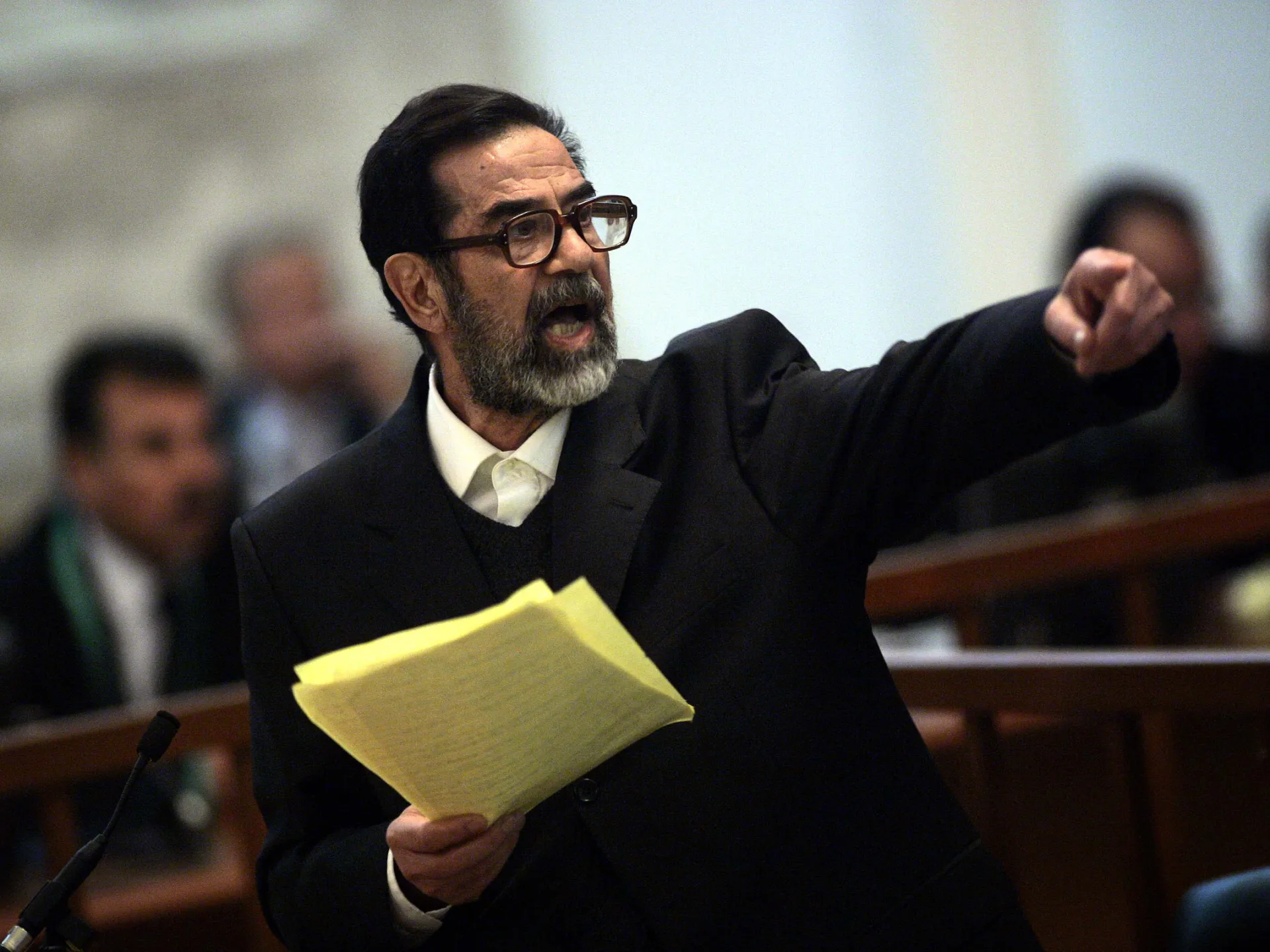
Iraqi President Saddam Hussein was captured by US forces on December 13, 2003, nine months after the US-led invasion and occupation of Iraq started based on false intelligence of Baghdad possessing weapons of mass destruction (WMD).

Like Noriega, Saddam had for years been a key Washington ally, in his case, during the years of the Iraq-Iran war in the 1980s that killed one million people.

The US also claimed in the build-up to the 2003 war, without basis, that Saddam supported armed groups like al-Qaeda.

However, no WMDs were ever found in the country.

Saddam was found hiding in a hole near his hometown of Tikrit.

He stood trial in an Iraqi court and received the death penalty, leading to his execution by hanging for crimes against humanity on December 30, 2006.

Juan Orlando Hernandez

The case of Honduras’s Hernandez demonstrates what some observers suggest is a hypocritical approach by the US.

Hernandez was captured in his home in Tegucigalpa in an operation by the US agents and Honduran forces in February 2022 – only days after he left his position as president of his country.

In April 2022, he was extradited to the US over his alleged involvement in corruption and the illegal drug trade, and in June of the same year, he was sentenced to 45 years in prison.

However, Hernandez was pardoned by US President Donald Trump on December 1, 2025.

Days later, Honduras’s top prosecutor issued an international arrest warrant for Hernandez, intensifying legal and political turmoil just days after the ex-leader walked free from a United States prison.

Source link

U.S. strikes Venezuela and says Maduro has been captured and flown out of the country

The United States hit Venezuela with a “large-scale strike” early Saturday and said its president, Nicolás Maduro, had been captured and flown out of the country after months of stepped-up pressure by Washington — an extraordinary nighttime operation announced by President Trump on social media hours after the attack.

Multiple explosions rang out and low-flying aircraft swept through Caracas, the capital, as Maduro’s government immediately accused the United States of attacking civilian and military installations. The Venezuelan government called it an “imperialist attack” and urged citizens to take to the streets.

It was not immediately clear who was running the country, and Maduro’s whereabouts were not immediately known. Trump announced the developments on Truth Social shortly after 4:30 a.m. ET. Under Venezuelan law the vice president, Delcy Rodríguez, would take power. There was no confirmation that had happened, though she did issue a statement after the strike.

“We do not know the whereabouts of President Nicolás Maduro and First Lady Cilia Flores,” Rodriguez said. “We demand proof of life.”

Maduro, Trump said, “has been, along with his wife, captured and flown out of the Country. This operation was done in conjunction with U.S. Law Enforcement. Details to follow.” He set a news conference for later Saturday morning.

The legal implications of the strike under U.S. law were not immediately clear. Sen. Mike Lee (R-Utah) posted on X that he had spoken with Secretary of State Marco Rubio, who briefed him on the strike. Rubio told Lee that Maduro “has been arrested by U.S. personnel to stand trial on criminal charges in the United States.”

The White House did not immediately respond to queries on where Maduro and his wife were being flown to. Maduro was indicted in March 2020 on “narco-terrorism” conspiracy charges in the Southern District of New York.

Maduro last appeared on state television Friday while meeting with a delegation of Chinese officials in Caracas.

The explosions in Caracas, Venezuela’s capital, early on the third day of 2026 — at least seven blasts — sent people rushing into the streets, while others took to social media to report hearing and seeing the explosions. It was not immediately clear if there were casualties on either side. The attack itself lasted less than 30 minutes and it was unclear if more actions lay ahead, though Trump said in his post that the strikes were carried out “successfully.”

The Federal Aviation Administration issued a ban on U.S. commercial flights in Venezuelan airspace because of “ongoing military activity” ahead of the explosions.

The strike came after the Trump administration spent months escalating pressure on Maduro. The CIA was behind a drone strike last week at a docking area believed to have been used by Venezuelan drug cartels — the first known direct operation on Venezuelan soil since the U.S. began strikes in September.

For months, Trump had threatened that he could soon order strikes on targets on Venezuelan land following months of attacks on boats accused of carrying drugs. Maduro has decried the U.S. military operations as a thinly veiled effort to oust him from power.

Some streets in Caracas fill up

Armed individuals and uniformed members of a civilian militia took to the streets of a Caracas neighborhood long considered a stronghold of the ruling party. But in other areas of the city, the streets remained empty hours after the attack. Parts of the city remained without power, but vehicles moved freely.

Video obtained from Caracas and an unidentified coastal city showed tracers and smoke clouding the landscape sky as repeated muted explosions illuminated the night sky. Other footage showed an urban landscape with cars passing on a highway as blasts illuminated the hills behind them. Unintelligible conversation could be heard in the background. The videos were verified by The Associated Press.

Smoke could be seen rising from the hangar of a military base in Caracas, while another military installation in the capital was without power.

“The whole ground shook. This is horrible. We heard explosions and planes,” said Carmen Hidalgo, a 21-year-old office worker, her voice trembling. She was walking briskly with two relatives, returning from a birthday party. “We felt like the air was hitting us.”

Venezuela’s government responded to the attack with a call to action. “People to the streets!” it said in a statement. “The Bolivarian Government calls on all social and political forces in the country to activate mobilization plans and repudiate this imperialist attack.”

The statement added that Maduro had “ordered all national defense plans to be implemented” and declared “a state of external disturbance.” That state of emergency gives him the power to suspend people’s rights and expand the role of the armed forces.

The website of the U.S. Embassy in Venezuela, a post that has been closed since 2019, issued a warning to American citizens in the country, saying it was “aware of reports of explosions in and around Caracas.”

“U.S. citizens in Venezuela should shelter in place,” the warning said.

Reaction emerges slowly

Inquiries to the Pentagon and U.S. Southern Command since Trump’s social media post went unanswered. The FAA warned all commercial and private U.S. pilots that the airspace over Venezuela and the small island nation of Curacao, just off the coast of the country to the north, was off limits “due to safety-of-flight risks associated with ongoing military activity.”

U.S. Sen. Mike Lee, R-Utah, posted his potential concerns, reflecting a view from the right flank in the Congress. “I look forward to learning what, if anything, might constitutionally justify this action in the absence of a declaration of war or authorization for the use of military force,” Lee said on X.

It was not clear if the U.S. Congress had been officially notified of the strikes.

The Armed Services committees in both houses of Congress, which have jurisdiction over military matters, have not been notified by the administration of any actions, according to a person familiar with the matter and granted anonymity to discuss it.

Lawmakers from both political parties in Congress have raised deep reservations and flat out objections to the U.S. attacks on boats suspected of drug smuggling on boats near the Venezuelan coast and the Congress has not specifically approved an authorization for the use of military force for such operations in the region.

Regional reaction was not immediately forthcoming in the early hours of Saturday. Cuba, however, a supporter of the Maduro government and a longtime adversary of the United States, called for the international community to respond to what president Miguel Díaz-Canel Bermúdez called “the criminal attack.” “Our zone of peace is being brutally assaulted,” he said on X. Iran’s Foreign Ministry also condemned the strikes.

President Javier Milei of Argentina praised the claim by his close ally, Trump, that Maduro had been captured with a political slogan he often deploys to celebrate right-wing advances: “Long live freedom, dammit!”

The U.S. military has been attacking boats in the Caribbean Sea and the eastern Pacific Ocean since early September. As of Friday, the number of known boat strikes is 35 and the number of people killed is at least 115, according to numbers announced by the Trump administration.

They followed a major buildup of American forces in the waters off South America, including the arrival in November of the nation’s most advanced aircraft carrier, which added thousands more troops to what was already the largest military presence in the region in generations.

Trump has justified the boat strikes as a necessary escalation to stem the flow of drugs into the U.S. and asserted that the U.S. is engaged in an “armed conflict” with drug cartels.

Cano and Toropin write for the Associated Press. Toropin and AP journalist Lisa Mascaro reported from Washington.

Source link

[BREAKING] US Claims Maduro Captured During Military Operation Against Venezuela

Caracas, January 3, 2026 (venezuelanalysis.com) – US President Donald Trump has claimed that US Special Forces have captured Venezuelan President Nicolás Maduro during a miltary operation against Venezuela in the early hours of Saturday.

In a social media message, Trump stated that the US had “successfully carried out a large scale strike against Venezuela” and that Maduro and first lady Cilia Flores had been “captured and flown out of the country.”

Venezuelan Vice President Delcy Rodríguez confirmed that Maduro and Flores’ whereabouts are unknown and demanded that the Trump administration provide proof of life.

US attacks began around 2 am local time, with loud explosions felt in the capital and nearby states.

Multiple military sites, including Fuerte Tiuna in Caracas, were reportedly bombed. Social media users reported low flying aircraft and active air defenses. The port in La Guaira was likewise among infrastructures hit.

Videos on social media also showed helicopters flying over the Venezuelan capital, with military analysts claiming that US Special Forces were deployed.

In a statement published on state outlets, the Venezuelan government accused the United States of carrying out a military attack against Venezuelan territory, describing it as a violation of the UN Charter and a threat to regional peace.

Authorities announced the activation of national defense plans, the deployment of the armed forces, and the declaration of a state of “External Commotion” nationwide. The Maduro government also called for popular mobilization and said it would raise formal complaints before international bodies, including the United Nations.

Venezuelan Defense Minister Vladimir Padrino Lopez issued a statement confirming US bombings in Caracas and surrounding areas.

Padrino reported that Venezuelan authorities are assessing damages and casualties from the attacks, claiming that US helicopters fired missiles on residential areas. The armed forces chief urged the international community to condemn Washington’s “criminal aggression.”

The Trump administration has escalated regime-change threats against Caracas im recent months and vowed to strike land targets.

[Story in development]

Source link

Maduro says Venezuela open to talks with US, remains mum on dock attack | Politics News

Venezuela leader strikes conciliatory tone while renewing claim US wants to topple government to access vast oil reserves.

Venezuela is open to negotiating a deal with the United States to combat drug trafficking, President Nicolas Maduro has said, even as he remained silent on a reported CIA-led strike on his country last week.

The latest statement, made during an interview that aired on Thursday, comes as Maduro has struck a more conciliatory tone towards the US amid Washington’s months-long sanctions and military pressure campaign.

Recommended Stories

list of 3 itemsend of list

That included, on Thursday, the release of more than 80 prisoners accused of protesting his disputed victory in the 2024 election, the second such release in recent days.

“Wherever they want and whenever they want,” Maduro told Spanish journalist Ignacio Ramonet of the idea of dialogue with the US on drug trafficking, oil and migration in an interview on state TV.

He stressed that it is time for both nations to “start talking seriously, with data in hand”.

“The US government knows, because we’ve told many of their spokespeople, that if they want to seriously discuss an agreement to combat drug trafficking, we’re ready,” he said.
Still, Maduro renewed his allegations that the US is trying to topple his government and gain access to Venezuela’s vast oil reserves through Washington’s months-long sanctions and military pressure campaign.

“If they want oil, Venezuela is ready for US investment, like with Chevron,” he added, referring to the US oil giant, which is the only major oil company exporting Venezuelan crude to the US.

Asked point-blank by Ramonet if he confirmed or denied a US attack on Venezuelan soil, Maduro said: “This could be something we talk about in a few days.”

To date, Maduro has not confirmed a US land attack on a docking facility that allegedly targeted drug boats.

For months, the US has launched numerous strikes on alleged drug smuggling boats originating from Venezuela, in what rights groups have decried as extrajudicial killings. The Trump administration has also imposed a blockade on sanctioned oil tankers entering and exiting Venezuela’s coast.

Tensions further escalated after Trump revealed earlier this week a strike on a docking area for alleged Venezuelan drug boats, in the first known attack on Venezuelan territory of the US campaign.

Trump has not confirmed widespread reports in US media that the attack was a CIA operation or where it occurred, saying only it was “along the shore”.

“There was a major explosion in the dock area where they load the boats up with drugs,” he told reporters at his Mar-a-Lago resort in Florida.

“So we hit all the boats and now we hit the area, it’s the implementation area, that’s where they implement. And that is no longer around.”

The US president has repeatedly threatened ground strikes on drug cartels in the region, which he has labelled “narcoterrorists”. He has claimed, without providing evidence, that Maduro leads a trafficking organisation that aims to destabilise the US by flooding it with drugs.

However, regional experts have noted that Venezuela is not known to be involved in the illicit fentanyl trade, which far and away accounts for the highest number of overdose deaths in the US. Trump has labelled the drug a “weapon of mass destruction”.

Maduro has said the Trump administration’s approach makes it “clear” that the US “seek to impose themselves” on Venezuela through “threats, intimidation and force”.

Maduro’s interview was taped on New Year’s Eve, the same day the US military struck five alleged drug-smuggling boats, killing at least five people.

The latest attacks bring the total number of known boat strikes in the Caribbean and eastern Pacific to 35 and the number of people killed to at least 115, according to numbers announced by the Trump administration.

Venezuelans and Colombians have been among the victims.

Source link

Venezuela frees dozens detained during protests against Maduro | Human Rights News

Families celebrate Christmas releases while calling for full freedom of detainees.

Authorities in Venezuela have released at least 60 people arrested during protests against President Nicolas Maduro’s re-election, according to a human rights advocacy group, though campaigners say hundreds remain behind bars.

The releases began early on Thursday, over Christmas, according to the Committee for the Freedom of Political Prisoners, a group of rights activists and relatives of detainees arrested during unrest that followed July’s presidential election.

Recommended Stories

list of 3 itemsend of list

“We celebrate the release of more than 60 Venezuelans, who should never have been arbitrarily detained,” committee head Andreina Baduel told the AFP news agency.

“Although they are not entirely free, we will continue working for their full freedom and that of all political prisoners.”

Maduro secured a third term in office in the July 2024 vote, a result rejected by parts of the opposition amid allegations of fraud. The disputed outcome triggered weeks of demonstrations, during which authorities arrested about 2,400 people. Nearly 2,000 have since been released, according to rights groups.

Despite the latest releases, Venezuela still holds at least 902 political prisoners, according to Foro Penal, an NGO that monitors detentions.

Relatives said many of those freed had been held at Tocoron prison, a maximum-security facility in Aragua state, roughly 134km (83 miles) from the capital Caracas. Officials have not publicly clarified the conditions under which detainees were released.

“We must remember that there are more than 1,000 families with political prisoners,” Baduel said. Her father, Raul Isaias Baduel, a former defence minister and once an ally of the late president, Hugo Chavez, died in custody in 2021.

Source link

Video: Maduro rejects Trump’s warning against ‘acting tough’ | Nicolas Maduro

NewsFeed

US President Donald Trump warned Nicolas Maduro to ‘not play tough’ and to step down on Monday, while the Venezuelan leader said Trump should focus on the issues in his own country. Trump told reporters the US will keep 1.9 million barrels of oil that were seized near Venezuela in December.

Source link

Trump warns Maduro not to ‘play tough’ as China, Russia back Venezuela | Donald Trump News

United States President Donald Trump has issued a new warning to Nicolas Maduro, saying “it would be smart” for the Venezuelan leader to leave power, as Washington escalates a pressure campaign against Caracas.

The warning on Monday came as Russia pledged “full support” for Maduro’s government, and China condemned the US’s seizure of two oil tankers off the coast of Venezuela.

Recommended Stories

list of 4 itemsend of list

Trump, speaking at his Mar-a-Lago resort in Florida alongside his top national security aides, Secretary of State Marco Rubio and Secretary of Defense Pete Hegseth, suggested that he remains ready to further escalate his four-month pressure campaign.

When asked if the ⁠goal was to force Maduro from power, Trump told reporters: “Well, I think it probably would… That’s up to him what he wants to do. I think it’d be smart for him to do that. But again, we’re gonna find out.”

“If he wants to do something, if he plays tough, it’ll be the ​last time he’s ever able to play ‌tough,” he added.

Trump levied his latest threat as the US coastguard continued for a second day to chase a third oil tanker that it described as part of a “dark fleet” that Venezuela uses to evade US sanctions.

“It’s moving along, and we’ll end up getting it,” Trump said.

The US president also promised to keep the ships and the nearly 4 million barrels of Venezuelan oil the coastguard has seized so far.

“Maybe we’ll sell it. Maybe we’ll keep it. Maybe we will use it in the strategic reserves,” he said. “We’re keeping it. We’re keeping the ships also.”
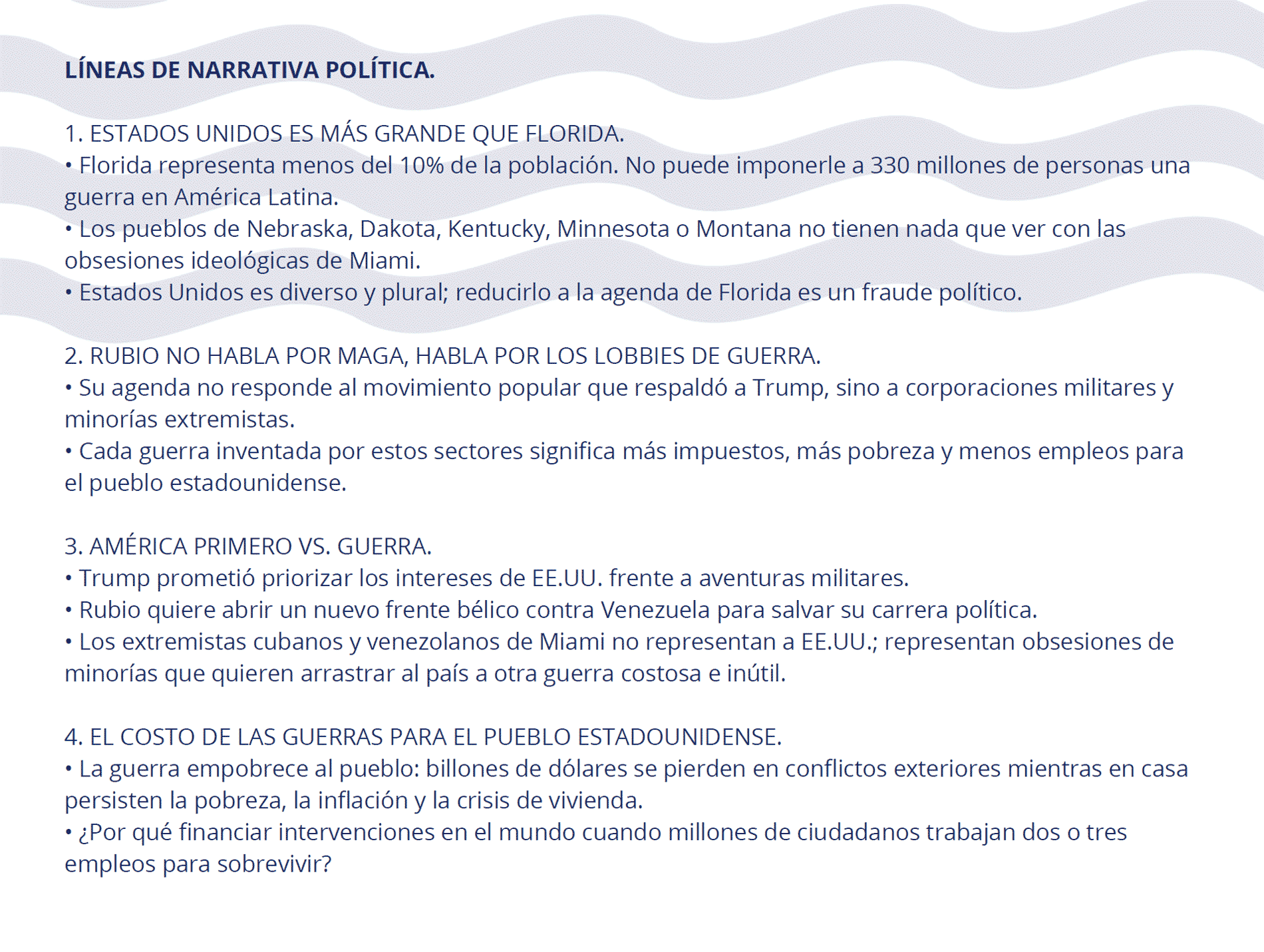
Maduro fires back

Trump’s campaign against Venezuela’s vital oil sector comes amid a large US military buildup in the region with a stated mission of combating drug trafficking, as well as more than two dozen strikes on alleged drug trafficking vessels in the Pacific Ocean and Caribbean Sea near the South American nation.

Critics have questioned the legality of the attacks, which have killed more than 100 people.

Venezuela denies any involvement in drug trafficking and insists that Washington is seeking to overthrow Maduro to seize the country’s oil reserves, which are the world’s largest.

It has condemned the US’s vessel seizures as acts of “international piracy”.

Maduro fired back at Trump hours after the latest warning, saying the US president would be “better off” if he focused on his own country’s problems rather than threatening Caracas.

“He would be better off in his own country on economic and social issues, and he would be better off in the world if he took care of his country’s affairs,” Maduro said in a speech broadcast on public television.

The exchange of words came on the eve of a United Nations Security Council meeting on Tuesday to discuss the growing crisis.

Russia’s Minister of Foreign Affairs Sergey Lavrov, in a phone call with his Venezuelan counterpart, Yvan Gil, slammed the US’s actions and expressed support for Caracas.

“The ministers expressed their deep concern over the escalation of Washington’s actions in the Caribbean Sea, which could have serious consequences for the region and threaten international shipping,” the Russian Ministry of Foreign Affairs said in a statement.

“The Russian side reaffirmed its full support for and solidarity with the Venezuelan leadership and people in the current context,” it added.

US blockade

China also condemned the US’s latest moves as a “serious violation of international law”.

“China opposes any actions that violate the purposes and principles of the United Nations Charter and infringe upon the sovereignty and security of other countries,” said Lin Jian, a spokesperson for the Chinese Foreign Ministry.

“Venezuela has the right to develop independently and engage in a mutually beneficial cooperation with other nations. China understands and supports Venezuela’s stance in safeguarding its legitimate rights and interests,” he added.

Last week, Rubio brushed aside Moscow’s stated support for Caracas.

Washington, he said, was “not concerned about an escalation with Russia with regards to Venezuela” as “they have their hands full in Ukraine”.

US-Russia relations have soured in recent weeks as Trump has voiced frustration with Moscow over the lack of a resolution on the war in Ukraine

Gil, on Monday, also read a letter on state television, signed by Maduro and addressed to UN member nations, warning that the US blockade “will affect the supply of oil and energy” globally.

“Venezuela reaffirms its vocation for peace, but also declares with absolute clarity that it is prepared to defend its sovereignty, its territorial integrity and its resources in accordance with international law,” he said.
“However, we responsibly warn that these aggressions will not only impact Venezuela. The blockade and piracy against Venezuelan energy trade will affect oil and energy supply, increase instability in international markets, and hit the economies of Latin America, the Caribbean, and the world, especially in the most vulnerable countries.”

Source link

Useful Voices: How Maduro Exploits the US Debate on Venezuela

On September 1, at an international press conference convened in response to threats from the U.S. government, Nicolás Maduro declared: “The Miami mafia has seized political power in the White House and the State Department; they have imposed their extremist Miami-centric vision and have ‘Miamisized’ U.S. foreign policy toward all of Latin America and the Caribbean; because threatening Venezuela is threatening the entire continent.”

This statement fits with a script distributed through Siscom, the messaging system used by Venezuela’s Ministry for Communication and Information to send orders to media and digital activists. “The U.S. warmongering maneuver is driven by extremist sectors in South Florida, representing less than 10% of the U.S. population, who seek to impose their agenda on the entire country, ignoring the majorities who oppose wars and want the government to focus on internal problems,” reads a paragraph from the document. 

La Hora de Venezuela obtained several of these scripts, distributed between March and September 2025 to 40,000 users participating in more than 600 Siscom groups. The main messages: the entire nation is enlisting as if it were Vietnam, while at the same time there is an atmosphere of calm and normalcy. But the scripts also aim to influence public discourse in the United States, by contrasting the “Miami lobby” with America First and MAGA, framing a military escalation against Venezuela as a useless cost in the face of its internal problems.

The propaganda apparatus takes phrases from U.S. politicians, analysts, and media outlets and amplifies to validate its propaganda and disinformation narratives. 

On December 3, 2025, Democratic Representative Jim McGovern announced that he would introduce a resolution to force a vote in Congress against the Trump administration’s “crazy escalations” against Venezuela. “No one, except the president and his billionaire allies, wants this war,” McGovern stated

A few hours later, Madelein García, a journalist for Telesur—the international propaganda channel dependent on the Venezuelan Ministry for Communication and Information—quoted and translated McGovern’s post. It wasn’t necessary for journalists, media outlets, or communicators allied to his government to claim that Washington was divided: it was enough to amplify the message of a congressman speaking from within the U.S. political system, while avoiding the sound of propaganda.

In general, McGovern’s statement echoed talking points included in an operational manual formatted as a slide presentation that had been circulated months earlier through Siscom, on August 29, by Johannyl Rodríguez, Venezuela’s vice minister of Communication and Information. Page 7 of that script includes, for example, phrases such as “Rubio does not speak for MAGA; he speaks for the war lobbies” and “His agenda does not respond to the popular movement that backed Trump, but rather to military corporations and extremist minorities.”

García’s quote of McGovern served as external validation for narratives that the Maduro administration is trying to position. There was no need for sympathetic journalists, outlets, or communicators to talk about divisions in Washington over Venezuela: amplifying a Democratic lawmaker from within the U.S. political system was enough to make the framing sound less like official propaganda.

Days earlier, on November 29, 2025, Democratic Senator Chuck Schumer had also questioned the policy toward Venezuela, arguing that it didn’t align with the “America First” principle, alluding to the unnecessary expenditure of resources and internal priorities. 

Schumer’s argument also resonated with ideas already laid out in the August 29 presentation: the split between America First and war, and the cost of escalation for ordinary citizens. Among the lines in the script sent by the Maduro Ministry of Communication official includes lines such as: “Trump promised to prioritize U.S. interests over military adventures,” “War impoverishes the people: trillions of dollars are lost in foreign conflicts while poverty, inflation, and the housing crisis persist at home,” and “Why fund interventions around the world when millions of citizens work two or three jobs just to survive?”

Venezuela News, an “unofficial” mouthpiece for pro-Maduro propaganda—and a frequent amplifier of disinformation—reported Schumer’s statements as further proof that figures in the Democratic leadership are questioning the coherence and legitimacy of an escalation against Venezuela. 

On September 2, Juan González—former director for the Western Hemisphere at the Council of National Security during the Biden administration—questioned the logic of the military deployment in the Caribbean: “So the U.S. government is using false information to justify a terrorist designation and then spending at least $7 million a day to have a carrier strike group kill 11 traffickers…?” Days later, the Venezuelan News Agency (AVN) turned it into a headline (“Former Biden advisor denounces false information and million-dollar waste”). González’s comment was also reported by Venezuela News and Globovisión.

Once again, the framing was perfect for amplifying the script’s narratives, without the need to manufacture the message through Maduro’s propaganda apparatus.

Creating discord between Maga and Rubio

Alongside narratives about America First and the unnecessary use of U.S. public resources, the scripts distributed by Siscom also lay out another divisive line: portraying U.S. policy toward Venezuela as the result of an internal fracture, in which a minority—associated with Secretary of State Marco Rubio and several Florida Cuban politicians—drags the country into an escalation unwanted by the rest of the population.

These guidelines aim to intervene in the U.S. public conversation from within, seeking to sow discord by amplifying pre-existing tensions between the MAGA (Make America Great Again) movement and parts of Washington’s political apparatus.

The same script sent by Siscom on August 29, for example, defines staging guidelines for content that includes “short, direct material that connects with the MAGA audience.” Another section features “impact phrases” such as “Rubio does not speak for MAGA; he speaks for the war lobbies,” “Trump defends America First; Rubio puts his interests first,” or “Florida cannot impose a war in Latin America on the rest of the United States.”

Extra News Mundo, another “unofficial” source of Venezuelan propaganda, and “Unleash Dracarys,” (pseudonym used by Dayra Rivas, Director of Digital Media at Information Ministry), published a video to multiply the reaction of right wing activist Laura Loomer -who opposes military action in Venezuela- against an interview to Cuban American congresswoman María Elvira Salazar, a supporter of Machado. The video reiterates the “MAGA vs. Florida” trope recommended in the Siscom script: Cuban politicians in Florida are trying to impose a war on Trump.

Everyone is happy

Regarding the story line of “everything is fine in Venezuela and nobody is afraid of Trump,” the Maduro propaganda took advantage of a December 4 photo essay in The New York Times, which opens with a video of a group of Caracas residents dancing salsa in a nightclub and showcases scenes of concerts, baseball games, and Christmas celebrations in a country seemingly at peace. At the same time, the piece warns that the surveillance by security forces has stifled open expression of dissent and concludes with a question: whether this tranquility can truly be believed.
A summarized version of the article, published on The New York Times’ Instagram account, received over a thousand comments, at least half of which were negative or dismissive. The carousel opened with the same video of Venezuelans dancing salsa, but the final point of the report—the question of whether this calm is real—was relegated to the background. Its celebratory tone resonated with several pieces of reassuring propaganda that began appearing more frequently. 

Since mid-November, at least five videos of Venezuelans dancing and celebrating were shared through Nicolás Maduro’s official Telegram channel. In one of them, Maduro was seen dancing and calling for a party every day of the week. All of this content was massively and coordinatedly amplified by state media and digital activist networks, in line with the Street, Networks, Media, Walls, and Word of Mouth Method signed by Maduro, that broadly defines the government’s information operation.

That same approach also appears laid out as an operational line in another playbook circulated through Siscom. In a presentation sent on August 26, ahead of the launch of the #YoMeAlisto campaign, it explains: “Psychological warfare is defeated with images of peace, discipline, and normality,” and “Our response is to show that the country does not grind to a halt, that it continues producing, working, and moving forward.”

Even more explicit was the exploitation of another New York Times article, published on November 26, 2025, which compiled criticisms from former diplomats, experts, and opposition figures regarding statements attributed to María Corina Machado. The article warns that, amid the Trump administration’s military deployment in the Caribbean, some voices fear that false claims are being exaggerated or disseminated to justify intervention, and mentions “debunked claims” on issues of drug trafficking and security.

The report also echoed propaganda lines included in government scripts that present the “war on drugs” as a pretext for continuing the escalation and militarization of the Caribbean. In the script sent on August 29, for example, one line appears particularly clear: “The Cartel of the Suns is a media fabrication to justify aggression,” along with others that maintain that the U.S. uses this framework to promote regime change and expand its presence in the region.

Screenshots of that New York Times article were quickly seized upon by a network of propaganda video creators. The campaign attempted to reinforce a line already present in Siscom documents: to discredit María Corina Machado, presenting her as a source of disinformation that is pushing the United States toward intervention. An opportune corollary to the more than 80 hoaxes and disinformation incidents directed against Machado from Maduro’s communications apparatus in 2024 and 2025. 

Journalism in Venezuela operates in a hostile environment for the press, with dozens of legal instruments designed to punish speech, such as the laws “against hate,” “against fascism,” and “against the blockade.” This content was produced by journalists who are in Venezuela and is being published with full awareness of the threats and constraints that, as a result, have been imposed on the dissemination of information from within the country.

Source link

Uruguay’s FM on US claims to police Latin America and rising tensions | Nicolas Maduro

Mario Lubetkin on Washington’s revived sphere-of-influence doctrine, Venezuela, and China’s growing footprint.

The United States is reviving a policy first set out in the 1800s that treats Latin America as its strategic sphere of influence. As Washington expands maritime operations in the Caribbean and eastern Pacific, critics warn of legal violations and rising regional instability.

Uruguay’s Foreign Minister Mario Lubetkin joins Talk to Al Jazeera to discuss US strikes, Venezuela, migration pressures, and China’s growing role in the region — and whether diplomacy can still prevent escalation in a hemisphere shaped once again by power politics.

Source link