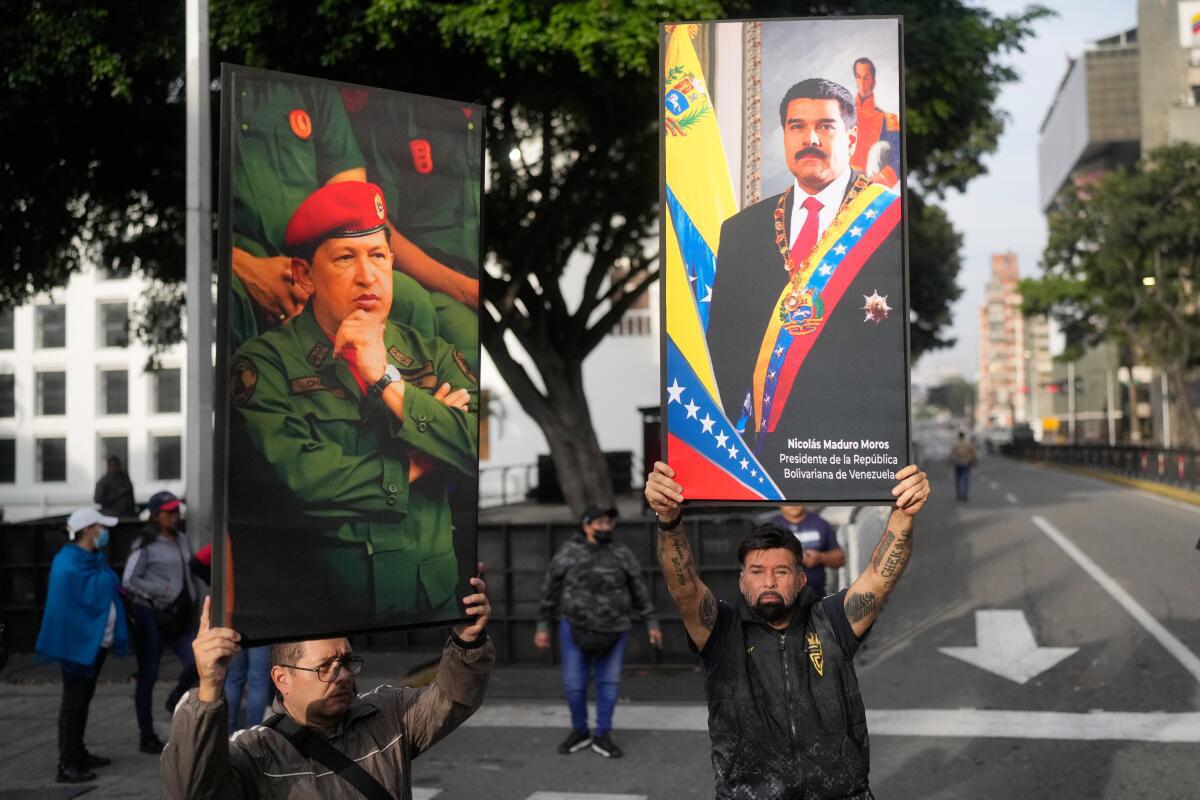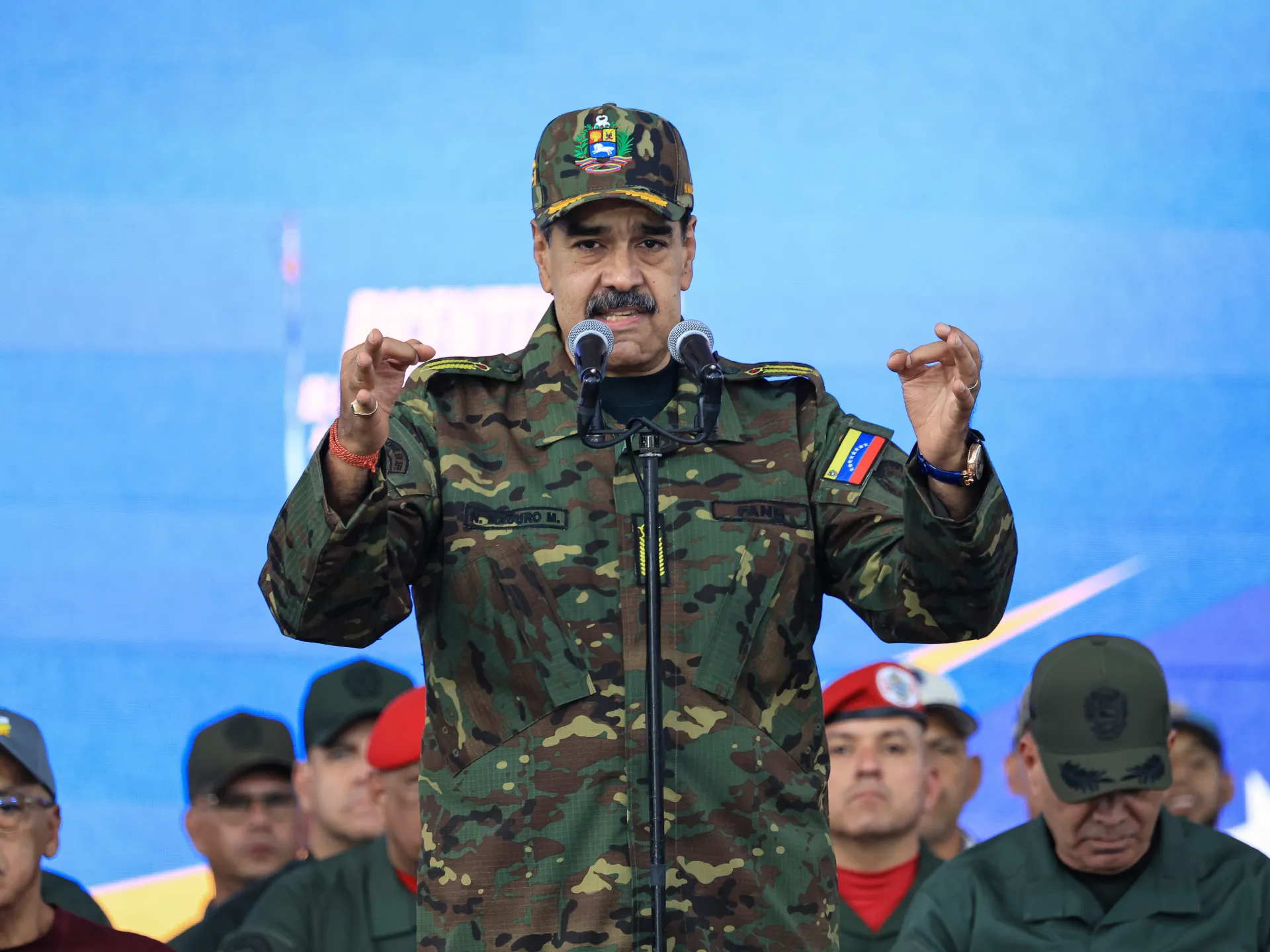
Maduro

Maduro to appear in New York court: What to expect | Courts News

Venezuelan President Nicolas Maduro is to appear in a New York court on Monday, two days after he was abducted by US special forces in a military operation in Caracas.

The US military arrested Maduro and his wife, Cilia Flores, on Saturday and brought them to New York, where they face multiple federal charges, including drugs and weapons charges.

Recommended Stories

list of 4 itemsend of list

Here is more about Maduro’s scheduled court appearance:

When and where will it take place?

Maduro is to appear before a federal judge at noon (17:00 GMT).

The appearance is scheduled to happen in the Daniel Patrick Moynihan United States Courthouse in the Southern District of New York. Maduro is to appear before US District Judge Alvin Hellerstein.

A court spokesperson told NBC News that Flores, who is also listed as a defendant in a US indictment unsealed on Saturday, will appear in court on Monday as well.

What are the charges?

According to the indictment, the US accuses Maduro of being at the forefront of corruption to “use his illegally obtained authority” to “transport thousands of tons of cocaine” to the US with his coconspirators.

Additionally, the indictment alleges that Maduro has “tarnished” every public office he has held. It adds that Maduro “allows cocaine-fueled corruption to flourish for his own benefit, for the benefit of members of his ruling regime, and for the benefit of his family members”.

Maduro faces four counts:

  • Count 1, narcoterrorism conspiracy: US prosecutors say Maduro and his coconspirators knowingly provided something of financial value to US-designated “foreign terrorist organizations” and their members. The indictment lists these organisations as the Revolutionary Armed Forces of Colombia (FARC), a leftist rebel group that signed a peace deal in 2016 but has dissidents who refused to lay down their arms and are still involved in the drug trade; Segunda Marquetalia, the largest dissident FARC group; National Liberation Army, another leftist Colombian rebel group; Mexico’s Sinaloa Cartel; Los Zetas/Cartel del Noreste, another Mexican drug cartel; and Tren de Aragua, a Venezuelan gang.
  • Count 2, cocaine importation conspiracy: It accuses Maduro and his codefendants of conspiring to manufacture, distribute and import cocaine into the US.
  • Count 3, possession of machineguns and destructive devices: The indictment accuses the defendants of possessing, carrying and using machineguns in relation to the above drug‑trafficking counts.
  • Count 4, conspiracy to possess machineguns and destructive devices: It further accuses the defendants of conspiring to use, carry and possess those weapons in furtherance of drug trafficking.

The indictment also says Maduro and his codefendants should forfeit to the US government any proceeds and assets obtained from the alleged crimes.

Is there evidence for these charges?

There is little evidence that drugs are trafficked from Venezuela on a large scale. The 2023 United Nations Office on Drugs and Crime World Drug Report said global cocaine production hit a record of 3,708 tonnes, up nearly one‑third from 2022, with most coca cultivation taking place in Colombia, followed by Peru and Bolivia.

Trafficking routes into the US in 2023-2024 primarily passed through Colombia, Peru and Ecuador, not Venezuela, although it does serve as a minor transit corridor for Colombian cocaine moving into the eastern Caribbean.

Who is named in the indictment?

Maduro

Maduro, 63, who became Venezuela’s president in 2013, was declared the winner of 2024’s election. His re-election was rejected as fraudulent by the US and independent observers, such as the Carter Center. A UN expert panel said the 2024 vote failed to meet international standards.

Nine Latin American countries called for a review of the results with independent oversight.

Maduro defended the election results and accused his opponents of undermining the country’s sovereignty.

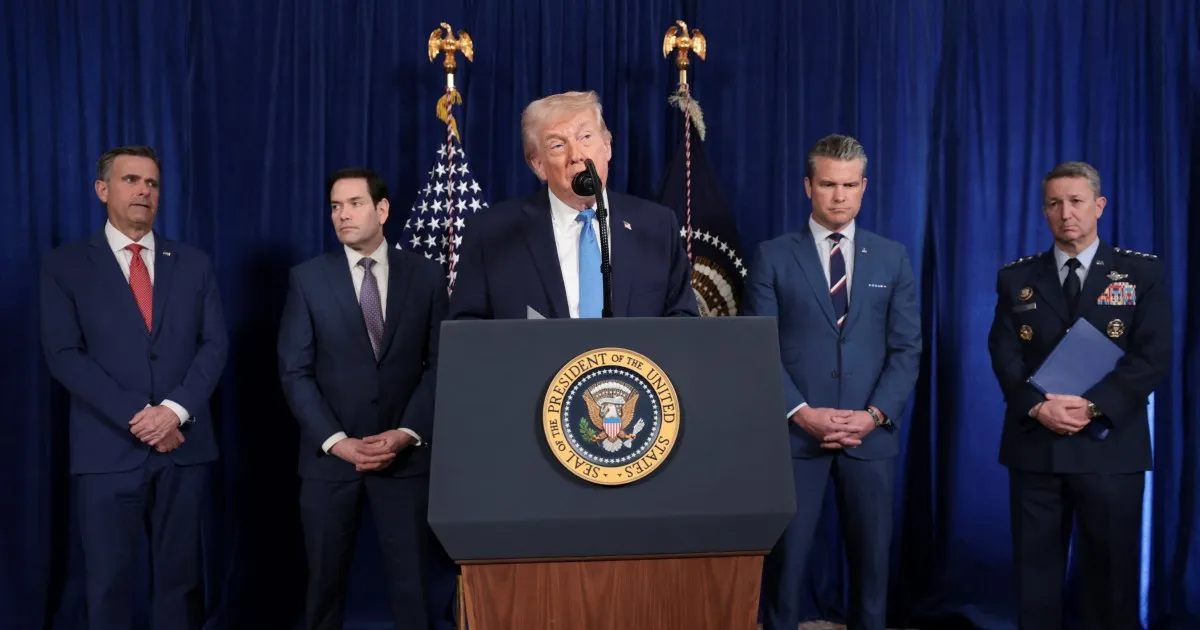
Since returning to the White House nearly a year ago, US President Donald Trump has expanded sanctions and punitive measures against Maduro and senior officials in his government.

The Trump administration ramped up military pressure starting in August when it deployed warships and thousand of its service members in the Caribbean near Venezuela. It has since carried out dozens of air strikes on alleged Venezuelan drug boats, killing more than 100 people.

Maduro has pushed back by mobilising Venezuelan military personnel.

During this time, the Caracas-based news network Globovision quoted Maduro as saying: “From the north, the empire has gone mad and, like a rotten rehash, has renewed its threats to the peace and stability of Venezuela.”

But a day before Saturday’s US attack on the country, Maduro had offered to hold talks to combat drug trafficking.

Flores

Flores, 69, has been married to Maduro since 2013.

Known as the “first combatant” rather than first lady, Flores is a veteran lawyer and politician who rose to prominence by defending future President Hugo Chavez after his failed 1992 coup. She helped secure his release and later became a key Chavismo figure and the first woman to preside over Venezuela’s National Assembly. Chavismo, which promotes socialism and anti-imperialist politics, is the political movement started by Chavez, Maduro’s mentor.

The indictment accuses Flores of joining Maduro’s cocaine importation conspiracy.

Other defendants

The indictment names four other people as Maduro’s coconspirators, namely Diosdado Cabello, Venezuela’s interior minister; Ramon Rodriguez Chacin, former Venezuelan interior minister; Nicolas Maduro Guerra, Maduro’s son and a Venezuelan politician; and Hector Rusthenford Guerrero Flores, the leader of Tren de Aragua, which was designated as a “foreign terrorist organization” by the US in February. But most experts do not define Tren de Aragua as a “terrorist organisation”.

It is not clear yet who will represent Maduro, Flores and the other defendants.

Who is the judge?

Hellerstein was born in 1933 in New York. He was appointed to the federal bench in 1998 by former President Bill Clinton.

He is likely on Monday to advise Maduro and Flores about their rights and ask them if they want to enter a plea.

What’s at stake?

Maduro’s freedom is primarily at stake. If convicted, he could face 30 years to life in prison.

“This is less about Maduro as it is about access to Venezuela’s oil deposits,” Ilias Bantekas, a professor of transnational law at Hamad Bin Khalifa University in Qatar, told Al Jazeera. “This is the number one target. Trump is not content with just allowing US oil firms to get concessions but to ‘run’ the country, which entails absolute and indefinite control over Venezuela’s resources.”

Venezuela’s oil reserves are concentrated primarily in the Orinoco Belt, a region in the eastern part of the country stretching across roughly 55,000sq km (21,235sq miles).

While the country is home to the world’s largest proven oil reserves – at an estimated 303 billion barrels as of 2023 – it earns only a fraction of the revenue it once did from exporting crude due to mismanagement and US sanctions.

Last month, Trump accused Venezuela in a post on his Truth Social platform of “stealing” US oil, land and other assets and using that oil to fund crime, “terrorism” and human trafficking.

Trump repeated his false claims after Maduro’s arrest. During a news conference on Saturday, Trump said the US would “run” Venezuela until a “safe, proper and judicious transition” could be carried out.

“Given the opposition of all South American states, save for Argentina, to US dominance in the region, Trump’s plan requires a vast military deployment. We need to see how countries like Brazil and Colombia react to this, including also BRICS,” said Bantekas from Hamad Bin Khalifa University.

In a joint statement released on Sunday, the governments of Spain, Brazil, Chile, Colombia, Mexico and Uruguay said the US actions in Venezuela “constitute an extremely dangerous precedent for peace and regional security and endanger the civilian population”.

“If there was an armed conflict between Venezuela and the USA and, given that Maduro is the head of his country’s armed forces, then he would be a legitimate target,” Bantekas said.

“However, under the circumstances there is no armed conflict between the two countries and in the absence of an armed attack by Venezuela against the US, the latter’s invasion in Venezuela violates article 2(4) of the UN Charter, as does the abduction of the country’s President. It is a blatant act of aggression.”

Article 2(4) of the UN Charter bars UN members from the threat or use of force against the territorial integrity or political independence of any state.

A United Nations Security Council meeting on Monday will determine the legality of the US abduction of Maduro.

“Given that Maduro is already in US custody and in the USA, it is in the interests of all parties that he appear before a court. At the very least, Maduro can challenge the legality of his arrest and the jurisdiction of the court,” Bantekas said.

“The court itself has an obligation to decide if it has jurisdiction and as a preliminary issue decide whether Maduro enjoys immunity from criminal prosecution. If these issues are dispensed the court nonetheless finds that it has jurisdiction and that Maduro does not enjoy immunity, then the prosecutor must prove its case.”

What’s next?

The Trump administration has not explicitly stated a clear plan for Venezuela, with analysts saying the administration has sent out confusing signals.

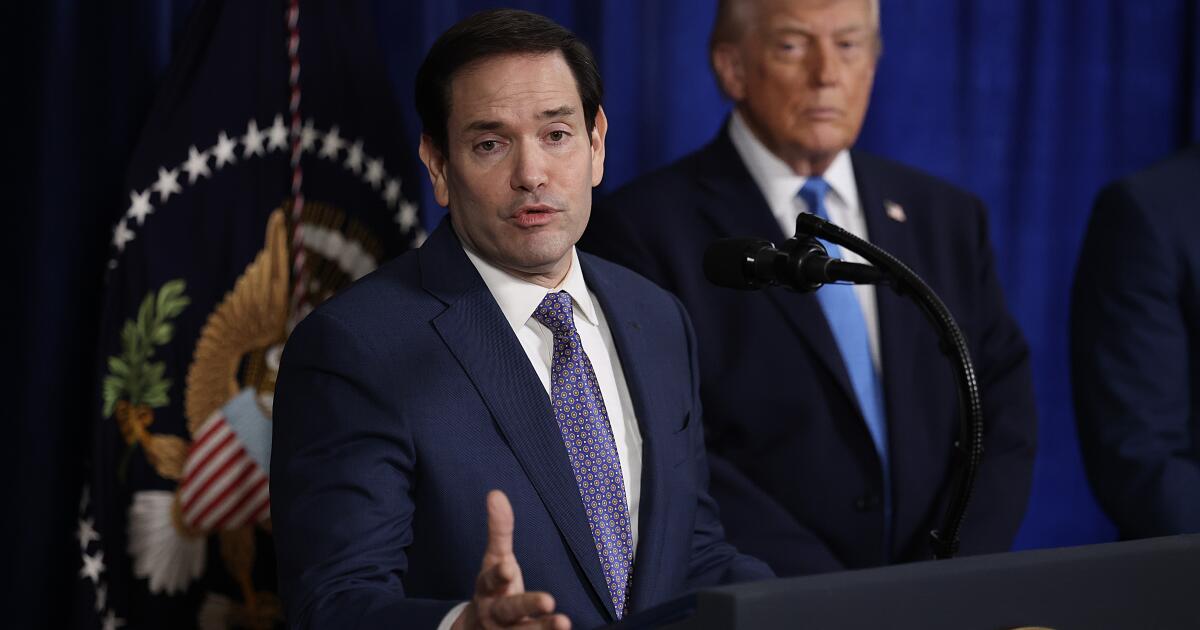
In an interview with the NBC news channels on Sunday, US Secretary of State Marco Rubio suggested that Washington will not govern Venezuela on a day-to-day basis besides enforcing an existing “oil quarantine”.

Rubio told ABC news on Sunday that the US had leverage over Venezuela and the US would “set the conditions” to ensure that Venezuela is no longer a “narco-trafficking paradise”.

But on Sunday, Trump told reporters that the US is ready to carry out a second military strike on Venezuela if its government refuses to cooperate with his plan to ‘resolve’ the situation there.

She could “pay a very big price” if she “does not do what’s right”, Trump said, refering Venezuela’s new leader, Delcy Rodriguez.

During his Saturday conference, Trump said that Rodriguez told Rubio that she will do what the US needs her to. “She really doesn’t have a choice,” Trump had said.

In his first press conference after Maduro’s illegal abduction on Saturday, Trump ruled out the possibility of working with opposition leader and Nobel Prize winner Maria Corina Machado, who was barred from running in the 2024 presidential elections.

Machado, a member of the Venezuelan National Assembly, is seen as the most credible adversary of Maduro’s leftist government.

On Monday, Rodriguez, the interim leader, offered to cooperate with Trump. In a statement posted on social media, she invited Trump to “collaborate” and sought “respectful relations”.

“President Donald Trump, our peoples and our region deserve peace and dialogue, not war,” she wrote.

Her conciliatory tone came a day after she appeared on state TV declaring that Maduro was still Venezuela’s sole legitimate president.

Source link

Venezuela: Latin American Countries Jointly Condemn US Attacks as Interim Gov’t Backs Maduro

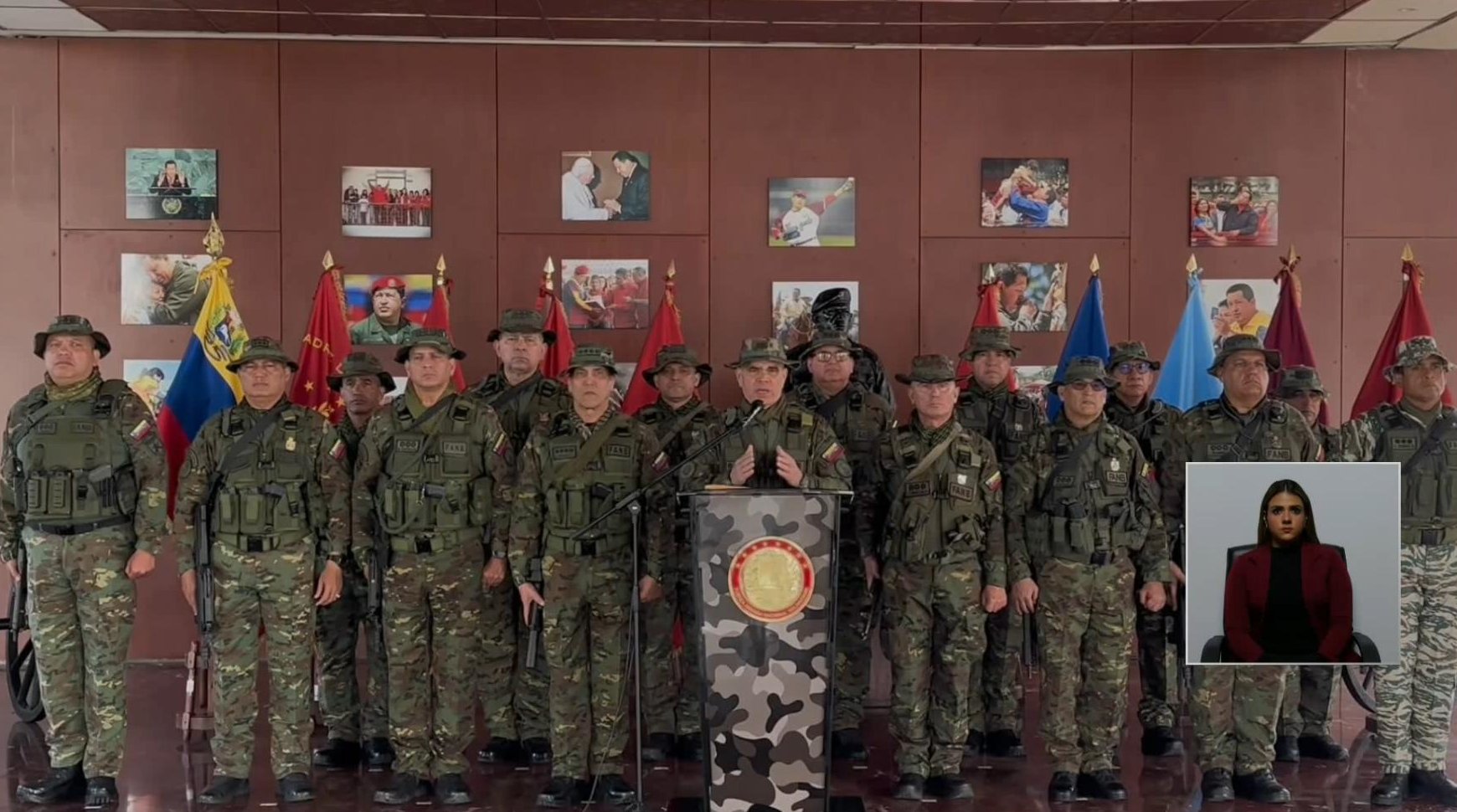
The Venezuelan armed forces expressed readiness to maintain peace and internal order in the country. (Archive)

Caracas, January 4, 2025 (venezuelanalysis.com) – The governments of Brazil, Chile, Colombia, Mexico, Uruguay, and Spain issued a joint statement Sunday rejecting “unilateral US actions in Venezuelan territory.”

“These actions contravene basic principles of international law and represent a very dangerous precedent for peace and regional security,” the communique read.

The joint statement followed widespread regional and global condemnation of Washington’s January 3 strikes against Venezuelan military sites and kidnapping of President Nicolás Maduro and First Lady Cilia Flores.

The countries went on to issue calls for dialogue and urged the United Nations secretary general and member states to help “de-escalate tensions and preserve peace.” 

In response to US President Donald Trump’s claim that he would “run” Venezuela, the signatories expressed concern over “attempts at foreign government control or seizure of natural resources.” However, the declaration made no mention of Maduro nor called for his release.

The diplomatic response to the US attacks also included an emergency summit of the Community of Latin American and Caribbean nations (CELAC), held on Sunday, January 4. Venezuelan Foreign Minister Yván Gil decried the US actions as blatant violations of international law and the United Nations Charter.

“The US has violated the personal immunity of a sitting head of state,” Gil told regional leaders in the conference call. “Kidnapping a president is kidnapping a people’s sovereignty.”

Venezuela’s top diplomat urged CELAC member-states to “take a step forward,” warning that silence would amount to acceptance of Washington’s unilateral acts.

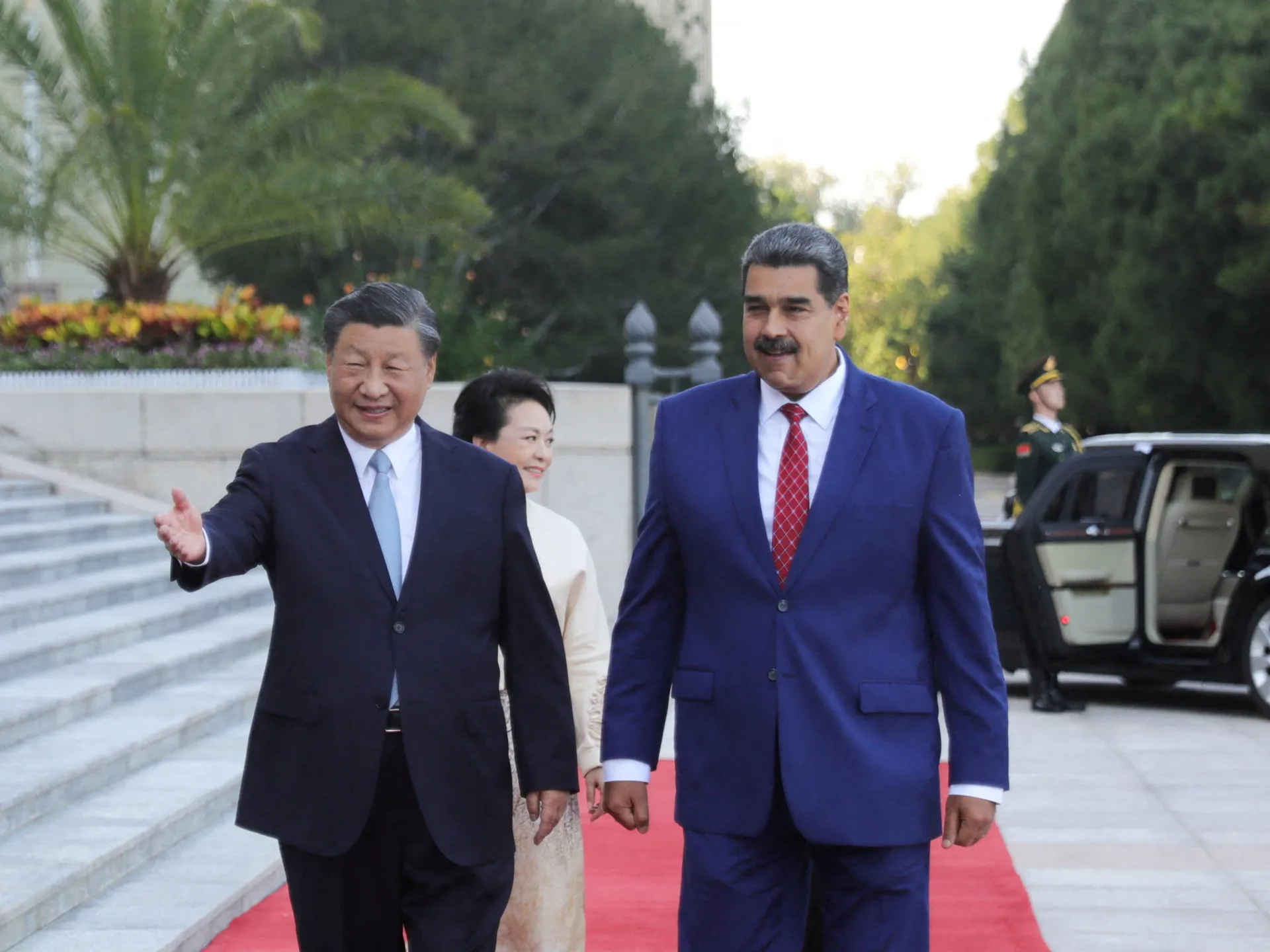
A number of countries, including Venezuelan allies Russia and China, have forcefully denounced the US military operation. In a Sunday statement, Beijing charged Washington with a “clear violation of international law” and called for Maduro and Flores’ “immediate release.”

The UN Security Council is scheduled to hold an emergency session on Monday.

For her part, Venezuela Vice President and now acting Interim President Delcy Rodríguez reiterated demands for Maduro’s release and vowed that the country would not submit “to any empire.” Rodríguez held a press conference Saturday afternoon and confirmed the enactment of a decree establishing a “state of external commotion.” The instrument grants the executive additional tools, including the ability to mobilize troops or restrict civil liberties, for a period of 90 days that can be extended.

On Saturday night, the Venezuelan Supreme Court ruled that Maduro’s kidnapping and rendition to US soil constituted a temporary absence and that Rodríguez was mandated to take over the presidency on an interim basis.

Footage surfaced Saturday evening showing Maduro being walked out of an airplane in New York. He was later taken to a DEA facility before being moved, along with Flores, to the Metropolitan Detention Center in Brooklyn. He made no statements but greeted DEA officers and appeared upbeat in photos, making a peace sign and holding his thumbs up.

The Venezuelan president was indicted by a New York district court on Saturday, with charges including “narcoterrorism conspiracy” and “possession of machine guns.” A hearing is reportedly scheduled for Monday.

For their part, Venezuela’s National BolivarianArmed Forces (FANB) likewise issued a communique on Sunday, rejecting the “cowardly kidnapping” of Maduro and Flores and reiterating its mission to “confront imperial aggression.”

The FANB voiced support for Rodríguez taking over the presidency on an acting basis and vowed to maintain readiness to preserve “peace and internal order.” 

The Defense Ministry has yet to provide a report on damages and casualties from the US strikes, though Sunday’s communiqué condemned the “cold-blooded murder” of members of Maduro’s security detail. Unconfirmed reports have put forward a figure of 80 deaths.

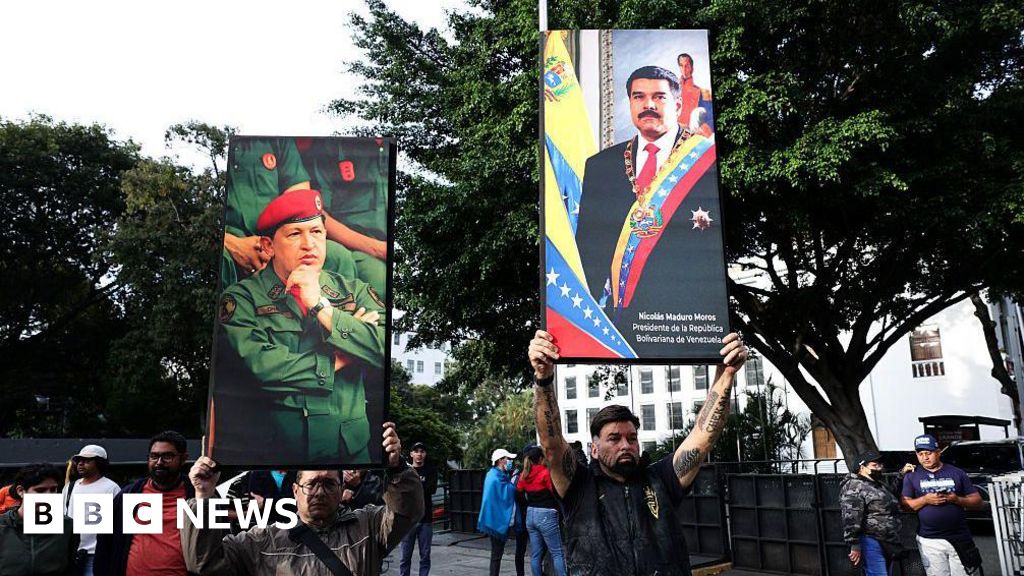
Venezuelan popular movements and political parties took to the streets for a second consecutive day on Sunday, holding marches and rallies in Caracas and other cities. Public transportation and retail functioned to a greater degree than on Saturday.

The US attacks also spurred numerous international solidarity demonstrations over the weekend. Crowds gathered in dozens of Latin American, European and US cities. A demonstration was called for Sunday outside the Brooklyn detention center where Maduro is being held.

The January 3 operation came on the heels of the largest ever US Caribbean military build-up, with Trump having previously ordered dozebs of strikes against small boats accused of carrying drugs, killing over 100 civilians. The US president has repeatedly expressed intentions of using military threats to extract favorable oil deals for US corporations.

In a Sunday interview, Secretary of State Marco Rubio warned the acting government in Caracas to “make the right decisions” and affirmed that the US retained “leverage” mechanisms, including a naval blockade stopping oil exports.

Source link

Venezuela decries ‘cowardly kidnapping’ as officials back Maduro | US-Venezuela Tensions News

Venezuela’s Defence Minister Vladimir Padrino Lopez has denounced the United States’ move to abduct leader Nicolas Maduro as a “cowardly kidnapping”, adding that some of the president’s bodyguards were killed “in cold blood”, as well as military personnel and civilians on the Venezuelan side.

In his televised statement on Sunday, Padrino Lopez also endorsed a Supreme Court ruling that appointed Vice President Delcy Rodriguez — who also serves as oil minister — as acting president for 90 days.

Recommended Stories

list of 3 itemsend of list

US President Donald Trump threatened that Rodriguez will pay a “very big price” if she doesn’t cooperate with Washington. “If she doesn’t do what’s right, she is going to pay a very big price, probably bigger than Maduro,” Trump told The Atlantic in a telephone interview.

US forces attacked Caracas in the early hours of Saturday, bombing military targets and spiriting away Maduro and his wife to face federal narco-trafficking charges in New York. The Venezuelan president was escorted off a plane at Stewart Air National Guard Base in New York state and taken to a Brooklyn jail.

He is due to make his first appearance on Monday in Manhattan’s federal court.

US to use oil blockade to leverage change in Venezuela

US Secretary of State Marco Rubio on Sunday suggested that Washington would not take a day-to-day role in governing Venezuela other than enforcing an existing “oil quarantine”, using that leverage to press policy changes in the country.

Rubio’s statements seemed designed to temper concerns, a day after Trump announced the US would “run” the oil-rich nation. The Trump administration’s actions drew unease from parts of his own Republican Party coalition, including an “America First” base that is opposed to foreign interventions, as well as from observers who recalled past nation-building efforts in Iraq and Afghanistan.


Rubio dismissed such criticism, saying that Trump’s intent had been misunderstood by a “foreign policy establishment” that was fixated on the Middle East.

Al Jazeera’s Phil Lavelle, reporting from Doral, Florida in the US, said Trump had been elected on an “America First” policy centred around no engagement in foreign wars or sending US service personnel into danger.

“Now we’ve got this situation where he said, less than 24 hours ago, ‘We’re not afraid of putting boots on the ground,’” Lavelle said.

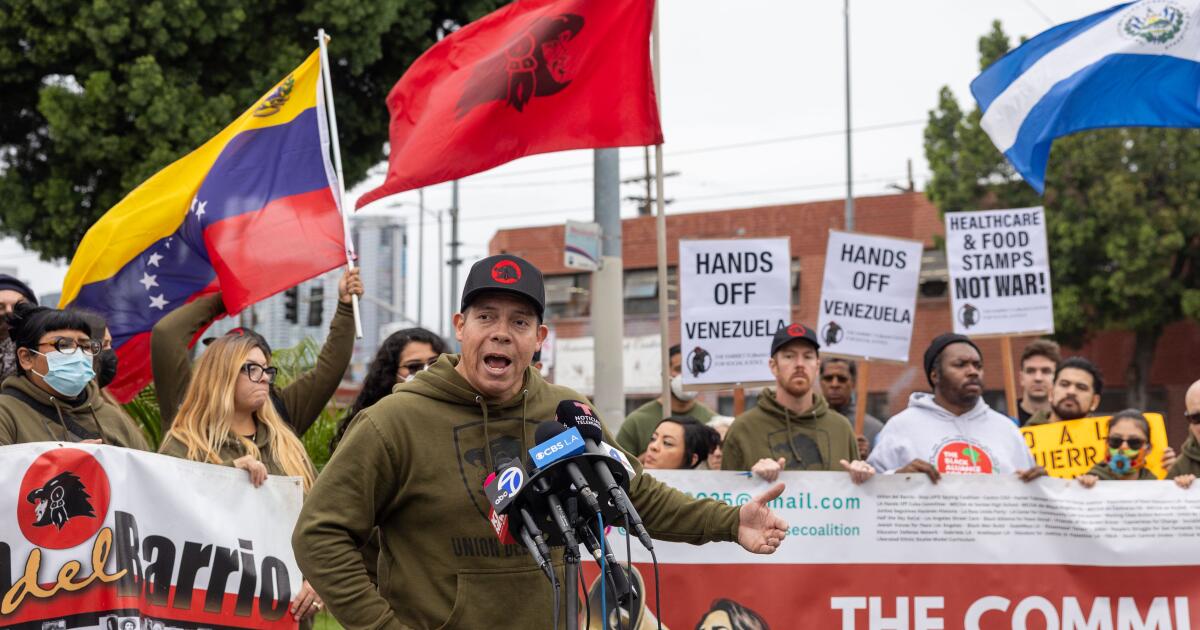
Protests took place in cities across the US against Trump’s military action in Venezuela. Hundreds gathered in the rain in downtown Los Angeles, carrying signs saying “Stop bombing Venezuela now!” and “No blood for oil”.

“I stand against US imperialism altogether. They want oil … They want to help the corporate billionaires. Bombing is just their means to building power like that, of taking control. So again, I’m against it,” said one protester named Niven.

Trump on Saturday delivered a speech in which he made little mention of the so-called “war on drugs” – which for months had been his main justification for bombing Venezuelan ship and assets – but argued that Venezuela had “stolen” oil from the US and that it would now be taken back.

The United Nations special rapporteur on human rights and counterterrorism, Ben Saul, said the US actions in Venezuela were illegal, calling on Trump to be investigated and impeached. “Every Venezuelan life lost is a violation of the right to life. President Trump should be impeached and investigated for the alleged killings,” he said in a social media post.

The UN Security Council (UNSC) was set to meet on Monday to discuss the situation in Venezuela. UN Secretary-General Antonio Guterres said he was “deeply alarmed” by the US strikes, which a spokesperson said could “constitute a dangerous precedent”.

Uncertainty in Venezuela after Maduro’s abduction

Some Venezuelans in Caracas have welcomed the US’s seizure of Maduro, but others said the action could worsen conflict in the country, with protests denouncing the US taking place.

“There should be a positive change for all Venezuelans, because it has been 28 years of government, and now is the time for transition in this country,” said Ronald Gaulee, a motorcycle rider in Caracas.

Merchant Juan Carlos Rincon was more cautious. “The truth is that there is a lot of manipulation behind all this,” he told the Reuters news agency. “We want to be at peace, move forward, and for Venezuela to have, like any other country, the right to choose its own destiny and its own leaders.”

Baker Franklin Jimenez said he would heed the government’s call to defend the country. “If they took him away, I think they shouldn’t have done so, because this will create an even worse conflict than the one we have now,” he said. “And as for the bombings and all that, we have to go out, we all have to go out into the streets to defend our homeland, to defend ourselves.”

Some Venezuelans decided to flee the country amid the uncertainty, crossing the Venezuela-Colombia border to reach the Colombian town of Cucuta. Karina Rey described a “tense situation” in the Venezuelan city of San Cristobal, just across the border.

“There are long lines, and people are very paranoid, or on edge, over food. Supermarkets are closing,” Rey told Al Jazeera. “The lines are very long just to stock up on food, because we don’t know what will happen in the coming weeks. We’re waiting to see what happens.”

Al Jazeera’s Alessandro Rampietti, reporting from Cucuta, said many Venezuelans there initially felt jubilant after Maduro was ousted. “But that quickly shifted to uncertainty,” he said.

“Several people said they expected the United States to immediately bring opposition leader Maria Corina Machado back into the country, along with Edmundo Gonzalez Urrutia, who many Venezuelans believe won the last presidential election,” Rampietti continued.

“Instead, with much of the existing leadership still in place and with Vice President Delcy Rodriguez appointed as interim leader, there is growing fear about what could happen next.”

Tiziano Breda, a senior analyst at the Armed Conflict Location and Event Data Project, said what happens next hinges on the response of Venezuela’s government and armed forces.

“So far, they’ve avoided direct confrontation with US forces, but deployments on the streets point to efforts to contain unrest,” he said. “A smooth transition remains unlikely, and the risk of resistance from pro-regime armed groups – including elements within the military and Colombian rebel networks active in the country – remains high.”

Source link

What might the US do next after Venezuela? | Nicolas Maduro

There are legal concerns about the abduction of Maduro, but little Western criticism.

The United States’ abduction of Venezuela’s President Nicolas Maduro has been sharply criticised by his allies – but not by Western nations, despite questions about its legality.

So, does the operation signal a new aggressive US strategy? And what might the global impact be?

Presenter: Adrian Finighan

Guests:

Charles Shapiro – Former US ambassador to Venezuela under President George W Bush

Stefan Wolff – Professor of International Security at the University of Birmingham in the United Kingdom

Ernesto Castaneda – Director of the Center for Latin American and Latino Studies at the American University in Washington, DC

Source link

To ‘run’ Venezuela, Trump presses existing regime to kneel

Top officials in the Trump administration clarified their position on “running” Venezuela after seizing its president, Nicolás Maduro, over the weekend, pressuring the regime that remains in power there Sunday to acquiesce to U.S. demands on oil access and drug enforcement, or else face further military action.

Their goal appears to be the establishment of a pliant vassal state in Caracas that keeps the current government — led by Maduro for more than a decade — largely in place, but finally defers to the whims of Washington after turning away from the United States for a quarter century.

It leaves little room for the ascendance of Venezuela’s democratic opposition, which won the country’s last national election, according to the State Department, European capitals and international monitoring bodies.

Trump and his top aides said they would try to work with Maduro’s handpicked vice president and current interim president, Delcy Rodríguez, to run the country and its oil sector “until such time as we can do a safe, proper and judicious transition,” offering no time frame for proposed elections.

Trump, Secretary of State Marco Rubio and Homeland Security Secretary Kristi Noem underscored the strategy in a series of interviews Sunday morning.

“If she doesn’t do what’s right, she is going to pay a very big price, probably bigger than Maduro,” Trump told the Atlantic, referring to Rodríguez. “Rebuilding there and regime change, anything you want to call it, is better than what you have right now. Can’t get any worse.”

Rubio said that a U.S. naval quarantine of Venezuelan oil tankers would continue unless and until Rodríguez begins cooperating with the U.S. administration, referring to the blockade — and the lingering threat of additional military action from the fleet off Venezuela’s coast — as “leverage” over the remnants of Maduro’s regime.

“That’s the sort of control the president is pointing to when he says that,” Rubio told CBS News. “We continue with that quarantine, and we expect to see that there will be changes — not just in the way the oil industry is run for the benefit of the people, but also so that they stop the drug trafficking.”

Sen. Tom Cotton (R-Ark.), chairman of the Senate Select Committee on Intelligence, told CNN that he had been in touch with the administration since the Saturday night operation that snatched Maduro and his wife from their bedroom, whisking them away to New York to face criminal charges.

Trump’s vow to “run” the country, Cotton said, “means the new leaders of Venezuela need to meet our demands.”

“Delcy Rodríguez, and the other ministers in Venezuela, understand now what the U.S. military is capable of,” Cotton said, while adding: “It is a fact that she and other indicted and sanctioned individuals are in Venezuela. They have control of the military and security forces. We have to deal with that fact. But that does not make them the legitimate leaders.”

“What we want is a future Venezuelan government that will be pro-American, that will contribute to stability, order and prosperity, not only in Venezuela but in our own backyard. That probably needs to include new elections,” Cotton added.

Whether Rodríguez will cooperate with the administration is an open question.

Trump said Saturday that she seemed amenable to making “Venezuela great again” in a conversation with Rubio. But the interim president delivered a speech hours later demanding Maduro’s return, and vowing that Venezuela would “never again be a colony of any empire.”

The developments have concerned senior figures in Venezuela’s democratic opposition, led by Maria Corina Machado, last year’s Nobel Peace Prize laureate, and Edmundo González Urrutia, the opposition candidate who won the 2024 presidential election that was ultimately stolen by Maduro.

In his Saturday news conference, Trump dismissed Machado, saying that the revered opposition leader was “a very nice woman,” but “doesn’t have the respect within the country” to lead.

Elliott Abrams, Trump’s special envoy to Venezuela in his first term, said he was skeptical that Rodríguez — an acolyte of Hugo Chávez and avowed supporter of Chavismo throughout the Maduro era — would betray the cause.

“The insult to Machado was bizarre, unfair — and simply ignorant,” Abrams told The Times. “Who told him that there was no respect for her?”

Maduro was booked in New York and flown by night over the Statue of Liberty in New York Harbor to the Metropolitan Detention Center in Brooklyn, where he is in federal custody at a notorious facility that has housed other famous inmates, including Sean “Diddy” Combs, Ghislaine Maxwell, Bernie Madoff and Sam Bankman-Fried.

He is expected to be arraigned on federal charges of narco-terrorism conspiracy, cocaine importation conspiracy, possession of machine guns and destructive devices, and conspiracy to possess machine guns and destructive devices as soon as Monday.

While few in Washington lamented Maduro’s ouster, Democratic lawmakers criticized the operation as another act of regime change by a Republican president that could have violated international law.

“The invasion of Venezuela has nothing to do with American security. Venezuela is not a security threat to the U.S.,” said Sen. Chris Murphy, a Democrat from Connecticut. “This is about making Trump’s oil industry and Wall Street friends rich. Trump’s foreign policy — the Middle East, Russia, Venezuela — is fundamentally corrupt.”

In their Saturday news conference, and in subsequent interviews, Trump and Rubio said that targeting Venezuela was in part about reestablishing U.S. dominance in the Western Hemisphere, reasserting the philosophy of President James Monroe as China and Russia work to enhance their presence in the region. The Trump administration’s national security strategy, published last month, previewed a renewed focus on Latin America after the region faced neglect from Washington over decades.

Trump left unclear whether his military actions in the region would end in Caracas, a longstanding U.S. adversary, or if he is willing to turn the U.S. armed forces on America’s allies.

In his interview with the Atlantic, Trump suggested that “individual countries” would be addressed on a case-by-case basis. On Saturday, he reiterated a threat to the president of Colombia, a major non-NATO ally, to “watch his ass,” over an ongoing dispute about Bogota’s cooperation on drug enforcement.

On Sunday morning, the United Nations Security Council was called for an urgent meeting to discuss the legality of the U.S. operation inside Venezuela.

It was not Russia or China — permanent members of the council and longstanding competitors — who called the session, nor France, whose government has questioned whether the operation violated international law, but Colombia, a non-permanent member who joined the council less than a week ago.

Source link

U.S. Has Captured Venezuelan President Nicolas Maduro (Updated)

Videos and images are emerging on social media showing what appears to be a large U.S. military operation now underway around the Venezuelan capital of Caracas, which includes multiple large explosions and the presence of American special operations helicopters. While there has been no official announcement of such an operation kicking off, this comes after months of U.S. military buildup in the region aimed at pressuring cartels and Venezuelan dictator Nicolas Maduro.

See all the latest updates at the bottom of the post.

We have reached out to the White House, Pentagon, and U.S. Southern Command for comment and will update this story with any pertinent information provided.

Videos show explosions and the resulting clouds of smoke across the skyline.

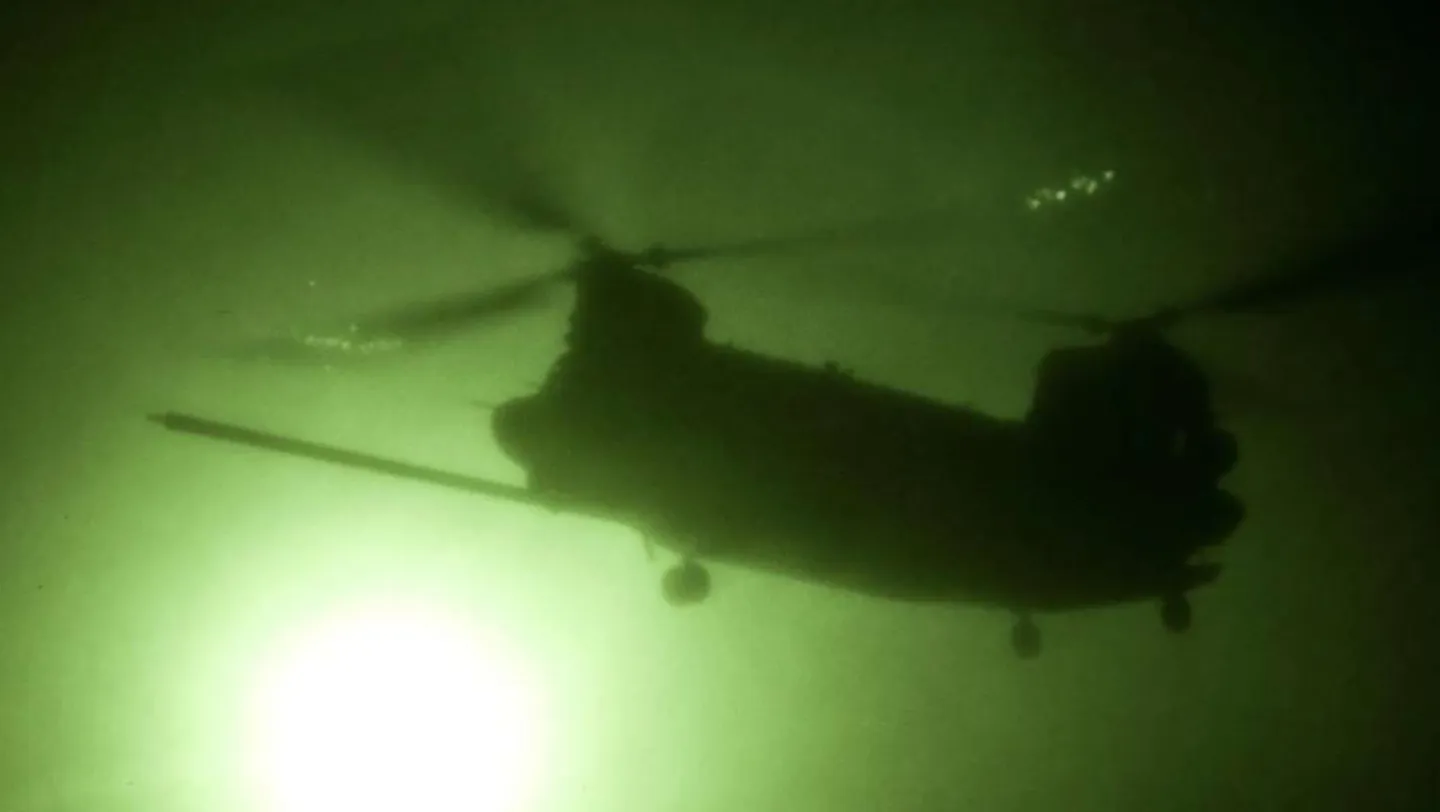
Other videos show 160th Special Operations Aviation Regiment (SOAR) MH-47 Chinook helicopters (and what appear to likely be MH-60s) flying over Caracas as several explosions erupt in the background.

Full-scale military operations appear to be underway against Venezuela, with dozens of helicopters with the U.S. Army spotted over the capital of Caracas. pic.twitter.com/kIqfbGjOK4

— OSINTdefender (@sentdefender) January 3, 2026

Based on what we are seeing, which still has not been confirmed by the U.S. government at this time, it seems that large-scale kinetic actions inside Venezuela have begun as a new phase of Operation Southern Spear.

We will be updating this post with additional analysis and information. Stand by.

Update: 2:45AM EST—

The Pentagon and SOUTHCOM responded to our inquiry about what was going on and they told us to contact the White House without further comment. We haven’t gotten a response yet.

CBS News reports that Trump ordered the strikes, including on military facilities.

🚨BREAKING via @CBSNews: President Trump ordered strikes on sites inside Venezuela including military facilities, U.S. officials said, as the administration early Saturday ratcheted up its campaign against the regime of President Nicolás Maduro. via @JimLaPorta and me

— Jennifer Jacobs (@JenniferJJacobs) January 3, 2026

Some thoughts on the timing of this operation. Flying special operations helicopter missions deep inside contested territory during nearly a full moon is far from ideal. It isn’t clear if something may have pushed-up a timeline for such an operation. Venezuela’s air defenses are not advanced, but they do pose a threat, which you can read all about here. Beyond larger SAM systems, the country also has many man-portable air defense systems (MANPADS) that are especially problematic for helicopters, as well as anti-aircraft artillery. Regardless, either the threat was deemed low enough to move forward with helicopter operations or the risk was worth the potential reward of whatever target or targets they were after.

It’s also worth noting that air strikes likely wiped out known air defenses that could put the helicopters at risk, but Venezuela’s MANPADS (if they were widely deployed) and road-mobile SAMs are far harder, and in many cases impossible, to mitigate with pre-planned strikes. We would also expect that either the U.S. had assurances that Venezuela’s fighter force would not fly, and contingencies in place to make sure they didn’t, or they were (more likely) preemptively destroyed on the ground. Beyond a fighter suppression of enemy air defenses and counter-air package, electronic and cyber warfare would have played a major role in this operation in regard to blunting Venezuela’s air defenses, as well.

Timing is interesting here. Moon is nearly full, far from optimal for this kind of thing, especially using SOF helicopters deep into a metro area like this. Strikes likely helped clear air defenses for them, but that is unclear at this time. Target may have dictated the timeline…

— Tyler Rogoway (@Aviation_Intel) January 3, 2026

A video showing a helicopter firing rockets at targets on the ground is said to have come from tonight’s operation, although we cannot confirm it. This looks like a common MH-60 Direct Action Penetrator or MH-6 Little Bird rocket attack run.

One strike appeared to have hit a harbor warehouse:

Update: 3:20 AM EST—

Venezuela’s government has put out a statement decrying the attacks and saying that they are about seizing the country’s oil and mineral resources.

With what appears to be a very large contingent of 160th SOAR helicopters spearheading this operation, it seems likely that the USS Iwo Jima would be used to support them, especially as much of this ship’s air wing has been moved ashore. The special operations mothership M/V Ocean Trader is also a critical part of this effort as it has been in the region for months and sailing with the Iwo Jima, but its ability to support many helicopters is much more limited than an amphibious assault ship.

Would imagine that USS Iwo Jima is also acting as special operations mothership for this. Much of its air wing has been redeployed ashore. Ocean Trader of course is in the mix as well.

— Tyler Rogoway (@Aviation_Intel) January 3, 2026

📍Caribbean Sea

The @USNavy (🇺🇸) Iwo Jima ARG is conducting fleet maneuvers in the Caribbean Sea, notably with a special guest, the MV Ocean Trader Special Warfare Support vessel.

Geolocation: 13.35894, -66.28738 pic.twitter.com/GFtUVUbSdn

— SA Defensa (@SA_Defensa) December 24, 2025

Here is another video showing what appears to be an MH-60 Direct Action Penetrator doing another run:

Footage of a US helicopter (possible USMC AH-1Z Viper) engaging ground targets with gun and rocket fire in Caracas, Venezuela. pic.twitter.com/mT5h1lnFkl

— OSINTtechnical (@Osinttechnical) January 3, 2026

Early reports said Fort Tiuna was a major focus of the action. This military installation is a center of gravity for the Venezuelan military and it has some very unique features, including bunkers/tunnels built into the side of the mountain it butts up against.

Man… there is some very ‘interesting’ features at this base pertaining to what is built into the hillside.

— Tyler Rogoway (@Aviation_Intel) January 3, 2026

Update: 4am EST—

There have been reports that the presidential palace was targeted in some way this evening, although we cannot confirm that. There are armored vehicles now in position protecting the roads nearby:

A V-150 “Commando” Armored Wheeled-Gun with the Venezuelan Army spotted near Miraflores Presidential Palace in the capital of Caracas. pic.twitter.com/ToYWjTRlMn

— OSINTdefender (@sentdefender) January 3, 2026

Apparently Hugo Chavez’s mausoleum was struck:

Airfields were extensively targeted, with some major secondary explosions:

It looks like there were some flight diversions heading to Puerto Rico:

Major diversions of civil flights away from San Juan in Puerto Rico, as U.S. forces likely use the island to stage strikes on Venezuela. pic.twitter.com/rBWwkbMYjC

— OSINTtechnical (@Osinttechnical) January 3, 2026

It’s also worth noting that all this went down within hours of China’s envoy arriving in Caracas, in part to show support for the Maduro regime during the crisis with the United States. The diplomatic party may still be in the capital.

Just a few hours ago, Maduro held a three-hour meeting in Caracas with Xi’s Special Envoy from China, underscoring how Beijing is quietly deepening its role in the escalating U.S.–Venezuela crisis. pic.twitter.com/LWEBygUtNg

— Gandalv (@Microinteracti1) January 3, 2026

The U.S. government has issued a shelter-in-place order for any Americans who remain in Venezuela:

Update: 4:31 am EST—

President Trump has put out a statement saying the U.S. has captured Maduro and his wife and has flown them out of the country. This matches exactly with our suspicion that this operation was peculiar in its timing and how odd it was pushing the 160th SOAR over Caracas so early in the operation during nearly a full moon. Now this makes total sense. As our editor stated earlier in the evening when this began:

“Timing is interesting here. Moon is nearly full, far from optimal for this kind of thing, especially using SOF helicopters deep into a metro area like this. Strikes likely helped clear air defenses for them, but that is unclear at this time. Target may have dictated the timeline here. Use your imagination with that one.”

Timing is interesting here. Moon is nearly full, far from optimal for this kind of thing, especially using SOF helicopters deep into a metro area like this. Strikes likely helped clear air defenses for them, but that is unclear at this time. Target may have dictated the timeline…

— Tyler Rogoway (@Aviation_Intel) January 3, 2026

Trump’s post on Truth Social also said there would be a presser at 11am.

Update: 5:24 am EST—

Was Maduro in on his own ‘exit’ or was this a true snatch and grab? Weird indicators point to both possibilities. This is a glaring question that we will hopefully get an answer to in the coming hours.

Venezuela’s defense minister is alive and is putting up a defiant front:

Venezuelan Defense Minister is alive and speaks:

We will not negotiate, we will not surrender, and we will ultimately triumph.

NOTE: Maduro has been captured by U.S. forces. pic.twitter.com/7Dgk2JOauI

— Clash Report (@clashreport) January 3, 2026

CBS News reports that the U.S. Army’s Delta Force captured Maduro. They were very likely at the center of the operation, but it’s possible, if not probable, that other elements, including those from the FBI, were also directly present during the operation.

🚨SCOOP from @CBSNews: Venezuela’s Maduro was captured by Delta Force, the US military’s elite special mission unit, sources tell me.

— Jennifer Jacobs (@JenniferJJacobs) January 3, 2026

Update: 8:40 am EST—

“Nicolas Maduro and his wife, Cilia Flores, have been indicted in the Southern District of New York,” U.S. Attorney General Pamela Bondi has now written in a post on X. “Nicolas Maduro has been charged with Narco-Terrorism Conspiracy, Cocaine Importation Conspiracy, Possession of Machineguns and Destructive Devices, and Conspiracy to Possess Machineguns and Destructive Devices against the United States.”

Nicolas Maduro and his wife, Cilia Flores, have been indicted in the Southern District of New York. Nicolas Maduro has been charged with Narco-Terrorism Conspiracy, Cocaine Importation Conspiracy, Possession of Machineguns and Destructive Devices, and Conspiracy to Possess…

— Attorney General Pamela Bondi (@AGPamBondi) January 3, 2026

Senator Mike Lee, a Utah Republican, says he has spoken with Secretary of State and acting National Security Advisor Marco Rubio about the overnight operation, confirming that Maduro is now in U.S. custody.

“This action likely falls within the president’s inherent authority under Article II of the Constitution to protect U.S. personnel from an actual or imminent attack,” Lee wrote in a post on X. “He [Rubio] anticipates no further action in Venezuela now that Maduro is in U.S. custody.”

He anticipates no further action in Venezuela now that Maduro is in U.S. custody

— Mike Lee (@BasedMikeLee) January 3, 2026

Pictures and videos have now emerged showing at least one of Venezuela’s Russian-made Buk-M2E surface-to-air missile systems that was destroyed by U.S. strikes. The Buk-M2E is among the Venezuelan military’s most modern air defense capabilities, as you can read more about here.

A firefighter walks past a destroyed anti-aircraft unit at La Carlota military air base, after U.S. President Donald Trump said the U.S. has struck Venezuela and captured its President Nicolas Maduro, in Caracas, Venezuela, January 3, 2026. REUTERS/Leonardo Fernandez Viloria pic.twitter.com/dFE3aOY4L3

— Idrees Ali (@idreesali114) January 3, 2026

Venezuela’s Minister of Interior Diosdado Cabello Rondon, another key figure in Maduro’s regime, has also now made a public appearance following the U.S. operation in Venezuela. Cabello, as well as Defense Minister Vladimir Padrino López, are also under indictment in the United States on charges related to drug trafficking.

Venezuelan Minister of Interior Diosdado Cabello:

Trust the leadership and remain calm. Do not fall into despair or aid the enemy.

This is not our first struggle—we have faced attacks before and endured.

Beyond any individual, there is an organized people who know what must… pic.twitter.com/GqJZaUSk7F

— Clash Report (@clashreport) January 3, 2026

Updates to this story have ended. You can find our continuing coverage of the U.S. operation in Venezuela here.

Contact the author: howard@thewarzone.com

Tyler’s passion is the study of military technology, strategy, and foreign policy and he has fostered a dominant voice on those topics in the defense media space. He was the creator of the hugely popular defense site Foxtrot Alpha before developing The War Zone.


Howard is a Senior Staff Writer for The War Zone, and a former Senior Managing Editor for Military Times. Prior to this, he covered military affairs for the Tampa Bay Times as a Senior Writer. Howard’s work has appeared in various publications including Yahoo News, RealClearDefense, and Air Force Times.


Source link

Who is Venezuelan Vice President Delcy Rodriguez, now leading the country? | Nicolas Maduro News

A brief power vacuum had emerged in Venezuela in the sudden chaos and confusion after the abduction of President Nicolas Maduro by the United States.

But shortly after the US military rained strikes down on Caracas and other areas on Saturday, US President Donald Trump – in a surprise snub against Venezuelan opposition leader Maria Corina Machado, who was awarded last year’s Nobel Peace Prize – noted that Vice President Delcy Rodriguez, 56, had been sworn in as interim president.

Recommended Stories

list of 4 itemsend of list

The right-wing Machado – who had cosied up to Trump, especially after her October Nobel win, an honour that he himself coveted and she dedicated to him – was described by the US president as not having enough support or “respect” to be Venezuela’s leader.

Trump said Rodriguez had talked to US Secretary of State Marco Rubio and was “essentially willing to do what we think is necessary to make Venezuela great again”.

“I think she was quite gracious,” Trump added. “We can’t take a chance that somebody else takes over Venezuela that doesn’t have the good of the Venezuelan people in mind.”

However, Rodriguez’s remarks soon after the strikes and abduction were diametrical: She criticised the US military action as “brutal aggression” and called for Maduro’s immediate release.

“There is only one president in this country, and his name is Nicolas Maduro,” Rodriguez said defiantly on state television as she was flanked by top civilian officials and military commanders.

Who, then, is the current acting president of Venezuela?

Revolutionary roots

A Caracas native, Rodriguez was born on May 18, 1969. She is the daughter of left-wing rebel fighter Jorge Antonio Rodriguez, who founded the Socialist League party in the 1970s. Her father was killed while tortured in police custody in 1976, a crime that shook many activists of the era, including a young Maduro.

Rodriguez’s brother, also named Jorge, also holds a key role in government as the head of the National Assembly.

She is an attorney who graduated from the Central University of Venezuela and rose rapidly through the political ranks in the past decade. Rodriguez has a long history of representing on the world stage what late President Hugo Chavez called his socialist “revolution” with those carrying on his legacy referred to as Chavistas.

She served as communication and information minister from 2013 to 2014, foreign minister from 2014 to 2017 and as the head of a pro-government Constituent Assembly, which expanded Maduro’s powers, in 2017.

Economic prowess

Rodriguez is sometimes perceived as more moderate than many soldiers who took up arms with Chavez in the 1990s.

Rodriguez’s roles as finance and oil minister, held simultaneously with her vice presidential post, have made her a key figure in the management of Venezuela’s economy and gained her major influence with the country’s withered private sector. She has applied orthodox economic policies in a bid to fight hyperinflation.

Maduro added the oil ministry to Rodriguez’s portfolio in August 2024, tasking her with managing escalating US sanctions on Venezuela’s most important industry.

Rodriguez developed strong ties with Republicans in the US oil industry and on Wall Street who balked at the notion of a US-led change in Venezuela’s government.

Among her past interlocutors were Blackwater security company founder Erik Prince and, more recently, Richard Grenell, a Trump special envoy who tried to negotiate a deal with Maduro for greater US influence in Venezuela.

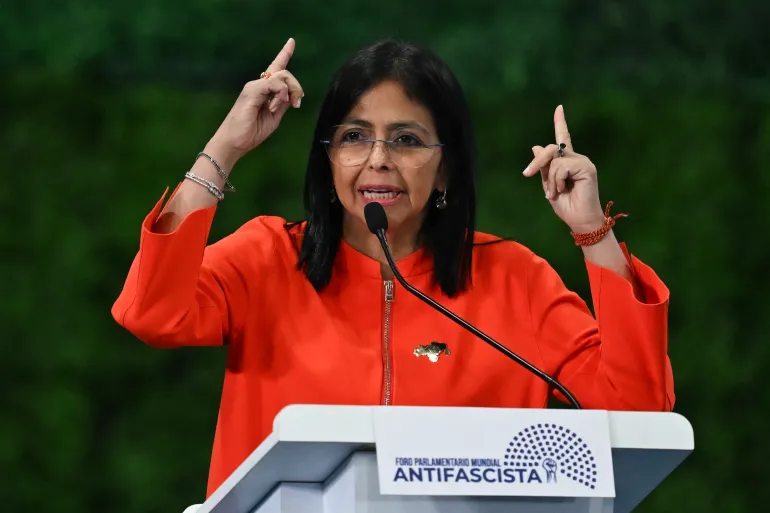
(FILES) Venezuela's Vice President Delcy Rodriguez speaks during the Antifascist Global Parliamentary Forum in Caracas on November 5, 2024.
Venezuelan Vice President Delcy Rodriguez speaks during the Antifascist Global Parliamentary Forum in Caracas [File: AFP]

A ‘tiger’

Despite being perceived as more moderate, Maduro has called Rodriguez a “tiger” for her die-hard defence of his socialist government.

When she was named vice president in June 2018, Maduro described her as “a young woman, brave, seasoned, daughter of a martyr, revolutionary and tested in a thousand battles”.

After Maduro’s abduction on Saturday, Rodriguez demanded the US government provide proof of life for Maduro and his wife, Cilia Flores, and minced no words in denouncing the US actions.

“We call on the peoples of the great homeland to remain united because what was done to Venezuela can be done to anyone. That brutal use of force to bend the will of the people can be carried out against any country,” she said in an address broadcast by the state television channel VTV.

The Constitutional Chamber of Venezuela’s Supreme Court later on Saturday ordered Rodriguez to serve as acting president.

The court ruled that Rodriguez will assume “the office of President of the Bolivarian Republic of Venezuela, in order to guarantee administrative continuity and the comprehensive defence of the Nation”.

Source link

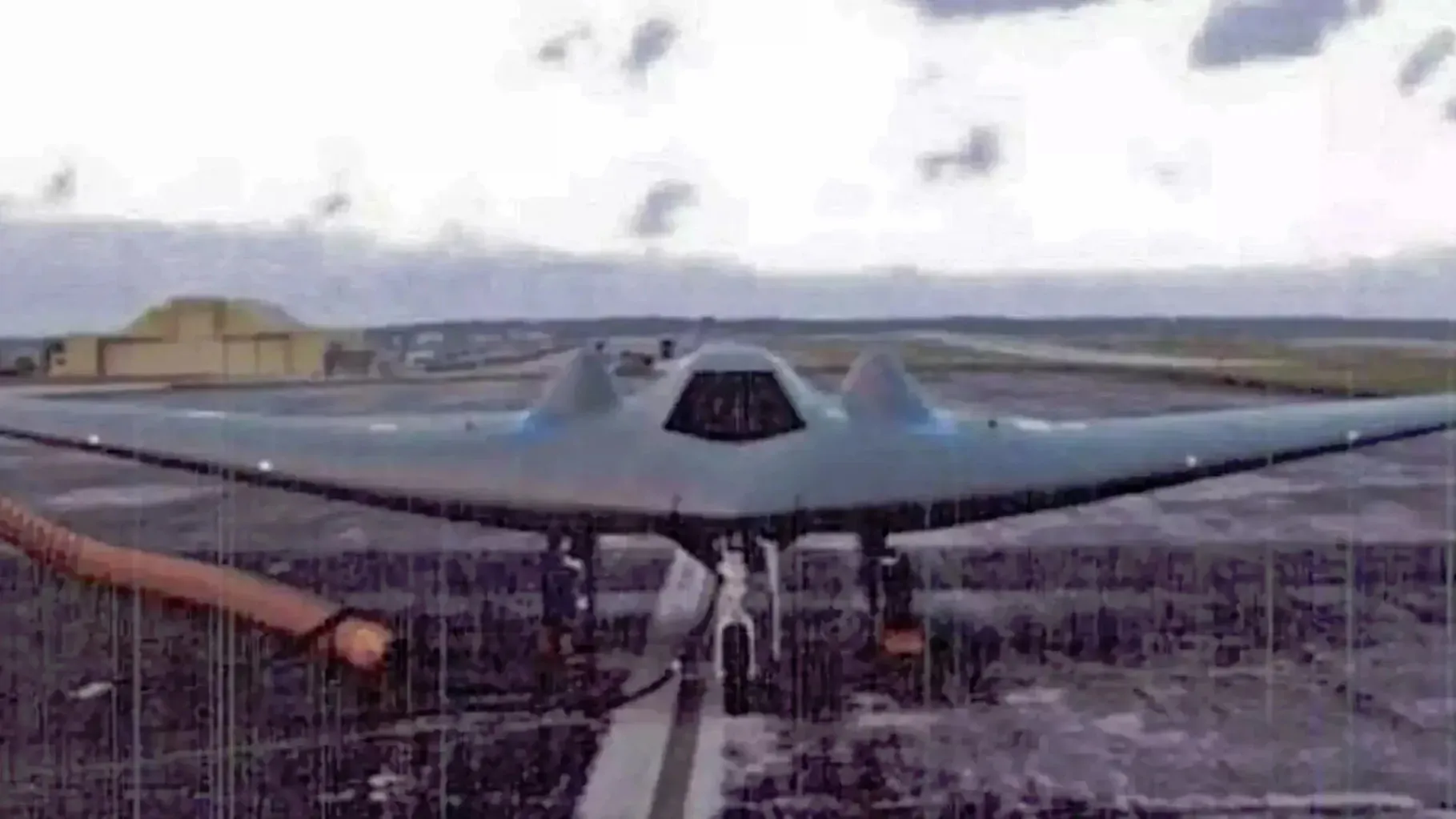
RQ-170 Sentinel Stealth Drone Supported Maduro Capture Mission

At least one, and possibly two, of the U.S. Air Force’s secretive RQ-170 Sentinel stealth drones appear to have taken part in last night’s operation to capture Venezuelan dictator Nicolas Maduro and his wife. Spotting an RQ-170 in the context of a real-world mission is very rare, but it would not be unexpected in this case. The RQ-170 was designed by Lockheed’s Skunk Works exactly for this application, to provide persistent surveillance of high-value targets deep inside contested environments, including in support of special operations missions just like the one overnight in Venezuela.

Readers can get caught up on what is known about the U.S. mission overnight in Venezuela, nicknamed Operation Absolute Resolve, with our ongoing coverage here.

A local spotter in Puerto Rico captured video said to show the RQ-170 returning to the former Naval Station Roosevelt Roads earlier this morning, as seen in the social media post below. The same spotter also filmed clips of other aircraft arriving at the base today, and has been otherwise visually monitoring air traffic there for some time now. This facility, also known as Jose Aponte de la Torre Airport, has been a major hub for expanded U.S. military operations in and around the Caribbean since September 2025. This is just one focal point in a much larger buildup of American air, naval, and ground assets in the region over the last five months.

U.S. RQ-170 stealth drone returning to Puerto Rico this morning.

This is a quiete rare footage of the drone, spotted after supporting US strikes on Venezuela last night.

[📹 Nando Curbelo Rodriguez]pic.twitter.com/dYVHcfGvbQ

— Massimo (@Rainmaker1973) January 3, 2026

It’s also worth noting here that, back in December, Air Forces Southern (AFSOUTH) had posted pictures on social media highlighting a visit by Air Combat Command (ACC) head Gen. Adrian Spain to its 612th Air Operations Center at Davis-Monthan Air Force Base in Arizona. AFSOUTH is the U.S. Air Force’s top command for operations in and around much of Latin America. One of those images included an individual wearing a name patch with an RQ-170 silhouette, as well as the shoulder sleeve insignia of the 432nd Wing. The posts and pictures contained therein were subsequently taken down. The 30th and 44th Reconnaissance Squadrons, both assigned to the 432nd Wing at Creech Air Force Base in Nevada, are the only units the Air Force has acknowledged publicly as operating RQ-170s. Many had taken this as a sign that Sentinels might be flying operational missions in and around the Caribbean.

The Air Force officially acknowledged the RQ-170’s existence more than a decade and a half ago, but continues to be exceptionally tight-lipped about the Sentinel fleet, which is said to number between 20 and 30 of the drones in total. However, what is known about its operational activities to date fully aligns with the operation in Venezuela last night.

The RQ-170 is now a 20-year-old design, at least, and is not a cutting-edge, very-low-observable aircraft. At the same time, it still offers a stealthy tool for persistent intelligence, surveillance, and reconnaissance (ISR) missions that many opponents are less likely to detect even when flying deeply inside their airspace. The drones are thought to be able to carry a variety of sensors, including an active electronically-scanned array radar with synthetic aperture imaging and ground-moving target indicator capabilities, a sensor ball with electro-optical and infrared video cameras, and/or electronic/signals intelligence suites.

With that array of capabilities in hand, RQ-170s would have provided a valuable way to discreetly track Maduro’s movements and otherwise establish his ‘patterns of life,’ as well as those of the forces guarding him, for an extended period of time in the lead-up to the actual launch of the operation to capture him. During the mission itself, having one of the drones orbiting overhead would have provided an indispensable source of real-time information, including to help spot threats that might unexpectedly appear. Those same feeds would also have given senior leaders, including President Donald Trump, a way to watch the operation as it happened.

“I was able to watch it in real time, and I watched every aspect of it.” Trump had said in a phone interview with Fox News earlier today.

The Sentinel fleet was used in exactly this way before and during the raid that led to the death of Al Qaeda founder Osama Bin Laden in a compound in Abbottabad, Pakistan, in 2011. Other aspects of the planning for the Venezuela mission also reportedly mirrored the playbook used ahead of the Bin Laden operation, including the construction of a full-scale replica of Maduro’s safe house and the infiltration of a CIA advance team to gain additional insights into his daily routine.

Past use of RQ-170s over Iran to keep tabs on its nuclear program is another general example of its ability to persistently surveil key sites even in denied areas, though one of the drones was notably lost in that country in 2011. Sentinels are also likely to have conducted flights at least very near North Korean airspace while operating from South Korea. The drones have also been at least deployed elsewhere in the Pacific in the past, and may have been sent into the Black Sea region to collect intelligence on Russian forces on the heavily-defended occupied Crimean Peninsula between 2022 and 2023.

With all this in mind, RQ-170s could also have surveilled Venezuelan military bases and other sites that U.S. forces struck as part of the operation overnight, and helped with post-strike assessments. The Air Force has disclosed having at least conducted tests in the past of the Sentinel in the bomb damage assessment role in combination with B-2 bombers.

During a press conference today, Chairman of the Joint Chiefs of Staff U.S. Air Force Gen. Dan “Razin” Caine also stressed the degree to which Venezuela’s air defenses played in planning for the mission last night, which also could have played a role in the decision to employ the RQ-170. Though Venezuela’s capabilities and capacity in this regard were limited – and are likely far more so now following the U.S. strikes – they still presented risks that had to have been taken into account. This is something TWZ had already explored in detail in the past.

A firefighter walks past a destroyed anti-aircraft unit at La Carlota military air base, after U.S. President Donald Trump said the U.S. has struck Venezuela and captured its President Nicolas Maduro, in Caracas, Venezuela, January 3, 2026. REUTERS/Leonardo Fernandez Viloria pic.twitter.com/dFE3aOY4L3

— Idrees Ali (@idreesali114) January 3, 2026

“As the force began to approach Caracas, the Joint Air Component began dismantling and disabling the air defense systems in Venezuela, employing weapons to ensure the safe passage of the helicopters into the target area,” Caine explained. “The goal of our air component is, was, and always will be to protect the helicopters and the ground force and get them to the target and get them home.”

Caine’s comments here are further underscored by the use of F-22 Raptors, arguably the most survivable manned tactical jet known to be in the U.S. inventory today. A dozen Raptors also landed at the former Naval Station Roosevelt Roads this morning following sorties over or around Venezuela. It isn’t clear if the F-22s flew direct from their base in the U.S. or staged in Puerto Rico shortly before the strikes commenced. The F-22 owes its very existence, at least in part, to fears about the dangers posed by the extensive array of air defense systems in service in Syria in the immediate post-Cold War period, as you can learn more about here.

In addition to F-22s, the aerial elements of the U.S. force package employed during the operation last night included “F-35s, F[/A]-18s, EA-18s, E-2s, B-1 bombers, and other support aircraft, as well as numerous remotely piloted drones,” according to Caine. Suppression and destruction of enemy air defenses (SEAD/DEAD) would have been a key mission set for the stealth F-35s, too. F-22s and F-35s played a similar role during strikes on Iranian nuclear sites earlier this year, nicknamed Operation Midnight Hammer. It is likely that RQ-170s also played a role in that operation as well, providing direct overhead coverage of the strikes and intel for post mission bomb damage assessments.

General Dan Caine, Chairman of the Joint Chiefs of Staff:

The force included F-22s, F-35s, F-18s, EA-18s, E-2s, B-1 bombers, other support aircraft, and numerous remotely piloted drones.

As the force approached Caracas, the joint air component began dismantling and disabling… pic.twitter.com/3XWtcQDJu3

— Clash Report (@clashreport) January 3, 2026

TWZ also previously highlighted the particularly important role EA-18G Growlers could play in kinetic action against Venezuela after a squadron of those jets arrived in Puerto Rico last month. Growlers had already been in the region by that point as part of the air wing aboard the supercarrier USS Gerald R. Ford. At least one EC-130H Compass Call aircraft, which offers additional electronic warfare capabilities, was also recently deployed to Puerto Rico.

Many questions remain about how Venezuela’s air defense network responded, or didn’t, to the U.S. operation overnight. One U.S. helicopter is known to have been damaged by unspecified ground fire during the mission, but remained flyable. No other aircraft are known to have sustained damage at this time.

What we do have now is clear evidence that at least one RQ-170 took part in last night’s operation in Venezuela.

Contact the author: joe@twz.com

Joseph has been a member of The War Zone team since early 2017. Prior to that, he was an Associate Editor at War Is Boring, and his byline has appeared in other publications, including Small Arms Review, Small Arms Defense Journal, Reuters, We Are the Mighty, and Task & Purpose.


Source link

We just witnessed power kidnapping the law | Nicolas Maduro

The United States intervention in Venezuela to abduct President Nicolás Maduro is not law enforcement extended beyond its borders. It is international vandalism, plain and unadorned.

Power has displaced law, preference has replaced principle and force has been presented as virtue. This is not the defence of the international order. It is its quiet execution. When a state kidnaps the law to justify kidnapping a leader, it does not uphold order. It advertises contempt for it.

The forcible seizure of a sitting head of state by the US has no foothold in international law. None. It is not self-defence under Article 51 of the United Nations Charter. It was not authorised by the UN Security Council. International law is many things, but it is not a roving moral warrant for great powers to perform regime change by abduction.

The claim that alleged human rights violations or trafficking in narcotics justifies the removal of a foreign head of state is particularly corrosive. There is no such rule. Not in treaty law. Not in custom law. Not in any serious jurisprudence.

Human rights law binds states to standards of conduct. It does not license unilateral military seizures by self-appointed global sheriffs. If that were the rule, the world would be in a permanent state of sanctioned chaos.

Indeed, if the US were serious about this purported principle, consistency would compel action far closer to home. By the logic now advanced, there would be a far stronger legal and moral case to seize Israeli Prime Minister Benjamin Netanyahu, given the extensive documentation of mass civilian harm and credible allegations of genocide arising from Israel’s conduct in Gaza.

Yet no such logic is entertained. The reason is obvious. This is not law. It is power selecting its targets.

Regime change is not an aberration in American foreign policy. It is a habit with a long paper trail, from Iran in 1953 to Guatemala in 1954, Chile in 1973 and Iraq in 2003.

But the kidnapping of a sitting president marks a new low. This is precisely the conduct the post-1945 legal order was designed to prohibit. The ban on the use of force is not a technicality. It is the central nervous system of international law. To violate it without authorisation is to announce that rules bind only the weak.

The US understands this perfectly. It is acting anyway and in doing so is conducting the autopsy of the UN Charter system itself.

The rot does not stop there. Washington has repeatedly violated its obligations under the UN Charter and the UN Headquarters Agreement. It has denied entry to officials it disfavours. Preventing the Palestinian president from addressing the UN General Assembly in person last year was not a diplomatic faux pas. It was a treaty breach by the host state of the world’s principal multilateral institution.

The message was unmistakable. Access to the international system and adherence to the UN Charter is conditional on American approval.

The UN was designed to constrain power, not flatter it. Today, it increasingly fails to constrain serious international law violations. Paralysed by vetoes, bullied by its host and ignored by those most capable of violating its charter, the UN has drifted from the supposed guardian of legality to a stage prop for its erosion.

At some point, denial becomes self-deception. The system has failed in its core promise. Not because international law is naive but because its most powerful beneficiary has decided it is optional.

It is, therefore, time to say the unsayable: The UN should be permanently relocated away from a host state that treats treaty obligations as inconveniences. And the international community must begin a serious, sober conversation about an alternative global structure whose authority is not hostage to one capital, one veto or one currency – or a system whose powers supersede the UN precisely because the UN has been hollowed out from within.

Law cannot survive as a slogan. Either it restrains those who wield the most force, or it is merely rhetoric deployed against those who do not. What the US has done in Venezuela is not a defence of order. It is a confirmation that international order has been replaced by preference. And preferences, unlike law, recognise no limits.

The views expressed in this article are the author’s own and do not necessarily reflect Al Jazeera’s editorial stance.

Source link

How the US attack on Venezuela, abduction of Maduro unfolded | US-Venezuela Tensions News

In a move that stunned the world, the United States bombed Venezuela and toppled President Nicolas Maduro amid condemnation and plaudits.

In a news conference on Saturday at his Mar-a-Lago resort in Florida, President Donald Trump praised the operation to seize Maduro as one of the “most stunning, effective and powerful displays of American military might and competence in American history”.

Recommended Stories

list of 4 itemsend of list

It was the riskiest and most high-profile military operation sanctioned by Washington since the US Navy’s SEAL team killed al-Qaeda leader Osama bin Laden in a safe house in Pakistan’s Abbottabad in 2011.

News of the 63-year-old Maduro being abducted took over the global news cycle.

After months of escalation and threats over Maduro’s alleged involvement in shipping drugs to the US, the Trump administration had increased pressure on Caracas with a military build-up in the Caribbean and a series of deadly missile attacks on alleged drug-running boats that had killed more than 100 people and whose legality has been heavily questioned by the United Nations and legal experts.

The US had also previously offered a $50m reward for information leading to Maduro’s arrest.

But while the military was conducting operations in the Caribbean, US intelligence had been gathering information about Maduro, his eating habits, and special forces covertly rehearsed a plan to remove him from power forcibly.

Here’s everything we know about how Maduro and his wife, Cilia Flores, were “captured”.

How was Maduro abducted?

The operation, named “Absolute Resolve”, was carefully rehearsed for months, according to General Dan Caine, chairman of the Joint Chiefs of Staff, who spoke at Trump’s news conference.

Trump also told Fox News that US forces had practised their extraction of Maduro on a replica building.

“They actually built a house which was identical to the one they went into with all the same, all that steel all over the place,” Trump said.

At 11:46pm local time on Friday (03:46 GMT on Saturday), Trump gave the green light.

On Friday night, Caine said, “the weather broke just enough, clearing a path that only the most skilled aviators in the world could move through”, with about 150 aircraft involved in the operation, taking off from 20 different airbases across the Western Hemisphere.

As part of the operation, US forces disabled Venezuela’s air defence systems, with Trump saying the “lights of Caracas were largely turned off due to a certain expertise that we have”, without elaborating.

Several deafening explosions rang out across the capital, with Pete Hegseth, the defence secretary, describing it as part of a “massive joint military and law enforcement raid” that lasted less than 30 minutes.

US helicopters then touched down at Maduro’s compound in the capital at 2:01am (06:01 GMT) on Saturday, with the president and his wife then taken into custody.

There has been no readout on whether there was an exchange of fire, in a chaotic scramble, or if they were taken without a struggle.

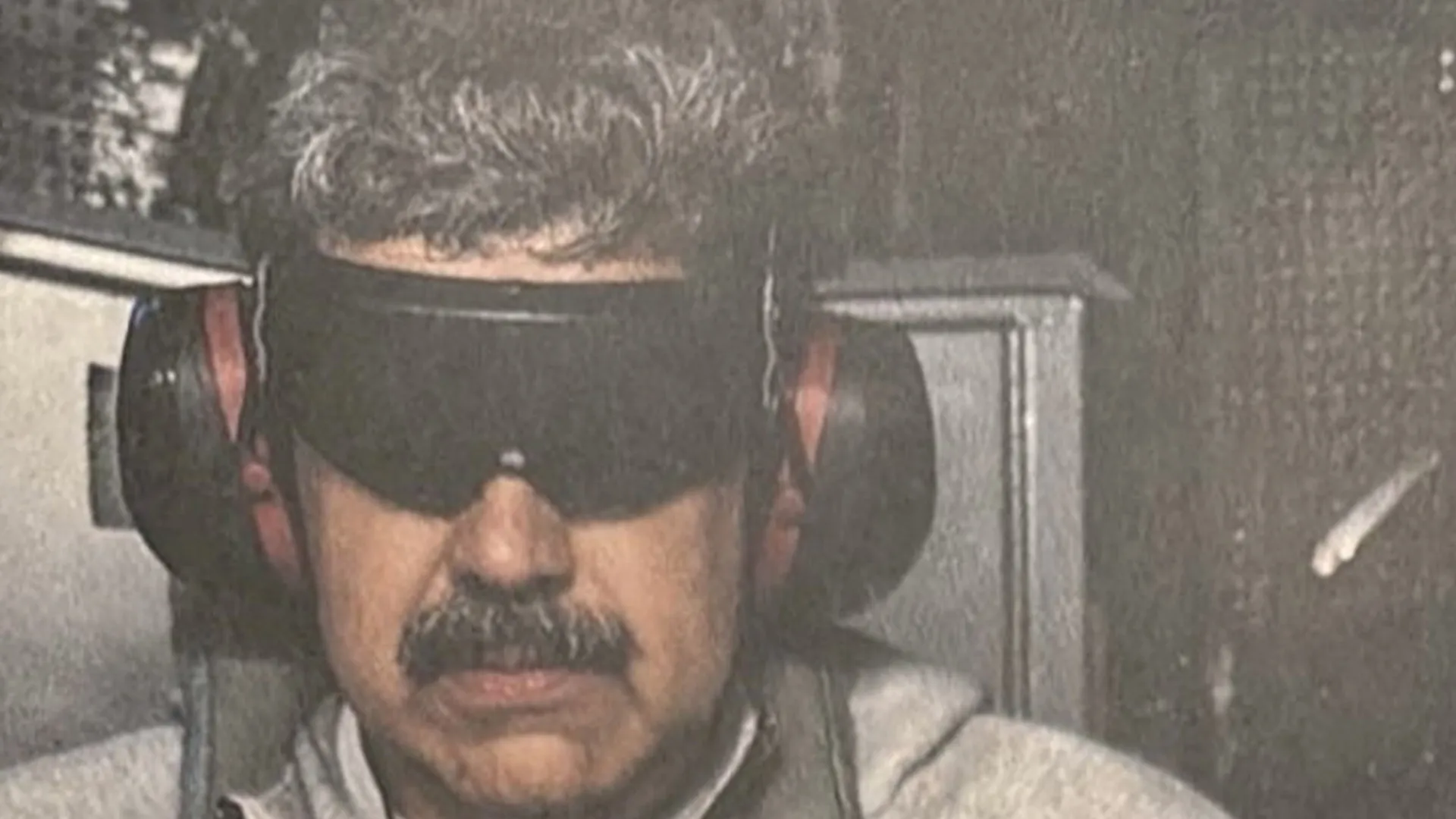
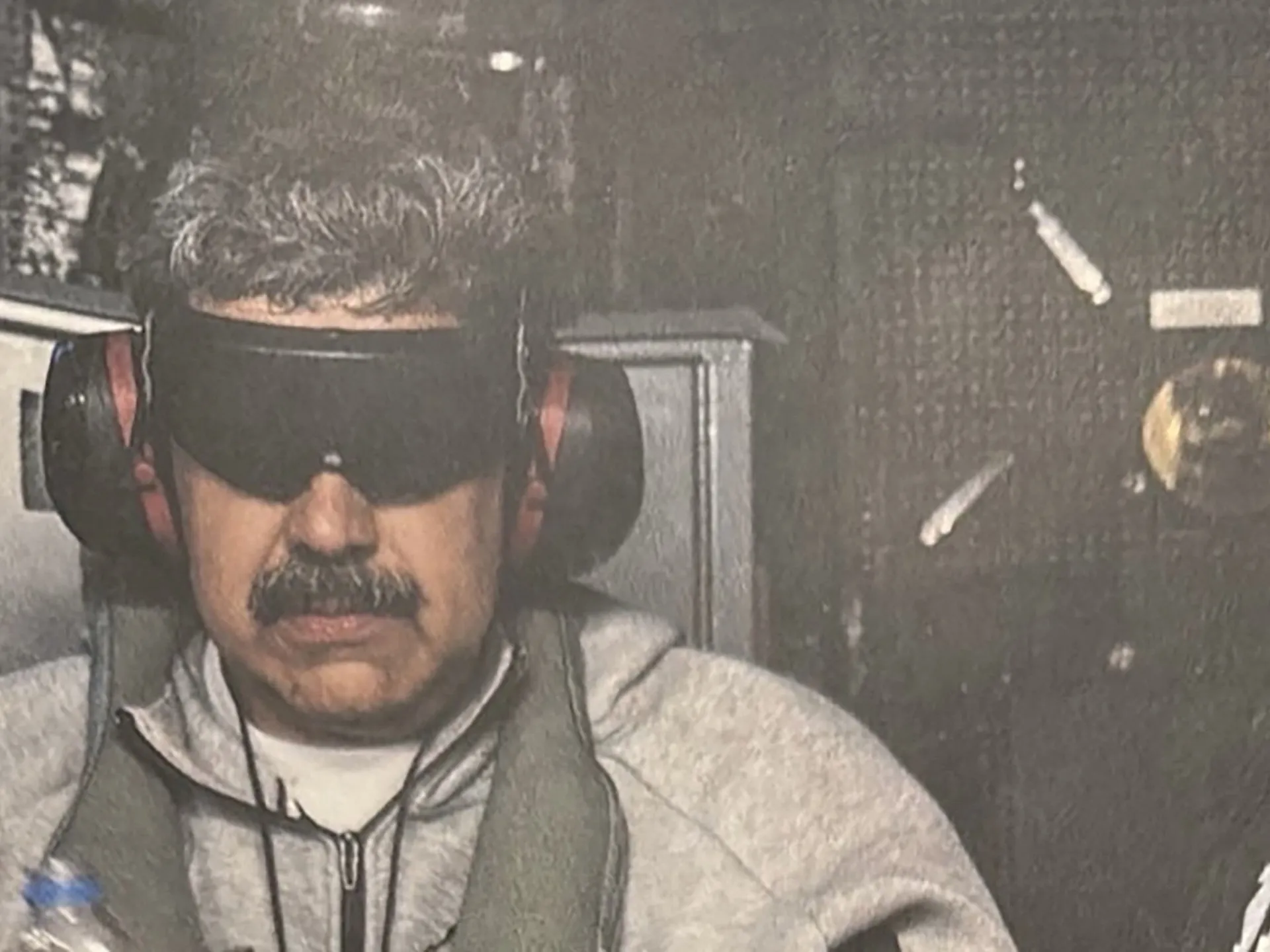
At 4:29am (08:29 GMT), just two and a half hours later, Maduro was put on board a US aircraft carrier, en route to New York. Trump later posted a photograph of the Venezuelan leader on his Truth Social social media platform, blindfolded, wearing a grey tracksuit.

After departing the USS Iwo Jima, US forces escorted Maduro on a flight, touching down in New York’s Stewart Air National Guard Base at about 4:30pm (21:30 GMT).

How many people were killed in the US strikes on Venezuela?

The US strikes hit Caracas as well as the states of Miranda, Aragua and La Guaira, according to the Venezuelan government.

To Linda Unamumo, a public worker, the US attacks caused an explosion that was so strong it destroyed the roof of her house.

“Even up until a little while ago, I was still crying … I was crying because I was so scared … I had to leave my house with my daughter, with my family, and go to another house, a neighbour’s house. It was really traumatic. I wouldn’t wish it on anyone, really,” she told the AFP news agency.

While official casualty counts have yet to be released, an official told The New York Times newspaper on condition of anonymity that at least 40 people had been killed in the attacks.

According to Trump, a few US members were injured in the operation, but he believed no one was killed.

What’s next for Venezuela?

During his news conference on Saturday, Trump announced that the US would “run” the country until a new leader was chosen.

“We’re going to make sure that country is run properly. We’re not doing this in vain,” he said. “This is a very dangerous attack. This is an attack that could have gone very, very badly.”

The president did not rule out deploying US troops in the country and said he was “not afraid of boots on the ground if we have to”.

Trump also, somewhat surprisingly, ruled out working with opposition figure and Nobel Peace Prize winner Maria Corina Machado, who had dedicated her prize, which he so wanted to win himself, to the US president.

“She doesn’t have the support within or the respect within the country,” he said.

The Constitutional Chamber of Venezuela’s Supreme Court ordered Vice President Delcy Rodriguez to serve as acting president following the US’s abduction of Maduro.

The court ruled that Rodriguez will assume “the office of President of the Bolivarian Republic of Venezuela, in order to guarantee administrative continuity and the comprehensive defence of the Nation”.

The court also said it would work to “determine the applicable legal framework to guarantee the continuity of the State, the administration of government, and the defense of sovereignty in the face of the forced absence of the President of the Republic”.

Trump had said earlier on Saturday that the US would not occupy Venezuela, provided Rodriguez “does what we want”.

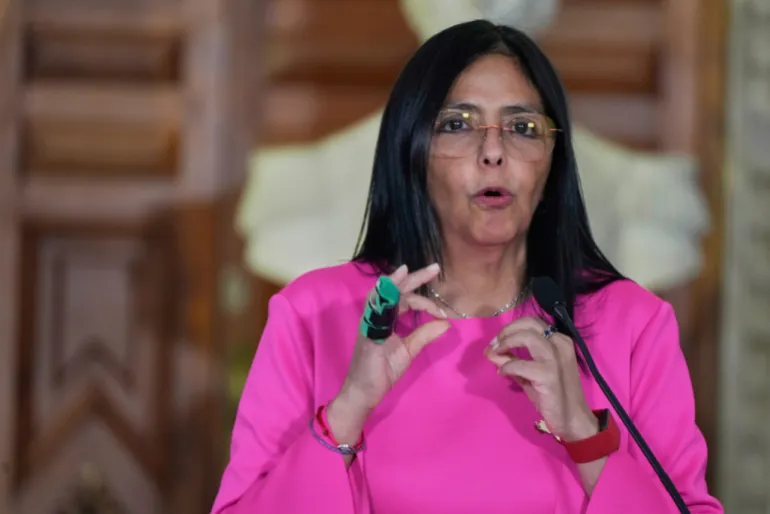
Delcy Rodriguez addresses the press
Venezuelan Vice President Delcy Rodriguez speaks to the press at the Foreign Office in Caracas, Venezuela, on August 11, 2025 [Ariana Cubillos/AP Photo]

Source link

China urges US to ‘stop toppling’ Venezuelan government, release Maduro | Nicolas Maduro News

China has called on the United States to immediately release Venezuelan President Nicolas Maduro after Washington carried out massive military strikes on the capital, Caracas, as well as other regions, and abducted the leader.

Beijing on Sunday insisted the safety of Maduro and his wife Cilia Flores be a priority, and called on the US to “stop toppling the government of Venezuela”, calling the attack a “clear violation of international law“.

Recommended Stories

list of 4 itemsend of list

It was the second statement issued by China since Saturday, after US President Donald Trump said Washington had taken Maduro and his wife and flown them out of the country.

On Saturday, Beijing slammed the US for “hegemonic acts” and “blatant use of force” against Venezuela and its president, urging Washington to abide by the United Nations charter.

China is closely watching developments in Venezuela, according to Andy Mok, a senior research fellow at the Center for China and Globalisation.

Mok told Al Jazeera that a Chinese delegation had met Venezuelan officials just hours before the US action, adding that Beijing was not surprised by Washington’s move, given the scale of US strategic and economic interests in the region.

What did stand out, he said, was how the operation was carried out, as it may “represent the long-term US strategy in the region”.

China is Venezuela’s largest buyer of oil, Mok added, although the country accounts for only 4-5 percent of its total oil imports. Beyond energy, he said, China has growing trade and investment interests across Latin America, meaning Beijing is paying close attention to political shifts in the region.

Mok warned that if a future US administration were to revive a Monroe Doctrine-style policy, it could increase tensions with China, as Latin America is a “pillar of China’s Global South strategy”.

Still, China is likely to limit its response to the events in Venezuela to diplomatic protest rather than hard power, according to China-based analyst Shaun Rein.

“I think China has issued a very strong condemnation of the United States, and they’re working with other Latin American and Caribbean countries to say this isn’t right,” Rein, founder of the China Market Research Group, told Al Jazeera.

Rein said Beijing is deeply alarmed but constrained, and its options are limited.

“There’s not a lot of things that China can do. Frankly, it doesn’t have the military power. It only has two military bases outside of China, while America has 800,” Rein noted, stressing that, “historically, China is not warlike”.

“China is just going to make proclamations criticising the United States’ actions, but they’re not going to push back with military action, and they’re probably not going to push back with economic sanctions.”

Global condemnations, celebrations

World reaction has poured in since the US military action in Venezuela, with opinion firmly split over the intervention.

Left-leaning regional leaders, including those of Brazil, Colombia, Chile and Mexico, have largely denounced Maduro’s ouster, while countries with right-wing governments, from Argentina to Ecuador, have largely welcomed it.

Australian Prime Minister Anthony Albanese on Sunday said he backed a “peaceful, democratic transition” of power in Venezuela, but urged that international law be respected.

His government was “monitoring developments”, he said in a statement.

South Korea also responded on Sunday, calling for a de-escalation of tensions.

“Our government urges all involved parties to make utmost efforts toward easing regional tensions. We hope for a quick stabilisation of the situation via dialogue, ensuring democracy is restored, and the will of the Venezuelan people is honoured,” its Ministry of Foreign Affairs said.

Venezuela has been increasingly isolated, particularly after Maduro’s contested election in 2024.

China and Russia, however, continue to maintain strong economic and strategic ties, and alliances have grown with Iran over their shared opposition to US policy.

Source link

Trump just sent a very dangerous message to Latin America | Nicolas Maduro

Within hours of a massive operation of regime change in Venezuela, United States President Donald Trump revelled in his “success”. He posted a photo of Venezuelan President Nicolas Maduro in handcuffs and then addressed the American public.

He praised the military for launching “one of the most stunning, effective and powerful displays of American military might” in US history, allegedly rendering Venezuelan forces “powerless”. He announced that Maduro and his wife would be indicted in New York for “narcoterrorism” and claimed – without evidence – that US operations have reduced maritime drug trafficking by 97 percent.

Trump went further, declaring that the US would “run the country” until an unspecified transition could be arranged, while openly threatening a “second and much larger attack”. Crucially, he framed these claims within a broader assertion of US “domination over the Western Hemisphere”, explicitly invoking the 1823 Monroe Doctrine.

The US military intervention in Venezuela represents something far more dangerous than a single act of aggression. It is the latest manifestation of a centuries-old pattern of US interference that has left Latin America scarred. The regime change operation in Caracas is a clear sign the Trump administration is embracing this old policy of interventionism with renewed fervour. And that bodes ill for the region.

That this attack targeted Maduro’s repressive and corrupt government, which was responsible for the immense suffering of many Venezuelans, makes the situation no less catastrophic. Washington’s long history of supporting brutal dictatorships across the region strips away any pretence of moral authority. Trump himself can hardly claim any moral high ground given that he is himself embroiled in a major political scandal due to his close ties with convicted paedophile Jeffrey Epstein and has maintained unconditional support for Israel’s genocide in Gaza.

The Trump administration’s attack on Venezuela solidifies a catastrophic pattern of violations of international law. If the US can unilaterally launch military strikes against sovereign nations at a whim, then the entire framework of international law becomes meaningless. This tells every nation that might and power trump legality and sovereignty.

For Latin America specifically, the implications are chilling. To understand why this attack reverberates so painfully across the region, one must take a quick look at its history. The US has orchestrated or supported coups and military dictatorships throughout the region with disturbing regularity.

In Guatemala in 1954, the CIA overthrew the democratically elected government of Jacobo Arbenz. In Chile in 1973, the US backed the coup that brought Augusto Pinochet to power and ushered in an era of unchecked political violence. In 1983, the US invaded and occupied the island of Grenada to overthrow its socialist government. In Argentina, Brazil, Uruguay, and throughout Central America, Washington provided training, funding and political cover for military regimes that tortured dissidents and murdered civilians.

The new question now is, if the US carried out regime change in Venezuela so easily, who is next? Colombia’s President Gustavo Petro, who has been at odds with the Trump administration, was quick to react – and is right to be concerned, as in December, Trump threatened an intervention, saying “he’ll be next“. Others in the region are also nervous.

Beyond the looming threat of US intervention, Latin America now also faces the potential regional instability that a regime change in Caracas is likely to create. The political crisis under Maduro had already spilled beyond its borders into neighbouring Colombia and Brazil, where Venezuelans fled poverty and repression. One can only imagine the ripple effect the US-enacted regime change will have.

There are probably many Venezuelans who are celebrating Maduro’s ouster. However, the US intervention directly undermines the political opposition in Venezuela. It would allow the regime, which appears to retain power, to paint all opposition as foreign agents, eroding its legitimacy.

The Venezuelan people deserve democracy, but they have to achieve it themselves with international support, not to have it imposed at gunpoint by a foreign power with a documented history of caring more about resources and geopolitical dominance than human rights.

Latin Americans deserve better than to choose between homegrown authoritarianism and imported violence. What they need is not American bombs but genuine respect for self-determination.

The US has no moral authority to attack Venezuela, regardless of Maduro’s authoritarian nature. Both can be true: Maduro is a dictator who caused immense harm to his people, and US military intervention is an illegal act of aggression that will not resolve the crisis of democracy in Venezuela.

The region’s future must be determined by people themselves, free from the shadow of empire.

The views expressed in this article are the author’s own and do not necessarily reflect Al Jazeera’s editorial stance.

Source link

Trump says US will ‘run’ Venezuela after Nicolas Maduro seized | Donald Trump News

United States President Donald Trump has said that Washington will “run” Venezuela until a political transition can take place, hours after US forces bombed the South American country and “captured” its president, Nicolas Maduro.

Speaking during a news conference on Saturday, Trump said the US would “run the country until such time as we can do a safe, proper and judicious transition”.

Recommended Stories

list of 3 itemsend of list

“We don’t want to be involved with having somebody else get in, and we have the same situation that we had for the last long period of years,” he said.

The Trump administration launched attacks on Venezuela’s capital, Caracas, and seized Maduro and his wife in the early hours of Saturday.

A plane carrying the Venezuelan leader landed in New York state on Saturday evening, according to US media.

Footage broadcast by CNN, Fox News and MS Now showed US officials escorting a person they identified as Maduro off a plane at the Stewart international airport, about 97 kilometres (60 miles) northwest of New York City.

Maduro’s capture took place after a months-long US pressure campaign against his government, which included US seizures of oil tankers off the Venezuelan coast, as well as deadly attacks on alleged drug-smuggling boats in the Caribbean. The attacks were widely denounced as extrajudicial killings.

Washington had accused the Venezuelan leader, who has been in power since 2013, of having ties to drug cartels. Maduro had rejected the claim, saying the US was working to depose him and take control of Venezuela’s vast oil reserves.

During Saturday’s news conference, Trump said that “very large United States oil companies” would move into Venezuela to “fix the badly broken… oil infrastructure and start making money for the country”.

He added that his administration’s actions “will make the people of Venezuela rich, independent and safe”.

The Trump administration has defended Maduro’s “capture, saying the left-wing leader faced drug-related charges in the US.

These charges include “narco-terrorism conspiracy, cocaine importation conspiracy, possession of machine guns and destructive devices, and conspiracy to possess machine guns and destructive devices against the United States”, US Attorney General Pam Bondi said.

“They will soon face the full wrath of American justice on American soil in American courts,” she added in a post on X.

A Justice Department official told the Reuters news agency that Maduro is expected to make an initial appearance in Manhattan federal court on Monday.

‘Illegal abduction’

But legal experts, world leaders and Democratic Party lawmakers in the US have condemned the administration’s actions as a violation of international law.

“Attacking countries, in flagrant violation of international law, is the first step towards a world of violence, chaos, and instability, where the law of the strongest prevails over multilateralism,” Brazilian President Luiz Inacio Lula da Silva wrote on X.

Ben Saul, the United Nations special rapporteur on human rights and counterterrorism, slammed what he called Washington’s “illegal abduction” of Maduro. “I condemn the US’ illegal aggression against Venezuela,” Saul wrote on social media.

A spokesperson for UN chief Antonio Guterres said he was “deeply alarmed” by the situation, describing the US’s actions as setting “a dangerous precedent”.

“The Secretary-General continues to emphasize the importance of full respect – by all – of international law, including the UN Charter. He’s deeply concerned that the rules of international law have not been respected,” Guterres’s office said in a statement.

Earlier on Saturday, Venezuela’s defence minister released a defiant statement in response to the US attacks, urging people to remain united.

“We will not negotiate; we will not give up,” Vladimir Padrino Lopez said, stressing that Venezuela’s independence is not up for negotiation. “We must maintain calm and [be] united in order to prevail in these dire moments.”

Uncertainty prevails

It remains unclear how exactly the US plans to “run” Venezuela, and how long the purported transitional period will last.

During Saturday’s news conference, Trump said that US Secretary of State Marco Rubio had spoken with Venezuelan Vice President Delcy Rodriguez.

“She was sworn in as president just a little while ago,” Trump told reporters. “She had a long conversation with [Rubio], and she said, ‘We’ll do whatever you need’. I think she was quite gracious, but she really doesn’t have a choice.”

Rodriguez appeared to contradict that in a news conference in Caracas later in the day.

“We demand the immediate release of President Nicolas Maduro and his wife. The only president of Venezuela is President Nicolas Maduro,” she said.

“We are ready to defend Venezuela. We are ready to defend our natural resources, which should be for national development,” she added.

Al Jazeera’s Latin America editor Lucia Newman, reporting from Chile, said that, if Rodriguez is “on board” with the US plan for Venezuela, as Trump and Rubio have suggested, “she certainly didn’t sound like it” during her address.

“She sounded like her typical, fiery self, very much on the side of… Maduro, demanding that he be released and saying that Venezuela would not be a colony of the United States,” Newman said.

The events of the day have brought “a rollercoaster of emotions” to “Venezuelans both inside and outside of the country”, said Caracas-based journalist Sissi de Flaviis.

“When we first heard that Maduro was taken out of the country, there was a mix of reactions,” she said. “A lot of people couldn’t believe it. Other people were pretty much celebrating. Other people were kind of on standby, waiting.”

After Trump’s news conference announcing US plans to run Venezuela, “there’s been a shock”, de Flaviis added.

“People are a bit concerned about what this will actually mean for us, what this will mean for the government and who is going to lead us in the next few days, months and years.”

Meanwhile, Harlan Ullman, a former US naval officer, told Al Jazeera that “the notion of America taking over Venezuela is going to explode in our faces”.

“When Trump says, ‘We’re going to run the country’: We’re not capable of running America, how are we going to be able to run Venezuela?” Ullman said.

“I do not believe that we have a plan for dealing with Venezuela,” he added. “A country is extraordinarily complex. We lack the knowledge, understanding and all the logistics to do this.”

Source link

World leaders react to US capture of Venezuelan leader Nicolás Maduro

Leaders around the world have responded with a mix of condemnation and support to the US capture of Venezuela’s President Nicolás Maduro.

Following a large-scale strike on Venezuela on Saturday, Maduro and his wife were captured by US forces and removed from the country. The pair have been indicted on drug charges in New York.

In an initial response, UK Prime Minister Keir Starmer said his government would “shed no tears” for the end of Maduro’s regime.

Neighbouring Latin American countries condemned the actions, as did Venezuela’s long-term allies, Russia and China. China said it was “deeply shocked and strongly condemns” the use of force against a sovereign country and its president.

Russia accused the US of committing “an act of armed aggression”.

Iran, which is locked in its own dispute with Trump over his promise of intervention in its country, called the strikes a “flagrant violation of the country’s national sovereignty”.

Trump said the US will “run” Venezuela “until we can do a safe, proper and judicious transition”.

Many Latin American leaders condemned the US actions.

President Luiz Inacio Lula Da Silva in Brazil wrote on X that the actions “cross an unacceptable line”, adding “attacking countries in flagrant violation of international law is the first step toward a world of violence, chaos, and instability”.

Colombian President Gustavo Petro called the strikes an “assault on the sovereignty” of Latin America, while Cuba’s President Miguel Diaz-Canel described it as a “criminal attack”.

Chile’s President Gabriel Boric expressed “concern and condemnation” on X and called for “a peaceful solution to the serious crisis affecting the country”.

Cuban President Miguel Diaz-Cane accused the US of a “criminal attack”, while Uruguay said in an official statement it was monitoring developments “with attention and serious concern” and “rejects, as it always has, military intervention”.

Trump has indicated that Cuba could become part of a broader US policy in the region, calling it a failing nation. Secretary of State Marco Rubio said Cuba was a disaster run by incompetent leaders who supported Maduro’s administration. He said the government in Havana should be concerned

The Venezuelan Interior Minister Diosdado Cabello urged citizens to remain calm and to trust the country’s leadership and military, saying, “The world needs to speak out about this attack,” according to the Reuters news agency.

But Argentinian President Javier Milei – who Trump has described as his “favourite president” – wrote “Freedom moves forward” and “Long live freedom” on social media.

Meanwhile UK Prime Minister Sir Keir Starmer refused to be drawn into whether or not the military action may have broken international law.

In an interview with the BBC’s Sunday with Laura Kuenssberg programme on Saturday morning, the prime minister did not condemn the US strikes.

He said he was waiting to establish all the facts but would not “shy away from this”, adding he was a “lifelong advocate of international law”.

The UK was not involved in the strikes and Sir Keir said he had not spoken to Trump about the operation.

Later on Saturday, Sir Keir posted on X that the UK “regarded Maduro as an illegitimate president and we shed no tears about the end of his regime”.

“The UK government will discuss the evolving situation with US counterparts in the days ahead as we seek a safe and peaceful transition to a legitimate government that reflects the will of the Venezuelan people,” he added.

The EU’s top diplomat Kaja Kallas reiterated the bloc’s position that Maduro lacks legitimacy, that there should be a peaceful transition of power, and that the principles of international law must be respected.

French President Emmanuel Macron said the transition of power “must be peaceful, democratic, and respectful of the will of the Venezuelan people” in a post on X.

He added he hoped González – the opposition’s 2024 presidential candidate – could ensure the transition.

German Chancellor Friedrich Merz said the legality of the US operation was “complex” and international law in general must apply.

He warned that “political instability must not be allowed to arise in Venezuela”.

UN Secretary General Antonio Guterres said he was “deeply concerned that the rules of international law have not been respected”, his spokesperson said. He was “deeply alarmed” by the strikes, which set a “dangerous precedent”.

He called on all actors in Venezuela to engage in inclusive dialogue, in full respect of human rights and the rule of law”.

In the US, Senate Minority Leader Chuck Schumer, a Democrat, said, “Let me be clear, Maduro is an illegitimate dictator, but launching military action without congressional authorization, without a federal plan for what comes next, is reckless”

Source link

Venezuelans react to US Maduro arrest with hope and uncertainty

Grace Eliza Goodwin,

Cristobal Vasquezand

Tom Bateman,State department correspondent

Getty Images A man wipes his tears while holding flags of Venezuela and the United States next to the statue of Simon Bolivar in Bogota, Colombia during a rally after Nicolás Maduro's capture.Getty Images

Protestors held a rally in Bogota, Colombia after Nicolás Maduro’s capture.

As the dust settles in Caracas, Venezuelans are reacting to the news of President Nicolás Maduro’s capture by the US with hope, fear, and uncertainty.

People began to emerge in the streets Saturday after a night rocked by explosions in the Caracas Valley, with moods that ranged from celebration to condemnation.

Dina, a local resident, told the BBC that for now, she is grateful to the US for “taking Maduro out of here” because now, she “at least can see some light at the end of the tunnel again”.

But the political climate remains tense, part of why she did not give the BBC her real name.

Jorge, another Venezuelan who lives near Caracas, told the BBC that while he’s grateful to be “well-supported by Trump and the entire United States”, he fears the coming days will not be easy.

“Now that they are taking this man away, what’s going to happen?” Jorge told the BBC. “It doesn’t guarantee us anything. So there is a bit of uncertainty. We don’t know what the coming days will bring.”

Supporters of Maduro’s government have also been rallying in the streets of Caracas, demanding the US release their leader. Caracas Mayor Carmen Meléndez, a firm government loyalist, joined in the rally to protest against what she called Maduro’s “kidnapping”.

Early Saturday, US forces under President Donald Trump carried out a series of targeted attacks in Venezuela’s capital, ultimately taking the country’s leader into US custody.

The US accuses Maduro of running a “narco-terrorist” regime. He is widely seen by opponents within his country as well as by foreign governments as having illegitimately won Venezuela’s 2024 election.

Maduro – who leads the United Socialist Party and has been in power since 2013 – has frequently been accused of repressing opposition groups and silencing dissent in Venezuela, at times with the use of violence.

As Maduro and his wife are extradited to New York City to face drug trafficking and weapons charges, the future of Venezuela remains unclear. Trump has said the US will run the country – and manage its oil reserves – until a permanent replacement for Maduro can be established.

Maduro has previously rejected US claims he has direct involvement in drug trafficking.

But even for those who are grateful to see Maduro gone, there’s still a lot of fear and uncertainty, several Venezuelans told the BBC.

Dina isn’t putting much faith in Trump.

“He says something now and tomorrow he changes his mind,” Dina said of Trump. “I mean, I’m not used to taking his words seriously.”

The “only thing that was good” about what Trump has said since Maduro’s capture, Dina said, is that the US will be investing in Venezuela, which she hopes will lead to “a better economic situation” for the struggling country.

Venezuela VP: Maduro is ‘the only president’

The danger of speaking out against Maduro is still very real within Venezuela, as the National Assembly – which is dominated by Maduro loyalists – passed a law a few weeks ago declaring anyone who expresses support for US naval blockades a “traitor”.

Jorge said he saw motorcyclists from colectivos, which are pro-government paramilitary groups in Venezuela, roaming the streets with weapons yesterday.

“It makes you a bit afraid to even go out to buy bread right now,” he said. “We’ll have to wait for the best and have patience.”

Jorge added that he’s worried about the influence of Maduro’s ally, Diosdado Cabello, Venezuela’s Minister of Interior, Justice and Peace.

“He is a very bad person, very spiteful,” Jorge said of Cabello. “I don’t know how many people he has on his side. Hopefully, the army stands with the people and he loses some control.”

Sandra echoed Jorge and Dina’s relief at Maduro’s ousting. But, she too is skeptical about the future and what it means for Venezuelans in exile.

Close to eight million Venezuelans have left Venezuela since Maduro came to power – and many of them have been openly celebrating Maduro’s capture in the streets of the cities where they have settled.

In addition to the millions in exile, others are “missing, imprisoned, dead, or merely surviving”, — which is “a true tragedy that had not been addressed by any country”, Sandra said.

“This is only the beginning; we know there is still a long road ahead,” Sandra added. “No country had previously heard the cry of Venezuelans in the face of this tragedy”.

Tom Bateman and Kristina Volk contributed to this report.

Source link

What are the implications of US ‘capture’ of Nicolas Maduro? | Nicolas Maduro

US special forces have seized Venezuela’s president and his wife.

US special forces seized Venezuela’s president, Nicolas Maduro, in an attack that has taken the country and the world by surprise.

Maduro has long denied accusations by US President Donald Trump of heading a narcotics cartel.

So, what are the implications of Washington’s actions?

Presenter: James Bays

Guests:

Phil Gunson – senior analyst for the Andes Project at the International Crisis Group

Richard Weitz – US security analyst and senior fellow at the NATO Defense College

Temir Porras – foreign policy adviser to former Venezuelan President Hugo Chavez and former chief of staff to Maduro

Source link

Many U.S. Venezuelans praise Maduro capture, but some protest in Los Angeles

Maria Eugenia Torres Ramirez was having dinner with her family in Los Angeles on Friday night when the flood of messages began. Word had begun to circulate that the U.S. was invading Venezuela and would seize its president, Nicolás Maduro.

Torres Ramirez, 38, fled her native country in 2021, settled in L.A. and has a pending application for asylum. Her family is scattered throughout the world — Colombia, Chile and France. Since her parents died, none of her loved ones remain in Venezuela.

Still, news that the autocrat who separated them had been captured delivered a sense of long-awaited elation and united the siblings and cousins across continents for a rare four-hour phone call as the night unfolded.

“I waited for this moment for so long from within Venezuela, and now that I’m out, it’s like watching a movie,” said Torres Ramirez, a former political activist who opposed Maduro. “It’s like a jolt of relief.”

Many Venezuelans across the U.S. celebrated the military action that resulted in Maduro’s arrest. Economic collapse and political repression led roughly 8 million Venezuelans to emigrate since 2014, making it one of the world’s largest displacement crises.

About 770,000 live in the U.S. as of 2023, concentrated mainly in the regions of Miami, Orlando, Houston and New York. Just over 9,500 live in L.A., according to a 2024 U.S. Census estimate.

In the South Florida city of Doral, home to the largest Venezuelan American community, residents poured into the streets Saturday morning, carrying the Venezuelan flag, singing together and praising the military action as an act of freedom.

In Los Angeles, a different picture emerged as groups opposed to Maduro’s arrest took to the streets, though none identified themselves as being of Venezuelan descent. At a rally of about 40 people south of downtown Los Angeles, John Parker, a representative of the Harriet Tubman Center for Social Justice, called the raid a “brutal assault and kidnapping” that amounted to a war crime.

The United States’ intervention in Venezuela had nothing to do with stopping the flow of drugs, he said, and everything to do with undermining a legitimate socialist government. Parker called for Maduro to be set free as a few dozen protesters behind him chanted, “Hands off Venezuela.”

Parker said when he visited Venezuela a few weeks ago as part of a U.S. peacemaking delegation, he saw “the love people had for Maduro.”

A later demonstration in Pershing Square drew hundreds out in the rain to protest the U.S intervention. But when a speaker led chants of “No war in Venezuela,” a woman draped in a Venezuelan flag attempted to approach him and speak into the microphone. A phalanx of demonstrators circled her and shuttled her away.

At Mi Venezuela, a restaurant in Vernon, 16-year-old Paola Moleiro and her family ordered empanadas Saturday morning.

A portion of one of the restaurant’s walls was covered in Venezuelan bank notes scrawled with messages. One read: “3 de enero del 2026. Venezuela quedo libre.

Venezuela is free.

Around midnight the night before, Paola started getting messages on WhatsApp from her relatives in Venezuela. The power was out, they said, and they forwarded videos of what sounded like bomb blasts.

Paola was terrified. She’d left Venezuela at age 7 with her parents and siblings, first for Panama and later the U.S., in 2023. But the rest of her family remained in Venezuela, and she had no idea what was going on.

Paola and her family stayed up scanning television channels for some idea of what was happening. Around 1:30 a.m., President Trump announced that U.S. forces had captured Maduro.

“The first thing I did, I called my aunt and said, ‘We are going to see each other again,’” she said.

Because of the Venezuelan state’s control over media, her relatives had no idea their leader had been seized by U.S. forces. “Are you telling me the truth?” Paola said her aunt asked.

Paola hasn’t been home in nine years. She misses her grandmother and her grandmother’s cooking, especially her caraotas negras, or black beans. As a child, she said, certain foods were so scarce that she had an apple for the first time only after moving to Panama.

Paola said she was grateful to Trump for ending decades of authoritarian rule that had reduced her home country to a shell of what it once was.

“Venezuela has always prayed for this,” she said. “It’s been 30 years. I feel it was in God’s hands last night.”

For Torres Ramirez, it was difficult to square her appreciation for Trump’s accomplishment in Venezuela with the fear she has felt as an immigrant under his presidency.

“It’s like a double-edged sword,” she said. “Throughout the course of this whole year, I have felt persecuted. I had to face ICE — I had to go to my appointment with the fear that I could lose it all because the immigration policies had changed and there was complete uncertainty. For a moment, I felt as if I was in Venezuela. I felt persecuted right here.”

During a news conference Saturday morning, Trump said Maduro was responsible for trafficking illicit drugs into the U.S. and the deaths of thousands of Americans. He repeated a baseless claim that the Maduro government had emptied Venezuela’s prisons and mental institutions and “sent their worst and most violent monsters into the United States to steal American lives.”

“They sent everybody bad into the United States, but no longer, and we have now a border where nobody gets through,” he said.

Trump also announced that the U.S. will “run” Venezuela and its vast oil reserves.

“We’ll run it professionally,” he said. “We’ll have the greatest oil companies in the world go in and invest billions and billions of dollars and take that money, use that money in Venezuela, and the biggest beneficiary are going to be the people of Venezuela.”

Torres Ramirez said that while she’s happy about Maduro’s ouster, she’s unsure how to feel about Trump’s announcement saying the U.S. will take over Venezuela’s oil industry. Perhaps it won’t be favorable in the long term for Venezuela’s economy, she said, but the U.S. intervention is a win for the country’s political future if it means people can return home.

Patricia Andrade, 63, who runs Raíces Venezolanas, a volunteer program in Miami that distributes donations to Venezuelan immigrants, said she believes the Trump administration is making the right move by remaining involved until there is a transition of power.

Andrade, a longtime U.S. citizen, said she hasn’t been to Venezuela in 25 years — even missing the deaths of both parents. She said she was accused of treason for denouncing the imprisonment of political opponents and the degradation of Venezuela’s democracy under Maduro’s predecessor Hugo Chavez. She said she worries that Venezuela’s remaining political prisoners could be killed as payback for Maduro’s arrest.

“We tried everything — elections, marches, more elections … and it couldn’t be done,” she said. “Maduro was getting worse and worse, there was more repression. If they hadn’t removed him, we were never going to recover Venezuela.”

While she doesn’t want the U.S. to fix the problems of other countries, she thanked Trump for U.S. involvement in Venezuela.

She said she can’t wait to visit her remaining family members there.

Source link

On the ground in Venezuela: Shock, fear and defiance

It was about 2 a.m. Saturday Caracas time when the detonations began, lighting up the sullen sky like a post-New Year’s fireworks display.

“¡Ya comenzó!” was the recurrent phrase in homes, telephone conversations and social media chats as the latest iteration of U.S. “shock and awe” rocked the Venezuelan capital. “It has begun!”

Then the question: “¿Maduro?”

The great uncertainty was the whereabouts of President Nicolás Maduro, who has been under Trump administration threat for months.

The scenes of revelry from a joyous Venezuelan diaspora celebrating from Miami to Madrid were not repeated here. Fear of the unknown kept most at home.

Hours would pass before news reports from outside Venezuela confirmed that U.S. forces had captured Maduro and placed him on a U.S. ship to face criminal charges in federal court in New York.

Venezuelans had watched the unfolding spectacle from their homes, using social media to exchange images of explosions and the sounds of bombardment. This moment, it was clear, was ushering in a new era of uncertainly for Venezuela, a nation reeling from a decade of economic, political and social unrest.

Government supporters display posters of Venezuelan President Nicolás Maduro, right, and former President Hugo Chávez

Government supporters display posters of Venezuelan President Nicolás Maduro, right, and former President Hugo Chávez in downtown Caracas on Saturday.

(Matias Delacroix / Associated Press)

The ultimate result was an imponderable. But that this was a transformative moment — for good or bad — seemed indisputable.

By daybreak, an uneasy calm overtook the city of more than 3 million. The explosions and the drone of U.S. aircraft ceased. Blackouts cut electricity to parts of the capital.

Pro-government youths wielding automatic rifles set up roadblocks or sped through the streets on motorcycles, a warning to those who might celebrate Maduro’s downfall.

Shops, gas stations and other businesses were mostly closed. There was little traffic.

“When I heard the explosions, I grabbed my rosary and began to pray,” said Carolina Méndez, 50, who was among the few who ventured out Saturday, seeking medicines at a pharmacy, though no personnel had arrived to attend to clients waiting on line. “I’m very scared now. That’s why I came to buy what I need.”

A sense of alarm was ubiquitous.

“People are buying bottled water, milk and eggs,” said Luz Pérez, a guard at one of the few open shops, not far from La Carlota airport, one of the sites targeted by U.S. strikes. “I heard the explosions. It was very scary. But the owner decided to open anyway to help people.”

Customers were being allowed to enter three at a time. Most didn’t want to speak. Their priority was to stock up on basics and get home safely.

Rumors circulated rapidly that U.S. forces had whisked away Maduro and his wife, Cilia Flores.

There was no immediate official confirmation here of the detention of Maduro and Flores, both wanted in the United States for drug-trafficking charges — allegations that Maduro has denounced as U.S. propaganda. But then images of an apparently captive Maduro, blindfolded, in a sweatsuit soon circulated on social media.

There was no official estimate of Venezuelan casualties in the U.S. raid.

Rumors circulated indicating that a number of top Maduro aides had been killed, among them Diosdado Cabello, the security minister who is a staunch Maduro ally. Cabello is often the face of the government.

But Cabello soon appeared on official TV denouncing “the terrorist attack against our people,” adding: “Let no one facilitate the moves of the enemy invader.”

Although Trump, in his Saturday news conference, confidently predicted that the United States would “run” Venezuela, apparently during some undefined transitional period, it’s not clear how that will be accomplished.

A key question is whether the military — long a Maduro ally — will remain loyal now that he is in U.S. custody. There was no public indication Saturday of mass defections from the Venezuelan armed forces. Nor was it clear that Maduro’s government infrastructure had lost control of the country. Official media reported declarations of loyalty from pro-government politicians and citizens from throughout Venezuela.

In his comments, Trump spoke of a limited U.S. troop presence in Venezuela, focused mostly on protecting the oil infrastructure that his administration says was stolen from the United States — a characterization widely rejected here, even among Maduro’s critics. But Trump offered few details on sending in U.S. personnel to facilitate what could be a tumultuous transition.

Meantime, Venezuelan Vice President Delcy Rodríguez surfaced on official television and demanded the immediate release of Maduro and his wife, according to the official Telesur broadcast outlet. Her comments seemed to be the first official acknowledgment that Maduro had been taken.

“There is one president of this country, and his name is Nicolás Maduro,” the vice president said in an address from Miraflores Palace, from where Maduro and his wife had been seized hours earlier.

During an emergency meeting of the National Defense Council, Telesur reported, Rodríguez labeled the couple’s detention an “illegal kidnapping.”

The Trump administration, the vice president charged, meant to “capture our energy, mineral and [other] natural resources.”

Her defiant words came after Trump, in his news conference, said that Rodríguez had been sworn in as the country’s interim president and had evinced a willingness to cooperate with Washington.

“She’s essentially willing to do what we think is necessary to make Venezuela great again,” Trump said.

Pro-government armed civilians patrol in La Guaira, Venezuela

Pro-government armed civilians patrol in La Guaira, Venezuela, on Saturday after President Trump announced that President Nicolás Maduro had been captured and flown out of the country.

(Matias Delacroix / Associated Press)

Somewhat surprisingly, Trump also seemed to rule out a role in an interim government for Marina Corina Machado, the Venezuelan Nobel Peace Prize laureate and longtime anti-Maduro activist.

“She’s a very nice woman, but doesn’t have respect within the country,” Trump said of Machado.

Machado is indeed a controversial figure within the fractured Venezuelan opposition. Some object to her open calls for U.S. intervention, preferring a democratic change in government.

Nonetheless, her stand-in candidate, Edmundo González, did win the presidency in national balloting last year, according to opposition activists and others, who say Maduro stole the election.

“Venezuelans, the moment of liberty has arrived!” Machado wrote in a letter released on X. “We have fought for years. … What was meant to happen is happening.”

Not everyone agreed.

“They want our oil and they say it’s theirs,” said Roberto, 65, a taxi driver who declined to give his last name for security reasons. “Venezuelans don’t agree. Yes, I think people will go out and defend their homeland.”

Special correspondent Mogollón reported from Caracas and staff writer McDonnell from Boston. Contributing was special correspondent Cecilia Sánchez Vidal in Mexico City.

Source link