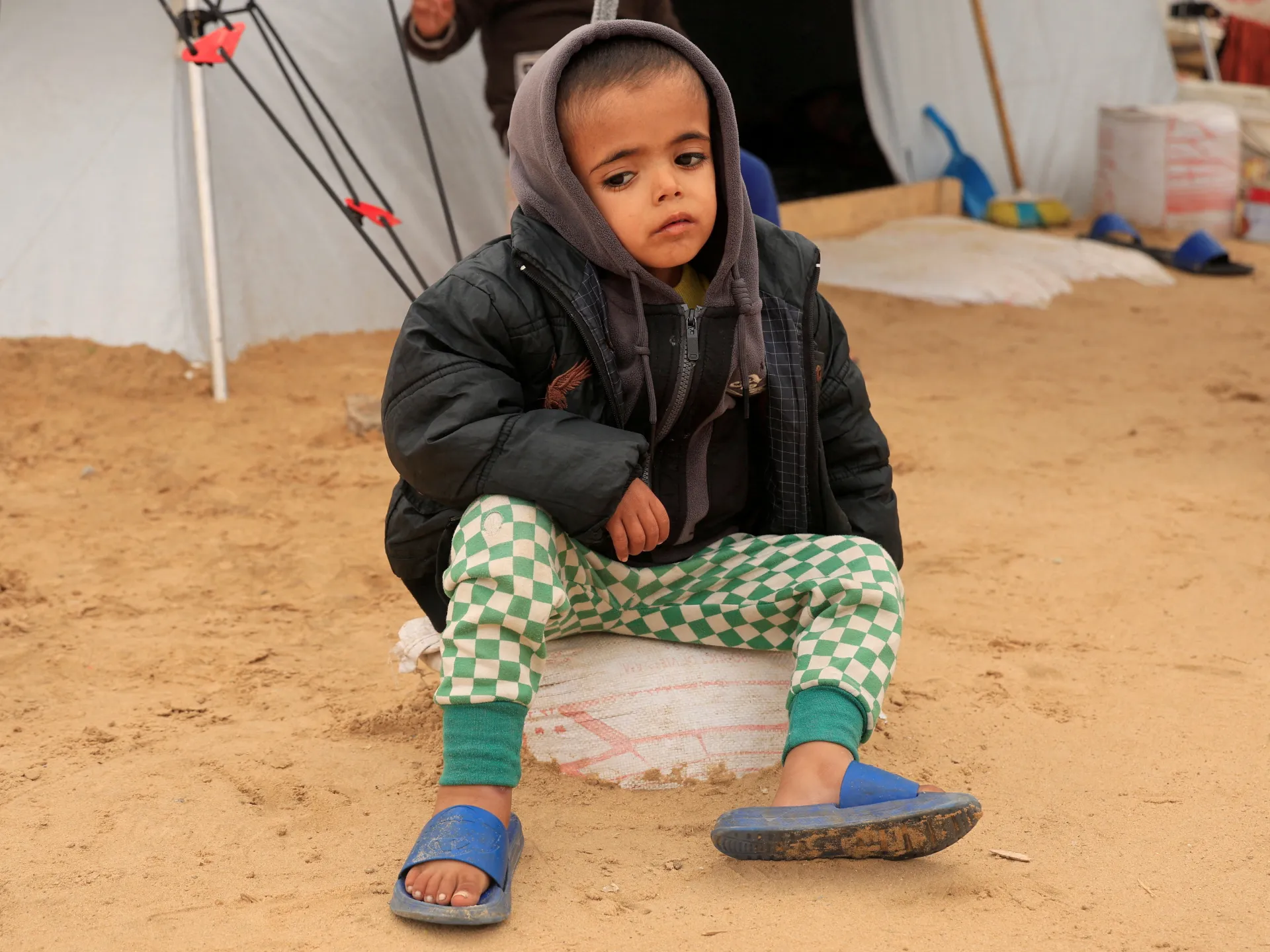
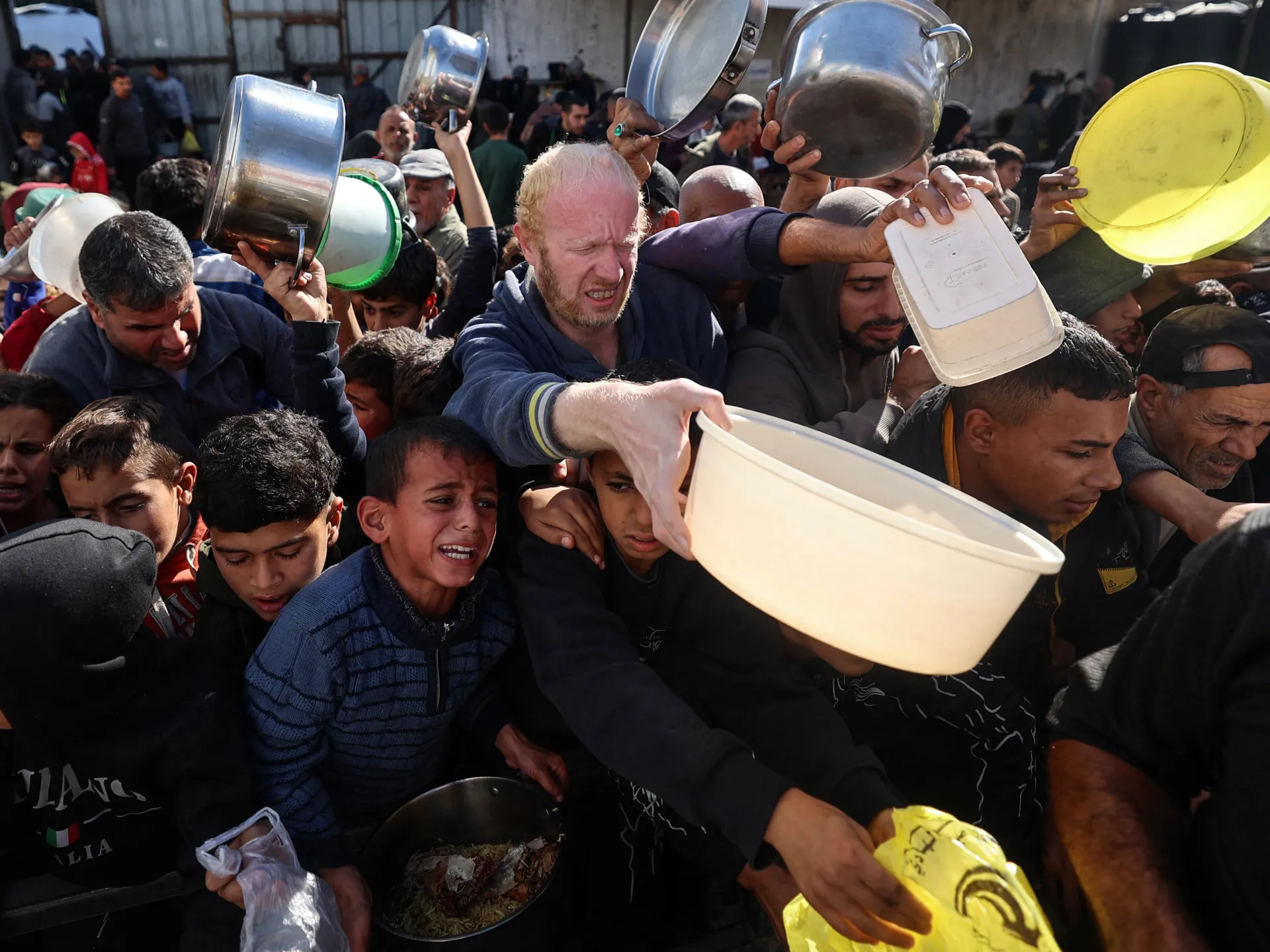
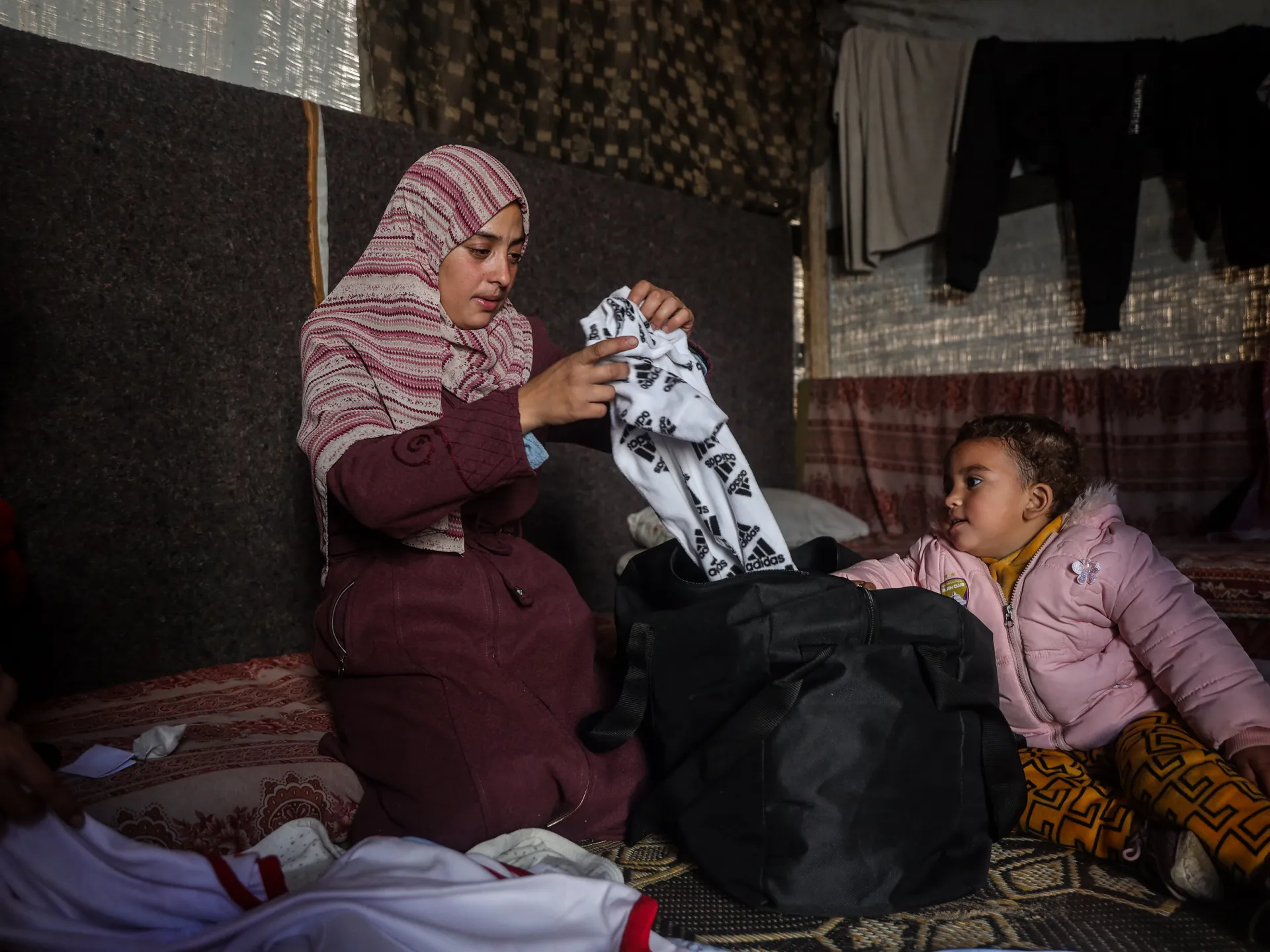
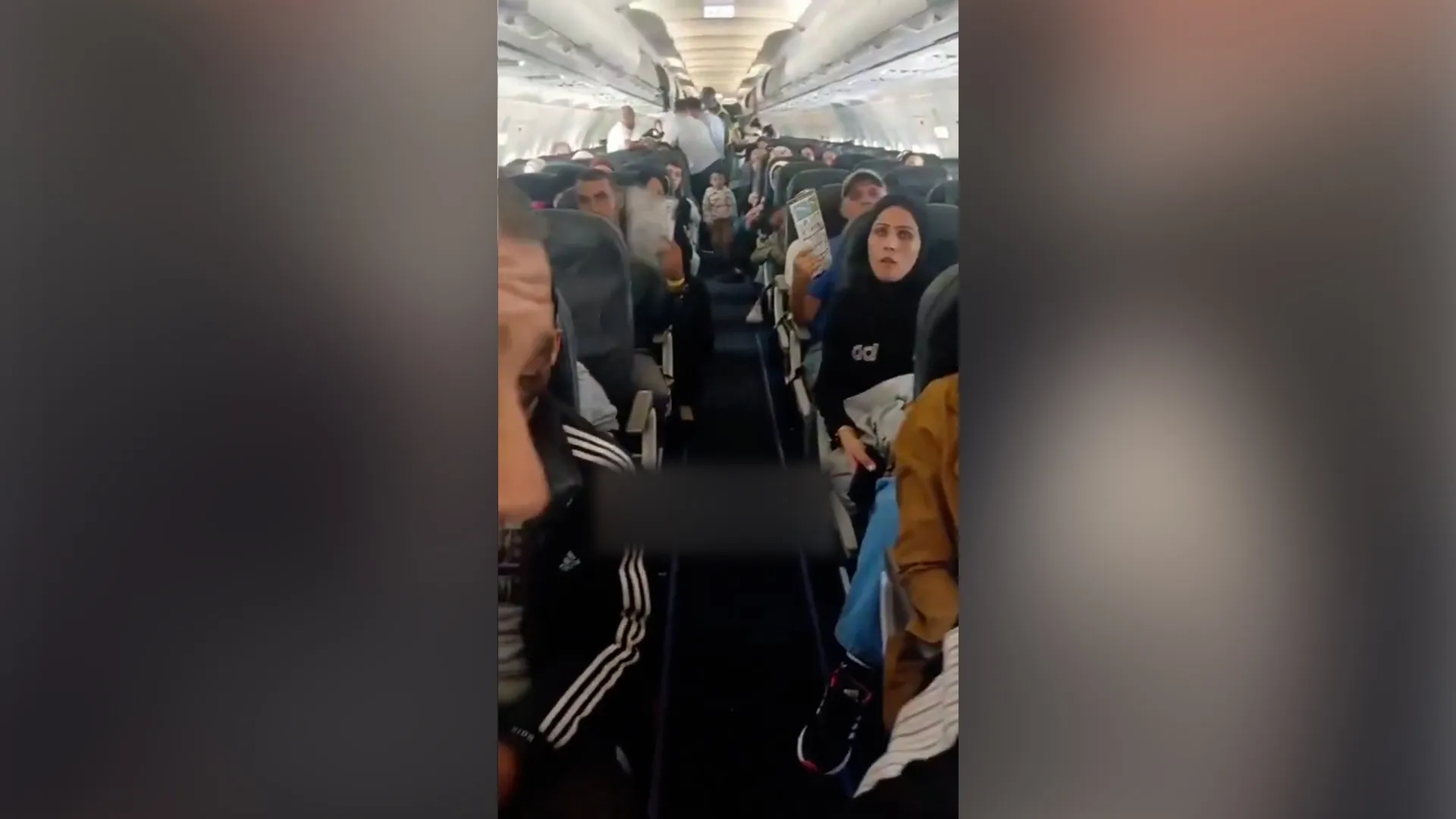
A Palestinian woman in Gaza has died as a winter storm threatens the lives of nearly 900,000 Palestinians living in tents across the devastated coastal enclave.
The 30-year-old, identified as Alaa Marwan Juha, died on Sunday when a wall collapsed onto her tent in the Remal neighbourhood to the west of Gaza City, Al Jazeera Arabic reported.
Recommended Stories
list of 4 itemsend of list
The incident occurred amid heavy rain and strong winds that have battered the Gaza Strip since Saturday evening, flooding and blowing away thousands of tents sheltering the forcibly displaced Palestinians.
Al Jazeera Arabic, citing witnesses, reported that the partially destroyed wall gave way under the force of the wind, crashing down on the tent beside it. The wall collapse also injured several members of Juha’s family, the network reported.
Many Palestinian families have been living in tents since late 2023 as Israel waged its genocidal war on Gaza. The enclave is imminently facing freezing temperatures, rain and strong winds, as the authorities warn the downpour could intensify into a full-blown storm.
‘Disaster area’
Amjad Shawa, director of the Palestinian NGOs Network (PNGO), told Al Jazeera Arabic that the severe weather conditions are exacerbating an already catastrophic humanitarian situation.
“This low-pressure system will complicate matters further … and poses a danger to the lives of citizens,” Shawa said.
He said the tents offer no real protection against flooding and called for an urgent entry of mobile homes, or caravans, and equipment to repair destroyed sewage networks.
“Tents represent neither a choice nor a solution,” he said, noting that agreed humanitarian protocols stipulate the provision of adequate shelter.
A displaced Palestinian woman adjusts the canvas of the family tent shelter as the region experiences rain and cold winter conditions, in Gaza City, on December 28, 2025 [AFP]
Shawa urged the international community to pressure Israel to lift restrictions on life-saving aid, describing the entire Gaza Strip as a “disaster area”.
At least 15 people, including three babies, have died this month from hypothermia following the rains and plunging temperatures, according to the authorities in Gaza.
Emergency workers have warned people not to stay in damaged buildings, several of which have completely collapsed. But with much of the Palestinian territory reduced to rubble, there are few places to escape the rain.
Meanwhile, the healthcare system in Gaza is on the brink of total collapse, and the absence of much-needed aid, including medicine and medical supplies, is exacerbating the situation.
Ceasefire violations
Separately on Sunday, Israeli Prime Minister Benjamin Netanyahu left Tel Aviv for the United States, as negotiators and others discuss the second stage of the ceasefire, the first phase of which took effect on October 10.
Israel continues to violate the ceasefire agreement and block desperately needed humanitarian aid to the war-ravaged coastal enclave, even though these are stipulated in the first phase of the agreement.
A 20-point plan proposed by US President Donald Trump in September called for an initial truce followed by steps towards a wider peace. So far, as part of the first phase, there has been the exchange of captives held by Hamas in Gaza and prisoners in Israeli jails, and a partial withdrawal of Israeli forces from the enclave.
However, Israeli attacks continue. Since the truce went into effect, more than 414 Palestinians have been killed and 1,142 wounded in ceasefire violations, according to Gaza’s Ministry of Health.
Israel’s genocidal war on Gaza has killed at least 71,266 Palestinians and wounded 171,219 since October 2023.
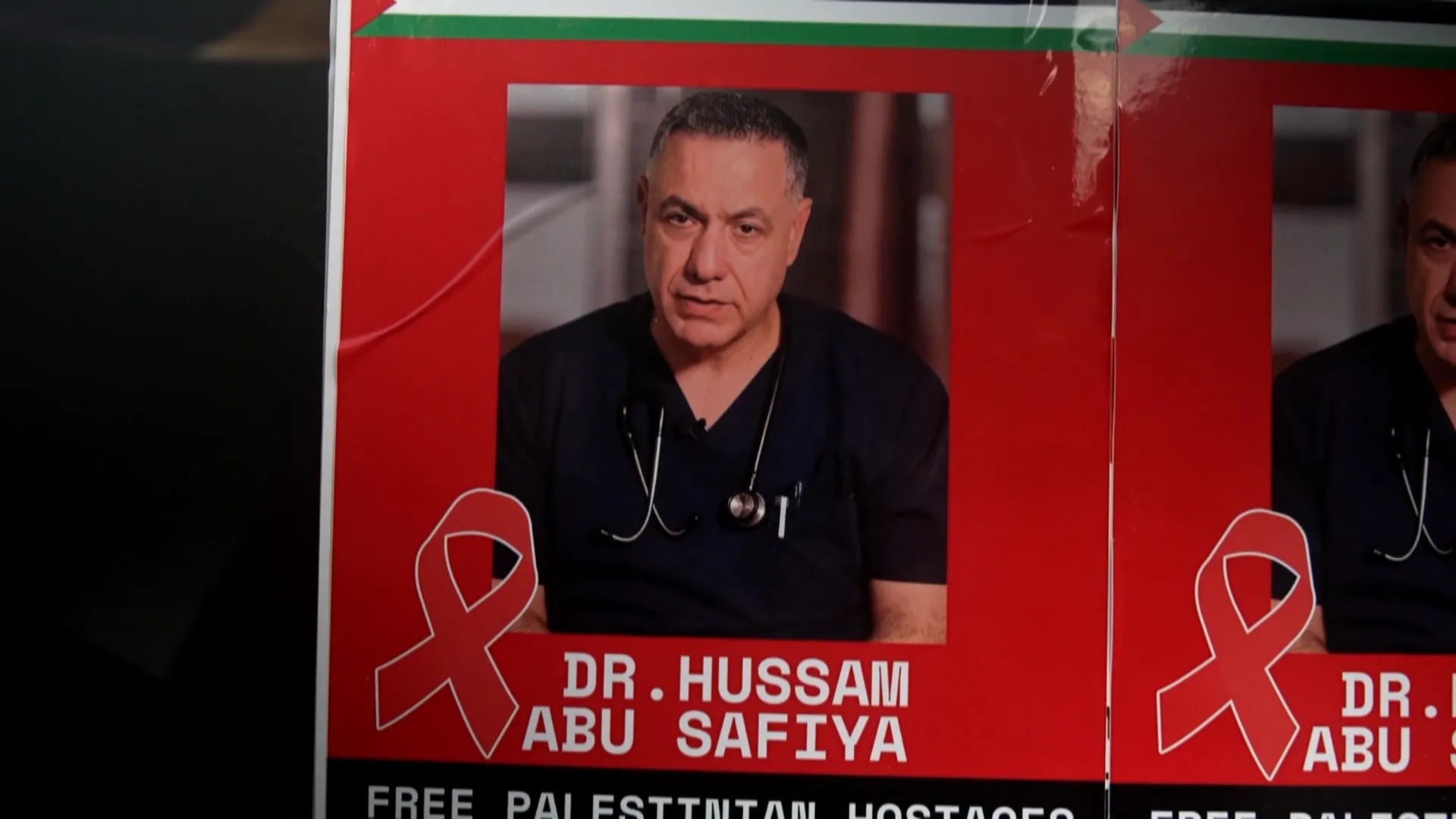
Israel has held Gaza doctor Hussam Abu Safia for an entire year without charge. His son is pleading for his release, describing his father’s mistreatment in detention and recalling his refusal to abandon his patients at Kamal Adwan Hospital.
Tens of thousands of displaced Palestinians in Gaza, surrounded by tents and debris, are suffering through more winter rains after two years of Israeli bombardment destroyed much of the Strip.
A polar low-pressure system accompanied by heavy rain and strong winds swept across the Gaza Strip on Saturday. It is the third polar low to affect the Palestinian territory this winter, with a fourth low-pressure system forecast to hit the area starting on Monday, meteorologist Laith al-Allami told the Anadolu news agency.
Recommended Stories
list of 4 itemsend of list
Many families have been living in tents since late 2023, for most of the duration of Israel’s genocidal war on Gaza.
The enclave is imminently facing freezing temperatures, rain and strong winds, as the authorities warn the downpour could intensify into a full-blown storm.
Mohammed Maslah, a displaced Palestinian now in Gaza City, told Al Jazeera in his rugged tent that he did not have a choice but to stay there.
“I could not find anywhere to live in Gaza, except Gaza Port,” he told Al Jazeera. “I’m forced to stay here because my home is under Israeli control. After just a few hours of rain, we were soaked.”
In Deir al-Balah, Shaima Wadi, a mother of four children who was displaced from Jabaliya in the north, spoke to the Associated Press. “We have been living in this tent for two years. Every time it rains and the tent collapses over our heads, we try to put up new pieces of wood,” she said. “With how expensive everything has become, and without any income, we can barely afford clothes for our children or mattresses for them to sleep on.”
The heavy rains earlier this month flooded tents and makeshift shelters across Gaza, where most of the buildings have been destroyed or damaged by Israeli attacks.
So far in December, at least 15 people, including three babies, died from hypothermia following rains and plunging temperatures, with several buildings collapsing, according to the authorities in Gaza. Aid organisations have called for Israel to allow more shelters and other humanitarian aid into the territory.
Ibrahim Abu al-Reesh, head of field operations for the Civil Defence in the Gaza Port area, said that his teams responded to various distress calls as weather conditions got harsher in places where displaced people set up fragile tents.
“We worked hard to cover some of these damaged tents with plastic sheets after they were flooded by rainwater,” he told Al Jazeera.
Al Jazeera’s Ibrahim Al Khalili, reporting from Gaza City, said that winter has been adding to the suffering of tens of thousands of displaced Palestinians who do not have safe shelters.
“The same misery repeats as each rain fills neighbourhoods with muddy water,” he said.
Ceasefire talks
As Palestinians face dire conditions in Gaza, Israeli Prime Minister Benjamin Netanyahu is expected to visit Washington, DC, in the coming days while negotiators and others discuss the second stage of the ceasefire that took effect on October 10.
The progress in the peace process has been slow. Challenges in phase two of the ceasefire include the deployment of an international stabilisation force, a technocratic governing body for Gaza, the proposed disarmament of Hamas and further Israeli troop withdrawals from the territory.
So far, the agreement has partially held despite Israel’s repeated violations.
Since the ceasefire went into effect, more than 414 Palestinians have been killed and 1,142 wounded, according to Gaza’s Ministry of Health.
It also said the bodies of 679 people were pulled from the rubble during the same period, as the truce makes it safer to search for the remains of people killed earlier.
The ministry on Saturday said that 29 bodies, including 25 recovered from under the rubble, had been brought to local hospitals over the past 48 hours.
The overall Palestinian death toll from Israel’s war has risen to at least 71,266, the ministry said, and another 171,219 have been wounded.
Gaza City – Dr Hussam Abu Safia, 52, remains in an Israeli prison a year after Israel detained him without charges or trial.
His family and supporters are demanding his release as his health deteriorates amid reports of the inhumane conditions under which he is being held.
Recommended Stories
list of 3 itemsend of list
Abu Safia, known for his steadfast presence as director of Kamal Adwan Hospital in Beit Lahiya, north of Gaza City, has become central in international discussions on the protection of medical personnel in armed conflicts.
He insisted on staying at the hospital, along with several medical staff, despite continuous Israeli attacks on the facility.
Israel eventually surrounded the hospital and forced everyone to evacuate. Since then, Abu Safia has been in detention, and the hospital has been out of service.
He was transferred between Israeli prisons, from the notorious Sde Teiman holding facility to Ofer Prison, being mistreated continuously.
No charges have been brought against Abu Safia, who is held under the “unlawful combatant” law, which allows detention without a standard criminal trial and denies detainees access to the evidence against them.
A family’s suffering
Abu Safia is being held in extreme conditions and, according to lawyers, has lost more than a third of his body weight.
His family is worried about him as he also suffers from heart problems, an irregular heartbeat, high blood pressure, skin infections and a lack of specialised medical care.
His eldest son, Ilyas, 27, told Al Jazeera via Zoom from Kazakhstan, where the family fled a month ago, about their grief over Abu Safia’s detention, adding that his father’s only “crime” was being a doctor.
Ilyas, his mother Albina and four siblings stayed with his father at Kamal Adwan through the Israeli attacks, despite opportunities to leave Gaza, especially as Albina is a Kazakh citizen.
On October 26, 2024, Israel killed Ilyas’s brother, Ibrahim, 20, while it shelled the hospital.
“The entire medical staff cried in grief for [my father] and for Ibrahim,” Ilyas said.
The taking of Dr Abu Safia
At dawn on December 27, 2024, the hospital woke up to a tightened Israeli siege with tanks and quadcopter drones.
Israeli tanks had been around Kamal Adwan since mid-October 2024, gradually moving closer – destroying parts of the infrastructure like water tanks – until that day when they were so close nobody could move outside.
Dr Walid al-Badi remained with Abu Safia in Kamal Adwan until they were forced to evacuate [Abdelhakim Abu Riash/ Al Jazeera]
Patients and staff gathered in the emergency reception corridor, according to Dr Walid al-Badi, 29, who stayed with Abu Safia until his arrest, and spoke to Al Jazeera on December 25 at the Baptist Hospital in Gaza City.
“The situation was extremely tense, loudspeakers were calling on everyone to evacuate, but Dr Abu Safia asked us to remain calm. Then the loudspeakers called Dr Abu Safia to come to the tank.”
Abu Safia was ordered to enter an armoured vehicle. According to al-Badi, the doctor returned carrying a sheet of instructions, dishevelled, his clothes dusty and a bruise under his chin.
Everyone rushed to check on him, and he told them that he had been assaulted.
“Israeli media showed a video claiming they … treated him with respect, but they didn’t show … how he was assaulted in the tank, threatened,” al-Badi said.
Abu Safia was ordered by the Israelis to prepare a list of everyone in the hospital, which he did and returned to the armoured vehicle, where he was told that only 20 staff could remain. The rest had to leave.
“Around 10am, the Israelis allowed some ambulances to take patients, wounded people, some displaced civilians, and the doctor’s family to the Indonesian Hospital [about 1km away] while the medical teams left on foot,” al-Badi recounts.
However, several patients remained, besieged along with the medics.
“The doctor told me to go, but I told him I would stay with him until the end.”
The only female medic who remained was intensive care unit head, Dr Mai Barhouma, who spoke to Al Jazeera from the Baptist Hospital.
Barhouma had been working with critical patients dependent on medical equipment and oxygen, and her conscience would not allow her to leave, despite Abu Safia asking her to.
The Israeli army repeatedly summoned Abu Safia for new instructions, once, according to Drs Barhouma and al-Badi, offering a safe exit for him alone.
He refused, insisting that he would stay with his staff. At about 10pm, the quadcopters ordered everyone to line up and evacuate.
During this time, Israel shelled and set fire to the upper floors and turned off the electricity.
“We were heartbroken as Dr Abu Safia led [us] out,” al-Badi recalled. “I hugged Dr Abu Safia, who was crying as he left the hospital he tried so hard to stay in.”
Testimonies from that day say medical staff were taken to al-Fakhoura School in Jabalia, where they were beaten and tortured by Israeli soldiers during interrogations.
Barhouma left in an ambulance with an ICU patient, but the ambulance was held for hours at the school.
Dr Mai Barhouma, who oversaw the ICU at Kamal Adwan Hospital, insisted on staying with Dr Abu Safia until the moment the hospital was evacuated [Abdelhakim Abu Riash/ Al Jazeera]
“The soldiers bound our hands and forced us to walk towards al-Fakhoura school, [2km away] from the hospital. Our colleagues who had left in the morning were still there, being tortured,” al-Badi recalled, adding that they arrived at about midnight.
“They ordered us to strip down to our underwear, tied our hands and began severely beating us with boots and rifle butts, insulting and verbally abusing us.”
The interrogation and beatings of the medics in the freezing cold continued for hours while Barhouma was in the ambulance with the critically ill patient.
“The oxygen ran out, so I started using a manual resuscitation pump. My hands swelled from pumping nonstop, terrified that the patient would die,” she said.
She described hearing the screams of the male medics being tortured, and then being ordered out of the ambulance by Israeli soldiers.
“The soldier asked for my ID and took an eye scan, then ordered me to get out, but I refused and told him I had a critical patient who would die if I left them.”
Eventually, the Israelis released the medics, including al-Badi and Abu Safia, ordering them to head for western Gaza, while sending the ambulance with Barhouma in it on an alternate route westwards.
But the relief didn’t last. They had only walked a few metres when an Israeli officer called out to Abu Safia.
“Our faces froze,” al-Badi said. “The doctor asked what was wrong. The officers said: ‘We want you with us in Israel.’”
Al-Badi and a nurse tried to pull the doctor away, but he rebuked them and told them to keep walking.
“I was crying like a child being separated from his father as I watched the doctor being arrested and dressed in the white nylon uniform for detainees.”
Calls for his release
Abu Safia’s family are appealing to human rights and legal bodies for his immediate release.
“My father’s lawyers visited him around seven times over the past year, [each visit allowed only] after exhausting attempts with the prison administration. Each time, my father’s condition has deteriorated significantly,” Ilyas told Al Jazeera.
Ilyas Abu Safia, Abu Safiya’s eldest son, speaking to Al Jazeera via Zoom from Kazakhstan about the latest updates on his father’s case and detention conditions [Abdelhakim Abu Riash/ Al Jazeera]
“[He] has fractures in his thigh and shrapnel in his foot from an injury while at the hospital before his arrest. He also suffers other health problems and is subjected to severe psychological and physical abuse that does not befit his age.
“Israel is trying to criminalise my father’s work, his continued service to people and his efforts to save the wounded and the sick in an area Israel itself considered a ‘red zone’ at the time.
“My father’s presence and steadfastness inside the hospital posed a major obstacle to the Israeli army and its plan to empty the north of its residents.”
Ilyas is proud of his father.
“My father is a doctor who will be held up worldwide as an example of adherence to medical ethics and courage.
“I am proud beyond words, and I hope to embrace him soon and see him emerge from the darkness of prison safe and well.”
Attack comes a day after an Israeli army reservist in civilian clothes rammed his vehicle into a Palestinian man praying on the roadside.
Published On 26 Dec 202526 Dec 2025
Share
Two people have died in a stabbing and car-ramming attack in northern Israel, officials say.
Israeli police and emergency workers said a Palestinian from the Israeli-occupied West Bank attacked and killed a man and a woman on Friday before he was shot and wounded.
Recommended Stories
list of 3 itemsend of list
The attack came a day after an Israeli military reservist dressed in civilian clothes rammed his vehicle into a Palestinian man who was praying on a roadside in the West Bank after earlier firing shots in the area.
“Footage was received of an armed individual running over a Palestinian individual,” the Israeli military said in a statement about Thursday’s attack, adding that the Israeli reservist’s military service had been terminated. The Palestinian man went to hospital for checks after the attack before returning home.
In Friday’s incident, Israeli police said the attacker first crashed his vehicle into people in the northern city of Beit Shean, killing a 68-year-old man, and then sped onto a highway.
Later, he fatally stabbed a 20-year-old woman near the highway, “and the suspect was ultimately engaged with gunfire near Maonot Junction in Afula following intervention by a civilian bystander,” police said, adding that the attacker was taken to a hospital.
Both the victims were pronounced dead at the scene by paramedics, Israel’s rescue services said. A teenage boy was hospitalised with minor wounds sustained in the car-ramming, according to bystanders.
The Israeli military said the attacker had “infiltrated into Israeli territory several days ago”.
Since Israel’s genocidal war in Gaza began in October 2023, tens of thousands of Palestinians have been killed there.
At the same time, Israeli settlers have escalated violence in the West Bank, seizing Palestinian land and harassing civilians while Israeli forces conduct regular raids and arrests.
More than 1,000 Palestinians have been killed in the West Bank since October 7, 2023, mostly in operations by security forces and some by settler violence, according to the United Nations.
In the same period, 57 Israelis have been killed in Palestinian attacks.
After Friday’s incident, Israeli Defence Minister Israel Katz said he had instructed the military to respond forcefully in the West Bank town of Qabatiya, where he said the assailant came from.
The Israeli military said it was “preparing for an operation” in the area.
Ramallah, occupied West Bank – The Palestinian economy is undergoing a severe downturn, driven by Israel’s continued assault on Gaza, intensified restrictions on movement and trade in the occupied West Bank, and a sharp decline in both domestic and external financial resources.
As the Palestinian government struggles to manage an escalating fiscal crisis, official data and expert assessments warn that the economy is approaching a critical threshold – one that threatens the continuity of state institutions and their ability to meet even basic obligations.
Recommended Stories
list of 3 itemsend of list
A joint report by the Palestinian Central Bureau of Statistics (PCBS) and the Palestine Monetary Authority (PMA), published in the Palestinian Economic Monitor for 2025, found that the economy remained mired in deep recession throughout the year.
According to the report, gross domestic product (GDP) in Gaza contracted by 84 percent in 2025 compared with 2023, while GDP in the occupied West Bank declined by 13 percent over the period. Overall GDP levels remain far below their pre-war baseline, underscoring the fragility of any potential recovery and the economy’s inability to regain productive capacity under current conditions.
The report documented a near-total collapse of economic activity in Gaza, alongside sharp contractions across most sectors in the West Bank, despite a modest improvement compared with 2024. It also recorded a decline in trade volumes to and from Palestine compared with 2023, while unemployment in Gaza exceeded 77 percent during 2025.
Palestinian Economy Minister Mohammed al-Amour visits the Bethlehem Industrial Zone to assess the state of Palestinian industries, December 10, 2025 [Handout/Palestinian Ministry of National Economy]
Withheld revenues and mounting debt
Palestinian Economy Minister Mohammed al-Amour said Israeli authorities are withholding approximately $4.5bn in Palestinian clearance revenues, describing the move as a form of “collective punishment” that has severely undermined the Palestinian Authority’s (PA’s) ability to function.
“The total accumulated public debt reached $14.6bn by the end of November 2025, representing 106 percent of the 2024 gross domestic product,” al-Amour told Al Jazeera.
The minister said the debt includes $4.5bn owed to the International Monetary Fund, $3.4bn to the Palestinian banking sector, $2.5bn in salary arrears to public employees, $1.6bn owed to the private sector, $1.4bn in external debt, and $1.2bn in other financial obligations.
“These pressures have had a direct impact on the overall performance of the public budget,” al-Amour said, contributing to a widening deficit and sharply reduced capacity to cover operational spending and essential commitments.
All of that has led al-Amour to conclude that the Palestinian economy is undergoing “its most difficult period” since the establishment of the PA in 1994.
Official estimates show GDP contracted by 29 percent in the second quarter of 2025, compared with 2023, while GDP per capita fell by 32 percent over the period. These figures align with a recent report by the United Nations Conference on Trade and Development (UNCTAD), which concluded that the Palestinian economy has regressed to levels last seen 22 years ago.
In response, al-Amour said the government was implementing an “urgent package of measures”.
“The government is rolling out a series of actions that include strengthening the social protection system, supporting citizens’ resilience in Area C [of the West Bank], and backing small and medium-sized enterprises and productive sectors, particularly industry and agriculture,” al-Amour said.
Official data show a sharp drop across nearly all economic activities. Construction contracted by 41 percent, while both industry and agriculture declined by 29 percent each. Wholesale and retail trade fell by 24 percent.
The tourism sector has been among the hardest hit. Following the start of Israel’s genocidal war on Gaza in October 2023, the Ministry of Tourism reported daily losses exceeding $2m, as inbound tourism nearly collapsed. By the end of 2024, cumulative losses were estimated at approximately $1bn.
The Palestinian Economic Policy Research Institute (MAS), citing PCBS data, reported an 84.2 percent drop in hotel occupancy in the West Bank during the first half of 2024 compared with the same period a year earlier. Losses in accommodation and food services alone amounted to roughly $326m.
Despite the downturn, al-Amour said the Ministry of Economy is focusing on sustaining the private sector, substituting Israeli imports across seven key sectors, developing the digital and green economies, and improving the business environment. He noted that about 2,500 new companies continue to be registered each year.
Tourism collapsing
Samir Hazbun, a lecturer at al-Quds University and board member of the Palestinian Federation of Chambers of Commerce and Industry, said repeated crises have hollowed out the economy.
“Over the past five years, all economic sectors have entered successive crises, starting with the COVID-19 pandemic and followed by the war on Gaza,” Hazbun said. “Tourism, one of the most important sectors, has been especially affected, exhausting the local economy and weakening its ability to recover.”
Hazbun said preliminary estimates indicate tourism has suffered direct losses exceeding $1bn, alongside extensive indirect losses resulting from the paralysis of hotels, souvenir shops, travel agencies, tour guides and street vendors.
He added that hotel investments alone are estimated at $550m, with no financial returns for owners, forcing many workers out of the sector due to the absence of job security and safety nets.
Economic expert Haitham Daraghmeh described Palestinian debt as “accumulated debt that increases monthly”, owed to banks, suppliers, contractors, and the telecommunications and health sectors.
“The withholding of clearance revenues is no longer a temporary financial crisis; it has become a factor of complete economic paralysis,” he said.
With external aid frozen and domestic revenues at historic lows, Daraghmeh warned that the government was “no longer able to cover salaries or operational costs”.
“The government is operating like an ATM, with no real capacity for investment or economic stimulus,” Daraghmeh added.
Economic warnings
Daraghmeh said World Bank reports warn that continued failure to pay salaries and meet obligations could trigger comprehensive economic collapse. While some countries, including France and Saudi Arabia, have pledged support, he said none of that assistance has materialised.
He outlined three possible scenarios; the most likely is a continued gradual decline, driven by ongoing revenue withholding and shrinking resources. The second involves international intervention to prevent total collapse, particularly at a decisive political moment. The third scenario could see a conditional breakthrough, tied to European demands for financial reform, anticorruption measures, curriculum changes and elections.
Taken together, the data and expert assessments suggest the Palestinian economy is approaching a dangerous tipping point. Analysts warn that without an end to revenue withholding, renewed international financial support, and a shift in the political context, the economy risks sliding from prolonged crisis into outright collapse.
The question facing Palestinian officials and economists alike is how long the system can endure under siege-like conditions – and whether political and economic shifts will arrive in time to halt what many now describe as a slow and deliberate economic unravelling.
Four members of the advocacy group Palestine Action have pledged this week to continue their hunger strike amid grave medical warnings and the hospitalisations of their fellow protesters.
The group’s members are being held in five prisons in the United Kingdom over alleged involvement in break-ins at a facility of the UK’s subsidiary of the Israeli defence firm Elbit Systems in Bristol and a Royal Air Force base in Oxfordshire. They are protesting for better conditions in prison, rights to a fair trial, and for the UK to change a July policy listing the movement as a “terror” group.
Recommended Stories
list of 4 itemsend of list
Palestine Action denies charges of “violent disorder” and others against the eight detainees. Relatives and loved ones told Al Jazeera of the members’ deteriorating health amid the hunger strikes, which have led to repeated hospital admissions. Lawyers representing the detainees have revealed plans to sue the government.
The case has brought international attention to the UK’s treatment of groups standing in solidarity with Palestinians amid Israel’s genocidal war in Gaza. Thousands of people have rallied in support of Palestine Action every week.
Hunger strikes have been used throughout history as an extreme, non-violent way of seeking justice. Their effectiveness often lies in the moral weight they place upon those in power.
Historical records trace hunger strikes back to ancient India and Ireland, where people would fast at the doorstep of an offender to publicly shame them. However, they have also proved powerful as political statements in the present day.
Here are some of the most famous hunger strikes in recent world history:
A pigeon flies past a mural supporting the Irish Republican Army in the Ardoyne area of north Belfast, September 9, 2015 [Cathal McNaughton/Reuters]
Irish Republican Movement hunger strikes
Some of the most significant hunger strikes in the 20th century occurred during the Irish revolutionary period, or the Troubles. The first wave was the 1920 Cork hunger strike, during the Irish War of Independence. Some 65 people suspected of being Republicans had been held without proper trial proceedings at the Cork County Gaol.
They began a hunger strike, demanding their release and asking to be treated as political prisoners rather than criminals. They were joined by Terence MacSwiney, the lord mayor of Cork, whose profile brought significant international attention to the independence cause. The British government attempted to break up the movement by transferring the prisoners to other locations, but their fasts continued. At least three prisoners died, including MacSwiney, after 74 days.
Later on, towards the end of the conflict and the signing of the Good Friday Agreement, imprisoned Irish Republicans protested against their internment and the withdrawal of political prisoner status that stripped them of certain rights: the right to wear civilian clothes, or to not be forced into labour.
They began the “dirty protest” in 1980, refusing to have a bath and covering walls in excrement. In 1981, scores of people refused to eat. The most prominent among them was Bobby Sands, an IRA member who was elected as a representative to the British Parliament while he was still in jail. Sands eventually starved to death, along with nine others, during that period, leading to widespread criticism of the Margaret Thatcher administration.
India’s Mohandas Karamchand Gandhi, who was later popularly known as Mahatma Gandhi, used hunger strikes as a tool of protest against the British colonial rulers several times. His fasts, referred to as Satyagraha, meaning holding on to truth in Hindi, were considered by the politician and activist not only as a political act but also a spiritual one.
Gandhi’s strikes sometimes lasted for days or weeks, during which he largely sipped water, sometimes with some lime juice. They achieved mixed results – sometimes, the British policy changed, but at other times, there were no improvements. Gandhi, however, philosophised in his many writings that the act was not a coercive one for him, but rather an attempt at personal atonement and to educate the public.
One of Gandhi’s most significant hunger strikes was in February 1943, after British authorities placed him under house arrest in Pune for starting the Quit India Movement back in August 1942. Gandhi protested against the mass arrests of Congress leaders and demanded the release of prisoners by refusing food for 21 days. It intensified public support for independence and prompted unrest around the country, as workers stayed away from work and people poured out into the streets in protest.
Another popular figure who used hunger strikes to protest against British rule in colonial India was Jatindra Nath Das, better known as Jatin Das. A member of the Hindustan Socialist Republican Association, Das refused food while in detention for 63 days starting from August 1929, in protest against the poor treatment of political prisoners. He died at the age of 24, and his funeral attracted more than 500,000 mourners.
Palestinian kids wave their national flag and hold posters showing Khader Adnan following his death on May 2, 2023 [Majdi Mohammed/AP Photo]
Palestinian prisoners in Israeli prisons
Palestinians held, often without trial, in Israeli jails have long used hunger strikes as a form of protest. One of the most well-known figures is Khader Adnan, whose shocking death in May 2023 after an 86-day hunger strike drew global attention to the appalling treatment of Palestinians by the Israeli government.
Adnan, who was 45 when he starved to death at the Ayalon Prison, leaving behind nine children, had repeatedly been targeted by Israeli authorities since the early 2000s. The baker from the occupied West Bank had once been part of the Palestinian Islamic Jihad group as a spokesperson, although his wife later stated publicly that he had left the group and that he had never been involved in armed operations.
However, Adnan was arrested and held without trial multiple times, with some estimates stating that he spent a cumulative eight years in Israeli prisons. Adnan would often go on hunger strike during those detentions, protesting against what he said was usually a humiliating arrest and a detention without basis. In 2012, thousands in Gaza and the West Bank rallied in a non-partisan show of support after he went 66 days without food, the longest such strike in Palestinian history at the time. He was released days after the mass protests.
In February 2023, Adnan was once again arrested. He immediately began a hunger strike, refusing to eat, drink, or receive medical care. He was held for months, even as medical experts warned the Israeli government that he had lost significant muscle mass and had reached a point where eating would cause more damage than good. On the morning of May 2, Adnan was found dead in his cell, making him the first Palestinian prisoner to die in a hunger strike in three decades. Former Palestinian Information Minister Mustafa Barghouti described his death as an “assassination” by the Israeli government.
Hunger strikes at Guantanamo
Following the 2002 opening of the Guantanamo Bay detention camp of the United States in Cuba, where hundreds of “terror” suspects were held prisoners, often with no formal charges, they used hunger strikes in waves to protest against their detention. The camp is notorious for its inhumane conditions and prisoner torture. There were 15 detainees left by January 2025.
The secret nature of the prison prevented news of earlier hunger strikes from emerging. However, in 2005, US media reported mass hunger strikes by scores of detainees – at least 200 prisoners, or a third of the camp’s population.
Officials forcefully fed those whose health had severely deteriorated through nasal tubes. Others were cuffed daily, restrained, and force-fed. One detainee, Lakhdar Boumediene, later wrote that he went without a real meal for two years, but that he was forcefully fed twice a day: he was strapped down in a restraining chair that inmates called the “torture chair”, and a tube was inserted in his nose and another in his stomach. His lawyer also told reporters that his face was usually masked, and that when one side of his nose was broken one time, they stuck the tube in the other side, his lawyer said. Sometimes, the food got into his lungs.
Hunger strikes would continue intermittently through the years at Guantanamo. In 2013, another big wave of strikes began, with at least 106 of the remaining 166 detainees participating by July. Authorities force-fed 45 people at the time. One striker, Jihad Ahmed Mustafa Dhiab, filed for an injunction against the government to stop officials from force-feeding him, but a court in Washington, DC rejected his lawsuit.
Protests against apartheid South Africa
Black and Indian political prisoners held for years on Robben Island protested against their brutal conditions by going on a collective hunger strike in July 1966. The detainees, including Nelson Mandela, had been facing reduced food rations and were forced to work in a lime quarry, despite not being criminals. They were also angry at attempts to separate them along racial lines.
In his 1994 biography, Long Walk to Freedom, Mandela wrote that prison authorities began serving bigger rations, even accompanying the food with more vegetables and hunks of meat to try to break the strike. Prison wardens smiled as the prisoners rejected the food, he wrote, and the men were driven especially hard at the quarry. Many would collapse under the intensity of the work and the hunger, but the strikes continued.
A crucial plot twist began when prison wardens, whom Mandela and other political prisoners had taken extra care to befriend, began hunger strikes of their own, demanding better living conditions and food for themselves. Authorities were forced to immediately settle with the prison guards and, a day later, negotiate with the prisoners. The strike lasted about seven days.
Later, in May 2017, South Africans, including the then Deputy President Cyril Ramaphosa, who was imprisoned in a different facility during apartheid, supported hunger-striking Palestinian prisoners by participating in a collective one-day fast. At the time, late Robben Island veteran Sunny “King” Singh wrote in the South African paper Sunday Tribune that hunger strikes in the prison never lasted more than a week before things changed, and compared it with the protracted situation of Palestinian strikers.
“We were beaten by our captors but never experienced the type of abuse and torture that some of the Palestinian prisoners complain of,” he wrote. “It was rare that we were put in solitary confinement, but this seems commonplace in Israeli jails.”
Other countries, including Brazil, Colombia, Ireland, Mexico, Spain and Turkiye, have already joined the case in The Hague.
Published On 23 Dec 202523 Dec 2025
Share
Belgium has formally joined the case launched by South Africa at the International Court of Justice (ICJ) alleging Israel is committing genocide in the Gaza Strip.
In a statement on Tuesday, the ICJ – The Hague-based highest court of the United Nations – said Belgium had filed a declaration of intervention in the case.
Recommended Stories
list of 4 itemsend of list
Other countries, including Brazil, Colombia, Ireland, Mexico, Spain and Turkiye, have already joined the proceedings.
South Africa brought the case in December 2023, arguing that Israel’s war in Gaza violates the 1948 UN Convention on the Prevention and Punishment of the Crime of Genocide.
Israel has rejected the allegations and criticised the case.
While a final ruling could take years, the ICJ issued provisional measures in January 2024 ordering Israel to take steps to prevent acts of genocide in Gaza and to allow unimpeded access for humanitarian aid.
The court’s orders are legally binding although it has no direct mechanism to enforce them.
The ICJ also said Israel’s presence in occupied Palestinian territory is unlawful and its policies amount to annexation.
Israel has continued its assaults in Gaza and the occupied West Bank despite the rulings and growing international criticism while advancing plans to seize large parts of Palestinian territory.
Meanwhile, the United States and several of its European allies continue to provide military and financial support to Israel.
Washington has rejected the merits of South Africa’s case, and US lawmakers have criticised the country and issued threats against it.
The US has also imposed sanctions on members of the International Criminal Court (ICC), which has issued arrest warrants against Israeli Prime Minister Benjamin Netanyahu and former Defence Minister Yoav Gallant.
Belgium was also among a group of countries that recognised the State of Palestine in September. Nearly 80 percent of UN member states now recognise Palestine.
Since a ceasefire began on October 10, the Palestinian Ministry of Health in Gaza said, Israel has killed at least 406 Palestinians and injured 1,118 in the enclave. Since the start of the war on October 7, 2023, the ministry said, at least 70,942 Palestinians have been killed and 171,195 wounded.
The Israeli government is cracking down on critical media outlets, giving it unprecedented control over how its actions are presented to its citizens.
Among the moves is the so-called Al Jazeera Law, which allows the government to shut down foreign media outlets on national security grounds. On Tuesday, the Israeli parliament approved the extension of the law for two years after it was introduced during Israel’s genocidal war on Gaza to essentially stop Al Jazeera’s operations in Israel.
Recommended Stories
list of 4 itemsend of list
Separately, the government is also moving to shut down the popular Army Radio network, one of two publicly funded Israeli news outlets. The radio station is often criticised by the Israeli right wing, which views Army Radio as being biased against it.
Israelis are still reliant on receiving their news from traditional outlets with about half relying on broadcast news for information on current affairs and about a third similarly relying upon radio stations.
The tone of the media that is allowed to publish and broadcast is important. According to analysts inside Israel, the selective broadcasting of Palestinian suffering during Israel’s war on Gaza has helped sustain the carnage and reinforced a sense of grievance that allows for Israel’s continued assaults on Gaza as well as regional countries, such as Syria, Yemen and Lebanon.
Despite what observers characterise as a media environment firmly rigged in its favour, the far-right government of Prime Minister Benjamin Netanyahu, which contains ministers convicted of “terrorism” offences and others who have repeatedly called for the illegal annexation of the occupied West Bank, is looking nevertheless to bypass legal checks on its control of the media and bring more of Israel’s information feed under its control.
Let’s take a closer look.
Because the government believes it is too critical.
Israeli politicians have long complained about how the war in Gaza has been covered in both the international and domestic media.
But the government added a new accusation in November, partly blaming the media for the Hamas-led attacks on southern Israel on October 7, 2023.
“If there hadn’t been a media entirely mobilised to encourage refusal [to volunteer to reserve duty] and reckless opposition to the judicial reform, there wouldn’t have been such a rift in the nation that led the enemy to seize the opportunity,” Communications Minister Shlomo Karhi said as he introduced a bill to increase government control of the news environment, referring to attempts by the Israeli government to reduce the independence of the judiciary.
Israeli Prime Minister Benjamin Netanyahu, right, speaks to Minister of Communications Shlomo Karhi in the Knesset in West Jerusalem [File: Maya Alleruzzo/AP Photo]
In addition to the ‘Al Jazeera Law’, there are three items of legislation under way: a plan to privatise Israel’s public broadcaster, Kan, the move to abolish Army Radio, and an initiative to bring the media regulator under government control.
Both Army Radio and Kan, the other state-funded outlet with editorial independence, have carried numerous reports critical of the government.
This week, Kan aired an interview with Netanyahu’s former spokesperson Eli Feldstein, who told the broadcaster that the prime minister had instructed him to develop a strategy to help evade responsibility for the October 7 attacks.
Meanwhile, Israeli Defence Minister Israel Katz, justifying the move to shut down Army Radio, said on Monday that the outlet had become a platform to attack the Israeli military and its soldiers.
Israel is also potentially changing the way it regulates its media. In November, the Israeli parliament pressed ahead with a bill that would abolish existing media regulators and replace them with a new authority appointed by the government, potentially allowing for even greater state interference.
Israeli Attorney General Gali Baharav-Miara attends a cabinet meeting at the Bible Lands Museum in Jerusalem [Gil Cohen-Magen/Pool via Reuters]
Lastly, Israel has also codified into law the emergency legislation banning foreign media outlets whose output it disagrees with. It was first enacted as emergency legislation in May 2024 when Israel used it to ban Al Jazeera from its territory, and it was then used in the same month to halt the activity of The Associated Press after the government accused the United States-based news agency of sharing footage with Al Jazeera.
Under the new law, the communications minister – with the prime minister’s sign-off and the backing of a ministerial committee – may halt a foreign broadcaster’s transmissions if the prime minister accepts a professional assessment that the outlet poses a security threat. The minister can also shut the broadcaster’s offices, confiscate equipment used to produce its content and block access to its website.
Have the moves been criticised?
The International Federation of Journalists (IFJ) and the United Kingdom’s National Union of Journalists have criticised Israel’s decision to legislate against foreign media platforms it deems a security threat.
In a statement, IFJ General Secretary Anthony Bellanger said: “Israel is openly waging a battle against media outlets, both local and foreign, that criticise the government’s narrative: that is typical behavior of authoritarian regimes. We are deeply concerned about the Israeli parliament passing this controversial bill, as it would be a serious blow to free speech and media freedom, and a direct attack on the public’s right to know.”
The attempt to shutter Army Radio has also been heavily criticised with Israeli Attorney General Gali Baharav-Miara declaring the move unlawful and accusing Netanyahu’s coalition of making public broadcasting “weakened, threatened and institutionally silenced and its future shrouded in mist”.
Baharav-Miara has also criticised the move to place media regulation under government control, saying the bill “endangers the very principle of press freedom”.
Not very.
The Israeli media have overwhelmingly been a consistent cheerleader of the Israeli government’s actions in Gaza, where more than 70,000 Palestinians have been killed by Israel, and in the occupied West Bank.
The suffering of Palestinians is rarely shown, and when it is, it is often justified.
That means Israelis often don’t recogise the hypocrisy of their government’s statements.
An example came in June after Iran struck an evacuated hospital during the 12-day war between Israel and Iran. The Israeli government called the incident a war crime, and the Israeli media reflected that outrage.
But the attack came after Israel had been accused by a variety of organisations, including the United Nations, of systematically destroying Gaza’s healthcare system with medical workers targeted for arrest and frequently tortured despite their protection under international law.
“The Israeli media … sees its job as not to educate – it’s to shape and mould a public that is ready to support war and aggression,” journalist Orly Noy told Al Jazeera from West Jerusalem in the wake of the strike on the Israeli medical centre. “It genuinely sees itself as having a special role in this.”
Commercial premises among buildings facing demolition as military incursions intensify near Qalandiya and Kafr Aqab.
Israeli forces have begun demolishing shops in the vicinity of the Qalandiya refugee camp, north of occupied East Jerusalem, as part of a wider military incursion across several Palestinian neighbourhoods, witnesses and medical officials say.
The raids, which began early on Tuesday, have extended into the nearby town of Kafr Aqab, where Israeli troops deployed in large numbers, carried out house searches and forcibly evicted residents from their homes, according to local media reports.
Recommended Stories
list of 3 itemsend of list
The Palestine Red Crescent Society said its medical teams treated at least three people injured during the raids in Qalandiya and Kafr Aqab. The injuries included a bullet wound to the thigh, wounds caused by shrapnel from live ammunition, and injuries resulting from physical assault.
The Jerusalem governorate reported that at least three Palestinians were injured by Israeli forces’ gunfire, in addition to dozens of cases of suffocation caused by the firing of tear gas and stun grenades, the Palestinian Wafa news agency reported.
Several Palestinians were detained during the large-scale incursion that was also accompanied by the deployment of military vehicles and bulldozers.
Among those arrested are Anan Mohammed Taha and his father, Mohammed Taha, residents of the Qalandiya refugee camp, Wafa said.
‘Intimidation’ and ‘anxiety’
Residents said Israeli forces ordered several families to evacuate their homes, with at least three houses converted into temporary military outposts in Kafr Aqab. Homeowners were reportedly told the operation would continue until at least Wednesday morning.
Israeli forces also stormed the youth club inside the Qalandiya refugee camp and turned the facility into a military base, according to Al Jazeera Arabic’s correspondent.
Journalists covering the operation were also targeted, including Al Jazeera Arabic reporters, with Israeli forces firing stun grenades and tear gas canisters in their direction during the raid in Kafr Aqab.
According to the Jerusalem governorate authorities, stun grenades were also fired directly towards students in the area as they were returning home from school, while private surveillance cameras were seized.
Al Jazeera’s Nida Ibrahim, reporting from Kafr Aqab, said Israeli forces are continuing to “intimidate” Palestinians.
“They have raided Palestinian stores, Palestinian shops, and they’ve destroyed some of the plaques, some of the advertisement billboards that were here”, in an attempt to further cripple the Palestinian economy, Ibrahim said.
“This is part of the anxiety that Palestinians live through day in and day out as these Israeli raids continue on a daily basis,” she added.
Israeli incursions across the West Bank average “60 raids per day”, Ibrahim said.
In addition to the demolitions, Israeli forces confiscated goods from commercial shops in the Qalandiya refugee camp, Kafr Aqab and parts of northern Jerusalem, citing alleged unpaid municipal taxes.
Most Palestinians living in these areas hold Jerusalem residency identification cards. Residents say they are subject to high municipal taxes while receiving few basic services.
Separately, confrontations were also reported in the town of Beit Furik, east of Nablus in the occupied West Bank, after Israeli forces stormed the area.
Israel Katz says military units will be established inside the Palestinian enclave, in contravention of the truce agreement.
Published On 23 Dec 202523 Dec 2025
Share
Israeli Defence Minister Israel Katz has said the Israeli military will never fully withdraw from the Gaza Strip and that an army unit will be established inside the Palestinian enclave.
Speaking on Tuesday, Katz said Israeli forces would remain deployed throughout Gaza, despite a United States-backed peace plan signed by Israel and Hamas in October that calls for a full Israeli military withdrawal and rules out the re-establishment of Israeli civilian settlements in the territory.
Recommended Stories
list of 4 itemsend of list
“We are located deep inside Gaza, and we will never leave all of Gaza,” Katz said. “We are there to protect.”
“In due course, we will establish Nahal [an Israeli infantry brigade] outposts in northern Gaza in place of the settlements that were uprooted,” Katz added, according to Israeli media.
Hours later, he issued a statement in English to the Reuters news agency, saying Nahal units would be stationed in Gaza “only for security reasons”. The Israeli media reported that US officials were displeased with Katz’s initial comments and demanded clarification.
Nahal units are military formations that combine civilian service with army enlistment and have historically played a role in the creation of Israeli communities.
Katz was speaking at a ceremony in the occupied West Bank marking the approval of 1,200 housing units in the illegal Israeli settlement of Beit El.
Addressing settlement expansion in the West Bank, Katz said: “Netanyahu’s government is a settlements government … it strives for action. If we can get sovereignty, we will bring about sovereignty. We are in the practical sovereignty era.”
“There are opportunities here that haven’t been here for a long time,” he added.
Israel is expected to head into an election year in 2026, with illegal settlement expansion a key political issue. Far-right and ultranationalist members of Prime Minister Benjamin Netanyahu’s coalition have repeatedly said they intend to reoccupy Gaza and expand illegal settlements in the West Bank.
Under international law, all Israeli settlements in the occupied West Bank are illegal. The transfer of an occupying power’s civilian population into occupied territory is considered a war crime under the Rome Statute of the International Criminal Court.
Meanwhile, violence by Israeli forces and settlers has continued across the West Bank, while killings continue in Gaza despite the ceasefire. Palestinian officials say more than 1,100 Palestinians have been killed, about 11,000 wounded and more than 21,000 arrested.
The Palestinian Ministry of Health said that since a ceasefire began on October 11, at least 406 Palestinians have been killed and 1,118 injured. Since the start of Israel’s war on October 7, 2023, the ministry said, 70,942 Palestinians have been killed and 171,195 wounded.
Police arrest three people outside insurer of Israeli arms maker Elbit, including Thunberg for holding placard.
British police have arrested Swedish activist Greta Thunberg and two other people at a pro-Palestine protest in central London, according to campaign group Defend Our Juries.
The group said Thunberg was arrested on Tuesday at the Prisoners for Palestine protest held in the heart of London’s Square Mile financial district outside the offices of Aspen Insurance, which provides coverage for Israeli defence contractor Elbit Systems.
Recommended Stories
list of 3 itemsend of list
The group said Thunberg had arrived after the protest began, and it shared video footage of the activist holding a sign reading, “I support the Palestine Action prisoners. I oppose genocide.” Thunberg has called Israel’s war in Gaza a genocide and has twice joined flotilla campaigns to try to break Israel’s siege of Gaza.
The City of London Police, which polices the financial district, confirmed that a 22-year-old woman, a description corresponding to Thunberg, was arrested for displaying a placard “in support of a proscribed organisation (in this case Palestine Action) contrary to Section 13 of the Terrorism Act 2000”.
This is the latest protest in solidarity with activists from the Palestine Action group, six of whom are currently on hunger strike in British prisons with two now hospitalised. The direct action group has been proscribed as a “terrorist organisation” by the United Kingdom’s government.
Defend Our Juries said Tuesday’s protest was held to draw attention to Aspen Insurance’s “complicity in genocide” and to express solidarity with prisoners affiliated with Palestine Action.
Thunberg is seen after her arrest for holding a placard expressing support for Palestinian Action prisoners and condemnation of Israel’s genocide [Handout/Defend Our Juries]
Two others, a man and a woman, were also arrested at the protest although they had “glued themselves nearby”, according to the City of London Police, which described damage with “hammers and red paint” to “a building on Fenchurch Street”, where the offices of Aspen Insurance are located.
Defend Our Juries confirmed the damage, saying in a news release that two activists “covered the front of the building with symbolic blood-red paint, using re-purposed fire extinguishers” before attaching themselves to the front of the building in the aim of “drawing attention to Aspen’s complicity in Genocide, disrupting their business, and closing down the building”.
The group said Aspen Insurance, a global insurer and reinsurer, was targeted because of its affiliation with Elbit Systems UK, a subsidiary of Elbit Systems, which is Israel’s largest arms producer. It describes its drones as “the backbone” of the Israeli military.
Palestine Action protesters had targeted one of the UK subsidiary’s operations in Bristol last year. Among their five key demands, the group’s hunger strikers want the manufacturer, which has several UK factories, to be shut down.
Defend Our Juries said in its news release that Deputy Prime Minister and Justice Minister David Lammy has “refused to speak to legal representatives of the hunger-strikers, or their families”.
A few days earlier, Thunberg had voiced solidarity with the hunger strikers on Instagram, saying: “It is up to the state to intervene, and put an end to this by meeting these reasonable demands that pave the way for the freedom of all those who choose to use their rights trying to stop a genocide, something the British state has failed to do themselves.”
A Palestine Action spokesperson said in relation to her arrest that it was not clear whether police had “made another one of their mistakes in interpreting the crazy ban on Palestine Action” or whether they had “turned anyone expressing support for prisoners locked up beyond the legal time limit for taking action to stop a genocide into alleged terrorists”.
London, United Kingdom – Lawyers of imprisoned hunger-striking activists linked to the protest group Palestine Action have put the British government on notice as the justice secretary refuses to meet them.
Imran Khan & Partners, which represents the collective, wrote a pre-claim letter to the government on Monday, warning that they would seek a High Court case should officials fail to respond by Tuesday afternoon.
Recommended Stories
list of 4 itemsend of list
Eight activists, aged between 20 and 31, have participated in a rolling strike that began on November 2. There are rising fears that one or more of them could soon die in jail.
In recent days, their relatives and loved ones have told Al Jazeera of their deteriorating health and repeated hospital admissions.
Their lawyers have long called for a meeting with Justice Secretary David Lammy to discuss welfare and prison conditions, believing such an intervention could be life-saving.
But the government has so far refused, saying hunger strikes are not an unusual phenomenon in prisons and that policies to provide adequate medical care to anyone refusing food are being followed.
“Our clients’ food refusal constitutes the largest co-ordinated hunger strike in British history since 1981,” the lawyers wrote, referring to the Irish Republican inmates led by Bobby Sands. Sands and nine others died of starvation, one on day 46 of the protest.
“As of today’s date, [the current] strike has lasted up to 51 days, nearly two months, and poses a significant risk to their life with each passing day,” the lawyers wrote.
The detainees are being held in five prisons over their alleged involvement in break-ins at the United Kingdom’s subsidiary of the Israeli defence firm Elbit Systems in Bristol and a Royal Air Force base in Oxfordshire. They deny the charges against them, such as burglary and violent disorder.
Amu Gib, Heba Muraisi, Teuta Hoxha and Kamran Ahmed are on day 52, 51, 45 and 44 of their protests, respectively. Lewie Chiaramello, who is diabetic and refuses food every other day, began his protest 30 days ago.
Qesser Zuhrah, Jon Cink and Umer Khalid have ended their strike.
All eight will have spent more than a year in prison before their trials take place, well beyond the UK’s usual six-month pre-trial detention limit.
The hunger strikers’ five demands include immediate bail, the right to a fair trial and the de-proscription of Palestine Action, which accuses the UK government of complicity in Israel’s war crimes in Gaza. The UK government banned Palestine Action in July, branding it a “terror” group, a label that applies to groups such as ISIL (ISIS). The protesters have called for an end to alleged censorship in prison, accusing authorities of withholding mail, calls and books. They are also urging that all Elbit sites be closed.
‘Engage with each one’
Leading human rights barrister Michael Mansfield has backed calls for the government to intervene.
“It’s a simple proposition, engage with each one,” he told Al Jazeera. “That’s your job [as government], that’s what you’re there for. You are safeguarding people’s health, welfare and life.”
In a letter addressed to Lammy, he wrote, “Fundamental human rights in the United Kingdom are being destroyed in this quagmire of disinterest and populist politics, the most important being the presumption of innocence and the right to a fair trial by means of preparation and due process.
“There has to be an equality of arms which can hardly be achieved when a defendant is held in oppressive and lengthy periods of remand.”
Families of the prisoners have alleged mistreatment in prison, saying some detainees have been verbally abused and left without care in dangerous health conditions. The Ministry of Justice has denied these accusations and says it cannot comment on individual cases.
“Government takes action when it chooses to,” Mansfield wrote. “There could be no more appropriate time than now with the life-endangering protest by the hunger strikers. The delay is grotesque in some cases, up to two years with trial dates being set in 2027.”
Nida Jafri, a friend of hunger striker Amu Gib, plans to deliver Mansfield’s letter – and one of her own – in hand to the Ministry of Justice on Tuesday.
“These people are on remand – not convicted, still awaiting full legal process,” reads Jafri’s letter. “They are weak, in pain, and visibly wasting away. The absence of adequate medical observation or humane treatment under prison or hospital care is not only unacceptable; it breaches fundamental rights to health, dignity, and life.”
London, United Kingdom – Two Palestine Action-affiliated remand prisoners on hunger strike have been taken to hospital, according to a family member and a friend, adding to fears that the young Britons refusing food in protest could die at any moment.
Twenty-eight-year-old Kamran Ahmed, who is being held at Pentonville prison in London, was hospitalised on Saturday, his sister, Shahmina Alam, told Al Jazeera.
Recommended Stories
list of 4 itemsend of list
Amu Gib, 30, who has not eaten food for 50 days at HMP Bronzefield in Surrey, was taken to hospital on Friday, said the Prisoners for Palestine group and friend Nida Jafri, who is in regular contact with them. Gib uses the pronoun they.
Ahmed and Gib are among six detainees protesting across five prisons over their alleged involvement in break-ins at the United Kingdom’s subsidiary of the Israeli defence firm Elbit Systems in Bristol and a Royal Air Force base in Oxfordshire.
They deny the charges against them, such as burglary and violent disorder.
“It’s day 42 [of Ahmed’s hunger strike], and at this point, there’s significant risk of organ damage,” said his sister, Alam. “We know that he’s rapidly been losing weight in the last few days, losing up to half a kilogram [1.1lbs] a day.”
Ahmed’s last recorded weight was 60kg (132lbs).
When Al Jazeera first interviewed Alam on December 12, Ahmed, who is 180cm (5′ 11”), weighed 64kg (141lbs), having entered prison at a healthy 74kg (163lbs). On Thursday, Alam told journalists at a news conference in London that he weighed 61.5kg (136lbs).
Ahmed’s speech was slurred in a call with the family on Friday, said Alam. He is said to be suffering from high ketone levels and chest pains.
“Honestly, I don’t know how he’s going to come out of this one,” said Alam.
It is the third time Ahmed has been hospitalised since he joined the hunger strike.
Shahmina Alam with her younger brother, Kamran Ahmed, a Palestine Action-linked hunger striker [Courtesy of the Alam family]
‘Critical stage’
The hunger strikers’ demands include immediate bail, the right to a fair trial and the de-proscription of Palestine Action, which accuses the UK government of complicity in Israel’s war crimes in Gaza. The UK government banned Palestine Action in July, branding it a “terror” group, a label that applies to groups such as ISIL (ISIS).
The protesters have called for an end to their alleged censorship in prison, accusing authorities of withholding mail, calls and books. They are also urging that all Elbit sites be closed.
The six are expected to be held for more than a year until their trial dates, well beyond the UK’s six-month pre-trial detention limit.
Qesser Zuhrah, a 20-year-old who has refused food for 50 days, is also in hospital, having lost 13 percent of her body weight, according to her lawyers. The other protesters are Heba Muraisi, Teuta Hoxha and Lewie Chiaramello, who is diabetic and refuses food every other day.
There was no immediate comment from either Pentonville or HMP Bronzefield.
‘I’m scared’
Gib called their friend, Jafri, on Thursday from prison, telling her they needed a wheelchair to attend a doctor’s appointment where their vital signs would be checked.
Prison staff at first “refused” to provide a wheelchair, and later, after offering one, “refused to push” it, Jafri said. “So they laid there with … no check of their vitals on day 47 of their hunger strike,” Jafri said.
When they are hospitalised, the prisoners are unable to call their loved ones, as they can from jail.
Jafri told Al Jazeera, “I’m scared they’re there alone with no phones and no calls allowed.”
Gib, who has lost more than 10kg (22lbs), is below the normal range for most health indicators, which is “highly concerning” for their immune system, their lawyers have said.
Prison officials have “failed to provide [Gib] with thiamine [a vitamin] consistently, and Amu is feeling the effects on their cognitive function”, the lawyers said.
Gib’s eyes are also “sore with the bright [prison] lights”, Jafri said.
Amu Gib (left) with their friend, Nida Jafri [Courtesy: Nida Jafri]
The lawyers have demanded a meeting with Secretary of State for Justice David Lammy, hoping his intervention could be life-saving. Thousands of everyday Britons, hundreds of doctors and dozens of MPs have urged Lammy to heed their call. But so far, he has refused, leading critics to accuse the UK government of wilfully ignoring the issue.
The UK media have also been accused of downplaying the protest and its dangers.
The protest is said to be the largest coordinated hunger strike in UK prisons since 1981, when Irish Republican inmates led by Bobby Sands refused food.
“In contrast to the robust media coverage of the Irish hunger strikes in the 1980s, the Palestine Action hunger strikes have been largely met with media silence,” wrote Bart Cammaerts, a professor of politics and communication at the London School of Economics.
“What will it take for the British media to pay attention to the plight of jailed pro-Palestinian activists? The death of an activist? Or the awakening of a moral conscience?”
Gaza’s Ministry of Health has appealed for increased drug, medical consumables and laboratory supplies, warning of severe shortages after more than two years of Israel’s genocidal war against the Palestinian people in Gaza and a crippling blockade.
The ministry said on Sunday that the shortages were making it difficult to provide diagnostic and treatment services.
Recommended Stories
list of 4 itemsend of list
Doctors in the war-ravaged Palestinian territory have long warned that they are struggling to save lives because Israel is not allowing the most essential medical supplies in. During Israel’s genocidal war, which has spanned more than two years, nearly all of Gaza’s hospitals and healthcare facilities were attacked, with at least 125 health facilities damaged, including 34 hospitals.
“The number of items completely out of stock on the essential medicines list has reached 321, representing a 52 percent shortage,” the Health Ministry said in a statement.
“The number of items completely out of stock on the medical consumables list has reached 710, representing a 71 percent shortage. The shortage rate for laboratory tests and blood bank supplies has reached 59 percent,” it added.
The most critical drug shortages are in emergency services, particularly life-saving intravenous solutions, intravenous antibiotics, and pain killers, the ministry said.
The shortage in emergency and intensive care services is potentially depriving 200,000 patients of emergency care, 100,000 patients of surgical services, and 700 patients of intensive care, it added.
The ministry cited additional shortages in kidney, oncology, open-heart surgery, and orthopedic supplies, among others.
“Given these alarming figures, and with the continued reduction by the occupation of the number of medical trucks entering Gaza to less than 30 percent of the monthly need, and with the insufficient quantity of supplies available, the Ministry of Health urgently appeals to all relevant parties to fully assume their responsibilities in implementing emergency interventions,” it said.
Despite a United States-backed ceasefire that took effect on October 10, Israel continues to violate its agreement with Hamas by failing to allow in the agreed quantities of medical aid trucks, deepening what the Gaza Health Ministry has described as a critical and ongoing health emergency.
Amid the shortages of medical supplies, 1,500 children are awaiting the opening of border crossings to travel and receive treatment outside Gaza.
Zaher Al Waheidi, the head of the Information Unit at Gaza’s Health Ministry, said on Sunday that 1,200 patients, including 155 children, have died after being unable to be evacuated from Gaza for medical treatment.
Palestinian detainees released
Meanwhile, six Palestinian detainees released from Israeli detention arrived at Al-Aqsa Martyrs Hospital in Deir el-Balah on Sunday for medical treatment, according to medical sources. A correspondent for the Anadolu news agency said the men were transferred via the International Committee of the Red Cross (ICRC).
Rights groups say Israel had detained the men without clear legal procedures. The ICRC says it has not been granted access to Palestinians held in Israeli detention since October 2023, warning that international humanitarian law requires humane treatment and family contact.
The releases are part of sporadic Israeli actions involving Gaza detainees held for months. Many former prisoners report malnutrition and injuries from abuse.
About 1,700 detainees were released in October under the ceasefire deal, but more than 10,000 Palestinians – including women and children – remain in Israeli prisons, where rights groups report widespread abuse, starvation and medical neglect.
Elsewhere in the enclave, Gaza’s Civil Defence said it rescued five people, including a child and two women, who were trapped under the collapsed roof of their house in Sheikh Radwan, northwest of Gaza City.
The roof collapse killed four people, according to Gaza’s Ministry of Interior and National Security.
At least 18 people have been killed due to the collapse of 46 buildings in Gaza since the ceasefire came into effect, according to the ministry.
More than 70,000 Palestinians, mostly women and children, have been killed, and more than 171,000 others have been wounded in attacks in Israel’s war on Gaza since October 2023.
The talks between the four countries lauded the first stage of the truce, including expanded humanitarian assistance, return of captives, force withdrawals and reduction in hostilities.
The United States, Egypt, Qatar and Turkiye have urged the parties to the Gaza ceasefire to honour their commitments and show restraint, the chief US envoy says after talks in the US city of Miami.
Senior officials from the four mediator countries met Steve Witkoff, US President Donald Trump’s special envoy, on Friday to review the first phase of the ceasefire between Israel and Hamas, which took effect on October 10, according to a joint statement released on Saturday.
Recommended Stories
list of 4 itemsend of list
The meeting was held against the backdrop of ongoing Israeli attacks on the enclave. The Palestinian Civil Defence in Gaza said that six people were killed on Friday when an Israeli strike hit a school housing displaced people, raising the number of Palestinians killed by Israeli fire since the deal took effect to about 400.
“We reaffirm our full commitment to the entirety of the President’s [Trump’s] 20-point peace plan and call on all parties to uphold their obligations, exercise restraint, and cooperate with monitoring arrangements,” Witkoff said in a statement posted on X.
First phase of truce
Saturday’s statement cited progress yielded in the first stage of the peace agreement, including expanded humanitarian assistance, the return of captives’ bodies, partial force withdrawals and a reduction in hostilities.
It called for “the near-term establishment and operationalisation” of a transitional administration, which is due to happen in the second phase of the agreement, and said that consultations would continue in the coming weeks over its implementation.
Under the truce deal’s terms, Israel is supposed to withdraw from its positions in Gaza, an interim authority is to govern the Palestinian territory instead of Hamas, and an international stabilisation force is to be deployed.
On Friday, US Secretary of State Marco Rubio expressed hope that countries would contribute troops for the stabilisation force, but also urged the disarmament of Hamas, warning the process would unravel unless that happened.
Hamas statement
A meeting was also held between Hamas’s chief negotiator, Khalil al-Hayya, and Turkish intelligence chief Ibrahim Kalin in Istanbul on Saturday.
In a statement from Hamas after the meeting, the group said it was committed to abiding by the ceasefire agreement, despite Israeli violations.
“The delegation stressed the urgent need to halt these continuous violations,” the statement added.
“The delegation also reviewed the deteriorating humanitarian situation in the Gaza Strip with the onset of winter, emphasising the critical priority of urgently bringing in tents, caravans, and heavy equipment to save our people from death by cold and drowning, given the destruction of infrastructure and homes.”
Winter storms have been worsening the conditions for hundreds of thousands of displaced Palestinians in Gaza, as aid agencies warn that Israeli restrictions are preventing lifesaving assistance from reaching people across the besieged enclave.
Bodies recovered, Israeli strikes continue
On Saturday, an Israeli air strike targeted two people in northern Gaza, according to a statement from the military, which alleged that they “posed an immediate threat” to Israeli troops after crossing the so-called yellow line, which separates areas under Israeli army control from those where Palestinians are permitted to move.
No details were yet available on whether the two people were killed or injured.
Gaza’s Civil Defence on Saturday also said it recovered the bodies of 94 Palestinians from the rubble in the enclave.
The bodies were retrieved in central Gaza City and transferred to the forensic department at Al-Shifa Medical Complex to arrange their burial in the Martyrs’ Cemetery in the central city of Deir el-Balah, according to a statement from the Civil Defence.
Thousands of Palestinians are believed to still be buried under the rubble of destroyed buildings in Gaza.
The Israeli army has killed more than 70,700 people in Gaza, mostly women and children, and injured more than 171,000 others since it began its genocidal war on the enclave in October 2023.
Red ribbons and Palestinian flags were seen in London at a vigil calling for the release of thousands of Palestinians being held without charge in Israeli prisons. The vigil focused on Dr. Hussam Abu Safia, director of Gaza’s Kamal Adwan Hospital, who’s been held for nearly one year. Al Jazeera’s Milena Veselinovic was there.
Doctors Without Borders, known by its French initials MSF, has warned that babies and children in the Gaza Strip are dying from harsh winter weather, calling on Israel to ease its aid blockade as the military continues to violate the ceasefire and press on with its genocidal war.
Citing the death of a 29-day-old premature baby, Said Asad Abedin, from severe hypothermia in southern Gaza’s Khan Younis, MSF said on Friday that winter storms “combined with the already dire living conditions [are] increasing health risks”.
Recommended Stories
list of 4 itemsend of list
The death toll from extreme weather stood at 13 as of Thursday, according to Gaza’s Ministry of Health. Another two-week-old baby, Mohammed Khalil Abu al-Khair, froze to death without access to proper shelter or clothing earlier this week.
Ahmed al-Farra, head of the maternity paediatric department at Nasser Medical Complex, said in a video update that “hypothermia is very dangerous” for babies. “If nothing is offered for these families in the tents, for warming, for mobile homes, for caravans, unfortunately, we will see more and more” deaths, al-Farra said.
Children are “losing their lives because they lack the most basic items for survival,” Bilal Abu Saada, a nursing team supervisor at Nasser Hospital, told MSF. “Babies are arriving to the hospital cold, with near-death vital signs.”
In addition to the growing number of deaths, MSF said its staff has recorded high rates of respiratory infections that it expects to increase throughout the winter, posing a particular danger to children under five.
“As Gaza is battered by heavy rains and storms, hundreds of thousands of Palestinians continue to struggle in flooded and broken makeshift tents,” the organisation added. “MSF calls on Israeli authorities to urgently allow a massive scale up of aid into the Strip.”
No letup in Israeli attacks
Palestinian news agency Wafa, meanwhile, reported that Israeli forces demolished buildings, carried out artillery shelling and shot guns in areas east of Gaza City on Saturday morning, with more gunfire reported east of Khan Younis.
On Friday, an Israeli strike on a shelter for displaced Palestinians killed at least six people. The Israeli military claimed to be firing on “suspects”.
Graphic videos from the scene showed body parts and terrified civilians trying to carry wounded people out of danger.
Military vehicles also descended upon the town of az-Zawiya, located west of Salfit in the occupied West Bank, where forces severely beat and injured a number of citizens and stormed homes, the agency said.
‘I can still hear his tiny cries’
Heavy rain, high winds and freezing temperatures have battered Gaza in recent weeks, flooding or blowing away more than 53,000 tents that have served as makeshift shelters for displaced Palestinians.
With huge swaths of buildings and infrastructure destroyed, streets are quick to flood and sewage overflows. Displaced families have sought refuge in the shells of partially fallen-down buildings despite the risk of collapse, with 13 buildings caving in across Gaza last week.
The winter weather and Israel’s blocking of vital aid and mobile homes for shelter have proven deadly for children and babies.
Late in the evening of December 13, Eman Abu al-Khair, a 34-year-old displaced Palestinian living in al-Mawasi west of Khan Younis, found her sleeping baby Mohammed “cold as ice”, his hands and feet frozen and “his face stiff and yellowish”, she told Al Jazeera.
She and her husband couldn’t find transportation to get to hospital, and intense rain made it impossible to make the trek by foot.
After rushing Mohammed by animal-drawn cart to Red Crescent Hospital in Khan Younis at dawn, he was admitted to intensive care with a blue face and convulsions. He died two days later.
“I can still hear his tiny cries in my ears,” Eman said. “I sleep and drift off, unable to believe that his crying and waking me at night will never happen again.”
Mohammed “had no medical problems,” she added. “His tiny body simply couldn’t withstand the extreme cold inside the tents.”
Since the October 10 ceasefire took effect, Israel has continued to block the entry of humanitarian aid into the Gaza Strip despite calls from a host of United Nations agencies, international organisations and other states for it to stop.
The UN has said that Israel has prevented tents and blankets from reaching Palestinians, even as an estimated 55,000 families have seen their belongings and shelters damaged or destroyed in the storm.
Dozens of child-friendly spaces have also been damaged, affecting 30,000 children, according to the UN.
Natasha Hall, a senior advocate for Refugees International, told Al Jazeera that aid is entering Gaza in a “trickle” in part due to its opaque list of “controlled dual-use items” that has included nappies, bandages, tools, tents and other essentials.
“It’s unclear how those could be used as weapons or any kind of dual use,” Hall said.
A shell company with Israeli ties exploited Palestinians desperate to flee the ongoing war in Gaza, charging them large sums of money to covertly exit the country in what may be an official plan to ethnically cleanse the territory.
In an exclusive digital investigation, Al Jazeera probed last month’s mystery flight that spirited 153 passengers from Gaza to South Africa, unearthing figures working for Al-Majd Europe, an unregistered front organisation that falsely claimed to be working for humanitarian aims.
Recommended Stories
list of 3 itemsend of list
The Palestinians arrived at OR Tambo International Airport, which serves the cities of Johannesburg and Pretoria, on November 13. Refused entry by border police as they did not have departure stamps from Israel on their passports, they were stuck on the aircraft for 12 hours before being allowed to disembark.
South African President Cyril Ramaphosa admitted the passengers “out of compassion”, but said at the time that his government, which has long been a strong supporter of the Palestinian cause, would investigate as it seemed that they had been “flushed out” of the Gaza Strip.
Forced evacuations
Israeli officials have previously openly stated that they support what they have termed the “voluntary emigration” of Palestinians from Gaza, in what effectively would be their forced evacuation.
In March 2025, Israel’s security cabinet set up a controversial bureau to get Palestinians to leave Gaza voluntarily, which was headed by former deputy director of the Ministry of Defence, Yaakov Blitstein. Israeli Defence Minister Israel Katz said at the time that 40 percent of Gaza residents were “interested in emigrating”.
The previous month, Al-Majd Europe set up its online presence with a new website stating that it focused on relief efforts in Muslim countries, specifically “for Gazans wishing to exit Gaza”, with claims that it had organised mobile health clinics in the enclave and trips for Palestinian doctors abroad that Al Jazeera later discovered to be false.
A passenger from the November flight to South Africa, whose identity was kept hidden for his own protection, said he contacted the organisation after finding the link online, which promised not only a way out of Gaza, but safety and medical treatment for injuries. “Initially, it said it was free. Then they asked for $1,400 [per person]. Then the price went up to $2,500,” he said.
Testimonies gathered by Al Jazeera showed that payments requested varied from $1,000-2,000 per person, with strict criteria for signing up. Only families would be accepted on condition that they kept their departure secret, with details on flight departures only released a few hours before takeoff.
Passengers say they were told to arrive at the Karem Abu Salem crossing (called Kerem Shalom in Israel) in southern Gaza. When they arrived, their personal belongings were confiscated, and they were put on buses to Ramon Airport, near the Israeli city of Eilat, apparently by Israeli authorities.
Nigel Branken, a South African social worker who helped tho Palestinians on the plane, previously told Al Jazeera that there were “very clearly … marks of Israel involved in this operation to take people … to displace them”.
Evacuees told Al Jazeera they were not informed of their final destination until moments before boarding. They were then escorted onto a flight registered to a brand new airline called FLYYO without exit stamps in their travel documents.
Al Jazeera discovered that FLYYO has organised a number of similar flights, all taking off from Israeli airports, headed to Romania, Indonesia, South Africa, Kenya and other destinations.
False identity
Further scrutiny of Al-Majd Europe, which said it was a “humanitarian foundation established in 2010 in Germany”, with a head office located in Sheikh Jarrah, a neighbourhood in occupied East Jerusalem, later revealed its identity to be a sham.
Al Jazeera found no company registered by that name on any German or European database. The supposed address does not appear in official Jerusalem records, with the location on Google Maps corresponding to a hospital and a cafe.
While digging into the flights, Al Jazeera found two faces linked to the organisation – both Palestinians. The first was Muayad Hisham Saidam, which the organisation lists as its humanitarian projects manager in Gaza.
A search of Saidam’s name reveals that in May 2024, his wife created a public page to ask for donations to help her family leave Gaza. A year later, Saidam posted an image of himself boarding a plane chartered by Fly Lili, another Romanian airline, announcing that he was departing Gaza.
Using the angle of his shadow, time of the flight and the location of the plane on the Ramon Airport runway, Al Jazeera discovered Saidam was likely on a flight on May 27, 2025, which left Israel for Budapest, with 57 Palestinian passengers from Gaza.
It appears that Saidam’s identity is real, and that his family was likely evacuated to Indonesia. But his connection to Al-Majd Europe is unclear.
The second public face of the organisation belongs to a man named only as Adnan, though he appears to have no digital footprint.
On November 13, the day of the Johannesburg flight, a page containing a number of partner companies was deleted from Al-Majd’s website. Using open-source intelligence techniques, Al Jazeera recovered the page, which showed a number of well-known groups that Al-Majd claimed to have been working with, including the International Red Cross.
One name stood out: Talent Globus – a recruitment company established in Estonia in 2024, with a fund containing only $350. Its website lists four employees, including Director Tom Lind, a businessman with Israeli and Estonian citizenship.
Lind’s name has been linked to a number of other companies where he’s listed either as a founder or director – all without official registration or physical addresses.
Lind’s name appeared in reports by Israeli newspaper Haaretz as one of the coordinators of the flights of Palestinians leaving Ramon Airport.
In May 2025, Lind posted on his LinkedIn page that he had left Talent Globus, and was instead focused on “humanitarian efforts to support Palestinians”. He said that, alongside a network of individuals and groups, he had assisted with the evacuation of a “substantial number” of people from Gaza.
Photos of the other three employees of Talent Globus from its website – James Thompson, Maria Rodriguez, David Chen – all turned out to be stock images.
And much like those employees, it appears as though Al-Majd itself is a fake humanitarian group, leading to the question of what those behind the organisation are trying to hide.
Publicly, Israel has seemed to back down from its plan to encourage “voluntary emigration”. But Al Jazeera’s investigation poses more questions – is Al-Majd part of a bigger plan, a way to quietly empty Gaza of its inhabitants, one secret flight at a time?
Responding to reports that Hamas may be willing to partially disarm, handing over heavy weaponry but keeping its small arms, US Secretary of State Marco Rubio said peace will never happen if the group has the capability to “threaten or attack Israel.”
“This is what gives us purpose.” Coders and engineers in Gaza’s tech sector are fighting to finish projects and keep clients, dealing with little electricity, limited internet, and aging equipment.
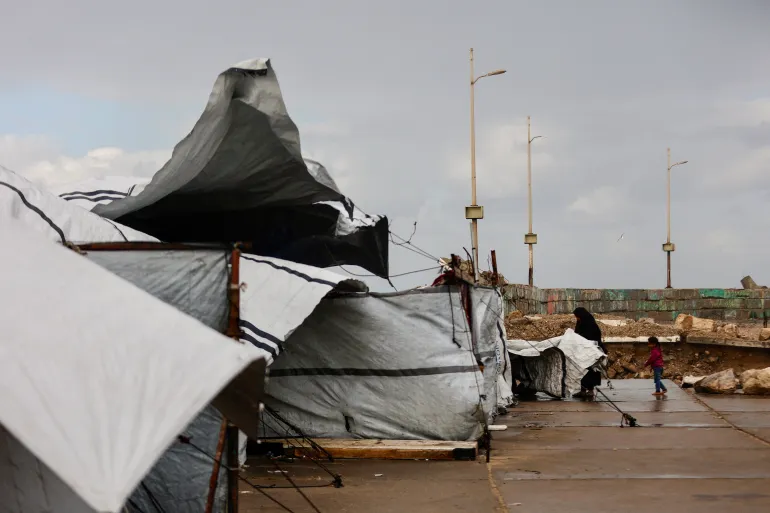

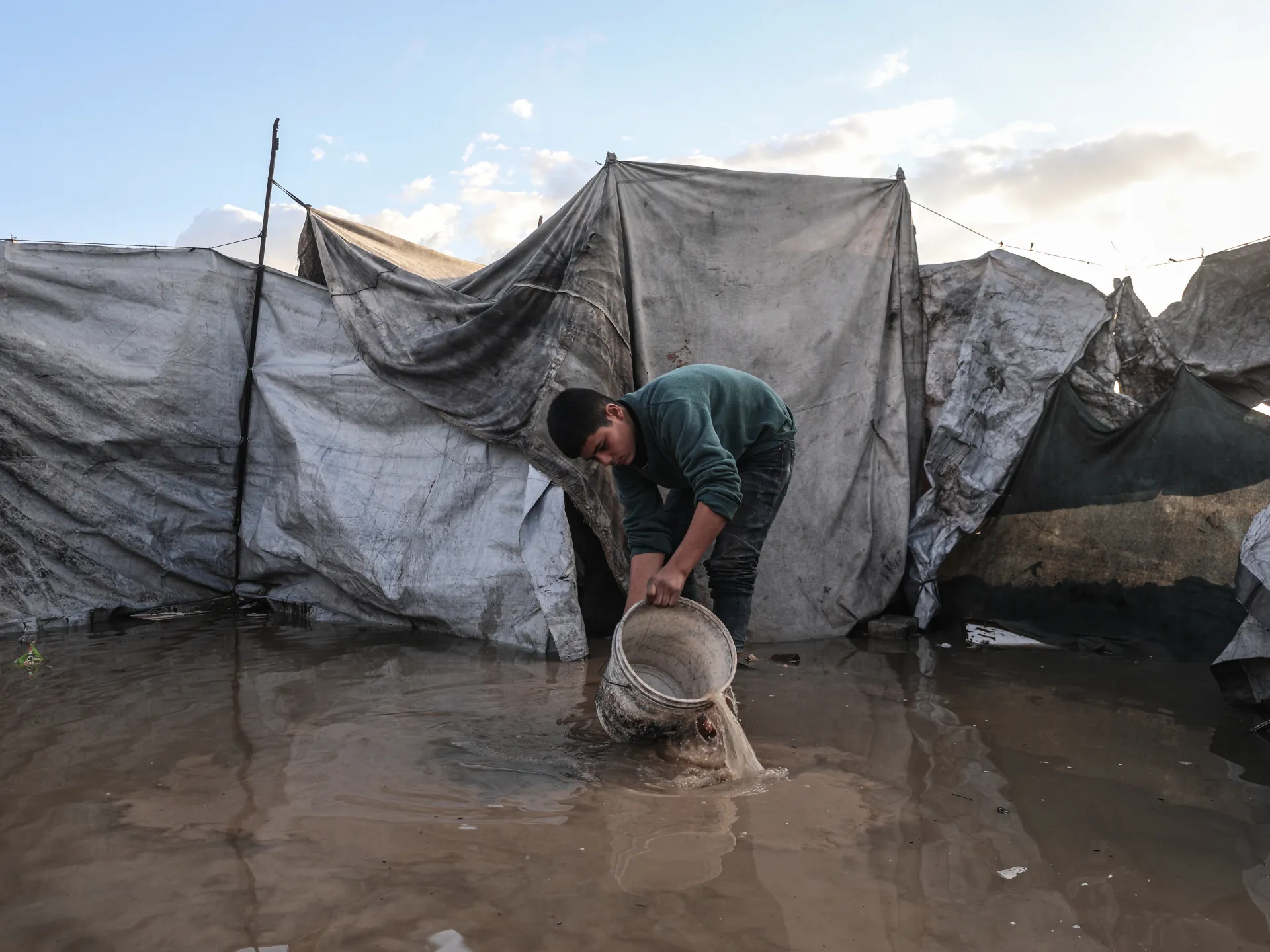
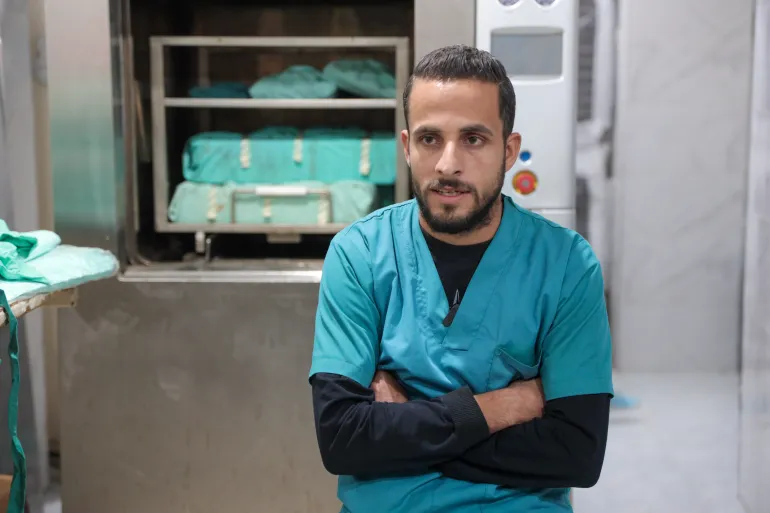


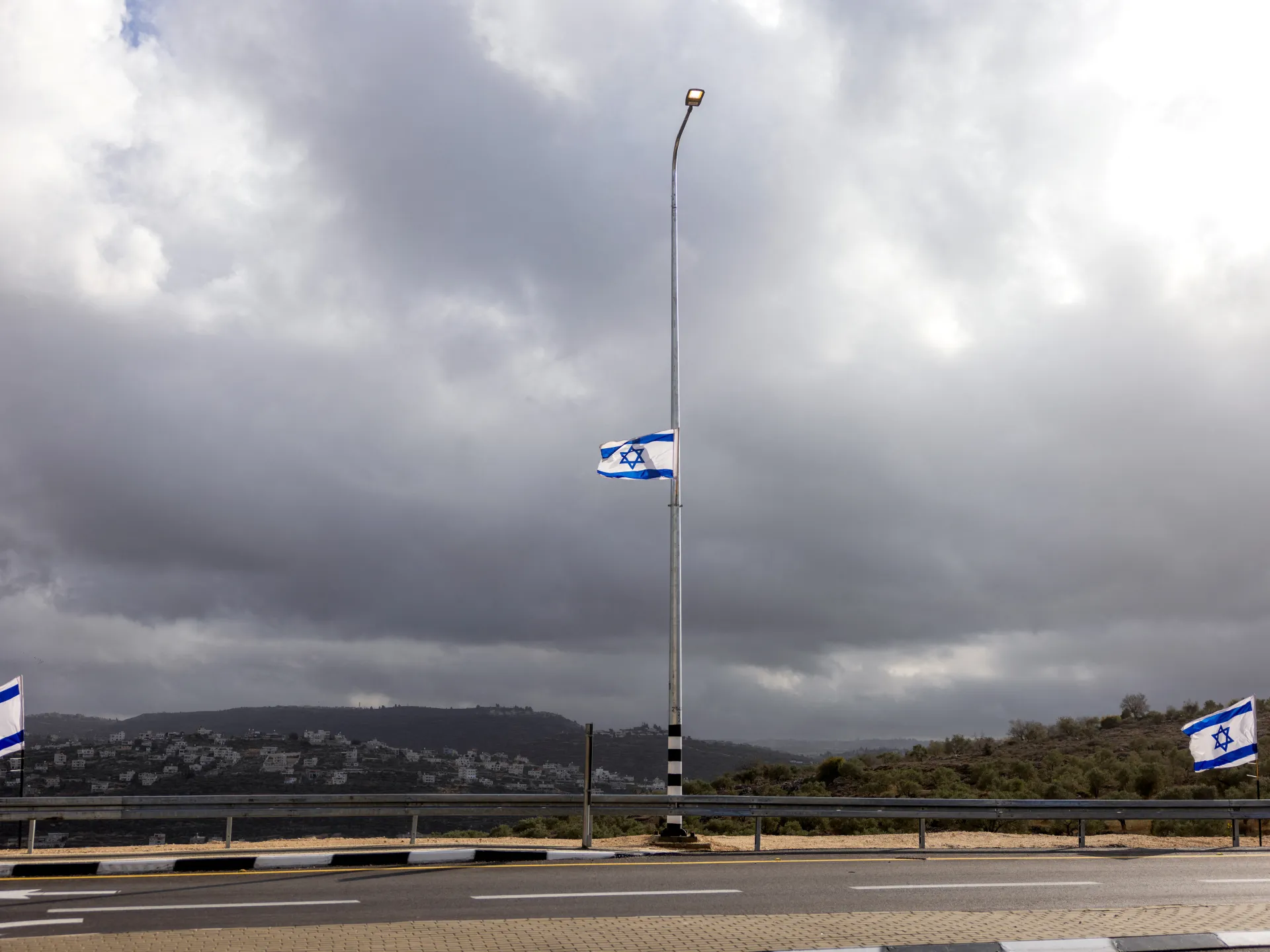
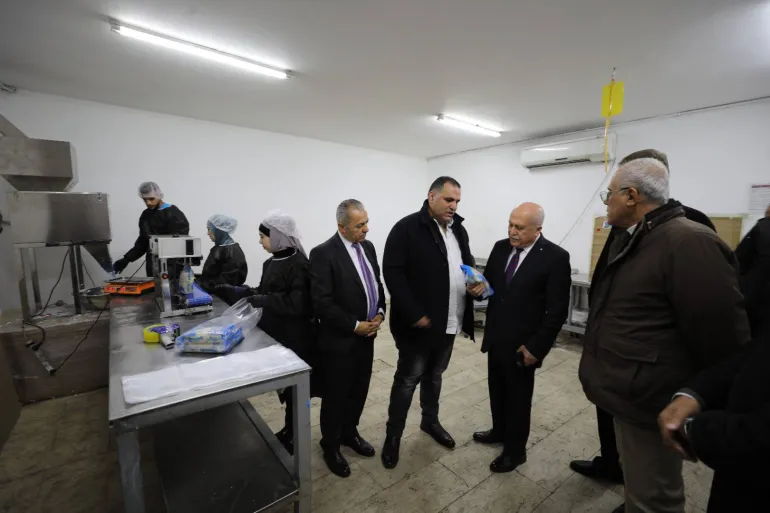

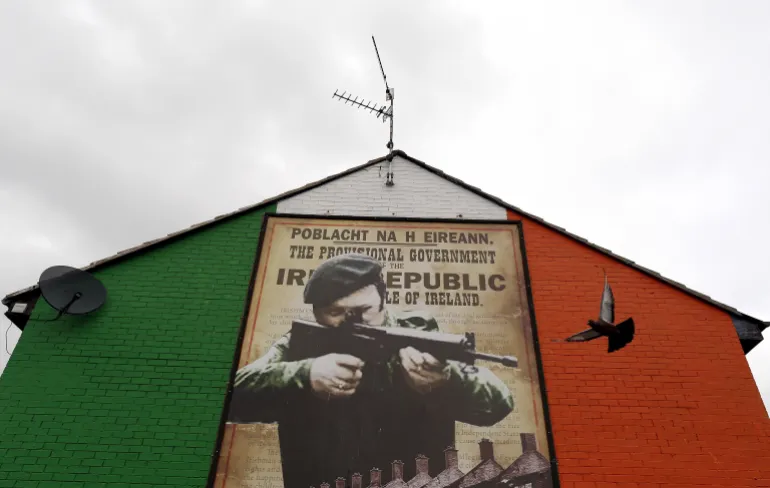





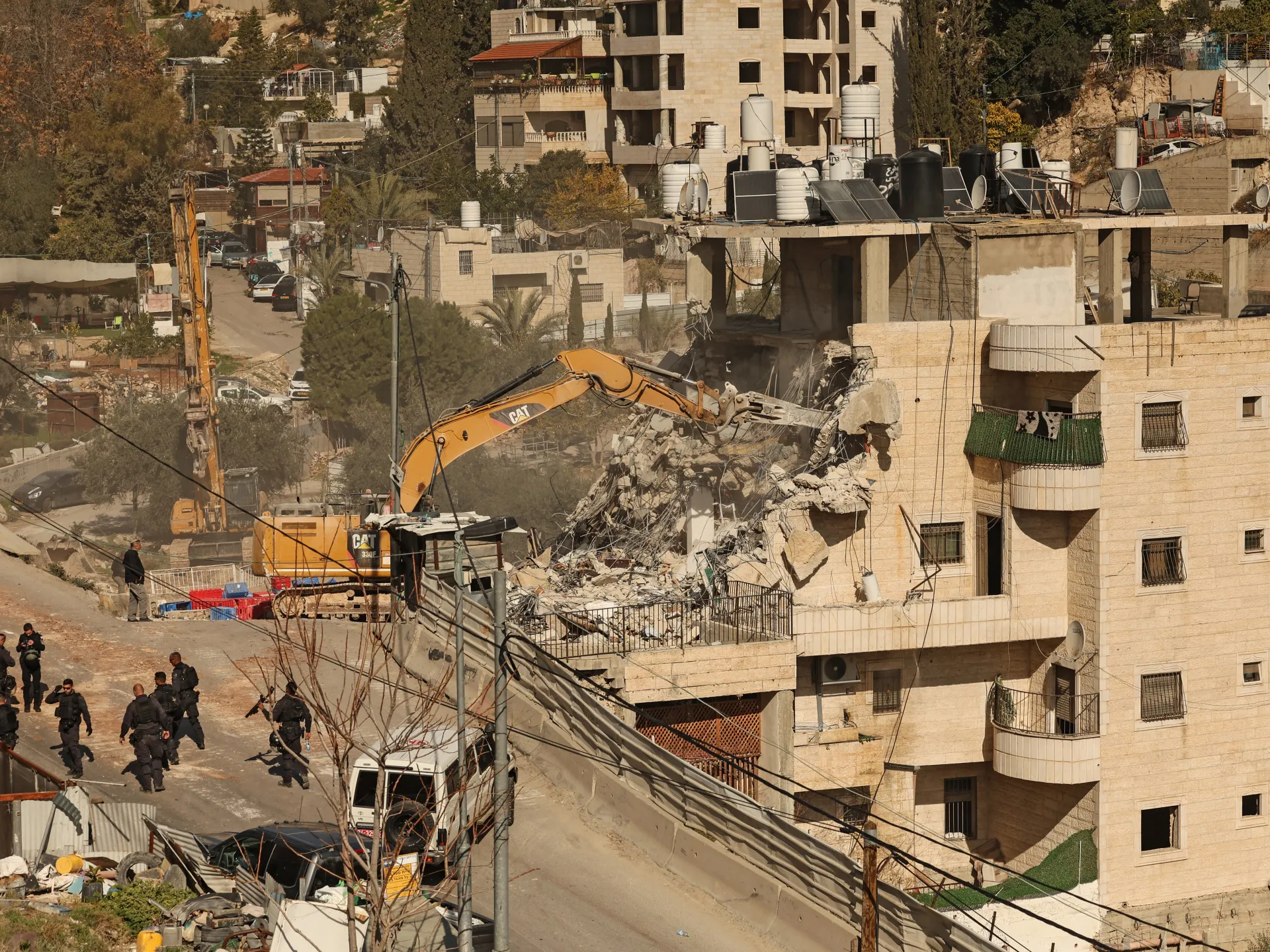

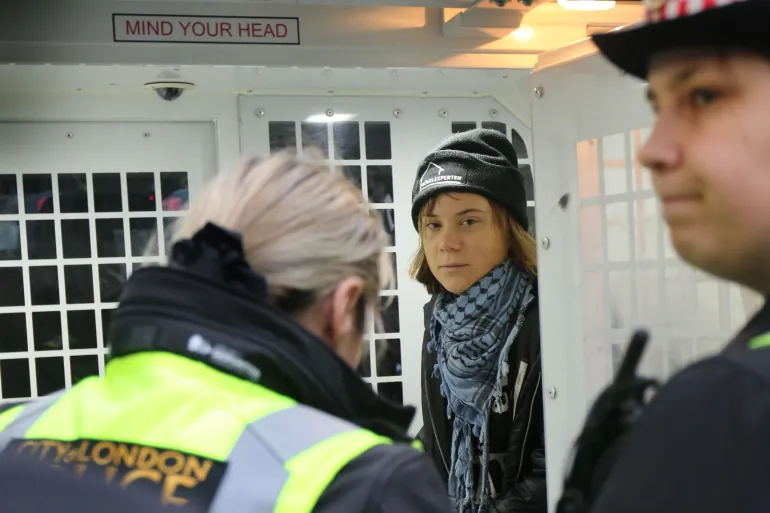



![Shahmina Alam with Kamran Ahmed - Palestine Action linked hunger striker [Courtesy of Alam family]](https://i0.wp.com/www.aljazeera.com/wp-content/uploads/2025/12/WhatsApp-Image-2025-12-15-at-15.26.19-1-1765801678.jpg?w=640&ssl=1)