election

Bangladesh President Shahabuddin Plans Mid-Term Resignation

Bangladeshi President Mohammed Shahabuddin, elected unopposed in 2023 as a nominee of the Awami League, has announced his intention to step down midway through his term following February’s parliamentary election. His decision comes amid tensions with the interim government led by Nobel laureate Muhammad Yunus.

Although the presidency in Bangladesh is largely ceremonial, Shahabuddin gained national prominence during the student-led uprising in August 2024, when Prime Minister Sheikh Hasina fled to New Delhi and parliament was dissolved. During this period, Shahabuddin remained the last constitutional authority in the country.

Conflict with Interim Government

Shahabuddin described feeling sidelined by Yunus, citing instances such as being excluded from meetings, the removal of his press department, and the sudden elimination of his portraits from Bangladeshi embassies worldwide. “A wrong message goes to the people that perhaps the president is going to be eliminated. I felt very much humiliated,” he told Reuters in his first media interview since taking office.

Despite these grievances, he affirmed that he would remain in office until elections are held, respecting constitutional norms, and would allow the next government to determine his successor.

Political Landscape Ahead of Elections

Opinion polls suggest the Bangladesh Nationalist Party (BNP) and hardline Jamaat-e-Islami are the leading contenders to form the next government. Shahabuddin has emphasized that no party has asked him to resign in recent months, and he maintains regular contact with Army Chief General Waker-uz-Zaman, who has assured him of no intention to seize power.

Military and Democratic Context

Bangladesh has a history of military intervention in politics, but Shahabuddin indicated that the army leadership is committed to democratic processes. During the August 2024 protests, the military largely stayed out of the conflict, which helped shape the political transition.

Personal Analysis

Shahabuddin’s planned resignation reflects a deeper struggle over the symbolic authority of the presidency amid political instability. Although the role is ceremonial, the treatment he received from the interim government appears to have eroded his sense of institutional respect. His public statements highlight not only personal frustration but also the fragility of democratic norms in transitional periods.

Furthermore, the situation underscores the delicate balance between civilian authority and the military in Bangladesh, where past interventions have shaped governance patterns. By signaling his willingness to step down while remaining constitutionally compliant, Shahabuddin seeks to preserve institutional legitimacy while avoiding direct confrontation, potentially smoothing the path for the incoming administration and reducing political friction in a tense electoral environment.

Overall, his resignation would mark a symbolic transition, emphasizing both the limitations of the presidency in Bangladesh’s political system and the ongoing influence of military and interim authorities in shaping the political landscape.

With information from Reuters.
Source link

Honduras election official says ‘disturbances’ preventing vote recount | Elections News

Statement comes as regional body says no evidence of fraud in November vote that Trump-backed candidate Asfura leads.

The head of Honduras’s National Electoral Council (CNE) has decried acts preventing the ongoing recount of the Central American country’s presidential election, as a regional body said there was no reason to suspect fraud in the November 30 vote.

Ana Paola Hall’s statement on Monday came amid ongoing protests and unrest over the unresolved election. Nasry Asfura, a right-wing businessman publicly supported by US President Donald Trump, has held a razor-thin lead over his top opponent, Salvador Nasralla.

Recommended Stories

list of 3 itemsend of list

At least 99 percent of votes have already been counted, but CNE has said that nearly 2,800 ballots will need to be re-examined through a special recount.

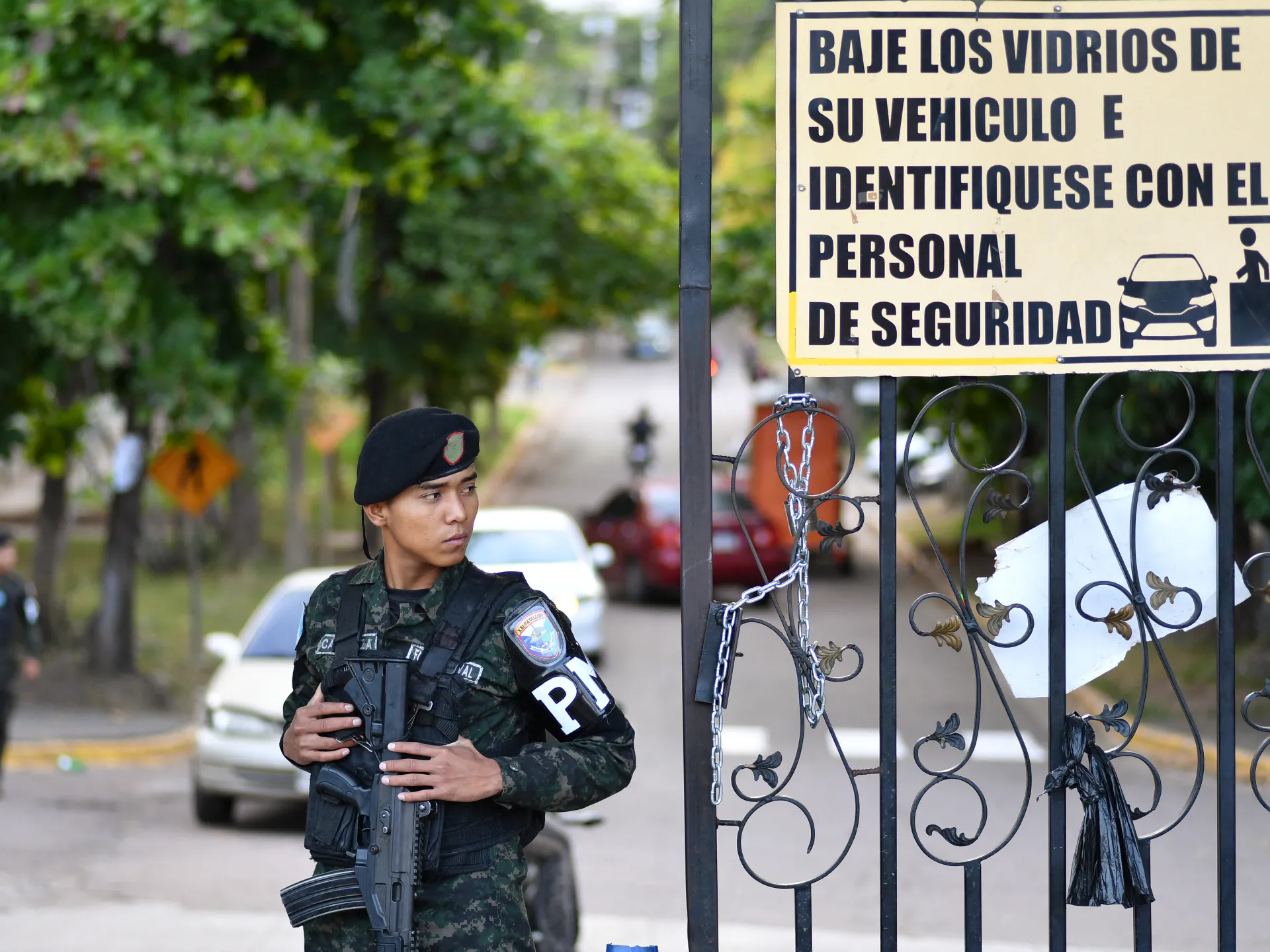
In a post on X, Hall said disturbances seen in the country’s capital, Tegucigalpa, have “prevented the necessary conditions for the special recount to begin”.

Observers have said infighting at the CNE, which is run by three officials each representing one of the major political parties, has delayed reaching the final results.

Both Nasralla, a conservative, and outgoing left-wing President Xiomara Castro have alleged vote tampering, although several international missions have dismissed the claims.

On Monday, the Organization of American States (OAS), a regional body, said that despite a lack of expertise in overseeing the election, there was not “any evidence that would cast doubt on the results”.

The OAS mission “urgently calls on the electoral authorities to immediately begin the special recount and to explore all possible ways to obtain the official results as quickly as possible,” OAS official Eladio Loizaga said in a report he read to the group’s members.

“The current delay in processing and publishing the results is not justifiable,” he said in the report.

The OAS statement added that its mission of 101 observers from 19 countries “did not observe any malice or obvious manipulation of the electoral materials or computer systems”. The finding was in line with that of a parallel European Union mission.

The election in Honduras had been in turmoil even before polls opened, with several major parties, political figures, and foreign interference for months casting doubt on the election’s integrity.

The most prominent scandal involved an investigation by the attorney general into a member of Asfura’s National Party for allegedly discussing plans with a military officer to influence the vote.

The candidate for outgoing President Castro’s LIBRE party, Rixi Moncada, later told Reuters news agency that the alleged conspiracy proved the election was “the most rigged in history”.

Several candidates have also criticised the influence of Trump, who endorsed Asfura in the final stretch of the race and vowed to withhold US funding if his candidate did not win.

The US president also pardoned former Honduran President and National Party member Juan Orlando Hernandez, who had been convicted in the US of drug trafficking, two days before the vote.

Authorities in Honduras, a country of about 11 million, subsequently issued a fresh arrest warrant for Hernandez.

Source link

Far-right candidate Jose Antonio Kast wins Chile’s presidential election | Elections News

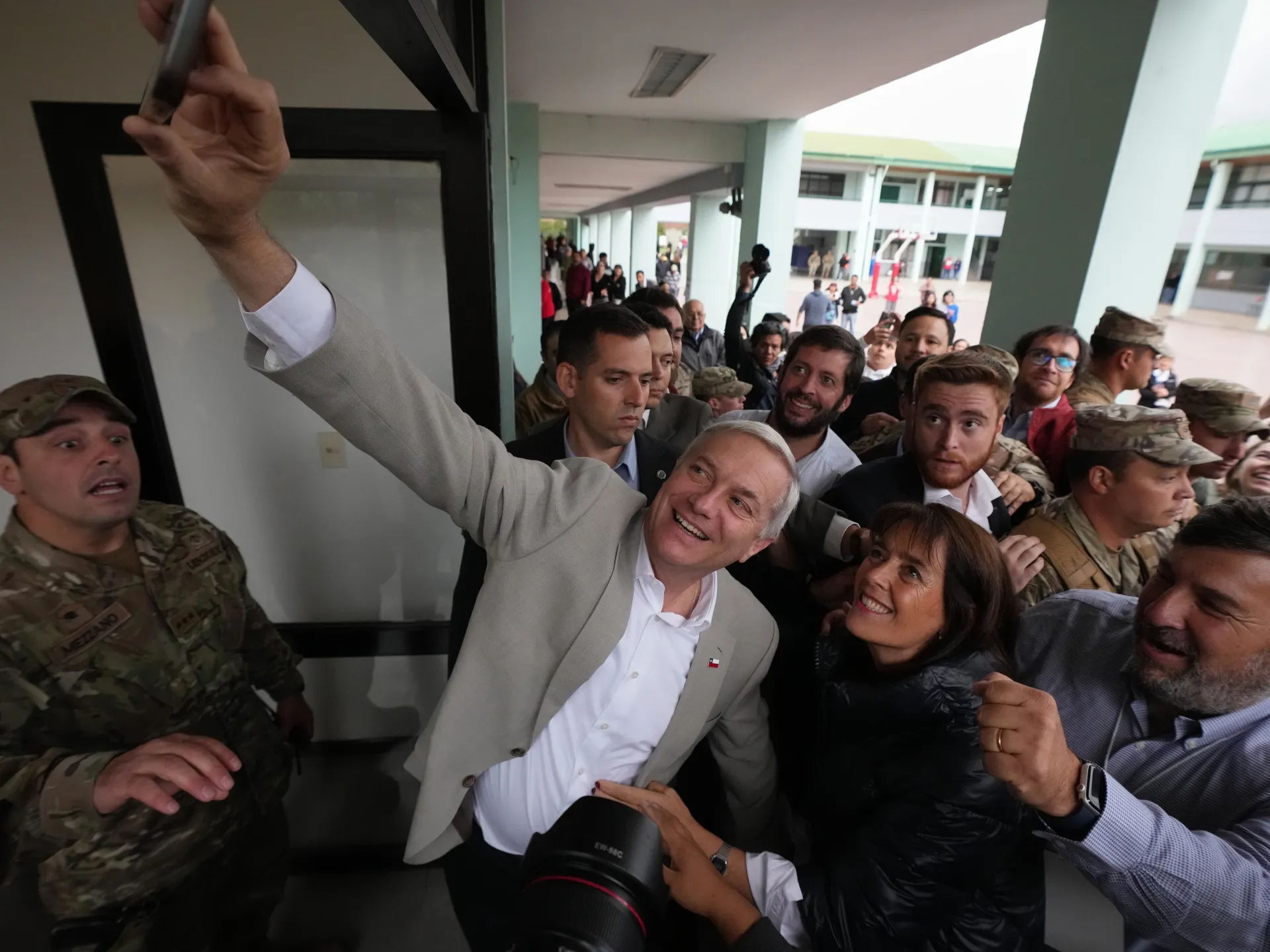
Far-right candidate Jose Antonio Kast has won a run-off election to become Chile’s 38th president, ousting the centre-left government currently in power.

On Sunday, with nearly all the ballots counted, Kast prevailed with nearly 58 percent of the vote, defeating former Labour Minister Jeannette Jara, a Communist Party politician who represented the governing centre-left coalition.

Recommended Stories

list of 3 itemsend of list

Jara and her coalition, Unity for Chile, conceded defeat shortly after the polls closed in the South American country.

“Democracy has spoken loud and clear. I have just spoken with President-elect [Kast] to wish him success for the good of Chile,” Jara wrote on social media.

“To those who supported us and were inspired by our candidacy, rest assured that we will continue working to build a better life in our country. Together and standing strong, as we always have.”

The result marks the latest victory for the far right in Latin America, which has seen a streak of right-wing leaders once considered political outsiders rise to power in countries like Argentina and Ecuador.

The tally also marks a significant comeback for Kast himself, the 59-year-old leader of the Republican Party. The 2025 election marks his third attempt to win the presidency — and his first successful bid.

During the last election, in 2021, he was trounced by outgoing President Gabriel Boric, who won by nearly a 10-point margin.

But Boric, a former student leader who became Chile’s youngest president, had seen his popularity slump to about 30 percent by the end of his four-year term. He was also ineligible to run for a second term under Chilean law.

In public opinion polls, voters also expressed frustration with recent spikes in crime and immigration, as well as a softening of Chile’s economy.

Kast, meanwhile, campaigned on the promise of change. He said he would address voter concerns by carrying out crackdowns on crime and immigration, including through a campaign of mass deportation, similar to what United States President Donald Trump has done in North America.

His security platform — dubbed the “Implacable Plan” — also proposes stiffer mandatory minimum sentencing, incarcerating more criminals in maximum security facilities, and putting cartel leaders in “total isolation” to cut them off from any communication with the outside world.

“Today, while criminals and drug traffickers walk freely through the streets, committing crimes and intimidating people, honest Chileans are locked in their homes, paralyzed by fear,” Kast writes in his security plan.

Kast has also taken a hard right stance towards social and health issues, including abortion, which he opposes even in cases of rape.

But those hardline policies earned Kast criticism on the campaign trail. Critics have also seized upon his own sympathetic comments about Chile’s former dictator, military leader Augusto Pinochet.

In 1973, Pinochet oversaw a right-wing military coup that ousted the democratically elected leader, Salvador Allende. He proceeded to rule the country until 1990. His government became known for its widespread human rights abuses and brutal oppression of political dissent, with thousands executed and tens of thousands tortured.

While Kast has rejected the label “far right”, he has repeatedly defended Pinochet’s government. Of Pinochet, Kast famously quipped, “If he were alive, he would vote for me.”

Opponents also sought to draw attention to Kast’s family ties: His father, Michael Martin Kast, was born in Germany and had been a member of the Nazi Party. The elder Kast immigrated to Chile in 1950.

Reporting from a polling site in the capital of Santiago, Al Jazeera correspondent Lucia Newman noted that Sunday’s victory was a historic one for Chile’s far right. But, she noted, Kast has sought to moderate his platform to better appeal to voters in the current election cycle.

“This is the first time since 1990 — since the military dictatorship before 1990, when Chile returned to democracy — that such a conservative government will be in power,” Newman explained.

“It’s really not certain just how conservative it will be. Jose Antonio Kast was a supporter of former dictator General Augusto Pinochet. He has shirked away from that in recent years, and certainly in this campaign.”

In the wake of Kast’s election victory, right-wing leaders from across the Americas offered their congratulations in statements on social media.

“Congratulations to Chilean President-Elect [Jose Antonio Kast] on his victory,” Trump’s Secretary of State Marco Rubio wrote. “The United States looks forward to partnering with his administration to strengthen regional security and revitalize our trade relationship.”

Argentina’s libertarian leader Javier Milei likewise chimed in, hailing it as a major win for his conservative political movement.

“FREEDOM IS ADVANCING,” Milei wrote, echoing his own campaign rallying cry.

“Enormous joy at the overwhelming victory of my friend [Jose Antonio Kast] in the Chilean presidential elections! One more step for our region in defense of life, liberty, and private property. I am sure that we will work together so that America embraces the ideas of freedom and we can free ourselves from the oppressive yoke of 21st-century socialism…!!!”

Ecuador’s right-wing President Daniel Noboa, meanwhile, said that “a new era is beginning for Chile and for the region”.

This year’s presidential race was the first time since 2012 that voting had been compulsory in the country. There are approximately 15.7 million eligible voters in the South American country.

Kast originally came in second place during the first round of voting on November 16. He scored about 23.9 percent of the vote, compared with Jara’s 26.8 percent.

But polls had widely favoured him to win in the run-off. While Chile’s left wing held a primary in June and coalesced around its victor, Jara, right-wing parties did not hold a primary to choose a coalition nominee.

The result was a fractured right in the first round of voting. But in the final contest, Kast was able to sweep up votes that had previously gone to his right-leaning adversaries, earning him a comfortable win.

Still, Kast faces a divided National Congress, which is expected to blunt some of his more hardline proposals. Kast will be sworn in on March 11.

Source link