How do we talk about antisemitism after the Bondi shooting?
Na’amod co-founder Em Hilton, raised in Bondi, says Jews must resist retreat, find moral courage, and build bonds with Muslims, Palestinians, and other threatened communities.
Albanese said Australia has more guns now than 30 years ago, when the country’s deadliest-ever mass shooting took place.
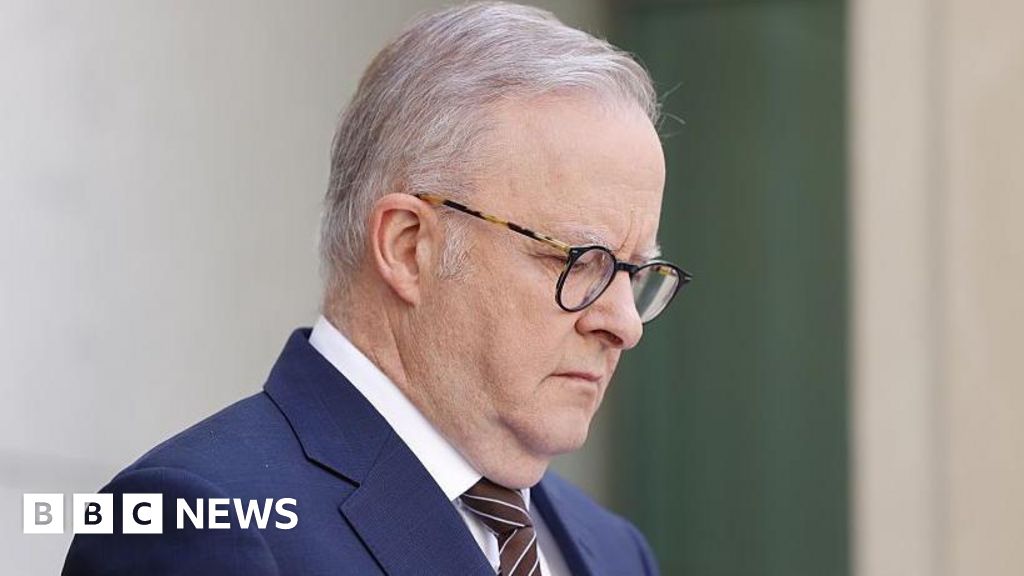
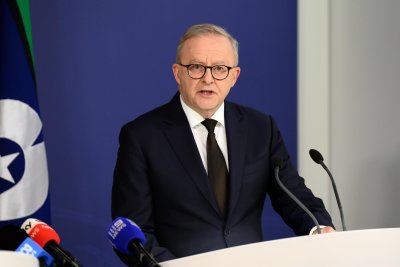
Australia will launch a national gun buyback scheme, Prime Minister Anthony Albanese has announced, as the country continues to come to terms with the deadly attack on a Jewish holiday event at Sydney’s Bondi Beach that left 15 people dead.
Albanese called the plan the country’s biggest gun buyback since 1996 – the year of Australia’s deadliest mass shooting in modern history, the Port Arthur massacre in the island state of Tasmania – and said authorities will purchase surplus, newly-banned and illegal firearms.
Recommended Stories
list of 3 itemsend of list
“Right now, there are more guns in Australia than there were during Port Arthur. We can’t allow that to continue,” Albanese told a news conference on Friday, adding that there are currently more than four million firearms in the country.
“Non-citizens have no need to own a gun. And someone in suburban Sydney has no need to own six … The terrible events of Bondi show we need to get more guns off our streets,” he said.
Albanese added that authorities in Australia’s states and territories will be tasked with collecting the weapons and processing payments for surrendered firearms under the scheme. Federal police will then be responsible for destroying them.
“We expect hundreds of thousands of firearms will be collected and destroyed through this scheme,” Albanese added.
Aided by some of the toughest gun restrictions globally, Australia has one of the lowest gun homicide rates in the world.
Restrictions were tightened after a lone gunman, armed with semiautomatic weapons, killed 35 people at the Port Arthur tourist site almost 30 years ago.
The massacre shocked the country, with authorities soon after launching a major gun amnesty and buyback scheme that removed more than 650,000 newly-prohibited firearms from circulation.
‘We need to do more to combat this evil scourge’
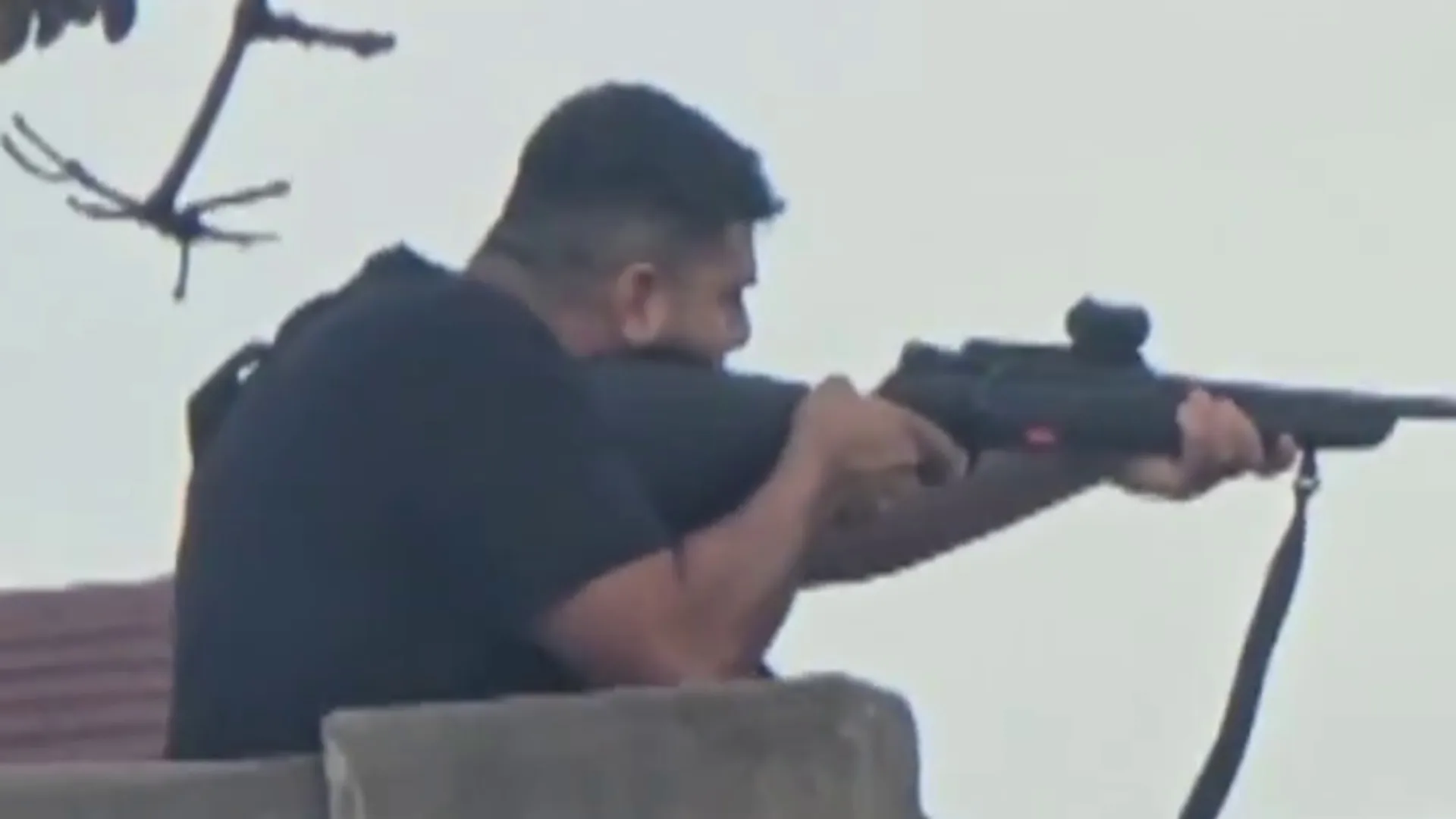
Sunday’s shooting in Sydney’s Bondi Beach area – in which two attackers, named as father and son Sajid Akram and Naveed Akram, went on a shooting spree and killed 15 people – has had a similarly jolting impact on Australian society as the Port Arthur massacre and prompted self-reflection.
Albanese said 50-year-old Sajid – who was shot dead at the scene – and 24-year-old Naveed – who was charged with “terrorism” and murder offences after he awoke from a coma on Tuesday – were inspired by “Islamic State ideology”.
On Thursday, Albanese announced tougher hate speech laws as he acknowledged the country had experienced a rising tide of anti-Jewish hate since the Hamas-led October 7, 2023, attacks on Israel, and Israel’s genocidal war on Gaza.
Albanese said rising anti-Semitism in Australia “culminated on Sunday in one of the worst acts of mass murder that this country has ever seen”.
“It was an attack on our Jewish community – but it was also an attack on the Australian way of life,” he said.
“Australians are shocked and angry. I am angry. It is clear we need to do more to combat this evil scourge, much more,” he added.
The prime minister also announced on Friday that Australia will hold a national day of reflection this Sunday – one week after the mass shooting.
Albanese urged Australians to light candles at 6:47pm (07:47 GMT) on Sunday, December 21 – “exactly one week since the attack unfolded”.
“It is a moment to pause, reflect, and affirm that hatred and violence will never define who we are as Australians,” he told reporters.
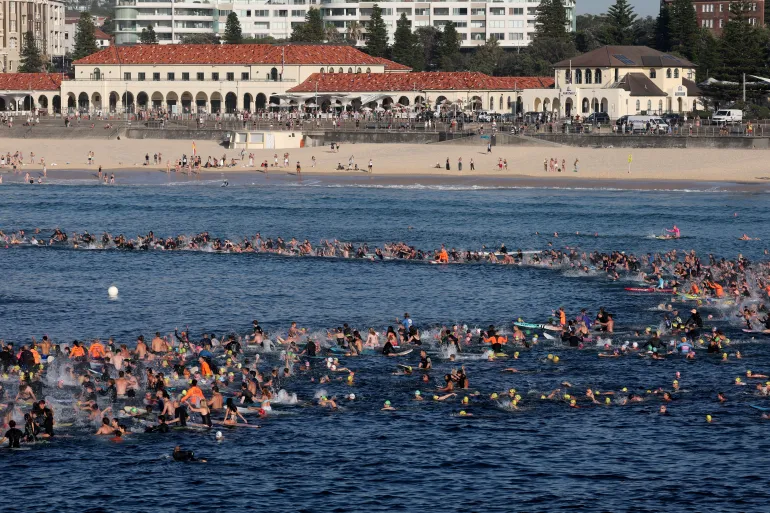
Earlier on Friday, hundreds of people plunged into the ocean off Bondi Beach in another gesture to honour the dead.
Swimmers and surfers paddled into a circle as they bobbed in the gentle morning swell, splashing water and roaring with emotion.
“They slaughtered innocent victims, and today I’m swimming out there and being part of my community again to bring back the light,” security consultant Jason Carr told the AFP news agency.
“We’re still burying bodies. But I just felt it was important,” the 53-year-old said.
“I’m not going to let someone so evil, someone so dark, stop me from doing what I do and what I enjoy doing,” he said.
Surfers and swimmers congregate in the surf at Bondi Beach as they participate in a tribute for the victims of Sunday’s Bondi Beach attack, in Sydney, on December 19, 2025 [David Gray/AFP]
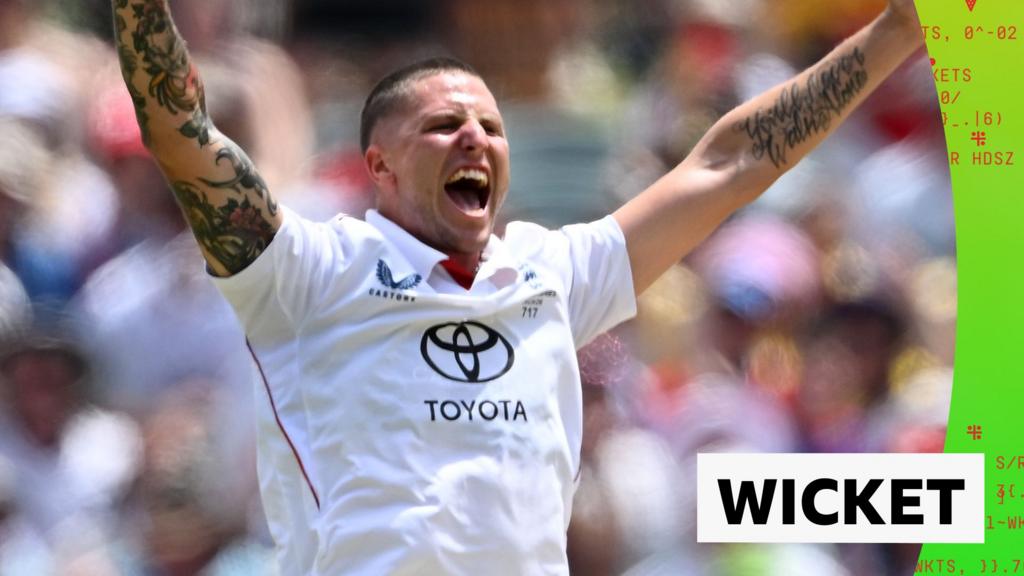
England’s Brydon Carse dismisses Jake Weatherald lbw for one, but replays show the decision should have been overturned as Australia are made to regret their decision not to review, leaving the home side on 8-1, with a lead of 93, on day three of the third Ashes Test in Adelaide.
The Australian government has announced a gun buyback scheme in the wake of the Bondi Beach attack – its deadliest mass shooting in decades.
The scheme is the largest since the Port Arthur massacre in 1996, which left 35 people dead and prompted Australia to introduce world-leading gun control measures.
Fifteen people were killed and dozens injured on Sunday when two gunmen, believed to have been motivated by “Islamic State ideology”, opened fire on a Jewish festival at the country’s most iconic beach.
On Friday police said a group of men who were arrested in Sydney after travelling from the state of Victoria had “extremist Islamic ideology”.
Police allege Sunday’s attack, which they have declared a terrorist incident, was committed by a father-son duo. Naveed Akram, 24, has been charged with 59 offences, including 15 counts of murder and one of committing a terrorist act. His father Sajid was killed during the attack.
The day after the shooting, national cabinet – which includes representatives from the federal government and leaders from all states and territories – agreed to tighten gun controls.
Speaking to media on Friday, Prime Minister Anthony Albanese said there are now more than 4 million firearms in Australia – more than at the time of the Port Arthur massacre.
“We know that one of these terrorists held a firearm licence and had six guns, in spite of living in the middle of Sydney’s suburbs… There’s no reason why someone in that situation needed that many guns.
“We need to get more guns off our streets.”
Earlier on Friday, a senior New South Wales police officer told national broadcaster ABC seven men arrested by counter terrorism police in Sydney on Thursday evening may have been on their way to Bondi.
Tactical officers swarmed on the group, who had travelled from Victoria and were known to police there, in dramatic scenes in the suburb of Liverpool.
NSW Police Deputy Commissioner David Hudson said “some indication” that Bondi was one of the locations they were considering visiting, but “with no specific intent in mind or proven at this stage”.
Rarely used national security powers were relied upon to swoop before their plans developed.
“We made the decision that we weren’t going to … take any chances in relation to what they might be doing,” he said.
Officers found a knife, but no guns or other weapons, Mr Hudson added.
A Hanukkah menorah is projected onto the sails of the Sydney Opera House in memory of the victims of a shooting at Bondi Beach, in Sydney. On Thursday, police detained seven men believed to be part of a planned “violent attack.” Photo by NSW Premier’s Office/UPI | License Photo
Dec. 18 (UPI) — Sydney police have detained seven men in a suburb Thursday with officers reportedly ramming a car and detaining the men after a tip about a planned “violent attack.”
The arrests came just a few days after 15 people were killed on Bondi Beach in Australia at a Hanukkah gathering.
The seven men were believed to be traveling from Melbourne to Bondi. The intercepted cars had Victoria plates, which is the state that includes Melbourne, 550 miles from Sydney.
“At this point in time, police have not identified any connection to the current police investigation of the Bondi terror attack,” a New South Wales police press release said.
“Police subsequently intercepted two cars as part of the investigation. As investigations continue, seven men are assisting police with their inquiries,” the release said.
Police didn’t release any more details about the men or the attack plans.
The men were stopped in Liverpool, a suburb southwest of Sydney.
Social media images showed a white hatchback with body damage from a collision that was blocked off by police tape at a Liverpool intersection, The Guardian reported.
Other images showed several heavily armed police in camouflage gear, and men with their hands zip-tied behind their backs lined up against a nearby fence.
Though police said there is no link to the Bondi shooting, Thursday morning Australian Federal Police Commissioner Krissy Barrett said to expect more raids in the wake of the Bondi attack.
“In the coming days, the New South Wales Joint Counter Terrorism Team will execute further search warrants to support our investigation. There is a lot of material to be examined, and the AFP continues to work with both domestic and international partners to build a more complete picture of the movements and who the alleged offenders had contact with, both in Australia and offshore,” she said.
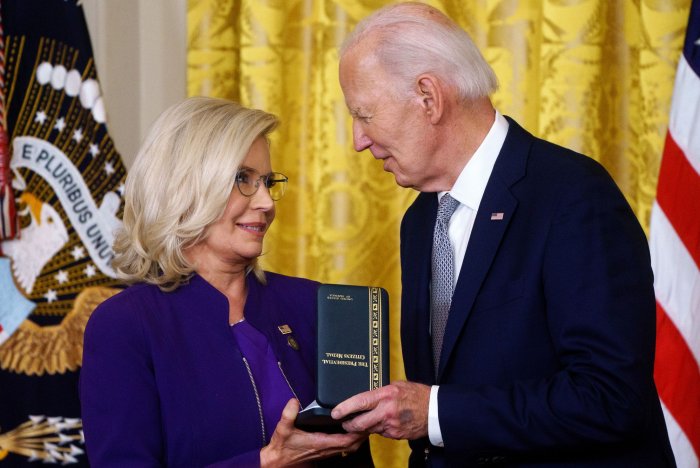
Former President Joe Biden presents the Presidential Citizens Medal to Liz Cheney during a ceremony in the East Room of the White House in Washington, on January 2, 2025. The Presidential Citizens Medal is bestowed to individuals who have performed exemplary deeds or services. Photo by Will Oliver/UPI | License Photo
Philippine official said ‘a mere visit’ to the country does not support claims the men underwent ‘terrorist training’.
There is no evidence the suspected gunmen in the deadly Bondi Beach attack received military training in the southern Philippines, Manila’s national security adviser has said, as Australia announced plans to introduce measures to tighten the country’s hate speech laws.
In a Wednesday statement, Philippine National Security Adviser Eduardo Ano confirmed the two suspects in Sunday’s attack in Sydney, Australia – which saw 15 people killed after gunmen opened fire at a Jewish event – were in the country from November 1 to 28 this year.
Recommended Stories
list of 3 itemsend of list
Ano said immigration records showed that 50-year-old Sajid Akram and his 24-year-old son Naveed Akram travelled via the Philippine capital Manila to Davao City on the southern island of Mindanao. He added that Sajid had entered the country on an Indian passport, while Naveed entered on an Australian one.
Ano added that there was “no evidence” that the men had received “any form of military training” while in the country.
“A mere visit does not support allegations of terrorist training, and the duration of their stay would not have allowed for any meaningful or structured training,” he said.
The men mostly stayed in their hotel rooms when in Davao, according to a report by local news outlet MindaNews. Staff at the hotel said the pair checked in on November 1 and rarely went out for more than an hour at a time during their almost monthlong stay.
Australian authorities announced on Wednesday that Naveed Akram had been charged with 59 offences for his role in the attack, including murder and terror charges, when he woke from his coma. Sajid Akram, his father, was shot dead by police at the scene.
Ano also suggested that reports describing Mindanao – a Muslim-majority region in the Catholic-majority country, plagued by a decades-long secessionist conflict – as a “hotspot for violent extremism or Islamic State ideology” were “outdated and misleading”.
“Since the 2017 Marawi Siege, Philippine security forces have significantly degraded ISIS-affiliated groups in the country,” he said, referring to a five-month battle in which the ISIL-inspired Maute group seized the southern city and fought government forces.
“The remnants of these groups have been fragmented, deprived of leadership, and operationally degraded,” Ano added.
A 2014 peace agreement, which saw rebels drop their secessionist aspirations in exchange for a more powerful and better-funded Muslim autonomous region called Bangsamoro, has also brought a degree of calm to Mindanao.
‘Also an attack on the Australian way of life’: Anthony Albanese
On Thursday, Australian Prime Minister Anthony Albanese pledged to introduce new legislation cracking down on hate speech in response to the Bondi Beach attack, as he acknowledged that Australia had witnessed an increase in anti-Semitism since the Hamas-led October 7, 2023, attacks on Israel, and Israel’s genocidal war on Gaza.
Announcing the new measures at a news conference, Albanese said his government will seek to introduce legislation making it easier to charge people promoting hate speech and violence – including religious preachers – while new powers will be created to cancel or reject visas of people who spread “hate and division”.
The legislation would also develop a regime to target organisations whose leaders engage in hate speech, Albanese added.
Albanese said rising anti-Semitism “culminated on Sunday in one of the worst acts of mass murder that this country has ever seen”.
“It was an attack on our Jewish community – but it was also an attack on the Australian way of life. Australians are shocked and angry. I am angry. It is clear we need to do more to combat this evil scourge, much more,” he said.
New South Wales Premier Chris Minns said on Wednesday he would recall the state parliament next week in order to pass urgent reforms on gun laws.
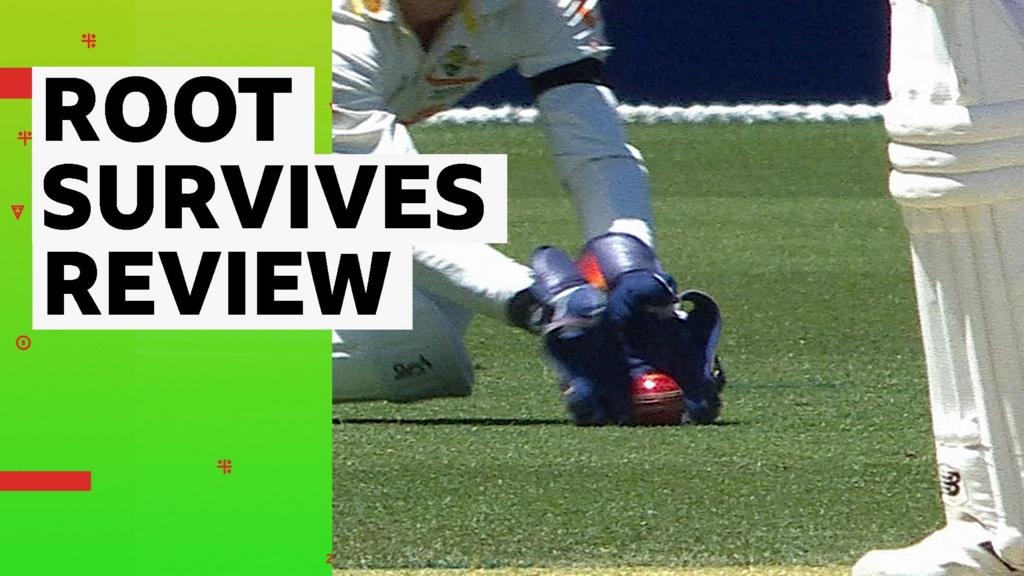
Joe Root avoids being given out for one after review shows an edge behind drops just short of Australian wicketkeeper Alex Carey, with England 42-3, still 329 runs behind Australia’s first innings score of 371 on day two of the third Ashes Test in Adelaide.
England’s Jofra Archer gets two wickets in three balls, removing Marnus Labuschagne and Cameron Green, in the first over after lunch as Australia fall to 94-4 on day one of the third Ashes Test in Adelaide.
Australia’s government is fending off political attacks from inside and outside the country after the Bondi massacre. Israeli leaders and interest groups have been condemned for trying to politicise the killings, as Soraya Lennie explains.
Australia’s spy agency has revealed that one of the men who carried out the country’s worst massacre in three decades was investigated for links to ISIL. Police say Naveed Akram and his father Sajid targeted Jewish Australians celebrating Hanukkah at the country’s most famous beach.
Australian Prime Minister Anthony Albanese speaks to the media during a press conference on Monday, a day after a mass shooting at Bondi Beach, in Sydney, Australia. Photo by Steven Markham/EPA
Dec. 15 (UPI) — Prime Minister Anthony Albanese said Monday that his government will seek to strengthen Australia’s already stringent gun laws after a father-and-son duo killed 15 people and injured 40 others on Sunday in one of the country’s worst-ever shootings.
“People’s circumstances change. People can be radicalized over a period of time. Licenses should not be in perpetuity,” he told reporters during a Monday press conference.
The shooters have not been identified, although authorities have said the father was 50 years old and the son 24.
They are alleged to have opened fire late Sunday afternoon into crowds of people at the iconic Australian tourist destination. The 50-year-old father was shot and killed by police at the scene. The 24-year-old son has been hospitalized in serious but stable condition.
Authorities are investigating the shooting as a terrorist attack targeting Australia’s Jewish community during Hanukkah celebrations.
Six firearms have been confiscated by the New South Wales Joint Counter Terrorism Team, which is investigating the shooting.
The NSW Police Force said in a statement Monday that three firearms and two improvised explosive devices were located at the scene following the shooting and are undergoing forensic examination.
Search warrants executed Sunday night at two homes, one in Bonnyrigg and another in Campsie, uncovered two additional firearms.
A sixth firearm and a third improvised explosive device were discovered Monday at the Bondi crime scene, NSW Police Force said.
Authorities said earlier Monday that the 50-year-old alleged shooter is a licensed firearms holder and that they are investigating to confirm that the six firearms confiscated are the six he is licensed to have.
Albanese said Monday that he will take to the National Cabinet later that afternoon a proposal to empower agencies to examine what can be done to strengthen Australia’s gun laws.
“If we need to toughen these up, if there’s anything we can do, I’m certainly up for it,” he said.
The identities of the alleged shooters have not been made public. Home Affairs Minister Tony Burke told reporters that the 24-year-old son is an Australian-born citizen, and that the father had arrived in the country in 1998 on a student visa, which was then transferred to a partner visa in 2001. He has been on resident return visas since.
Asked what country the father was a native of, Burke declined to answer, saying he has not been cleared by police to make that information public.
Albanese said the son was known to police, and first came to their attention in October 2019.
“He was examined on the basis of being associated with others and the assessment was made that there was no indication of any ongoing threat or threat of him engaging in violence,” he said.
The probing of the son was the product of those he was associated with rather than anything he had done, he said, adding that the investigation was conducted over a six-month period.
NSW Police Commissioner Mal Lanyon earlier Monday told reporters that “there was very little knowledge of either of these men by the authorities.”
“The person had a firearms license for a number of years for which there were no incidents,” he said.
Australian Prime Minister Anthony Albanese has pledged a review of his country’s gun laws and added support for Jewish Australians, as his government faces scrutiny following a deadly shooting at Sydney’s Bondi Beach.
On Monday afternoon, Albanese faced reporters to answer questions about the shooting, which took place a day earlier, during a local Hanukkah celebration. At least 15 people have died, including a 10-year-old girl, and dozens are reported injured.
Recommended Stories
list of 4 itemsend of list
“What we saw yesterday was an act of pure evil, an act of terror, an act of anti-Semitism: an attack on the first day of Hanukkah, targeted at the Jewish community,” Albanese said in prepared remarks, after visiting the crime scene.
“A dark day in Australia’s history, on what should have been a day of light.”
The Australian government has yet to name the suspected attackers, identifying them only as a 50-year-old man and his 24-year-old son. The father died in a shootout with police, while the son is currently being treated at a local hospital.
Hanukkah is sometimes called the Festival of Lights, and in Monday’s news conference, Albanese encouraged Australians to participate in a show of solidarity with the country’s Jewish community.
“I would urge and join with others who have urged Australians across the country to light a candle, put it in their front window tonight at 6:47pm [19:47 GMT] to show that light will indeed defeat darkness – part of what Hanukkah celebrates, of course,” he said. “We are stronger than the cowards who did this.”
But while Albanese and other officials urged calm, critics questioned whether the government had done enough to curtail both anti-Semitism and gun violence.
Netanyahu spurs scrutiny
One of Albanese’s highest-profile critics in the wake of the attack was Israeli Prime Minister Benjamin Netanyahu.
The right-wing Israeli leader blamed Albanese’s centre-left government for failing to protect Australia’s Jewish community. He also linked the shooting to Australia’s recent decision to recognise Palestinian statehood.
“Your call for a Palestinian state pours fuel on the anti-Semitic fire,” Netanyahu said in remarks directed at Albanese, voicing sentiments he later repeated in a social media post.
“It emboldens those who menace Australian Jews and encourages the Jew hatred now stalking your streets.”
Those remarks fuelled outrage and accusations that Netanyahu was leveraging the tragedy for political aims.
In a post on social media, UN special rapporteur Ben Saul also criticised Netanyahu for linking Australia’s recognition of Palestinian statehood to Sunday’s shootings.
“I am disgusted that the Israeli PM links Australia’s principled support for a Palestinian State with yesterday’s terrorist attack in Bondi,” said Saul, who also serves as an international law chair at the University of Sydney.
“Australia has taken extensive measures to prevent anti-semitism,” Saul added.
When asked on Monday morning about Netanyahu’s remarks, Albanese said his focus was on bringing people together.
“This is a moment for national unity,” the Australian prime minister told reporters in Sydney. “This is a moment for Australians to come together. That’s precisely what we’ll be doing.”
He also said his government would beef up funding and support to protect Jewish community members, including covering the costs of guard services.
“We’re extending the funding for the National Council for Jewish Community Security and its state-based community security groups, to provide overall security cover to the Jewish community,” Albanese said.
“We’re also working with Jewish community organisations to see how we can best support charity efforts, including through tax-deductible status for donations.”
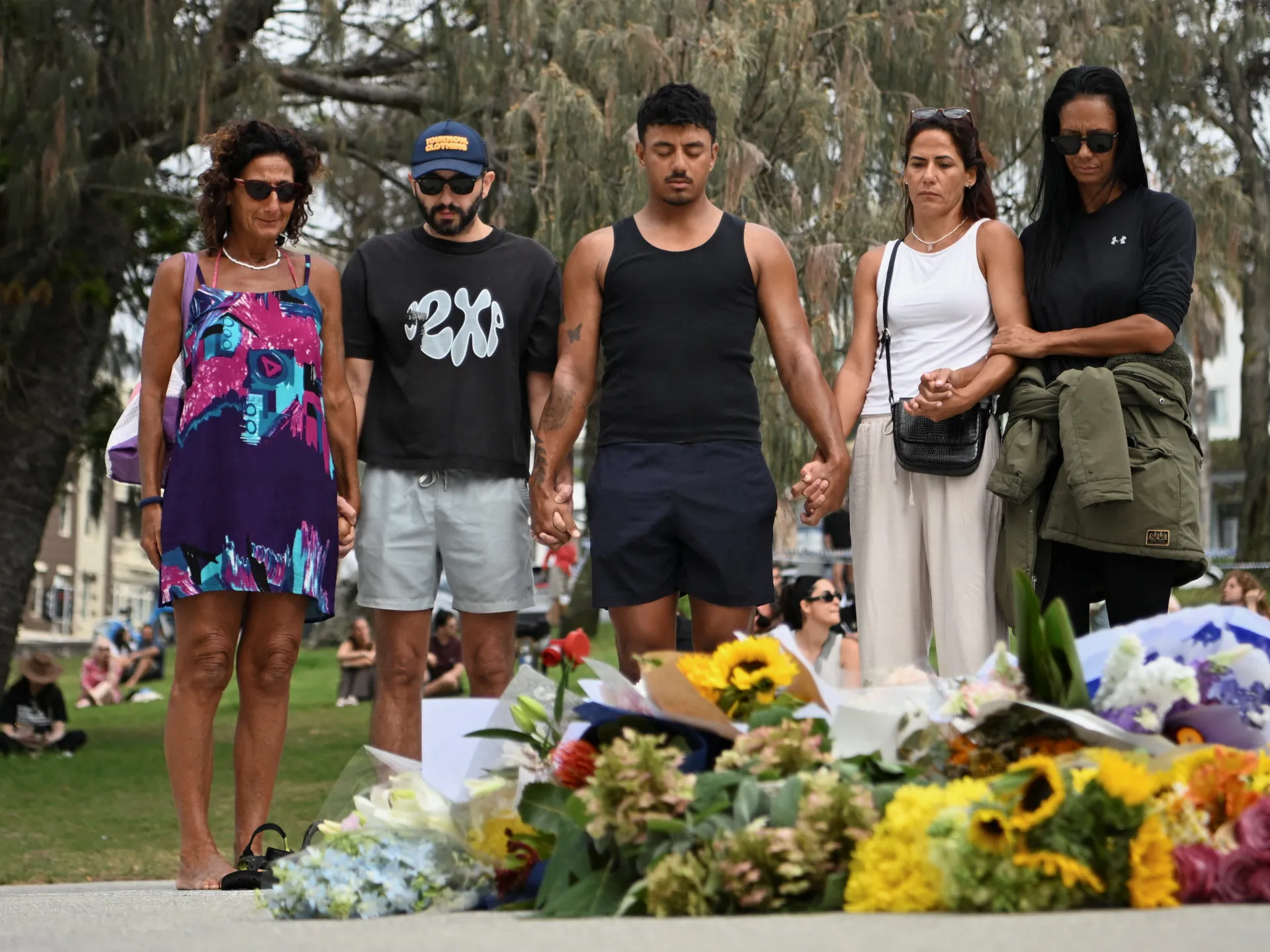
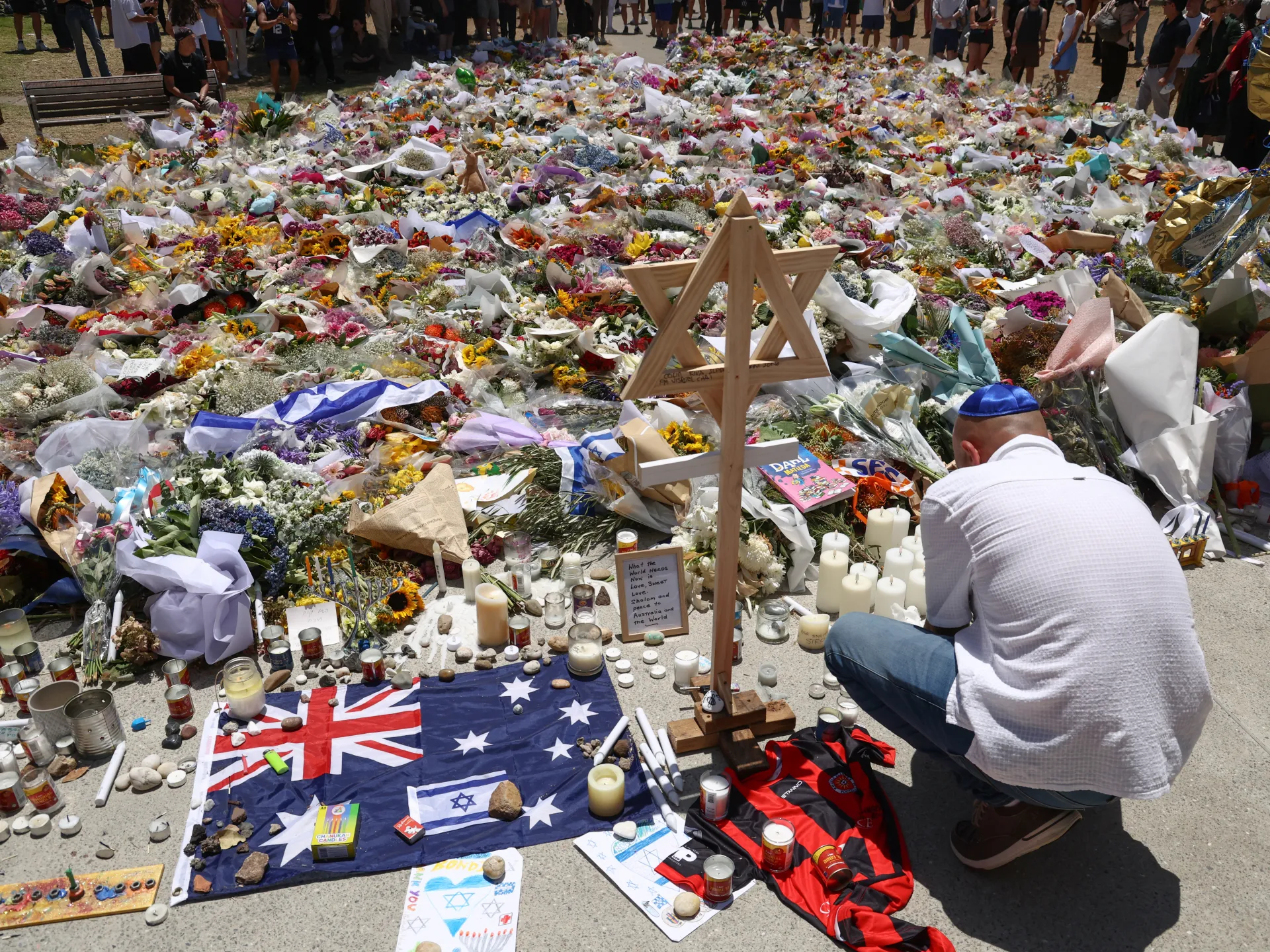
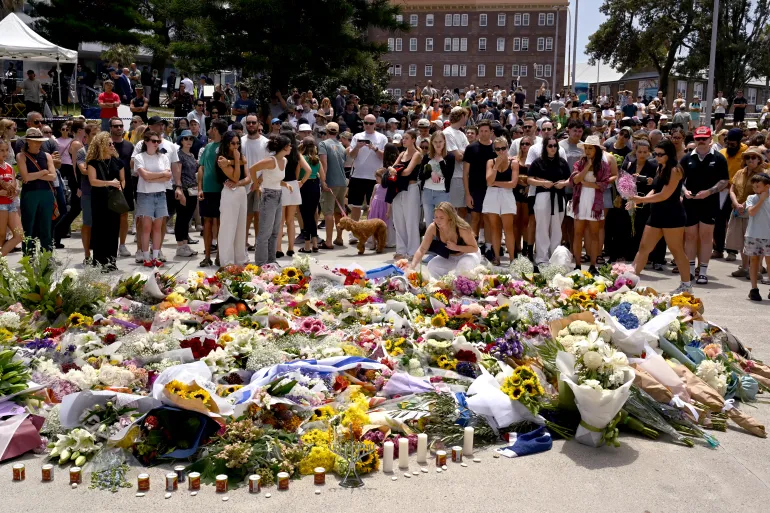
Mourners gather by floral tributes at the Bondi Pavilion in Sydney on December 15, 2025 [Saeed Khan/AFP]
Australia’s gun reforms under scrutiny
Albanese also told reporters on Monday afternoon that he would be convening a meeting of state premiers to discuss “tougher gun laws, including limits on the number of guns that can be used or licensed by individuals”.
“People’s circumstances change. People can be radicalised over a period of time. Licences should not be in perpetuity,” said Albanese.
His remarks follow questions about the six guns recovered from the scene of the shooting and the revelation that the 24-year-old suspect had previously come under police scrutiny.
Officials have repeatedly said the 50-year-old suspect had “met the eligibility criteria for a firearms licence”, and that the 24-year-old was previously not deemed to be a threat.
Australia introduced some of the world’s strictest gun laws, including bans on automatic and semiautomatic rifles and shotguns, after a shooter killed 35 people in the Tasmanian town of Port Arthur in 1996.
The 1996 reforms, introduced under former Prime Minister John Howard, were hailed as a success after Australia saw no mass shootings occur for close to two decades.
However, according to a recent report from the Australia Institute, the implementation of the laws has lapsed in recent years, with more guns now in the country than before 1996.
On Monday, Albanese said the reforms had “made an enormous difference” and were a “proud moment” of bipartisan action, but that reviews were now needed to ensure better coordination between states.
Chris Minns, the premier of New South Wales, where the shooting took place, also told reporters on Monday he would be reviewing gun laws.
“We want to make sure that prospective reform and change in New South Wales has a lasting impact,” Minns said. “It’s not the last time I’ll be mentioning it, and you can expect action soon.”
Sunday’s shooting at Bondi Beach follows several other mass shootings in recent years, including a 2022 attack in Wieambilla, Queensland, linked to Christian fundamentalist ideology that left six people dead.
An Australian man was also responsible for the attack in 2019 that killed 51 people at a mosque in Christchurch, New Zealand, where semiautomatic weapons are still sold.
Al Jazeera takes a look at the third Ashes Test between Australia and England, which is being played in Adelaide.
England face a series-defining third Ashes Test in Australia, knowing defeat will see their hosts retain the famous urn, but also have the chance of whitewashing their old enemy.
The match begins in Adelaide on Tuesday, where an unassailable 3-0 lead is in sight for the Aussies.
Australia won the first Test inside two days in Perth as Travis Head’s century made short work of his side’s target, while the Aussies needed only four days in Brisbane to secure the second match of the series.