NEWS

Stay informed and up-to-date with the latest news from around the world. Our comprehensive news coverage brings you the most relevant and impactful stories in politics, business, technology, entertainment, and more.

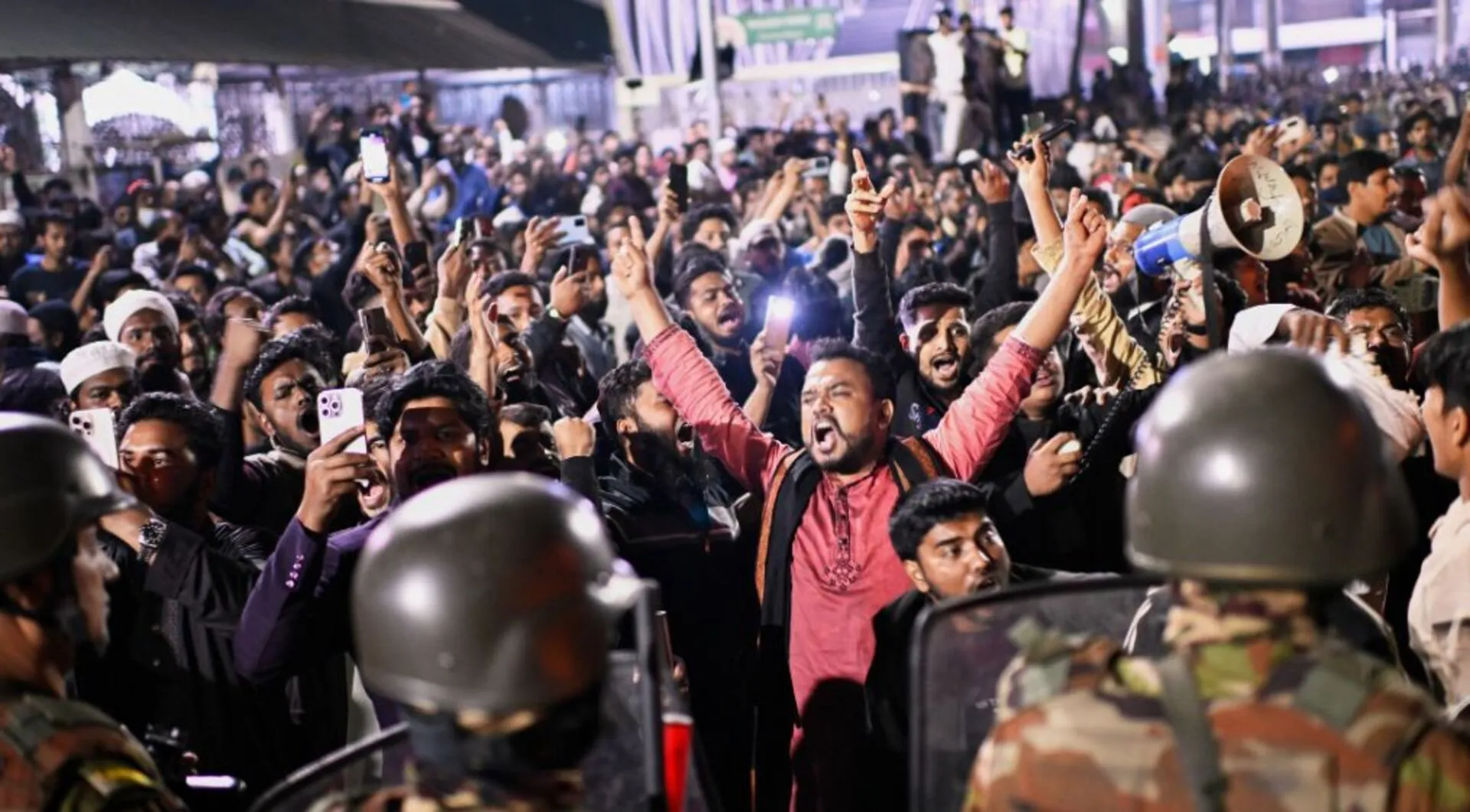
How volatile is the political situation in Bangladesh? | Politics

Tensions are growing after the killing of a student leader in last year’s revolt, which toppled Sheikh Hasina.

Tensions are growing in Bangladesh after the killing of a student leader of last year’s uprising that ousted Prime Minister Sheikh Hasina.

Elections for a new government are due in February.

So, how volatile is the political situation?

Presenter: Dareen Abughaida

Guests:

Taqbir Huda – human rights lawyer and Clarendon Scholar at Oxford University

Asif Shahan – professor of development studies at the University of Dhaka

Fahmida Khatun – executive director at the Centre for Policy Dialogue in Bangladesh

Source link

US reportedly pursuing third oil tanker linked to Venezuela

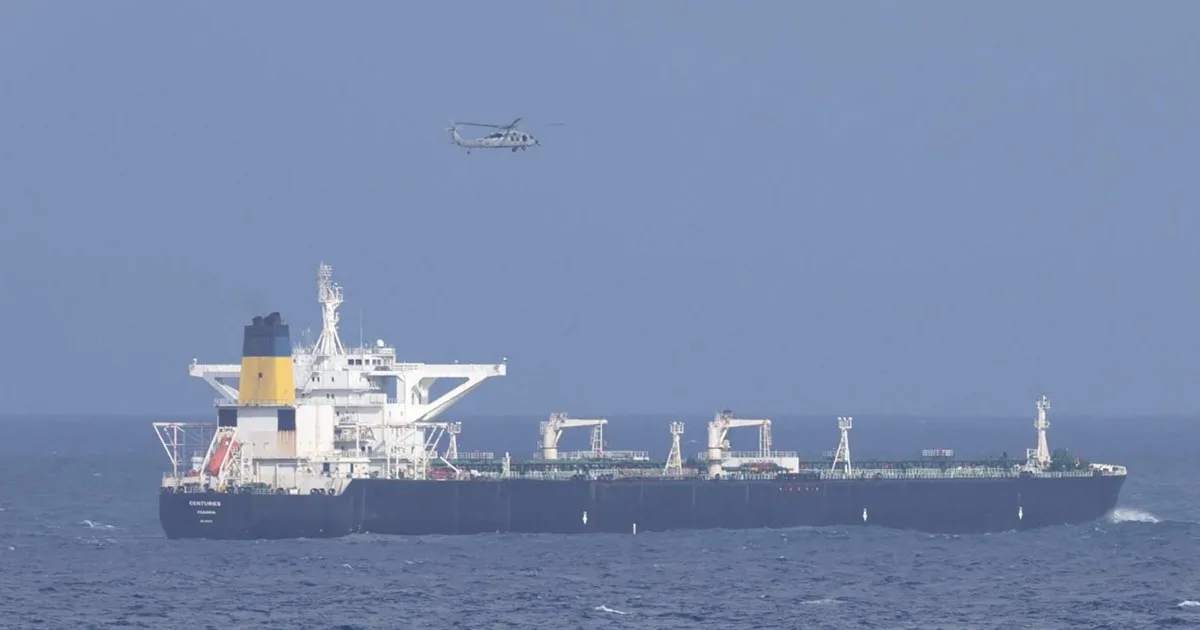
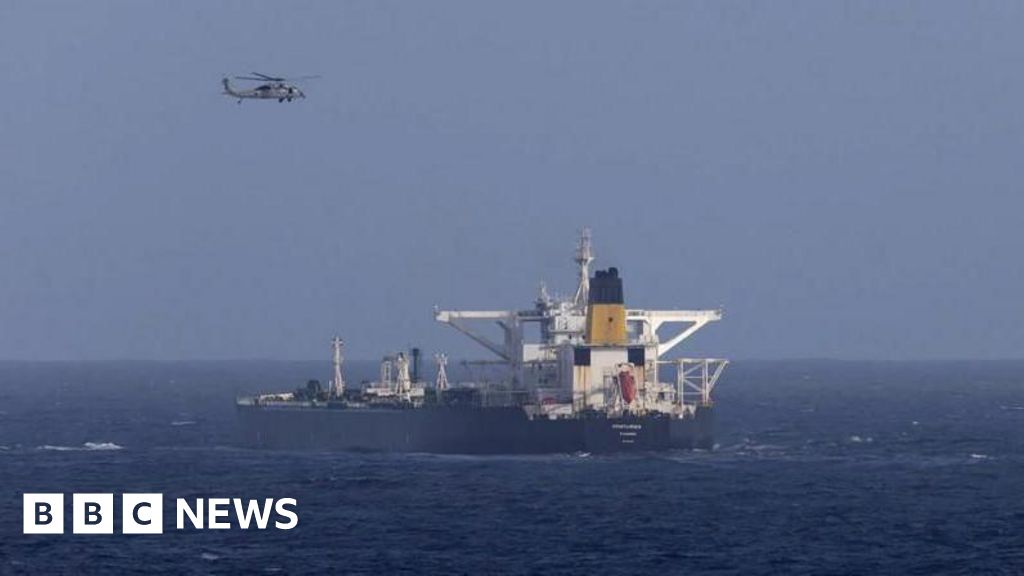
The US Coast Guard is in “active pursuit” of another vessel in international waters near Venezuela as tensions in the region continue to escalate.

US authorities have already seized two oil tankers this month – one of them on Saturday.

Sunday’s pursuit related to a “sanctioned dark fleet vessel that is part of Venezuela’s illegal sanctions evasion”, a US official said. “It is flying a false flag and under a judicial seizure order.”

Washington has accused Venezuela of using oil money to fund drug-related crime, while Venezuela has described the tanker seizures as “theft and kidnapping”.

US President Donald Trump last week ordered a “blockade” of sanctioned oil tankers entering and leaving the country.

Venezuela – home to the world largest proven oil reserves – has accused the Trump administration of trying to steal its resources.

US authorities have not yet officially confirmed Sunday’s pursuit, and the exact location and name of the tanker involved is not yet known.

As of last week, more than 30 of the 80 ships in Venezuelan waters or approaching the country were under US sanctions, according to data compiled by TankerTrackers.com.

Saturday’s seizure saw a Panamanian-flagged tanker boarded by a specialised tactical team in international waters.

That ship is not on the US Treasury’s list of sanctioned vessels, but the US has said it was carrying “sanctioned PDVSA oil”. In the past five years the ship also sailed under the flags of Greece and Liberia, according to records seen by BBC Verify.

“These acts will not go unpunished,” the Venezuelan government said in response to Saturday’s incident. It added that it intended to file a complaint with the United Nations Security Council and “other multilateral agencies and the governments of the world”.

Venezuela is highly dependent on revenues from its oil exports to finance its government spending.

In recent weeks, the US has built up its military presence in the Caribbean Sea and has carried out deadly strikes on alleged Venezuelan drug-smuggling boats, killing around 100 people.

Sanctions also were placed on some of President Maduro’s relatives and on businesses associated with what the US calls his illegitimate regime.

Secretary of State Marco Rubio told reporters on Friday: “It is clear that the current status quo with the Venezuelan regime is intolerable for the United States.”

He added that the goal of the Trump administration is to change that dynamic.

His comments were criticised by Venezuela’s foreign minister who accused Rubio dragging the US down the path of “regime changes”.

It has provided no public evidence that these vessels were carrying drugs, and the military has come under increasing scrutiny from Congress over the strikes.

The Trump administration has accused Venezuelan President Nicolás Maduro of leading a designated-terrorist organisation called Cartel de los Soles, which he denies.

Source link

Operation Hawkeye Strike: A U.S. Response to ISIS Attack

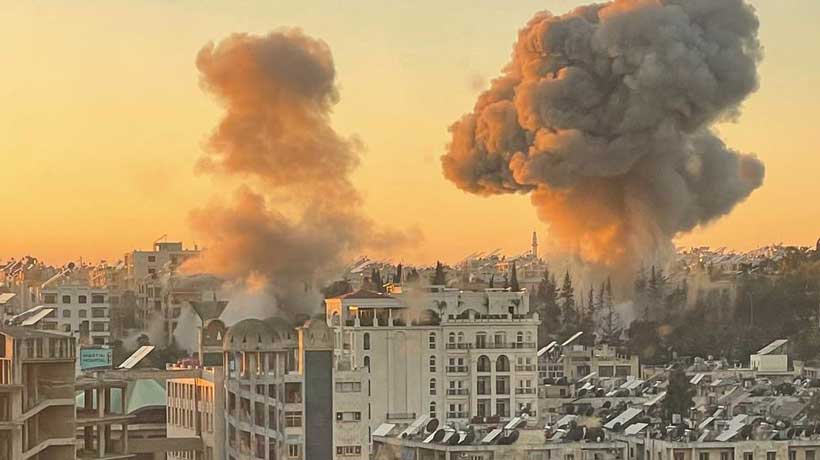
NEWS BRIEF The United States launched large-scale retaliatory airstrikes against more than 70 Islamic State targets across central Syria on Friday, responding to a deadly attack on American personnel earlier in the week. The operation, supported by Jordanian fighter jets and involving U.S. F-15s, A-10s, Apache helicopters, and HIMARS rockets, was described by Defense Secretary […]

The post Operation Hawkeye Strike: A U.S. Response to ISIS Attack appeared first on Modern Diplomacy.

Source link

Nigeria says 130 kidnapped Catholic schoolchildren freed | News

The country has seen a wave of recent mass abductions, as it suffers from multiple interlinked security concerns.

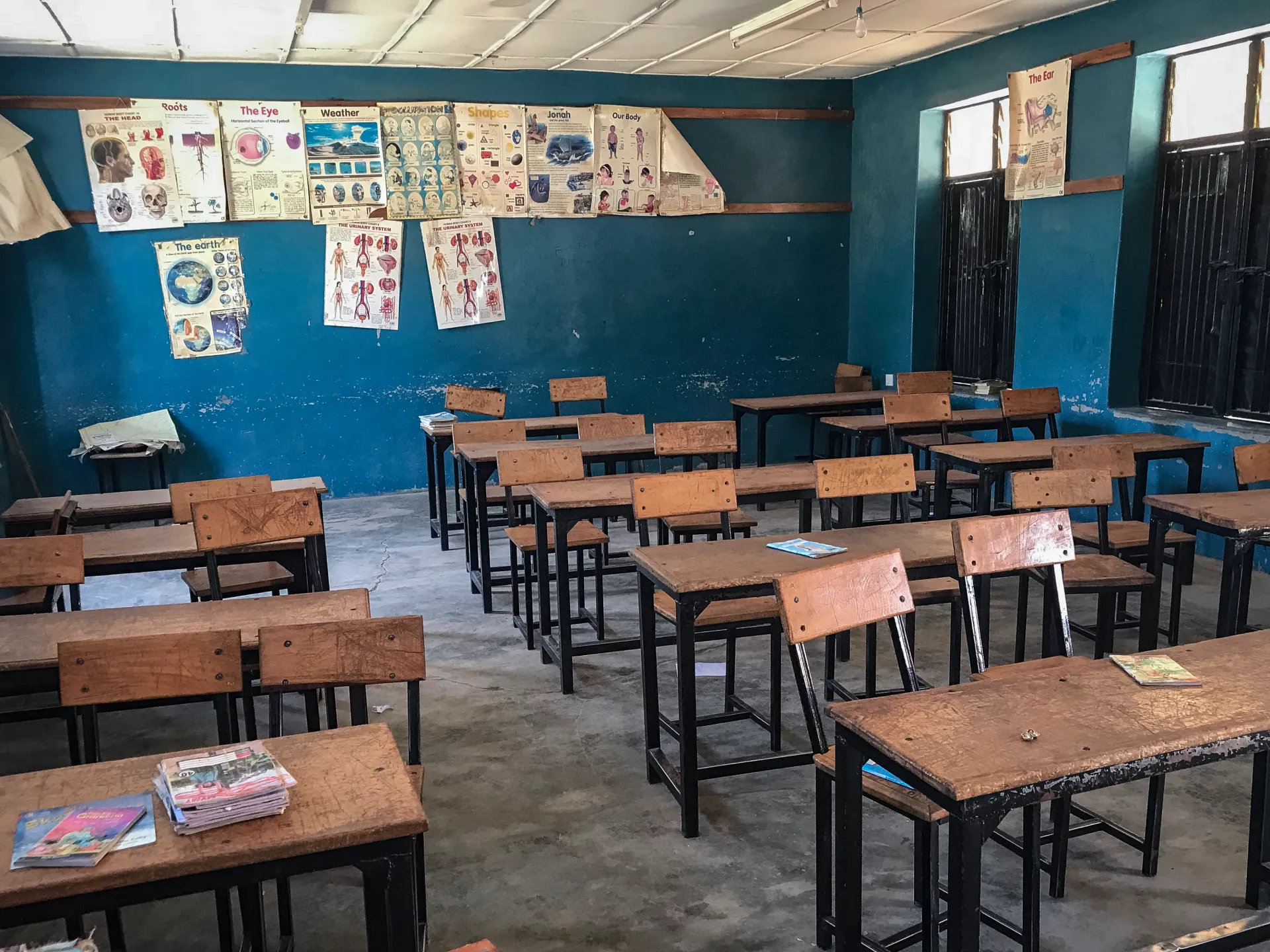
Nigerian authorities have secured the release of 130 kidnapped schoolchildren taken by gunmen from a Catholic school in November, according to a presidential spokesman, after 100 were freed earlier this month.

“Another 130 Abducted Niger State Pupils Released, None Left In Captivity,” Sunday Dare said in a post on X on Sunday.

Recommended Stories

list of 4 itemsend of list

In late November, hundreds of students and staff were kidnapped from St Mary’s co-educational boarding school in north-central Niger State.

The attack came amid a wave of mass abductions reminiscent of the 2014 Boko Haram kidnapping of schoolgirls in the town of Chibok.

The West African country suffers from multiple interlinked security concerns, from armed groups in the northeast to armed “bandit” gangs in the northwest.

The exact number of children taken from St Mary’s has been unclear throughout the ordeal.

Initially, the Christian Association of Nigeria (CAN) said that 315 students and staff were unaccounted for after the attack in the rural hamlet of Papiri.

About 50 of them escaped immediately afterwards, and on December 7, the government secured the release of about 100 people.

That would leave about 165 thought to be still in captivity before Sunday’s announcement that 130 were rescued.

However, a UN source told the AFP news agency that all those taken appeared to have been released, as dozens thought to have been kidnapped had managed to run off during the attack and make their way home.

The accounting has been complicated because the children’s homes are scattered across swaths of rural Nigeria, sometimes requiring three or four hours of travel by motorbike to reach their remote villages, the source said.

The source told the AFP that “the remaining set of girls/secondary school students will be taken to Minna”, the capital of Niger State, on Monday.

“We’ll have to still do final verification,” Daniel Atori, a spokesman for CAN in Niger State, told the AFP.

Mass kidnappings

It has not been made public who seized the children from their boarding school, or how the government secured their release.

Kidnappings for ransom are a common way for criminals and armed groups to make quick cash in Nigeria.

But a spate of mass abductions in November put an uncomfortable spotlight on the country’s already grim security situation.

Assailants kidnapped two dozen Muslim schoolgirls, 38 church worshippers, and a bride and her bridesmaids, with farmers, women and children also taken hostage.

The kidnappings also come as Nigeria faces a diplomatic offensive from the United States, where President Donald Trump has alleged that there have been mass killings of Christians in Nigeria that amounted to a “genocide”, and he threatened military intervention.

Nigeria’s government and independent analysts reject that framing, which has long been used by the Christian right in the US and Europe.

One of the first mass kidnappings that drew international attention was in 2014, when nearly 300 girls were seized from their boarding school in the northeastern town of Chibok by the Boko Haram armed group.

A decade later, Nigeria’s kidnap-for-ransom crisis has “consolidated into a structured, profit-seeking industry” that raised some $1.66m between July 2024 and June 2025, according to a recent report by SBM Intelligence, a Lagos-based consultancy.

Source link

US pursues another oil tanker near Venezuela: Reports | News

The vessel was flying a false flag and under a judicial seizure order, according to US officials cited by US media.

The United States is pursuing an oil tanker in international waters near Venezuela, US media reported, in what would be the second such operation in two days and the third in less than two weeks.

“The United States Guard is in active pursuit of a sanctioned dark fleet vessel that is part of Venezuela’s illegal sanctions evasion,” a US official told the Reuters news agency on Sunday.

Recommended Stories

list of 4 itemsend of list

“It is flying a false flag and under a judicial seizure order.”

Another official told the agency that the tanker was under sanctions, but added that it had not been boarded so far and that interceptions can take different forms – including sailing or flying close to vessels of concern.

The officials, who were speaking on condition of anonymity, did not give a specific location for the operation or name the vessel being pursued.

The pursuit of the tanker was also reported by The Associated Press news agency, which cited an official briefed on the operation separately.

The official, who also spoke on condition of anonymity, said Sunday’s pursuit involved “a sanctioned dark fleet vessel that is part of Venezuela’s illegal sanctions evasion.”

The official also said that the vessel was flying a false flag and under a judicial seizure order.

Two tankers seized

The pursuit comes after the US seized an oil tanker off Venezuela on Saturday as part of a “blockade” ordered by US President Donald Trump.

US Homeland Security Secretary Kristi Noem said on Saturday that the coastguard apprehended the vessel with support from the Pentagon.

“The United States will continue to pursue the illicit movement of sanctioned oil that is used to fund narco terrorism in the region,” she wrote.

“We will find you, and we will stop you,” she added.

The operation marked the second time in recent weeks that the US has seized a tanker near Venezuela, and it comes amid a large US military build-up in the region.

Trump, whose administration has continued to ramp up pressure on Venezuelan President Nicolas Maduro, ordered on Tuesday a “total and complete blockade” of all sanctioned oil tankers entering and leaving the South American country.

Trump’s pressure campaign on Maduro has also included a ramped-up military presence in the region and more than two dozen military strikes on alleged drug trafficking vessels in the Pacific Ocean and Caribbean Sea near the South American nation. At least 100 people have been killed in the attacks.

The two oil tankers that were seized were operating on the black market and providing oil to countries under sanctions, Kevin Hassett, director of the White House’s National Economic Council, said in a TV interview on Sunday.

Source link

Swedish authorities board sanctioned Russian ship in national waters | News

Authorities board vessel off Swedish coast after it suffered an engine failure.

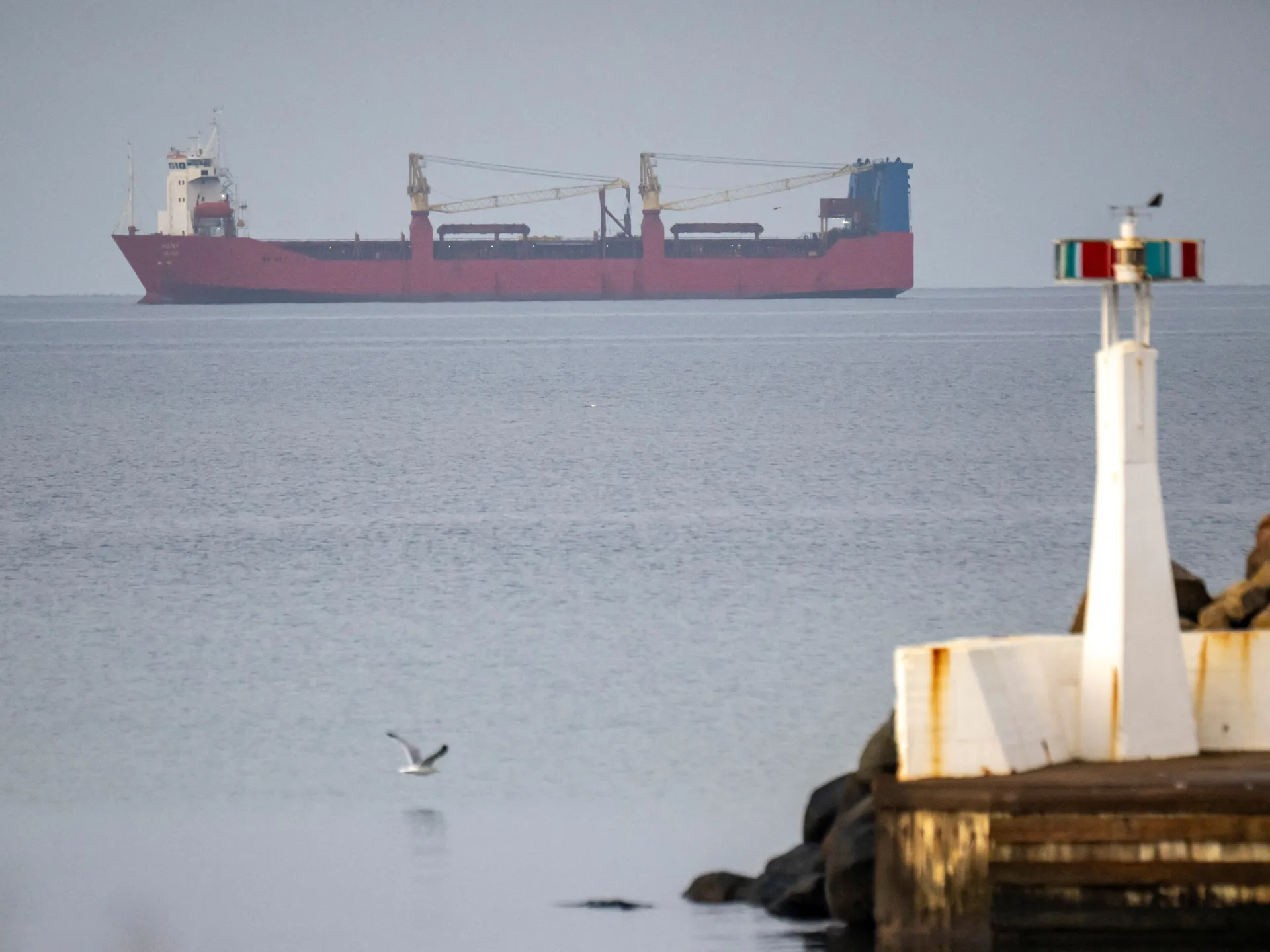
Sweden’s customs service has said that authorities boarded a Russian freighter that anchored in Swedish waters on Friday after developing engine problems, and were conducting an inspection of the cargo.

The owners of the vessel, the Adler, are on the European Union’s sanctions list, Martin Hoglund, spokesman at the customs authority, said on Sunday.

Recommended Stories

list of 4 itemsend of list

“Shortly after 0100 (00:00 GMT) last night we boarded the ship with support from the Swedish Coast Guard and the police service in order to make a customs inspection,” Hoglund said. “The inspection is still ongoing.”

Hoglund declined to say what the customs service had found on board the ship.

According to ship-tracking service Marine Traffic, the Adler is a 126-metre-long, roll-on, roll-off container carrier. It is anchored off Hoganas in southwest Sweden.

EU and US sanctions

In addition to the Adler being on an EU sanctions list, the vessel and its owners, M Leasing LLC, are also both subject to US sanctions, suspected of involvement in weapons transport, according to OpenSanctions, a database of sanctioned companies and individuals, persons of interest and government watchlists.

Hoglund said the ship had left the Russian port of St Petersburg on December 15, but he said customs did not have any information about its destination.

The night-time operation was led by the Swedish Customs Administration along with the coastguard, National Task Force, Swedish Security Service and prosecutors.

In a previous incident, the Adler was boarded by Greek forces in the Mediterranean in January 2021. The operation was carried out under the auspices of the EU’s Operation Irini, which monitors the United Nations arms embargo on Libya.

Source link

Take That singer Robbie Williams surprises 94-year-old fan

This is the moment Robbie Williams made a 94-year-old fan’s wish come true.

Norma, a resident of Humberston Care Home in North East Lincolnshire, told staff she had followed the singer from when he was in Take That and had always wanted to see him.

The home organised for her to see a Robbie Williams tribute act and then went one step further by organising for her to speak to the singer, who admitted he was urged to call her by his daughter, who had seen Norma’s story online.

Norma said: “I was absolutely amazed. I really was surprised.

“Nothing like this has happened to me before.

“He was in America, laid out on the bed. I nearly said to him you could have got done up for me!”

The moment was organised by Bailey Greetham, who holds fitness and wellbeing sessions with residents, and films videos on behalf of the home.

He added: “She said I was off to a Robbie Williams tribute but I am a little bit upset because it’s not the real Robbie.

“I had the camera with me so I said let’s film something and we put it on the internet and it got a million views and Robbie was tagged 5,000 times.”

Source link

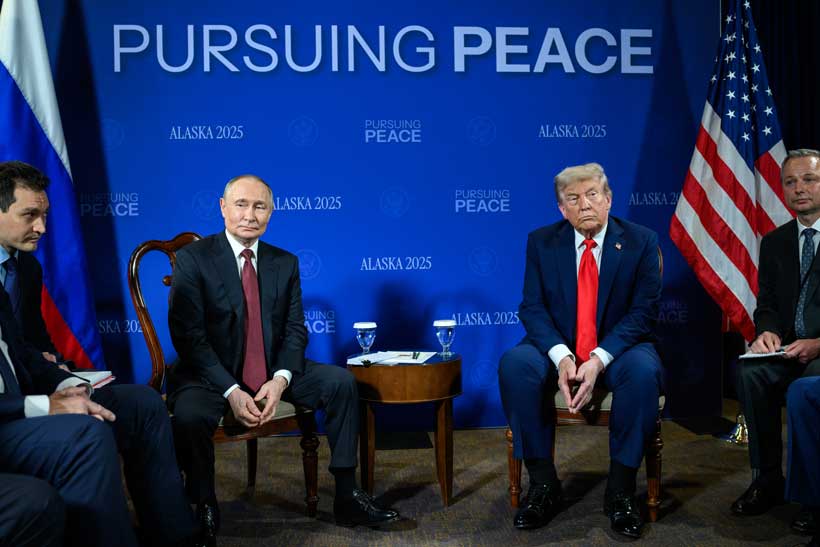
As Putin Refuses to Bend, U.S. and Russia Meet for Ukraine Peace Talks

NEWS BRIEF U.S. and Russian officials are set to meet in Florida for high-level talks aimed at ending the war in Ukraine, following separate discussions with Ukrainian and European negotiators. The talks, led by property magnate-turned-diplomat Steve Witkoff and Jared Kushner for the U.S., and Kirill Dmitriev for Russia, seek to narrow gaps in a […]

The post As Putin Refuses to Bend, U.S. and Russia Meet for Ukraine Peace Talks appeared first on Modern Diplomacy.

Source link

Mo Salah focused on Egypt success at AFCON with Liverpool crisis behind him | Football News

Liverpool and Egypt star forward Mohamed Salah is centred on winning his first Africa Cup of Nations title.

Egypt captain Mohamed Salah ‌has put aside his travails at Liverpool and is focused on Africa Cup of Nations (AFCON) ‍success with his national ‍team, coach Hossam Hassan said on Sunday.

Egypt’s talisman is at the tournament in Morocco on the back of a fiery outburst after being dropped by the Premier League champions, but his comments and subsequent apology to teammates have had no impact on his form, Hassan ⁠said ahead of Egypt’s opening Group B match against Zimbabwe in Agadir on Monday.

Recommended Stories

list of 4 itemsend of list

“Salah’s morale in training is ​very high, as if he were just starting out with the national team, and ‍I believe he will have a great tournament with his country,” said the coach.

At 33, it is arguably Salah’s last chance to win an elusive trophy with Egypt and add international honours to an impressive collection of medals at club ‍level.

“I believe Salah ⁠will be among the best players at the tournament, and he will remain an icon and one of the best players in the world.

“I support him technically and morally, because we cannot forget that Salah needs to win the Africa Cup of Nations,” Hassan added.

Omar Marmoush and Mohamed Salah react.
Manchester City forward Omar Marmoush, right, will pair with Mohamed Salah to form an awesome front-line attack for Egypt at AFCON [File: Ahmed Mosaad/NurPhoto via Getty Images]

Liverpool struggles on the backburner

Salah goes into Monday’s match having last started for Liverpool in their 4-1 home loss to PSV Eindhoven in the Champions League at the end of November.

He was dropped for the next game against West ​Ham United, and after a draw with Leeds United on December 6, lashed ‌out at the club and Liverpool coach Arne Slot, telling journalists he felt he had been made a scapegoat for their poor start to the season and suggested that he may not have long left at Anfield.

Hassan said he had kept in ‌touch with his captain throughout the controversy.

“There was constant communication with Mohamed Salah during what I don’t want to call a crisis because any player ‌can have a difference of opinion with his coach at his ⁠club.”

Salah has not scored since Liverpool’s 2-0 win over Aston Villa at the start of November, including an outing with Egypt in a friendly against Uzbekistan last month.

“The same situation happened with Salah when he went through a period of not scoring goals with ‌Liverpool,” Hassan told reporters.

“Then he returned to the right path through the national team, and as a result, he came back at a level even better than before. I believe he will deliver a strong ‍tournament alongside his teammates.”

Salah has twice been a Cup of Nations runner-up, in 2017 and 2021. Egypt have won a record seven AFCON titles, but their last success was in 2010.

Source link

Rights groups condemn new record number of executions in 2025

Caroline HawleyDiplomatic correspondent

ESOHR Issam al-ShazlyESOHR

Egyptian fisherman Issam al-Shazly was executed on Tuesday after being convicted of drug-related charges

Saudi Arabia has surpassed its record for the number of executions carried out annually for a second year in a row.

At least 347 people have now been put to death this year, up from a total of 345 in 2024, according to the UK-based campaign group Reprieve, which tracks executions in Saudi Arabia and has clients on death row.

It said this was the “bloodiest year of executions in the kingdom since monitoring began”.

The latest prisoners to be executed were two Pakistani nationals convicted of drug-related offences.

Others put death this year include a journalist and two young men who were children at the time of their alleged protest-related crimes. Five were women.

But, according to Reprieve, most – around two thirds – were convicted of non-lethal drug-related offences, which the UN says is “incompatible with international norms and standards”.

More than half of them were foreign nationals who appear to have been put to death as part of a “war on drugs” in the kingdom.

The Saudi authorities have not responded to the BBC’s request for comment on the rise in executions.

“Saudi Arabia is operating with complete impunity now,” said Jeed Basyouni, Reprieve’s head of death penalty for the Middle East and North Africa. “It’s almost making a mockery of the human rights system.”

She described torture and forced confessions as “endemic” within the Saudi criminal justice system.

Ms Basyouni called it a “brutal and arbitrary crackdown” in which innocent people and those on the margins of society have been caught up.

Tuesday saw the execution of a young Egyptian fisherman, Issam al-Shazly, who was arrested in 2021 in Saudi territorial waters and said he had been coerced into smuggling drugs.

Reprieve says that 96 of the executions were solely linked to hashish.

“It almost seems that it doesn’t matter to them who they execute, as long as they send a message to society that there’s a zero-tolerance policy on whatever issue they’re talking about – whether it’s protests, freedom of expression, or drugs,” said Ms Basyouni.

There has been a surge of drug-related executions since the Saudi authorities ended an unofficial moratorium in late 2022 – a step described as “deeply regrettable” by the UN human rights office.

Speaking anonymously to the BBC, relatives of men on death row on drugs charges have spoken of the “terror” they’re now living in.

One told the BBC: “The only time of the week that I sleep is on Friday and Saturday because there are no executions on those days.”

Cellmates witness people they have shared prison life with for years being dragged kicking and screaming to their death, according to Reprieve.

Reuters Crown Prince Mohammed bin Salman of Saudi Arabia attends the US-Saudi Investment Forum in Washington DC, (19 November 2025)Reuters

Prince Mohammed bin Salman has loosened social restrictions while simultaneously silencing criticism

The de facto ruler of Saudi Arabia, Mohammed bin Salman – who became crown prince in 2017 – has changed the country profoundly over the past few years, loosening social restrictions while simultaneously silencing criticism.

In a bid to diversify its economy away from oil, he has opened Saudi Arabia up to the outside world, taken the religious police off the streets, and allowed women to drive.

But the kingdom’s human rights record remains “abysmal”, according to the US-based campaign group Human Rights Watch, with the high level of executions a major concern. In recent years, only China and Iran have put more people to death, according to human rights activists.

“There’s been no cost for Mohammed bin Salman and his authorities for going ahead with these executions,” said Joey Shea, who researches Saudi Arabia for Human Rights Watch. “The entertainment events, the sporting events, all of it is continuing to happen with no repercussions, really.”

According to Reprieve, the families of those executed are usually not informed in advance, or given the body, or informed where they have been buried.

The Saudi authorities do not reveal the method of execution, although it is believed to be either beheading or firing squad.

In a statement sent to the BBC, the UN’s special rapporteur on extrajudicial, summary or arbitrary executions, Dr Morris Tidball-Binz, called for an immediate moratorium on executions in Saudi Arabia with a view to abolition, as well as “full compliance with international safeguards (including effective legal assistance and consular access for foreign nationals), prompt notification of families, the return of remains without delay and the publication of comprehensive execution data to enable independent scrutiny”.

Amnesty International Abdullah al-Derazi (L) and Jalal al-Labbad (R)Amnesty International

Abdullah al-Derazi and Jalal al-Labbad were executed in October and August respectively after being convicted of crimes they allegedly committed as minors

Among the Saudi nationals executed this year were Abdullah al-Derazi and Jalal al-Labbad, who were both minors at the time of their arrest.

They had protested against the government’s treatment of the Shia Muslim minority in 2011 and 2012, and participated in the funerals of people killed by security forces. They were convicted of terrorism-related charges and sentenced to death after what Amnesty International said were grossly unfair trials that relied on torture-tainted “confessions”. UN human rights experts had called for their release.

The UN also condemned the execution in June of the journalist, Turki al-Jasser, who had been arrested in 2018 and sentenced to death on charges of terrorism and high treason based on writings he was accused of authoring.

“Capital punishment against journalists is a chilling attack on freedom of expression and press freedom,” said Unesco’s Director-General, Audrey Azoulay.

Reporters Without Borders said he was the first journalist to be executed in Saudi Arabia since Mohammed bin Salman came to power, although another journalist, Jamal Khashoggi, was murdered by Saudi agents at the Saudi consulate in Istanbul in 2018.

Human Rights Watch Turki al-JasserHuman Rights Watch

Journalist Turki al-Jasser was executed in June after seven years in detention

Last December, UN experts wrote to the Saudi authorities to express concern over a group of 32 Egyptians and one Jordanian national who had been sentenced to death on drugs charges, and their “alleged absence of legal representation”. Since then, most of the group have been executed.

A relative of one man put to death earlier this year said that he had told her that people were being “taken like goats” to be killed.

The BBC has approached the Saudi authorities for a response to the allegations but has not received one.

But in a letter dated January 2025 – in reply to concerns raised by UN special rapporteurs – they said that Saudi Arabia “protects and upholds” human rights and that its laws “prohibit and punish torture”.

“The death penalty is imposed only for the most serious crimes and in extremely limited circumstances,” the letter stated. “It is not handed down or carried out until judicial proceedings in courts of all levels have been completed.”

Source link

A Giant That Doesn’t Know How to Use Its Power

This year, in the US-China trade war and the grand military parade, China demonstrated economic and military strength that forced the United States to back down. However, Beijing merely displayed its power; various parties discovered that this giant does not know how to wield it.

The US paused its economic attacks on China, but the Dutch government directly “took control of” a Chinese-owned company in the Netherlands—Nexperia—through public authority. The EU expanded anti-dumping measures against China, with France as the main driver behind anti-China economic policies.

The US publicly acknowledged that China’s rising military power in the Western Pacific can no longer be suppressed and adjusted its global strategy to focus on the Western Hemisphere. Yet Japan shifted the Taiwan issue from strategic ambiguity to strategic clarity, adopting a more confrontational posture and challenging China’s bottom line. Regional countries, in various ways, have called for “peace” in the Taiwan Strait—support that amounts to nothing less than opposing China’s unification and indirectly endorsing Japan’s position. Meanwhile, the Philippines, mired in internal chaos, continued to provoke China in the South China Sea.

Since China has the capability to confront the US, it should have the ability to punish Europe, Japan, and the Philippines for their unfriendliness toward China. But Beijing did not do so. When facing challenges from these parties, it only issued symbolic verbal protests or took measures that failed to eradicate the problems—putting on a full defensive posture but lacking concrete and effective actions. As a result, events often started with thunderous noise but ended with little rain, fizzling out in the end.

From Beijing’s appeasement toward Europe, Japan, and the Philippines, all parties have reason to believe that China is a giant that doesn’t know how to use its own power. This presents a strategic opportunity for the weak to overcome the strong—especially now, as the US contracts its global strategy and distances itself from its allies. Maximizing benefits from China’s side is the rational choice.

For example, with Japan: Beijing responded to Tokyo’s intervention in the Taiwan issue with high-intensity verbal criticism, but its actions were inconsistent with its words. Although it revisited the “enemy state clauses” at the UN, raised the postwar Ryukyu sovereignty issue, and even conducted joint military exercises with Russia 600 kilometers from Tokyo, these actions were far less intense than the rhetoric. Even the verbal criticism cooled down after a month.

The US maintained a low profile on the China-Japan dispute, adopted a cool attitude toward Tokyo, and even indirectly expressed condemnation—likely the main reason Beijing de-escalated. This shows that China’s original intent in handling the incident was to force the US to “decouple” from Japan on the Taiwan issue and isolate Tokyo, which maintains close ties with Taipei.

Influenced by official attitudes, the Chinese people once again mistook official rhetoric for commitments, believing Beijing would go to war if necessary to eradicate Japan’s interference in internal affairs. After all, unresolved deep-seated hatred—akin to a sea of blood—remains between China and Japan. Moreover, this year marks the 80th anniversary of China’s victory in the War of Resistance Against Japanese Aggression, with various events held throughout the year to engrave in memory the national humiliation of Japan’s invasion of China.

But after Trump indirectly criticized Japan for provoking unnecessary disputes, Beijing seemed satisfied and stepped down gracefully. Although the dispute has not ended and continues to develop, like its handling of Philippine provocations, China has placed disputes with neighbors into long-term games, effectively shelving the issues—and causing the Chinese people renewed frustration.

After this three-way interaction, the asymmetry between Beijing’s words and actions has likely become deeply ingrained. In the future, it will be much harder for Beijing to mobilize the 1.4 billion people’s shared enmity.

The key point: In this dispute, who—China, Japan, or the US—gained the greatest substantive strategic benefits? So far, it’s hard to say who won the first round. China appeared to come out looking the best, preserving the most face, yet Japan also gained, and the US obtained leverage for future talks with China.

In the first round of this dispute, China strategically established the legitimacy of denying Japan’s intervention in the Taiwan issue, narrowing Tokyo’s diplomatic space for anti-China actions via Taiwan. Japan’s right wing advanced toward national normalization, hollowing out its peace constitution to cope with US strategic contraction; additionally, the Liberal Democratic Party regained public support. The US demonstrated its influence in East Asia—even after “withdrawing” its military to the second island chain—and raised its bargaining chips at the US-China negotiation table.

However, from a medium- to long-term perspective, Japan gains nothing worth the loss: the Ryukyu Islands will become a burden rather than an outer defense wall. The two major powers, China and the US, will orderly redraw their spheres of influence in East Asia; the US will gain a dignified pretext for abandoning Taiwan, while China will recover Taiwan at a lower cost.

Conversely, beyond the asymmetry between words and actions, there is also asymmetry between actions and strength. Beijing’s greatest loss is that the international community—especially its neighbors and Europe—has seen through China’s essence of appearing fierce but being timid inwardly. They have once again discovered that antagonizing China brings no adverse consequences; on the contrary, it can yield unexpected benefits—provided they give China the face it needs to achieve strategic gains.

For example, Vietnam: After the China-Japan dispute cooled, a Vietnamese warship transited the Taiwan Strait under the pretext of freedom of navigation without prior notification to China, signaling it is not a vassal of Beijing and aligning with Washington’s position.

Vietnam is a major beneficiary of the US-China confrontation, with massive Chinese goods rerouted through Vietnam to the US; transit trade has skyrocketed its economic growth. Thus, it firmly believes maximizing benefits lies in a neutral stance between China and the US. However, from a supply chain perspective, China is the supplier and the US the customer—the latter slightly more important. Factoring in China-Vietnam South China Sea disputes and China’s habitual concessions versus the lethal US carrot-and-stick approach, Vietnam naturally leans more pro-US.

Additionally, during the China-Japan dispute, Singapore’s prime minister publicly sympathized with Japan, while Thailand and Vietnam jointly called for peace in the Taiwan Strait—showing Southeast Asian nations, like Japan, hope to maintain the peaceful status quo in the Taiwan Strait and oppose military conflict in the region, which is equivalent to opposing China’s recovery of Taiwan. Of course, Northeast Asia’s South Korea holds the same view; some countries publicly state it due to internal and US factors, while others choose silence.

China’s neighboring countries all see the fact that the Philippines’ intense anti-China stance has gone unpunished. Despite deep internal political turmoil, Manila can still spare efforts to provoke China in the South China Sea—clearly a profitable path. Neighbors conclude: If China can concede on core interests, what can’t it concede?

On the other side of the globe, Europe has noticed this phenomenon too. The Dutch government rashly took over a Chinese enterprise, severely damaging China’s interests and prestige; Beijing’s response started strong but ended weakly—mainly to avoid impacting China-EU trade, even amid decoupling risks everywhere. No wonder Britain subsequently sanctioned two Chinese companies on suspicion of cyberattacks, unafraid of angering Beijing just before Prime Minister Starmer’s planned January visit to China.

In short, whether on the regional Taiwan issue or extraterritorial China-EU economic issues, China faces a broken windows effect. Although from a grand strategic view, all related events remain controllable for Beijing, appeasement only invites more trouble. It’s not impossible that China will eventually be unable to suppress public indignation and be forced to suddenly take tough measures—like at the end of the pandemic, when people took to the streets and Beijing immediately lifted lockdowns, rendering all prior lockdown justifications untenable overnight.

Indeed, China currently appears as a giant that doesn’t know how to use its power. But when a rabbit is cornered, it bites. When Beijing is forced to align actions with strength, the intensity will be astonishing; then, China will want more than just face.

There’s a saying: Attack is the best defense. But with its long history, this nation views offense and defense more comprehensively. The Chinese believe that when weak, attack is the best defense; when holding an advantage, defense is the best attack. As long as the opponent’s offense can be controlled within acceptable limits, persistent defense inflicts less damage than the opponent’s self-exhaustion in stamina. Conversely, when at a disadvantage, a full assault is needed to reverse it.

In other words, China doesn’t fail to know how to use power; it deems using power uneconomical. This explains why the West walks a path of decline while China continues rising—the latter accumulates power, and the former overdraws it.

President Trump is shrewd and pragmatic; he knows cornering China awakens the giant, so he eased US-China relations. But simultaneously, the US doesn’t mind—and even quietly encourages—its allies to provoke China, while positioning itself as a mediator to benefit. This is a reasonable tactic and the most effective offensive against China.

Xi Jinping once said China has great patience—implying that if patience is exhausted, the world will see a completely different China, one that uses power without regard for cost.
Source link

Sixty years ago, the world tried to stop racial discrimination and failed | Human Rights

The way the story is often told is that Western countries gifted human rights to the world and are the sole guardians of it. It may come as a surprise for some, then, that the international legal framework for prohibiting racial discrimination largely owes its existence to the efforts of states from the Global South.

In 1963, in the midst of the decolonisation wave, a group of nine newly independent African states presented a resolution to the United Nations General Assembly (UNGA) calling for the drafting of an international treaty on the elimination of racial discrimination. As the representative from Senegal observed: “Racial discrimination was still the rule in African colonial territories and in South Africa, and was not unknown in other parts of the world … The time had come to bring all States into that struggle.”

The groundbreaking International Convention on the Elimination of All Forms of Racial Discrimination (ICERD) was unanimously adopted by the UNGA two years later. The convention rejected any doctrine of superiority based on racial differentiation as “scientifically false, morally condemnable and socially unjust”.

Today, as we mark 60 years since its adoption, millions of people around the world continue to face racial discrimination – whether in policing, migration policies or exploitative labour conditions.

In Brazil, Amnesty International documented how a deadly police operation in Rio de Janeiro’s favelas this October resulted in the massacre by security forces of more than 100 people, most of them Afro-Brazilians and living in poverty.

In Tunisia, we have seen how authorities have for the past three years used migration policies to carry out racially targeted arrests and detentions and mass expulsions of Black refugees and asylum seekers.

Meanwhile, in Saudi Arabia, Kenyan female domestic workers face racism and exploitation from their employers, enduring gruelling and abusive working conditions.

In the United States, diversity, equity and inclusion (DEI) initiatives aimed at tackling systemic racism have been eliminated across federal agencies. Raids by Immigration and Customs Enforcement (ICE) targeting migrants and refugees are a horrifying feature of President Donald Trump’s mass deportation and detention agenda, rooted in white supremacist narratives.

Migrants held in detention centres have been subjected to torture and a pattern of deliberate neglect designed to dehumanise and punish.

Elsewhere, Amnesty International has documented how new digital technologies are automating and entrenching racism, while social media offers inadequately moderated forums for racist and xenophobic content. For example, our investigation into the United Kingdom’s Southport racist riots found that X’s design and policy choices created fertile ground for the inflammatory, racist narratives that resulted in the violent targeting of Muslims and migrants.

Even human rights defenders from the Global South face racial discrimination when they have to apply for visas to Global North countries in order to attend meetings where key decisions are made on human rights.

All these instances of systemic racism have their roots in the legacies of European colonial domination and the racist ideologies on which they were built. This era, which spanned nearly four centuries and extended across six continents, saw atrocities that had historical consequences – from the erasure of Indigenous populations to the transatlantic slave trade.

The revival of anti-right movements globally has led to a resurgence of racist and xenophobic rhetoric, a scapegoating of migrants and refugees, and a retrenchment in anti-discrimination measures and protections.

At the same time, Western states have been all too willing to dismantle international law and institutions to legitimise Israel’s genocide against Palestinians in Gaza and shield Israeli authorities from justice and accountability.

Just as the creation of the ICERD was driven by African states 60 years ago, Global South countries continue to be at the forefront of the fight against racial oppression, injustice and inequality. South Africa notably brought the case against Israel at the International Court of Justice and cofounded The Hague Group – a coalition of eight Global South states organising to hold Israel accountable for genocide.

On the reparations front, it is Caribbean and African states, alongside Indigenous peoples, Africans and people of African descent, that are leading the pursuit of justice. The Caribbean Community (CARICOM) has been intensifying pressure on European governments to reckon with their colonial past, including during a recent visit to the United Kingdom by the CARICOM Reparations Commission.

As the African Union announced 2026-36 the Decade of Reparations last month, African leaders gathered in Algiers for the International Conference on the Crimes of Colonialism, at which they consolidated demands for the codification of colonialism as a crime under international law.

But this is not enough. States still need to confront racism as a structural and systemic issue, and stop pretending slavery and colonialism are a thing of the past with no impact on our present.

Across the world, people are resisting. In Brazil, last month, hundreds of thousands of Afro-Brazilian women led the March of Black Women for Reparations and Wellbeing against racist and gendered historic violence. In the US, people fought back against the wave of federal immigration raids this year, with thousands taking to the streets in Los Angeles to protest and residents of Chicago mobilising to protect migrant communities and businesses against ICE raids.

Governments need to listen to their people and fulfil their obligations under ICERD and national law to protect the marginalised and oppressed against discrimination.

The views expressed in this article are the authors’ own and do not necessarily reflect Al Jazeera’s editorial stance.

Source link

Survivors are ‘nervous and sceptical’ about partial Epstein file release

Watch: Images, cassettes and high-profile figures – What’s in the latest Epstein files?

The release of thousands of pages of documents related to the late sex offender Jeffrey Epstein’s abuse by the US department of justice (DOJ) has left some who were anxiously awaiting the files disappointed.

By law, the DOJ had to make all materials public by the end of Friday. But only some have been released, many with numerous redactions.

The lawmakers who pushed for these documents to see the light of day have described the DOJ’s efforts as insincere, and some legal experts say that the redactions may only fuel ongoing conspiracy theories.

“We just want all of the evidence of these crimes out there,” Epstein survivor Liz Stein told the BBC.

Ms Stein told Radio 4’s Today programme that she thought the justice department was “really brazenly going against the Epstein Files Transparency Act” – the law that requires all the documents to be released.

Survivors are really worried about the possibility of a “slow roll-out of incomplete information without any context”, she noted.

Marina Lacerda, who was 14 when she was abused by Epstein, also told the BBC some of the survivors were “still nervous and sceptical about how they are going to release the rest of the files”.

“We are very worried that it will still be redacted in the same way that it was today.

“We are a little disappointed that they’re now still lingering on and distracting us with other things.”

US Department of Justice Epstein poses with Michael Jackson US Department of Justice

Epstein poses with Michael Jackson

Among the latest released information is a photo of Epstein now jailed confidante Ghislaine Maxwell outside Downing Street – the UK prime minister’s office and residence – a document that claims Epstein introduced a 14-year-old girl to US President Donald Trump at Mar-a-Lago, and multiple images of former President Bill Clinton.

Other released photos show the interiors of Epstein’s homes, his overseas travels, as well as celebrities, including Andrew Mountbatten-Windsor, Mick Jagger, Michael Jackson, Diana Ross and Peter Mandelson – former UK Labour Party politician and ambassador to the US.

Being named or pictured in the files is not an indication of wrongdoing. Many of those identified in the files or in previous releases related to Epstein have denied any wrongdoing.

Trump has consistently denied any wrongdoing in relation to Epstein and has not been accused of any crimes by Epstein’s victims. Clinton has never been accused of wrongdoing by survivors of Epstein’s abuse, and has denied knowledge of his sex offending.

At least 15 of the released files were no longer available on the DOJ website on Saturday.

One of the missing files showed a mass of framed photos on a desk, according to CBS, the BBC’s media partner in the US. The photos showed Bill Clinton, and another was of the Pope. In an open drawer, there was a photo of Trump, Epstein, and Maxwell.

Other missing files included photos of a room with what appeared to be a massage table and nude photos and nude paintings.

It was not clear why the files were no longer available.

In a post on X on Saturday night, the DOJ wrote: “Photos and other materials will continue being reviewed and redacted consistent with the law in an abundance of caution as we receive additional information.”

The BBC has asked the DOJ for comment.

Deputy US Attorney General Todd Blanche said on Friday – the day the materials were released – that the department had identified more than 1,200 Epstein victims or their relatives, and withheld material that could identify them.

But many of the documents are also heavily redacted.

The DOJ said it would comply with the congressional request to release documents, with some stipulations.

It redacted personally identifiable information about Epstein’s victims, materials depicting child sexual abuse, materials depicting physical abuse, any records that “would jeopardise an active federal investigation” or any classified documents that must stay secret to protect “national defence or foreign policy”.

The DOJ said it was “not redacting the names of any politicians”, and added a quote they attributed to Blanche, saying: “The only redactions being applied to the documents are those required by law – full stop.

“Consistent with the statute and applicable laws, we are not redacting the names of individuals or politicians unless they are a victim.”

John Day, a criminal defence attorney, told the BBC he was surprised by the amount of information that was redacted.

“This is just going to feed the fire if you are a conspiracy theorist,” he said. “I don’t think anyone anticipated there would be this many redactions. It certainly raises questions about how faithfully the DOJ is following the law.”

Mr Day also noted that the justice department is required to provide a log of what was being redacted to Congress within 15 days of the files’ release.

“Until you know what’s being redacted you don’t know what’s being withheld,” he said.

In a letter to the judges overseeing the Epstein and Maxwell cases, US attorney for the Southern District of New York Jay Clayton, said: “Victim privacy interests counsel in favour of redacting the faces of women in photographs with Epstein even where not all the women are known to be victims because it is not practicable for the department to identify every person in a photo.”

Clayton added that “this approach to photographs could be viewed by some as an over-redaction” – but that “the department believes it should, in the compressed time frame, err on the side of redacting to protect victims.”

Reuters Liz Stein, who was a victim of late financier Jeffrey Epstein, speaks on the day of a rally in support of Epstein's victims, on Capitol Hill in Washington, DC, in September 2025. Liz is wearing a pink suir and standing in front of a podium with the word stand with survivors on a sign. Reuters

Epstein survivor Liz Stein has called for all of the files to be released

Baroness Helena Kennedy, a human rights lawyer and Labour peer in the House of Lords in the UK, said she was told the redactions in the documents were there to protect the victims.

“Authorities always have a worry” about “exposing people to yet further denigration in the public mind”, she told the BBC’s Today programme.

Many Epstein survivors seem “very keen” to have the material exposed, she said, but added that they “might not be so keen if they knew exactly what was in there”.

Democrat Congressman Ro Khanna, who led the charge along with Republican Congressman Thomas Massie to release the files, said the release was “incomplete” and added that he is looking at options like impeachment, contempt or referral to prosecution.

“Our law requires them to explain redactions,” Khanna said. “There is not a single explanation.”

Massie seconded Khanna’s statement and posted on social media that Attorney General Pam Bondi and other justice department officials could be prosecuted by future justice departments for not complying with the document requirements.

He said the document release “grossly fails to comply with both the spirit and the letter of the law” of the Epstein Files Transparency Act.

After the release, the White House called the Trump Administration the most “transparent in history”, adding that it has “done more for the victims than Democrats ever have”.

Blanche was asked in an interview with ABC News whether all documents mentioning Trump in the so-called Epstein files will be released in the coming weeks.

“Assuming it’s consistent with the law, yes,” Blanche said. “So there’s no effort to hold anything back because there’s the name Donald J Trump or anybody else’s name, Bill Clinton’s name, Reid Hoffman’s name.

“There’s no effort to hold back or not hold back because of that.

“We’re not redacting the names of famous men and women that are associated with Epstein.”

Additional reporting by Jaroslav Lukiv

Source link

Marines Seeking 10,000 First-Person View Drones At $4K A Pop

The U.S. Marine Corps is looking for companies that can provide 10,000 first-person view drones by Jan. 1, 2027, according to a Request for Information (RFI) posted Thursday on a government procurement website. While just a minute fraction of the number of FPV drones being used by both sides of the war in Ukraine monthly, the RFI is the latest move by the Marines to put these swift and maneuverable weapons into the hands of its troops. It was issued as the Pentagon seeks to dramatically increase drone supplies across the services.

The USMC, as we have previously noted, wants strike weapons at the squad level with far greater reach than rifles and mortars. The Corps has created “attack drone teams” to integrate the lessons in Ukraine about the effectiveness of these weapons against personnel and equipment into their formations. We’ll talk more about those teams later in this story.

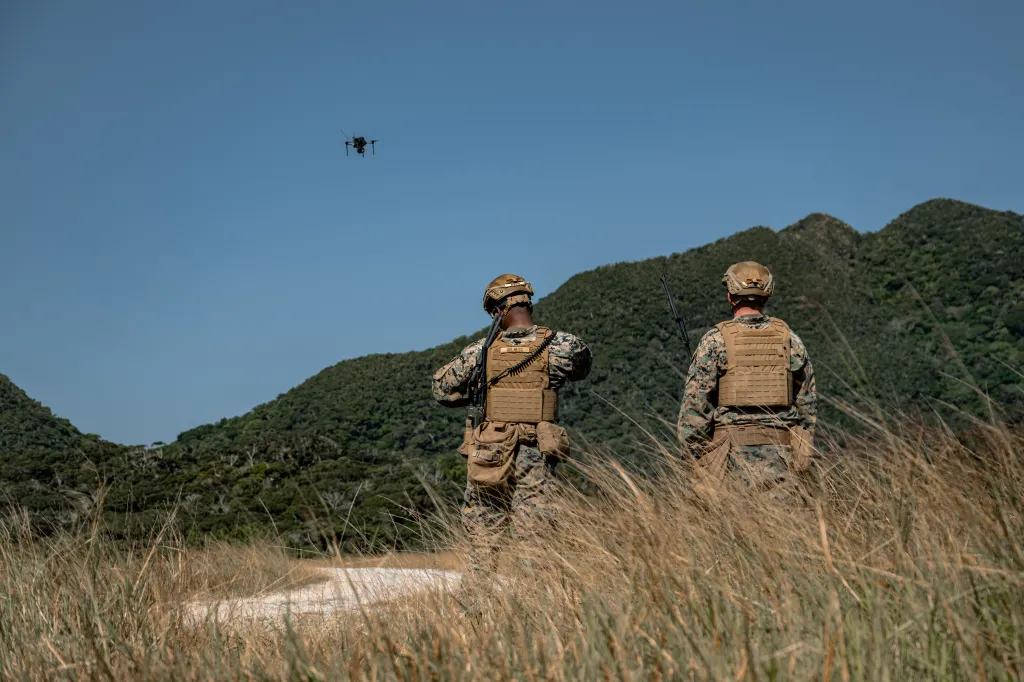
U.S. Marines with III Marine Expeditionary Force prepare to receive a drone during the Marine Corps Attack Drone Competition on Camp Schwab, Okinawa, Japan, Dec. 9, 2025. During a two-week period, the Marine Corps Attack Drone Team trained and certified 3rd Marine Division Marines as attack drone operators, attack drone instructor, and payload specialist instructors, increasing the Division’s lethality and capacity of trained and certified attack drone operators and instructors. (U.S. Marine Corps photo by Cpl. Joaquin Dela Torre)
U.S. Marines with III Marine Expeditionary Force prepare to receive a drone during the Marine Corps Attack Drone Competition on Camp Schwab, Okinawa, Japan, Dec. 9, 2025. (U.S. Marine Corps photo by Cpl. Joaquin Dela Torre) Cpl. Joaquin Carlos Dela Torre

The use of FPV drones by both Russia and Ukraine has changed the face of war. They have enabled small units to strike targets in some cases as far away as 40 kilometers, though more typically less than half that distance, greatly extending the depth of the front lines.

Drone footage from Ukraine’s Lazar Special Forces Group captures a precision strike on a Russian 9K33 Osa air defense vehicle in Kherson Oblast, destroying its active radar. The FPV drone covered the 300-meter distance to impact in less than 17 seconds. pic.twitter.com/VtYVcvYJak

— Polymarket Intel (@PolymarketIntel) December 19, 2025

The Marines want the same capabilities.

“FPV drones offer squad-level lethality up to 20 kilometers for under $5,000, compared to more expensive weapons systems with less capability,” the Marines explained in March. “This provides a cost-effective and scalable solution for modern combat.”

The RFI, published on Thursday, is one step toward meeting that goal. It calls for FPV drones costing less than $4,000 per unit for the aircraft, with the understanding that ground-control stations, communications equipment, goggles, batteries and charging stations for swarming will add to the price tag.

These can be controlled by radio frequencies as well as fiber optic cables. First employed by Russia last year, these cable-controlled drones are now widely used by both sides because they are immune to jamming and many other forms of electronic warfare. They also help mitigate interference from geography and structures that can impede radio signals.

KYIV, UKRAINE - 2025/04/01: First Person View (FPV) drone controlled via fibre optics is seen during a test flight. FPV drones equipped with fiber optics, offer key advantages over traditional UAVs. They drones are immune to electronic warfare (EW) systems, remain undetectable to enemy radio reconnaissance, ensure high-quality communication over long distances, and are not affected by the radio horizon. The first batch50 drones and 10 km of fiber opticshas already been delivered to the front lines. The drones were handed over to Ukrainian forces by Petro Poroshenko, leader of the European Solidarity party. According to him, the project began in the fall of 2023, and now these advanced drones will be operated by Ukraine's best specialists. Over the past three years, Poroshenko's team has been actively supporting the Ukrainian Armed Forces, investing in scientific research, manufacturing, and equipment procurement. More than 70,000 FPV drones have already been sent to the front, along with Ai-Petri strike complexes, Poseidon UAVs, vehicles, trucks, mobile laundry and shower units, grenade launchers, and much more. Now, this arsenal is being expanded with revolutionary fiber-optic drones that could change the course of the war. (Photo by Mykhaylo Palinchak/SOPA Images/LightRocket via Getty Images)
A first-person view (FPV) drone controlled by fiber optic cables in Ukraine. (Photo by Mykhaylo Palinchak/SOPA Images/LightRocket via Getty Images) SOPA Images

The use of these types of FPV drones has become so ubiquitous that some Ukrainian cities are covered in cables, which you can see in the following video.

Pilots from the reconnaissance company of the 63rd Mechanized Brigade showed what Lyman looks like today. The city is holding on, but is gradually becoming covered by this “web.” – “Today, the intensity of combat is measured not so much by destroyed buildings as by the amount of… pic.twitter.com/KzRyRWmkpa

— Ukraine – Combat Footage Archive 🇬🇪 🇺🇦 (@Bodbe6) December 19, 2025

The Marines are also seeking designs that can be easily converted from non-kinetic to multiple different kinetic payloads by troops on the front lines. In addition, the RFI calls for drones giving Marines the ability to “modify, within reason, the system with a variety of third-party payloads, armaments, and munitions without vendor involvement.” The Corps also wants the ability to repair these drones by itself, without vendor involvement, a critical need in any swiftly evolving fight.

There are no requirements listed for speed, range, altitude, or payload weights; however, the RFI asks that interested companies provide those specifications. Regardless, the Corps is looking to move out quickly — at least in terms of notoriously sluggish U.S. military procurement norms — on this effort. The RFI calls for the delivery of an initial tranche of these weapons by Jan. 1, 2027, “with the ability to quickly ramp production and deliver larger quantities up to 5,000 air vehicles within 6 months and 10,000 units within 12 months.”

The RFI comes as the Marines are testing FPV drones to see how they function in simulated combat and to certify troops on their use. There have been at least two examples of that since November alone.

U.S. Marines with III Marine Expeditionary Force load a notional payload on a drone during the Marine Corps Attack Drone Competition on Camp Schwab, Okinawa, Japan, Dec. 9, 2025. During a two-week period, the Marine Corps Attack Drone Team trained and certified 3rd Marine Division Marines as attack drone operators, attack drone instructor, and payload specialist instructors, increasing the Division’s lethality and capacity of trained and certified attack drone operators and instructors. (U.S. Marine Corps photo by Cpl. Joaquin Dela Torre)
U.S. Marines with III Marine Expeditionary Force load a notional payload on a drone during the Marine Corps Attack Drone Competition on Camp Schwab, Okinawa, Japan, Dec. 9, 2025. (U.S. Marine Corps photo by Cpl. Joaquin Dela Torre) Cpl. Joaquin Carlos Dela Torre

Earlier this month, the 3rd Marine Division, III Marine Expeditionary Force, participated in the Marine Corps Attack Drone Competition at Camps Hansen and Schwab, Okinawa, Japan.

“The competition put Neros Archer, first-person view attack drones into the hands of the Division’s capable warfighters,” the Marines said in a release. The Neros Archer is “capable of carrying a 2 kg/4.5 lb payload over 20 kilometers,” the company asserts on its LinkedIn page. In November, the company was awarded a $17 million contract to provide about 8,000 drones, including kinetic-strike capable FPVs, to the Corps. It was previously awarded a contract under the U.S. Army’s Purpose-Built Attritable Systems (PBAS) program and had produced 6,000 of these drones for Ukraine.

A Neros Archer first-person view drone sits on a case during a demonstration range at Weapons Training Battalion on Marine Corps Base Quantico, Virginia, March 7, 2025. The Marine Corps Attack Drone Team used the Neros Archer FPV drone to engage targets on the range to showcase the drone’s capabilities on the battlefield. (U.S. Marine Corps photo by Cpl. Joshua Barker)
A Neros Archer first-person view (FPV) drone. (U.S. Marine Corps photo by Cpl. Joshua Barker) Cpl. Joshua Barker

The attack drone competition on Okinawa allowed Marines “to test and improve their drone skills alongside the top operators in the Marine Corps, enhancing their confidence and capabilities on the battlefield,” said U.S. Marine Corps Sgt. Grant Doran, an attack drone instructor with the Marine Corps Attack Drone Team in Quantico. “It also lets us train the people who will be taking over our positions in the future. Other branches were also able to bring their top operators in, so we can share our tips and tricks to increase lethality across all services.”

The certification “increased 3rd Marine Division’s tactical drone use in both offensive and defensive scenarios,” the division explained.  “The Neros Archer drone extends the Marines’ understanding of the battlespace by 20 kilometers, and this capability increases the Marines’ lethal reach and ability to attack using precision weapons.”

“I believe that with [any potential] crisis, small Unmanned Aerial Systems development and integration within small unit formations is going to be super relevant given its longer reach,” Doran posited.

The Marine Corps Attack Drone Team, Weapons Training Battalion – Quantico, in coordination with Training and Education Command and the Marine Corps Warfighting Laboratory, hosted senior U.S. Marine Corps leaders and members of the Marine Gunner Symposium for a weapons demonstration at Marine Corps Base Quantico, Va., Aug. 20, 2025. U.S. Marine Corps Lt. Gen. Jerry Carter, deputy commandant for information, Headquarters Marine Corps, attended the event, which showcased First-Person View attack drone mission profiles, AI-enabled autonomous strikes, and counter-drone training to highlight their role as a critical force multiplier for the Fleet Marine Force and advance the Secretary of Defense’s drone dominance initiative. (U.S. Marine Corps photo by Connor Taggart)
A Marine working on first-person view (FPV) drones. (U.S. Marine Corps photo by Connor Taggart) Connor Taggart

In November, the Marine Corps Battalion Landing Team 3/6, 22nd Marine Expeditionary Unit (Special Operations Capable) conducted FPV attack drone training on Camp Santiago, Puerto Rico.

“The 2d Marine Division and the Marine Corps Attack Drone Team are training and certifying 22nd MEU(SOC) Marines on the Neros Archer first-person view drone system, demonstrating the 22nd MEU(SOC)’s commitment to innovation, adaptability, and enhanced combat readiness,” a release explains. That training came as the U.S. was ramping up its Operation Southern Spear campaign against drug traffickers and Venezuelan dictator Nicolas Maduro, which you can read more about here.

22nd MEU FPV Drone Training


The RFI and the recent competition and training come after the Corps announced the establishment of its experimental Marine Corps Attack Drone Team (MCADT) at the service’s base in Quantico, Virginia, earlier this year.

MCADT’s creation was a direct response to “the rapid proliferation of armed first-person-view drone technology and tactics observed in modern conflicts, particularly in Eastern Europe,” the Marines said in a press release issued back in March. “As emerging threats continue to evolve, the Marine Corps is prioritizing the integration of FPV drone capabilities to enhance lethality and operational effectiveness across the Fleet Marine Force.”

The Marine Corps’ growing interest in FPV drones is unfolding as their use, popularized by the war in Ukraine, has spread to conflicts across the globe by states and non-state actors. Still, it is important to note, as TWZ regularly does, that the threats posed by weaponized uncrewed aerial systems, including small modified commercial designs, far predate the all-out war in Ukraine. The following image shows a drone used by a Mexican cartel in 2020.

One of the armed drones that was reportedly recovered in Tepalcatepec. (Mexico News Daily screencap)

The U.S. is increasingly heeding the wake-up call emanating from the battlefields of Ukraine. In July, War Secretary Pete Hegseth unveiled an ambitious Pentagon-wide effort to dramatically boost the number of troops armed with small drones. Earlier this month, the Pentagon unveiled its $1 billion “Drone Dominance” program to purchase hundreds of thousands of kamikaze drones of all types. Last month, the Army announced its own plans to purchase a million kamikaze drones over the next two to three years and recently signed a $1 billion agreement to purchase Switchblade-series loitering munitions. These Trump administration efforts, among several others, have subsumed the Biden administration’s $1 billion Replicator program, created to buy small drones.

The Marines, meanwhile, have a separate program to spend hundreds of millions of dollars on small drones. In April 2024, the Marine Corps Systems Command (MARCORSYSCOM) awarded three companies – Teledyne FLIR Defense, AeroVironment and Anduril Industries  – an Indefinite Delivery/Indefinite Quantity contract worth up to $249 million under its Organic Precision Fires-Light (OPF-L) program. The most recent order came earlier this month, when the Corps agreed to purchase 600 Rogue-1 loitering munitions from Teledyne FLIR Defense for $42.5 million, or about $71,000 a piece. That follows an initial $12 million order for 127 Rogue-1s, which had a price tag of about $90,000 per unit.

Teledyne FLIR Defense senior marketing manager Shannon Jidas holds up a Rogue-1 drone at the 2024 SOF Week special operations conference in Tampa. (Howard Altman/staff ) Teledyne FLIR Defense senior marketing manager Shannon Jidas holds up a Rogue 1 drone at the SOF Week special operations conference in Tampa. (Howard Altman/staff )

As the Marines eye a potential future peer conflict where drones will play a huge role, there is another lesson from the Ukraine war to consider. Magazine depth for these weapons is critical, which is why the Corps is also looking for a mix of short-range, troop-controlled drones, including ones far cheaper, albeit less capable in some ways, than the Rogue-1.

Still, the procurement of 10,000 FPV drones, as we noted earlier in this story, pales in comparison to what is seen in Ukraine, a nation in an existential fight. Kyiv, for instance, plans to produce 4.5 million FPV drones by the end of this year. Russia, for its part, plans to produce 2.5 million of these weapons. Still, Ukraine is a unique, well-established conflict with largely static lines, and is not what the U.S. would likely face in the Pacific, for instance, where FPV drones won’t be needed in such massive quantities. Still, FPV drones will be a staple of land warfare going forward.

Though its goals are comparatively small in number, the RFI is a small step toward closing the Pentagon’s yawning drone development and procurement gap that TWZ has frequently highlighted

Contact the author: howard@thewarzone.com

Howard is a Senior Staff Writer for The War Zone, and a former Senior Managing Editor for Military Times. Prior to this, he covered military affairs for the Tampa Bay Times as a Senior Writer. Howard’s work has appeared in various publications including Yahoo News, RealClearDefense, and Air Force Times.


Source link

Magnet Diplomacy: China’s Rare-Earth Exports Soar After Xi Deal

NEWS BRIEF China’s rare-earth magnet exports surged to 6,150 metric tons in November, the second-highest level on record and a 12% increase from October, following the U.S.-China agreement to streamline exports of the critical elements. The recovery comes after China restricted magnet exports in April during the trade war, bringing parts of the global supply […]

The post Magnet Diplomacy: China’s Rare-Earth Exports Soar After Xi Deal appeared first on Modern Diplomacy.

Source link

UNSC condemns Rwanda, M23 rebels for offensive in eastern DR Congo | Paul Kagame News

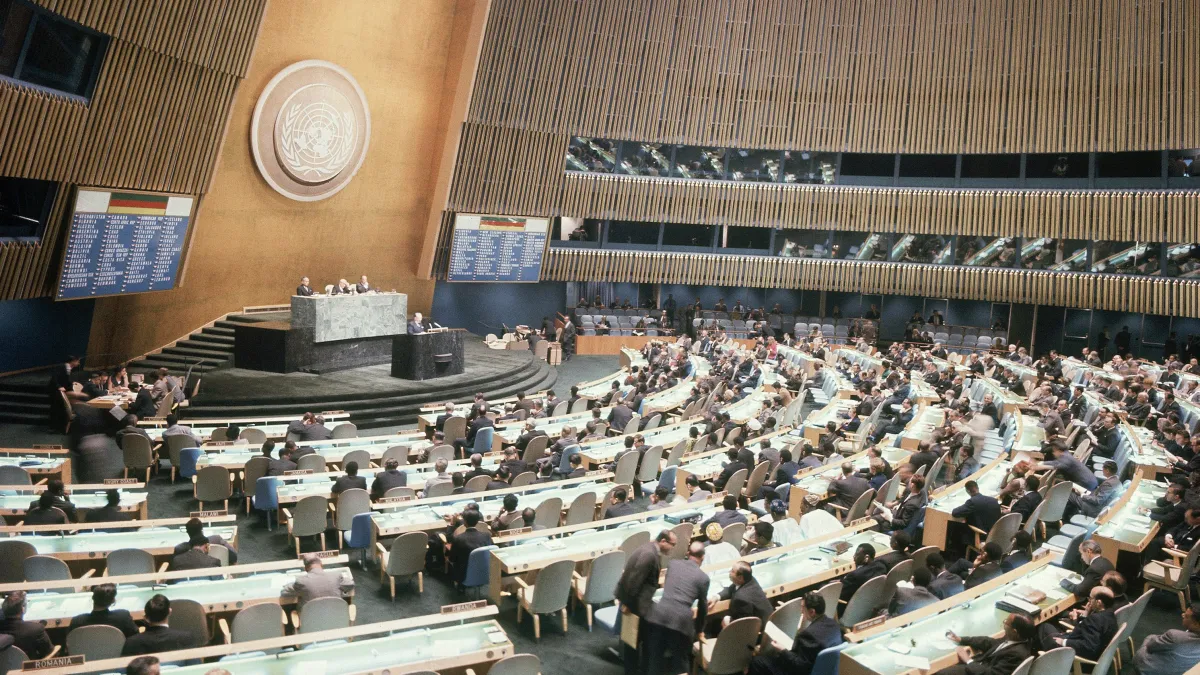
The United Nations Security Council (UNSC) has condemned Rwanda for backing a rebel offensive in eastern Democratic Republic of the Congo and urged it to withdraw its forces and stop supporting the M23 armed group.

The UNSC unanimously adopted the resolution on Friday, and also extended the UN peacekeeping mission in the DRC, known as MONUSCO, for a year. This came despite Rwanda’s repeated denials – contrary to overwhelming evidence – of involvement in a conflict that has intensified as a United States-brokered peace deal unravels.

Recommended Stories

list of 3 itemsend of list

The UNSC said M23’s seizure of the strategic city of Uvira “risks destabilizing the whole region, gravely endangers civilian populations and imperils ongoing peace efforts”.

“M23 must immediately withdraw at least 75km (47 miles) from Uvira and return to compliance with all of its obligations undertaken in the Framework Agreement,” said Jennifer Locetta, a US representative to the UN.

M23 captured Uvira in the South Kivu Province on December 10, less than a week after the DRC and Rwandan presidents met US President Donald Trump in Washington and committed to a peace agreement.

“It is an amazing day: great day for Africa, great day for the world and for these two countries. And they have so much to be proud of,” Trump crowed, as fighting quickly undermined the White House spectacle.

One Uvira resident, Feza Mariam, told Al Jazeera in recent days: “We don’t know anything about the political process they are talking about.

“The only thing we need is peace. Anyone able to provide us with peace is welcome here. For the rest, we as citizens, we don’t care about it.”

The M23 group claimed on Wednesday it was withdrawing from the city following international backlash, but the DRC government dismissed this as a “staged” pullback, saying M23 forces remain deployed there.

US Secretary of State Marco Rubio acknowledged on Friday that commitments under the Washington accord were “not being met” but said his government had now signed agreements it could “hold people to”.

The US earlier warned it would use available tools against those undermining the peace deal, with US officials estimating between 5,000 and 7,000 Rwandan soldiers were operating in eastern DRC as of early December.

The US had previously sanctioned Rwandan cabinet ministers earlier this year, and the DRC later led calls to expand those sanctions after the seizure of Uvira.

The fighting has triggered a major humanitarian emergency, with more than 84,000 people fleeing into Burundi since early December, according to the UN refugee agency, which said the country has reached a “critical point” as refugees arrive exhausted and traumatised. They join approximately 200,000 others who had already sought refuge in the country.

Regional officials say more than 400 civilians have been killed in recent violence in the city.

The seizure of Uvira, located directly across Lake Tanganyika from Burundi’s largest city, Bujumbura, has raised fears of broader regional spillover. The city was the last major foothold in South Kivu for the DRC government and the Wazalendo, which are DRC-allied militias, after M23 captured the provincial capital, Bukavu, in February.

Rwanda has consistently denied backing M23, despite assessments by UN experts and the international community. In a February interview with CNN, Rwandan President Paul Kagame said he did not know whether his country’s troops were in the DRC, despite being commander-in-chief of the armed forces.

Rwanda implicitly acknowledged a presence in eastern DRC in February 2024, when it rejected a US call to withdraw troops and surface-to-air missile systems, saying it had adjusted its posture for self-defence.

Rwanda maintains that its security concerns are driven by the presence of the Democratic Forces for the Liberation of Rwanda, a militia composed largely of Hutus who fled to the DRC after participating in the 1994 genocide that killed approximately 800,000 Tutsis and moderate Hutus.

Kigali views the group as an existential threat and accuses the DRC government of supporting it.

The broader conflict in the mineral-rich eastern DRC, where more than 100 armed groups operate, has displaced more than seven million people, creating one of the world’s worst humanitarian crises.

Source link

US, Russian officials meet in Miami for talks on Ukraine war | Russia-Ukraine war News

Negotiators from Russia and the United States have met in the US city of Miami as Ukrainian President Volodymyr Zelenskyy urged Washington to ramp up the pressure on Moscow to end its war on Ukraine.

The meeting on Saturday took place between Russian President Vladimir Putin’s special envoy, Kirill Dmitriev, and US President Donald Trump’s special envoy, Steve Witkoff, and his son-in-law, Jared Kushner.

Recommended Stories

list of 3 itemsend of list

Dmitriev told the reporters the talks were positive and would continue on Sunday.

“The discussions are proceeding constructively,” said Dmitriev. “They began earlier and will continue today, and will also continue tomorrow.”

Earlier, US Secretary of State Marco Rubio had said that he may also join the talks in Miami. He said that progress has been made in discussions to end the war, but there is still a way to go.

“The role we’re trying to play is a role of figuring out whether there’s any overlap here that they can agree to, and that’s what we’ve invested a lot of time and energy [on], and continue to do so,” Rubio said. “That may not be possible. I hope it is. I hope it can get done this month, before the end of the year.”

Trump’s envoys have for weeks been negotiating a 20-point peace plan with Ukrainian, Russian and European officials.

While US ​officials say they have made progress, major differences remain on the issues of territory and possible security guarantees that Kyiv says are essential for any agreement.

Russia has shown few signs that it is willing to give up its expansive territorial demands in Ukraine, which it believes it is well-positioned to secure as the war grinds on and political fractures emerge among Ukraine’s European allies.

In Kyiv, Zelenskyy said he remains supportive of a US-led negotiations process, but that diplomacy needs to be accompanied by greater pressure on Russia.

“America must clearly say, if not diplomacy, then there will be full pressure… Putin does not yet feel the kind of pressure that should exist,” he said.

The Ukrainian leader said Washington has also proposed a new format for talks with Russia, comprised of three-way talks at the level of national security advisers from Ukraine, Russia, and the US.

Zelenskyy expressed scepticism that the talks would result in “anything new”, but said he would support trilateral discussions if they led to progress in areas such as prisoner swaps or a meeting of national leaders.

“If such a ‍meeting could be ⁠held now to allow for swaps of prisoners of war, or if a meeting of national security advisers achieves agreement on a leaders’ meeting… I cannot be opposed. We would support such a US proposal. Let’s see how things go,” he said.

The last time Ukrainian and Russian envoys held official direct talks was in July in Istanbul, which led to prisoner swaps but little else.

The talks in Miami come after Putin promised to press ahead with his military offensive in Ukraine, hailing Moscow’s battlefield gains in an annual news conference on Friday.

Putin, however, suggested that Russia could pause its devastating strikes on the country to allow Ukraine to hold a presidential ballot, a prospect that Zelenskyy rejected.

Meanwhile, the death toll in Ukraine’s Black Sea Odesa region from an overnight Russian ballistic missile strike on port infrastructure rose to eight, with 30 people wounded.

A civilian bus was struck in the attack, Ukrainian Prime Minister Yulia Svyrydenko said.

The Russian attacks on the coastline region have wrought havoc in recent weeks, hitting bridges and cutting electricity and heating for hundreds of thousands in freezing temperatures.

Moscow earlier said it would expand strikes on Ukrainian ports as retaliation for targeting its sanctions-busting oil tankers.

On Saturday, Ukraine claimed to have destroyed two Russian fighter jets at an airfield in Moscow-occupied Crimea, according to the security service SBU. Kyiv’s army said it struck a Russian oil rig in the Caspian Sea as well as a patrol ship nearby.

Putin described Russia’s initial full-scale invasion of Ukraine as a “special military operation” to “demilitarise” the country and prevent the expansion of NATO.

Kyiv and its European allies say the war, the largest and deadliest on European soil since World War II, is an unprovoked and illegal land grab that has resulted in a tidal wave of violence and destruction.

Source link

Russia-Ukraine war: List of key events, day 1,396 | Russia-Ukraine war News

Here is where things stand on Sunday, December 21:

Fighting

  • The death toll from a Russian missile attack on Ukraine’s port city of Odesa rose from seven to eight, with at least 30 others wounded, according to Ukrainian authorities.
  • Ukrainian President Volodymyr Zelenskyy described the situation in Odesa as “harsh” and accused Russia of trying to block Kyiv’s access to the Black Sea.
  • The Ukrainian leader also said that he is looking to replace the head of the Southern Air Command, Dmytro Karpenko, over the Russian strikes on Odesa.
  • Ukrainian Deputy Prime Minister Oleksii Kuleba said Russian forces also attacked the nearby port of Pivdennyi on Saturday, hitting several reservoirs.
  • Ukraine’s military said its special forces carried out a drone attack on a Lukoil oil rig in the Caspian Sea on Friday, along with the Russian military patrol ship Okhotnik. The military also said that the Filanovsky oil rig, which had been targeted twice this month, was damaged in the strike.
  • The Ukrainian military also said it destroyed two Russian fighter jets at an airfield in the occupied Crimean peninsula.
  • Russia’s Ministry of Defence said its forces took control of the villages of Svitle and Vysoke, located in Ukraine’s eastern Donetsk region and the northeastern Luhansk region, respectively.

Diplomacy and ceasefire talks

  • Zelenskyy said the United States proposed a new format for talks with Russia, comprised of three-way talks at the level of national security advisers from Ukraine, Russia, and the US.
  • The Ukrainian leader expressed scepticism that the talks would result in “anything new”, but added that he believes that US-led talks have the best chance of success.
  • He added that he would support trilateral discussions if they led to progress in areas such as prisoner swaps or a meeting of national leaders. “If such a ‍meeting could be ⁠held now to allow for swaps of prisoners of war, or if a meeting of national security advisers achieves agreement on a leaders’ meeting… I cannot be opposed. We would support such a US proposal. Let’s see how things go,” he said.
  • Zelenskyy also pushed back against calls for Ukraine to hold elections as the war drags on, stating that voting cannot take place in Russian-occupied areas and that security conditions must first improve. “It is not [Russian President Vladimir] Putin who decides when and in what format the elections in Ukraine will take place,” Zelenskyy said.
  • Zelenskyy urged European leaders to approve a measure to seize frozen Russian assets and use them to fund Ukraine’s war effort, saying that doing so will strengthen Ukraine’s leverage at the negotiating table. The International Monetary Fund has estimated that Ukraine will need about 137 billion euros ($161bn) in 2026 and 2027, as the demands of the war continue to strain the country’s economy.
  • Russian special envoy Kirill Dmitriev held talks with his US counterpart, Steve Witkoff, and US President Donald Trump’s son-in-law, Jared Kushner, in the city of Miami.
  • “The ‌discussions are proceeding constructively. They began earlier and ‌will continue ⁠today, and will also continue tomorrow,” ‌Dmitriev said
  • Russian Minister of Foreign Affairs Sergey Lavrov attended a summit in Cairo, held to advance closer cooperation between Russia and African nations, and attended by more than 50 countries. Lavrov pitched Russia as a “reliable partner” to African countries in areas such as security and national sovereignty.

Weapons

  • Ukrainian presidential aide Oleksandr Kamyshin announced a deal with Portugal on the joint production of maritime drones, saying it would help “defend Europe from the sea”.

Source link