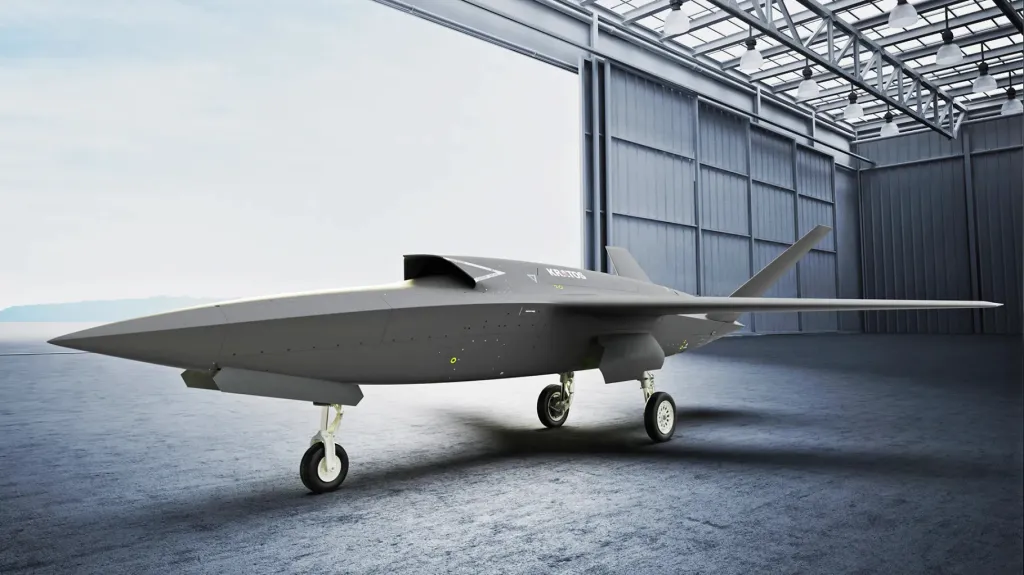
XQ58

Marine XQ-58 Valkyries Will Launch Via Rockets Or Runways

Kratos has confirmed to TWZ that the landing gear-equipped version of its XQ-58 Valkyrie drone being developed for the U.S. Marines will still be able to make rocket-assisted takeoffs from static launchers. This means the new addition to the stealthy Valkyrie family will retain a valuable degree of runway independence, though they will have to touch down on a runway at the end of their sortie. This opens up additional operational possibilities, though there are also tradeoffs.

TWZ had reached out to Kratos yesterday for more details about the CTOL version of the XQ-58. This followed the announcement of a team-up between that company and Northrop Grumman to develop and deliver Valkyrie variants to the U.S. Marine Corps under the Marine Air-Ground Task Force Uncrewed Expeditionary Tactical Aircraft (MUX TACAIR) Collaborative Combat Aircraft (CCA) program. Kratos first disclosed that it was working on a Valkyrie with built-in landing gear last year, and the company now says it is aiming for a first flight early this year.

A previously released rendering of the landing gear-equipped CTOL version of the XQ-58. Kratos

“The initial aircraft for the MUX TACAIR CCA contract will be landing gear version Valkyries, which can take off and land conventionally, or be booster-launched and conventionally landed,” a Kratos spokesperson told us.

When asked if this meant the CTOL Valkyrie would be able to use existing static launchers or if it would require a new launch architecture for boosted takeoffs, that spokesperson also responded: “the same.”

“Unfortunately, [we] cannot share more,” they added when asked for further details about the ongoing development of the CTOL version of the XQ-58, though they did confirm the early 2026 target timeframe for a first flight.

The baseline Valkyrie design, which first flew in 2019, does not have landing gear and is designed to take off via the rocket-assisted method from static launchers. The drone is then recovered via parachute at the end of a sortie.

An XQ-58 seen being launched using the rocket-assisted method. USAF/2nd Lt. Rebecca Abordo
An XQ-58 descends down to the ground via parachute after a sortie. USAF

Before announcing plans for the CTOL version, Kratos had also unveiled a special launch trolley that allows variants without landing gear to take off from traditional runways, though not land back on them.

Kratos Valkyrie Trolley Launch System


Details about the CTOL configuration of the XQ-58 and its comparative capabilities to existing variants remain limited. There have been indications that the landing gear-equipped type may be very similar in many respects to earlier types, which is underscored now by the confirmation that it can still be launched via rocket boosters. Whether or not the CTOL version is larger and, if so, to what degree, is still unknown. That it can make use of existing static launchers would limit how much bigger it could be, both dimensionally and weight-wise. It is also unclear if the parachute recovery system could be fitted, if desired.

“You’ll be able to do a conventional takeoff and land with retractable gear,” Steve Fendley, president of the Unmanned Systems Division at Kratos, had told Aviation Week last year. “You give up a proportion of your payload volume of your internal payload, but you can still maintain all the external.”

Runway-independent configurations do present their own limitations when it comes to maximum takeoff weight, and, by extension, payload capacity, as well as range. Kratos has told TWZ in the past that the versions of the XQ-58 without landing gear get a boost “in the 10s of % for both fuel and payload capacity” just when using the aforementioned launch trolley, and that this “enables quite an advantage for [the] amount of payload and range / endurance of the system.”

Another look at an XQ-58 without landing gear on the special launch trolley. Kratos

What we now know is that the CTOL version offers a single platform with the flexibility to take off from conventional runways, which could allow for heavier overall weights, or to use the existing rocket-boosted method from a much wider array of potential operating locations. In a real-world operational scenario, the drones could fly a rocket-boosted mission to start, recover on a runway at a tertiary site, and then continue to fly sorties from there, or be deployed elsewhere. This would combine the benefits of runway independence, including the difficulties imposed on enemies trying to target what could be widely distributed launch points, during an initial wave, and the advantages offered by normal runway-centric tactical air operations for follow-on sorties.

Furthermore, the runway-independent launch capability would allow forward deployments virtually anywhere for use in that first-day-of-war context. It should be remembered here that Kratos has also previously shown a model of a static launcher for the Valkyrie that fits discreetly inside a standard shipping container.

An XQ-58 that can land like any other fixed-wing aircraft on a runway offers advantages for resetting the drones and getting them back into the fight. It takes far more time and effort to get runway-independent types ready for relaunch after they touch down via parachute. That method of landing also relies on airbags to cushion the impact, and a failure of that element of the system can lead to significant damage. There is, of course, always the potential for accidents while operating from traditional runways. Regardless, a Valkyrie that uses a runway should be able to achieve significantly higher sortie rates.

A US Air Force XQ-58 seen being recovered after a test flight. USAF capture

The CTOL variant’s flexibility could also have benefits outside of a tactical scenario. TWZ has previously noted that a landing gear-equipped version would be easier to integrate, overall, with other tactical air assets that rely on traditional runways, which would also be relevant for training and other day-to-day peacetime activities. That being said, a significant portion of the Marine Corps’ future CCA fleets, as well as those that the U.S. Air Force and the U.S. Navy plan to acquire and field, may not ever be daily fliers.

There are still tradeoffs, especially if the CTOL version of the Valkyrie otherwise remains unchanged in many respects from previous versions. Kratos has been steadily working to expand the performance envelope of the XQ-58 design, but it has been made clear that some degree of internal volume has to be sacrificed to give the drone built-in landing gear. Even if the CTOL design is larger overall, the revised internal configuration could create different payload restrictions that might be further magnified when employed in a runway-independent mode. It’s also important to point out that the rocket-launched method makes use of expendable boosters, a steady supply of which is then required to support those operations.

The rocket boosters can be seen falling away after the launch of an XQ-58 in the video below.

Kratos XQ-58A Valkyrie Test Flight


For the moment, the U.S. Marine Corps looks to be trying to find the optimal mix of flexibility for its future operational Valkyrie fleets. However, a key advantage of the XQ-58 has historically been its total lack of any need for a runway. TWZ has repeatedly highlighted the importance of that kind of total runway independence to the Corps’ still-evolving expeditionary and distributed concepts of operations, which focus heavily on the rapid establishment of forward operating bases in far-flung locales, especially remote islands with limited infrastructure. The Marines expect these operations to be regularly conducted within an adversary’s so-called “weapons engagement zone,” further underscoring the critical need for very high degrees of operational flexibility to survive, let alone fight effectively.

The Marine Corps could still acquire additional versions of the XQ-58 down the line, including fully runway-independent types, or add completely different designs to its future CCA fleets, giving it a further mix of capabilities. The Valkyrie was designed from the outset to be highly modular and to use open architecture systems, making it easier to integrate new and improved capabilities and functionality to existing examples, as well.

“The uncrewed weapons systems under development [as part of the MUX TACAIR program] will enhance Marine Corps Aviation’s lethality and ability to support the Stand-in Force (SiF) by delivering air-to-ground, reconnaissance, and Electronic Warfare (EW) capabilities,” according to official budget documents released last year. “The Marine Corps will use a spiral approach for capability insertion into TACAIR. MUX TACAIR Increment I will rapidly accelerate the time between development and fielding, ensuring rapid and relevant capability delivery of a Minimum Viable Product (MVP) to the warfighter.”

The growing array of options for launching and recovering XQ-58 variants is something that could also easily appeal to other potential operations beyond the Marine Corps. The only other known operator of the Valkyrie currently is the U.S. Air Force, which oversaw the type’s first flight in 2019 and has been using the drones primarily for test and evaluation purposes since then.

XQ-58A Valkyrie Demonstrator Inaugural Flight


Kratos told Aviation Week yesterday that there is another opportunity for XQ-58 sales in the United States, but did not elaborate. The company is not among those known to be under contract now to develop concepts for carrier-based CCAs for the U.S. Navy. It may be one of the nine firms currently competing in the second phase, or Increment 2, of the U.S. Air Force’s CCA program, which that service has so far declined to name. Kratos was notably absent from Increment 1 of that program and had previously expressed interest in taking part in Increment 2.

Valkyrie has also begun making inroads overseas, and Kratos is now working with Airbus on a version for the German Air Force. Whether that will be a landing gear-equipped variant or not is unknown.

More details about the CTOL version of the XQ-58 may emerge as Kratos gets closer to a first flight and as work on the initial prototype for the Marine Corps proceeds. It is very possible, if not probable, that the first example of the CTOL configuration will be the one in the works now for the Marines. The service has previously said it hopes to receive its first MUX TACAIR CCA prototype before the end of the year.

If nothing else, it has been confirmed now that the CTOL type will have an added layer of flexibility by retaining a runway-independent launch capability.

Contact the author: joe@twz.com
Joseph has been a member of The War Zone team since early 2017. Prior to that, he was an Associate Editor at War Is Boring, and his byline has appeared in other publications, including Small Arms Review, Small Arms Defense Journal, Reuters, We Are the Mighty, and Task & Purpose.


Source link

USMC XQ-58 Valkyrie Development Makes Leap Forward With New Contract (Updated)

The Marine Corps’ pursuit of a fully missionized version of Kratos’ stealthy XQ-58A Valkyrie drone has taken another step forward with a new announcement that Northrop Grumman is now aiding in the effort. Northrop Grumman says it will deliver a “mission kit” that includes its Prism autonomy package, sensors, and other capabilities to help fully turn the Valkyrie into what looks set to be the Marines’ first operational Collaborative Combat Aircraft (CCA).

Northrop Grumman announced today it has received a competitively awarded deal in relation to what is formally known as the Marine Air-Ground Task Force Uncrewed Expeditionary Tactical Aircraft (MUX TACAIR) Collaborative Combat Aircraft (CCA) program. U.S. officials confirmed last year that the Marine Corps was moving to transition its experimental work with the XQ-58 into a full program of record to develop and field an operational CCA-type drone. The Marines have acquired at least three Valkyries since 2023. The U.S. Air Force is the only other known current operator of the XQ-58 and has been using the type for test and evaluation work since its first flight in 2019.

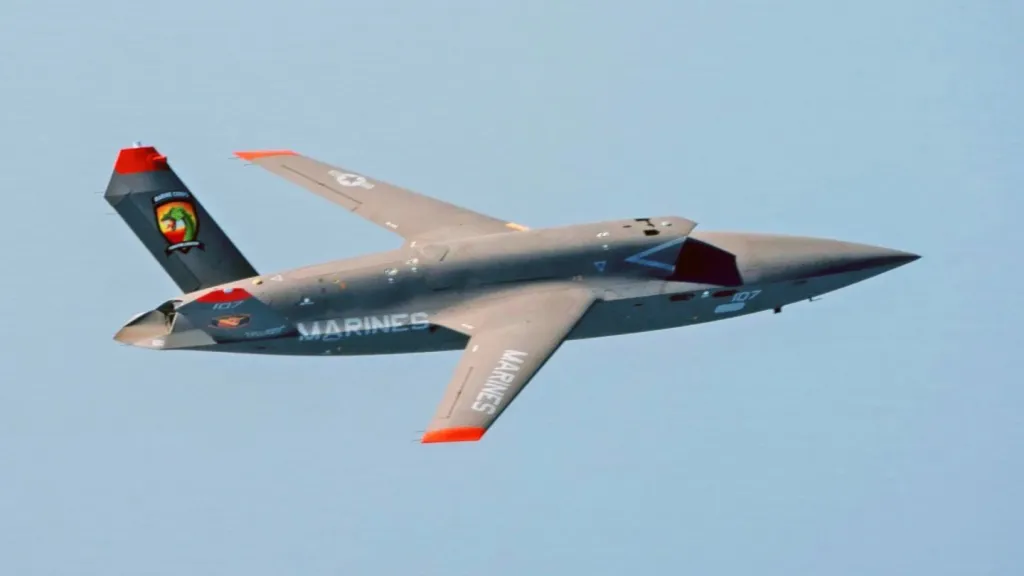
One of the Marine Corps’ XQ-58 drones seen during a previous test flight.

Under the newly announced deal, “Northrop Grumman will develop and rapidly deliver platforms that include” the aforementioned mission kit, “inclusive of sensors and software-defined technologies designed specifically for uncrewed aircraft,” according to a company press release. “The mission kit’s flexible technology can perform various kinetic and non-kinetic effects, making the platform a combat-ready asset.”

“Northrop Grumman’s open architecture autonomy software package – known as Prism – will manage the aircraft’s operations autonomously,” the release adds. The company has already been conducting flight testing involving Prism using the Model 437 Vanguard jet, now also referred to as Beacon, which was developed and built by its subsidiary Scaled Composites.

Discovering the Benefits of a Fully Connected Digital Ecosystem


“Northrop Grumman remains at the forefront of advanced sensing capabilities, delivering innovative solutions that meet the needs of the warfighter with unmatched speed and reliability,” Krys Moen, Vice President for Advanced Mission Capabilities, said in an accompanying statement. “This enhanced capability set ensures optimal performance for both crewed and uncrewed platforms.”

“The integration of the Kratos Valkyrie aircraft system configured with the world’s best multifunction mission systems from Northrop Grumman results in a high-capability CCA at a price point that enables the uncrewed systems to be deployed in mass with crewed aircraft,” Steve Fendley, President of Kratos’ Unmanned Systems Division, also said in a statement included in the release.

Northrop Grumman’s press release also highlights Kratos’ work on a derivative of the XQ-58 with built-in landing gear. As originally designed, Valkyrie is fully runway independent and takes off via a rocket-assisted method from a static launcher. The drone is then recovered via parachute at the end of the sortie. Kratos has also developed a special trolley that allows versions without fixed landing gear to take off from traditional runways.

A rendering of the fixed landing gear derivative of the XQ-58. Kratos
An XQ-58 seen being launched using the rocket-assisted method. USAF The Kratos XQ-58 Valkryie, one of which is seen here at the moment of launch, is a runway-independent design that the US Air Force has already used to support research and development and test and evaluation efforts that are feeding into the CCA program. USAF
An XQ-58 loaded onto the launch trolley that allows for takeoffs from traditional runways. Kratos

Northrop Grumman has separately told Breaking Defense that its MUX TACAIR CCA deal is valued at approximately $231.5 million and covers work over a period of 24 months, and that is a so-called Other Transactional Agreement (OTA). The U.S. military uses the OTA mechanism to support rapid prototyping and other research and development work without having to go through more traditional and often more drawn-out contracting processes.

Official U.S. military budget documents released last year said that the Marines were looking to acquire at least one MUX TACAIR CCA prototype in a conventional takeoff and landing (CTOL) configuration. Kratos has referred to the fixed landing gear Valkyrie derivative as the CTOL version. However, whether that is the only configuration the Marines are eyeing now is unclear, and TWZ has reached out to Northrop Grumman, Kratos, and the Marine Corps for more details.

“So we’re obviously, we’ve been doing a lot of development work for the Marines, a lot of integration of mission systems, a lot of ground and flight test of those mission systems,” Kratos’ Fendley had told TWZ on the show floor of the annual Modern Day Marine conference in Washington, D.C., last year. “And that’s continued to where we’re pretty close to having a couple final versions of the aircraft.”

TWZ has previously highlighted the value a runway-independent version would bring to the Marine Corps, given the service’s current focus on future expeditionary and distributed operations. Flexibility to operate from traditional runways, which could offer benefits in terms of total payload capacity and maximum range, could still be desirable, as well.

Overall, “the uncrewed weapons systems under development [as part of the MUX TACAIR program] will enhance Marine Corps Aviation’s lethality and ability to support the Stand-in Force (SiF) by delivering air-to-ground, reconnaissance, and Electronic Warfare (EW) capabilities,” per the aforementioned budget documents. “The Marine Corps will use a spiral approach for capability insertion into TACAIR. MUX TACAIR Increment I will rapidly accelerate the time between development and fielding, ensuring rapid and relevant capability delivery of a Minimum Viable Product (MVP) to the warfighter.”

There has also been explicit talk about pairing the XQ-58 with the Marine Corps F-35B Joint Strike Fighters, and flight tests to explore this kind of crewed-uncrewed teaming have been carried out in the past.

A US Marine Corps F-35B, at top, flies together with one of the service’s XQ-58s. USMC

Outside of work for the Marine Corps, beyond the aforementioned developments related to launching and recovering the Valkyrie, Kratos has been steadily working to expand the performance and other capabilities of the design. The company is separately working on a miniature cruise missile called Ragnarok, which the XQ-58 can carry in its internal bay and externally under its wings, and that you can read more about here. Renderings have also shown Valkyries with AIM-120 Advanced Medium Range Air-to-Air Missiles (AMRAAM) under their wings. Northrop Grumman has put forward the uncrewed aircraft as a notional launch platform for its Lumberjack loitering one-way attack drone, as well.

Ragnarok missiles, or mockups thereof, seen loaded in the internal bay of an XQ-58, as well as under its wing. Kratos
A rendering depicting an XQ-58 launching Northrop Grumman Lumberjacks. Northrop Grumman

The XQ-58 has a high degree of modularity baked in from the start. Kratos has long put heavy emphasis on open-architecture systems to make it easier to integrate new and improved capabilities and functionality down the line, as well.

Regardless of the aircraft’s physical configuration, there are many other questions the Marine Corps will still need to answer before it can truly field an operational CCA force, something the service itself has been open about and that TWZ regularly highlights. Much remains to be settled about how CCA-type drones will be deployed, launched, recovered, supported, and otherwise operated on a day-to-day basis, let alone employed tactically in a real-world combat environment.

“We still have a lot to learn simply to get this thing airborne, flying, and executing next to an F-35, and not hitting each other,” Col. Derek Brannon, director of the Marine Corps’ Cunningham Group, said at the Modern Day Marine exhibition last year. “I know there’s a lot of work out there, but that’s important to make sure that we become lethal.”

A Marine XQ-58 seen flying together with a pair of US Air Force F-35A Joint Strike fighters during a flight test. USAF

The Cunningham Group, which falls under the office of the Deputy Commandant for Aviation, is charged with plotting out the overall future course for Marine Corps aviation developments.

This all applies equally to the U.S. Air Force and U.S. Navy CCA programs. All three services are pursuing their efforts in very close cooperation, including in the development of common command and control architectures. By the Navy’s own admission, the Air Force and Marine Corps CCA programs are much more mature than its effort.

Joining the Marine Corps MUX TACAIR program is an important development for Northrop Grumman as a company, which has been making other inroads in the growing CCA market space recently. In December, the Air Force announced that it had assigned a formal designation, YFQ-48A, to the Project Talon drone design developed by Northrop Grumman and its subsidiary Scaled Composites. The service also said at that time that the YFQ-48A, which had only been unveiled publicly earlier in the month, was a “strong contender” for inclusion in its CCA efforts. Project Talon leveraged lessons from Northrop Grumman’s losing entry in the competition for the first phase, or Increment 1, of the Air Force’s CCA program, as you can learn more about here. Last September, the Navy also confirmed that Northrop Grumman was among the companies it had awarded contracts to for the development of concepts for future carrier-based CCAs.

Project Talon is here. This next-gen autonomous aircraft is made to adapt fast.

➡️ Modular by design
➡️ Mission-ready
➡️ Built for the challenges ahead pic.twitter.com/6UOhLSBHKn

— Northrop Grumman (@northropgrumman) December 4, 2025

The Marine Corps moving to field an operational version of the Valkyrie has been significant for Kratos, as well. The company has been very actively pitching versions of the XQ-58 to other customers, including ones overseas. It is working now with Airbus to craft a version for the German armed forces. Kratos has also been seeing growing export success with other designs in its tactical drone portfolio.

When it comes to the Marine Corps CCA plans, the service has said it hopes to take delivery of the first prototype before the end of this year, and Northrop Grumman has now joined Kratos in working to make that a reality.

Update: 5:10 pm EST—

Northrop Grumman has now provided additional details about how it is working together with Kratos in relation to the MUX TACAIR CCA effort, and about what the company will be contributing.

“Northrop Grumman and Kratos teamed up to respond together to the Naval Aviation Systems Consortium Statement of Need Request for White Papers for USMC TACAIR Increment 1 (N00019-24-9-0021).  Northrop Grumman and Kratos have collaborated successfully together on multiple projects in prime and support roles including Valkyrie,” a company spokesperson explained to TWZ. “Due to the collaborative integration needed for this solution, the team jointly decided Northrop Grumman as Lead Systems Integrator and Kratos as airframe subcontractor provided the best approach for MUX TACAIR.”

“The mission kit is a fully integrated sensor suite covering multiple functions and frequency bands,” they added. “Northrop Grumman is integrating both Northrop sensors and a variety of best of breed industry sensors into a low-cost integrated solution.”

“Kratos is teamed with NGC for mission configured Valkyrie derivatives and is also a subcontractor on the MUX TACAIR contract providing Valkyrie aircraft, supporting development and testing including flight testing, and supporting integration of NGC mission systems for the ultimate Marines CCA product, which Kratos will manufacture in Oklahoma City,” a spokesperson for that company also separately told TWZ.

Contact the author: joe@twz.com

Joseph has been a member of The War Zone team since early 2017. Prior to that, he was an Associate Editor at War Is Boring, and his byline has appeared in other publications, including Small Arms Review, Small Arms Defense Journal, Reuters, We Are the Mighty, and Task & Purpose.


Source link