wounded

Ukraine’s StarGate Drone Now Evacuating Wounded Soldiers

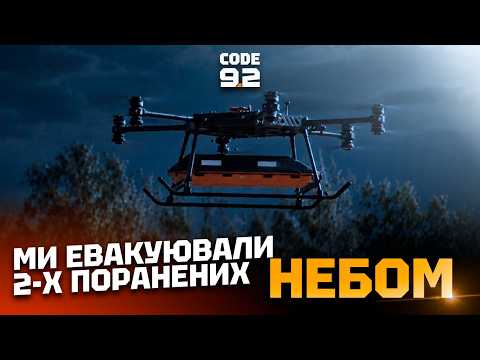
Ukraine’s 475th Separate Assault Regiment, known as CODE 9.2, says it has used the StarGate uncrewed aerial platform to evacuate two seriously wounded soldiers from the battlefield in the span of a week. Reportedly, this is the first time the specialized drone has been used for an operation of this kind. It is not, however, the first instance of Ukraine using an aerial rescue drone on the battlefield, with the more extemporized heavy hexacopter also having been used recently, as you can read about here.

Taken together, the missions underscore Ukraine’s efforts to develop alternative casualty evacuation capabilities as Russian drone threats, electronic warfare, and harsh terrain increasingly complicate conventional recovery operations, including those using uncrewed ground vehicles (UGVs).

МИ ЕВАКУЮВАЛИ ДВОХ ПОРАНЕНИХ ДРОНОМ STARGATE thumbnail

МИ ЕВАКУЮВАЛИ ДВОХ ПОРАНЕНИХ ДРОНОМ STARGATE

According to CODE 9.2, on its Facebook page, the regiment’s personnel carried out two complex evacuation missions using StarGate, a platform developed and manufactured by Ukrainian company SkyFall. The two wounded servicemen were 25-year-old Yevhen, callsign “Izyum,” and 24-year-old Artem, callsign “Kolobok.” Both belonged to adjacent units and had suffered severe limb injuries while occupying positions in a so-called gray zone approximately three miles from the Russian border.

Difficult terrain, including water obstacles, and the threat posed by Russian first-person-view (FPV) drones prevented ground vehicles from reaching the casualties, the regiment said. Air evacuation was the only available option.

Drone operators watch as two soldiers carry their injured comrade to the SkyFall drone for evacuation. CODE 9.2/screencap

The missions were planned and executed by CODE 9.2 personnel with support from SkyFall. They required coordination among multiple units, additional forces and equipment, and dedicated fire support — much like a more traditional casualty evacuation effort involving crewed helicopters. Vampire heavy strike drones were employed to suppress enemy positions during the operations.

“The injury tore off half of my foot, so a lot of blood was lost already,” Izyum said in a video interview from his hospital room. “I think if that incredible little bird hadn’t flown in, well, getting out from there would have been unrealistic.”

During one of the missions, StarGate reportedly flew nearly 20 miles to reach the casualty before covering approximately the same distance on the return leg with the wounded serviceman aboard. CODE 9.2 said Russian electronic warfare systems were actively attempting to suppress satellite navigation signals in the area.

An injured soldier is helped out of the drone after recovery to a safe area. CODE 9.2/screencap

Despite the reported interference, the platform completed the mission using its onboard artificial intelligence-based navigation system, according to the regiment. The statement did not specify the navigation technologies involved.

StarGate was designed specifically for casualty evacuation, or CASEVAC, when conventional ground transportation cannot reach wounded personnel or would expose them to unacceptable risks. Its stated specifications include a payload capacity of up to 330 pounds and a maximum speed of approximately 65 miles per hour. The evacuation module is based on a covered, medical-grade stretcher.

StarGate on the ground. SkyFall

Oleksandr Nastenko, commander of CODE 9.2, callsign “Flint,” said the regiment intends to use the experience gained from the two missions to train crews and make aerial evacuation a more established capability. The regiment also plans to set up a dedicated aerial medical evacuation unit within its medical company.

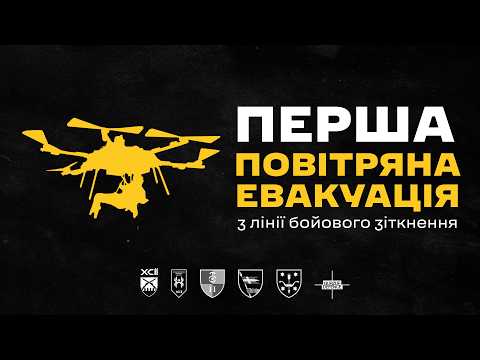
The StarGate missions follow a separate reported operation involving the 92nd Assault Brigade, which says its personnel helped evacuate a wounded soldier using a heavy-lift hexacopter drone, produced by Gurzuf Defense, with the casualty suspended beneath it, as seen in the video below:

ТАКОГО ЩЕ НІХТО НЕ РОБИВ! В УКРАЇНІ ПРОВЕЛИ ПЕРШУ В СВІТІ ПОВІТРЯНУ ЕВАКУАЦІЮ ЛЮДИНИ З ЛІНІЇ ФРОНТУ thumbnail

ТАКОГО ЩЕ НІХТО НЕ РОБИВ! В УКРАЇНІ ПРОВЕЛИ ПЕРШУ В СВІТІ ПОВІТРЯНУ ЕВАКУАЦІЮ ЛЮДИНИ З ЛІНІЇ ФРОНТУ

This drone was reportedly an Audag-6 model, which is said to be capable of carrying a 200-pound payload over a distance of up to 15 miles.

In that incident, the soldier had been wounded while holding his position. Once again, aerial extraction was judged the only suitable option; in this case, due to the presence of mines and intense Russian drone activity.

This was a more improvised approach, which the brigade described as the world’s first frontline aerial drone evacuation of a wounded soldier. Compared to Stargate, the Gurzuf drone brings some drawbacks with it, including casualty stability, exposure to the elements, the risk of swinging during flight, and the difficulty of safely lifting and lowering a severely injured person. It subsequently emerged that the soldier involved, Kostiantyn Vlasenko, had been forced to amputate his own foot as part of a 491-day ordeal on a frontline position.

A soldier clipped to the underside of a Gurzuf drone via a harness is flown to safety. 92nd Assault Brigade/YouTube screencap

This was not the first time that Ukrainian forces have adapted existing drone technology to effect battlefield evacuations.

TWZ also previously reported on a Ukrainian soldier who managed to escape from the Russians that surrounded him after an electric bike was dropped to him by a large aerial drone.

Врятований завдяки дрону. Як ми витягли пораненого побратима з оточення thumbnail

Врятований завдяки дрону. Як ми витягли пораненого побратима з оточення

As a purpose-built platform, StarGate offers a more standardized way to secure and transport casualties, and to transport them protected from the elements, in a secure, prone position. However, StarGate still faces the challenges of flying in contested airspace and navigating under electronic warfare conditions. Once again, depending on the degree of injuries, the casualty may need assistance being put on the stretcher and, regardless of the degree of medical care that can be provided, StarGate is only an option if already available in proximity to the victim.

Close-up view of the StarGate stretcher. SkyFall

The fact that the StarGate missions also needed strike drones for fire support underscores that casualty recovery, whatever the platform being used, typically requires coordination across multiple combat elements.

Despite the limitations, CODE 9.2’s plan to create a dedicated medical aviation element indicates it wants to move beyond one-off missions toward a repeatable capability.

StarGate in flight. SkyFall

As with other emerging technologies from the war in Ukraine, this is likely to be studied by other armed forces, too. The U.S. military, for example, has long looked at the potential of uncrewed aerial systems to effect casualty evacuation missions, as you can read about here.

Meanwhile, the challenges of that conflict mean that Ukrainian troops continue to explore different ways to recover wounded troops from positions that more conventional evacuation methods can no longer safely reach.

Contact the author: thomas@thewarzone.com
Thomas Newdick is a staff writer at TWZ, where he covers military aviation, defense technology, weapons systems, and international security. Based in Berlin, Germany, he reports on conflicts, military modernization efforts, and emerging aerospace technologies around the world, with a particular interest in airpower and its role in contemporary warfare. His reporting is informed by deep expertise in modern and historical airpower, particularly in Europe, with a focus on military aviation, air campaigns, and aerospace developments across the continent and beyond.


Source link

Aerial Drones Appear To Be Picking Up Wounded Off The Battlefield In Ukraine

The Ukrainian Armed Forces say they have carried out the world’s first frontline evacuation of a wounded soldier by aerial drone. The soldier, from the 30th Mechanized Brigade, is said to have been recovered successfully and is undergoing treatment and rehabilitation.

“This is a historic event, at least for our unit for sure,” said “Napalm,” a squad commander and programmer with the 92nd Assault Brigade’s uncrewed ground vehicle (UGV) company. The precise date and location of the operation have not been disclosed, and the claim of a global first has not been independently verified. However, a video of the event has been published by the 92nd, which you can watch below:

ТАКОГО ЩЕ НІХТО НЕ РОБИВ! В УКРАЇНІ ПРОВЕЛИ ПЕРШУ В СВІТІ ПОВІТРЯНУ ЕВАКУАЦІЮ ЛЮДИНИ З ЛІНІЇ ФРОНТУ thumbnail

ТАКОГО ЩЕ НІХТО НЕ РОБИВ! В УКРАЇНІ ПРОВЕЛИ ПЕРШУ В СВІТІ ПОВІТРЯНУ ЕВАКУАЦІЮ ЛЮДИНИ З ЛІНІЇ ФРОНТУ

At this point, it should be noted that the footage has not been independently verified and could depict a staged demonstration rather than an actual combat evacuation. It should, at least, be treated with a degree of caution.

According to accompanying reports, the infantryman was wounded while holding his position. Mines and intense Russian drone activity prevented a conventional ground evacuation, prompting the 92nd’s specialists to attempt an aerial extraction. The video shows the soldier clipping himself to the underside of the drone via a harness before being flown to safety. The extemporized nature of the platform is underscored by the fact that, while in the air, the soldier dangles below its rigid landing legs.

The soldier is seen hunched under the hexacopter before attaching his harness to the drone. 92nd Assault Brigade/YouTube screencap

The aircraft was a heavy hexacopter manufactured by Ukrainian company Gurzuf Defense, which provided it free of charge. A UAV operator from the 30th Mechanized Brigade piloted the drone. Throughout the recovery, the soldier remained in contact with the drone operator.

With the drone now airborne, the drone controllers monitor the flight from the ground. 92nd Assault Brigade/YouTube screencap

The operation involved the 92nd, 30th and 14th Mechanized Brigades, the 10th Army Corps and Gurzuf Defense.

Ukraine increasingly uses uncrewed ground vehicles to deliver supplies and evacuate casualties from exposed positions. According to Euromaidan Press, Ukrainian UGVs conducted approximately 112,000 logistics and evacuation missions between January and August 2026.

However, ground robots can struggle with mines, mud, and cratered terrain, while remaining vulnerable to drones and artillery. These obstacles make it especially difficult to conduct UGV operations in the battlefield’s “kill zone,” which can extend six to nine miles or more from the front line. You can read an in-depth account of Ukrainian UGV efforts in this previous story.

A video showing a Ukrainian UGV in action in the Donetsk region:

Ground Drones Evacuate Wounded Soldiers Under Fire In Ukraine | Ukraine Front Line Update thumbnail

Ground Drones Evacuate Wounded Soldiers Under Fire In Ukraine | Ukraine Front Line Update

Aerial platforms are able to reach casualties in places where ground vehicles cannot safely travel, and can get there far quicker, without having to stick to specific routes.

The 92nd has not disclosed the evacuation distance or flight duration of the mission. If, as reported, the drone used was an Audag-6 model, this is stated to be capable of carrying a 200-pound payload over a distance of up to 15 miles.

Meanwhile, the recovery points to a growing trend in the Ukrainian Armed Forces.

Only days before the story of the evacuation broke, it emerged that Ukraine is also now testing the StarGate, a purpose-built aerial medical evacuation drone — also of the heavy hexacopter type — developed by the SkyFall company. This is a rather more tailored solution to the problem, with a covered, medical-grade stretcher slung below the drone. It has a reported payload capacity of around 330 pounds, uses AI-assisted navigation, and can also deploy nets against hostile drones attempting to intercept it.

Exclusive look at 'StarGate,' Ukraine's drone that can evacuate wounded soldiers thumbnail

Exclusive look at ‘StarGate,’ Ukraine’s drone that can evacuate wounded soldiers

The 92nd’s operation used a heavy-lift hexacopter adapted for an ad hoc casualty transport, rather than a more bespoke design. This means the soldier had to be adequately trained on how to strap in, and also had to be in a condition that they could actually perform this procedure. This would also be the case even if other soldiers were able to assist them in strapping in.

While these kinds of solutions may be new to the battlefield in Ukraine, using uncrewed aerial systems for personnel recovery and medical evacuation is far from new.

Back in 2016, the Army completed a demonstration of the Lockheed Martin K-Max helicopter in a casualty evacuation role. The K-Max can operate with and without a pilot and was used as a drone by the Marine Corps to deliver cargo in Afghanistan.

A U.S. Marine Corps K-Max helicopter. U.S. Marine Corps

“Unmanned and autonomous platforms have the potential to completely rewrite the medical doctrine,” Army Col. Daniel Kral, head of the Army’s Advanced Technology Research Center (TATRC), explained during a conference at Fort Detrick in Maryland in 2017.

In 2019, TWZ reported on U.S. Army efforts to explore how uncrewed craft might speed up the casualty evacuation process. This work included evaluation of the Dragonfly Pictures, Inc. (DPI) DP-14 Hawk, a small, tandem-rotor drone with a 400-pound cargo capacity.

 A DP-14 Hawk shown configured for casualty evacuation. Dragonfly Pictures, Inc.

The emergence of autonomous air vehicles, or uncrewed ‘flying taxis,’ with short or vertical take-off and landing capabilities in the urban air mobility sector has also generated military interest. The U.S. Air Force Research Laboratory, for example, has conducted studies into how craft such as these could be adapted for combat search and rescue, with the idea that they would be airdropped to recover a fighter pilot shot down while operating over hostile territory.

Closer to the Ukrainian hexacopter concept is the Flowcopter FC-100, a heavy-lift quadcopter drone that the U.S. Army tested in a medical evacuation capacity in Poland during the large-scale Saber Strike exercise earlier this year. Carrying a 220-pound payload, the drone has a range of more than 60 miles.

U.S. Army Soldiers assigned to the Regimental Support Squadron, 2d Cavalry Regiment, run with a test dummy in a stretcher towards a drone during an Autonomous Triage and Treatment Challenge taking place near Bemowo Piskie Training Area, Poland, May 10, 2026. From April 27 to May 31, 2026, U.S. and Allied forces will exercise the North Atlantic Treaty Organization’s (NATO) Eastern Flank Deterrence Initiative, demonstrating NATO’s ability to fight and win on the modern battlefield. Nearly 15,000 troops from eleven nations will train across the High North, Baltic region, and Poland. They will execute rapid maneuvers, air defense, counter-drone operations, and cyber defense to validate NATO’s regional defense plans in real time. This series of linked exercises includes Saber Strike, Immediate Response, and Swift Response. The exercises turn investment into capability. Soldiers integrate unmanned systems such as AI-enabled command and control and live data networks to move, decide, and fight more effectively across all domains. Sword 26 demonstrates how U.S. Army Europe and Africa drives transformation at scale while strengthening deterrence. Together with our allies, we are building a unified, lethal force ready to defend NATO territory and respond to any threat. (U.S. Army Reserve photo by Spc. Thomas Madrzak)
U.S. Army soldiers run with a test dummy in a stretcher towards a Flowcopter FC-100 drone during an Autonomous Triage and Treatment Challenge taking place near Bemowo Piskie Training Area, Poland, May 10, 2026, as part of Exercise Saber Strike. U.S. Army Reserve photo by Spc. Thomas Madrzak

All of these concepts aim to address the inherent vulnerability of larger personnel recovery platforms in more contested environments.

In their favor, they offer the potential to rescue troops from more precarious situations, with the smaller drones touching down in relatively tight areas in mountainous, forested, or jungle environments. Autonomous navigation systems can guide the drones through smoke, dust, or bad weather, too.

On the other hand, these small craft have no space for a medic, pararescuemen, or other additional personnel. Bearing in mind their limited range and lower speeds, they also need to be in the right location to respond to emergencies as and when they occur.

For the Ukrainian Armed Forces, aerial medical evacuation drones are being rapidly developed and now fielded to help address another problem: the vulnerability of UGVs in areas of the battlefield that have long become far too hazardous for crewed medevac platforms to operate.

By now, both sides in the Ukraine war are relying heavily upon small, autonomous uncrewed aircraft to perform a wide variety of resupply, surveillance, communications, and strike roles on and around the front lines. With that in mind, the adaptation of these kinds of vehicles for casualty evacuation and personnel recovery missions is the next logical step.

Contact the author: thomas@thewarzone.com

Thomas Newdick is a staff writer at TWZ, where he covers military aviation, defense technology, weapons systems, and international security. Based in Berlin, Germany, he reports on conflicts, military modernization efforts, and emerging aerospace technologies around the world, with a particular interest in airpower and its role in contemporary warfare. His reporting is informed by deep expertise in modern and historical airpower, particularly in Europe, with a focus on military aviation, air campaigns, and aerospace developments across the continent and beyond.


Source link