UCLA

Gabriela Jaquez and UCLA women dominate in win over Long Beach State

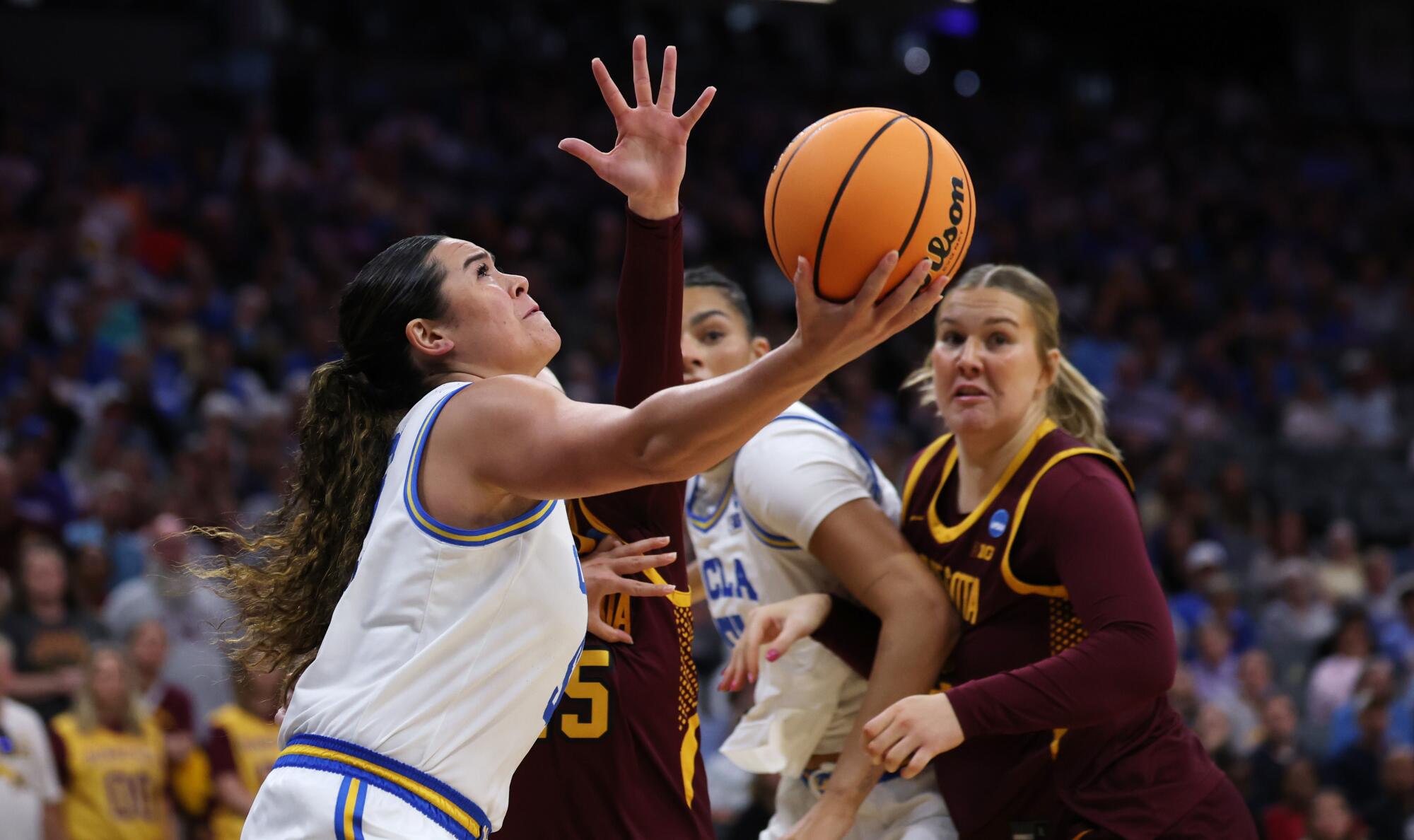
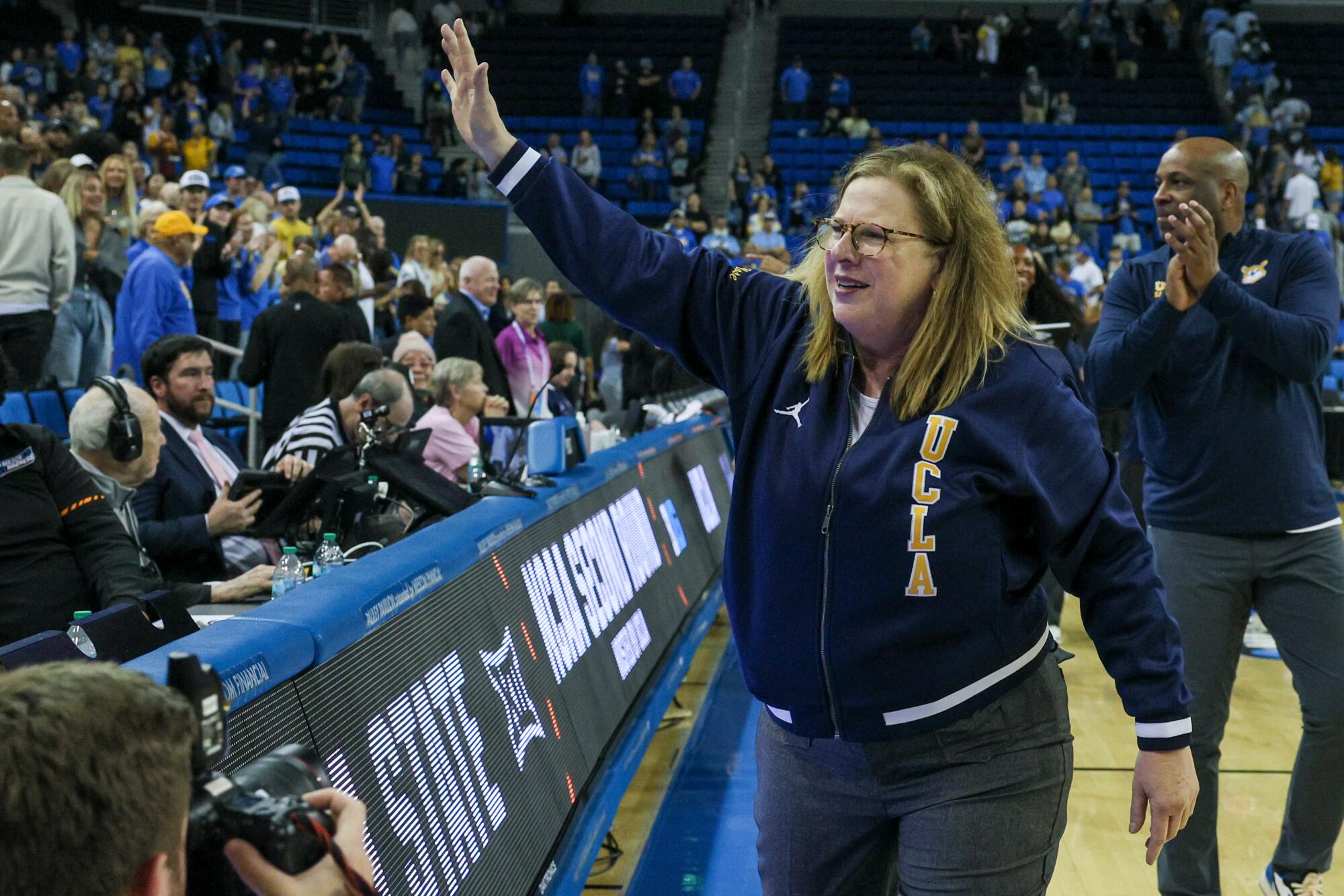
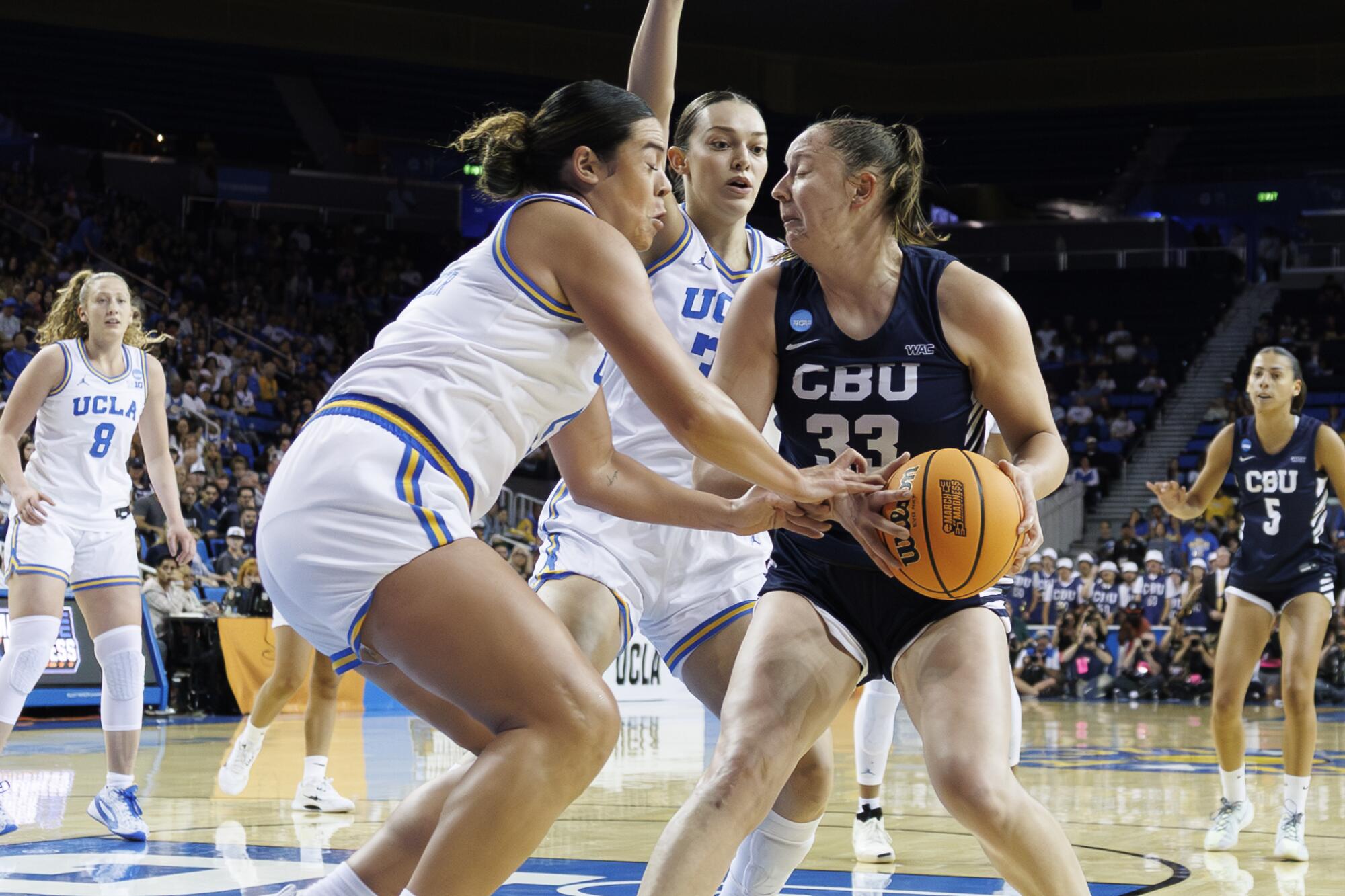
UCLA women’s basketball coach Cori Close could not have imagined a better way for her team to wrap up nonconference play than Saturday afternoon’s 106-44 trouncing of Long Beach State at Pauley Pavilion.

Coming off Tuesday’s 115-28 triumph over Cal Poly San Luis Obispo — UCLA’s largest margin of victory during the NCAA era — the Bruins picked up where they left off, leading wire-to-wire for their fifth consecutive win since suffering their lone loss to Texas on Nov. 26.

“We’re growing … we had a couple of lapses today and we’re not there yet, but we’re heading in the right direction,” Close said. “I love the selflessness of this team.”

Senior guard Gabriela Jaquez led the way with 17 points and made five of six three-point shots. Angela Dugalic added 13 points while Gianna Kneepkens had 10 points and 10 rebounds. All 11 Bruins who played scored at least one basket.

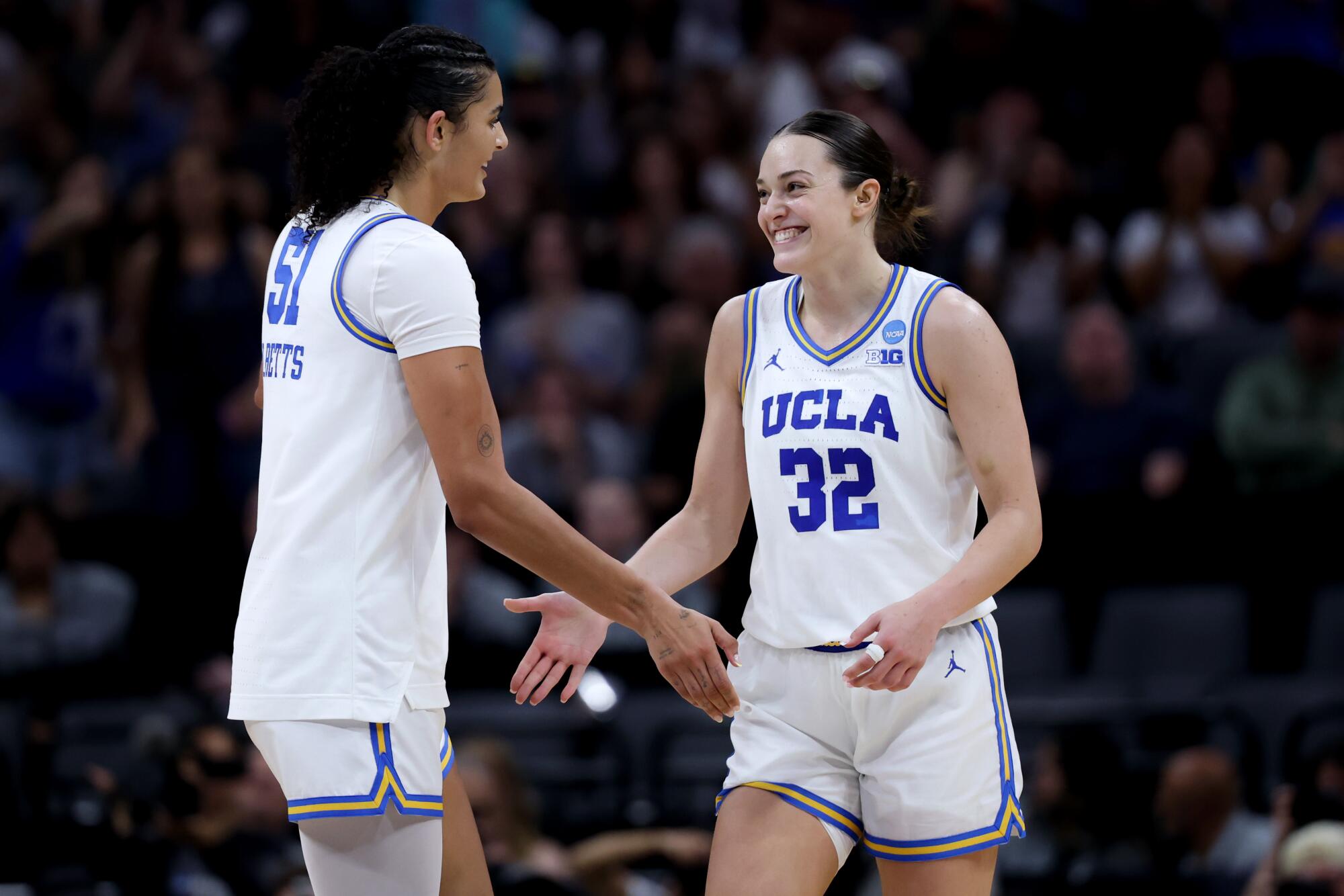
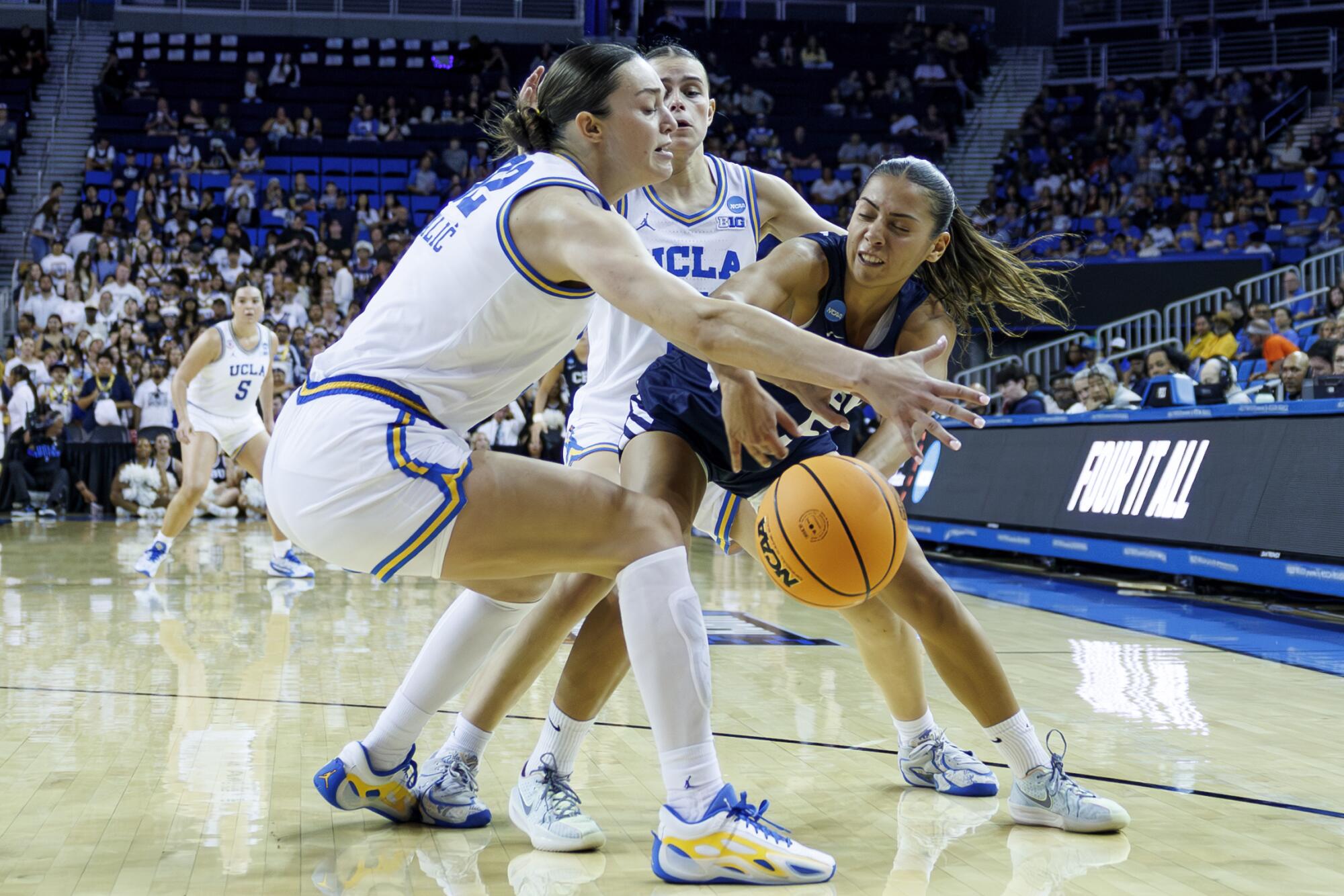
UCLA forward Sienna Betts, top, and Long Beach State forward Kennan Ka, front, dive for the ball.

UCLA forward Sienna Betts, top, and Long Beach State forward Kennan Ka dive for the ball during the Bruins’ win Saturday.

(Jessie Alcheh / Associated Press)

Playing their last game in Westwood until Jan. 3, when they will host crosstown rival USC, the Bruins (11-1 overall, 1-0 in Big Ten) looked every bit like the No. 4 team in the country, improving to 6-0 at home. They are ranked fourth in both the Associated Press and coaches polls behind Connecticut, Texas and South Carolina.

“I’m really proud of our nonconference schedule. Not many local teams are willing to play us, so I want to compliment Long Beach State,” Close said. “Our starting guards [Charlisse Leger-Walker and Kiki Rice] combined for 17 assists and one turnover. We have depth and balance and that’s a great luxury to have.”

Jaquez scored nine of the Bruins’ first 12 points. She opened the scoring with a three-pointer from the top of the key and added triples on back-to-back possessions to increase the margin to eight points. Her fourth three-pointer, from the right corner, extended the lead to 21-5.

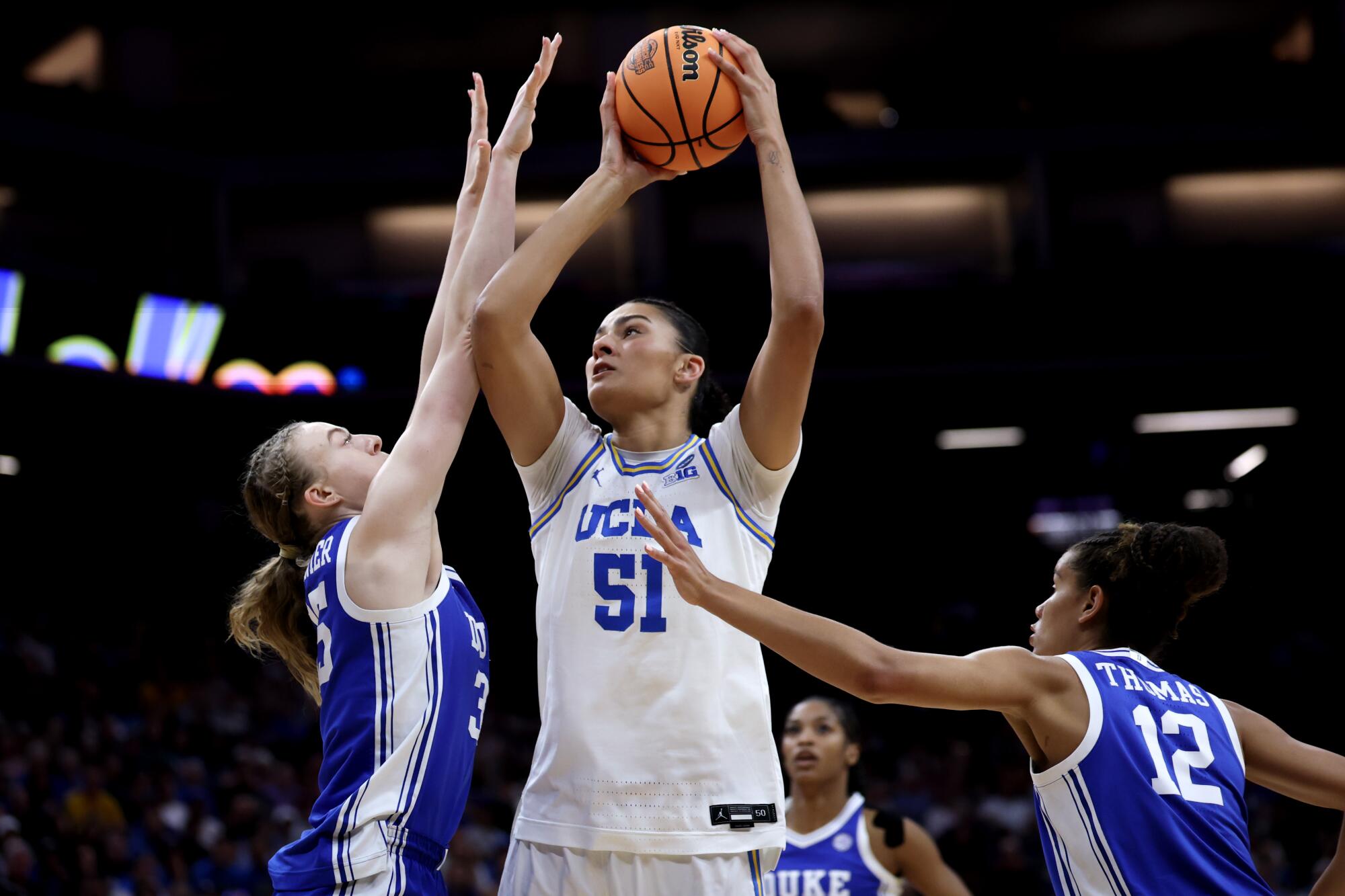
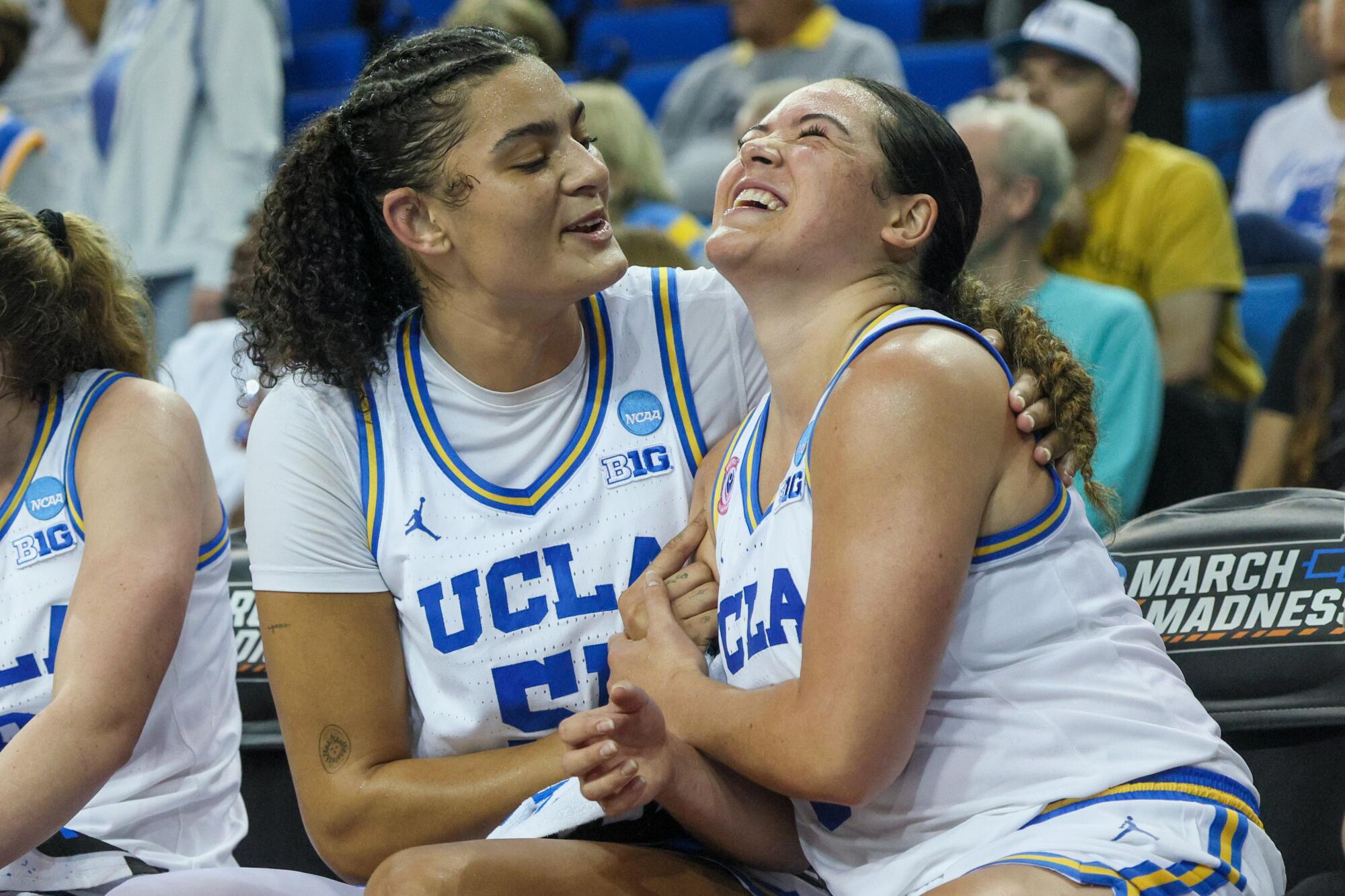
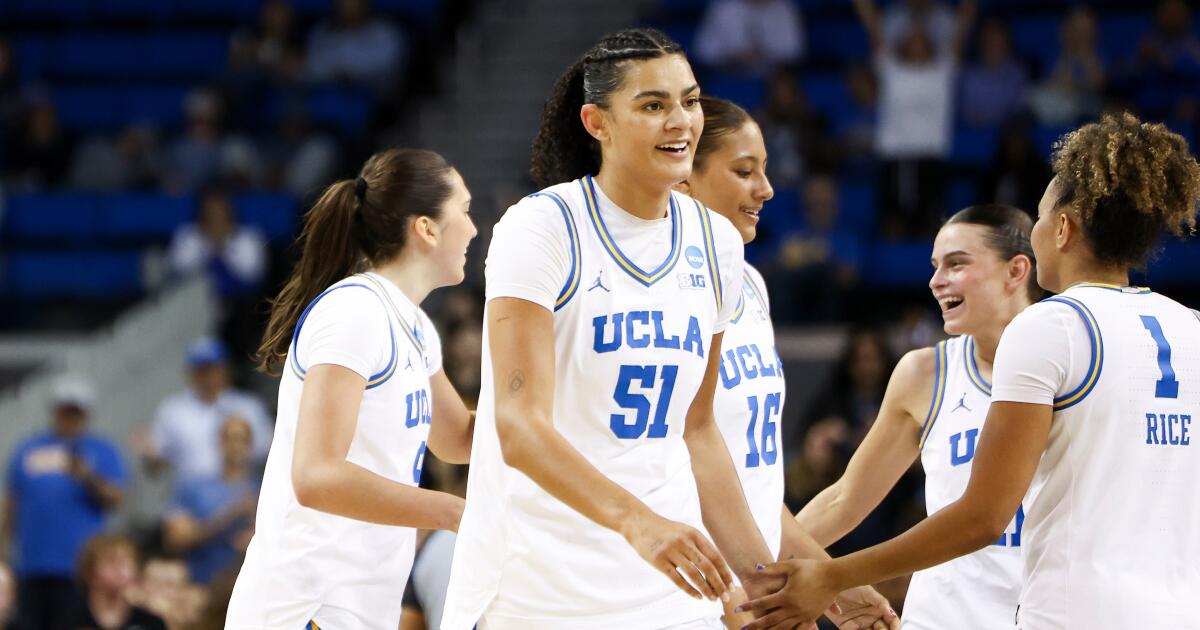
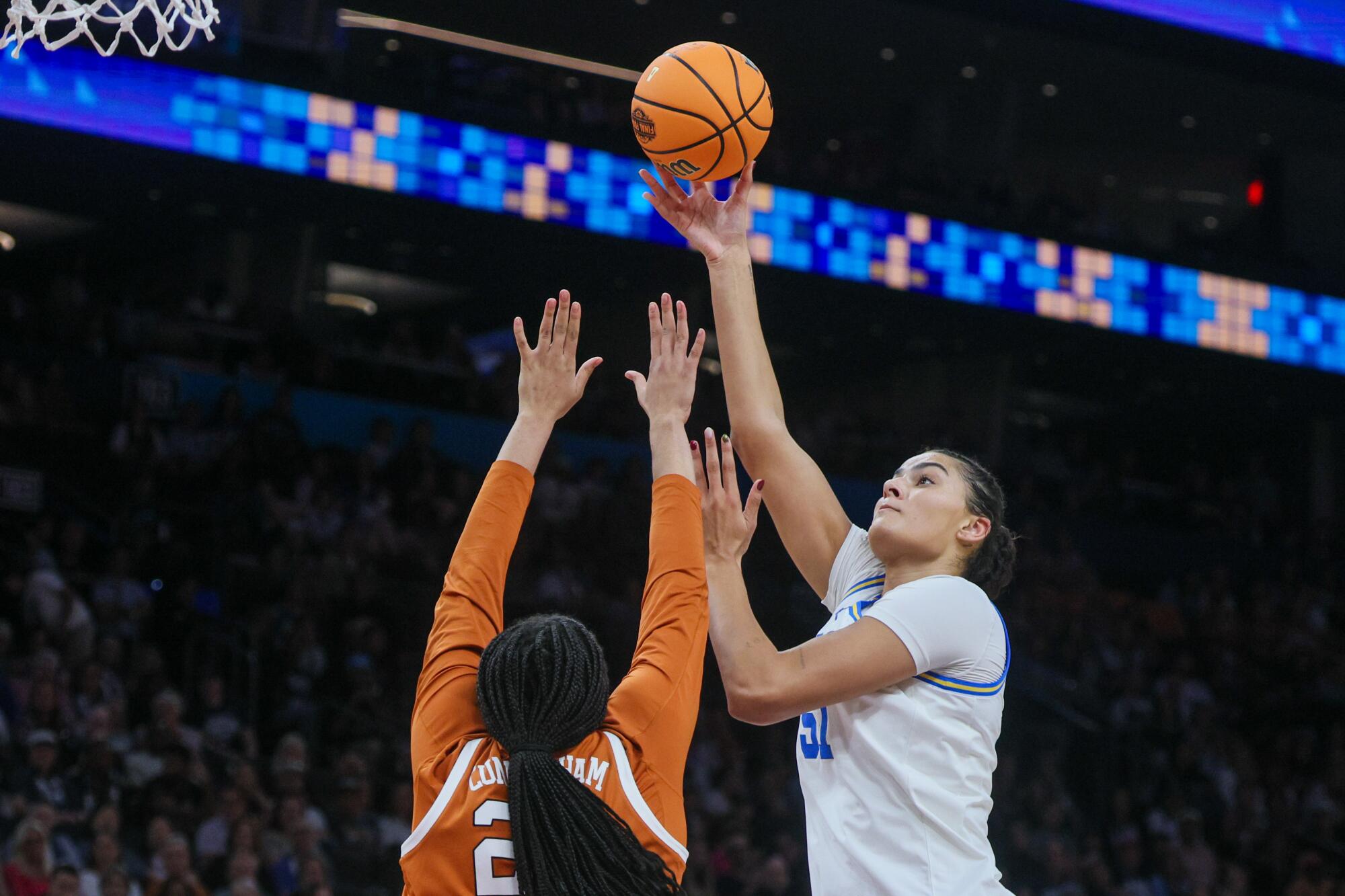
Sienna Betts’ jumper in the lane put UCLA up by 19 at the end of the first quarter. The sophomore finished with 14 points and senior Lauren Betts added 17. The sisters’ parents, Michelle and Andy, played volleyball and basketball, respectively, for Long Beach State. Sienna wears her mom’s No. 16 while Lauren dons her dad’s No. 51.

Rice’s steal and layup made it 46-18 with 3:28 left in the first half and Leger-Walker’s tip-in at the buzzer gave the Bruins a 34-point advantage at halftime. Rice had a complete game, contributing 15 points, nine rebounds, seven assists, four steals and one block.

The result continued the Bruins’ recent dominance against the Beach. UCLA has won six straight head-to-head meetings, including a 51-point blowout in the schools’ previous matchup last December, when Close became the all-time winningest coach in program history by earning her 297th victory to surpass Billie Moore (296-181). Long Beach State has not beaten the Bruins since 1987 under Joan Bonvicini, who posted a 16-1 record versus UCLA in her 12 seasons at the Beach from 1979 to 1991.

The Bruins’ primary focus on defense was slowing down sophomore guard JaQuoia Jones-Brown, who entered Saturday averaging 17.2 points per game. She scored 10 of the Beach’s 11 points in the first quarter but was held scoreless the rest of the way. She has scored in double figures in nine of 10 games. Guard Christy Reynoso added six points for Beach (0-10 overall, 0-2 in Big West).

The Bruins travel to Columbus on Dec. 28 to face No. 21 Ohio State (9-1).

Source link

UCLA’s dismal defense in comeback over Cal Poly raises questions

UCLA had just put on a dazzling offensive display when a help-wanted sign went up in the postgame news conference.

The search for assistance came from a coach who knows his team can score but will need a lot better effort on the other side of the ball to get to where it wants to go this season.

“My biggest challenge with this team,” Mick Cronin said after the Bruins needed an epic scoring surge in the second half to post a relief of a 108-87 victory over Cal Poly, “is finding a guy or two or three that their mind is on defense.”

Nobody filled that role Friday night during a first half that led to scattered boos serenading the Bruins on their way to the locker room inside Pauley Pavilion.

UCLA was trailing by two points after putting in a low effort and playing just a sprinkling of defense against a mid-major team with a losing record from the Big West Conference.

The Cal Poly logo on the front of the opponents’ jerseys did not elicit the same sort of spirited effort the Bruins had given against more brand-name foes, continuing a troubling trend going back to the season opener.

“I definitely think that’s fair to say,” UCLA guard Skyy Clark said after notching a season-high 30 points while making six of 10 three-pointers and becoming the first Bruin in school history to make at least six three-pointers in back-to-back games. “That’s just something we gotta harp on as a team.”

The Bruins could exhale after going with a smaller lineup that produced 65 points in the second half, the most in a half by UCLA since it splurged for 66 in the second half against George Mason on Dec. 22, 1994.

But plenty of worries linger, most of them on the defensive end for a team that has given up an average of 78.2 points over its last six games.

This was another case of UCLA simply outgunning an opponent, the Bruins shooting 57.4% to Cal Poly’s 51% during a game in which defense was played only in spurts. How do the Bruins explain giving up 45 points in the first half?

“We’ve got too many guys who are conscientious objectors defensively,” Cronin said. “And if I can’t get those guys to quit protesting — they don’t say anything, but until they really believe that’s the way to win … ”

UCLA (9-3) prevailed only after Cronin went with a three-guard lineup, replacing center Xavier Booker with Jamar Brown to start the second half in an effort to combat the Mustangs’ drive-and-kick offense that stationed practically everyone behind the three-point line. With a more mobile lineup, the Bruins proceeded to go on a 15-0 run to transform a two-point deficit into a 60-47 lead, removing any doubt about the game’s outcome.

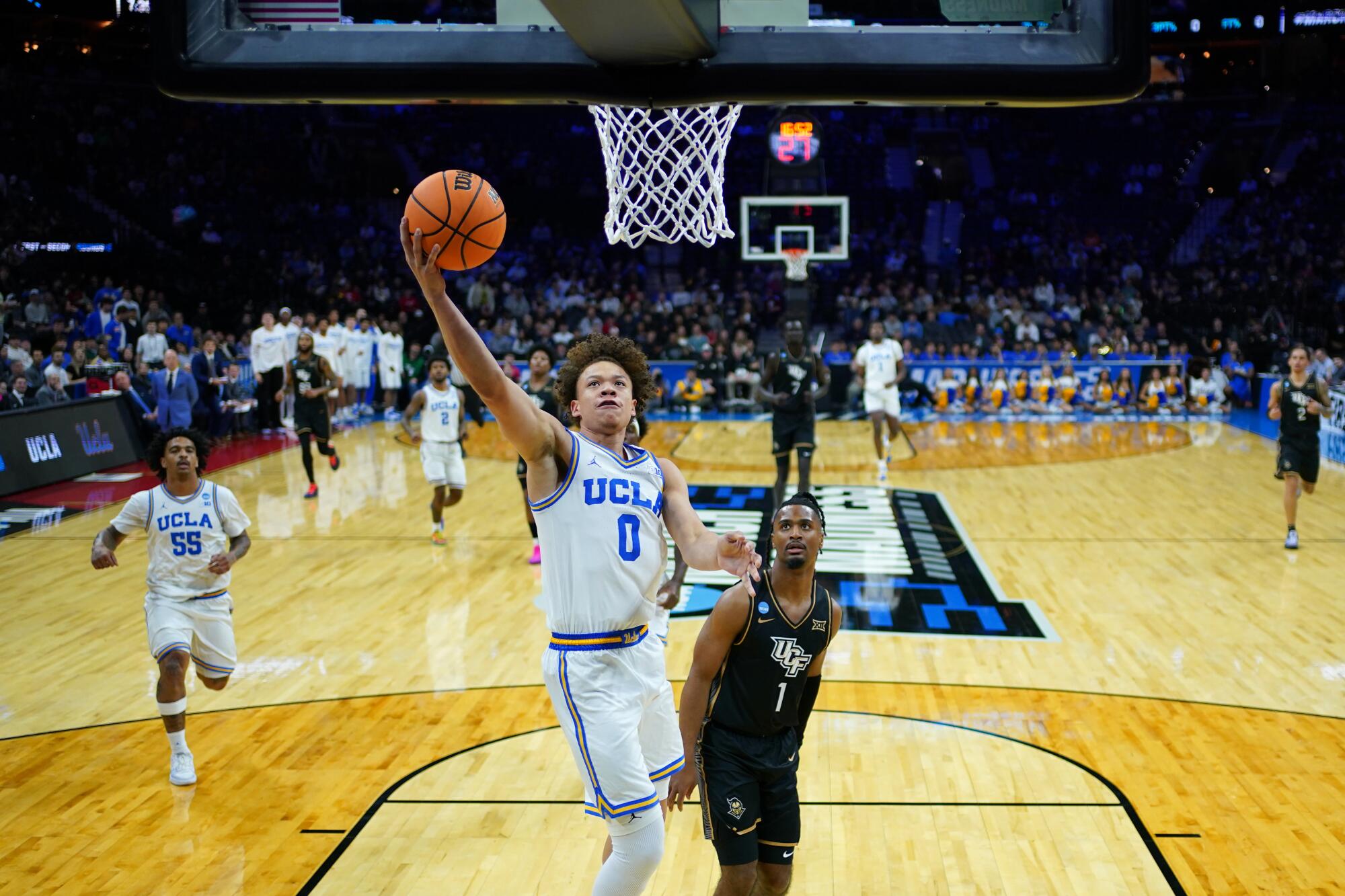
Clark continued his recent scoring spree and received plenty of help from forward Tyler Bilodeau (24 points and eight rebounds) and point guard Donovan Dent (16 points, 11 assists and five steals) as the Bruins notched a second consecutive victory.

UCLA guard Donovan Dent, center, dribbles past Cal Poly guards Guzman Vasilic, left, and Kieran Elliott.

UCLA guard Donovan Dent, center, dribbles past Cal Poly guards Guzman Vasilic, left, and Kieran Elliott to score during the second half Friday night.

(Damian Dovarganes / Associated Press)

Cayden Ward scored 21 points for Cal Poly (5-8), which had been given a 2% chance of winning, according to the metrics of basketball analyst Ken Pomeroy.

By the game’s midpoint, the possibility of a massive upset had crept uncomfortably upward for UCLA.

Giving up open shots as part of a lackluster defensive effort wasn’t nearly the worst of it for the Bruins.

Trent Perry twice fouled a three-point shooter, once prompting Cronin to yell, “Get over here!” after Perry sent Cayden Ward to the free-throw line for three shots. A new low came late in the first half when Brown fouled Hamad Mousa on a three-pointer that went in, Mousa making the free throw to complete a four-point play.

“Buddy, it’s the worst play in basketball, and I’ve gone literally years with that happening zero times,” Cronin said. “Nobody coaches that more than me. You are not allowed to foul a jump shooter if you play for me, never. Never. If you’re that close, that means the shot is contested. You could deduce that, right? So I don’t care if he makes it, he’s taking a contested shot. Jumping toward the guy, you’re going to land in his space.”
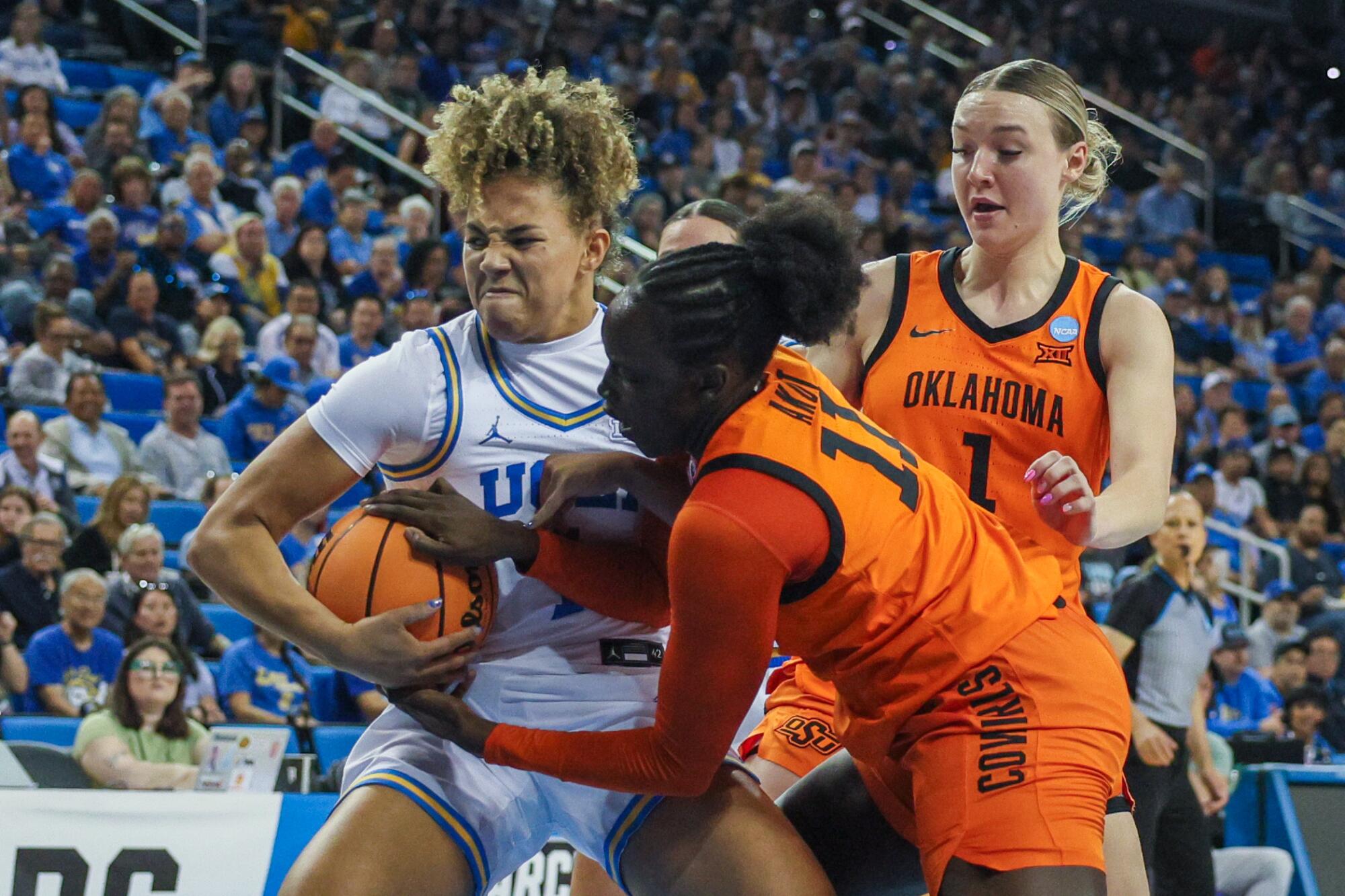
Brown was immediately replaced by Perry, whose defensive inattentiveness quickly reemerged when Ward beat him off the dribble for a one-handed dunk. Things improved considerably the rest of the way. Cronin said he continued to be pleased with Clark’s defense and was satisfied with the second-half effort of forward Eric Dailey Jr., who limited Mousa to only two of his 14 points after halftime.

Cronin suggested that he wanted this team to prioritize defense the way the Bruins did after halftime of their victory over Michigan State in the opening round of the 2021 NCAA tournament, which sparked a flurry of lockdown efforts leading to five consecutive wins.

“From that point on, it took a halfcourt shot to stop us from trying to win the title,” Cronin said, alluding to Jalen Suggs’ buzzer-beater in a national semifinal. “But if that wouldn’t have changed, we weren’t going anywhere, so you just keep trying to stay relentless with it.”

How does Cronin get his team to make that change?

“You play the guys who will do what you tell them to do,” Cronin said. “If you play guys who are conning you with their effort defensively, not only are you going to lose, then the other guys will start doing it because they think you’re a fraud because you’re playing them anyway.”

Applications are being accepted. The next opportunity to fill a heightened role comes Tuesday against UC Riverside.

Source link

A resurgent Donovan Dent is the star of UCLA’s victory over Arizona State

The crowd couldn’t believe what it had just witnessed.

Donovan Dent’s crossover move left a helpless defender watching from behind as he accelerated toward the basket, fans unleashing audible admiration even before the UCLA point guard completed the play with a driving layup.

Poor Noah Meeusen and everyone else who tried to stop Dent.

They were overmatched by the finishing ability and fearlessness of a player who had not shown much of either over the season’s first month, hardly resembling the star the Bruins thought they were getting.

On a revelation of a Wednesday night inside Pauley Pavilion, Dent finally looked like someone who could carry a team.

He did exactly that, the transfer from New Mexico helping the Bruins fend off Arizona State during a 90-77 victory that had his handprints all over it.

There were blow-by layups, floaters, a rare three-pointer and an old-fashioned three-point play on a jumper he threw up while getting fouled and falling down along the baseline. Dent unveiled a full array of moves on the way to scoring 20 points while making nine of 17 shots.

Dent’s understudy also came up huge. After the Sun Devils made things uncomfortably close midway through the second half, pulling to within five points, UCLA reserve guard Trent Perry made sure they would get no closer.

Perry rose for a three-pointer and then after teammate Brandon Williams made an energizing block at the rim, triggering a fast break, Perry found Skyy Clark for a three-pointer that extended the Bruins’ advantage to double digits.

Clark finished with 18 points on the strength of six three-pointers and Tyler Bilodeau added 18 points to help UCLA (8-3) bounce back from its loss to Gonzaga by holding off an old Pac-12 rival. Guard Anthony Johnson led Arizona State (9-3) with 20 points.

Dent’s final highlight came on a pass in transition to an open Clark, who rose for a three-pointer that gave UCLA a 12-point lead. In perhaps the only blemish on his night, Dent logged just four assists to go with his four turnovers.

It was an ensemble performance for the Bruins. UCLA coach Mick Cronin inserted backup center Steven Jamerson into his lineup to start the second half and Jamerson quickly rewarded him by chasing down an offensive rebound in the corner and adding two putback dunks.

But the big story was one of redemption.

It picked up momentum late in the first half when Dent rose without hesitation for a three-pointer. It was only Dent’s second made three-pointer of the season and his first since the season opener after a string of 12 consecutive misses dropped his accuracy from beyond the arc to 7.7%.
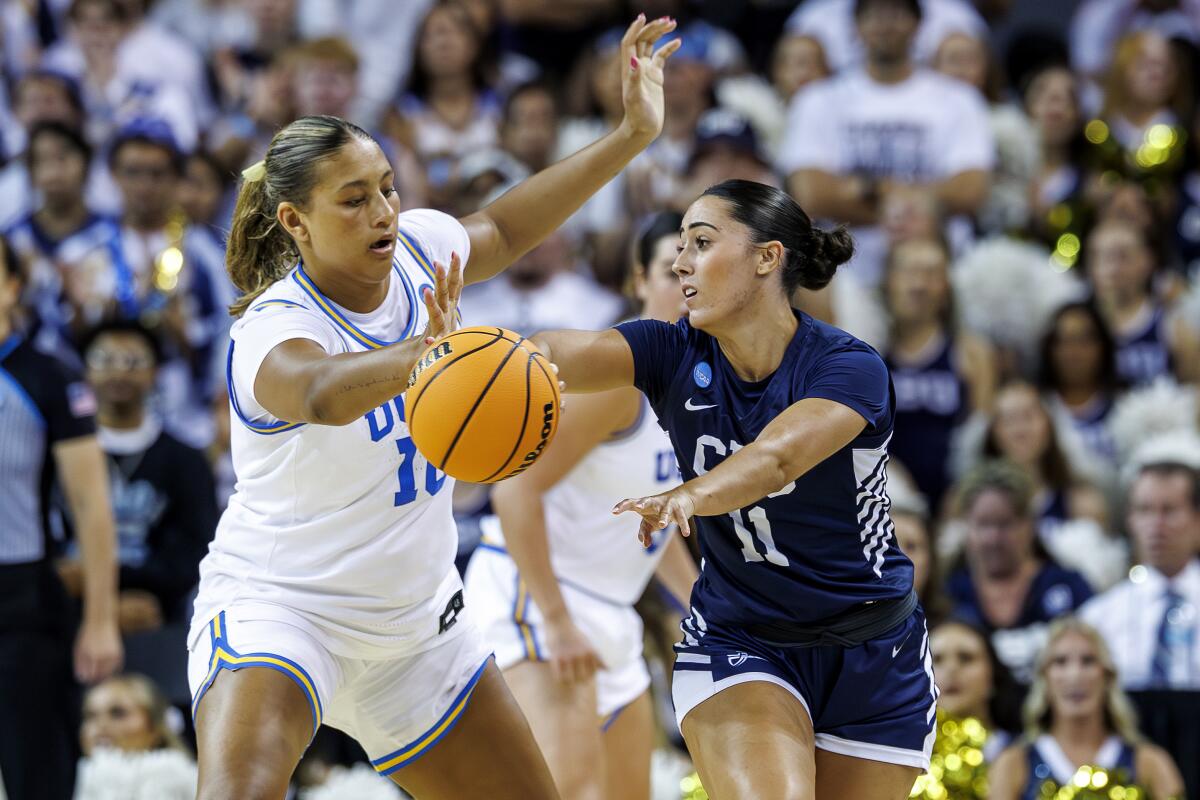
It was a stunning dropoff for someone who had made 40.9% of his three-pointers last season at New Mexico. His second make of the season from long distance increased his accuracy to 14.3%, still unsightly but at least no longer in single digits.

What was perhaps most pleasing about Dent’s performance in the first half was his heightened confidence level. He repeatedly beat his defender for driving layups, his aggressiveness an equal asset to his speed in rolling up 13 points on six-for-eight shooting by the game’s midpoint.

Source link

Latinos are underrepresented on streaming shows, new UCLA report shows

Latinos remain severely underrepresented in the television industry, according to UCLA’s latest Hollywood Diversity Report.

Released Tuesday, the report examined the top 250 series available on streaming, including both library offerings and current titles. Overall, it revealed a steep fall in cultural diversity among 2024’s top comedies and dramas, as well as fewer projects created by people of color and women.

For Latinos, representation on screen and behind the camera is scarce. Only 1.1% of the top streaming scripted shows were created by Latinos. Of the top streaming comedies and dramas, 3.3% had Latino lead actors and 5.2% were co-led by Latino actors. When looking exclusively at current streaming shows (excluding library titles), 1.1% were created by Latinos and 6.2% were led by Latino actors.

UCLA’s Hollywood Diversity Report dates back to 2014. The first iteration of the study used data that had been collected since 2011. Ana-Christina Ramón, UCLA’s director of the Entertainment and Media Research Initiative, says that this level of underrepresentation across all kinds of media is nothing new.

“It’s a consistent finding in our reports. But the numbers are such a stark level of underrepresentation because of the fact that we’re almost 20% of the population,” said Ramón. “Even when the numbers are a little bit better, they’re never close to where they should be.”

This lack of representation isn’t exclusive to the Latino population. The report found that four out of five leads in the most-watched streaming comedies and dramas were white actors, and white men account for nearly 79% of all show creators — leaving nearly every other race and ethnicity severely marginalized.

The downward trend comes at a time when President Trump has consistently targeted and called to end all diversity, equity and inclusion efforts. As a result, much of Hollywood has followed his lead. Paramount Global changed its staffing goals related to gender, race, ethnicity and sex; Warner Bros. Discovery restated its DEI activities as “inclusion”; and Walt Disney Co. got rid of its “diversity and inclusion” performance standard used to calculate executive compensation.

These findings generally defy American audiences’ preference for diverse content. The research shows that “a relatively diverse cast and diverse credited writers often resulted in higher ratings,” especially when these stories from diverse communities are live-action and scripted.

This trend isn’t isolated to television — eight of 2024’s top 10 streaming films and 14 of the top 20 streaming films featured casts with more than 30% people of color, according to previous UCLA research.

Despite the lack of Latino representation, Netflix’s narco-drama starring Sofia Vergara, “Griselda,” was the fifth-most-streamed television of 2024. In Latino households specifically, it reached third place, behind children’s TV shows “Bluey” and “Bebefinn.”

“The silver lining is that [‘Griselda’] was very popular, and though it’s a stereotypical topic, because it was made by the same people that made ‘Narcos,’ it had a prestige factor that gets passed along,” said Ramón.

She finds that the shows that tend to do well have to have a well-known lead actor, be of an interesting topic and be attached to something that is already established or popular. In 2023, the report included Netflix’s “Wednesday” at the fourth-most-streamed show and “The Last of Us” at No. 7, both shows featuring Latino lead actors.

All three titles “have a high production value and are familiar stories” — as “Griselda” was based on a true story, “Wednesday” builds off the IP of “The Addams Family” and “The Last of Us” is based on a video game.

“Regardless of which [ethnic] group you’re talking about, it really has to do with these very specific pieces,” said Ramón. “The very promising finding is the fact that underrepresented stories, which include Latinx stories and other BIPOC stories, tend to do better than shows that don’t, in terms of reviews and ratings.”

Source link

Sienna and Lauren Betts reunite as UCLA women win a laugher over Cal Poly

With a dominant performance on both sides of the court, including 46 rebounds and 19 steals, the UCLA women’s basketball team beat Cal Poly 115-28 on Tuesday at Pauley Pavilion.

The UCLA (10-1) defense held the Mustangs (2-8) to three points in the second quarter and forced 31 turnovers and single digit scoring in the last three quarters. The Bruins scored 59 points off turnovers. Senior Lauren Betts earned her third double-double of the season with 20 points and 10 rebounds.

Freshman Sienna Betts, the No. 2 recruit from the 2025 class, played her first minutes with the Bruins, sharing the court with her sister for the first time for UCLA. She scored her first field goal in the fourth to give the Bruins their first 100-point game since December 2024 against Long Beach State, which they will face on Sunday.

Sienna earned her first assist in the first quarter with a pass to, who else but, Lauren as she was driving to the basket. Sienna grabbed her first points in her collegiate career off the free-throw line and finished the game with five points and two assists while playing under restricted minutes after missing the first part of the season with a leg injury.

The No. 4 Bruins closed the second quarter with 27 unanswered points, punctuated by a three-pointer by Angela Dugalić at the buzzer.

The Bruins finished the game with five players scoring in double digits. By the end of the third quarter, UCLA held a 70-point lead.

It was déjà vu for the Mustangs, who lost to the Bruins, 69-37, exactly a year ago. Cal Poly was without leading scorer Vanessa McManus.

Source link

Mike White, former California and Oakland Raiders coach, dies at 89

Mike White, who had a successful career as a college coach with California and Illinois and later coached the NFL’s Oakland Raiders, has died. He was 89.

Cal said White’s family confirmed that he died Sunday in Newport Beach.

White helped the Golden Bears win a share of the Pac-8 title in 1975, led the Illini to their first Rose Bowl in 20 years in the 1983 season and coached the Raiders in their first two seasons back in Oakland in 1995-96 after leaving Los Angeles.

He also worked as an assistant for the San Francisco 49ers and was on Dick Vermeil’s staff with the St. Louis Rams when they won the Super Bowl following the 1999 season.

“Mike was special,” said Burl Toler Jr., a linebacker who played at Cal under White from 1974-77. “He treated us like men and with a lot of respect. Mike was a very gifted and smart coach who loved Cal and loved being a coach, and he surrounded himself with a lot of like minds who instilled in us a will to succeed.”

White was a four-sport student-athlete at Cal in the 1950s and spent time as an assistant with the Bears and at rival Stanford before getting the head coaching job at his alma mater in 1972.

White had a 35-30-1 record in six seasons at Cal, with his biggest success coming in 1975 when he was named coach of the year after the Bears finished tied with UCLA for first place in the conference. Cal finished 14th in the nation with an offense that featured Chuck Muncie and quarterback Joe Roth.

White also coached quarterback Steve Bartkowski earlier at Cal and helped develop him into the No. 1 overall pick in the 1975 NFL draft.

He then left for the NFL, spending two seasons as an offensive line coach for the 49ers, before returning to college in 1980 with Illinois. He led the Illini to a 47-41-3 record with three bowl trips, including a loss in the 1984 Rose Bowl to UCLA.

That 1983 Illinois team went 9-0 in the Big Ten and is the only team in conference history to beat every other conference opponent in the same season.

White then returned to the NFL in 1990, spending five seasons as an assistant with the Raiders before taking over as head coach. He had a 15-17 record before getting fired after the 1996 season.

Dubow writes for the Associated Press.

Source link

Chancellor Julio Frenk’s warm embrace of UCLA sports is a needed, welcome change

He spoke of the importance of athletics to the institution, of the way they bring people together and showcase excellence.

The remarks weren’t nearly as remarkable as the person doing the speaking.

UCLA chancellor Julio Frenk.

In recent years, the school’s chancellors had distanced themselves from athletics as if they were a distasteful part of the job. Gene Block would show up at the occasional football or basketball game but never granted interview requests or spoke at coaches’ introductions. He did once attach his name to a statement that misspelled the last name of newly hired football coach Rick Neuheisel.

Sign up for UCLA Unlocked

A weekly newsletter offering big game takeaways, recruiting buzz and everything you need to know about UCLA sports.

By continuing, you agree to our Terms of Service and our Privacy Policy.

It’s believed that the last UCLA chancellor to speak at a coach’s introduction was Albert Carnesale in 2003 upon the hiring of Karl Dorrell.

All of which makes Frenk’s appearance, not to mention his speaking for nearly five minutes Tuesday inside a Luskin Center ballroom, all the more extraordinary. Frenk was there to welcome Bob Chesney, the new football coach who has quickly galvanized a long-suffering fan base with his passion and willingness to immediately poke rival USC by proclaiming that UCLA would soon become “the school in town.”

Frenk had UCLA fans at hello.

What he said next was even more encouraging.

“Athletics are the front porch of the university, one of the most visible signals of what we stand for,” Frenk said. “Athletics connect us across generations and geographies with students and alumni, friends as well as strangers. These things are extremely important and help build community and all of that is coming true at UCLA.”

There was also a reference to one word — alignment — that athletic director Martin Jarmond and Chesney would later echo in their remarks.

“Winning in college football requires a unified approach across all of the university — university leadership and athletics are aligned and committed to doing the right things to build a winning program,” Frenk said.

Jarmond suggested that Frenk was willing to help in a way that his predecessor was not — a slightly curious idea given Block’s willingness to support the move to the Big Ten Conference and approve Jarmond’s contract extension, but it seemed that Jarmond’s larger point was about increased institutional support for the football program under the new chancellor.

“What I’m excited and really enthused about,” Jarmond said, “is we have alignment in a way that we have not had in the past. We have a great chancellor in Chancellor Frenk that understands the importance of athletics, bringing communities together, engaging alumni, wanting our student-athletes to be successful and understanding the commitment it takes at the university level for a football program to be competitive. We have investment now, and we have leadership and vision. I don’t always feel we’ve had all of those together.”

Without question, Frenk’s early visibility has already set a new, welcome tone from inside Murphy Hall.

His comments were heartening for anyone who cares about UCLA athletics because they show he’s not only paying attention but also willing to do his part — one that’s essential — to support the operation.

Suggestion box

UCLA coach Mick Cronin shouts instructions during a game against Oregon on Dec. 6.

Mick Cronin

(Jessie Alcheh / Associated Press)

It probably shouldn’t take a public-records request to find out that a high-profile UCLA coach — who at the time was the state of California’s second-highest paid public employee behind since-fired Cal football coach Justin Wilcox — received a new contract seven months earlier.

But that’s the reality of the situation after a Times records request led to the disclosure of Mick Cronin’s new deal that will pay the Bruins men’s basketball coach $4.5 million a year as part of a contract running through the end of the 2029-30 season.

The reasoning given for the lack of disclosure was the fiscal situation facing the school at the time, including the prospect of federal funding cuts.

Appearances are important, yes. But so are integrity and transparency.

This is the second time in the last two years that UCLA has signed one of its biggest figures inside the athletic department to a new deal while staying mum. Jarmond’s contract extension was signed in the spring of 2024 and not announced until the following November — after the football team had won three consecutive games, alleviating a significant amount of pressure that Jarmond was facing for the hiring of football coach DeShaun Foster.

The bottom line is this: UCLA is a public institution that should pride itself on accountability, and if you aren’t willing to openly divulge any significant move that you make, then maybe you shouldn’t be making it.

Chesney moves

While the transfer portal doesn’t open until Jan. 2, Chesney provided some early insight into his possible approach in rebuilding his first UCLA roster.

Upon his arrival at James Madison, Chesney said he had a center, guard and a punter come back from the previous team and added roughly 60 players in the transfer portal to help the Dukes win their first bowl game in the history of the school. The next year, the Dukes added about 50 players through the transfer portal and made the College Football Playoff.

What might that mean for his work with the Bruins?

“That will have to be determined by our team when we get that fully assembled and moving forward next year,” Chesney said. “But then whatever our expectations are is where we build our standards and then the day-to-day process. But I see zero reason why, you know, we cannot be competing, cannot be competing for a championship.”

Chesney has begun to assemble his staff, reportedly agreeing to bring James Madison offensive coordinator Dean Kennedy with him and hiring Florida State general manager Darrick Yray in an identical post with the Bruins as part of his efforts to bring in staffers with West Coast ties.

Yray had spent seven seasons in a variety of roles at Oregon State, rising to the role of director of player personnel. Before that, Yray had worked for four seasons as an offensive assistant and three as assistant director of football operations at Fresno State, his alma mater.

Basketball blues?

Cronin’s teams usually get better over the course of the season, even in down years. So it would be folly to foretell of a lost season for the Bruins in mid-December.

But the big question facing UCLA (7-3) at this pivotal point is whether this season has any upside beyond being a bubble team that loses in the first or second round of the NCAA tournament.

As currently constructed, UCLA has so many issues that it’s hard to imagine a different outcome.

A tentative Donovan Dent has not been much of an upgrade over a tentative Dylan Andrews at point guard. Eric Dailey Jr. takes too many jumpers while drifting in and out of games. Tyler Bilodeau can really score but continues to be somewhat limited defensively despite his best efforts. The thought of what the departed Aday Mara and William Kyle III aren’t doing for this team in the post haunts Bruins fans on a daily basis.

What’s far more worrisome is that the talent level isn’t elite — can you really foresee anyone on this roster forging a long NBA career? — and a coach known for defense doesn’t have enough athletic, relentless players to construct a good defense.

Local high school recruiting has all but dried up and Cronin made another reference to needing more money to bring in players after donors shelled out a massive amount last spring to land Dent.

None of it portends an encouraging trajectory for a coach in his seventh season. Cronin is a developmental coach whose finest seasons came with players who were in his program for multiple years. With free agency now the only constant in the college game, it might be time for Cronin to develop a new plan for success.

Opinion time

How does the rest of the men’s basketball season play out for the Bruins?

Everything comes together and the team makes a deep NCAA tournament run
The team plays better before another early tournament exit
The bubble is burst and the team misses the tournament

Click here to vote in our survey.

Poll results

We asked, “What is your level of happiness with the Bob Chesney hire?”

After 1,340 votes, the results:

Ecstatic, couldn’t be happier, 64.7%
Guardedly optimistic, 30.3%
In wait-and-see mode, 4.1%
This is the best they could do? 0.9%

In case you missed it

UCLA gymnasts upbeat about upcoming year after strong offseason workouts

‘I’m where I want to be.’ UCLA’s Mick Cronin got a new five-year contract this summer

UCLA’s defense wilts and a key signature win slips away during loss to Gonzaga

UCLA’s Donovan Dent could be rounding into form just in time for Gonzaga showdown

‘I want to do my part.’ How Dave Roberts helped UCLA land new coach Bob Chesney

Here’s the reason Troy Aikman didn’t get thanked by that UCLA football player

Hernández: UCLA football coach Bob Chesney and the Bruins share why they believe he will win

‘We can win here.’ Bob Chesney gives a bold vision for success as UCLA’s coach

Have something Bruin?

Do you have a comment or something you’d like to see in a future UCLA newsletter? Email me at ben.bolch@latimes.com, and follow me on X @latbbolch. To order an autographed copy of my book, “100 Things UCLA Fans Should Know & Do Before They Die,” send me an email. To get this newsletter in your inbox, click here.

Source link

UCLA gymnasts upbeat about upcoming season after offseason work

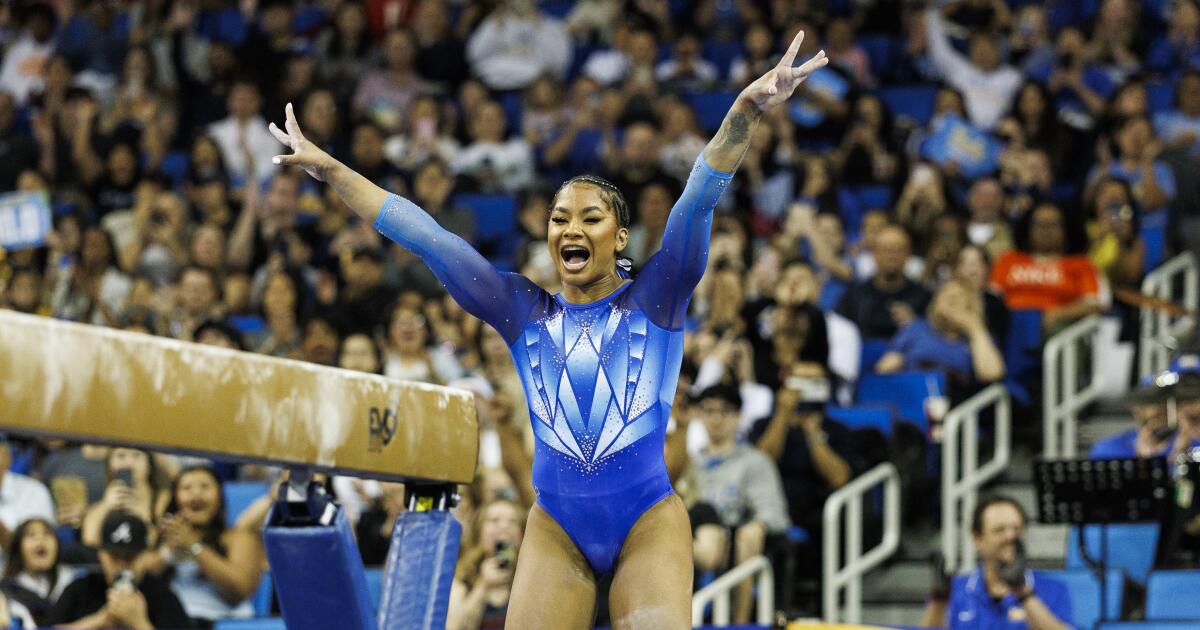
The UCLA gymnastics team offered fans a sneak peek of what can be expected during the 2026 season at its annual Meet the Bruins event Saturday.

The Bruins are coming off a runner-up finish at the NCAA championships and a sweep of the Big Ten regular season and conference titles.

Bar routines have been an area of growth for UCLA during the past season, and the team is shaping up to have better depth. The gymnasts have been pushing each other to improve, and UCLA coach Janelle McDonald is pleased with the progress.

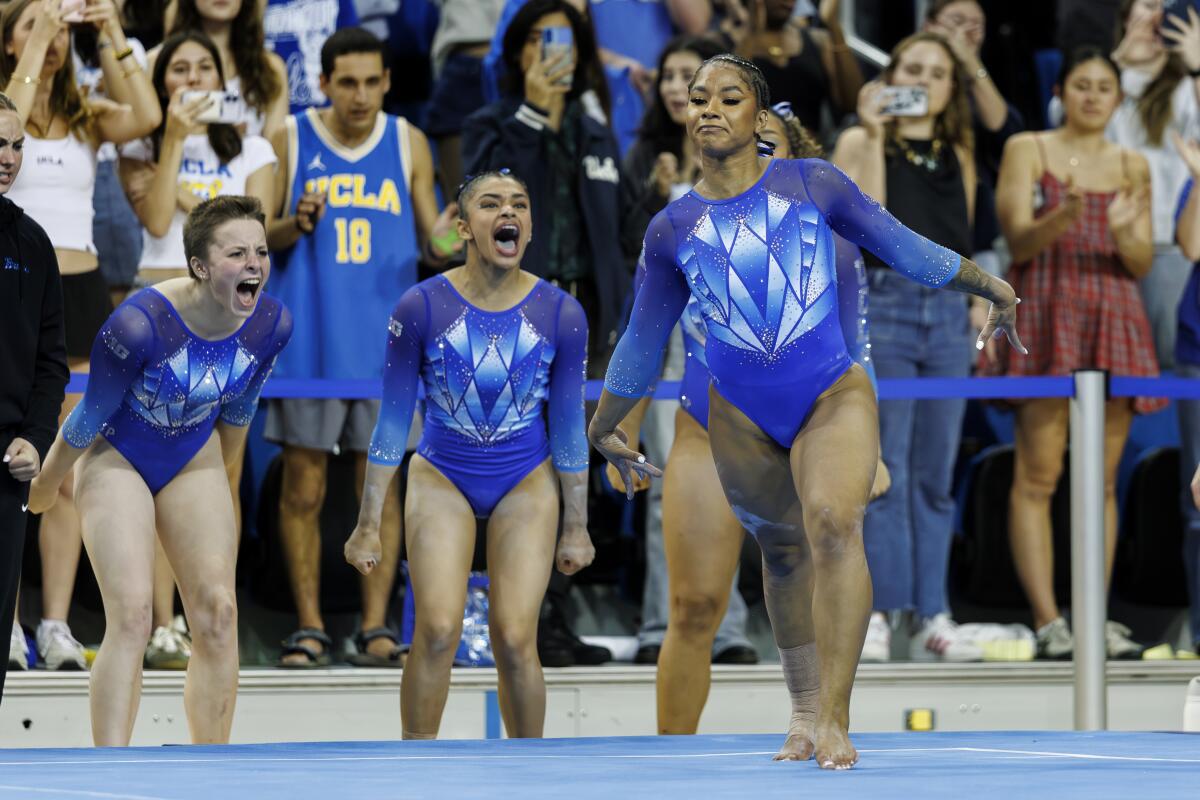
UCLA gymnast Jordan Chiles, center, fires up teammates during the Meet the Bruins exhibition on Saturday.

UCLA gymnast Jordan Chiles, center, fires up teammates during the Meet the Bruins exhibition on Saturday, Dec. 13, 2025, at Pauley Pavilion.

(Dylan Petrossian/UCLA Athletics)

“Really excited about where we are at on bars,” McDonald said. ”I feel like it can be a great event for us and just really working on the consistency of the details right now.”

There are skills the Bruins want to clean up and tighten before the first meet of the new season in January, including sharper execution and landings.

“There were a couple of uncharacteristic things that we don’t typically see in practice, people that are really consistent with sticking and having steps,” McDonald said after the Meet the Bruins exhibition.

The seniors say they are focused on adding routines and events, emphasizing learning, growing and pushing themselves in their final year.

“I feel like both Ciena [Alipio] and Maddie [Anyimi] have had that mentality all summer long to really be able to come into the preseason and make a statement. It was great to see them out there in different events and to see them perform so confidently,” McDonald said.

Sophomore Macy McGowan did not perform on floor due to an injury and has been working throughout the offseason, building back each week to get stronger.

Jordan Chiles showed off her Prince themed floor routine for the final time and will replace it with something new during the competition season.

“I am really excited to do this floor routine,” said Chiles, who was a finalist on “Dancing with the Stars” during the offseason. ”We’ve already started and honestly, I’m like, ‘This is not Jordan. I’ve done the cutesy, I’ve done the hip-hop, I’ve done all those things and this is more the passionate, confident last era of being a Bruin.’”

Freshman Ashlee Sullivan stepped onto the Pauley Pavillion floor for the first time and has been adjusting to the transition from elite competition to collegiate gymnastics.

“When I came here, we were already hitting the ground running,” Sullivan said. “Like everyone looked so good. The team looked competition ready. Feeding off of that, everyone … pushes me to be [the] best I can.”

Tiana Sumanasekera, Nola Matthews, Jordis Eichman, Kai Mattei, Ava Callahan and Sullivan joined the roster this season, bringing a wide variety of skills to the UCLA lineup.

The 2026 season begins Jan. 3, when the Bruins will compete against Washington, California and Oregon State.

Source link

UCLA’s Mick Cronin got a new five-year contract this summer

Strengthening its commitment to Mick Cronin, UCLA quietly awarded its men’s basketball coach a new five-year contract last summer that runs through the 2029-30 season, according to documents reviewed by The Times through a public-records request.

The contract that was signed by Cronin and athletic director Martin Jarmond in May and took effect June 1 will pay Cronin $4.5 million per season, a slight raise over the $4.1 million he was making under the previous contract that was set to expire after the 2027-28 season.

“I’m honored to be the coach at UCLA,” Cronin told The Times late Saturday night after his team’s 82-72 loss to Gonzaga at Climate Pledge Arena. “For me, I have no inklings of being anywhere else. I’ve had many offers to do so. I’m where I want to be so I’ll always say the same thing — it was surreal when I got the job and I’m just working hard to do everything we can to upgrade our program to a point to where we can try to win the title for our fans, and that’s all I really worry about. I’m at that point in my career, so if they want to extend me, I take it because I’m not looking to go anywhere.”

The contract was not announced at the time it was signed, according to an athletic department spokesperson, because of the financial climate within the university, particularly given the prospect of federal funding cuts.

Cronin’s contract was signed not long after he guided UCLA to the second round of the NCAA tournament, where the Bruins lost to Tennessee. Cronin’s previous teams reached the Final Four in 2021 and the Sweet 16 in 2022 and 2023.

Cronin, 54, has compiled a 145-67 record in seven seasons with the Bruins, his accomplishments including a Pac-12 title in 2023 that his team won by a four-game margin over second-place Arizona.

His new contract includes a buyout provision that calls for him to be paid $22.5 million if he’s terminated without cause through March 31, 2026. The buyout amount drops to $18 million if he’s terminated without cause through March 31, 2027; $13.5 million through March 31, 2028; $9 million through March 31, 2029; and $4.5 million through March 31, 2030.

The buyout includes a mitigation clause that would offset UCLA”s buyout obligations through future employment over the duration of the contract.

If Cronin were to leave for another job, he would owe UCLA $15 million through March 31, 2026, with that amount dropping to $12 million through March 31, 2027; $8 million through March 31, 2028; $6 million through March 31, 2029; and $4 million through March 31, 2030.

The bonus structure in Cronin’s contract calls for him to make $25,000 for a conference championship and $15,000 for a conference tournament championship. He’ll get an extra $45,000 if the Bruins make the NCAA tournament, $25,000 for making the second round, $40,000 for making the Sweet 16, $25,000 for making the Elite Eight, $50,000 for making the Final Four, $25,000 for making the championship game and $50,000 for winning the national title. If Cronin is selected conference coach of the year, he’ll make an additional $10,000.

Cronin could be awarded additional amounts for his team’s academic performance, along with retention bonuses of $500,000 if he’s employed through April 15, 2026; $600,000 if he’s employed through April 15, 2027; $700,000 if he’s employed through April 15, 2028; and $700,000 if he’s employed through April 15, 2029.

Source link

Ex-Trump DOJ lawyers say ‘fraudulent’ UC antisemitism probes led them to quit

Nine former Department of Justice attorneys assigned to investigate alleged antisemitism at the University of California described chaotic and rushed directives from the Trump administration and told The Times they felt pressured to conclude that campuses had violated the civil rights of Jewish students and staff.

In interviews over several weeks, the career attorneys — who together served dozens of years — said they were given the instructions at the onset of the investigations. All nine attorneys resigned during the course of their UC assignments, some concerned that they were being asked to violate ethical standards.

“Initially we were told we only had 30 days to come up with a reason to be ready to sue UC,” said Ejaz Baluch, a former senior trial attorney who was assigned to investigate whether Jewish UCLA faculty and staff faced discrimination on campus that the university did not properly address. “It shows just how unserious this exercise was. It was not about trying to find out what really happened.”

In spring 2024, increasingly tumultuous protests over Israel’s war in Gaza racked UCLA. Jewish students and faculty reported “broad-based perceptions of antisemitic and anti-Israeli bias on campus,” a UCLA antisemitism task force found. A group later sued, charging that UCLA violated their civil rights, and won millions of dollars and concessions in a settlement.

UCLA avoided trial, but the suit — along with articles from conservative websites such as the Washington Free Beacon — formed a basis for the UC investigations, the former DOJ lawyers said.

“UCLA came the closest to having possibly broken the law in how it responded or treated civil rights complaints from Jewish employees,” Baluch said. “But we just did not have enough information from our investigation to warrant suing UCLA.”

“To me, it’s even clearer now that it became a fraudulent and sham investigation,” another lawyer said.

A DOJ spokesperson did not respond to a request for comment. When it announced findings against UCLA in late July, Assistant Atty. Gen. Harmeet K. Dhillon — the DOJ civil rights chief — said the campus “failed to take timely and appropriate action in response to credible claims of harm and hostility on its campus.” Dhillon said there was a “clear violation of our federal civil rights laws.” Atty. Gen. Pam Bondi said UCLA would “pay a heavy price.”

The former DOJ attorneys’ description of their Trump administration work offers a rare view inside the government’s UC probe. For months, university officials have said little publicly about their ongoing talks with the DOJ. Their strategy has been to tread cautiously and negotiate an out-of-court end to the investigations and financial threats — without further jeopardizing the $17.5 billion in federal funds UC receives.

Four attorneys said they were particularly troubled by two matters. First, they were asked to write up a “j-memo” — a justification memorandum — that explained why UC should face a lawsuit “before we even knew the facts,” one attorney said.

“Then there was the PR campaign,” the attorney said, referring to announcements beginning with a Feb. 28, 2025, press release saying investigators would be visiting UCLA, UC Berkeley, USC and seven other universities nationwide because the campuses “have experienced antisemitic incidents since October 2023.”

“Never before in my time across multiple presidential administrations did we send out press releases essentially saying workplaces or colleges were guilty of discrimination before finding out if they really were,” said one attorney, who requested anonymity for fear of retaliation.

Jen Swedish, a former deputy chief on the employment discrimination team who worked on the UCLA case, said “virtually everything about the UC investigation was atypical.”

“The political appointees essentially determined the outcome almost before the investigation had even started,” said Swedish, referring to Trump administration officials who declared publicly that punishing colleges for antisemitism would be a priority. She resigned in May.

The lawyers spoke out because their formal connections to the DOJ recently ended. Many said they believed the Trump administration had compromised the integrity of the department with what they viewed as aggressive, politically motivated actions against UC and other elite U.S. campuses.

“I think there were absolutely Jewish people on campuses that faced legitimate discrimination. But the way we were pushed so hard to investigate, it was clear to so many of us that this was a political hit job that actually would end up not helping anyone,” said one attorney who worked on UC Davis and UCLA and interviewed students.

In a statement, a UC spokesperson said, “While we cannot speak to the DOJ’s practices, UC will continue to act in good faith and in the best interests of our students, staff, faculty, and patients. Our focus is on solutions that keep UC strong for Californians and Americans.”

The government has not sued UC.

But in August, the DOJ demanded that the university pay a $1.2-billion fine and agree to sweeping, conservative-leaning campus policy changes to settle federal antisemitism accusations. In exchange, the Trump administration would restore $584 million in frozen grant funding. At the time, Gov. Gavin Newsom called the proposal “extortion.”

Last month, after UC faculty independently sued, U.S. District Judge Rita F. Lin ruled that the “coercive and retaliatory” proposal violated the 1st Amendment. Lin blocked the fine and the demands for deep campus changes.

“Agency officials, as well as the president and vice president, have repeatedly and publicly announced a playbook of initiating civil rights investigations of preeminent universities to justify cutting off federal funding, with the goal of bringing universities to their knees and forcing them to change their ideological tune,” Lin said.

Her ruling does not preclude UC from negotiating with the administration or reaching other agreements with Trump.

Protests roiled campuses in spring 2024

The federal investigations largely focused on the tumultuous pro-Palestinian campus protests that erupted at UC campuses. On April 30, 2024, a pro-Israel vigilante group attacked a UCLA encampment, resulting in injuries to student and faculty activists. Police failed to bring the situation under control for hours — a melee former Chancellor Gene Block called a “dark chapter” in the university’s history.

During the 2023-24 UC protests, some Jewish students and faculty described hostile climates and formal antisemitism complaints to the schools increased. Some Jews said they faced harassment for being Zionists. Others said they encountered symbols and chants at protests and encampments, such as “From the river to the sea, Palestine will be free,” which they viewed as antisemitic. Jews were also among the leading encampment activists.

In June 2024, Jewish UCLA students and faculty sued UC, saying the encampment blocked them from accessing Dickson Court and Royce Quad. The four blamed the university for anti-Jewish discrimination, saying it enabled pro-Palestinian activists to protest. On July 29, 2025, UC agreed to pay $6.45 million to settle the federal suit.

In response to the demonstrations and suit, UC overhauled its free speech policies, banning protests that aren’t preapproved from vast portions of campus. It said it would strictly enforce existing bans on overnight encampments and the use of masks to hide identity while breaking the law, and agreed to not prohibit campus access to Jews and other legally protected groups.

Inside the investigations

The nine former DOJ lawyers worked between January and June researching whether UC campuses mishandled complaints of antisemitism filed by Jewish students, faculty and staff tied to pro-Palestinian encampments. They were involved with two areas under the DOJ’s Civil Rights Division — employment litigation and educational opportunities — tasked with looking into potential discrimination faced by UC employees and students.

The attorneys described an at times rushed process that concentrated legal staffing on probing antisemitism at UC campuses, to the detriment of other discrimination cases focused on racial minorities and people who are disabled.

At one point, attorneys said, more than half of the dozens of lawyers in the employment litigation section were assigned solely or nearly exclusively to UC campuses, with some told specifically to research the UCLA David Geffen School of Medicine and other campus divisions. As lawyers begin to quit, the attorneys said, additional staff was brought in from other DOJ teams — those focused on tax law and immigrant employment law.

When five lawyers in the mid-spring reported minimal findings at Berkeley, Davis and San Francisco campuses, they were reassigned to UCLA.

“It was like UCLA was the crown jewel among public universities that the Trump administration wanted to ‘get,’ similar to Harvard for privates,” said another attorney, who requested anonymity because they feared retaliation for speaking out. “There were meetings where managers — who were career employees like us — would convey that political appointees and even the White House wanted us all on UCLA.”

Dena Robinson, a former senior trial attorney, investigated Berkeley, Davis and Los Angeles campuses.

“I was someone who volunteered on my own to join the investigation and I did so because of some of my lived experience. I’m a Black woman. I’m also Jewish,” she said. But she described concerns about fast and shifting deadlines. “And I am highly skeptical of whether this administration actually cares about Jewish people or antisemitism.”

Lawyers described similar views and patterns in the Educational Opportunities Section, where UC investigations were concurrently taking place.

A 10th attorney, Amanda Huckins, said she resigned from that section to avoid being assigned to UC.

“I did not want to be part of a team where I’m asked to make arguments that don’t comport with the law and existing legal precedent,” she said.

Huckins had been away from the job for a little more than two months when she read findings the DOJ released July 29 saying that UCLA acted with “deliberate indifference” to Jewish students and employees and threatened to sue the university if it did not come to a settlement.

In those findings, the DOJ said, “Jewish and Israeli students at UCLA were subjected to severe, pervasive, and objectively offensive harassment that created a hostile environment by members of the encampment.” As evidence, it cited 11 complaints from Jewish or Israeli students regarding discrimination between April 25 and May 1, 2024.

It was “as if they only talked to particular students and used public documents like media reports,” Huckins said, adding that the evidence publicly presented seemed thin. In a “normal investigation,” attorneys research “different layers of document and data requests and interviews at every level of the university system.” Those investigations, she said, can take at least a year, if not longer.

What investigators encountered

Attorneys described site visits at several UC campuses over the spring, including meetings with campus administrators, civil rights officers, police chiefs and UC lawyers who attended interviews — including at least one with UCLA Chancellor Julio Frenk.

The lawyers said UC leaders were cooperative and shared campus policies about how civil rights complaints are handled as well as information detailing the way specific cases were treated, such as those of faculty who said they faced harassment.

“There were thousands and thousands of pages of documents and many interviews,” said Baluch, referring to Berkeley, Davis and UCLA. “There may have been harassment here and there, but there was not a lot that rose to the level of the university violating federal law, which is a pretty high bar.”

“We identified certain incidents at Berkeley and at Davis that were kind of flash points. There were a couple of protests that seemed to get out of hand. There were the encampments. There was graffiti. But we just did not see a really hostile work environment,” said another attorney who visited those campuses. “And if there was a hostile environment, it seemed to have been remediated by the end of 2024 or even May or June for that matter.”

However, at UCLA, Baluch said he and team members found “problems with the complaint system and that some of the professors were genuinely harassed and to such a severe level that it violates Title VII.” Eventually, he said “we successfully convinced the front office that we should only be going after UCLA.”

Where UC and Trump administration stand today

When Harvard faced major grant freezes and civil rights violation findings, it sued the Trump administration. UC has so far opted against going to court — and is willing to engage in “dialogue” to settle ongoing investigations and threats.

“Our priorities are clear: protect UC’s ability to educate students, conduct research for the benefit of California and the nation, and provide high-quality health care,” said UC spokesperson Rachel Zaentz. “We will engage in good-faith dialogue, but we will not accept any outcome that cripples UC’s core mission or undermines taxpayer investments.”

The calculation, according to UC sources, is simple. They want to avoid a head-on conflict with Trump because UC has too much federal money on the line. They point to Harvard — which suffered major grant losses and federal restrictions on its patents and ability to enroll international students after publicly challenging the president.

“Our strategy before was to lay low and avoid Trump any way we could,” said a UC official, who was not authorized to speak on the record. “After the UCLA grants were pulled and the settlement offer came in, the tactic shifted to ‘playing nice’” without agreeing to its terms.

In public remarks to the board of regents last month at UCLA, UC President James B. Milliken said “the stakes are enormous” and presented data on funding challenges: Under Trump, more than 1,600 federal grants have been cut. About 400 grants worth $230 million remained suspended after faculty court wins.

UC “is still facing a potential loss of more than a billion dollars in federal research funding,” Milliken said.

“The coming months may require even tougher choices across the university,” he said.

No information about a possible UC-Trump settlement has been released. But some former DOJ lawyers said they believe a settlement is inevitable.

“It’s devastating that these institutions are feeling pressured and bullied into these agreements,” said Huckins, speaking of deals with Columbia, Brown, Cornell and other campuses. “I would love it if more schools would stand up to the administration … I recognize that they’re in a hard spot.”

To Baluch, who worked on the UCLA case, it appeared that the DOJ had the upper hand.

“Cutting grants is a huge hit to a university. And the billion-dollars fine is a lot. I see why these universities feel backed into a corner to settle,” he said. “The threats, they are working.”

Source link

L.A. Olympics will likely force USC football to play at SoFi Stadium

Since it first opened in 1923, the Los Angeles Memorial Coliseum has been the sole home of USC football. No major sports team in the city’s history has played in the same venue for longer.

But after more than a century spent in the city’s iconic stadium, The Times has learned that the 2028 Summer Olympics and Paralympic Games will likely force USC to find a new home for its football team in 2028, with the likeliest option being SoFi Stadium in Inglewood.

Multiple people with knowledge of the situation not authorized to discuss it publicly told The Times that the Coliseum would not be ready for the start of college football season in September 2028 because of the $100-million temporary track that’s being built on top of the Coliseum field to host the track-and-field competition at the L.A. Olympics and Paralympic Games.

The logistics are still being worked out with L.A. 2028, and USC has not made a final decision about where the Trojans’ 2028 football season will be played. A source said the school hasn’t officially determined whether the Coliseum field could be ready later in the fall, perhaps to host a portion of USC’s 2028 home schedule. But even if it is logistically possible, it’s not clear that USC’s athletic department would find that arrangement in its best interest, given it would mean uprooting the team midseason or spending a long stretch of the 2028 slate away from L.A.

“USC and LA28 are working in lockstep on all logistics for the Olympic and Paralympic Games,” USC athletics spokesperson Cody Worsham said in a statement. “We will share details with the public when they are finalized.”

SoFi Stadium officials declined to comment when asked about USC’s possible move to the venue in 2028.

With the closing ceremonies of the Paralympic Games set for Aug. 27, 2028, there would be just two weeks for the temporary track to be removed and the grass field below to be restored ahead of USC’s currently scheduled 2028 home opener on Sept. 9. Multiple people told The Times that’s not a feasible timeline for a structure LA28 chairman Casey Wasserman once called “the most expensive and probably complicated thing we actually have to build” ahead of the 2028 Games.

This isn’t a new problem at USC. Discussions about the plausibility of the football program sharing the Coliseum with the Olympics in 2028 trace back well before current athletic director Jennifer Cohen was hired in 2023. The belief at one point, according to a person familiar with those discussions, was that with some clever scheduling, USC would only have to miss a home game or two.

Now, according to multiple people familiar with the situation, USC is expected to spend the 2028 season at SoFi Stadium, which hosts the NFL’s Rams and Chargers. By that point, it may also be the home field of the city’s other Big Ten football team.

UCLA has already stated it plans to trade the Rose Bowl, where it has played since 1982, for the modern SoFi Stadium, in spite of a lease agreement that runs through 2044. The city of Pasadena and the Rose Bowl Operating Company have since sued the school and SoFi Stadium’s ownership in hopes of blocking the Bruins’ move.

If UCLA forges on with plans to abandon the Rose Bowl in 2026 for SoFi, all four of the city’s major football teams could be playing under the same roof two years later.

Those logistics, however, pale in comparison to what it will take to host Olympic track and field at the Coliseum in 2028, in the same stadium where the competition was held almost a century earlier. The biggest obstacle LA28 faced using an iconic venue that hosted the 1984 Olympics is that there wasn’t enough room on the Coliseum floor for an Olympic-sized track.

Renovations in the early 1990s added 14 rows of seats at the bottom of the bowl, shrinking the size of the Coliseum field. The solution requires installation of a track 11 feet above the field that stretches over the first few rows of stadium seating to met Olympic standards.

To build the temporary track, the Coliseum’s turf and the dirt beneath it will be scraped away, down to the stadium’s concrete base where columns will be placed about every 10 feet. That construction at the Coliseum is expected to begin immediately after the Trojans finish their home football schedule sometime in November 2027.

Bill Hanway, the executive vice president for AECOM — the infrastructure consulting firm hired to oversee LA28’s preparations — told The Times in June 2024 that the track was “an incredibly complex build” in “an incredibly tight space.”

Taking track down will be its own challenge, one that will take longer than the two-week window between the end of the Games and the beginning of USC’s 2028 slate. When a similar structure was built for the 2014 Commonwealth Games in Glasgow, Scotland, the soccer team that played in the stadium — Queen’s Park FC — didn’t return for more than a year.

Unless that timeline can be slashed, the Trojans will spend the 2028 season switching off Saturdays with their rivals, who, for one year, would be across-the-hallway as opposed to across town.

USC and UCLA shared the Coliseum for 54 years before the Bruins moved to the Rose Bowl in 1982. For 33 of those years, the Coliseum also hosted the Rams on Sundays.

If that feels too crowded to USC, the Rose Bowl is the only other option in town — and suddenly seems to be in serious need of a tenant.

But as of now, according to a person familiar with the situation, SoFi Stadium is the only venue that’s been discussed as a potential temporary home.

Source link

Why Troy Aikman didn’t get thanked by that UCLA football player

Troy Aikman said he’s “done with NIL” after writing a check to a UCLA football player who never thanked him and went on to leave for another school after one season.

There was a reason for that lack of gratitude, according to one person familiar with the Bruins’ football name, image and likeness operations from that time not authorized to discuss donor information publicly.

The player in question didn’t know who funded his NIL deal, only that it was coming from the team’s collective, Men of Westwood. It was standard practice for players not to know which donors or alumni contributed NIL funds that were distributed to the team.

Aikman, who did not identify the player in his remarks, did receive thanks from Men of Westwood leadership, coach Chip Kelly and athletic director Martin Jarmond, according to the person familiar with the situation.

Aikman, the former UCLA quarterback who led the Bruins to a victory in the 1989 Cotton Bowl before going on to a Pro Football Hall of Fame career with the Dallas Cowboys, voiced his frustrations about NIL on the Sports Media Podcast with Richard Deitsch.

“I gave money to a kid, I won’t mention who,” Aikman told Deitsch. “I’ve done it one time at UCLA, never met the young man. He was there a year, he left after the year. I wrote a sizable check, and he went to another school. I didn’t even get so much as a thank-you note. So, it’s one of those deals, to where I’m done with NIL. I want to see UCLA be successful, but I’m done with it.”

Aikman went on to say he believed that players should be able to leave one school for another amid coaching turnover but should have to otherwise stay with the program paying them.

“There’s got to be some leadership at the very top that kind of cleans all of this up,” Aikman said. “Starting with players that accept money. There’s got to be some accountability and responsibility on their behalf, to have to stick to a program.”

Source link

Bob Chesney offers bold vision for success as UCLA football coach

Unflinching in his belief that he could elevate UCLA to win at the highest level, Bob Chesney sounded a brazen, fearless tone Tuesday during his introduction as the Bruins’ football coach.

“We don’t need to be the other school in town,” Chesney said inside the Luskin Center on campus, “we need to be the school in this town and I promise you that will happen very soon.”

Chesney said the success he’s had in two seasons at James Madison, which will open the College Football Playoff against Oregon on Dec. 20, could translate to his new job after agreeing to a five-year, $33.75-million contract that will pay him an annual salary of $6.75 million.

“Those same dreams,” Chesney said of what he’s done with the Dukes, “are the exact dreams we will have here.”

Bob Myers, the former Golden State Warriors general manager who served on the search committee, said UCLA had committed to providing him with resources that would rank in “the top third, maybe top quartile” of the Big Ten in a bid to give Chesney what he needed to compete with conference heavyweights.

The challenge is a big one. UCLA has not won a conference championship since 1998 and is coming off back-to-back losing seasons, including a 3-9 record under predecessor DeShaun Foster and interim coach Tim Skipper. None of that could dissuade Chesney from becoming the first sitting head coach to abandon his job to join the Bruins since Pepper Rodgers made a similar move in 1971.

“I believe in the power of UCLA,” Chesney said.

Chesney met with his new players earlier in the day, impressing them with his vision and exuberance.

“He has a lot of energy and cares about this place,” freshman linebacker Scott Taylor said, “and that’s what a lot of people want to see.”

Mixing humor with personal anecdotes in his remarks, Chesney joked that he was country singer Kenny Chesney’s first cousin and that the other Chesney would be at every game. He said his first coaching salary was $5,000. When it came to his coaching tree, Chesney said he had learned from many but wanted to embrace his own style.

“I don’t want to be anyone else,” he said. “I want to be me.”

Chesney said he also believed in accountability and would personally conduct class checks. What’s his style? Chesney said he embraced toughness and competitiveness. He also said he believed he could replicate his success at lower levels after having won at the Division III, Division II and Football Championship Subdivision levels before arriving at James Madison.

“There is zero doubt,” Chesney said, “that we can win here at UCLA.”

Check back soon for updates on this developing news story.

Source link