Aston Merrygold of JLS fame has opened up about the devastating toll of his recent ankle injury during an appearance on Sunday Brunch
JLS’ Aston admits ‘it’s killing me’ after painful injury(Image: GETTY)
JLS star Aston Merrygold has gotten candid about his recent leg injury, admitting the emotional toll is “killing me”.
The Peterborough-born boyband icon, 38, underwent surgery late last year after suffering a painful injury on his ankle during rehearsals.
However, Aston has continued to perform with the band, which also includes Marvin Humes, Oritsé Williams, and JB Gill, either seated or using crutches.
During an interview with Simon Rimmer and Tim Lovejoy on today’s (22nd February) edition of Channel 4’s Sunday Brunch, Aston shared some more insight into his injury and recovery.
“I broke everything in my ankle, apart from the bone,” he shared. “So, I’m still here.
“Basically, jumping off a platform to end the show, I vanished through the stage and landed on some crash mats. Obviously, I got excited and probably jumped a bit too high, trapped my leg between the crash mats and my body kept going.
“So I had to have full ankle reconstruction surgery.” Tim quipped: “Got a team of lawyers on that?”, prompting laughter from Aston.
After revealing he had continued with the tour on crutches, Aston was asked about his history playing football and how his injury has affected his exercise regime.
“You used to be a good footballer years ago, didn’t you?” Tim asked. “So this must be killing you.”
Aston agreed: “It’s killing me. But everything, even in the week, going away with the kids for a few days is lovely.”
Tim interjected, “Can you do anything?” and Aston revealed: “I can’t run yet. So that’s kind of the extent of it. Stairs are good now, for the ankle progression.”
The presenter then mused: “You know what they say, and this is so true, a well man has 10,000 wishes and an ill man has one.”
“100 percent,” Aston agreed. “And the worst, worst part of the whole thing was that I had to be bed-bound at one point.
Content cannot be displayed without consent
“Then, when I could stand up, it had to be no weight. So no picking up the kids, no kind of running around.
“Obviously I didn’t listen,” he then confessed. “You can’t have those special moments just taken away fully, so I was a bit like, ‘No, there are some things…’”
Simon then asked when Aston will be fully recovered, with the JLS star explaining: “The operation was in December. December 5th. And he said over six months.”
Sunday Brunch airs Sundays from 10am on Channel 4.
Bodies of five asylum seekers wash ashore in Libya as three others die in a separate incident off the coast of Greece.
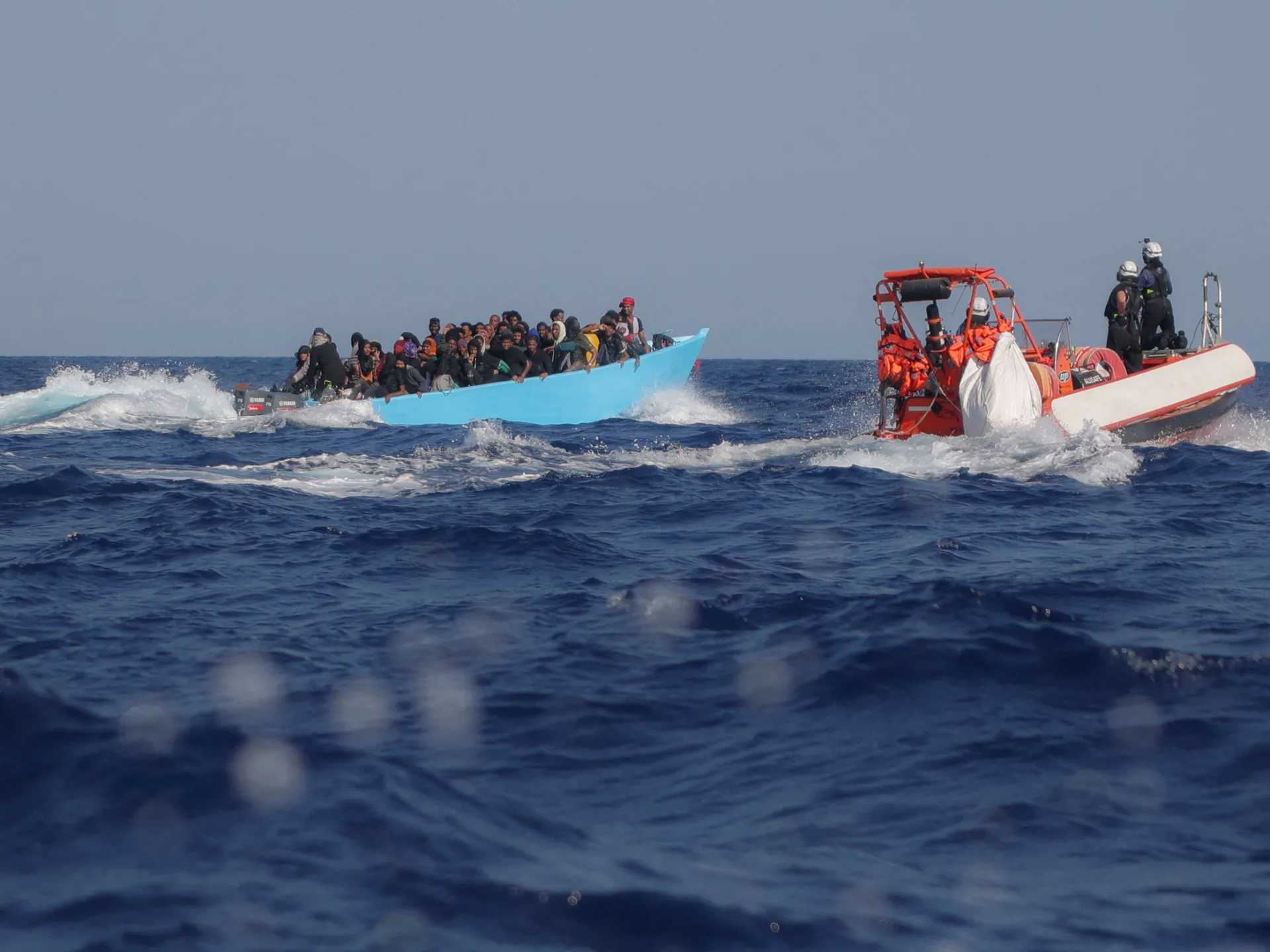
Police in Libya have recovered the bodies of five asylum seekers that washed ashore near the capital, Tripoli, as authorities in Greece announced the deaths of three others in a separate incident off the coast of Crete.
The bodies in Libya were found on Saturday by residents of the coastal town of Qasr al-Akhyar, according to a police officer.
Recommended Stories
list of 4 itemsend of list
Hassan Al-Ghawil, head of investigations at the Qasr Al-Akhyar police station, told the Reuters news agency that the bodies were all of dark-skinned people. Two of them were women.
He said people in the area had reported seeing a child’s body wash ashore before the waves returned it to sea.
“We reported to the Red Crescent to recover the bodies,” said Ghawil. “The bodies we found are still intact, and we think there are more bodies to wash ashore.”
The tragedy came weeks after the International Organization for Migration said some fifty-three migrants, including two babies, were dead or missing after a rubber boat carrying 55 people capsized off the coast of Zuwara town in western Tripoli.
It also came as Greek authorities were responding to a separate incident in the eastern Mediterranean.
The Athens News Agency reported on Saturday that authorities had recovered three bodies and rescued at least 20 people after a wooden boat carrying migrants and asylum seekers capsized off the coast of Crete.
Most of the survivors were Egyptians and Sudanese people, the agency reported. They also included four minors.
According to the Greek public broadcaster ERT, the wooden boat capsized when passengers were trying to climb up the ladders during a rescue effort involving a commercial ship.
The search for survivors was continuing with four patrol boats, an aircraft, and two ships from the European border agency Frontex, a spokesperson for the Greek coastguard told the AFP news agency.
According to ERT, survivors said about 50 people had been on board the wooden boat.
A second boat carrying about 40 migrants and asylum seekers was spotted in the area, leading to another rescue operation.
Thousands of people attempt the perilous crossing from Libya to Europe over the Mediterranean every year. Libya has become a transit route for people fleeing conflict and poverty to Europe since the fall in 2011 of longtime ruler Muammar Gaddafi.
Last week, a UN report said migrants in Libya, including young girls, are at risk of being killed, tortured, raped or put into domestic slavery, and called for a moratorium on the return of migrant boats to the country until human rights are ensured.
Many of the migrants and asylum seekers departing Libya seek to arrive in Crete, the gateway to the EU.
According to the United Nations High Commissioner for Refugees (UNHCR), more than 16,770 people seeking asylum in Europe arrived in Crete in 2025.
Faced with the surge in arrivals, the conservative Greek government suspended the processing of asylum applications for three months last summer, particularly for those arriving from Libya.
The UNHCR says 107 people died or went missing in Greek waters in 2025.
The true human cost of Israel’s genocidal war on the Gaza Strip has far exceeded previous official estimates, with independent research published in the world’s leading medical journals verifying more than 75,000 “violent deaths” by early 2025.
The findings, emerging from a landmark series of scientific papers, suggest that administrative records from the Gaza Ministry of Health (MoH) represent a conservative “floor” rather than an overcount, and provide a rigorous bedrock to the scale of Palestinian loss.
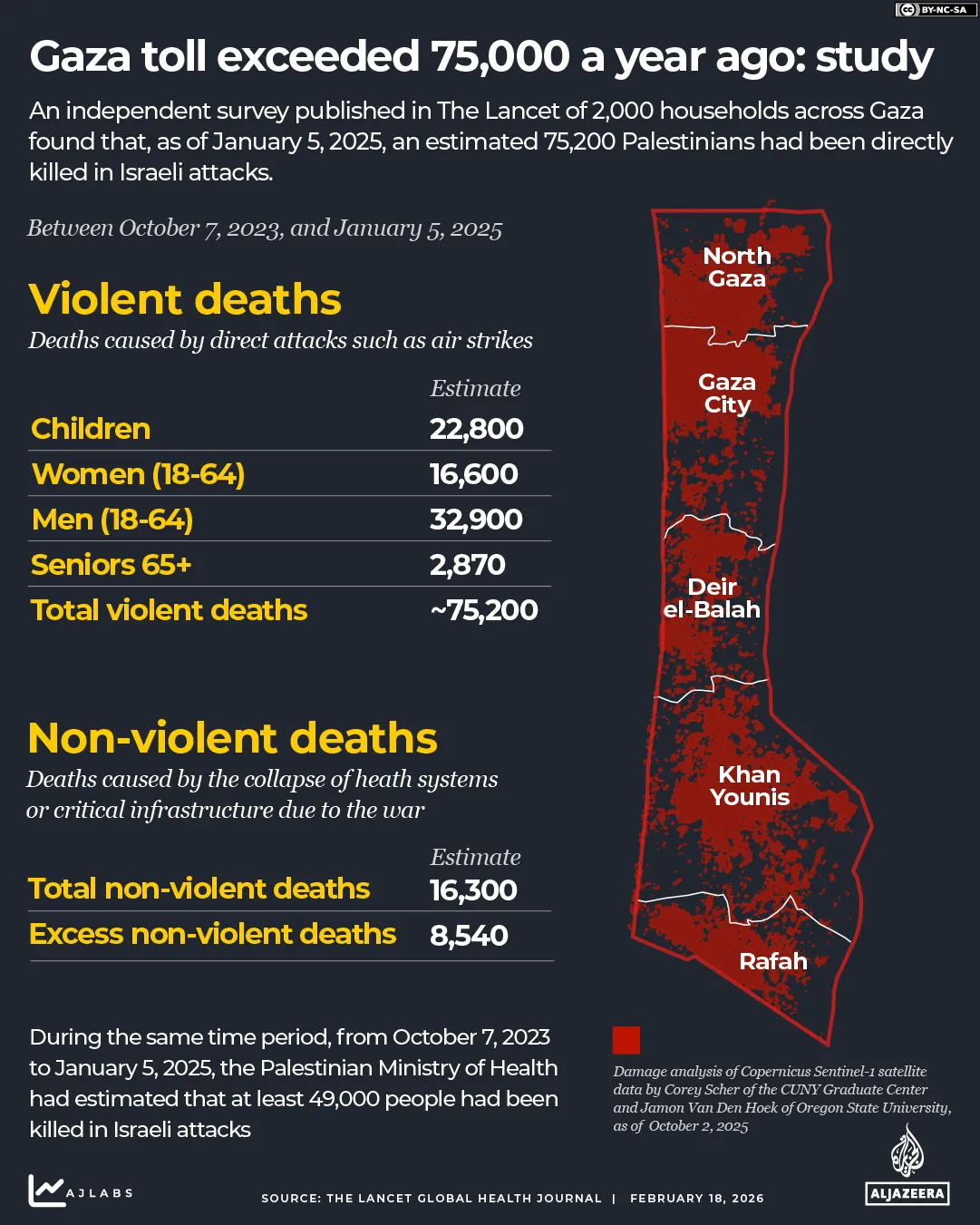
The Gaza Mortality Survey (GMS), a population-representative household study published in The Lancet Global Health, estimated 75,200 “violent deaths” between October 7, 2023 and January 5, 2025. This figure represents approximately 3.4 percent of Gaza’s pre-conflict 2.2 million population and sits 34.7 percent higher than the 49,090 “violent deaths” reported by the MoH for the same period.
The Gaza Health Ministry estimates that as of January 27 this year, at least 71,662 people have been killed since the start of the war. Of those, 488 people have been killed since the declaration of a ceasefire in the Gaza Strip on October 10, 2025.
Israel has consistently questioned the ministry’s figures, but an Israeli army official told journalists in the country in January that the army accepted that about 70,000 people had been killed in Gaza during the war.
Despite the higher figure, researchers noted that the demographic composition of casualties – where women, children, and the elderly comprise 56.2 percent of those killed – remains remarkably consistent with official Palestinian reporting.
(Al Jazeera)
Scientific validation of the toll
The GMS, which interviewed 2,000 households representing 9,729 individuals, provides a rigorous empirical foundation for a death toll.
Michael Spagat, a professor of economics at Royal Holloway University of London and the study’s lead author, found that while MoH reporting remains reliable, it is inherently conservative due to the collapse of the very infrastructure required to document death.
Notably, this research advances upon findings published in The Lancet in January 2025, which used statistical “capture-recapture” modelling to estimate 64,260 deaths during the war’s first nine months.
While that earlier study relied on probability to flag undercounts, this report shifts from mathematical estimation to empirical verification through direct household interviews. It extends the timeline through January 2025, confirming a violent toll exceeding 75,000 and quantifying, for the first time, the burden of “non-violent excess mortality”.
According to a separate commentary in the same publication, the systematic destruction of hospitals and administrative centres has created a “central paradox” where the more devastating the harm to the health system, the more difficult it becomes to analyse the total death toll.
Verification is further hindered by thousands of bodies still buried under rubble or mutilated beyond recognition. Beyond direct violence, the survey estimated 16,300 “non-violent deaths”, including 8,540 “excess” deaths caused directly by the deterioration of living conditions and the blockade-induced collapse of the medical sector.
Researchers highlighted that the MoH figures appear to be conservative and reliable, dispelling misinformation campaigns aimed at discrediting Palestinian casualty data. “The validation of MoH reporting through multiple independent methodologies supports the reliability of its administrative casualty recording systems even under extreme conditions,” the study concluded.
A decade of reconstructive backlogs
While the death toll continues to mount, survivors face an unprecedented burden of complex injury that Gaza’s decimated healthcare system is no longer equipped to manage. A predictive, multi-source model published in eClinicalMedicine quantified 116,020 cumulative injuries as of April 30, 2025.
The study, led by researchers from Duke University and Gaza’s al-Shifa Hospital, estimated that between 29,000 and 46,000 of these injuries require complex reconstructive surgery. More than 80 percent of these injuries resulted from explosions, primarily air attacks and shelling in densely populated urban zones.
The scale of the backlog is staggering. Ash Patel, a surgeon and co-author of the study, noted that even if surgical capacity were miraculously restored to pre-war levels, it would take approximately another decade to work through the estimated backlog of predicted reconstructive cases. Before the escalation, Gaza had only eight board-certified plastic and reconstructive surgeons for a population exceeding 2.2 million people.
The collapse of the health system
The disparity between reconstructive need and capacity is exacerbated by what researchers describe as the “systematic destruction” of medical infrastructure. By May 2025, only 12 of Gaza’s 36 hospitals remained capable of providing care beyond basic emergency triage, with approximately 2,000 hospital beds available for the entire population, down from more than 3,000 beds before the war.
“There is little to no reconstructive surgery capacity left within Gaza,” the research concluded, warning that specialised expertise like microsurgery is almost absent. The clinical challenge is further compounded by Israel’s use of incendiary weapons, which produce severe burns alongside blast-related fractures.
The long-term effect of these injuries is often irreversible. Without prompt medical treatment, patients face high risks of wound infection, sepsis, and permanent disability. The data indicate that tens of thousands of Palestinians will remain with surgically addressable disabilities for life unless there is a huge international increase in reconstructive capacity and aid.
The ‘grey zone’ of mortality
Writing in The Lancet Global Health, authors Belal Aldabbour and Bilal Irfan observed a growing “grey zone” in mortality where the distinction between direct and indirect death becomes blurred. Patients who die of sepsis months after a blast, or from renal failure after a crushing injury because they cannot access clean water or surgery, occupy a space that risks understating the true lethality of military attacks.
Conditions have only deteriorated since the data collection periods. By late 2025, forced evacuations covered more than 80 percent of Gaza’s area, with northern Gaza and Rafah governorates facing full razing by Israeli forces. Famine was declared in northern Gaza in August 2025, further reducing the physiological reserve of injured survivors and complicating any surgical recovery.
This series of independent studies serves as an urgent call for accountability and an immediate cessation of hostilities. “The healthcare infrastructure in Gaza is being repeatedly decimated by attacks despite protection by international humanitarian law,” researchers stated. They underscored that the only way to prevent the reconstructive burden from growing further is an immediate end to attacks against civilians and vital infrastructure.
Gezani is forecast to return to cyclone status when it strikes southern Mozambique on Friday evening.
Nearly 40 people have been killed and more than 12,000 others displaced after Cyclone Gezani slammed into Madagascar’s second-largest city earlier this week, as Mozambique braced for the storm’s arrival.
Updating its tolls as assessments progressed, Madagascar’s National Office for Risk and Disaster Management (BNGRC) said on Thursday it had recorded 38 deaths, while six people remained missing and at least 374 were injured.
Recommended Stories
list of 3 itemsend of list
Gezani made landfall on Tuesday at the Indian Ocean island nation Madagascar’s eastern coastal city, Toamasina, bringing winds that reached 250km/h (155mph).
Madagascar’s new leader, Colonel Michael Randrianirina, has declared a national disaster and called for “international solidarity”, saying the cyclone had “ravaged up to 75 percent of Toamasina and surrounds”.
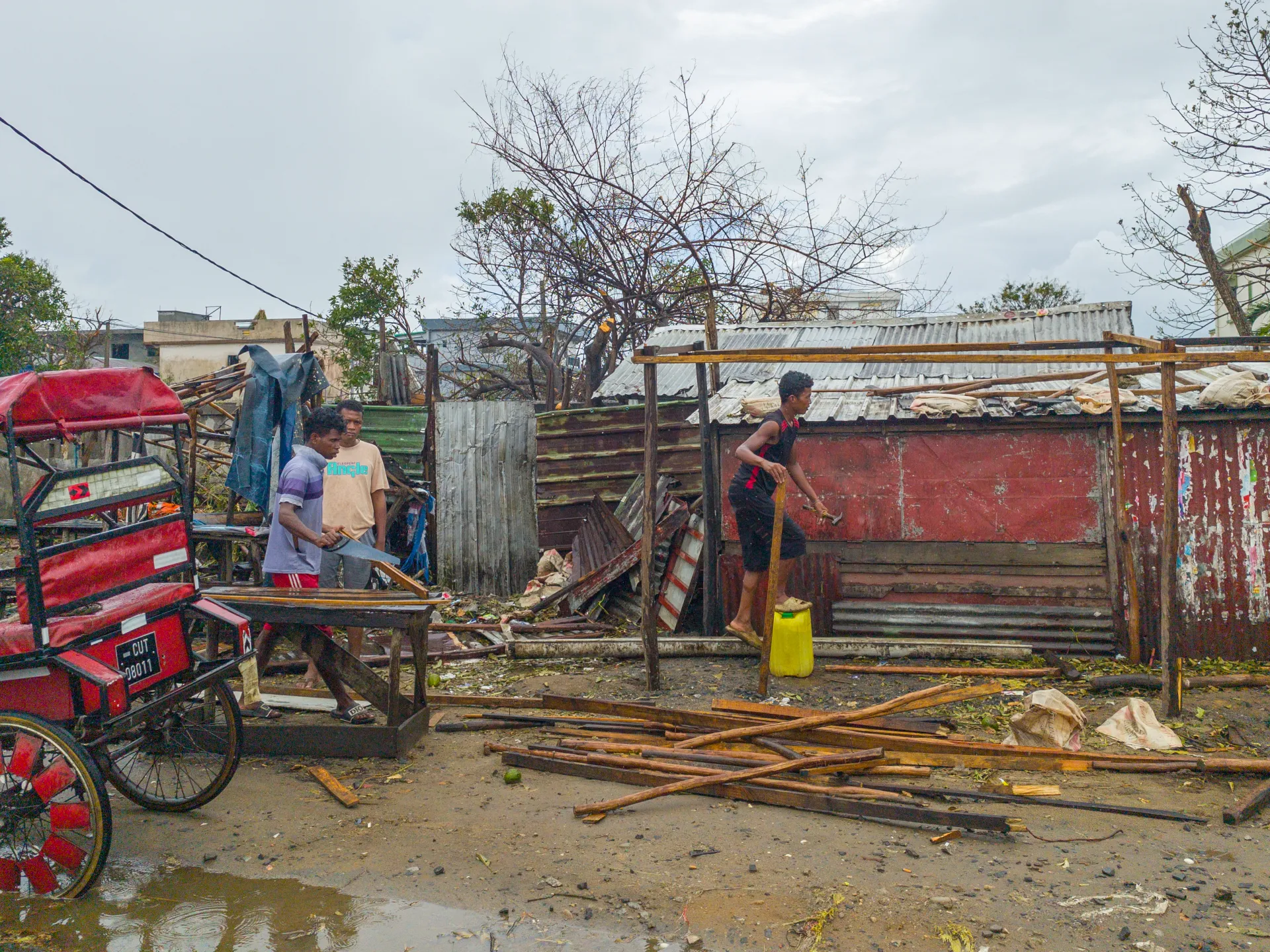
Images from the AFP news agency showed the battered city of 500,000 people littered with trees felled by strong winds and roofs blown off buildings.
Residents dug through piles of debris, planks and corrugated metal to repair their makeshift homes.
More than 18,000 homes were destroyed in the cyclone, according to the BNGRC, with at least 50,000 damaged or flooded. Authorities say many of the deaths were caused by building collapses, as many give inadequate shelter from strong storms.
The main road linking the city to the capital, Antananarivo, was cut off in several places, “blocking humanitarian convoys”, it said, while telecommunications were unstable.
The storm also caused major destruction in the Atsinanana region surrounding Toamasina, the disaster authority said, adding that assessments were still under way.
France announced the dispatch of food aid and rescue teams from its Reunion Island, about 1,000km (600 miles) away.
Thousands of people had been forced to leave their homes, said the United Nations’s International Organization for Migration (IOM), describing “widespread destruction and disruption”.
The cyclone’s landfall was likely one of the strongest recorded in the region during the satellite era, rivalling Geralda in February 1994, it said. That storm killed at least 200 people and affected half a million more.
Gezani weakened after landfall but continued to sweep across the island as a tropical storm until late on Wednesday.
It was forecast to return to cyclone status as it reaches the Mozambique Channel, according to the Regional Specialized Meteorological Centre La Reunion (CMRS), and could from Friday evening strike southern Mozambique.
Mozambican authorities issued warnings on Thursday about the approaching storm, saying it could cause violent winds and rough seas of 10-metre waves and urging people to leave the area of expected impact.
Both Madagascar and Mozambique are vulnerable to destructive storms that blow in off the Indian Ocean. Just last month, the northwestern part of Madagascar was hit by Cyclone Fytia, killing at least 14 people.
Mozambique has already faced devastating flooding from seasonal rainfall, with nearly 140 lives lost since October 1, according to the country’s National Disasters Management Institute.
Twisted Sister has canceled all of its 50th anniversary performances following the departure of lead singer Dee Snider because of “a series of health challenges.”
In a statement posted Thursday on Instagram, the heavy metal band said all scheduled shows beginning April 25 in São Paulo and through the summer have been canceled “due to the sudden and unexpected resignation” of Snider. The “I Wanna Rock” singer is no longer able to perform in the way that he used to because of multiple heath issues.
“I don’t know of any other way to rock,” Snider said in a statement accompanying the band’s announcement. “The idea of slowing down is unacceptable to me. I’d rather walk away than be a shadow of my former self.”
“The future of Twisted Sister will be determined in the next several weeks,” the band’s statement read.
The separate statement regarding Snider’s health explained that a “lifetime of legendarily aggressive performing has taken its toll on Dee Snider’s body and soul.”
Also posted to the “We’re Not Gonna Take It” singer’s Instagram account, the statement said that Snider “has had several surgeries over the years” to help manage his degenerative arthritis. His condition meant he had only been able to “perform a few songs at a time in pain.”
“Adding insult to injury, Dee has recently found out the level of intensity he has dedicated to his life’s work has taken its toll on his heart as well,” the statement continued. “He can no longer push the boundaries of rock ‘n’ roll fury like he has done for decades.”
A record fiscal quarter for Walt Disney Co.’s theme parks division was dampened slightly by a streaming aquisition and a protracted fight with YouTube, the Burbank media and entertainment giant reported Monday.
Disney recorded overall revenue of about $26 billion in the three-month period that ended Dec. 27, up 5% compared to the previous year. Disney’s income before income taxes totaled nearly $3.7 billion, a 1% jump from the same time period last year. Earnings per share were $1.34 for the quarter, down from $1.40.
Disney Chief Executive Bob Iger said in a statement that he was “pleased” with the company’s start to the fiscal year and nodded at the transition ahead to a new CEO.
“As we continue to manage our company for the future, I am incredibly proud of all that we’ve accomplished over the past three years,” he said.
It was a big quarter for Disney’s experiences division, which includes its theme parks, cruise line and Aulani resort and spa in Hawaii.
The sector reported $10 billion in revenue, aided by a 1% bump in attendance at its domestic theme parks and higher guest spending. The launch of the new Disney Destiny cruise ship in November also helped boost operating income to $3.3 billion, a 6% boost compared to the previous year.
Disney’s box office success with billion-dollar hits like “Zootopia 2” and “Avatar: Fire and Ash” helped propel revenue for its entertainment division by 7% to $11.6 billion. But costs related to its acquisition of a majority stake in FuboTV, as well as higher marketing costs in theatrical distribution and streaming services affected the sector’s operating income, which declined 35% to $1.1 billion.
The dip in operating income from the entertainment sector took a toll on the company’s total segment operating income, which was down 9% to $4.6 billion. That was also partly due to Disney’s contract dispute last fall with YouTube TV, which lasted for nearly 15 days and resulted in a blackout of Disney channels.
The temporary suspension of Disney channels on YouTube TV took a $110 million toll on operating income within Disney’s sports division, which was down 23% to $191 million. Sports revenue for the quarter totaled $4.9 billion, up 1% compared to the previous year.
The latest victim succumbing to injuries was an 18-year-old Swiss national.
Published On 1 Feb 20261 Feb 2026
Share
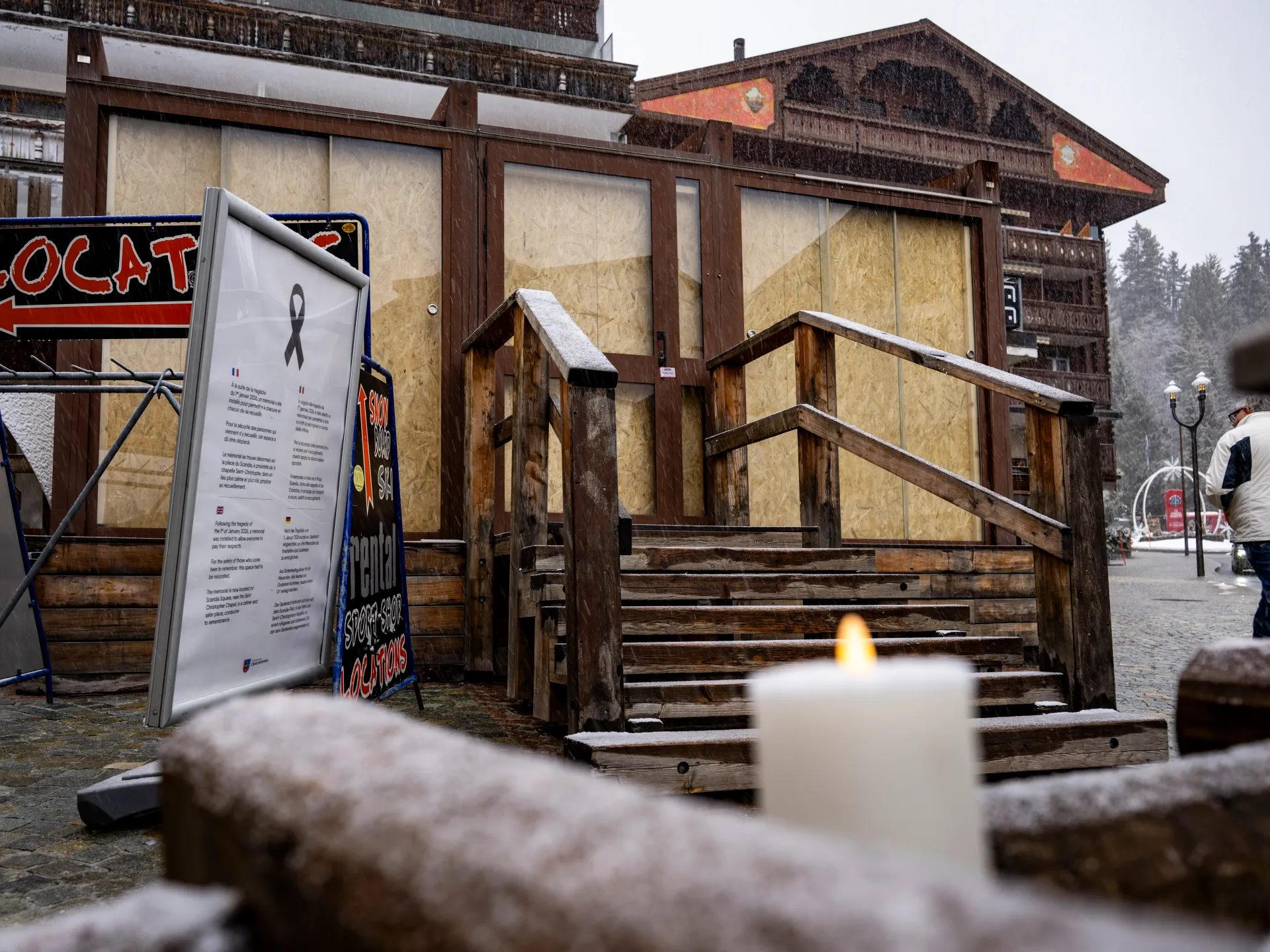
A teenager injured in the fire that engulfed a Swiss Alpine bar during New Year celebrations has died in hospital, according to Swiss authorities, increasing the death toll of one of the worst disasters in the country’s modern history to 41.
Saturday’s death was announced a month after the inferno at the ski resort of Crans-Montana. Another 115 were injured, most of whom remain in various hospitals.
Recommended Stories
list of 3 itemsend of list
“An 18-year-old Swiss national died at a hospital in Zurich on January 31,” the Wallis canton’s public prosecutor Beatrice Pilloud said in a brief statement.
“The death toll from the fire at Le Constellation bar on January 1, 2026 has now risen to 41.”
Pilloud said no further information would be released at this stage by her office, which is investigating the incident.
Those killed in the disaster were aged 14 to 39, but the majority were teenagers. Only four were aged over 24.
Among the dead are 23 Swiss nationals, including one French-Swiss dual national, and 18 foreigners.
Public prosecutors believe the fire started when revellers raised champagne bottles with sparklers attached too close to sound insulation foam on the ceiling of the bar’s basement.
Authorities are looking into whether the foam conformed to regulations and whether the candles were permitted for use in the bar. They say fire safety inspections had not been carried out since 2019.
Swiss prosecutors have opened a criminal investigation into the owners – French couple Jacques and Jessica Moretti – on suspicion of negligent homicide, negligent bodily harm and causing a fire by negligence.
The court of compulsory measures in the southwestern Valais region on January 12 ordered three months of pretrial detention for Jacques Moretti, but on January 23 ordered his release on bail.
The Crans-Montana municipality’s current head of public safety and a former Crans-Montana fire safety officer are also under criminal investigation.
Following the fire, seriously wounded patients were airlifted to various hospitals and specialist burns units throughout Switzerland and four other European countries.
Switzerland’s Federal Office for Civil Protection told the AFP news agency on Friday that at its last count, as of Monday, 44 patients were being treated abroad.
The Wallis health ministry told AFP that 37 patients were still in Swiss hospitals, as of Monday.
The picture is constantly changing, with patients moving between hospitals for different stages of their treatment, and some patients being readmitted. Some remain in intensive care.
The fire has tested relations with neighbouring Italy, which lost nationals in the blaze and has protested the release on bail of the bar’s owner.
Swiss authorities earlier this week said they would grant the Rome Public Prosecutor’s Office access to evidence gathered.