tied

Bolivia alleges fuel sabotage tied to international criminal network

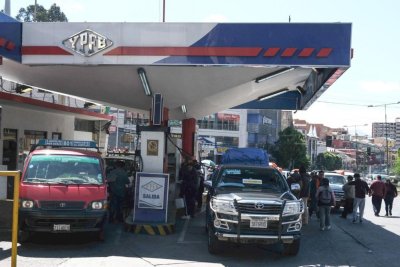
Bilivan consumers have felt the impact of contaminated gasoline. More than 10,000 vehicle owners, including long-distance transport operators and private drivers, have reported severe engine damage. File Photo by Luis Gandarilas/EPA

April 1 (UPI) — Bolivia’s government, led by President Rodrigo Paz, said it has uncovered an international criminal network responsible for sabotaging and adulterating imported fuel shipments that entered the country over the past five months.

Interior Minister Marco Antonio Oviedo told a news conference Tuesday that at least 150 million liters of gasoline and diesel were tampered with, citing an official investigation that identified a scheme involving fuel theft and contamination with water and oil in Chilean territory.

Authorities said the operation targeted tanker trucks transporting fuel to Bolivia, particularly in northern Chilean cities. In those locations, part of the fuel was allegedly siphoned off and replaced with a mixture of water and oil, according to local broadcaster Unitel.

President Paz said the adulteration began around October.

Investigators believe the network operated mainly in Chile, with additional links and operational hubs in Paraguay and Argentina. The direct economic loss to the Bolivian state is estimated at $150 million, excluding indirect costs linked to transport disruptions.

Consumers also have felt the impact. More than 10,000 vehicle owners, including long-distance transport operators and private drivers, have reported severe engine damage.

“We are facing an attack against the assets of Bolivian families,” Paz said, adding that the government will pursue legal mechanisms to compensate those affected, according to local newspaper El Deber.

Bolivia’s landlocked status makes transporting fuel from Chile critical to its energy supply chain. The country relies on Chilean ports such as Arica, Iquique and Mejillones to receive international shipments of crude oil and refined products.

After a virtual meeting Tuesday, Paz and Chilean President José Antonio Kast agreed on a joint roadmap to dismantle the transnational organized crime network behind the fuel adulteration, according to Bolivia’s state-run broadcaster BTV.

As an immediate response, Bolivia announced tighter controls at facilities operated by state energy company Yacimientos Petrolíferos Fiscales Bolivianos, known as YPFB, and the National Hydrocarbons Agency. Authorities will implement mandatory laboratory testing at production sites and border checkpoints.

Civil society groups have called for accountability as the investigation continues, urging authorities to prosecute those responsible abroad and to address potential internal failures that allowed the sabotage to go undetected for months.

The crisis comes as Bolivia faces a severe fuel supply shortage. After a structural decline in domestic hydrocarbon production, which fell about 44% between 2014 and 2024, the country shifted from a net exporter to a heavily import-dependent market. Bolivia now imports about 90% of the diesel and 50% of the gasoline it consumes.

The situation has worsened since 2023 due to a shortage of foreign currency, particularly U.S. dollars, complicating payments to international suppliers and contributing to intermittent shortages and partial disruptions in transport and productive sectors.
Source link

Senegal and Morocco tied by religion and trade but divided by AFCON fallout | Africa Cup of Nations News

When governing body offficials the Africa Cup of Nations title to Morocco, overturning Senegal’s victory two months after the chaotic final, football fans were stunned.

The impact of the decision could spread beyond sport and weaken the bond between the nations.

Recommended Stories

list of 4 itemsend of list

While Moroccan fans took to the streets to celebrate their team’s belated success, the decision by the Confederation of African Football (CAF) was met with disbelief in Senegal, with fans and authorities calling the decision “unjust”.

Senegal’s government on Wednesday said it will pursue “all appropriate legal avenues” to overturn the decision and called for an international investigation into “suspected corruption” within African football’s governing body.

The Senegal Football Federation (FSF) then announced on Thursday that it had instructed lawyers, apparently carrying through its threat to take the matter to the Court of Arbitration for Sport (CAS). Such a move could lead to a yearlong legal battle before a ruling.

CAF’s appeals board on Tuesday ruled that Senegal forfeited the final by leaving the field of play without the referee’s authorisation, and it awarded Morocco a default 3-0 win.

The game was delayed for 14 minutes as most of the Senegalese players and staff returned to their dressing room, while Senegal fans battled stewards behind one of the goals in protest against a controversial penalty call for Morocco after Senegal had a goal ruled out.

The players returned, Morocco missed the penalty, and Senegal won the match 1-0 in extra time.

What are the bonds that tie Morocco and Senegal?

Morocco and Senegal have long shared close ties built on religion, trade and culture. Tijaniyyah, a Sufi Muslim order, is widely followed in both countries. Moroccan banks and companies heavily invest in Senegal’s finance and agriculture sectors. Cultural exchanges include student programs, migration and joint festivals.

But the tensions surrounding the final and CAF’s appeals court decision to overturn Senegal’s victory have put a strain on the relationship between the two countries.

Last month, 18 Senegal fans who were arrested on charges of hooliganism at the final were given prison terms of up to a year by a Moroccan court. The Senegalese government has expressed solidarity with the Senegalese supporters.

Seydina Issa Laye Diop, president of the Senegalese national team’s fan group called “12th Gainde”, told The Associated Press on Thursday that the incidents should not damage the relationship between Senegal and Morocco.

“However, there are limits: if this continues, it could somewhat affect the pride of the Senegalese people,” Diop said. “If the goal is to preserve friendship, then it must be nurtured. Small gestures can have a big impact. These are things we can move past, especially since, during the trial, no solid argument has justified the continued detention of these supporters.”

Mariama Ndeye, a student in Senegal’s capital Dakar, said the decision has negatively affected her view of Moroccans.

“When everything goes well, they call us their brothers. But when things don’t go their way, they start being nasty,” Ndeye said.

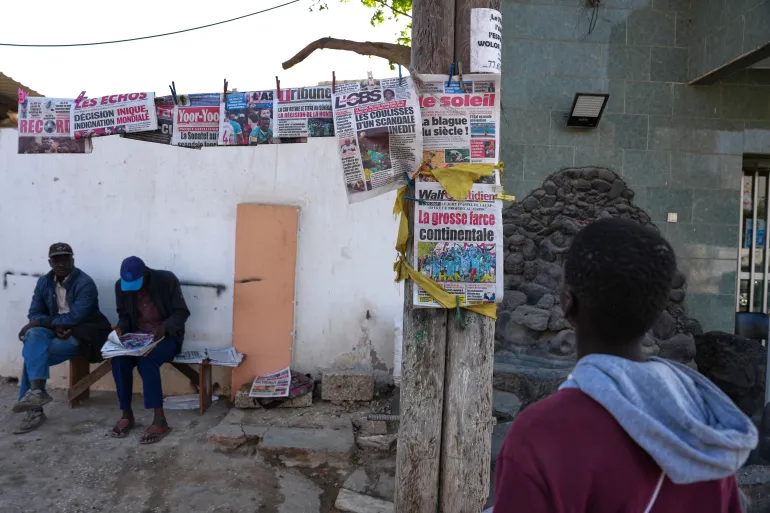
People read newspapers reporting on the Confederation of African Football decision stripping the Senegal national football team of their Africa Cup of Nations title and awarding it to Morocco national football team in Dakar, Senegal
The newspapers reporting the fallout from CAF’s AFCON decision are seen on display in Dakar, Senegal [Misper Apawu/AP]

Politics and sport are rarely separated as Senegal and Morocco find out

On Wednesday, Morocco’s embassy in Dakar called on Moroccans in Senegal to “demonstrate restraint, vigilance, and a sense of responsibility.”

“It is important to recall that, in all circumstances, it is only a match, the outcome of which should never justify any form of escalation or excessive remarks between brotherly peoples,” the embassy said.

While the dispute has remained centred around the football match, bad feelings have spread more generally.

In Casablanca, home appliances business owner Ismail Fnani said he felt like other African countries were rooting against Morocco during the final.

“Honestly, my views toward Senegalese and sub-Saharan Africans changed after this,” he said. “We used to feel sympathy and help them because they were migrants who had struggled to get here. Where there was once sympathy and compassion, now I will treat them as they have treated us.”

Mohamed el-Arabi, who works in a grocery shop in Casablanca, said he did not celebrate the decision awarding Morocco the title.

“We would have preferred it to stay with Senegal because it doesn’t feel right otherwise,” El Arabi said.

“People here have started hating Senegalese. They no longer provide them with help. We used to be like brothers, especially since they are Muslims like us, but that is no longer the case,” he added.

The Senegalese government’s allegation of “suspected corruption” at CAF followed anger at perceived favouritism towards Morocco, which is a 2030 World Cup co-host and has invested heavily to become a football superpower.

On Wednesday, CAF President Patrice Motsepe defended the body against perceptions of favouritism towards Morocco.

“Not a single country in Africa will be treated in a manner that is more preferential, or more advantageous, or more favourable than any other country on the African continent,” Motsepe said in a video published on the CAF website.

Source link

Lula, Flávio Bolsonaro tied in Brazil presidential runoff poll

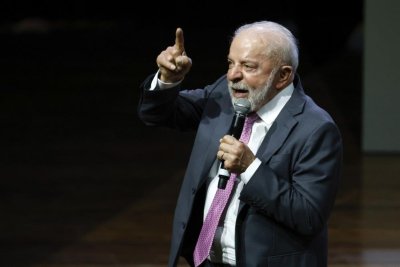
Brazilian President Luiz Inácio Lula da Silva (pictured) and right-wing Sen. Flávio Bolsonaro are each polling 41% in a potential runoff election. Photo by Sebastiao Moreira/EPA

March 12 (UPI) — Brazilian President Luiz Inácio Lula da Silva and right-wing Sen. Flávio Bolsonaro are tied for the first time for a potential runoff after the Oct. 4 presidential election, according to a poll released Wednesday. A runoff would be Oct. 25.

The survey found each candidate with 41% support in a hypothetical second round.

Bolsonaro, a member of the Liberal Party and son of former President Jair Bolsonaro, leads among voters who identify as independent, a shift that could give him an edge.

Among independents, Bolsonaro gained 6 percentage points and would lead Lula 32% to 27% in a runoff scenario. Another 36% said they would not vote and 5% were undecided.

The gap between the two candidates has narrowed steadily, from 10 points in December to seven in January, five in February and zero in March, according to the survey conducted by polling firm Quaest and commissioned by Genial Investimentos.

Similar trends have appeared in other recent polls. A Datafolha survey published Saturday showed Lula with 46% support compared with 43% for Bolsonaro.

Quaest tested first- and second-round scenarios with eight potential candidates. In first-round simulations, Lula leads in two scenarios and is statistically tied with Bolsonaro in five others. Lula’s support ranges between 36% and 39%, while Bolsonaro’s support ranges between 30% and 35%.

Felipe Nunes, Quaest’s director, said Bolsonaro’s gradual rise began after his father publicly named him as a potential candidate in December.

“Flávio has managed to consolidate Bolsonaro’s electorate. He has grown among right-wing voters and improved his performance among independent voters,” Nunes said, according to news website O Globo.

The poll also showed worsening public assessments of the government and the economy.

Both Lula and Bolsonaro face high rejection rates, with 56% of respondents saying they would not vote for Lula and 55% saying the same about Bolsonaro.

“The shift over time is striking. In December, Lula had much greater potential and lower rejection. Now, both have similar levels,” Nunes said.

The survey found 48% of Brazilians believe the economy has worsened over the past 12 months, while 24% say it has improved. In February, negative perceptions stood at 43%.

Source link