terror

Senate Democrat challenges Obama on killing American terror suspects

This post has been corrected. See the note at the bottom for details

A Democrat on the Senate Intelligence Committee says it is “unacceptable” that the Obama administration is refusing to provide Congress with the secret legal opinions cited to justify killing American citizens during counterterrorism operations.

Sen. Ron Wyden, an Oregon Democrat who has pushed against the notion of classified legal opinions, expressed his concerns in a letter to Atty. Gen. Eric H. Holder Jr. on Wednesday.

Previously, Wyden has complained about the refusal of the Justice Department to make public secret interpretations of domestic-surveillance law. On Wednesday, the senator said he wanted to know just how much authority President Obama claims when it comes to the matter of killing American terrorism suspects, but that his request, made last April, to see the classified legal opinions exploring that topic has been rebuffed.

“How much evidence does the president need to decide that a particular American is part of a terrorist group?” Wyden wrote. “Does the president have to provide individual Americans with an opportunity to surrender before using lethal force against them? Is the president’s authority to kill Americans based on authorization from Congress or his own authority as commander-in-chief? Can the president order intelligence agencies to kill an American who is inside the United States?”

Sen. Patrick J. Leahy, (D-Vt.), chairman of the Judiciary Committee, also has asked for copies of any classified legal opinions dealing with killing American citizens — but has not been provided any, his office said. At a Nov. 8, 2011, congressional hearing, Holder told Leahy that he could not “address whether or not there is an opinion in this area.”

For the executive branch to claim that intelligence agencies have the authority to knowingly kill American citizens while refusing to provide Congress with the legal opinions explaining its reasoning “represents an indefensible assertion of executive prerogative, and I expected better from the Obama Administration,” Wyden wrote to Holder.

A Justice Department official said the department is reviewing Wyden’s letter and will respond later.

“It would be entirely lawful for the United States to target high-level leaders of enemy forces, regardless of their nationality, who are plotting to kill Americans both under the authority provided by Congress in its use of military force in the armed conflict with Al Qaeda, the Taliban and associated forces as well as established international law that recognizes our right of self-defense,” the official said.

Last month, officials said Holder would be making a speech in the coming weeks laying out the legal justification for lethal strikes against Americans, such as the September CIA drone strike in Yemen that killed Anwar Awlaki, a U.S.-born citizen accused by U.S. officials of helping plan terrorist attacks against American targets. Wyden said he welcomed that.

U.S. officials have said that the CIA goes through extra legal steps when targeting a U.S. citizen as part of its drone strike program.

In early 2010, then-Director of National Intelligence Dennis Blair told the House Intelligence Committee that the intelligence community “take[s] direct action against terrorists” and added that “if we think that direct action will involve killing an American, we get specific permission to do that.”

Wyden said he is not suggesting “that the president has no authority to act in this area. If American citizens choose to take up arms against the United States during times of war, there can undoubtedly be some circumstances under which the president has the authority to use lethal force against those Americans. For example, there is no question that President Lincoln had the authority to order Union troops to take military action against Confederate forces during the Civil War.”

However, he said, the question becomes thornier when the U.S. is at war around the world with terrorists who don’t wear uniforms. “And it is critically important for the public’s elected representatives to ensure that these questions are asked and answered in a manner consistent with American laws and American values,” Wyden wrote.

Members of Congress need to understand how or whether the executive branch has attempted to answer these questions so that they can decide for themselves whether this authority has been properly defined, Wyden wrote.

“Americans have a particular right to understand how the U.S. government interprets the statement in the Bill of Rights that no American shall ‘be deprived of life, liberty, or property, without due process of law,’” Wyden wrote. “The federal government’s official views about the president’s authority to kill specific Americans who have not necessarily been convicted of a crime are not a matter to be settled in secret by a small number of government lawyers.”

A Washington Post-ABC News poll released Wednesday found that 83% of respondents said they approve of the use of drone strikes against terrorist suspects overseas. Sixty-five percent in the poll, conducted by telephone Feb. 1-4, said that American citizens suspected of terrorism are legitimate targets. Democrats approved of the drone strikes on American citizens by a 58%-33% margin, and liberals approved of them, 55%-35%, according to the Post’s blog, the Plum Line.

[email protected]

[For the record, 9:41 a.m., Feb. 10: An earlier version of this post incorrectly reported that Anwar Awlaki, a U.S. citizen killed by a CIA drone strike last year in Yemen, was born in Yemen. He was born in New Mexico.]

Source link

US adds Venezuelan ‘cartel’ to terror list as military threat rises | News

Move offers potential cover as Trump eyes expanded operations against Venezuela’s Maduro.

The United States is set to designating Venezuela’s “Cartel de los Soles” a foreign “terrorist” organisation (FTO).

President Donald Trump’s administration will add the “cartel”, which it asserts is linked to Venezuelan President Nicolas Maduro, to the list on Monday.

Recommended Stories

list of 4 itemsend of list

However, the entity is not actually a cartel, but rather a common reference to military officers and officials involved in corruption and other illegal activities.

The move, which comes amid a huge military buildup in the Caribbean Sea near Venezuela by the US, could offer legal cover to potential direct military action.

Trump is reportedly mulling the next step in his campaign against the South American country. A strike on Venezuelan territory would constitute a major escalation of the months-long US operation in the region, which has seen more than 80 people killed in strikes on boats accused of trafficking drugs.

UN officials and scholars of international law have said that the strikes are in clear violation of US and international law and amount to extrajudicial executions.

Washington is poised to launch a new phase of operations in the coming days, unnamed US officials told the Reuters news agency.

The report said the exact timing and scope of the new operations, and whether Trump had made a final decision to act, was unclear.

A senior administration official said they would not rule anything out regarding Venezuela.

Two of the officials said covert operations would likely be the first part of a new action against Maduro, with options under consideration including an attempt to overthrow the longstanding Venezuelan leader.

Cartel de los Soles

Venezuelans began using the term Cartel de los Soles in the 1990s to refer to high-ranking military officers who had grown rich from drug-running.

As corruption later expanded nationwide, first under the late President Hugo Chavez and then Maduro, the use of the term loosely expanded to include police and government officials, as well as activities like illegal mining and fuel trafficking.

The “suns” in the name refer to the epaulettes affixed to the uniforms of high-ranking military officers.

The umbrella term was elevated to a reported drug-trafficking organisation allegedly led by Maduro in 2020, when the US Department of Justice in Trump’s first term announced the indictment of Venezuela’s leader and his inner circle on narcoterrorism and other charges.

Maduro, in power since 2013, contends that Trump seeks to topple him and that Venezuelan citizens and the military will resist any such attempt.

However, the US campaign and the fears of potential military action continue to raise the pressure on Caracas.

Six airlines cancelled their routes to Venezuela on Saturday after the US aviation regulator warned of dangers from “heightened military activity”.

Spain’s Iberia, Portugal’s TAP, Chile’s LATAM, Colombia’s Avianca and Brazil’s GOL suspended their flights to the country, said Marisela de Loaiza, president of the Venezuelan Airlines Association (ALAV).

Turkish Airlines said on Sunday it was also cancelling flights from November 24 to 28.

Source link

The Intersection Between Healthcare and Loyalty to Terror Groups in Nigeria

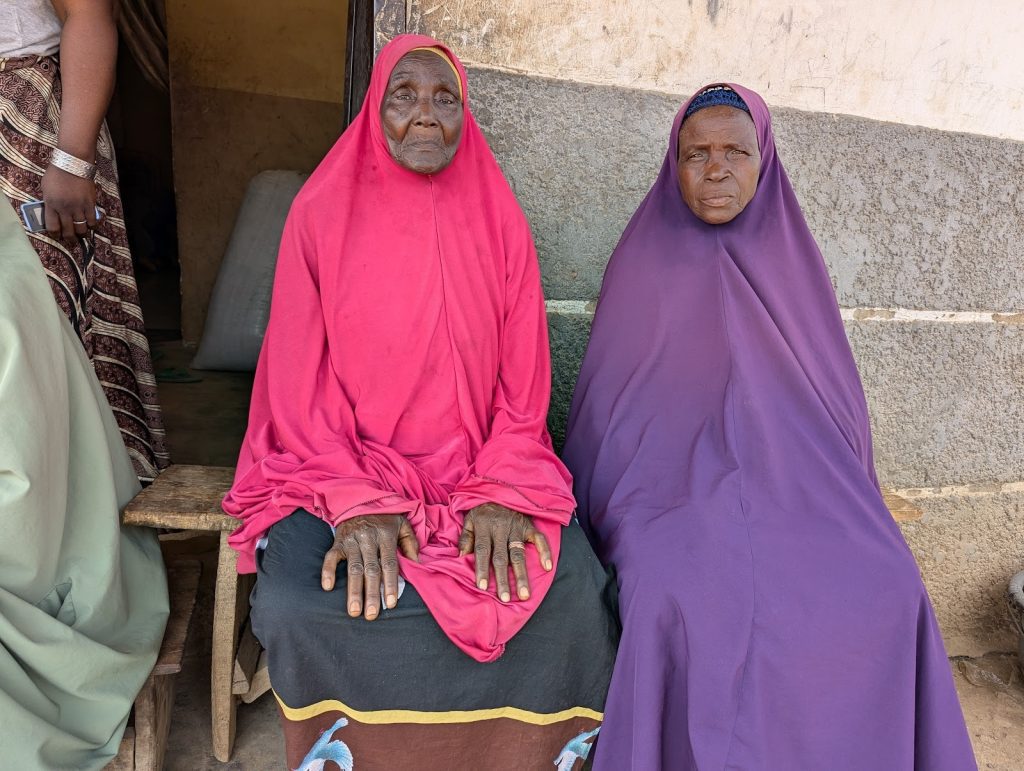
When Mariam* first started thinking of deserting Boko Haram’s settlement at Sambisa Forest, where she had been living for a decade, she was not entirely sure that it was the best idea. She still believed in the cause, for starters. But there was the matter of her body starting to fail her. 

Her husband had just died of HIV/AIDS, and she had unfortunately contracted the disease from him before he passed. Although the doctor in the forest tried to provide her with medication, it was not consistent. In addition, she had kids she feared infecting. Then, she started to hear that access to antiretroviral drugs was free in Maiduguri, the Borno State capital in northeastern Nigeria. So, she began to tinker with the idea, for the first time, of leaving the group behind. 

The group was all she had known for the past decade. She had even been prepared, at some point, to give her life for the cause by volunteering for a suicide bombing. She had been approved for it and had begun to undergo training and preparations when she realised she was pregnant. Her husband, previously supportive of what they collectively thought of as her noble martyrdom, then decided she could not blow herself up while carrying their child. She was heavily disappointed. That’s how far she was willing to go for the Boko Haram cause.

And so to leave it all behind seemed impossible. 

She had joined when the group first declared war on the Nigerian state over a decade ago, leaving state-controlled territories for the Sambisa Forest. They sought to establish what they believed to be an Islamic state, declaring formal education, democracy, and elections forbidden. Their campaign has killed over 35,000 people violently, displaced over two million others, and caused over 25,000 others to go missing. Mariam had been attending their sermons right from the early, non-violent days. 

Eventually, after nearly a decade, she left with her children in 2017. Since coming back to Maiduguri, she has had uninterrupted access to free medications for her condition, reducing her viral load and making her no longer infectious. And so, even though she considered the economic prospects and living conditions in Maiduguri to be worse than in Sambisa, she stayed because she could remain alive.

She keeps the truth of her condition from her children and everyone she knows. 

Earlier this year, however, the United States President Donald Trump announced the suspension of USAID, which was primarily responsible for the accessibility of antiretroviral drugs for people like Mariam. Without the USAID subsidy, the drugs are estimated to be unaffordably expensive for low-income earners like Mariam.

Word started to go around that the availability of the drugs would falter. When Mariam ran out of her six-month stash of medications, she returned to the Borno State Specialist Hospital to get a refill, as she has done for years now. There, she met a surprise that scared her. 

“They only gave me one small can of pills, not the usual two. They seemed to have changed the ratio. They didn’t say why, only that they had changed the ratio. The bottle will only last me three months,” she recounted.

Hands holding a plastic bag filled with pink pills on a woven mat background.
Mariam presents the last stash she received from the hospital. Photo: Hauwa Shaffii Nuhu/HumAngle.

It worried her. When she got home from the hospital, she poured the pills into a thin white plastic bag and hid it, as usual. That way, it is inconspicuous, and anyone who knew the kind of bottles the drugs came in would not be able to recognise hers. This is so that she would avoid stigma.

“Nobody knows I have HIV to date. Even my children. And they are HIV-free. I had them tested at the hospital. Even the eldest among them doesn’t know.”

Around the same time, NGO-run health facilities were also starting to shut down in many rural communities in Borno. For example, in Konduga, a primary healthcare centre run by Family Health International (FHI360) was shut down. The facility had been receiving hundreds of patients daily until its abrupt suspension, leaving many in need and others unemployed. 

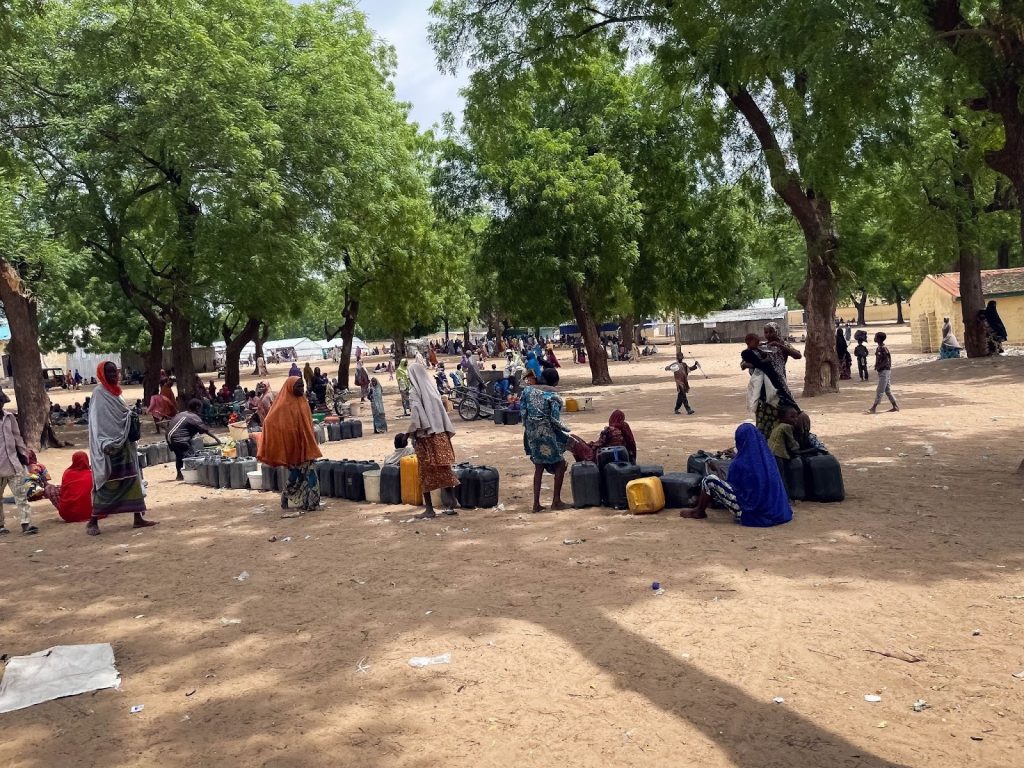
For Mariam, this has made her begin to consider going back to the terror group, especially after she lost everything during the tragic Maiduguri floods last year. She and her children barely escaped with their lives. The flood had swept through Maiduguri and neighbouring areas, affecting over one million people in total. Her daughter had initially been swept away until a neighbour dove into the waves and rescued her.

“It was a young man who came to help. I was at the verge of diving into the water myself when he came and said not to worry, that he would get her back, and he did. We could not salvage anything else from the flood. We were displaced to the Bakassi IDP camp.” 

When Mariam ran out of the three-month stash and went back to the hospital for a refill, she was only handed a one-month stash this time. The two times she has gone back for more refills after she had exhausted each, she only received one month’s stash, further scaring her.

Though she is no longer as committed to the Boko Haram ideology as she used to be, the realisation that she and her children’s lives are not safe has made her seriously reconsider the prospect of returning

A medical doctor working in Borno State, who pleaded anonymity, confirmed that the drugs had become difficult to access after the USAID suspension. “Patients who showed up at the hospitals were being told that the drugs were not available,” the doctor told HumAngle. “But if you knew your way around and gave some pharmacists some money, they would then give you the drugs, but keep in mind that the drugs are meant to be free. The situation has mildly improved.”

The availability of healthcare among terror groups is traceable to many sources. They are notorious for abducting healthcare workers and forcing them to work for them. But they also took medical training very seriously during the early days when the group first started to tactically come together over a decade ago, according to a former member of the group. 

Now, as many people are coming back to state-controlled territories, the rewards for recidivism have reportedly become higher, as the groups struggle to maintain their followers. Mariam hears these whispers from many of her associates.

“In addition to the drugs they were giving me in Sambisa, they would also give me a litre of honey and some black seed,” she said, adding that the honey and black seed were to help build her immune system.

In northwestern Nigeria, children who escaped or were rescued from terror groups have reported similar experiences. Some boys told HumAngle in an investigation that they joined the groups for things like food and healthcare. They said these were some of the incentives that made staying easy, and why they were not so keen on returning to state-controlled territories.

“I collected the last batch exactly a week ago today,” Mariam said of her access to the drugs. “The flow has never stopped. They always give me on schedule; it is just that I now only get one-month refills.” 

“The life over there is way better,” she said of Sambisa. “If I were there, I would have received a lot of support, especially with my husband dead. Here, who will help me? Everyone is focused on themselves. There is peace of mind there.”

When asked how there could be peace of mind there, with the threat of military bombardment ever present, she said the military would not harm women and children, and so she still would have been safe. “They will only ‘rescue’ us and bring us back to Borno… Even recently, I said to myself that life over there would be better for me. There were so many things weighing down on me at that time. It was even before the flood.”

On whether her children’s lives would be better in Maiduguri, she said it would only be so if her children had access to formal education here, which they don’t. Now, they spend all their time either at home with her or roaming the streets.

When we first spoke in June 2023, she had told me that her children were opposed to the Nigerian army and would throw rocks at them on the road, chanting war songs. When I asked her if things had improved now, she said yes.

“They don’t do that anymore,” she laughed. “They have forgotten. They don’t even want to hear anything related to Boko Haram anymore.”

If she could make an appeal for help to the government, it would be for three things. “Healthcare, school for my children, and a means of livelihood.”


This work was produced as a result of a grant provided by the Wits Centre for Journalism’s African Investigative Journalism Conference.

*Mariam is a pseudonym used to protect her anonymity. 

Source link

India has called the Delhi blast an ‘act of terror’: How will it respond? | Conflict

New Delhi, India – Indian Prime Minister Narendra Modi’s cabinet late Wednesday described the car explosion which jolted New Delhi earlier in the week as a “heinous terror incident, perpetrated by antinational forces”.

The Indian government’s words, two days after a slow-moving car blew up near the Red Fort, an iconic 17th-century monument in New Delhi, killing at least 13 people and wounding several, have since led to questions about how it might respond, raising concerns over the prospect of a new spike in regional tensions.

Earlier this year, in May, the Indian government had declared a new security doctrine: “Any act of terror will be treated as an act of war.”

That posture had come in the aftermath of an intense four-day air war between India and Pakistan, after India blamed Islamabad for an attack in Indian-administered Kashmir that killed 26 civilians.

Now, six months later, as India grapples with another attack – this time, in the heart of the national capital of the world’s most populous country – the Modi government has so far avoided blaming Pakistan.

Instead, say political analysts, New Delhi’s language suggests that it might be veering towards intensifying a crackdown on Kashmir, at a time when Islamophobia and anti-Kashmiri sentiments have skyrocketed across India in the aftermath of the car explosion.

red fort
Ambulances are kept on standby on a blood-spattered road at the blast site after an explosion near the Red Fort in the old quarters of Delhi on November 10, 2025. At least 13 people were killed and 19 injured when a car exploded in the heart of the Indian capital, New Delhi’s deputy fire chief told AFP [Sajjad Hussain/AFP]

A crackdown in Kashmir

Even before the blast in New Delhi, police teams from Indian-administered Kashmir had been carrying out raids across the national capital region, following a lead from Srinagar, which led to the seizure of a significant amount of explosives and arrests of nearly a dozen individuals.

Among the suspects are several Kashmiri doctors – including Umar Nabi, a junior doctor who is suspected of being the driver of the car that exploded – who were serving in hospitals in satellite towns outside New Delhi.

Since the explosion near the Red Fort, police in Indian-administered Kashmir have detained more than 650 people from across the Valley as they dig deeper into what sections of the Indian media are describing as a “white-collar terror module” that had gathered enough explosives for the biggest attack on India in decades, if members hadn’t been arrested.

Police teams have raided several locations, including the residences of members of banned sociopolitical outfits.

Indian forces on Thursday also demolished the home of Nabi, the alleged car driver. In recent years, Indian authorities have often demolished homes of individuals accused of crimes without any judicial order empowering them to do so, even though the Supreme Court has ordered an end to the practice. Rights groups have described the act of demolishing the homes of suspects as a form of collective punishment.

Students of medicine and practising doctors in Kashmir are also increasingly facing scrutiny – more than 50 have been questioned for hours, and some have had their devices seized for investigation.

“There is a sense of complete disbelief among all of us,” said a junior doctor at a government-run hospital in Srinagar, the capital of the federal territory of Indian-administered Kashmir.

The doctor requested anonymity to speak, fearing repercussions from the police.

The 34-year-old has seen conflict in Kashmir up close, treating injured protesters firsthand for weeks on end, during previous clashes with security forces. “But I never thought that we would be viewed with suspicion like this,” he said, adding that the explosion that killed 13 in New Delhi was “unfortunate and should be condemned”.

“It is unreal to us that a doctor can think of such an attack,” the doctor said. “But how does that malign our entire fraternity? If a professional defects and joins militants, does it mean that all professionals are terrorists?”

red fort
Security personnel check for evidence at the blast site following an explosion near the Red Fort in the old quarters of Delhi on November 11, 2025 [Arun Sankar/AFP]

‘Away from Pakistan, towards an enemy within’

India and Pakistan have fought three wars over Kashmir since the nations were partitioned in 1947 as the British left the subcontinent. Today, India, Pakistan and China all control parts of Kashmir. India claims all of it, and Pakistan seeks control of all of Kashmir except the parts held by China, its ally.

After the April attack in the resort town of Pahalgam in Indian-administered Kashmir, India had launched missiles deep inside Pakistan. Modi claimed that the attacks killed more than 100 “terrorists”. Pakistan insisted that civilians and soldiers, not armed fighters, were killed. Pakistan, which had rejected Indian accusations of a role in the April killings in Pahalgam, hit back.

Over four days, the nuclear-armed neighbours fired missiles and drones across their contested border, striking each other’s military bases.

When the Modi government agreed to a ceasefire on May 10, it faced domestic criticism from the opposition – and some sections of its own supporters – for not continuing with attacks on Pakistan. The government then said Operation Sindoor is “only on pause, not over”.

Six months later, though, New Delhi has been significantly more cautious about who to blame for the Delhi blast.

“There is a lot of due outrage this time, but there is no mention of Pakistan,” said Anuradha Bhasin, a veteran editor in Kashmir and author of a book, A Dismantled State: The Untold Story of Kashmir After Article 370, about how the region changed under the Hindu majoritarian Modi government. The Kashmir administration has banned her book in the region.

“This time, it is not about a crackdown on Pakistan,” she told Al Jazeera. “The public anger is being directed away from Pakistan, towards ‘an enemy within’.”

She said the Modi government appeared to be aware that finger-pointing at Pakistan “would create pressure from the public to take [military] action” against the neighbour.

Instead, she said, “public anger can be assuaged by creating any enemy.”

red fort
Gayatri Devi, mother of Pankaj Sahni, who died in a deadly explosion near the historic Red Fort in the old quarters of Delhi, reacts next to Sahni’s body outside his home before the funeral, in New Delhi, India, November 11, 2025 [Anushree Fadnavis/Reuters]

Analysts point to the Modi government’s use of the term “antinational forces” to describe the alleged perpetrators of the Delhi attack.

That’s a phrase the Modi government has previously used to describe academics, journalists and students who have criticised it, as well as other protesters and dissidents. Since Modi took office in 2014, India has continuously slid in multiple democracy indices for alleged persecution of minorities in the country and its crackdown on press freedom.

To Sumantra Bose, a political scientist whose work focuses on the intersection of nationalism and conflict in South Asia, the Indian cabinet resolution was significant in the way that it shied “away from naming and blaming Pakistan, which was a rather reflexive reaction for decades”.

After the fighting in May, the Indian government learned, the hard way, Bose said, that “there is no appetite and indeed no tolerance anywhere in the world for a military escalation in South Asia.”

Bose was referring to the lukewarm global support that India received after it bombed Pakistan without providing any public evidence of Islamabad’s links with the attackers in Pahalgam.

Instead, India was left disputing the repeated assertions of United States President Donald Trump that he had brokered the ceasefire between New Delhi and Islamabad, even as he hosted Pakistan’s army chief, praised him, and strengthened ties with India’s western neighbour. India has long held the position that all disputes with Pakistan must be resolved bilaterally, without intervention from any other country.

The contrast in New Delhi’s response to this week’s blast, so far, appears to have struck US State Secretary Marco Rubio, too.

Reacting to the Delhi blast, Rubio said “it clearly was a terrorist attack,” and “the Indians need to be commended. They’ve been very measured, cautious, and very professional on how they’re carrying out this investigation.”

India’s new security doctrine – that an act of terror is an act of war – “was a dangerous, slippery slope”, said Bose, who has also authored books on the conflict in Kashmir. His last work, Kashmir at the Crossroads: Inside a 21st-Century Conflict, published in 2021, is also banned in Kashmir.

The doctrine, he said, was aimed at pandering to Modi’s “domestic gallery” – a way of showing muscular strength, even at the risk of “serious military escalation” between India and Pakistan.

Now, by using terms like “white-collar terrorism”, analysts said Indian officials risked blurring the line between Kashmiri Muslims and armed rebels fighting Indian rule.

“The term doesn’t make sense to me, but it does put the needle of suspicion on young, educated Muslim professionals,” said Bose.

“The fact has been for decades that militants come from all sorts of social backgrounds in Kashmir – from rural farming families, working-class backgrounds, to educated professionals,” Bose argued. “If anything, it reflects the discontent that has been in the society across the groups.”

Bhasin, the editor from Kashmir, said the Indian government’s posture would lead to “adverse economic impact for Kashmiri Muslims and further ghettoisation, where they find it harder to get jobs or a place to rent”.

India
A supporter of India’s Bharatiya Janata Party (BJP) holds a placard during a rally expressing solidarity with the Indian armed forces, in Srinagar, on May 15, 2025, following a ceasefire between Pakistan and India [Tauseef Mustafa/AFP]

‘Everyone is so scared’

Kashmiris across India are already facing the brunt of hate and anger following the Delhi blast.

Since the bomb exploded on Monday in New Delhi, Indian social media platforms have been rife with rampant hate speech against Muslims.

Nasir Khuehami, the national convener of a Kashmiri student association, has spent four days fielding calls from Kashmiri Muslims.

“Across northern Indian states, Kashmiris are being asked to vacate their homes, there is active profiling going on, and everyone is so scared,” Khuehami told Al Jazeera, speaking from his home in Kashmir.

This is only the latest instance of this pattern playing out: An attack in Kashmir, or by a Kashmiri armed rebel, has often led to harassment and beating of Kashmiri Muslims – students, professionals, traders, or even labourers – living in India.

Khuehami said “to end this endless cycle of crises for Kashmiris” – where they are detained at home and abused outside – “the government needs to take confidence-building measures.”

Otherwise, Khuehami said, the Modi government was marginalising Kashmiris in India. By doing that, he said, India would be playing into the hands of the very country it accuses of wanting to grab Kashmir: Pakistan.

Source link

10 years after Paris terror attacks, stadium security guard says he’s ‘more victim than hero’

Salim Toorabally’s mental scars from the Paris terror attacks 10 years ago have not healed with time and the images of that night at Stade de France remain indelible.

The November 2015 attacks began at France’s national stadium and spread across the city in assaults that killed 132 people and injured more than 400. One person died and least 14 were injured outside Stade de France that night, but casualties there could have been far heavier without Toorabally’s vigilance.

It was Toorabally who stopped Bilal Hadfi — one of the three terrorist bombers who targeted the national stadium when France’s soccer team played Germany — from getting inside.

Toorabally was praised for his actions, by then-President François Hollande, by the Interior Ministry and also by the general public. Yet his own suffering, unrelenting since that night, went unnoticed.

“I was seen more as a hero than as a victim,” Toorabally told the Associated Press in a recent interview. “But this part of being a victim is equally inside me.”

Later on Thursday, France played Ukraine in a World Cup qualifier at the Parc des Princes stadium in Paris, where a commemoration was planned and Toorabally was invited by the French Football Federation.

“I will be there but with a heavy heart,” he said. “Ten years have passed like it was yesterday we were attacked.”

Stopping the bomber

Toorabally was positioned at Gate L as a stadium security agent.

Hadfi tried to enter but was stopped by Toorabally when he spotted him trying to tailgate another fan through the turnstile.

“A young man showed up. He was sticking close behind someone, moving forward without showing his ticket. So I said to him, ‘Sir, where are you going? Show me your ticket.’ But he just kept going, he wasn’t listening to me,” Toorabally told the AP. “So I put my arm out, put my arm in front of him so he couldn’t go inside, and then he said to me, ‘I have to get in, I have to get in.’ It made me suspicious.”

Toorabally kept an eye on the 20-year-old Hadfi, who was now standing back a few yards away.

“He positioned himself right in front of me, he was watching me work and I alerted [fellow security agents] over the radio: ‘Be careful at every gate, there’s a young man dressed in black with a young face, very childlike, who is trying to get in. Do not let him in,’” Toorabally recalled. ”He stood in front of me for about 10 minutes, watching me work, and that’s when I got really scared. I was worried he’d go back in, that I wouldn’t see him. I watched him intently, he stared at me intently and suddenly he disappeared in the crowd, he slipped away.”

Toorabally’s warning worked. Hadfi was denied entry elsewhere, before later detonating his explosive vest.

The explosions

There were two explosions close together during the first half of the match; the first ones around 9:20 p.m. near Gate D, and a third explosion approaching 10 p.m. close to a fast food outlet.

Toorabally vividly remembers them.

“I could feel the floor shaking,” he said. “There was a burning smell rising into the air, different to the smell of [smoke] flares.”

He also tended to a wounded man that night.

“I took charge of him, I lay the individual down. He had like these bolts [pieces of metal] lodged in his thigh,” said Toorabally, who still speaks to the man today. “I looked at my hands, there was blood. I didn’t have gloves on, and there were pieces of flesh in my hands.”

Keeping fans in the dark

Toorabally said he and other security agents were told not to inform spectators of the attack, to prevent a potential situation where 80,000 people tried leaving at the same time.

“The supporters inside couldn’t know the Stade de France had been attacked otherwise it would have caused enormous panic,” Toorabally explained. “At halftime some fans came up to us and asked, ‘What happened? Was there a gas explosion at the restaurants in front of the stadium?’ We didn’t answer them so as not to cause panic.”

After the game the stadium announcer told spectators which exit gates to use and many went home by train, including Toorabally.

Traumatic images

Five days after the attack he was called to a police station to help identify Hadfi as one of the bombers. Toorabally was given no forewarning of what he was about to see.

“They showed me a photo, his [Hadfi’s] head was separated from his body. The forensic police [officer] was holding his head,” Toorabally said. “I formally recognized him. It was indeed the man who had been in front of me, who had stood there, who had been alive and was now lifeless.”

Hadfi’s face remains imprinted on Toorabally’s mind.

“The image is very violent, someone’s head separated from his body. Then there’s the explosion, the odor of burning and my hand filled with human flesh. These images have stayed in my mind for 10 years.”

Toorabally‘s wage that night was 40 euros ($46). “I suffer from post-traumatic stress, it is very severe, very violent.”

Horrific memories can appear at any moment.

“I could be with you and talking with you and then all of sudden my mind goes back there,” Toorabally said. “This is something very, very difficult to deal with. It handicaps you.”

Talking helps

Toorabally talks to a psychiatrist and says it helps to tell people about what happened. But at the time of the attacks and in the months afterward he received no psychological support.

“That’s how traumatism sets in,” Toorabally said. “The proof being it stayed 10 years.”

He dealt with his mental anguish alone, having potentially saved hundreds of lives.

“Every time I go back to the Stade de France, I can’t help thinking about it,” Hollande told L’Équipe newspaper. “I realize what could have happened if an attack had taken place inside the stadium, or if panic had gripped the crowd.”

Former France midfielder Blaise Matuidi called Toorabally “more than a hero” and added “if the terrorists had entered, what would have happened? Just talking about it gives me chills.”

Pugmire writes for the Associated Press.

Source link

Michigan suspects charged in alleged ‘ISIS-inspired Halloween terror attack’

Nov. 3 (UPI) — The Justice Department announced Monday that “multiple suspects” have been charged in Michigan in an alleged Halloween plot to support the terror group ISIS in an “attack on American soil.”

Monday’s charges come three days after Federal Bureau of Investigation Director Kash Patel announced that the FBI had “stopped a potential terrorist attack in Michigan before it could unfold.”

“Thanks to swift action and coordination with our partners, a violent plot tied to international terrorism was disrupted,” he said Friday.

On Monday, Patel provided more details.

“Two Michigan men planned an ISIS-inspired Halloween terror attack near Detroit — stockpiling weapons, scouting targets and training at gun ranges,” Patel wrote in a second post on X. “This FBI acted fast, followed the evidence, and likely saved countless lives.”

According to a Justice Department press release Monday, FBI agents made the arrests Friday in eastern Michigan.

“This newly unsealed complaint reveals a major ISIS-linked terror plot with multiple suspects arrested in the Eastern District of Michigan targeting the United States,” said U.S. Attorney General Pam Bondi. “According to the complaint, subjects had multiple AR-15 rifles, tactical gear and a detailed plan to carry out an attack on American soil.”

No information was provided on the identity of the suspects, as the FBI called the investigation “ongoing.”

“With today’s unsealed criminal complaint, the American people can see the results of months of tireless investigative work where the FBI acted quickly and likely saved many lives,” Patel added. “We’ll continue to follow the facts, uphold the law and deliver justice for the American people.”

The special agent in charge of the FBI Detroit Field Office credited local authorities for their work to “ensure the safety of the citizens of Michigan and beyond.”

“Defending the homeland will always be one of our top priorities,” said Special Agent Jennifer Runyan. “We will utilize every available federal resource to disrupt and dismantle any individuals or groups who threaten national security.”

Source link

Two men accused of plotting terror attacks at LGBTQ+ bars in the Detroit area

Two men who had acquired high-powered weapons and practiced at gun ranges were scouting LGBTQ+ bars in suburban Detroit for a possible attack, authorities said Monday in filing terrorism-related charges against the pair.

Momed Ali, Majed Mahmoud and co-conspirators were inspired by Islamic State extremism, according to a 72-page criminal complaint unsealed in federal court. Investigators say a minor, identified only as Person 1, was deeply involved in the discussions.

“Our American heroes prevented a terror attack,” U.S. Atty. Gen. Pam Bondi said on X.

The men, described as too young to drink alcohol, had looked at LGBTQ+ bars in Ferndale as a possible attack, according to the complaint.

FBI agents had surveilled the men for weeks, even using a camera on a pole outside a Dearborn house, according to the court filing. Investigators also got access to encrypted chats and other conversations.

FBI Director Kash Patel had announced arrests Friday, but no details were released at the time while agents searched a home in Dearborn and a storage unit in nearby Inkster.

The FBI said the men repeatedly referred to “pumpkins” in their conversations, a reference to a Halloween attack.

Ali and Mahmoud were charged with receiving and transferring guns and ammunition for terrorism. Mahmoud had recently bought more than 1,600 rounds of ammunition that could be used for AR-15-style rifles, and they practiced at gun ranges, the government alleged.

They will appear in court Monday for their initial appearance. Mahmoud’s lawyer, William Swor, declined to comment. Messages seeking comment from Ali’s lawyer, Amir Makled, were not immediately answered.

Over the weekend, Makled seemed to wave off the allegations, saying they were the result of “hysteria” and “fear-mongering.”

It’s the second case since May involving alleged plots in the Detroit area on behalf of the Islamic State. The FBI said it arrested a man who had spent months planning an attack against a U.S. Army site in Warren. Ammar Said has pleaded not guilty and remains in custody.

White writes for the Associated Press.

Source link

FBI charges 2 Detroit men in Michigan Halloween terror plot

Nov. 3 (UPI) — Two men face federal charges for allegedly plotting a terror attack in Michigan over Halloween weekend, according to a criminal complaint unsealed.

On Friday, FBI Director Kash Patel stated the bureau “thwarted a potential terrorist attack.” Patel added that FBI agents arrested “multiple subjects in Michigan who were allegedly plotting a violent attack over Halloween weekend.”

Five suspects were arrested, two of whom — Mohmed Ali and Majed Mahmoud — were charged with multiple felonies in a 73-page criminal complaint in Michigan’s eastern federal judicial district.

Ali and Mahmoud were charged with receiving, transferring, attempting and conspiring to transfer firearms and ammunition.

In addition, the two suspects were charged with knowing and having reasonable cause to believe that the firearms and ammunition would be used to commit a federal terror crime.

The two allegedly purchased three AR-15-style rifles in August and September along with thousands of ammunition rounds and other firearm accessories, according to court documents.

Suspects referred to an attack by “brothers” in private WhatsApp messages on behalf of an Islamic extremist terror group.

FBI officials said the two “traveled together to scout potential target locations in Ferndale, Michigan” that included a number of known LGBTQ+ bars and clubs.

On Saturday, Ali was described as a 20-year-old U.S. citizen “with a lawful interest in recreational firearms.”

“There is no evidence whatsoever of a planned terror or ‘mass casualty’ plot,” said attorney Amir Makled, who represents Ali.

Two of the five arrested were released from custody.

Meanwhile, Ali and Mahmoud were due in court Monday.

Source link