Napoli have said Scott McTominay’s heart surgery “was a complete success” and expect the Scotland midfielder to resume training this month.
The 29-year-old’s ablation procedure – a minimally invasive operation to correct irregular heart rhythms – took place at Spire Manchester Hospital on Tuesday morning.
McTominay was substituted after 56 minutes of Napoli’s 2-1 Serie A defeat by Como on 30 August.
A mild benign arrhythmia was discovered, prompting the corrective treatment.
Napoli, who said in statement, external that “McTominay will rest for two weeks and then resume training”, had expected the former Manchester United player to return to action after the international break in early October.
When his heart issue was announced, McTominay posted on Instagram: “See you soon Napoli. I won’t take long.”
Sebastien Pocognoli’s first four games as Scotland head coach – home and away against Slovenia as well as matches with North Macedonia and Switzerland in the Nations League – are scheduled for the end of September and early October.
According to the NHS,, external an arrhythmia is when the heart beats too quickly or too slowly, or the heartbeat is not steady.
The British Heart Foundation explains, external a cardiac arrhythmia ablation involves using heat or cold energy to create tiny scars in the heart to block faulty signals and restore a typical heartbeat.
NEW YORK — Whenever Venus and Serena Williams decide to permanently close the door on their storied careers — the duo are competing in the U.S. Open’s women’s doubles this week after receiving a wild-card invitation — the extraordinary tale of two sisters from Compton, just 15 months apart, who both reached No. 1 and won bushels of major titles will continue to reverberate. It might be the most implausible sports story of the last 50 years.
Although Serena’s career accomplishments exceed her older sister’s by considerable margins, including a 23-7 advantage in singles majors, what if Venus had been the baby of the Williams bunch? Would those numbers have evened out?
It’s a fair question.
Research has shown that younger siblings often benefit from being last in the birth order, sometimes called a “younger-sibling effect.” Turns out, the proverbial runt of the litter may have an edge. And while the Williams sisters remain the gold-standard example in tennis, the sport has no dearth of cases, from Alexander Zverev and Andy Murray to Naomi Osaka and Tracy Austin, to name a few.
The birth-order advantage
Serena and Venus Williams hold their trophies after winning the women’s doubles final at Wimbledon on July 9, 2016.
(Tim Ireland / Associated Press)
To researchers, Serena’s rise is not an isolated miracle of genetics, but a classic expression of family dynamics. Dr. Joseph Baker, a sports scientist at the University of Toronto, has found that elite athletes are statistically far more likely to be later-born children. “The birth-order effect means there’s some kind of social or genetic element in the family environment that’s driving it,” Baker says.
Dr. Frank Sulloway, a psychology research associate at the University of California, Berkeley, has found that the younger-sibling effect is a modest but reliable and statistically significant trend. While not deterministic — elite firstborns like John McEnroe and Novak Djokovic remain towering counter-examples, and both had younger siblings that played professionally — the later-born tilt repeats across the athletic landscape.
The backyard crucible
Some investigators trace the younger sibling effect to “situated learning.” That is, developing mastery through hands-on engagement, social modeling, and “vicarious experience,” according to Baker.
“Seeing someone from the same family unit achieve greatness gives the younger sibling the confidence to achieve the same,” he says.
For Serena, who is the youngest of five sisters in the blended Williams family, that meant learning to return Venus’s blistering serve on Compton’s public courts. It meant watching her more heralded older sibling navigate a mostly white women’s tour as a teenager. Because Venus was more experienced and stronger, Serena was forced to accelerate her development just to compete. And since their father, Richard Williams, largely kept them out of junior tournaments, that interdependent learning likely proved especially potent.
“I was able to learn, so I didn’t make the same mistakes she made,” Serena said in 2009. Now 44, Serena returned to compete at Wimbledon in singles and has teamed up for several doubles events this season, including in Cincinnati last month with 46-year-old Venus, after saying she was “evolving away from tennis” following her last appearance at the 2022 U.S. Open.
Sisters Jessica Korda and Nelly Korda walk on the ninth green at the Aramco Championship on April 3 in Las Vegas.
(Harry How / Getty Images)
This crucible is not unique to tennis.
Michael Jordan famously credited his older brother, Larry, with igniting his competitive fire. Golfer Nelly Korda followed older sister Jessica onto the LPGA Tour before surpassing her with major titles and an Olympic gold medal, while Peyton and Eli Manning grew up amid the backyard competition of a football-obsessed family that produced two Super Bowl-winning quarterbacks.
The “rough draft” of parenting
Beyond hardwood or turf battles, younger siblings can benefit from a profound shift in parental behavior, a phenomenon Louisiana Tech University sport and exercise psychology professor Dr. Jordan Blazo calls the “rough draft hypothesis.”
Firstborn children are often a parent’s athletic test drive. Parents often face a steep, expensive learning curve when navigating youth sports with older children, overscheduling them and committing developmental mistakes. By the time a younger sibling arrives, parents know the ropes and the pathways to pursue, according to Blazo, who studies sibling relationships and social comparison in sports. They are more attuned to financial and other feasibilities, which gives them a clearer road map to success.
Southern California native Austin, the youngest of three accomplished tennis children and the youngest U.S. Open champion in history at 16 years and 9 months, says her physicist father maintained healthy boundaries. When Tracy once invited him to watch her play German great Steffi Graf, he declined because of a computer club meeting. “Having a parent that wasn’t overly engrossed in my winning and losing was the healthiest thing,” Austin says.
Meanwhile, her mother, having navigated four older siblings’ athletic careers, was free to travel with 14-year-old Tracy because the nest was empty.
Russia’s Mirra Andreeva, 19, agrees. The reigning French Open winner followed her sister, Erika, three years older, onto the pro tour. “I had more benefits because I’m younger,” said fifth-ranked Mirra of her sister, who has been ranked as high as No. 65. “[My] parents obviously knew what to do. Tennis-wise… maybe that saved me some time.”
Zverev, who followed brother Mischa, 9 years his senior, says traveling to pro events as a kid helped normalized the ATP Tour early. “Maybe I wasn’t as nervous… because I’ve seen them and known them for years,” says Germany’s Zverev, who captured his first major title at this year’s French Open and is the top seed in New York.
Swing for the fences: Risk-taking
This competitive ecosystem also shapes how younger siblings play. Sulloway’s research on birth order and risk-taking reveals that later-borns are more psychologically wired to take strategic risks to carve out their own niche and stand out in the family.
Sulloway’s 2010 study of Major League Baseball brothers, conducted in collaboration with psychologist Richard Zweigenhaft, found that later-born siblings were vastly more likely to attempt to steal bases (and were more successful at it) than their first-born brothers. They were also far more likely to strike out because they were literally swinging for the fences, a high-risk, high-reward strategy. In tennis, this could translate to a willingness to play more aggressively, such as going for more on second serves rather than playing it safe, according to Sulloway.
Warmth over hostility
Yet, this sibling incubator seems to work best with one critical condition: the familial relationship is based on warmth and companionship. Blazo’s research shows that when sibling dynamics are colored by hostility and toxic comparisons, younger siblings experience “differentiation.” They can suffer from lower perceived competence, burn out, and ultimately quit or flee to other sports to escape the older sibling’s shadow, which isn’t necessarily a negative course correction. Sometimes it works out best for both.
In other words, the most successful sporting siblings preserve their emotional bonds. Richard and Oracene Williams famously enforced a sisters-first rule, allowing Venus and Serena to battle on court but walk off as best friends. Mirra Andreeva says her parents taught them that sisters are “the closest people we’re gonna have in life,” and to protect that bond they rarely practice together to keep emotions from getting “messy.”
Sisters Venus and Serena Williams hold the U.S. Open doubles winners’ trophy on Sept. 12, 1999.
(Al Bello / Getty Images)
When Venus and Serena were leapfrogging each other early in their careers, often clashing in Grand Slam finals across continents and surfaces, Serena insisted their competition existed in a supportive environment. Certainly it did in doubles, where they teamed up to win three Olympic gold medals and 14 major titles, including two at the U.S. Open in 1999 and 2009.
At the 2001 U.S. Open, where Venus beat Serena in the first all-Williams Grand Slam final, Serena said: “If anything I prefer to play Venus because that means that we have reached our maximum potential and that we’ll both go home winners. So for me, I always want to see Venus do well. I never want to see Venus lose.”
The long shadow
The McEnroe brothers, John and Patrick, separated by seven years, also saw their supportive relationship boost Patrick’s career. When Patrick, the youngest of three boys, was struggling in college and his mother pressured him to take the law boards, John stepped in, telling her to let Patrick chase his pro tennis dreams. Patrick eventually cracked the top 30 in singles and reached No. 3 in doubles, though he never reached the heights of John, who won seven Grand Slam titles and reached No. 1 in both singles and doubles.
“I think it holds water,” Stanford University alum Patrick said of his last-born experience, citing other examples such as Andy Roddick, whose older brother John was an accomplished collegiate player, and Hall-of-Famer Arantxa Sánchez Vicario, the youngest of four whose two older brothers, Emilio and Javier, were top ATP players. “It just so happened that my brother was exponentially more talented than I was as an athlete, but it’s definitely what at least got me into tennis.”
John McEnroe, left, and his younger brother Patrick compete during in a doubles match in Richmond, Va., on Sunday, Feb. 6, 1984.
(Joanna Pinneo / Associated Press)
The comparisons to John, however, played both ways. Patrick said they motivated him as a junior, but felt like a burden when he was trying to establish himself on tour.
With many physical, emotional and psychological variables in play, researchers admit it’s hard to pinpoint where DNA ends and drive begins when it comes to sibling dynamics. Ultimately, genetics and talent establish the ceiling, but the evidence suggests a supportive sibling ecosystem helps alchemize raw potential into greatness, and the sibling that benefits most is the one that comes later.
For Serena, the competitive yet protective shield provided by Venus was critical to her own success. Venus went first. She absorbed the bulk of pressure, provided the model and set the standard her younger sister spent a lifetime chasing, and eventually surpassing.
“Just everything that she does inspires me,” Serena said.
The drive to Pedrovo is vertiginous, and each hairpin bend has me sending a silent prayer that we won’t meet a tractor coming the other way. When we near it, we abandon the car and continue on foot to the hamlet, a scattering of red-roofed, whitewashed houses high on the steep karst hillside. The air is warm and dry, scented with wild sage.
We follow a hand-painted sign to Čilčevi Farmstead. Descending stone steps to a lush garden, we find a shaded table set with fresh cheeses produced at the farm’s own dairy. Below, the valley stretches in both directions, a wide flat plain hemmed in by steep mountain slopes, with the Vipava River winding lazily through fields and vineyards.
Illustration: Guardian Graphics
If the Vipava valley gets a mention in a Slovenian guidebook, it’s usually as a wine region footnote. The area is an hour’s drive south-west of Ljubljana, meeting Italy at the cross-border city of Nova Gorica (called Gorizia on the Italian side). Most visitors skip it in favour of the Soča valley to the north, drawn to the turquoise river and opportunities for rafting on the rapids.
Vipava is a landscape shaped by a strong wind, the burja, which barrels down from the Alps, keeping the red earth arid, the trees bent low, and creating the perfect terrain for dry wines and dried meats. Tourism has traditionally been less of a focus, but I’m here with my family to meet local entrepreneurs and producers, to learn how this valley is building a genuine visitor experience that works for the community.
Part of the reason for the slow development of tourism has been the scarcity of accommodation, save a few nondescript business hotels and a handful of holiday cottages. One place that’s helping change that narrative is Wellba, a boutique guesthouse in the village of Planina, where an old abandoned farmstead has been converted into self-catering apartments and guest rooms by a local couple, working with traditional craftspeople and salvaged materials.
Marko and Tereza Kobal run the boutique Wellba hotel in Planina
Marko and Tereza Kobal grew up on this hillside and then worked in Ljubljana before deciding to return to build a family business, striving to create the kind of place they seek out when travelling. “People who travel want to experience something that is just the way it is, without embellishment, pretence, exaggeration – somewhere authentic,” says Marko. We enter Wellba through a traditional “black kitchen”, its walls darkened by generations of wood smoke. “When we came here the building needed work but it had a real soul. We want the building to stand for another 300 years, so we took the renovation slowly and carefully.”
Our light, spacious accommodation wears its history lightly, with plenty of space for playing card games and reading books on the balcony, with views of the neighbouring farmyard and the valley beyond. Next door, another tumble-down farm building will be converted and opened in 2027. The couple are also working on a boutique hotel in Vipava town in the valley below. The dream is for their children to run Wellba one day, forging their futures in this valley.
Across Vipava, similar small projects are emerging: small, family-run and developing slowly and thoughtfully. Tom Ločniškar and Borut Kokalj began Čilčevi Farmstead during the pandemic, having moved to Pedrovo and become interested in farming. “We started to keep animals. Now we have 150, which is too many animals for just a hobby,” laughs Tom.
Fresh cheeses at the Čilčevi Farmstead dairy in Pedrovo. Photograph: Ailsa Sheldon/The Guardian
He recalls the mad panic to source equipment before the lockdowns began. The pandemic also brought him his first customers, people who were out walking and keen to support local businesses. Tom and Borut keep local Istrska sheep and Drežnica goats, which graze on dry karst grasslands, changing pastures across this hillside every four days. Having tasted fresh cheese straight from the chill of the dairy, including creamy goat’s cheese with fenugreek and buttery mature sheep’s cheese, we walk uphill to meet the goats.
Tom says that in the early 1900s around 1,000 people lived in Pedrovo, but by the 1970s the permanent population had fallen to just two, and remained that low until the 1990s. “The village was almost abandoned because people moved to the cities,” he says. “It was the same in a lot of hill villages: life was hard and tractors didn’t work on steep slopes.” Today the population has risen to 20, with second homeowners roughly doubling that number in the holidays.
Elsewhere in the village, I meet Alenka and Mark Smerajc, who were one of the first families to return, raising three children and running a business here. Today they have two small holiday cottages in what were farm outbuildings and run a relaxed courtyard restaurant for guests, opening to the public at weekends and for holidays. “People wanted food,” shrugs Alenka, as her teenage children help bring out beautiful plates of handmade pasta with local cheese and wild herbs from the kitchen.
“In Vipava valley there was no tourism, so we got to decide how to build it,” says Jani Peljhan. That means GPS-guided cycling tours along roads too small to merit signposts, and experimenting with “wine trains”, carrying visitors from Nova Gorica to the vineyards with local winemakers on board to lead tasting sessions.
Jani’s company, Wajdušna, also offers hiking and paragliding, both gaining in popularity here. He meets us at Wellba with some e-bikes and we pedal through Ajdovščina to spot Roman ruins, and up to Vipavski Križ, famed for being one of the smallest towns in Slovenia, before zigzagging back up the other side of the valley through vineyards. The warmth of the afternoon and the steep hillsides makes me appreciate the “sport” mode on the bikes.
The region’s many narrow lanes are perfect for cycling trips. Photograph: Nejc Bole
In other regions, wine tourism often means visitor centres and branded experiences. In Vipava it still means sitting in someone’s kitchen. At Vina Lisjak in Zalošče, I eat at a little restaurant run by two brothers. “We opened the restaurant to show the wine,” says Peter Lisjak. “It’s all from our farm.” We eat generous platters of house dried meat, aged mountain cheeses, a fennel frittata and slow-cooked celeriac steaks with celery pesto and spinach. Dishes are served family style and there’s plenty of time for stories, with samples of delicious wine straight from the barrels in the cellar.
From Wellba, we walk across the village to Ferjančič vineyard, where seventh generation winemaker Matic Ferjančič talks us through his wines. His father developed the vineyard, going from five to 50,000 plants. “We work hard in the vineyard to make it easy in the cellar,” he says. As we chat, Matic keeps an ear to the baby monitor for the eighth generation sleeping upstairs.
Although many of my favourite restaurant experiences are the simple ones, Vipava valley cuisine can reach loftier heights. One night we smarten up the best we can and follow a winding road uphill to Zemono Manor, to eat at Gostilna Pri Lojzetu. Chef Tomaž Kavčič is known as a Slovenian slow food pioneer, and has earned a Michelin star for his playful dishes and proud use of local ingredients.
We eat delicate Vipava river trout with fermented apricots from the previous summer, and langoustine bisque from the coast. Traditional dishes such as jota, a sauerkraut and potato stew, are honoured on the menu, their humble roots celebrated not hidden. There are some theatrics, like a juniper plant producing flavoured vapour to complement a sorbet, but the restaurant atmosphere is friendly and relaxed. The server chats with my young stepson about his preferences, and brings him a generous bowl of gnocchi. It’s Kavčič’s night off so he sits with friends and a bottle of wine at the back of the restaurant, coming round all the tables frequently to chat.
Vipava may not remain overlooked for ever. But talking to the people building businesses here, there is little appetite for becoming the next famous wine destination. What they seem to want instead is something rarer and more interesting: tourism that helps a place thrive without changing what made it worth visiting in the first place.
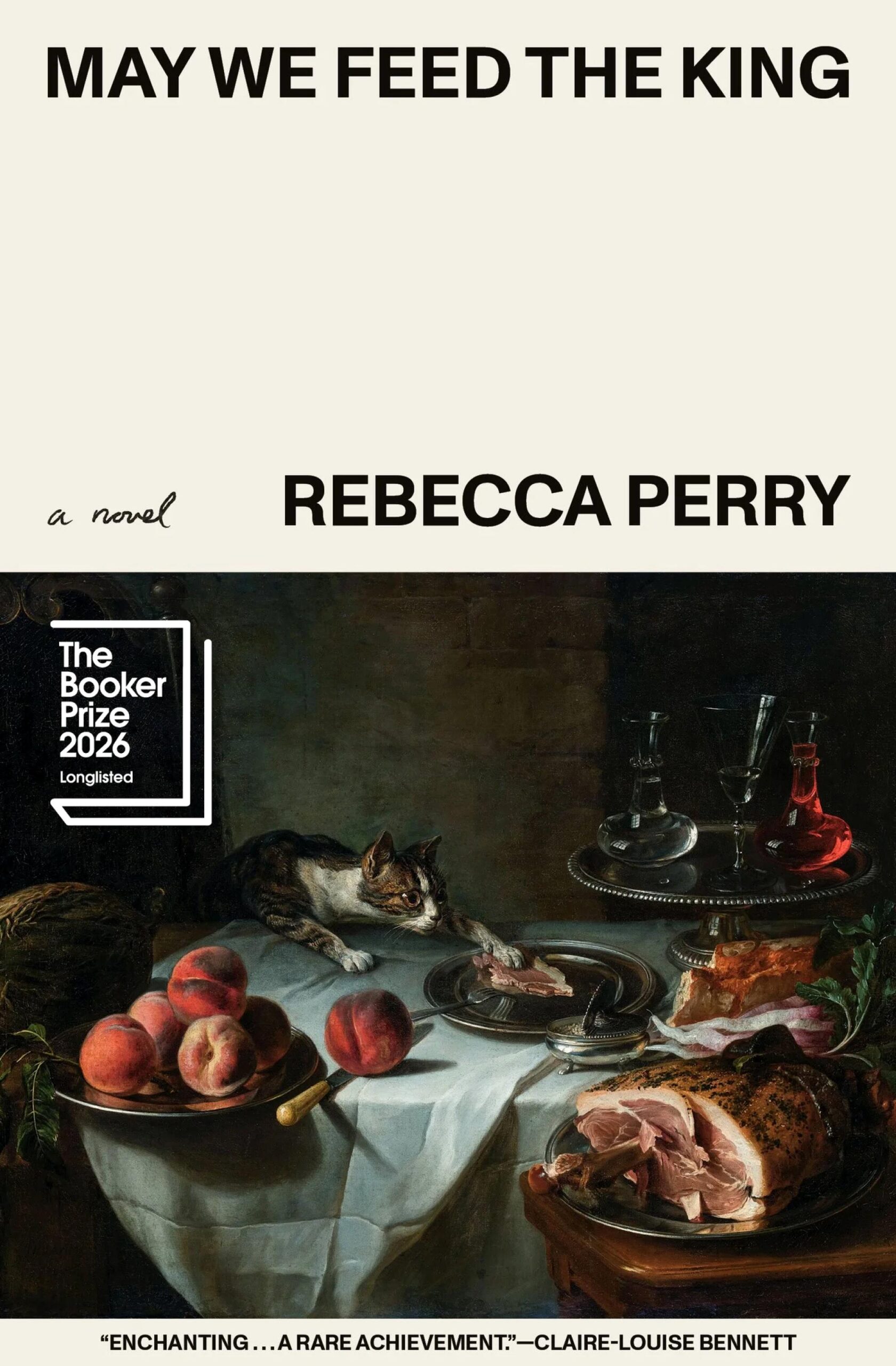
When the Booker Prize longlist was recently announced, it included a book with the memorable title “May We Feed the King.” The debut novel by British author Rebecca Perry isn’t yet available in the U.S., and when it does hit shelves, it will be coming from Transit Books, a small Bay Area publisher run by the husband-and-wife team Adam Z. Levy and Ashley Nelson Levy.
Cited by the Booker committee as “a playful, stirring meditation on history and storytelling” about a curator and a king, the book “has been an early favorite with indie booksellers,” Ashley says.
“May We Feed the King” by Rebecca Perry
(Transit)
“We knew the book was special when we acquired it,” Adam adds. “Ever since, we’ve been crossing our fingers and knocking on wood and sending up flares to the Booker gods, and sent the book to the printer a little earlier than usual just in case.”
Transit, known for publishing intelligent international fiction, began about a decade ago, when Ashley and Adam were convinced that great works of literature were being passed over by New York publishers, and that those books should have a place in America.
There were, Adam says, “really great authors who might have incredible reputations elsewhere not finding publishing houses here that are able to champion them in a way that gets them to access to a broader readership.”
The two were working full-time jobs while talking about their literary dreams over the dining room table. They had met at Columbia in New York and both worked in publishing there before moving to California, where Ashley is from.
Adam Z. Levy and Ashley Nelson Levy, co-publishers of the Bay Area nonprofit publisher Transit Books.
(Jennifer Baquing)
They carefully set out to connect with the international literary community and went through the slow process of launching Transit as a nonprofit. They now have a small staff, an office in Berkeley and count a Nobel Prizewinner, Jon Fosse, among their authors.
For the record:
9:20 a.m. Aug. 19, 2026An earlier version of this article stated that Transit’s office is located in Oakland. It is based in Berkeley.
At the same time Transit was starting out in Northern California, a pair of not-married friends in Los Angeles saw the same possibilities. Chris Heiser and Olivia Taylor Smith were convinced that they could begin a publishing house, starting with international noir.
Smith, who is now a senior editor at Simon & Schuster and lives in Germany, recalled those early days for me over Zoom. “We launched it at a time when it was almost the golden age of independent, small publishing, a lot of which was translation-focused,” she says.
They jumped right in, came up with a name, Ricochet, and a logo. Then they got a cease-and-desist letter — a small poetry press was also starting as Ricochet. “We had to change names,” Heiser says. “We were literally unnamed.” That’s how they launched Unnamed Press.
“A Certain Hunger” by Chelsea G. Summers
(Unnamed Press)
“I’m very grateful to the litigious poets who forced us to change our name,” Heiser adds. Their original crime-fiction focus rapidly expanded. Science fiction? Nonfiction? Feminist cannibal fiction? Yes, yes, yes.
That last was “A Certain Hunger” by Chelsea Summers, which Smith acquired. “I really loved that it is violent and intense and so visceral,” Smith said. “The prose is incredible and it absolutely was a cut above. Not to use a cannibalistic meat pun.” To date, the 2021 novel has been Unnamed Press’ biggest seller.
Where many literary novels from small presses sell fewer than 2,500 copies, “A Certain Hunger” has sold close to 200,000. “We’re a hits-driven business, you know — you have to have a book that does well enough to keep you going,” Heiser says.
Heiser remains with Unnamed as its publisher, and continues to guide it to unpredictable destinations. In 2022, the press opened North Figueroa Bookshop in Highland Park with fellow L.A. publisher Rare Bird Books — it stocks all publishers’ titles, not just their own.
Guests gather at the North Figueroa gallery for Unnamed Press’ launch of “Four Nose Jobs a Day,” a poetry book with an accompanying vinyl album by Devendra Banhart, center.
(Hoda Mallone)
And next door is the gallery they opened late last year. In June they held a gala launch for Devendra Banhart’s new collection of poems, “Four Nose Jobs a Day” in the North Figueroa gallery, published by Unnamed as both book and record album. The party was a little livelier than your typical book launch: Heiser says it “featured a reading backed by an excellent jazz trio, ceramic noses, a scent-maker, mimes and speed therapy, among many other things.”
Where Unnamed often makes unexpected turns, Transit has stuck close to its original mission: to translate a handful of books a year, often works of translation themselves, with a certain aesthetic.
For readers in sync with Transit’s sensibility — literary, bold and with an edge that feels fresh — they offer subscriptions. Their biggest swerve was adding children’s books. “The quality of the writing is really important, first and foremost,” Ashley said on a Zoom call with Adam and their executive editor, Lizzie Davis.
“We’re really attracted to literature that takes risks on the page,” Adam said. They began publishing acclaimed Norwegian author Jon Fosse’s work three years before he was awarded the Nobel Prize in literature. Transit is the American home of Fosse’s big and bold “Septology,” translated into English by Damion Searls.
“Septology 1-VII,” by Jon Fosse
(Transit Books)
Despite years of a cohort within the publishing community advocating for international literature, such as the National Book Awards’ translated literature prize being relaunched in 2018, translated works remain only 3% of the U.S. publishing market. Transit has remained committed to publishing works in translation, and has had genuine success.
Small publishers can be caught in a catch-22 when they have a sudden success. They have to pay to print books and get them distributed, then wait months before the profits (or unsold returns) come back. An author winning the Nobel Prize in literature is about as big a bonanza of demand as you can imagine.
When Fosse won the Nobel in 2023, that meant publishing a big run of his almost 700-page masterwork. “It was a bit of a cash crunch for us,” Adam admits, “but I think we were also lucky in a lot of ways.” The year before they had published “I Who Have Never Known Men” by Jacqueline Harpman, a Belgian novelist who died 20 years before — hardly a guaranteed success.
“Stories, Like Illnesses” by James Elkins
(Unnamed Press)
The publishers themselves can’t fully describe what happened — it was well-reviewed, it went viral, it kept selling, it went viral again. Now, the novel has sold more than 450,000 copies. “I feel like for a small press you really need to, not just catch a break, but catch a break every time,” Adam said, “if you want to last.” Those two pillars — the Fosse and Harpman — allowed the Levys to open their office in Oakland in 2024.
Transit recently released another Harpman book, “We Were Forbidden,” a trio of never-before translated novellas. In September, in addition to Perry’s book, they’ll also be publishing two novels by esteemed French writer Marie Darrieussecq.
Unnamed Press’ fall schedule includes James Elkins’ “Stories, Like Illnesses,” the third installment of a multivolume work called “Five Strange Languages.” Unnamed is publishing in five volumes over five years, “an epic publishing project for any publisher,” Heiser says. Luckily, the first volume got a boost when Jacob Elordi was photographed reading it during a marathon Frankenstein makeup session.
The Levys and Heiser all maintain that there was something about being in California that gave them the creative space to launch their publishing houses.
From their similar visions a decade ago, Transit and Unnamed were born separately, and have taken very different paths to sustainability. The Levys were deliberate and focused; Unnamed spontaneous and evolving. Both are flourishing and show what a little freedom can do.
PROFESSOR Green has revealed he’s got no savings despite his chart-topping success – and faces selling his house.
The rapper first hit the Top 10 in 2010 with debut single I Need You Tonight before going on to have a number one single with Read All About It in 2011.
Professor Green has revealed he has no saving and is considering selling his houseCredit: GettyThe rapper has had plenty chart success but hasn’t had much guidance regarding finances and savingsCredit: Alamy
But despite his chart success and collaborations with the likes of Lily Allen, Example and Emeli Sande, the star has revealed his finances do not reflect that.
In a new interview with The i Paper, Professor Green – real name Stephen Manderson – said: “So many artists get chewed up, spat out and come out the other side of it with f**k all.
Sign up for the Showbiz newsletter
Thank you!
“Everyone around them makes money – apart from them, because they’re good with words, songs and feelings, but they’re not good with money.
“It’s weird to get to this age and realise I’ve had no financial advice. I’m 42 and I spoke to a financial adviser for the first time recently, which was very telling.”
He continued: “I’ve got no real savings, no investments, no stocks, no shares, no ISAs.
“It’s hard to comprehend that I’ve got so much of my money tied up in a house that I don’t entirely own.
“Now that interest rates are no longer 1.7 per cent, I even wonder whether I should sell my house and rent, to future-proof myself.
“I’m forever on Rightmove, looking at houses I can’t afford.”
While he has continued to make music, Pro Green has also turned his hand to TV in recent months, appearing on The Masked Singer as the character Teabag in January.
Then in May he appeared on the 15th series of Celebs Go Dating on E4.
First in a series of stories profiling top high school football players by position. Today, Chris Fields III, Carson quarterback.
If you want to motivate quarterback Chris Fields III, doubt his skills. He’ll respond like an underdog boxer delivering a knockout punch. Just when you least expect him to step forward, he’ll find a way to produce.
Last season for Carson High, he was one of the best multidimensional quarterbacks in the Southland, passing for 2,031 yards and 29 touchdowns while rushing for 958 yards and 13 touchdowns in leading the Colts to the City Section Open Division championship.
He’s 6 feet 1, which some consider a roadblock to playing at the highest level, but it’s Fields’ intangibles that separate him.
He has spent most of the summer in the weight room, making himself a 205-pound, Marvel-like character capable of super strength.
“Goals don’t get accomplished skipping days,” he said of his training routine.
Every morning, he engages in deep stretching exercises. At night, there are ice baths. Taking care of his body for a season that could reach 14 games is one of his most important priorities.
He trusts his faith and his mother, who has raised him as a single parent. She’s so heavily involved in his football activities that she watches and breaks down film with him and comes to practices to support him.
“She could put on shoulder pads and a helmet and tear up a defense any day,” Fields said. “I’ve been through everything with mom.”
He remembers the days when the family struggled to pay for food and a place to stay.
“We came from the bottom,” Fields said. “We were heavily impoverished. If my mom has nowhere to sleep and she’s having to work multiple jobs while going to school to provide for me and my sister, I should be able to pay her back by doing well.”
So whatever anyone thinks, Fields’ drive is to make his mom proud, whether it’s in the classroom, on the field or by being respectful to strangers.
“If you’re at our games, you’re going to hear her in the crowd,” Fields said.
One of Fields’ strengths is to improvise. He understands how to make split-second decisions, and many involve whether to stay in the pocket or take off and run with his speed.
“When I determine that I’m going to run, it usually comes from pre-snap read knowing where my guys are,” he said. “If I feel the rush, I try to hang in there, try to extend the play but will do whatever is needed. I feel my legs are just as valuable as my arm.”
And his arm is pretty good — like, throwing a spiral 67 yards good.
He’s tough with the kind of leadership skills that inspire teammates to rally around him.
It’s another season of quality quarterbacks with the class of 2029 particularly strong after terrific freshman seasons by such players as Thaddeus Breaux of L.A. Hamilton, Ford Green of Westlake, Marcus Washington of Cajon, Jonah Tuaniga of Long Beach Millikan and Steven Moore of La Sierra. Add Evan McCalister of Valencia, Ezrah Brown of Orange Lutheran and Jeremy Mellalieu of Chaminade and you have the makings of a stellar sophomore class.
Fields said he understands the college recruiting grind. Everyone has their own idea of what kind of quarterback fits their offense.
“With schools who don’t typically have mobile quarterbacks, I always encounter, ‘I have to see the person,’” he said. “But I’ve never heard, ‘You’re too small.’ It’s all a perception. It comes down to whether they like you or not. I really want to play at the highest level of college football. If God has other plans, I’m willing to be humble and walk that path.”
During the summer, Fields committed to Georgetown, where academics and athletics can lead to a great future.
Wednesday: Gardena Serra running back AJ McBean.
Quarterbacks to watch
Thaddeus Breaux, L.A. Hamilton, 6-5, 225, So.: Has physical skills to be national prospect
Brady Edmunds, Huntington Beach, 6-5, 225, Sr.: Ohio State commit has been three-year starter
Chris Fields III, Carson, 6-1, 200, Sr.: City player of the year committed to Georgetown
Jack Hurst, Laguna Beach, 6-4, 190, Sr.: Passed for nearly 3,000 yards and 45 touchdowns as a junior
Jaden Jefferson, Corona Centennial, 5-10, 170, Sr.: Hawaii commit is dangerous passing or running
Koa Malau’ulu, St. John Bosco, 6-2, 180, Jr.: Will have blockers needed to have MVP season
Ryan Rakowski, Palos Verdes, 6-0, 180, Sr.: Nevada commit is one of the most accurate passers
Russell Sekona, Mater Dei, 6-3, 230, Jr.: Big adjustment moving to Trinity League
Taylor Lee, Oxnard Pacifica, 6-2, 185, Sr.: Record-setting junior season for Portland State commit
Dane Weber, Chaparral, 6-1, 210, Sr.: California commit passed for 3,645 yards and 41 touchdowns and ran for 14 touchdowns
Bob Mortimer has spoken about the appeal of his BBC show as Paul Whitehouse opened up about his late mother during an episode of Mortimer and Whitehouse: Gone Fishing
17:14, 10 Aug 2026Updated 17:14, 10 Aug 2026
Gone Fishing has a very big appeal amongst viewers(Image: BBC)
The comedian, who stars alongside Paul Whitehouse in the much-loved programme, said he hopes the show encourages people to spend more time with their friends, whatever their age.
Speaking during an appearance on Saturday Kitchen, Mortimer explained that much of what viewers see comes from the pair simply talking while spending long hours together by the water.
“We’re on the riverbank for eight hours, Matt. So, you know, we just talk most of the time when we’re not fishing,” he said. According to Mortimer, the production team then searches through those lengthy conversations for moments that work on screen.
“They try and find 30 seconds here or a minute there that’s worth putting on the telly,” he explained, adding that he could not imagine the programme working in quite the same way if it were scripted.
Mortimer also suggested that part of the show’s success comes from its relatability, with viewers perhaps recognising their own friendships in the relationship between the two presenters.
“I think a lot of people watch it. Certainly a lot of fellas watch it and think, ‘Oh, that’s me and my mate. That’s what we’re like,'” he said.
The relaxed conversations between Mortimer and Whitehouse have become one of the defining features of Gone Fishing, with the pair regularly discussing subjects far beyond fishing. Over the years, they have spoken openly about their health, personal experiences and events that have had a lasting impact on their lives.
One particularly emotional conversation saw Whitehouse discuss the devastating effect Alzheimer’s had on his mother, Anita May Whitehouse.
In a repeat episode of Mortimer and Whitehouse: Gone Fishing airing tonight (Monday, August 10), Whitehouse, 68, reflected on his mother’s illness while speaking candidly with his friend and co-host.
Whitehouse’s mother died in January 2022, and he later described the heartbreaking reality of seeing her suffer with the condition. Introducing the subject, Mortimer asked: “Alzheimer’s is the big for you though, isn’t it?”
Whitehouse replied: “Well, it is, you know. My poor mum, there was no existence. It’s become one of the biggest killers now.”
The pair have never shied away from difficult conversations on Gone Fishing, with their friendship providing a backdrop for discussions about everything from serious health problems to major moments in their personal and professional lives.
Mortimer and Whitehouse: Gone Fishing airs tonight at 10pm on BBC Two