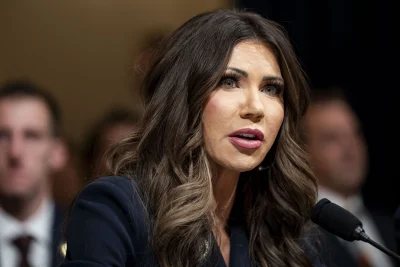
staffer

Assembly Speaker Rivas and brother sued by staffer who was fired

A recently fired California Legislature staff member filed a lawsuit this week against Assembly Speaker Robert Rivas claiming that the lawmaker and his brother, Rick, retaliated against her for reporting sexual harassment and alleged ethics violations.

Former press secretary Cynthia Moreno alleged in the lawsuit, filed Tuesday in Sacramento County Superior Court, that the speaker targeted her after she filed a sexual harassment complaint against a colleague in May 2024 and stripped her of “significant job responsibilities.”

Early this year, Moreno filed another complaint to the Workplace Conduct Unit, which investigates allegations of inappropriate conduct by legislative employees, alleging Rick Rivas, a nonprofit organization and a political action committee had “funneled money” to exert influence on the speaker, according to the lawsuit.

In response, Moreno alleges in the lawsuit, Rick Rivas used his influence to deny her a tenure-based pay raise and terminate her employment.

Rick Rivas is the American Beverage Assn.’s vice president for California and has acted as a political advisor to his brother. Rick Rivas did not immediately respond to an email seeking comment.

Elizabeth Ashford, a spokesperson for Robert Rivas, said the speaker’s brother had no role in Moreno’s employment and the lawmaker “recused himself from all matters related to Moreno’s termination,” which was handled by the Workplace Conduct Unit.

“The vast conspiracy theories included in this filing are absolutely false,” Ashford said in a statement, adding that “any court will see this for what it is: an attempt by a former employee to force a payout.”

The Assembly Rules Committee terminated Moreno in August after an investigation substantiated allegations of sexual harassment that had been lodged against her, according to Chief Administrative Officer Lia Lopez. Moreno has denied those allegations.

Moreno is seeking damages for lost wages and benefits, lost business opportunities and harm to her professional reputation. She’s also seeking a public apology for the “made-up sexual-harassment allegations launched against [her] for reporting Robert Rivas’ and Rick Rivas’ illegal and unethical actions,” the lawsuit states.

Source link

Worried staffers unionize at Yosemite, Sequoia national parks

For two years, labor organizers tried to unionize employees at a trio of celebrated California national parks, but they couldn’t reach critical mass.

Then came mass firings of National Park Service employees in February under the Trump administration. Many employees were reinstated, but litigation concerning the legality of the firings winds on. The park service has lost about a quarter of its staff since Trump reclaimed the White House, and that’s on top of a proposed $1-billion budget cut to the agency.

This summer the scales tipped. More than 97% of employees at Yosemite and Sequoia and Kings Canyon national parks who cast ballots voted to unionize, with results certified last week. More than 600 staffers — including interpretive park rangers, biologists, firefighters and fee collectors — are now represented by the National Federation of Federal Employees.

Steven Gutierrez, national business representative with the National Federation of Federal Employees.

Steven Gutierrez, national business representative with the National Federation of Federal Employees, said it took mass firings to “wake people up.”

(Christina House / Los Angeles Times)

“Culture is hard to change,” said Steven Gutierrez, a national business representative for the union. “It takes something like this administration firing people to wake people up, to say, ‘Hey, I’m vulnerable here and I need to invest in my career.’”

The unionized employees work at some of California’s most celebrated and highly visited national parks. Yosemite is famous for its awe-inspiring valley, while Sequoia and Kings Canyon are known for their giant sequoia trees.

Amid that beauty is a workforce that is frustrated and fearful. Two employees at Yosemite National Park described rock-bottom morale amid recent turmoil — and a sense that the union could provide an avenue for change. Both are union representatives and requested anonymity for fear of retaliation.

“With this administration, I think there’s a lot more people who are scared, and I think the union definitely helps towards protections that we really want,” said one employee.

National Park Service Ranger Anna Nicks walks through a grove of sequoia trees in Sequoia National Park.

National Park Service Ranger Anna Nicks walks through a grove of sequoia trees in Sequoia National Park in May 2024.

(Genaro Molina / Los Angeles Times)

Despite staff being depleted by buyouts and a hiring freeze, Interior Secretary Doug Burgum has ordered parks to remain “open and accessible.” As a result, the employee said visitors may not notice something is off.

“There’s a lot of folks doing multiple jobs and just trying to hold up the park,” she said, adding that she believes that the union will help ensure people get paid properly for the work they do and that their duties don’t shift.

The employees stressed that many workplace problems they want to see fixed — including low pay and squalid living conditions — predate Trump’s second stint in the White House. But recent developments have exacerbated the situation.

Because pay hasn’t kept pace with inflation, one employee said he’s unable to pay rent and lives out of his car for most of the year. Meanwhile, he said, those in park housing face safety threats such as hantavirus-carrying rodents that invade living spaces, caving-in roofs and unstable decks. Understaffing has plagued Yosemite for years.

“People that you see working here, they’re really at their wit’s end,” he said. “Personally speaking, it’s just a lot of work to handle. Years ago, we had twice as many people doing this work.”

Staffers are “worried about their futures,” he added.

The National Park Service did not respond to a request for comment. But in a statement to a Senate appropriations subcommittee in May, Burgum said the Trump administration remains committed to supporting the parks, while looking for ways to cut costs.

A waterfall is reflected in water in the meadow in the Yosemite Valley as the snowpack melts.

A waterfall is reflected in water in the meadow in the Yosemite Valley as the snowpack melts in April 2023.

(Francine Orr / Los Angeles Times)

“Since becoming Interior Secretary, I’ve traveled to National Parks, historic sites, and wildlife refuges to learn and hear from leadership on the ground,” Burgum said. “We’re instituting changes to get more people actually working in the parks and are looking forward to what Yellowstone Superintendent Cam Sholly forecasted to be an ‘outstanding summer.’ ”

The unionization vote comes as the Trump administration seeks to strip federal employees of labor protections many have long enjoyed. On Thursday, Trump signed an executive order that directs certain federal agencies — including NASA, the National Weather Service and the Bureau of Reclamation — to end collective bargaining agreements with unions representing federal employees.

The Department of Veterans Affairs previously moved to terminate protections for more than 400,000 of its workers. The president’s overall effort on this front is being fought in court, although federal judges have so far sided with the administration.

As labor unrest mounts, Americans and foreign tourists are visiting national parks like never before. In 2024, there were a record 332 million visits to national parks, including 4 million to Yosemite. Crowds continued to stream into national parks over Labor Day weekend.

Groups that advocate for public lands say that short staffing is quietly adding to long-standing problems.

Preventative Search and Rescue Program Coordinator Anna Marini gives the Lutter family children junior guide books.

Preventative Search and Rescue Program Coordinator Anna Marini gives the Lutter family children junior guide books after they finished a hike in August 2024 in Joshua Tree National Park.

(Gina Ferazzi / Los Angeles Times)

“It’s clear staffing shortages are directly impacting park operations across the system,” the nonprofit National Parks Conservation Assn. said in a statement Wednesday.

“Parks like Joshua Tree and Yosemite are struggling with search and rescue, law enforcement and even basic medical services, while some parks have no maintenance staff at all. Seasonal roads, trails and campgrounds like those at Sequoia and Kings Canyon remain closed due to unaddressed damage.”

The union voting took place July 22 to Aug. 19, and included permanent and seasonal employees. The National Federation of Federal Employees represents workers at several other national parks, including Yellowstone and, in Ohio, Cuyahoga Valley, as well as those in the U.S. Forest Service and Bureau of Land Management.

A union support sign is displayed at Sequoia National Park.

A union sign hailing federal workers is displayed at Sequoia National Park.

(Steven Gutierrez)

Federal employees don’t have the right to strike, Gutierrez said, meaning that much of employees’ advocacy has to happen in Washington, D.C. He said the union can bring workers face to face with congressional leaders to explain why their jobs matter — including the tourism dollars they help generate.

Next steps will include hammering out labor contracts for Yosemite and Sequoia and Kings Canyon, which can provide job protections.

Gutierrez said he’d like to see one drafted by December but acknowledged that it can be a long process.

“If Trump puts his fingers into it, it’s going to take longer,” he said.

Source link

White House Curbs Access of Former Clinton Staffer

White House officials announced Friday they have found evidence that Mark Middleton, a former presidential aide, abused his White House access to impress business clients. He has been barred from entering the executive mansion without high-level approval, they said.

The decision came in response to indications that Middleton, a former aide to presidential advisor Thomas F. “Mack” McLarty, had flaunted his White House connections in an effort to become an international deal-maker.

Among other things, he is accused of using his White House business cards and keeping a voice-mail message on the White House telephone system long after he had left his job there. He also is accused of taking business clients to the White House dining room without authorization and portraying himself as someone with influence among President Clinton’s inner circle.

The announcement also reflected an effort on the part of the president to take affirmative steps in response to the burgeoning controversy over illegal and questionable fund-raising for the Democratic Party. While Middleton may prove to be little more than a bit player in the fund-raising saga, revelation of his actions caused the White House considerable embarrassment at a time when it is trying to fend off the scandal.

Before Middleton left the White House in February 1995, he was the chief aide to McLarty, who served initially as White House chief of staff and later as a senior presidential advisor. McLarty chose Middleton as his deputy after watching the young man work as a fund-raiser for Clinton in Arkansas in 1992.

Middleton, 32, a former Little Rock lawyer, also was a friend of Democratic fund-raiser John Huang, who was responsible for raising millions of dollars from Asian American sources–some of which has been returned by the Democratic Party because it was from illegal or questionable sources.

According to a political consultant in Taiwan, Middleton discussed the possibility of accepting an illegal $15-million contribution for the Democratic campaign from an official of the ruling Kuomintang, or Nationalist Party, in Taipei. Both he and Kuomintang officials have denied the allegation.

Middleton issued a statement Friday acknowledging that “questions have been raised about whether I misused access to the White House for personal gain. I categorically deny any implication that I acted improperly.”

Aides Raise Questions

Many of the questions about Middleton were raised by presidential aides who have spent the last week charting the former employee’s comings and goings at the White House in the nearly two years since he resigned.

The record they uncovered shows that Middleton entered the White House complex 65 times between February 1995 and last September and often roamed the premises and dined in the White House mess.

White House Press Secretary Mike McCurry said the record suggests that Middleton abused his access, even though his business activities apparently were not in violation of ethics rules restricting what former presidential appointees can do.

“If you’re a visitor to the White House, you’re not supposed to be roaming the building [and] you’re not supposed to go to the White House mess, except with a White House employee,” a White House official explained.

Approval Condition

McCurry said that White House employees have been told that Middleton will not be allowed to enter unless he has the approval of the chief of staff. Until now, Middleton, like any other former employee, has been able to enter the complex at the invitation of anyone who works at the executive mansion.

“The White House looks askance at anyone misrepresenting themselves as a representative of the White House,” McCurry emphasized.

According to White House records, Middleton saw the president on six of his visits to the White House since February 1995. On one occasion, he accompanied James Riady, scion of a wealthy Indonesian family and a close friend of the president. They engaged Clinton in a discussion of U.S. trade policy with China.

Before joining the administration as a Commerce Department official, Huang was employed by the Riadys’ Lippo Bank. Middleton apparently made the acquaintance of both Riady and Huang in Little Rock, where they worked for Worthen Bank in the mid-1980s.

On another occasion after leaving his government post, officials said, Middleton attended a presidential reception at the White House accompanied by Siti Hediati Harijadi, the daughter of President Suharto of Indonesia. According to Middleton’s lawyer, Robert Luskin, Middleton is trying to broker a business deal for Suharto’s daughter.

Records show that eight of Middleton’s post-employment visits were authorized by McLarty. But White House officials said that McLarty remembers only one such visit, on March 20, 1995, when Middleton brought his new employer, Steven Green, then-owner of Samsonite and other companies, to the White House.

But most of Middleton’s visits to the executive mansion were authorized by lower-level employees who were Middleton’s friends. It was on these visits that White House officials suspect he took advantage of his access to escort potential clients, such as Suharto’s daughter, through the hallways and to the dining room.

For his part, Middleton claims that most of his visits were personal. “I visited the White House often because that is where my friends worked,” he said in his statement.

Visits Explained

But he acknowledged that he was occasionally accompanied by business associates.

“On a few occasions–probably less than 10 in total–I also had breakfast or lunch in the White House mess, sometimes with persons who were friends or business associates of mine,” he said. “I took them there as a courtesy and as an act of friendship. I never discussed business, raised money or arranged meetings with any White House official in connection with any of these visits.

“I never implied in any fashion that I still held a position in the White House or that I had any special influence there; I do not believe that anyone ever understood my efforts to arrange a lunch or a tour as anything other than as the modest gestures that they were.”

McCurry said that Middleton’s voice-mail message recently was erased from the White House telephone system. Officials are trying to decide whether to establish a policy governing how long such messages can be retained after an employee leaves.

“There was no good reason for his voice mail to be active for more than a year,” McCurry said.

As McLarty’s deputy, Middleton was often present during his boss’s meetings with U.S. and foreign business executives, such as the Riadys. At Enron, a Houston-based energy company, for example, executives recalled that they often talked to Middleton when McLarty was unavailable and developed a friendship with him.

Luskin, Middleton’s lawyer, said that his client received an “ethics briefing” shortly after he resigned. He was reminded that federal law prohibits him from lobbying the government on any issue in which he had been “personally or substantially involved.”

Different Standard

But Middleton was not asked to adhere to the much tougher standard imposed on those designated “senior employees.” That standard would have barred him from lobbying the White House on any issue, officials said.

Middleton maintained his relationship with the Riadys and corporate executives, such as those at Enron, after leaving the White House.

Not long after he had left, Middleton established his own company, CommerceCorp International, with an office on Pennsylvania Avenue near the White House. He traveled abroad, looking for business opportunities.

“I am going to Asia, the Middle East and beyond,” Middleton told an Arkansas business publication in February 1995 as he embarked on an overseas tour. “I’m going out to meet people I have built relationships with.”

Middleton called on one of Riady’s business partners, Hashim Ning, in June 1995, while the elderly Indonesian was recovering from surgery. He brought with him a personal get-well letter from Clinton. After Ning died, his relatives contributed $450,000 last year to the Democratic Party.

On Friday, Middleton said that he was “not responsible in any way” for the contribution made by Ning’s relatives.

Middleton also went to Taiwan on Aug. 1, 1995. While there, according to a Taiwanese political consultant who said he was present, the former White House aide met with the chief financial officer of the Kuomintang and discussed a $15-million contribution–a discussion denied by both Middleton and the Kuomintang official. Such foreign contributions to U.S. campaigns are illegal.

Middleton’s accuser, C.P. Chen, said that Middleton also encouraged Kuomintang to hire him as its Washington lobbyist to provide a “direct channel” to Clinton. Middleton has denied making any such solicitations.

Amy Weiss Tobe, spokeswoman for the Democratic National Committee, said that Middleton was not authorized to raise funds for the Democrats.

However, White House officials confirmed that Middleton had been involved in raising money for the Clinton Birthplace Foundation, a group that intends to make a historic site out of the president’s childhood home in Hope, Ark.

In Taiwan, a businessman who also met with Middleton recalls that the young man was looking for a foreign business partner for Wal-Mart Stores Inc. and other U.S. firms. The businessman, who declined to be identified, said that he admonished Middleton about trying to use his official contacts to make deals.

As this businessman recalled their conversation: “I told him, ‘Mark, this is not the way to do business. You are too young. You’re using your position for business. But really you’re being used by others.’ ”

Luskin said that Middleton was not employed by the Riadys or the governments of Indonesia or Taiwan, even though he maintained close contact with them. Luskin declined to name any of Middleton’s business clients.

Times staff writers Maggie Farley in Taiwan and Richard Serrano in Little Rock, Ark., contributed to this story.

Source link

Two 15-year-olds arrested in attack on former DOGE staffer

Aug. 6 (UPI) — Two 15-year-olds were arrested in an alleged attack on a former Department of Government Efficiency employee.

Edward Coristine, 19, whose nickname is “Big Balls,” was allegedly surrounded and assaulted by a group of about 10 teens near his car early Sunday morning. He said he shoved his date into the car for her safety and faced the teens, when they began attacking him.

Police patrolling the area saw the event, and they stepped out of their vehicle. The teens fled on foot, but two were caught, identified by Coristine and arrested. They were charged with unarmed carjacking. The two teens were a 15-year-old male and a 15-year-old female. The others are still at large.

Coristine, a software engineer, was one of the most known people associated with the DOGE effort, which attempted to cut government spending and eliminate waste in bureaucracy.

Elon Musk, who worked closely with DOGE before stepping away from his work with the Trump administration, also detailed the attack on X.

“A few days ago, a gang of about a dozen young men tried to assault a woman in her car at night in DC,” Musk said. “A [DOGE] team member saw what was happening, ran to defend her and was severely beaten to the point of concussion, but he saved her.”

Emergency medical services did not transport anybody as part of the incident, D.C. Fire and EMS told CBS News.

The police report also said a black iPhone 16 was stolen.

President Donald Trump renewed threats to have the federal government take over Washington, in response to the incident.

“Crime in Washington, D.C., is totally out of control,” Trump said.

“Local ‘youths’ and gang members … are randomly attacking, mugging, maiming and shooting innocent citizens,” he added, “at the same time knowing that they will be almost immediately released.

“The most recent victim was beaten mercilessly by thugs,” Trump said. “Washington, D.C., must be safe, clean and beautiful for all Americans and, importantly, for the world to see.”

He said the federal government would have no choice but to take control of the capital and “put criminals on notice.”

Local police reported a 35% reduction in crime in 2024, which set a 30-year low, The Hill reported.

This year, reported crimes in Washington are lower than in 2024, which would establish a new 30-year low if the trend continues.

Trump and Washington Mayor Muriel Bowser have met several times since the Nov. 5 election.

The president has said he and the mayor have an amicable relationship, and in a March 28 executive order, created the D.C. Safe and Beautiful Task Force.

That task force includes representatives from several federal agencies and federal law enforcement, who are tasked with cleaning up the city by working with local officials.

Such efforts include removing homeless encampments, supporting law enforcement, removing threats to public safety and streamlining the process for residents to get concealed carry permits for firearms.

Source link

Amid ICE raids, the Chicxs Rockerxs summer camp protects community

Every year, nonprofit organization Chicxs Rockerxs (pronounced cheek-ex roh-kerr-ex) hosts a week-long summer camp in Southeast Los Angeles for girls and gender nonconforming youth to unleash their inner rock stars.

At the camp, which took place from June 30 to July 4 this year, students learn new instruments, attend creative workshops, and perform original songs in bands with their fellow campers. Students ages 8 to 17 qualify for enrollment.

Yet two weeks before camp this summer, amid the citywide uptick in raids by Immigration and Customs Enforcement, organizers heard some students were staying home in fear.

“As we were planning and getting ready for camp in person, that’s sort of when the raids started happening in Southeast L.A., and we saw how intensified they were in the area and how violent [they were] and just really damaging to the community,” said organizer Audrey Silvestre.

To safeguard campers and their families from ICE raids in the region, Chicxs Rockerxs canceled the in-person camp — but not entirely.

Organizers quickly moved the program online. Staffers offered to drop off musical instruments, gift cards for food, and camp supplies to families who were not comfortable going out during the raids. They also made a formal announcement on Instagram, informing supporters about the crucial format change.

“We want to reaffirm that CRSELA stands in solidarity with our Black and Brown immigrant communities. As an organization, we formed in response to the firsthand challenges faced by girls and LGBTQ+ youth in Southeast LA, a predominantly Latinx/e immigrant region,” the post read in part.

“Thank you for thinking of the babies!!!” one person commented on the camp’s post.

“Your SELA community supports you!” another person wrote.

“It didn’t feel safe to be asking our communities to take the risk to leave their homes if they didn’t feel safe to do so,” Silvestre said.

Chicxs Rockerxs previously went virtual during the COVID-19 pandemic and facilitated their music camp by having students connect through Zoom to create bands, learn songwriting skills, and come up with an end product they could record together in the video sessions. According to Star, an organizer who asked that their full name not be disclosed for privacy reasons, the virtual model they developed for the pandemic was restructured for this year’s camp, and many changes were made to enhance the experience.

“We wanted them just to have an opportunity to have a safe space to create and to express themselves, and it didn’t necessarily have to result in a song at the end of the week,” Star said. “It was just opportunities to be creative.”

Students still learned new instruments this year, as staffers were able to drop off keyboards, guitars, bass guitars, drum pads and karaoke microphones to campers for daily lessons. Besides music courses, students also participated in smaller breakout rooms called “jam rooms,” which included different themes and creative activities. For example, some jam rooms consisted of karaoke, while others focused on making TikToks and interviewing one another.

“The idea behind these rooms was to keep it fun, because it’s Zoom and it’s not the most exciting for many kiddos who went to school on Zoom,” said Silvestre. “It’s not the most enjoyable way to experience camp, but it’s for them to have fun, bond with their bandmates and just be in community with each other.”

While campers all participated online from home, some staffers operated in person at their campus to stream lunchtime performances and daily assemblies. The organizers created a “DIY television studio,” which they described as similar to public access cable, allowing them to toggle between different cameras from their set to make sessions dynamic and improve the virtual experience for students.

Students like 17-year-old Naima Ramirez, who attended camp for the past four years, said she appreciated what Chicxs Rockerxs did for her and fellow campers.

“I think it was very thoughtful and kind of them to forget all of the scheduling that they had originally done for in-person camp and scramble into doing everything on Zoom,” Ramirez said.

Ramirez said she was initially disappointed to hear that camp was moving online but believed Chicxs Rockerxs did the right thing because of the current environment in Southeast L.A.

“I was bummed because it’s my last year and I was really looking forward to being in person,” Ramirez said. “But I also understood why we had to go online.”

For organizers at Chicxs Rockerxs, the safety and well-being of campers and their families is their top concern. Even though camp took a different approach this year, they said they’re always willing to help campers beyond the creative services they provide.

“One of the things CRSELA prides itself in is that this is meant to be a safe space,” Star said. “I’m really proud that we [were] able to create a safe space in a different way for [camp this year]. It’s a safety precaution for our community, and I think that’s more important at this time.”

Source link