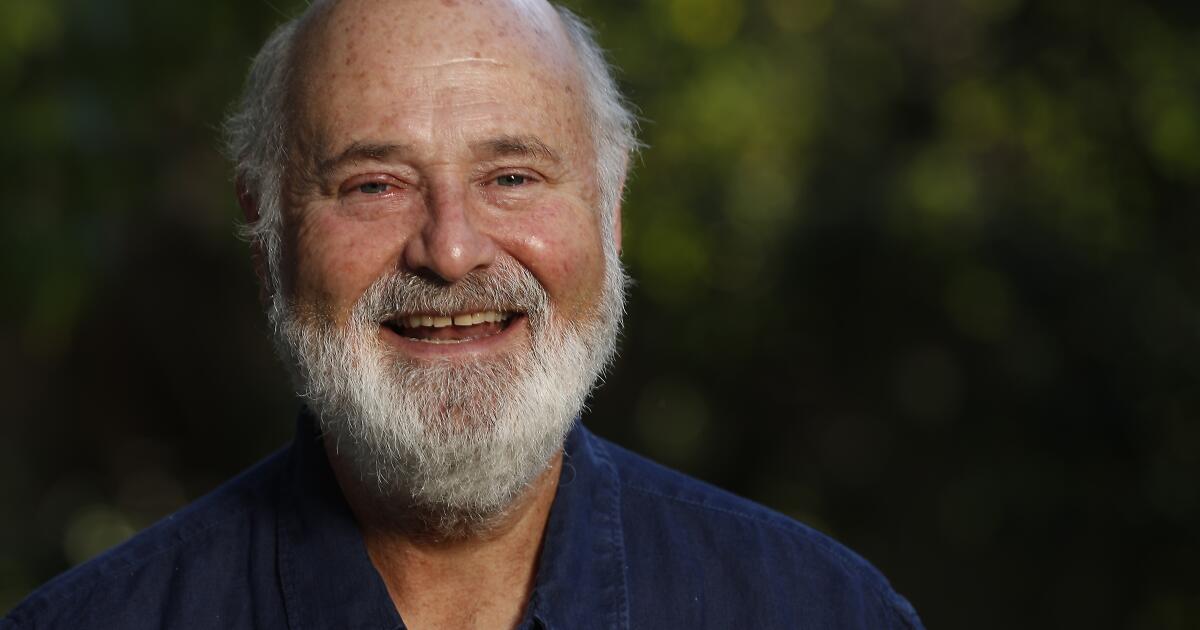
Rob Reiner’s humanity was a signature of his work on TV and film
Rob Reiner was a movie director who began as an actor who wanted to direct movies. The bridge between these careers was “This Is Spinal Tap” in 1984, his first proper film, in which he also acted. His original inclination, based on the music documentaries he had studied, had been not to appear onscreen, but he decided there was practical value in greeting the audience with a face familiar from eight seasons of “All in the Family” as Archie Bunker’s left-wing son-in-law, Michael “Meathead” Stivic.
Reiner’s television career began at 21, partnered with Steve Martin, writing for “The Smothers Brothers Comedy Hour.” As an actor, his early years were characterized by the small parts and guest shots that describe the early career of many performers we come to know well. He played multiple characters on episodes of “That Girl” and “Gomer Pyle, USMC,” a delivery boy on “Batman,” and appeared on “The Andy Griffith Show” and “Room 222.” His last such role, in 1971, the same year “All in the Family” premiered, was on “The Partridge Family” as a tender-hearted, poetry-writing, tattooed biker who becomes attached to Susan Dey‘s character and somewhat improbably takes her to a school dance. It’s a performance that prefigures the tenderness and humanity that would become a signature of his work as a writer, director and performer — and, seemingly, a person.
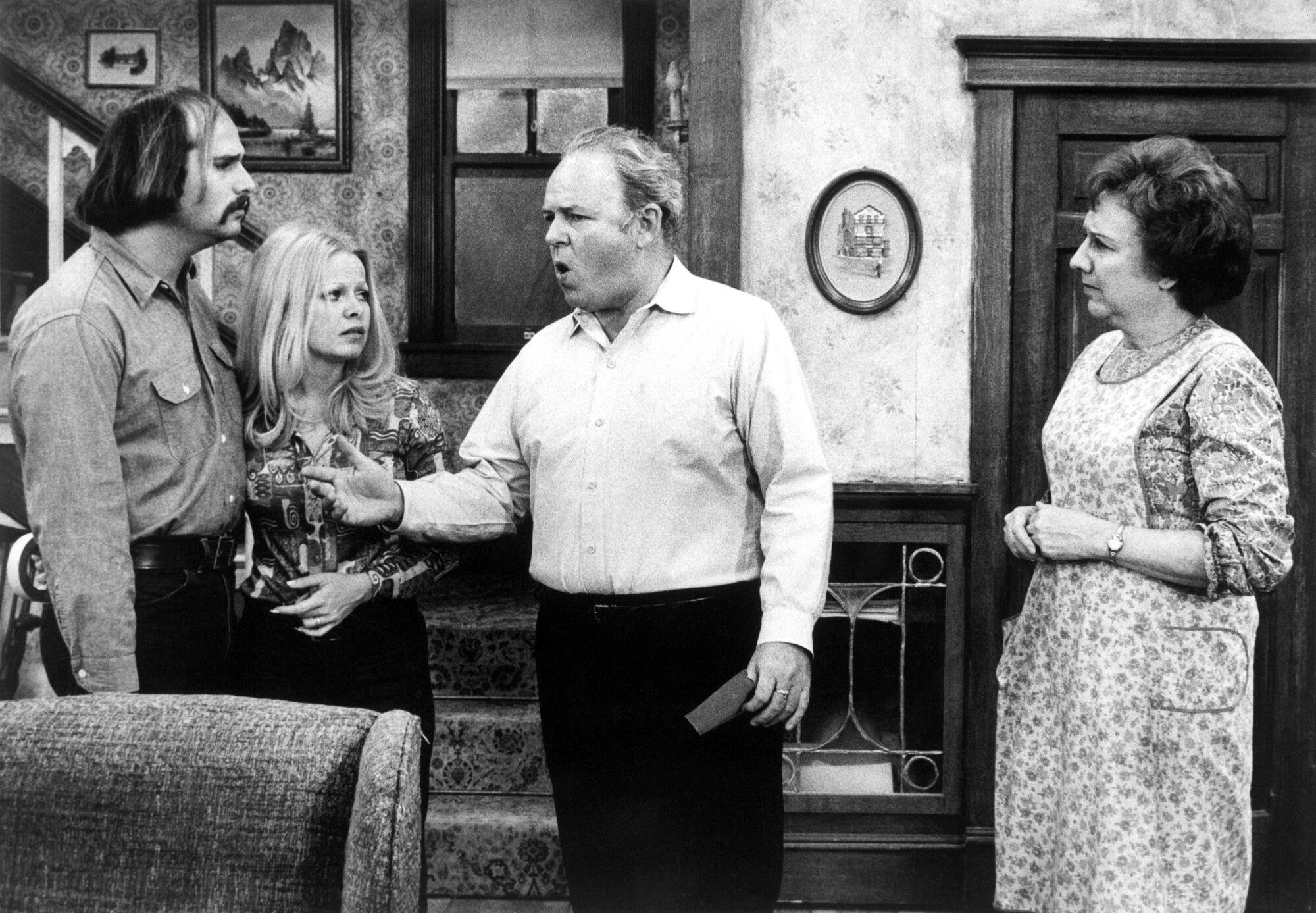
On “All in the Family,” in his jeans and work shirt, with a drooping mustache that seemed to accentuate a note of sadness, Reiner largely played the straight man, an irritant to Carroll O’Connor’s Archie Bunker, teeing up the issue-oriented dialectic. Once in a while he’d be given a broad comic meal to chew, as when wife Gloria (Sally Struthers) goes into labor while they’re out for dinner, and he accelerates into classic expectant-father sitcom panic. But minus the “Meathead” material, “All in the Family” is as much a social drama as it is a comedy, with Mike and Gloria struggling with money, living with her parents, new parenthood, and a relationship that blows hot and cold until it finally blows out for good. He’s not a Comic Creation, like Archie or Edith with their malaprops and mispronunciations, or even Gloria, but his importance to the storytelling was certified by two supporting actor Emmys.

Rob Reiner, Sally Struthers, Caroll O’Connor and Jean Stapleton in a scene from Norman Lear’s television series “All in the Family.”
(Bettmann Archive via Getty Image)
What Reiner carried from “Family” into his later appearances was a sort of bigness. He could seem loud — and loudness is something Norman Lear’s shows reveled in — even when he’s speaking quietly. Physically he occupied a lot of space, more as time went on, and beginning perhaps with “Spinal Tap,” in which he played director Marty DiBergi, he transformed tonally into a sort of gentle Jewish Buddha. In the 2020 miniseries “Hollywood,” Ryan Murphy’s alternate history of the 1930s picture business, the studio head he plays is not the desk-banger of cliche, but he is a man with an appetite. (“Get me some brisket and some of those cheesy potatoes and a lemon meringue pie,” he tells a commissary waiter — against doctor’s orders, having just emerged from a heart attack-induced coma. “One meal’s not going to kill me.”) He’s the boss, but, in a scene as lovely as it is historically unlikely, he allows his wife (Patti LuPone), who has been running things during his absence, to also be the boss.
Reiner left “All in the Family” in 1978, after its eighth season to explore life outside Michael Stivic. (In 1976, while still starring on “Family,” he tested those waters, appearing on an episode of “The Rockford Files” as a narcissistic third-rate football player.) “Free Country,” which he co-created with frequent writing partner Phil Mishkin, about a family of Lithuanian immigrants in the early 1900s, aired five episodes that summer. The same year, ABC broadcast the Reiner-Mishkin-penned TV movie “More Than Friends” (available on Apple TV) in which Reiner co-starred with then-wife Penny Marshall. Directed by James Burrows, whose dance card would fill up with “Taxi,” “Cheers” and “3rd Rock From the Sun,” it’s in some respects a dry run for Reiner’s “When Harry Met Sally…,” tracking a not-quite-romantic but ultimately destined relationship across time.
Future Spinal Tap lead singer Michael McKean appears there as a protest singer, while the 1982 CBS TV movie “Million Dollar Infield,” written again with Mishkin, features Reiner alongside future Spinal Tap lead guitarist Christopher Guest and bassist Harry Shearer; it’s a story of baseball, families and therapy. Co-star Bruno Kirby the year before had co-written and starred in Reiner’s directorial debut, “Tommy Rispoli: A Man and His Music,” a short film that aired on the long-gone subscription service On TV as part of the “Likely Stories” anthology. Kirby’s character, a Frank Sinatra-loving limo driver (driving Reiner as himself), found its way into “This Is Spinal Tap,” though here he is the center of a Reineresque love story.
After “Spinal Tap,” as Reiner’s directing career went from strength to strength, he continued to act in other people’s pictures (“Sleepless in Seattle,” “Primary Colors,” “Bullets Over Broadway” and “The Wolf of Wall Street,” to name but a few) and some of his his own, up to this year’s “Spinal Tap II: The End Continues.” On television, he mostly played himself, which is to say versions of himself, on shows including “It’s Garry Shandling’s Show,” “Curb Your Enthusiasm” and, of all things, “Hannah Montana,” with a few notable exceptions.

Rob Reiner and Jamie Lee Curtis play the divorced parents of Jess (Zooey Deschanel) in Fox’s “New Girl.”
(Ray Mickshaw / Fox)
The most notable of these, to my mind, is “New Girl,” in which Reiner appeared in 10 episodes threaded through five of the series’ seven seasons, as Bob Day, the father of Zooey Deschanel’s Jess. Jamie Lee Curtis, married to Guest in the real world, played his ex-wife, Joan, with Kaitlin Olson as his new, much younger partner, Ashley, who had been in high school with Jess. He’s positively delightful here, whether being overprotective of Deschanel or suffering her ministrations, dancing around Curtis, or fencing with Jake Johnson’s Nick. Improvisational rhythms characterize his performance, whether he’s sticking to the script or not. Most recently, he recurred in the fourth season of “The Bear,” which has also featured Curtis, mentoring sandwich genius Ebraheim (Edwin Lee Gibson); their scenes feel very much like what taking a meeting with Reiner might be like.
Coincidentally, I have had Reiner in my ear over the past couple of weeks, listening to the audiobook version of “A Fine Line: Between Stupid and Clever,” which he narrates with contributions from McKean, Shearer and Guest. A story of friendship and creativity and ridiculousness, all around a wonderful thing that grew bigger over the years, Reiner’s happy reading throws this tragedy into sharper relief. I have a DVD on the way, though I don’t know when I’ll be up to watching it. I only know I will.