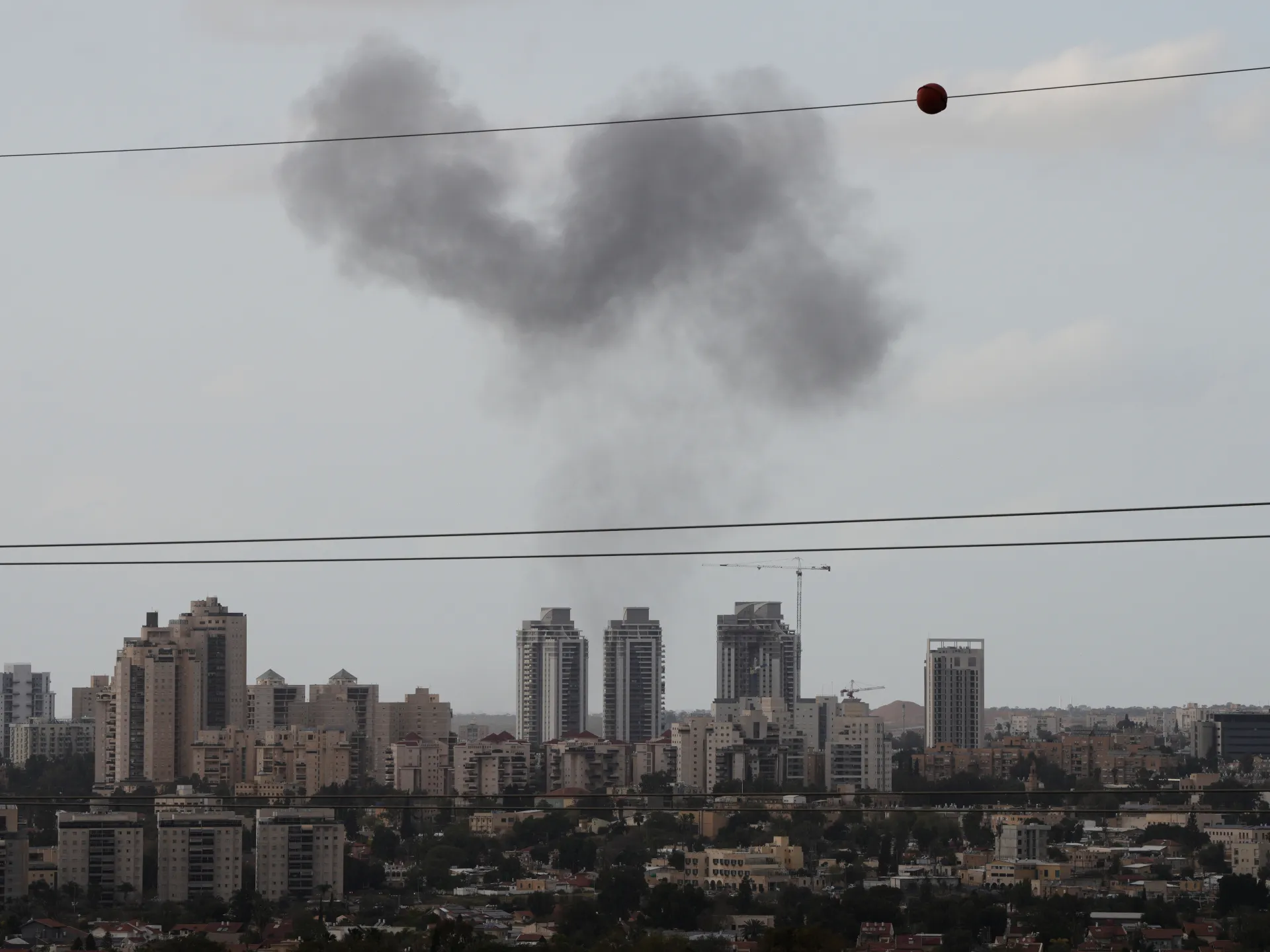
Iran hits industrial zone in southern Israel | US-Israel war on Iran News
An Iranian missile barrage has caused a fire a chemical plant near Beersheba in southern Israel, following expanded attacks on Iranian infrastructure.
Published On 29 Mar 2026
An Iranian missile barrage has caused a fire a chemical plant near Beersheba in southern Israel, following expanded attacks on Iranian infrastructure.
Published On 29 Mar 202629 Mar 2026
Share
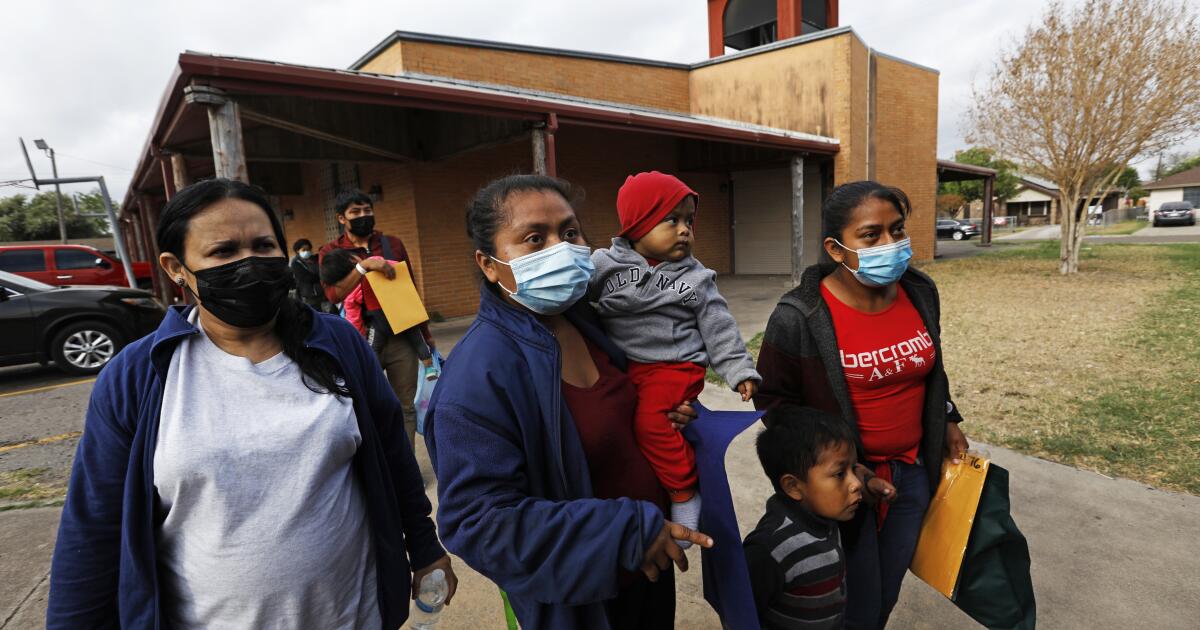
WASHINGTON — The Trump administration urged the Supreme Court on Tuesday to rule that it may block migrants from applying for asylum at ports of entry along the southern border.
The administration’s lawyers argued that the right to asylum, which arose in response to Nazi Germany and the Holocaust, does not extend to those who are stopped just short of a border post in California, Arizona or Texas.
They pointed to part of the immigration law that says a non-citizen who “arrives in the United States … may apply for asylum.”
“You can’t arrive in the United States while you’re still standing in Mexico. That should be the end of this case,” Vivek Suri, a Justice Department attorney, told the court.
Immigration rights advocates called this claim “perverse” and illogical. They said such a rule would encourage migrants to cross the border illegally rather than present themselves legally at a border post.
The justices sounded divided and a bit uncertain over how to proceed. But the conservative majority is nonetheless likely to uphold the administration’s broad power over immigration enforcement.
Several of the justices noted, however, the Trump administration is not currently enforcing a “remain in Mexico” policy.
Liberal Justices Sonia Sotomayor and Ketanji Brown Jackson questioned why the court would make a major decision on immigration and asylum with no immediate, practical impact.
The case posed a fundamental clash between the government’s need to manage surges at the border and the moral and historic right to offer asylum to those fleeing persecution.
In 1939, more than 900 Jewish refugees who were fleeing Nazi Germany aboard the MS St. Louis were turned away by Cuba and the United States. They were forced to return to Europe and more than 250 of them died in the Holocaust.
The worldwide moral reckoning spurred many nations, including the United States, to adopt new laws which offer protection to those fleeing persecution.
In the Refugee Act of 1980, Congress said that non-citizens either “physically present in the United States” or “at a land border or port of entry” may apply for asylum.
To be eligible for asylum, a non-citizen had to demonstrate a well-founded fear of persecution in their home country due to their race, religion, nationality, membership in a particular social group, or political opinion.
Only a small percentage of applicants win their asylum claims, and only after years of litigation.
But faced with overwhelming surge of migrants, the Obama administration in 2016 adopted a “metering” policy that required people to wait on the Mexican side of the border.
The Trump and Biden administrations maintained such policies for a time.
Immigrant rights advocates sued, contending the metering policy was illegal. They won before a federal judge in San Diego who ruled the migrants had a right to claim asylum.
In a 2-1 decision, the 9th Circuit Court of Appeals agreed in 2024.
“To ‘arrive’ means ‘to reach a destination,’” Judge Michelle Friedland wrote for the appeals court. “A person who presents herself to an official at the border has ‘arrived.’”
The Trump administration appealed.
Solicitor Gen. D. John Sauer said the “ordinary meaning of ‘arrives in’ refers to entering a specific place, not just coming close to it. An alien who is stopped in Mexico does not arrive in the United States.”
On Tuesday, the Justice Department attorney said the court should reverse the 9th Circuit and uphold the government’s broad power to block migrants approaching the border.
“I can’t predict the next border surge,” Suri said.
“For more than 45 years, Congress has guaranteed people arriving at our borders the right to seek asylum, consistent with our international treaty obligations,” said Kelsi Corkran, Supreme Court director of the Institute for Constitutional Advocacy and Protection, who argued the case. “Yet this administration believes that Congress gave it discretion to completely ignore those requirements, and turn back those who are seeking refuge from persecution at its whim.”
“The people turned away at our border are fleeing rape, torture, kidnapping, and death threats. You cannot tell families running for their lives to go back and wait in danger because their suffering is inconvenient,” said Nicole Elizabeth Ramos, border rights project directo at Al Otro Lado which was the plaintiff in the case. “We brought this case because the United States made a legal and moral commitment to protect people fleeing persecution.”
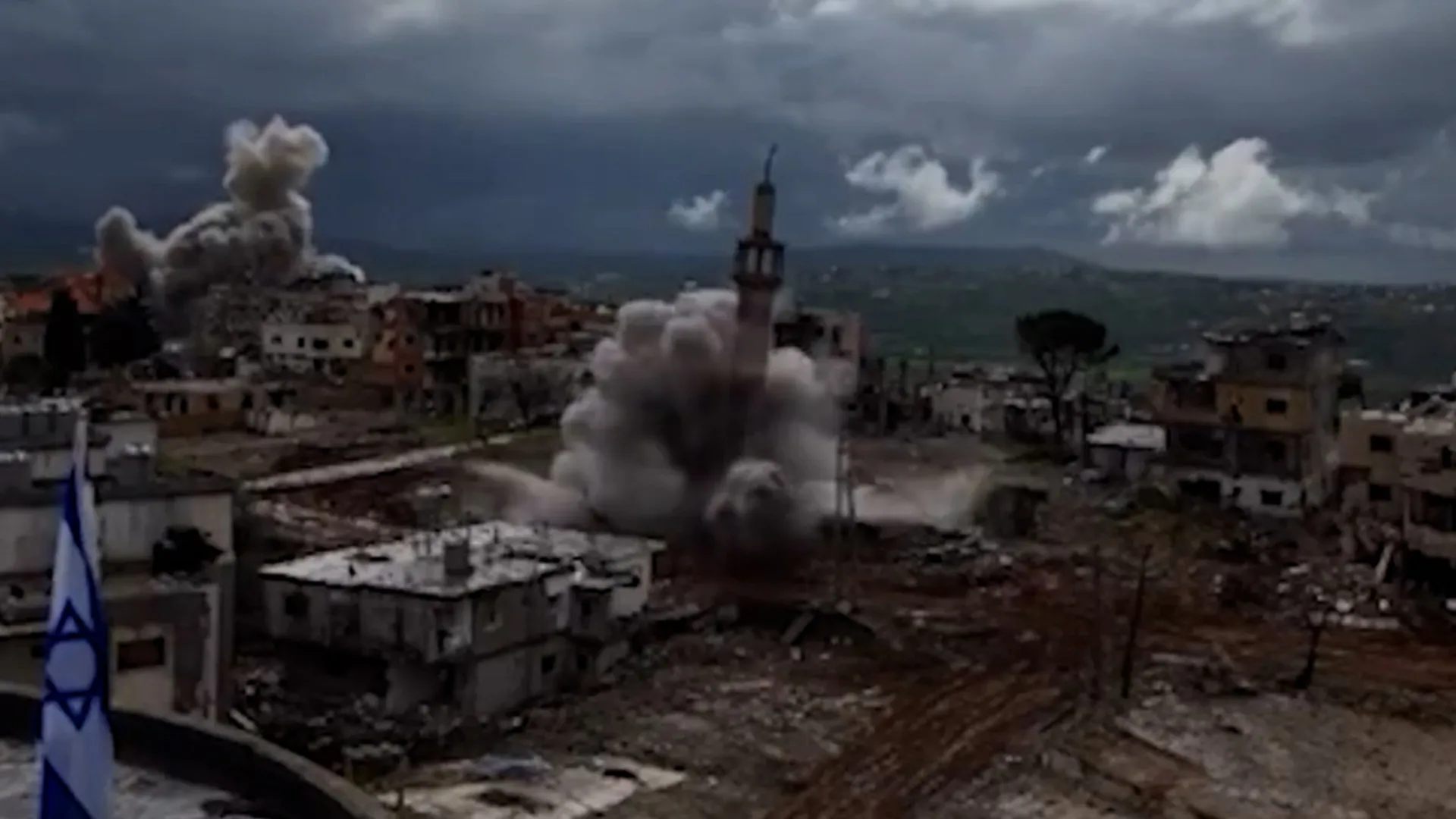
Video shows Israeli forces blowing up a mosque’s minaret in Khiam in southern Lebanon. Israel says it is fighting Hezbollah but has forcibly displaced more than a million people and stands accused of trying to depopulate the entire south of the country.
Published On 24 Mar 202624 Mar 2026
Share
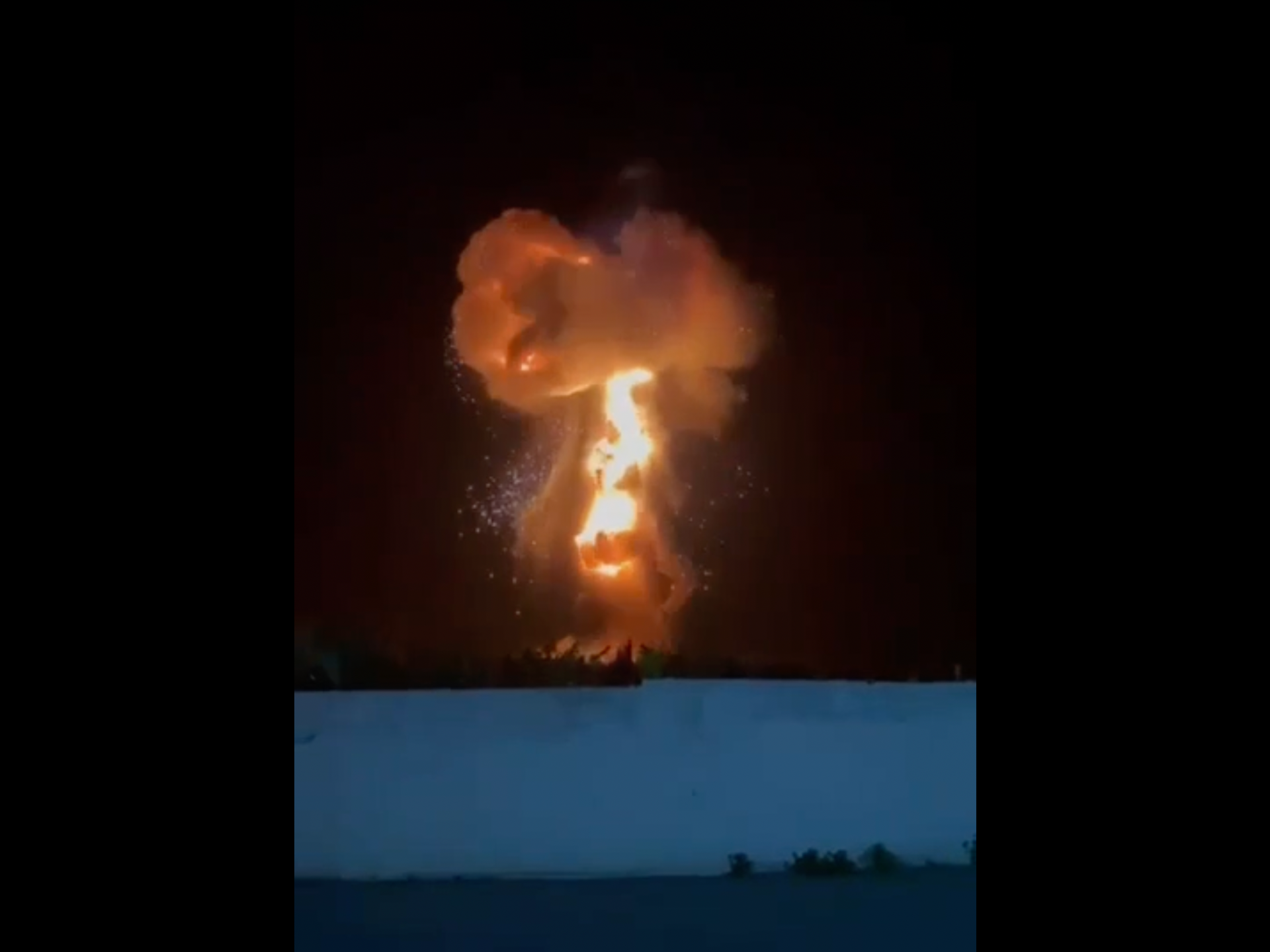
An Israeli attack has hit a petrol station in southern Lebanon, near the Rashidieh Camp for Palestinian refugees, triggering a huge explosion and fire. The Israeli army had issued forced displacement orders to residents.
Published On 24 Mar 202624 Mar 2026
Share
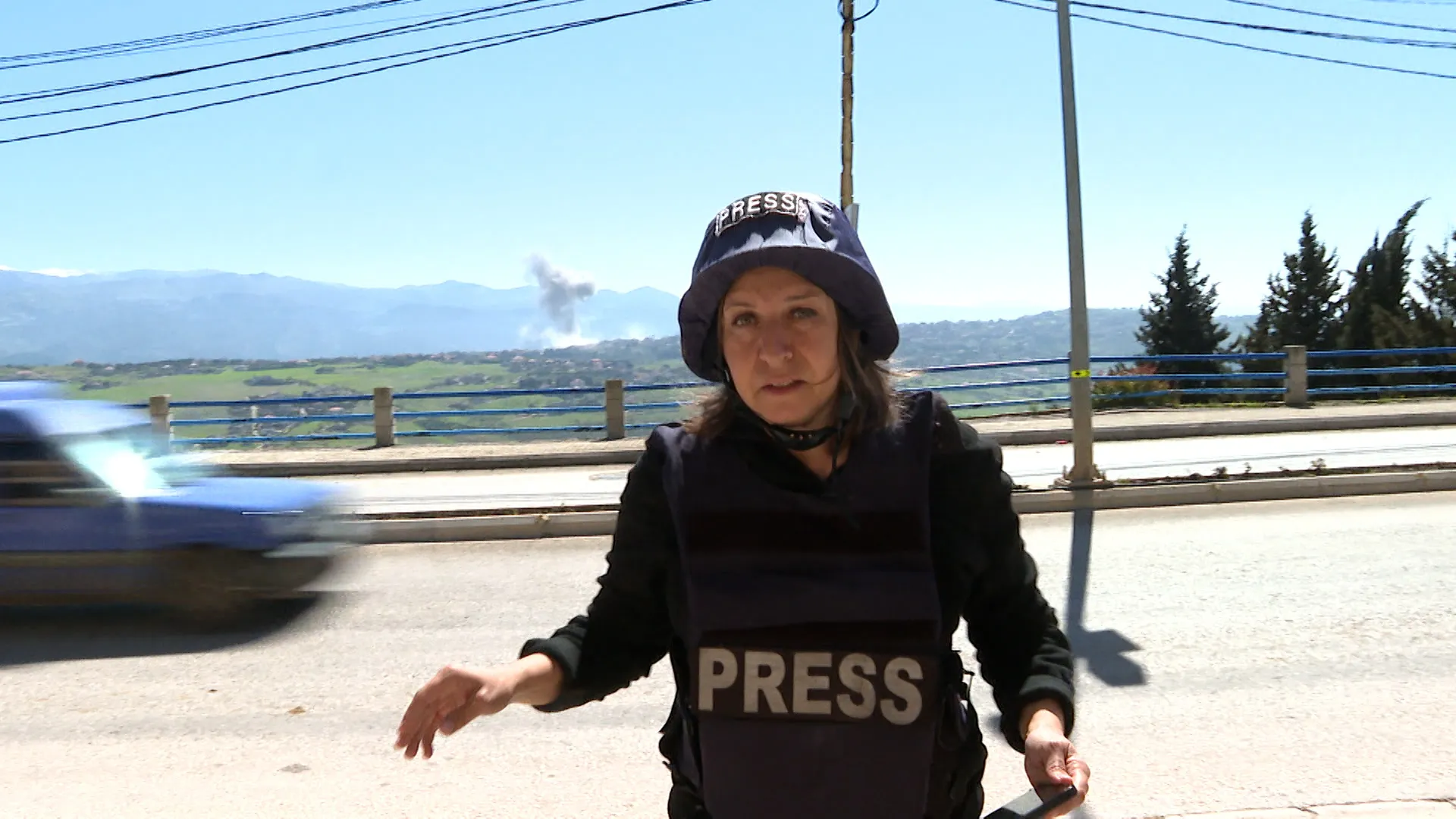
The Israeli military has launched waves of air raids across southern Lebanon after announcing “limited and targeted ground operations” against Hezbollah positions. Al Jazeera’s Zeina Khodr is in Marjayoun, which has been turned into an active war zone following clashes.
Published On 17 Mar 202617 Mar 2026
Share
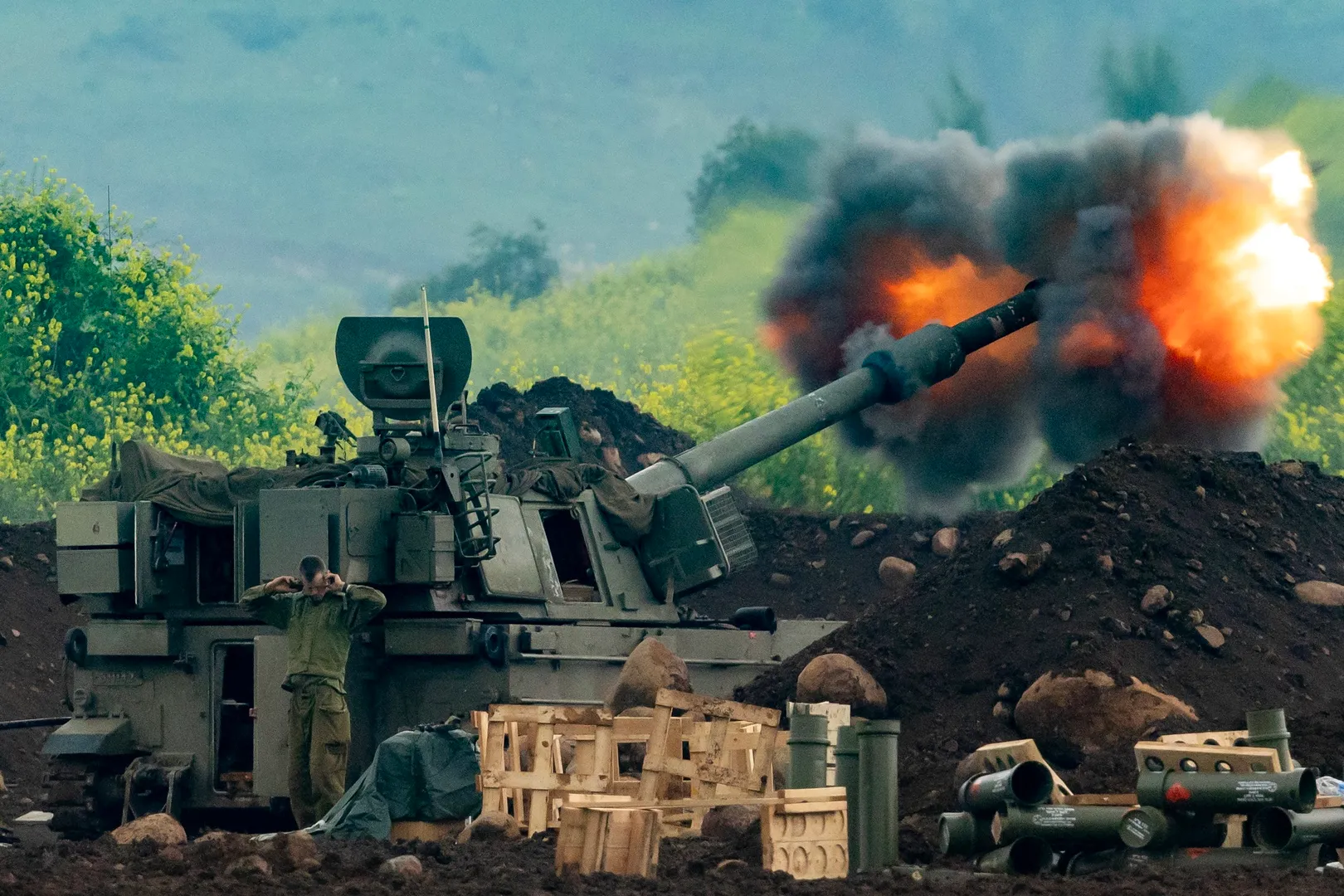
Israeli forces have attacked multiple towns in southern Lebanon after announcing “limited and targeted ground operations” against Hezbollah. Israel has warned residents will not be able to return to their homes until the military says so.
Published On 16 Mar 202616 Mar 2026
Share

Hi, and welcome to another edition of Prep Rally. I’m Eric Sondheimer. The champions have been crowned in high school basketball and soccer. What a weekend it was in Sacramento.
Prep Rally is devoted to the SoCal high school sports experience, bringing you scores, stories and a behind-the-scenes look at what makes prep sports so popular.
By continuing, you agree to our Terms of Service and our Privacy Policy.

Damien players celebrate their state Division I boys’ basketball title victory over Folsom at the Golden 1 Center in Sacramento on March 13, 2026.
(Greg Stein)
In the highest divisions at the CIF state championships at Golden 1 Center in Sacramento, Southern California basketball teams continue to dominate.
Sierra Canyon and Ontario Christian were crowned Open Division boys and girls champions, respectively. Sierra Canyon overcame the loss of Maxi Adams to an ankle injury in the first quarter to defeat Richmond Salesian 78-70. Here’s the report.

Kaleena Smith of Ontario Christian gets emotional in the first half at Golden 1 Center against Archbishop Mitty.
(Greg Stein)
Ontario Christian received another standout performance from junior guard Kaleena Smith to defeat Archbishop Mitty 56-49. Here’s the report.
Damien won Division I for coach Mike LeDuc. Here’s the report. Corona Centennial’s one-two punch of Sydney Douglas and Cyndee Bryant led the Huskies to the Division I girls title. Here’s the report.
Sylmar and Birmingham came up short trying to become the first City Section teams from the San Fernando Valley to win state titles. Sylmar was beaten in Division V. Here’s the report. Birmingham settled for runner-up in Division III. Here’s the report.
El Dorado’s girls’ team broke through in Division III. Here’s the report.

Garfield goalkeeper Javier Zarate gets his photo taken with CIF executive director Ron Nocetti at state soccer finals. Garfield lost 2-0 in Division V.
(CIF)
Garfield was beaten in the Division V state boys final 2-0 by Branson. But sophomore goalie Javier Zarate continues to impress. Here’s a look at his impact.
Mater Dei deserves the name soccer school of the West. The Monarchs won boys and girls state titles in Division I. The boys defeated Salinas Everett Alvarez 2-1. The girls defeated unbeaten Bishop O’Dowd 2-0. Los Alamitos won Division III boys over Watsonville 1-0. Irvine University won Division IV 3-2.

Freshman Louis Lappe of Harvard-Westlake receives congratulations after his first high school hit.
(Craig Weston)
Freshman Louis Lappe of Harvard-Westlake, the former El Segundo Little League star who gained national fame for his walk-off home run at the Little League World Series in 2023, hit his first high school home run on Wednesday.
A moment in time. The first career home run for freshman Louis Lappe. Courtesy Harvard-Westlake. I think he’s going to hit plenty more. pic.twitter.com/jESpnQC6YN
— eric sondheimer (@latsondheimer) March 12, 2026
Let’s just say he was a little excited.
Brody Schumaker of Santa Margarita had four hits, including a grand slam, and seven RBIs in a win over Los Osos. He has struck out once in 34 at-bats.

Landon Hovermale of Norco has allowed no runs in 18 2/3 innings this season.
(Nick Koza)
Norco has one of the hottest pitchers around in Landon Hovermale, who has given up no runs in 18 2/3 innings. Here was his latest performance.
It appears Southern Section is considering reducing teams to the Division 1 baseball playoffs with a smaller division and multiple games. Rest of teams would go in other divisions. Recommended by advisory committee. Only D1. Let’s see what turns out. Sounds like soccer playoffs.
— eric sondheimer (@latsondheimer) March 11, 2026
Foothill pitchers have thrown three consecutive shutouts.
There’s every indication that the Southern Section is going to introduce a new playoff format for Division 1 baseball only. It’s expected to be a 16-team tournament broken into four pools with double elimination leading to the quarterfinals with the top two teams in each pool advancing, followed by single elimination. The baseball advisory committee has been pushing for such a tournament in Division 1 for years.
Here’s this week’s top 25 rankings by The Times.
Emily Yoon of El Dorado threw a no-hitter in a win over Villa Park in a league opener.
Here’s last week’s top 20 softball rankings, with unbeaten Murrieta Mesa leading the way.
California state leader and meet record 10.27 wind legal for Servite’s Benjamin Harris at the Redondo Nike Track Festival! 📸: Bob Leetch pic.twitter.com/SXr4bESsVJ
— Rich Gonzalez (@PrepCalTrack) March 14, 2026
Benjamin Harris of Servite turned on the speed at Redondo Union on Saturday, running a wind legal 10.27 seconds in the 100 meters.
Moorpark Track & Field throws down the hammer!! Varsity Boys & JV sweep, Varsity Girls takes down Camarillo for the 1st time in a decade! Jr. Davis Benson sets TWO school records 14.30 110H, 38.82 300H and our Girls 4×100 Record gets broken at 48.26!! WHAT A DAY! @davistbenson pic.twitter.com/GBN8FxWwDZ
— Christian Dearborn (@CoachDearborn) March 12, 2026
One of the most versatile track and field athletes this season has to be junior Davis Benson of Moorpark. He’s putting up good marks in a variety of events. He’s already set school records in the 110 hurdles of 14.30 and the 300 hurdles in 38.82. And he’s gearing up for a high jump showdown later in the season with Sherman Oaks Notre Dame’s JJ Harel. Benson has gone 6-10.
Carson’s Jayden Rendon stamped himself as a state contender in the 110 hurdles with a time of 13.91 at Redondo Union.
Lawrence Kensinger of Venice, another pupil of Sherman Oaks Notre Dame throwing coach Nick Garcia, is closing in on 60 feet in the shotput. He recorded a career-best 59-8.
Jaslene Massey of Aliso Niguel, already No. 1 in the state in the discus, won the Nike Indoor Nationals in the shotput at 54-2.75, seventh-best mark in California history. She also got a mark of 188-7 in the discus, second-best all-time.
Loyola’s Ejam Yohannes ran 400 meters in a state-leading 46.24. It was a school record.

Former Mission Viejo coach Bob Johnson died last week. He was 80.
(Los Angeles Times)
High school football fans across Southern California were offering memories of Hall of Fame coach Bob Johnson after his passing Wednesay. He was 80.
Johnson won nine Southern Section titles coaching at Mission Viejo and El Toro.
Here’s the report.
One of the best sporting events of the year happens Friday night when volleyball powers Mira Costa and Loyola face off at Mira Costa. . . .
Alfred Rowe has resigned after one season as football coach at Long Beach Jordan. . . .
Earl Sanchez has resigned as basketball coach at Sierra Vista. . . .
Former Gardena Serra and UCLA tight end Caleb Wilson has been hired as an assistant coach at Colorado State under former UCLA coach Jim Mora Jr. . . .
Luis Cruz Jr. is the new football coach at Sunny Hills. . . .
The top football player in the state for next season, Honor Fa’alave-Johnson of Cathedral Catholic, announced he has committed to USC.

In 2023, Left-hander Mason Edwards of Palisades was one top pitchers in the City Section. Now he’s the ace at USC.
(Steve Galluzzo)
Mason Edwards, a junior at USC from Palisades High, is off to one of the best starts by a pitcher in the nation. He entered last week having allowed no runs and only three hits in 24 innings while recording a 3-0 record. He gave up his first run of the season on Friday. He’s left-handed and has 42 strikeouts. He throws between 90 and 93 mph.
Edwards has continued to improve at USC since his arrive in the fall of 2023.
From the Players Tribune, former El Toro pitcher pitcher Paul Skenes offers advice to Little Leaguers.
From the Daily Bruin, a story on Brentwood basketball coach Ryan Bailey, a former UCLA basketball standout.
From the Los Angeles Times, a story on former Chatsworth guard Alijah Arenas keeping his NBA dreams alive.
Trent McDuffie (St. John Bosco), Colby Parkinson (Oaks Christian), Coleman Shelton (Loyola), Quentin Lake (Mater Dei) are going to be Southern California heroes as they try to help the Rams win a Super Bowl in 2027.
— eric sondheimer (@latsondheimer) March 9, 2026
I should also note that the Sunset League has won 5 tournaments this season
Corona Del Mar — Mira Costa/Redondo Union Tournament🏆
Marina — Portola Tournament🏆
Los Alamitos — Kennedy Tournament🏆
Newport Harbor — Tesoro Tournament🏆
Fountain Valley — Pacifica Tournament🏆
— OC Boys Volleyball (@ocboysvball) March 11, 2026
Chris Sailer Kicking is beyond proud of our very first student, lifelong friend, staff member & NFL Legend @nickfolk2
He has signed a 2-year deal with the @AtlantaFalcons at the age of 41!
Nick has lead the NFL in FG% for the past 3 straight years going a combined 70-73. pic.twitter.com/phADFiqToU
— Chris Sailer Kicking (@Chris_Sailer) March 14, 2026
Have a question, comment or something you’d like to see in a future Prep Rally newsletter? Email me at eric.sondheimer@latimes.com, and follow me on Twitter at @latsondheimer.
Did you get this newsletter forwarded to you? To sign up and get it in your inbox, click here.
The Israeli army says its forces are striking key sites in southern Lebanon, as fierce clashes with Hezbollah continue near the town of Khiam.

Published On 16 Mar 202616 Mar 2026
Share
The Israeli military says its troops have begun ground operations in southern Lebanon as fighting against Hezbollah intensifies around the strategic southern town of Khiam.
At least three air strikes struck the city of Khiam, Al Jazeera Arabic reported on Monday.
list of 4 itemsend of list
Khiam, a stronghold of Hezbollah, is strategically located and is seen as a gateway to southern Lebanon. The latest war started after Hezbollah fired rockets in response to the killing of Iran’s Supreme Leader Ayatollah Ali Khamenei. Hezbollah had not attacked Israel since the 2024 ceasefire despite repeated Israeli violations of the United States-brokered deal.
On Monday morning, two Israeli air raids targeted the town of Yater, Al Jazeera Arabic reported. There were no immediate reports of casualties or damage.
Israel also launched raids on Burj Qalawiya, Sultaniya and Chaqra, also in southern Lebanon, according to Al Jazeera Arabic. Two raids were also conducted on the towns of Qantara and as-Sawana.
The Israeli army, in a post on X, said on Monday that its troops in recent days were “focused on ground operations on key targets in southern Lebanon to expand the forward defence area”.
“This operation is part of the effort to establish the forward defence, which includes destroying terrorist infrastructure and eliminating terrorists,” it added.
Khiam sits on high ground just a few kilometres from the Israeli border and the Litani River, giving it a commanding view over northern Israel and nearby Lebanese plains.
Al Jazeera’s Zeina Khodr said a “major battle was under way” in and around Khiam. “The elevation of Khiam for both sides gives them a strategic advantage,” she said.
Moreover, Khodr noted the town lies on a “long and important junction … a road that leads to the eastern and western sectors of southern Lebanon”.
“One of the roads leads to the Bekaa Valley too in eastern Lebanon, another area where Hezbollah has influence,” she said.
“What Israel has been trying to do is really cut the supply lines and the difficult capabilities of Hezbollah, so it’s unable to bring in more weapons and fighters to areas south of the Litani River.”
More than 800,000 people, including women and children, have been forced to flee from their homes as the Israeli army issued evacuation orders for many neighbourhoods in southern Lebanon, as well as the capital, Beirut.
Israeli attacks in Lebanon have so far killed at least 850 people, among them 107 children and 66 women.
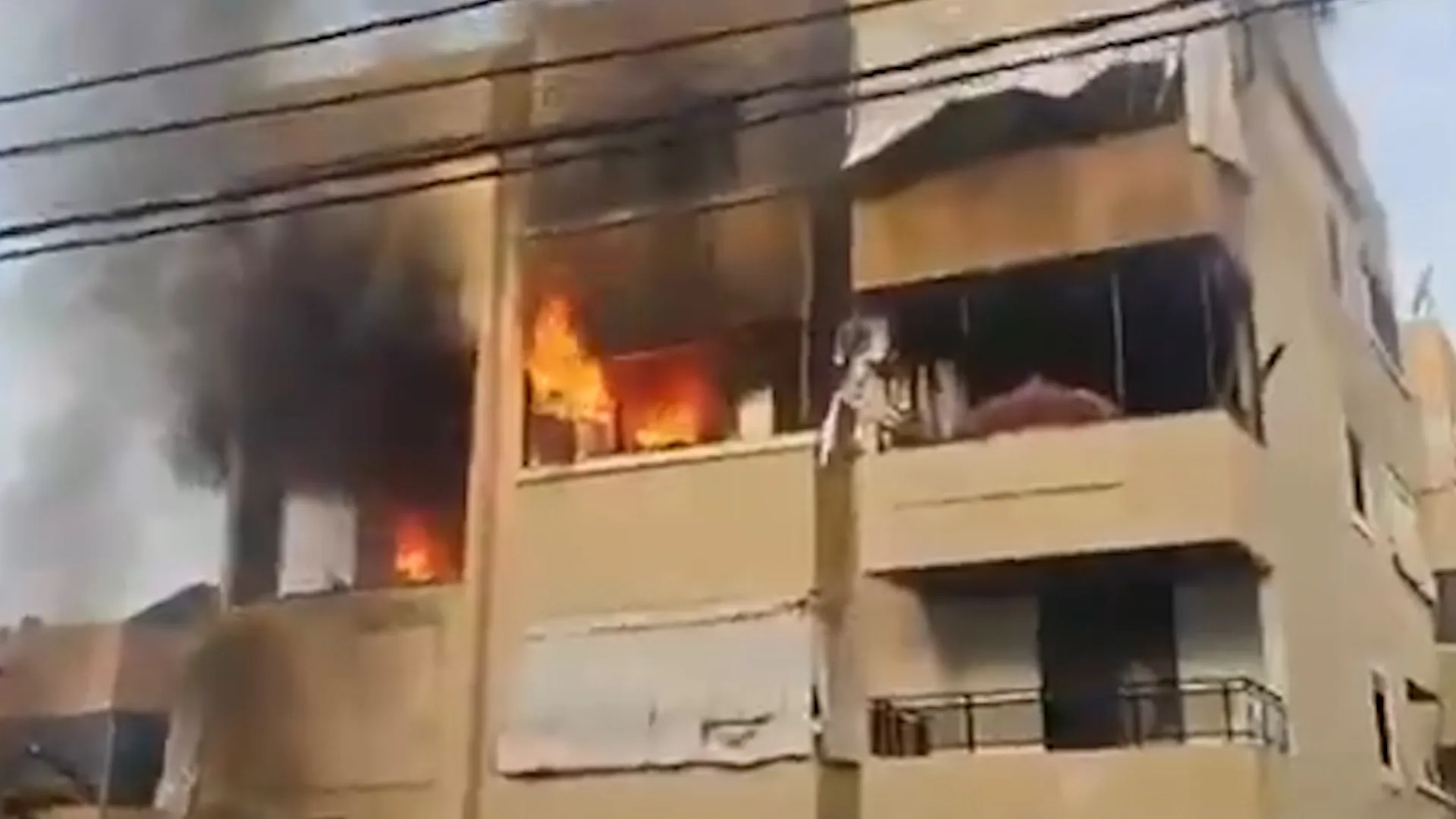
Video shows a large fire engulfing an apartment building in the Sidon area of southern Lebanon, following reports of an Israeli attack that killed four people.
Published On 14 Mar 202614 Mar 2026
Share
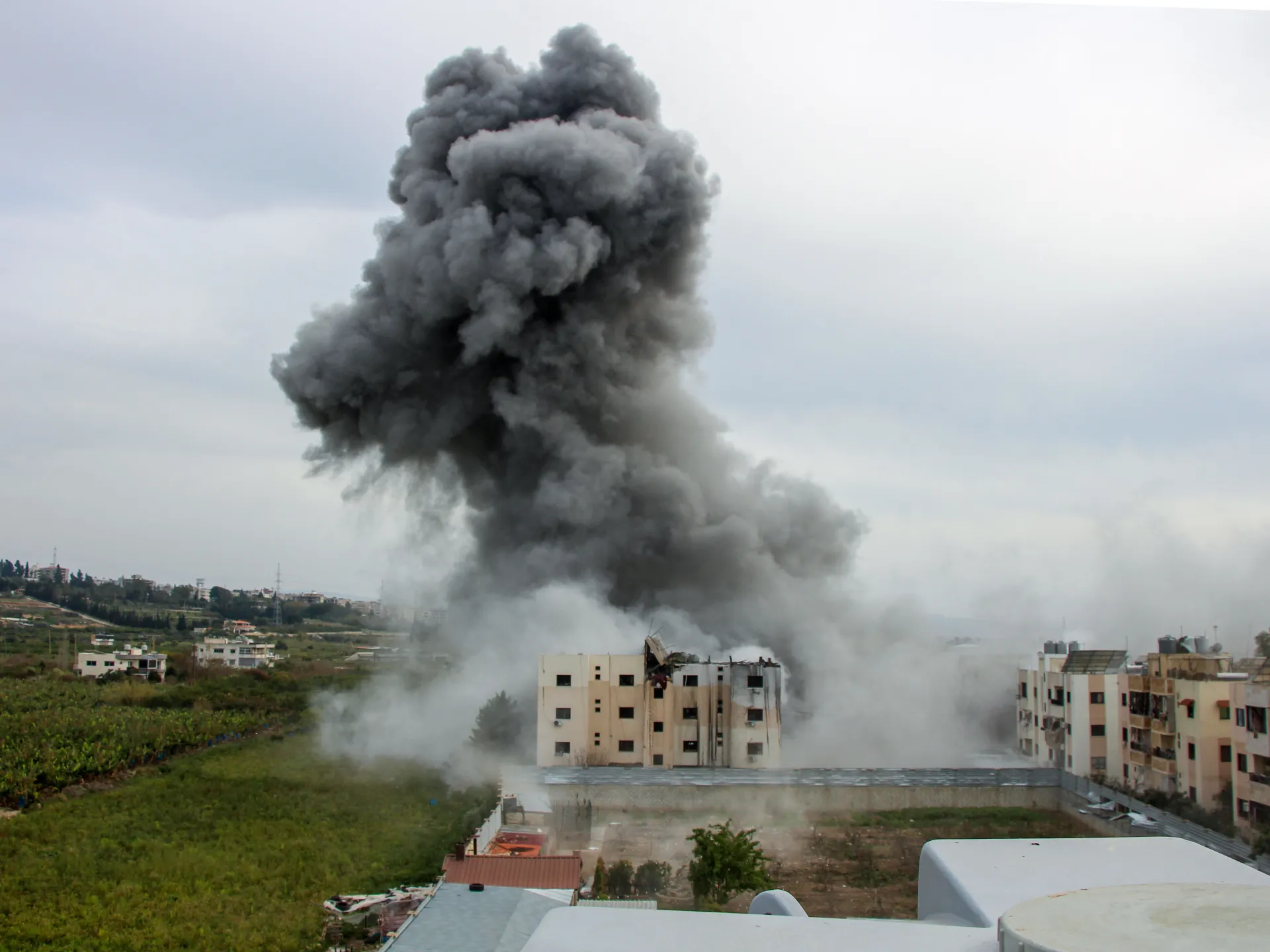
Israel’s attack, echoing similar carnage it wrought in Gaza, kills doctors, paramedics and nurses who were on duty.
An Israeli strike on a health centre in southern Lebanon has killed 12 medical workers, the Lebanese Ministry of Public Health said, as its devastating assault continued amid a wider regional war launched by the United States and Israel on Iran 15 days ago.
The attack late on Friday occurred in the village of Burj Qalaouiyah in the Bint Jbeil District, and killed doctors, paramedics and nurses who were on duty, Lebanon’s health ministry said.
list of 4 itemsend of list
The carnage echoed Israel’s constant targeting of medics and hospitals that decimated Gaza’s healthcare system during its genocidal war on the Palestinian enclave and which contravenes international humanitarian law.
Israeli strikes have so far killed 18 paramedics among 773 people reported killed in Lebanon since fighting between Hezbollah and Israel reignited March 2, after a US-Israeli assault on Iran began on February 28, with the conflict now embroiling much of the region.
According to Al Jazeera’s Heidi Pett, reporting from Beirut, the toll of medics was preliminary as rescue teams continued searching for missing people.
“You can see how deadly some of these individual air strikes have been, not just across the south, but of course, we are seeing air strikes hitting across the capital, Beirut,” said Pett.
Lebanon’s Ministry of Health said it was the second attack on the health sector within hours, after another Israeli strike on the southern village of Souaneh killed two paramedics and wounded five others when it hit a paramedic centre.
The ministry condemned the attack and denounced what it called as continued violence against health workers.
At least four people were also killed in an Israeli air raid on Taamir Haret Saida in the country’s south, the Lebanese News Agency (NNA) said.
Meanwhile, Hezbollah overnight claimed it fired suicide drones against Israeli troops in the northern town of Ya’ara inside Israel.
It was the 24th military operation announced by the group on Friday.
The Lebanese armed group also said it launched rocket attacks targeting Israeli soldiers in southern Lebanon, one in the town of Kfar Kila, and the other in the city of Khiam.
Late on Friday, Hezbollah leader Naim Qassem said his group is ready for a “long confrontation” with Israel as the war continues.
“This is an existential battle, not a limited or simple battle,” he said.
Meanwhile, Iran’s retaliatory attacks against Israel continued.
Rocket and missile strikes early on Saturday targeted the Upper Galilee region of northern Israel, Channel 12 reported.
The news outlet said that a “limited number of launches” were either “intercepted” or exploded in open areas.
A post on X from Israel’s public broadcaster KAN featured several vehicles damaged in the strikes.
Alarms were raised for suspected rocket and missile fire in Manara, Margaliot, Kfar Giladi, Misgav Am, Tel Hai, Metula, Kfar Giladi and Kfar Yuval throughout the early morning on Saturday.
“A lot of the damage that we are being told about at the moment seems to be coming from these cluster missiles that Iran has been launching pretty much consistently for the last week at least and they scatter over a large area,” said Al Jazeera’s Rory Challands, reporting from Amman, Jordan.
“They disperse these submunitions bomblets. Each of those has about 2.5 kilogrammes (5.5 pounds) of explosives in them. You can see why that does quite some damage when it scatters and hasn’t been intercepted by the Israeli air defence.”
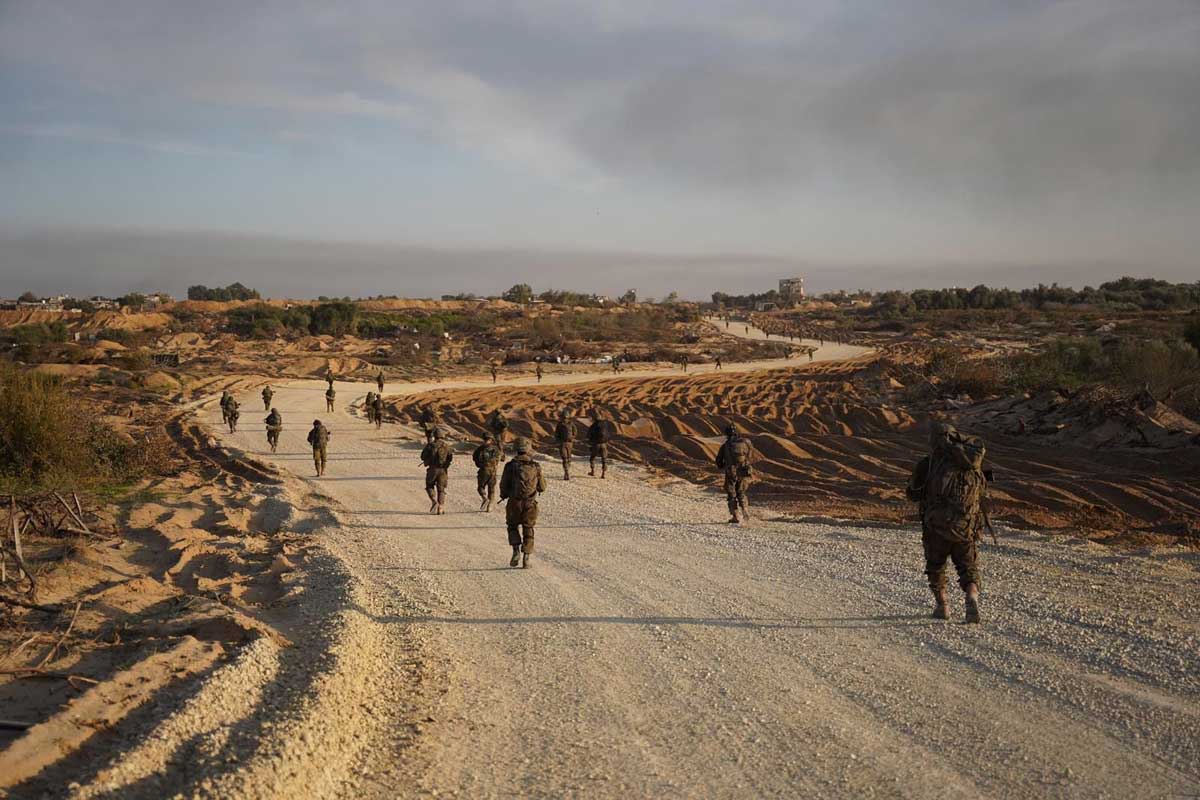
Human Rights Watch (HRW) said on Monday that the Israeli military illegally deployed white phosphorus munitions over the southern Lebanese town of Yohmor on March 3, posing severe risks to civilians.
Ramzi Kaiss, HRW’s Lebanon researcher, described the incendiary effects of white phosphorus as capable of causing death or “cruel injuries that result in lifelong suffering.” The group said it had verified eight images and reports from civil defense personnel responding to fires in residential areas.
White phosphorus can legally be used in warfare to create smoke screens, illuminate battlefields, mark targets, or burn fortified positions. However, HRW emphasized that deploying airburst white phosphorus over populated areas is prohibited under international humanitarian law.
Protocol III of the Convention on the Prohibition of Certain Conventional Weapons classifies white phosphorus as an incendiary weapon and forbids its use against military targets located among civilians. While Israel has not signed the protocol and is not legally bound by it, HRW and other rights groups argue that its use in populated areas constitutes a violation of humanitarian principles.
The report comes amid an intensification of Israeli strikes in Lebanon over the past week. According to the Lebanese National Council for Scientific Research, between October 2023 and July 2024, Israel carried out 175 attacks using white phosphorus in southern Lebanon, sparking fires across more than 600 hectares (1,480 acres) of farmland.
HRW previously accused Israel of using white phosphorus in 2023, a charge the Israeli military denied. Civilian displacement and casualties have been severe: nearly 400 people killed and hundreds of thousands forced to leave their homes as strikes continue.
The Israeli military told Reuters it was unaware of and could not confirm the use of white phosphorus shells in Yohmor. Officials said they had not reviewed the same videos cited by HRW and declined to comment on the allegations. Lebanese authorities have not issued a statement on the report.
On March 3, the Israeli military ordered residents of Yohmor and 50 other nearby towns to evacuate ahead of strikes, highlighting the heightened risks to civilians in affected areas.
The allegations underscore the ongoing humanitarian and legal concerns in southern Lebanon amid Israel’s operations. Even without Israel being formally bound by Protocol III, the use of incendiary munitions in populated areas raises questions about compliance with customary international humanitarian law, which prohibits indiscriminate attacks on civilians.
The repeated accusations of white phosphorus use reflect both the intensity of Israel’s military campaign and the broader risk of civilian harm in the conflict. Beyond immediate casualties and destruction, agricultural damage and displacement threaten long-term social and economic stability in southern Lebanon, particularly for farming communities still recovering from previous conflicts.
The HRW report may intensify international scrutiny on Israel’s conduct in Lebanon, potentially influencing diplomatic and humanitarian responses in the region.
With information from Reuters.

“I put in everything I would have wanted playing clubs — bus parking, a great green room and amazing sound system,” Mesh said. “In L.A., I wouldn’t have come close to getting this. But Indio’s very exciting — a lot of young metal bands are thriving, and now you don’t even have to go to the high desert to find them.”
Mesh is well known in the desert’s music scene (he also opened Studio B, a high-end mix studio). The venue — formerly the Little Street Music Hall — had a knotty opening after some early ownership disputes with former partners. But for salty desert rockers and hungry young punks who can’t afford Coachella tickets, it’s a welcome addition to the scene. “Pappy’s has a vibe where you go to the club just knowing there’ll be something cool there,” Mesh said, “Indio is getting that too.”

SOUTHERN CALIFORNIA REGIONALS
THURSDAY’S RESULTS
SEMIFINALS
BOYS
DIVISION I
#1 Mater Dei 2, #4 El Camino Real 1
#3 Del Norte 0, #2 Orange Lutheran 0 (Del Norte wins 4-1 in shootout)
DIVISION II
#4 San Pascual 1, #8 Sultana 0
#2 Mira Monte 2, #3 Fontana 1
DIVISION III
#1 Bishop Amat 3, #4 Palisades 1
#6 Los Alamitos 2, #7 Mt. Carmel 0
DIVISION IV
#1 Irvine University d. #5 Chatsworth, forfeit
#2 Granite Hills 2, #6 Santa Ana Valley 1
DIVISION V
#5 Kern County Taft 2, #1 Ontario Christian 1
#3 Garfield 3, #7 San Diego Lincoln 0
GIRLS
DIVISION I
#1 Santa Margarita 3, #4 Cleveland 0
#2 Mater Dei 2, #6 Oaks Christian 0
DIVISION II
#8 Westview 2, #5 Sherman Oaks Notre Dame 0
#2 Westlake 1, #3 Garces Memorial 0
DIVISION III
#4 Quartz Hill 1, #1 Del Norte 0
#2 Millikan 0, #3 Ayala 0 (Millikan wins 4-1 in shootout)
DIVISION IV
#5 Coachella Valley 4, #8 Segerstrom 1
#3 San Jacinto 3, #7 Del Sol 2
DIVISION V
#8 Coastal Academy 3, #5 Bravo 0
#3 Delano Kennedy 1, #2 Santa Monica Pacifica Christian 0
SATURDAY’S SCHEDULE
(Games at 5 p.m. unless noted)
FINALS
BOYS
DIVISION I
#3 Del Norte vs. #1 Mater Dei at Fred Kelly Stadium
DIVISION II
#2 Mira Monte at #1 San Pascual
DIVISION III
#6 Los Alamitos at #1 Bishop Amat
DIVISION IV
#2 Granite Hills at #1 Irvine University
DIVISION V
#5 Kern County Taft at #3 Garfield, 5 p.m.
GIRLS
DIVISION I
#2 Mater Dei vs. #1 Santa Margarita at Tesoro
DIVISION II
#8 Westview at #2 Westlake
DIVISION III
#4 Quartz Hill at #2 Millikan
DIVISION IV
#5 Coachella Valley at #3 San Jacinto
DIVISION V
#8 Coastal Academy at #3 Delano Kennedy
Note: State Championships March 13-14 at Matomas High in Sacramento (times TBA).
WASHINGTON — New signs of a widening regional conflict emerged Thursday as the war with Iran entered its sixth day, with European allies pledging warships and access to military bases for the U.S. campaign, Israel intensifying strikes in Lebanon against Hezbollah militants, and Kurdish forces preparing for a potential incursion into northern Iran.
Iran continued retaliatory missile and drone attacks against Israel and U.S. military sites across the region. The strikes hit at least “10 countries that did not attack [Iran],” British Prime Minister Kier Starmer said at a news conference Thursday.
Starmer announced new military deployments and confirmed the U.K. will allow American forces to use British bases for defensive operations against Iran. The move was a reversal of Starmer’s initial cautious approach, which drew criticism from President Trump, who said, “He’s no Winston Churchill.”
“I took the decision that the U.K. would not join the initial strikes on Iran by the U.S. and Israel,” Starmer said. “That decision was deliberate. It was in the national interest. And I stand by it. But when Iran started attacking countries around the Gulf and the wider region, the situation changed.”
The United Kingdom will send four additional RAF Typhoon jets to reinforce its squadron in Qatar, deploy Wildcat helicopters with anti-drone capabilities to Cyprus and dispatch the Royal Navy destroyer HMS Dragon to the eastern Mediterranean.
The moves place Britain among the most active European partners supporting the U.S. war effort, as Starmer warned that the conflict will likely “continue for some time,” he said. It comes after an Iranian drone struck a British military base in Cyprus on Monday, which has led to a mounting of European naval resources.
Located just 150 miles from Israel in the eastern Mediterranean, the island of Cyprus has emerged as a strategic — and exposed — nerve center in the U.S. offensive against Iran. It hosts vital British military bases and acts as an intelligence, surveillance, and logistics hub in countering Iranian influence and proxy attacks.
On Thursday, Italy’s defense minister, Guido Crosetto, said Thursday that his country would follow the lead of France, Spain and the Netherlands to aid in the defense of Cyprus.
“Within the EU it made sense to send a message of support to Cyprus,” he said.

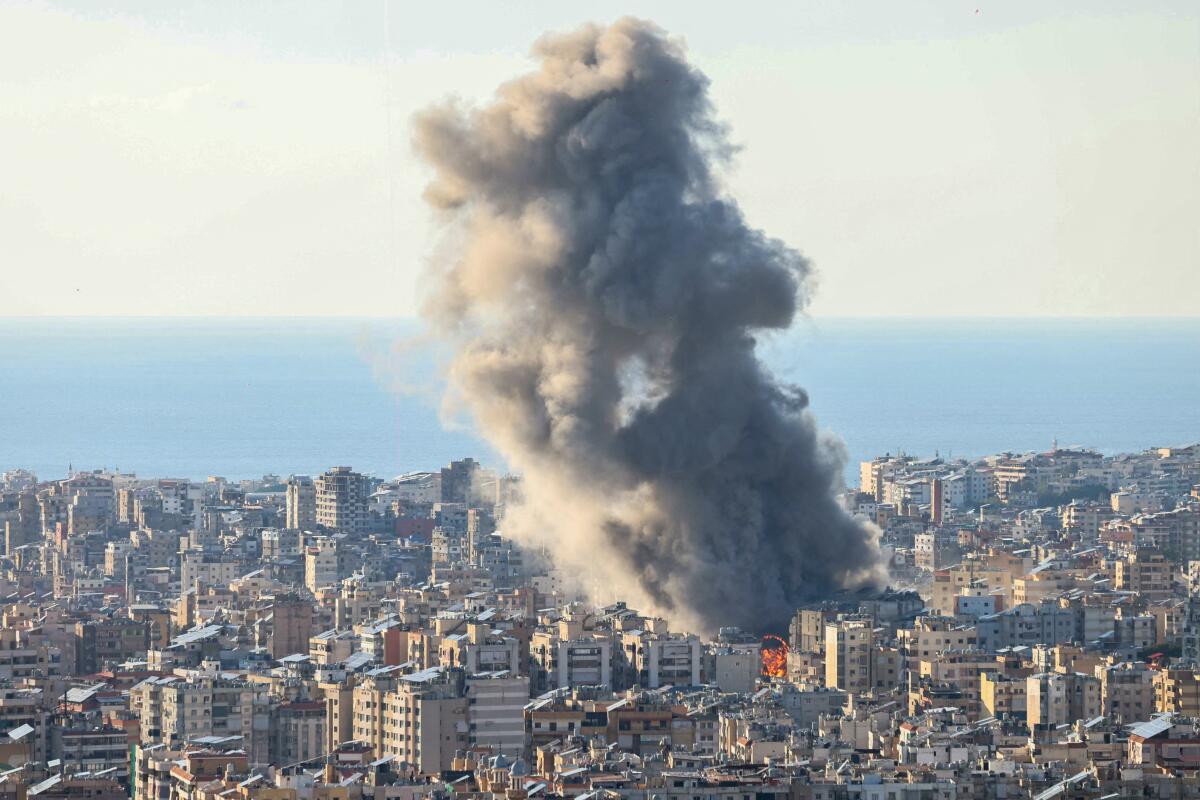
Smoke plumes billow following Israeli bombardment on Beirut’s southern suburbs on Monday.
(Ibrahim Amro/AFP via Getty Images)
Spain announced Thursday it would dispatch its advanced frigate Cristóbal Colón to Cyprus, after initially maintaining a “no to war” stance.
France also authorized temporary access to U.S. aircraft on bases located on French soil, a French army general staff official told Reuters.
And Germany, a country that has explicitly ruled out military participation in war with Iran and has criticized the legality of the initial U.S.–Israeli strikes, said Western powers must prepare for further escalation.
“Europe must remain united in the face of this crisis,” German Foreign Minister Annalena Baerbock said during an emergency meeting of European leaders. “We will not allow ourselves to be divided while regional stability is threatened.”
Meanwhile, conflict has reached a fever pitch between Israel and Hezbollah, the Lebanese-based Iranian proxy and key pillar of what Iran has called the “Axis of Resistance.” Overnight, Israel launched heavy airstrikes across southern Lebanon and issued urgent evacuation warnings for the southern suburbs of the capital, Beirut.
The outbreak of hostilities in Lebanon marks the end of a Israeli-Hezbollah truce and the opening of a major second front in the war with Iran. The fighting erupted after Hezbollah launched a barrage of drones and rockets at Israeli military sites—a retaliation for the joint U.S.-Israeli assassination of Iranian Supreme Leader Ayatollah Ali Khamenei.
Lebanon’s health ministry reported that at least 102 people have been killed by the Israeli strikes so far. In the Beirut suburbs, the Israeli military ordered residents of the Hezbollah-dominated Dahieh district to “save your lives and evacuate your homes immediately.”
“Dahieh? There’s not going to be a Dahieh any more,” one young man said as he talked to a family member on the phone at a media vantage point in the nearby hills.
The widening conflict has also drawn in Ukraine, which has some of the world’s most extensive experience in defending against Iranian-made Shahed drones. Such drones have been deployed by Russia in its war on Ukraine.
Ukraine President Volodymyr Zelensky said late Wednesday that the United States and other allies in Europe and the Middle East have sought Kyiv’s “expertise and practical support” to help them stop Iranian drones.
“Of course, any assistance we provide is only on the condition that it does not weaken our own defense in Ukraine and that it serves as an investment in our diplomatic capabilities,” Zelensky said in a social media post. “We help protect against war those who help us — Ukraine — bring the war to a dignified conclusion.”
While the aerial and naval battle intensifies across the Middle East, a ground war may also be on the horizon.

People arrive to sign a condolence book in memory of Iran’s Supreme Leader Ayatollah Ali Khamenei at the Embassy of Iran in New Delhi, India, on Thursday.
(Raj K Raj/Hindustan Times via Getty Images)
The United States and Israel have increased coordination with Kurdish armed groups along Iran’s western frontier, hoping to exploit longstanding tensions between Tehran and Kurdish factions opposed to the Iranian government, Kurdish officials told the Associated Press.
Iranian forces have already launched missile and drone strikes against Kurdish-controlled areas in northern Iraq following the initial U.S.–Israeli assault on Iranian targets.
Those strikes targeted areas around the city of Erbil and on Kurdish opposition groups operating near the Iranian border, locations where U.S. military forces and diplomatic facilities are also present.
Officials have not publicly confirmed whether Kurdish groups will mount cross-border operations, but security analysts say an incursion into Iranian territory could open a new front in the conflict.
U.S. Central Command, meanwhile, is asking the Pentagon to send more military intelligence officers to its headquarters in Tampa, Florida, to support operations against Iran for at least 100 days, but likely through September, according to a notification obtained by Politico.
The moves come as the House prepares to vote Thursday on a war powers resolution that would withdraw U.S. forces from hostilities in Iran, and limit the president’s power to wage war in the region. A similar measure failed Wednesday in the Senate, mostly along party lines.
Quinton reported from Washington and Bulos from Beirut.
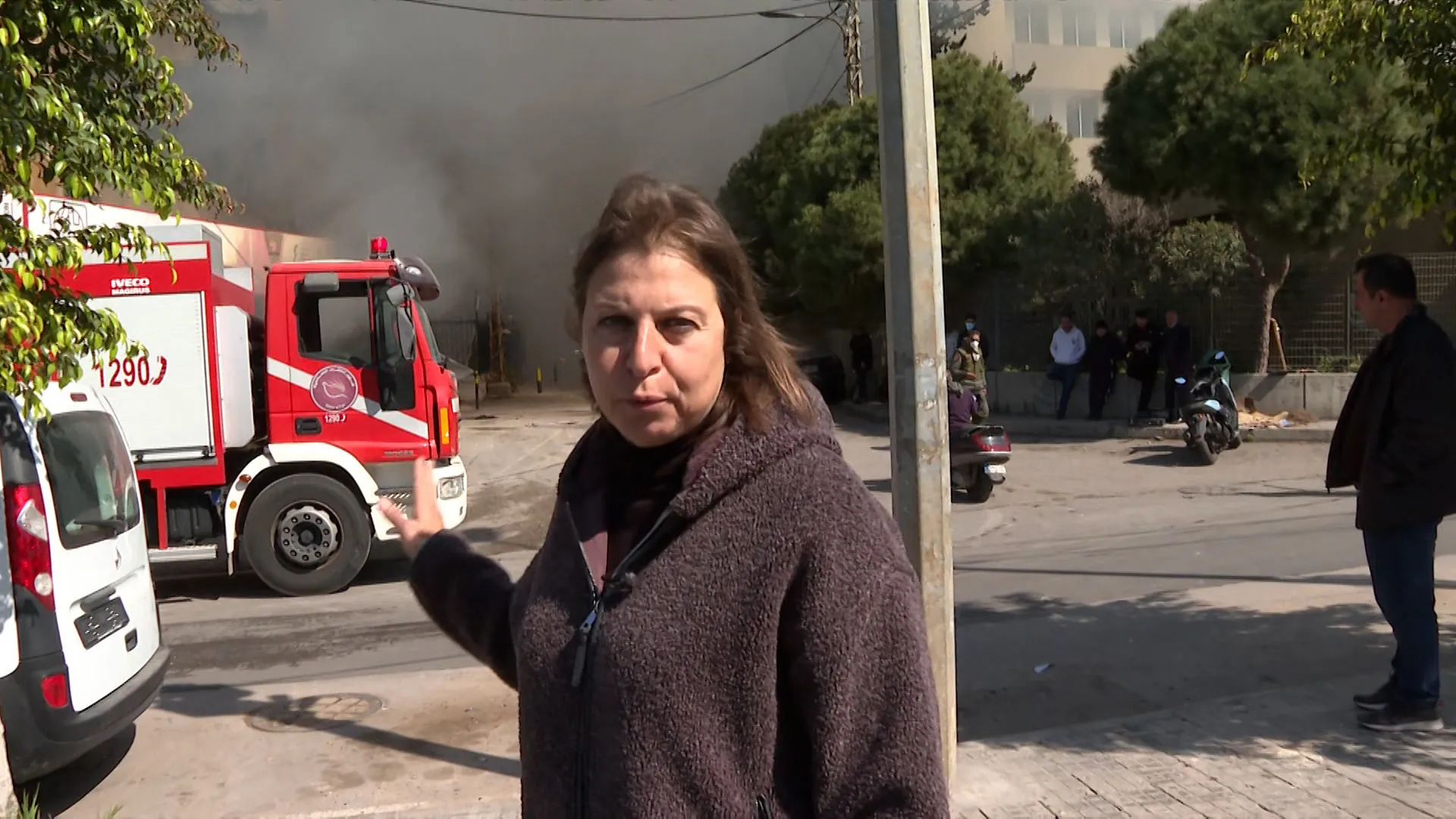
Al Jazeera’s Zeina Khodr reports from the site of an Israeli attack in Beirut’s southern suburbs, which Israel says targeted a ‘Hezbollah area’. Israeli forces have taken more land inside Lebanon, expanding a de facto buffer zone that has already displaced tens of thousands of people.
Published On 3 Mar 20263 Mar 2026
Share

HIGH SCHOOL BASKETBALL CHAMPIONSHIPS
CITY SECTION
Friday’s Results
BOYS
At Southwest College
OPEN DIVISION
#1 Palisades 75, #2 Cleveland 56
DIVISION II
#3 Sylmar 70, #4 King/Drew 64
At Birmingham High
DIVISION V
#2 Canoga Park 43, #1 Van Nuys 38
GIRLS
At Birmingham High
DIVISION II
#2 North Hollywood 59, #1 Harbor Teacher 55
At Southwest College
DIVISION III
#1 Washington Prep 45, #2 Gardena 30
At Garfield High
DIVISION IV
#12 Wilmington Banning 39, #11 Bravo 33
DIVISION V
#2 Legacy 33, #9 Los Angeles 32
Saturday’s Results
BOYS
At Pasadena City College
DIVISION I
#1 Granada Hills 59, #2 Chatsworth 51
DIVISION III
#10 Verdugo Hills 62, #1 RFK Community 42
DIVISION IV
#2 Franklin 69, #5 San Fernando 55
GIRLS
At Pasadena City College
OPEN DIVISION
#1 Westchester 60, #2 Birmingham 37
DIVISION I
#2 Granada Hills Kennedy 54, #1 El Camino Real 31
SOUTHERN SECTION
Friday’s Results
BOYS
At Azusa Pacific
DIVISION 4
Colony 51, Trabuco Hills 44
DIVISION 5
Gardena Serra 57, Pilibos 51
GIRLS
At Toyota Arena
DIVISION 1
La Salle 51, Valencia 35
DIVISION 2
Crescenta Valley 51, Saugus 43
DIVISION 3
St. Margaret’s 57, Murrieta Valley 41
At Azusa Pacific
DIVISION 4
El Dorado 41, La Canada 27
DIVISION 6
Savanna 46, Warren 25
Saturday’s Results
BOYS
At Toyota Arena
OPEN DIVISION
Sierra Canyon 59, Harvard-Westlake 53
DIVISION 1
Crean Lutheran 59, JSerra 52
DIVISION 2
Bishop Amat 71, Hesperia 48
DIVISION 3
Murrieta Mesa 65, Aliso Niguel 58
DIVISION 9
Colton 55, Pacific 42
At Azusa Pacific
DIVISION 6
Laguna Hills 78, Ramona 51
DIVISION 7
Rialto 57, Salesian 31
DIVISION 8
Victor Valley 78, South El Monte 45
GIRLS
At Toyota Arena
OPEN DIVISION
Sierra Canyon 69, Ontario Christian 62
DIVISION 8
Schurr 44, Orange 32
At Azusa Pacific
DIVISION 5
Bishop Diego 42, Burbank Burroughs 41
DIVISION 7
La Palma Kennedy 55, Laguna Hills 28
DIVISION 9
Sierra Vista 52, Desert Hot Springs 42