South China Sea

China sanctions 30 US firms, individuals over Taiwan weapons sales | Weapons News

Beijing urged the US to cease ‘dangerous’ efforts to arm the island, which it claims as its own.

China has sanctioned a group of United States defence companies and senior executives over weapons sales to Taiwan, the latest move against Washington’s support for the self-governed island that Beijing claims as its own.

China’s Ministry of Foreign Affairs announced the measures on Friday, targeting 20 US defence firms and 10 individuals. It said the sanctions are retaliation for the US’s newly announced $11.1bn weapons package for Taiwan, one of its largest ever for the territory.

Recommended Stories

list of 3 itemsend of list

“Any provocative actions that cross the line on the Taiwan issue ‌will be met with a strong ⁠response from China,” said a statement from the ministry, urging the US to cease “dangerous” efforts to arm the island.

The sanctioned companies include Boeing’s St Louis branch, Northrop Grumman Systems Corporation, L3Harris Maritime Services and Lazarus AI.

The measures freeze these companies’ assets in China and bar domestic organisations and individuals from working with them, according to the ministry. They also seize the China-held assets of sanctioned individuals and ban them from entering China.

Targeted individuals include the founder of defence firm Anduril Industries and nine senior executives from the sanctioned firms. The measures take effect on December 26.

The US is bound by law to provide Taiwan, which rejects Beijing’s claim to the territory, with the means to defend itself. But US arms sales to the island have deepened tensions with China.

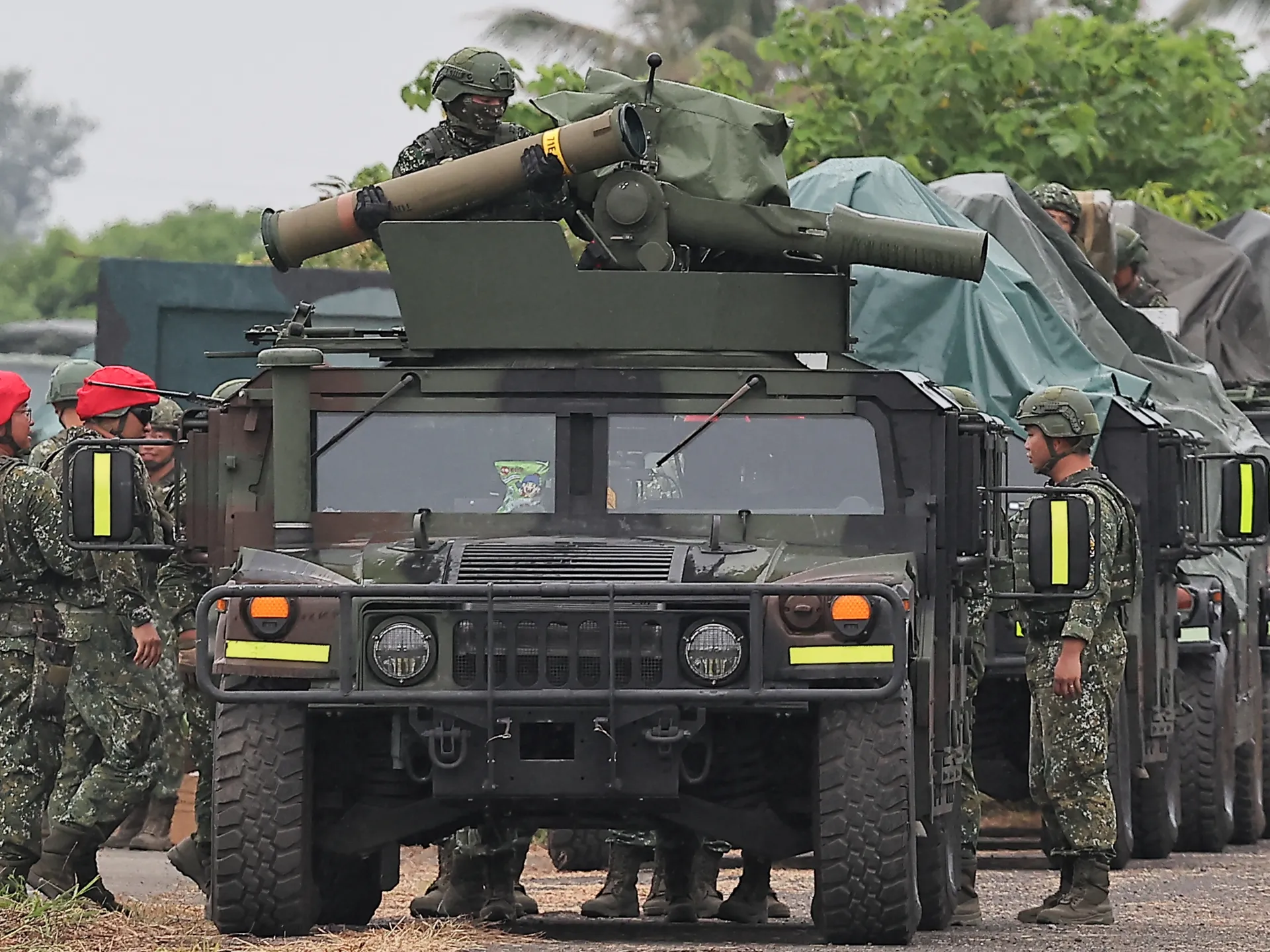
The latest US weapons deal with Taiwan, announced by President Donald Trump on December 17, includes the proposed sale of 82 High Mobility Artillery Rocket Systems, or HIMARS, and 420 Army Tactical Missile Systems, or ATACMS – worth more than $4bn.

The defence systems are similar to what the US had been providing Ukraine to defend against Russian aerial attacks.

The deal also includes 60 self-propelled howitzer artillery systems and related equipment worth more than $4bn and drones valued at more than $1bn.

Taiwan’s Ministry of National Defence praised the US for assisting Taiwan “in maintaining sufficient self-defence capabilities and in rapidly building strong deterrent power”.

Source link

Philippines says fishermen hurt, boat damaged in China coastguard skirmish | South China Sea News

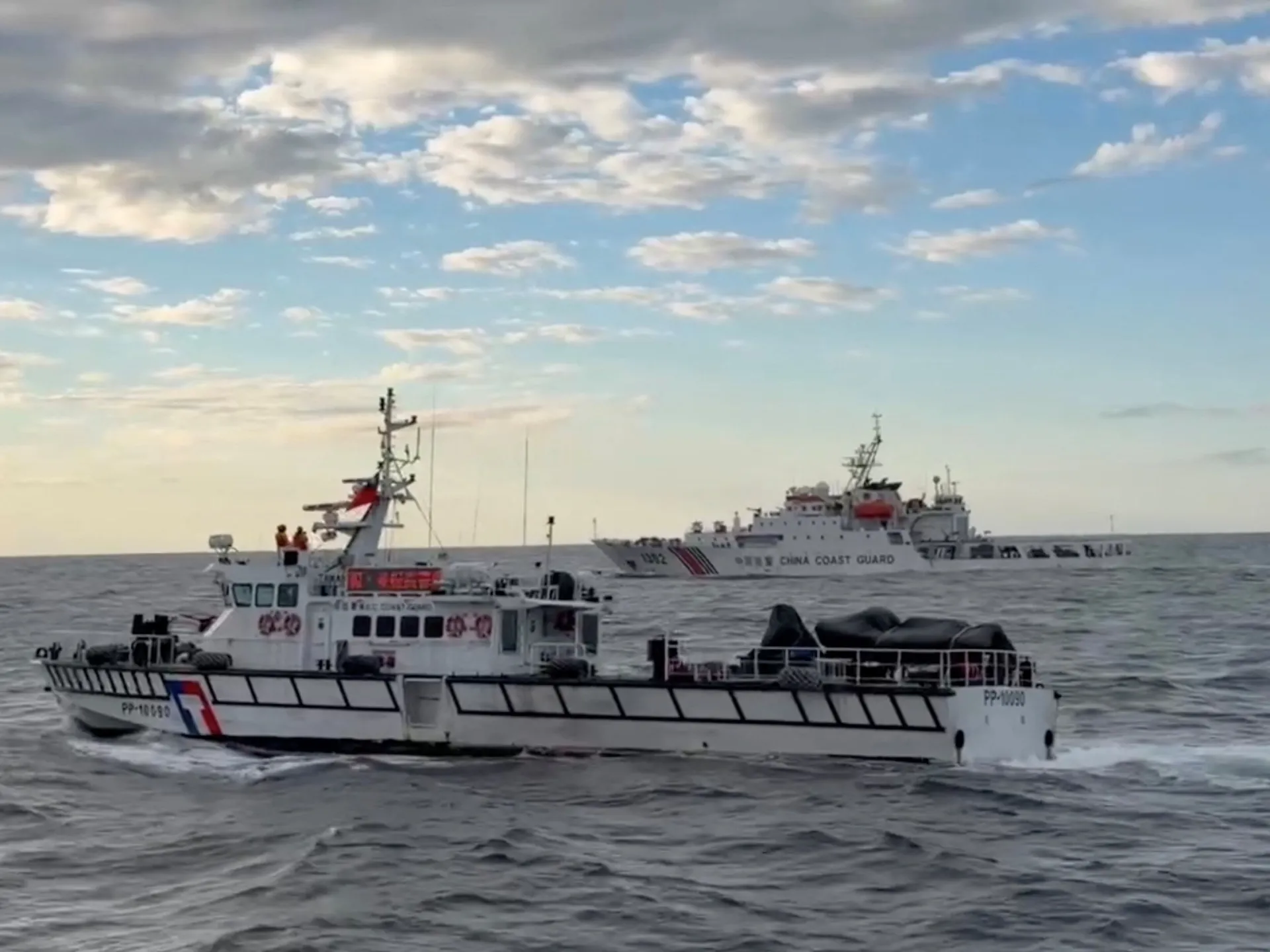
The Philippines has accused Chinese coastguard ships of firing water cannon at Filipino fishermen near a disputed South China Sea shoal, injuring three people and causing “significant damage” to two fishing vessels.

On Saturday, the Philippine coastguard (PCG) said that nearly two dozen Filipino fishing boats were attacked a day earlier, near an atoll called the Sabina Shoal that falls within the country’s 200km (124-mile) Exclusive Economic Zone (EEZ).

Recommended Stories

list of 3 itemsend of list

The fishermen faced high-pressure spray from Chinese water cannon, and Chinese vessels attempted aggressive blocking manoeuvres, according to Manila.

It was the latest in a series of confrontations between Chinese and Philippine ships in the contested waters of the South China Sea, which Beijing claims nearly in its entirety despite an international ruling against the claim.

Friday’s incident took place in a fish-rich area about 150km (93 miles) from the Philippine island of Palawan.

“As a result of these aggressive actions, three Filipino fishermen sustained physical injuries, including bruises and open wounds,” Commodore Jay Tarriela, a spokesman for the Philippine coastguard, said in a statement posted on Facebook.

“Two [Filipino fishing boats] also suffered significant damage from high-pressure water cannon blasts.”

During the incident, a Chinese boat also cut the anchor lines of several Filipino vessels, endangering their crews, according to the Philippine coastguard.

“The PCG calls on the Chinese coastguard to adhere to internationally recognised standards of conduct, prioritising the preservation of life at sea over pretensions of law enforcement that jeopardise the lives of innocent fishermen,” it said in a separate statement.

China, however, defended its actions on Friday as necessary to maintain its “territorial sovereignty” over the Sabina Shoal, which it referred to by the Chinese name Xianbin Jiao.

In a statement, Chinese coastguard spokesperson Liu Dejun said the military’s vessels had taken “necessary control measures, including issuing verbal warnings and expelling by external means, in accordance with laws and regulations”.

Dejun accused the Philippine vessels of having “deliberately intruded” on the shoal “under the pretext of fishing”.

Tarriela told the Reuters news agency that the Chinese coastguard’s statement amounted to an admission of wrongdoing.

In Saturday’s statement, the Philippine coastguard added that the vessels it deployed to aid the injured fishermen were repeatedly blocked from reaching the Sabina Shoal.

“Despite these unprofessional and unlawful interferences, the PCG successfully reached the fishermen this morning and provided immediate medical attention to the injured, along with essential supplies,” the statement said.

There has been a history of clashes between Chinese and Philippine vessels in the South China Sea, as each side seeks to assert its territorial claims.

A separate incident on Friday took place at the Beijing-controlled Scarborough Shoal, known in China as Huangyan Dao.

There, the Chinese military said that it had also “warned and expelled” several small aircraft from the Philippines that flew through what it considers its airspace.

In October, the Philippines also accused a Chinese ship of deliberately ramming one of its government vessels in the Spratly Islands, where Beijing has sought to assert its sovereignty claims for years. Beijing blamed Manila for the incident.

A month earlier, one person was injured when a water cannon from a Chinese coastguard vessel shattered a window on the bridge of a fisheries bureau vessel near the Scarborough Shoal.

China claims an area in the South China Sea that cuts into the exclusive economic zones of Brunei, Indonesia, Malaysia, the Philippines and Vietnam, which all have competing claims.

In 2016, an international tribunal sided with the Philippines, finding that China’s claims exceeded lawful limits under the United Nations Convention on the Law of the Sea.

But China denounced the ruling and has refused to abide by it.


Source link