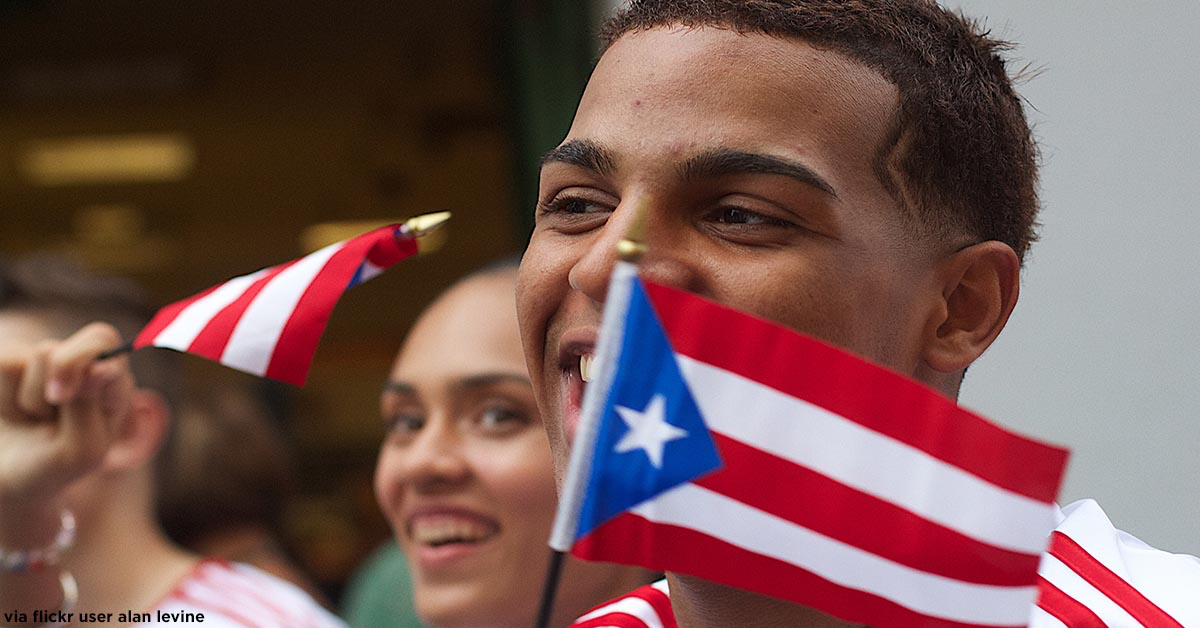
puerto rico

Essay: Bad Bunny’s Super Bowl halftime show will be a history lesson for the ages

Bad Bunny is constantly making history. Last Sunday he broke a new record by winning album of the year at the Grammys for his 2025 album, “Debí Tirar Más Fotos,” which was the first fully Spanish-language album to claim the title; and come Feb. 8, a.k.a. Super Bowl Sunday, he’ll be the headlining act at the Super Bowl halftime show.

Yet he is also teaching history. Bad Bunny’s latest record is not only a celebration of Puerto Rico and its people, but it offers a window into some of the challenges the embattled territory is currently facing — including massive migration, displacement and an infrastructure on the brink of collapse. In a moment when education is under attack, both in the United States and Puerto Rico, Bad Bunny is using pop culture’s biggest stage to offer the world a history lesson. And in this political context, that matters greatly.

In December 2024, I was contacted by Bad Bunny’s team to produce 17 pages outlining Puerto Rican history, to pair with each song’s YouTube visualizer for “DTMF.” Altogether, they have been viewed more than 775 million times.

I later produced 40 slides jam-packed with historical and cultural facts about Puerto Rico, which were screened at Bad Bunny’s 31-show residency in San Juan. These ranged from facts about the history of women’s suffrage to the founding of Puerto Rico’s oldest punk band, La Experiencia de Toñito Cabanillas.

When Bad Bunny was announced as the NFL’s choice to headline the halftime show, I was hardly surprised by the backlash from conservatives — including multiple Fox News hosts, podcasters and even President Trump, who said, “I don’t know who he is. I don’t know why they’re doing it … [It’s] crazy.”

As communities of color celebrated on social media, critics raised two questions: Why would a Spanish-speaking artist — even if he is the most-streamed artist on Earth — be chosen for that stage? And why wouldn’t they choose a more patriotic, Anglo-American artist?

While undoubtedly xenophobic in nature, these questions highlight their acute ignorance about the place that birthed Bad Bunny, and its ongoing entanglement with the United States.

Puerto Rico was first colonized by the Spanish from 1493 until 1898, the year that the United States occupied the country as part of the Spanish-American War. Later, in 1917, Puerto Ricans became U.S. citizens through the Jones Law. Eventually, we drafted a constitution and became a Commonwealth of the United States in 1952. But there is never one single historical narrative.

What these facts occlude, however, is that Puerto Ricans are second-class citizens who cannot vote for the president — and those in the archipelago are not fully protected by the U.S. Bill of Rights. According to the U.S. Supreme Court’s early-20th century Insular Cases, we belong to the United States, but we are not part of it.

Put simply: We are a colony of the United States in the 21st century.

When drafting the historical narratives for “DTMF,” Bad Bunny understood that Puerto Rican history is often unknown, even to our own people. He was interested in making history available for those who don’t have access to higher education. He wanted me to write these narratives in a candid manner to be read by people in the barriadas y caserios (working-class neighborhoods and the projects). These were the places where I came of age in Puerto Rico.

With the success of “DTMF,” Puerto Rican history was amplified to the world. I’ve had countless conversations with journalists from around the globe, who marveled at how little they knew about Puerto Rico’s history or its relationship to the United States. This is precisely what I think drives those debates about language and who gets the right to claim Americanness — a lack of information.

And even though Bad Bunny is a U.S. citizen, conservatives have organized an alternative “All-American Halftime Show,” which reveals how “Americanness” is policed through language and race. This is the product of willful ignorance.

Puerto Rico’s history is also that of Latin American, Caribbean, United States and Latinx communities. I believe Bad Bunny’s performance will invite people to understand the beauty and complexity of our people’s history, even if it makes outsiders uncomfortable. That he will also be doing so entirely in Spanish in a moment when Latinx people in the United States are being arrested or interrogated by federal agents for speaking in Spanish — or simply for having an accent? That matters.

Of course, artists alone will not save us from the perils of racism and xenophobia — I learned that from my time in the punk community. We cannot just wait on anyone, especially not celebrities, to change institutions without some people power to back them up.

Yet given his enormous reach — just this week his latest album hit No. 1 on Apple Music in China — Bad Bunny has the power to move the cultural needle. And if there’s one thing to take from the Grammys ceremony last Sunday, it’s that he’s not alone — other artists have taken a stand on anti-immigrant violence. They are living up to the moment. That matters too.

So while conservatives organize their bland counter to the Super Bowl halftime show — with none other than Kid Rock as headliner — Bad Bunny will be offering the world a much more valuable history lesson, full of sazón, batería y reggaetón.

Jorell Meléndez-Badillo is the author of “Puerto Rico: A National History and associate professor of Latin American and Caribbean History at the University of Wisconsin-Madison.

Source link

Ricky Martin pens tribute to Bad Bunny after his historic Grammy win

Following Bad Bunny’s landmark album of the year win at the 68th Grammy Awards for “Debí Tirar Más Fotos,” Ricky Martin penned a letter of appreciation to commemorate the moment.

In an opinion piece for the Puerto Rican newspaper El Nuevo Día published Tuesday, the Boricua hitmaker said Bad Bunny’s accomplishment stirred deep feelings within him.

“Benito, brother, seeing you win three Grammy Awards, one of them for album of the year, with a production entirely in Spanish, touched me deeply,” Martin wrote. “Not only as an artist, but as a Puerto Rican who has walked stages around the world carrying his language, his accent and his history.”

In addition to becoming the first all-Spanish album of the year winner, the “Nuevayol” artist took home the Grammy Awards for música urbana album and global music performance for the track “EoO” on Sunday.

Martin further called Bad Bunny’s achievement a “human” and “cultural” win, lauding him for not bending to the will of anyone who tried to change his sound in any way.

“You won without changing the color of your voice. You won without erasing your roots. You won by staying true to Puerto Rico,” Martin wrote. “You stayed true to your language, your rhythms and your authentic narrative.”

Martin, who first broke out as a solo musical act in the mid-’90s, became an international superstar off the back of his Spanish-language hits including 1995’s “María,” 1998’s “Vuelve” and “Perdido Sin Ti.”

He reached a new strata of stardom after his track “La Copa de Vida” was used as the official anthem for the 1998 FIFA World Cup. That song charted in over 60 countries and was translated into English. He landed his biggest hit with “Livin’ La Vida Loca,” which was the lead single from his 1999 self-titled English album.

When accepting his album of the year award Sunday night, Bad Bunny addressed the crowd predominantly in Spanish and spoke of the strugglesof the immigrant experience.

“I want to dedicate this award to all the people who had to leave their homeland, their country, to follow their dreams,” he said in English.

“Puerto Rico, believe me when I say that we are so much bigger than 100 by 35 and there is nothing that exists that we can’t accomplish,” the “Dakiti” artist said in Spanish. “Thank God, thank you to the academy, thank you to all the people who have believed in me throughout my whole career. To all the people who worked on this album. Thank you, Mami, for giving birth to me in Puerto Rico. I love you.”

The 54-year-old singer also showed love to Bad Bunny for using his platform to show solidarity for vulnerable communities.

“What touched me most about seeing you on the Grammys stage was the audience’s silence when you spoke,” Martin wrote. “When you defended the immigrant community, when you called out a system that persecutes and separates, you spoke from a place I know very well where fear and hope coexist, where millions live between languages, borders and deferred dreams.”

Martin concluded his letter by thanking Bad Bunny for reminding him and showing other Puerto Ricans that there is power in being true and authentic to yourself.

“This achievement is for a generation to whom you taught that their identity is non-negotiable and that success is not at odds with authenticity,” Martin wrote.

“This was for Puerto Ricans, for all our Latino brothers and sisters who dream in Spanish, for those crossing seas and borders wearing their cultures like a flag. From the heart, from one Boricua to another, with respect and love, I thank you for reminding us that when one of ours succeeds, we all succeed.”

Source link

Dodgers’ Edwin Díaz to pitch for Puerto Rico in World Baseball Classic

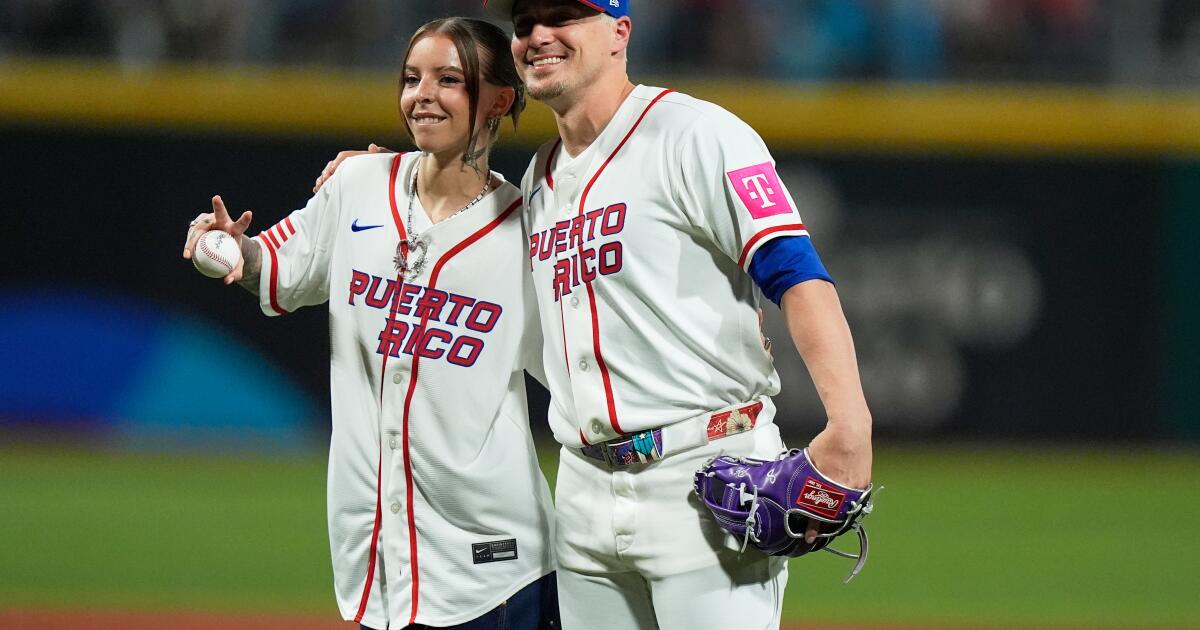
New Dodgers closer Edwin Díaz will pitch for Puerto in the World Baseball Classic in March, it was announced Monday.

Díaz, who signed a three-year, $69-million contract in December as the most sough-after reliever in free agency, pitched for Puerto Rico in the 2023 WBC but sufferd a right patellar tendon tear while celebrating a win over the Dominican Republic that pushed the team into the quarterfinals. He missed the entire 2023 MLB season as a result.

His announcement comes days after it was revealed Dodgers teammate Shohei Ohtani will not pitch in the WBC in order to focus on ramping up to pitch during the season without restrictions. Yoshinobu Yamamoto will pitch for Team Japan and catcher Will Smith and recently-retired left-hander Clayton Kershaw will be on the Team USA roster.

Source link

Bad Bunny wins Grammy for album of the year

Bad Bunny’s “Débi Tirar Más Fotos” was named album of the year at Sunday night’s 68th Grammy Awards — the first time a Spanish-language LP has won the Recording Academy’s most prestigious prize.

Bunny delivered the speech primarily in Spanish.

“I want to dedicate this award to all the people who had to leave their homeland, their country, to follow their dreams,” he said as the audience rose to its feet.

“Puerto Rico, believe me when I say that we are so much bigger than 100 by 35 and there is nothing that exists that we can’t accomplish,” he said in Spanish. “Thank God, thank you to the academy, thank you to all the people who have believed in me throughout my whole career. To all the people who worked on this album. Thank you, mami, for giving birth to me in Puerto Rico. I love you.”

“For all the people who have lost a loved one and even then have had to continue moving forward and continue with so much strength, this award is for you all.”

Intricately arranged with the sounds of the singer and rapper’s native Puerto Rico, “Débi Tirar Más Fotos” was released to rave reviews in January 2025 and quickly reached No. 1 on the Billboard 200 album chart. Last summer, Bad Bunny supported the project with a 30-date concert residency at San Juan’s José Miguel Agrelot Coliseum; he followed that with the announcement of a world tour that avoided the United States, in part, he told I-D magazine, because of his concern that immigration agents might turn up at shows.

Prior to Sunday’s win, “Débi Tirar Más Fotos” — the title translates in English to “I Should Have Taken More Photos” — was named album of the year at November’s Latin Grammy Awards. Next weekend, Bad Bunny (whose real name is Benito Antonio Martínez Ocasio) will headline the halftime show at Super Bowl LX in Santa Clara.

He won earlier in the night for música urbana album and global music performance.

The other LPs nominated for album of the year were Justin Bieber’s “Swag,” Sabrina Carpenter’s “Man’s Best Friend,” Clipse’s “Let God Sort Em Out,” Lady Gaga’s “Mayhem,” Kendrick Lamar’s “GNX,” Leon Thomas’ “Mutt” and Tyler, the Creator’s “Chromakopia.”

In 2025, Beyoncé took the prize with “Cowboy Carter.”

Source link

Add Miguel Rojas to the list of those unable to play in WBC

Miguel Rojas is the latest Dodger to withdraw from consideration for the World Baseball Classic, joining Teoscar Hernández, Andy Pages, Andy Ibáñez and perhaps other players. MLB Network will reveal all 20 team rosters Thursday at 4 p.m. PT.

Rojas, who turns 37 next month, will not represent his native Venezuela because of difficulty obtaining insurance. The versatile World Series star expressed regret that he cannot play in an Instagram story that included a photo of himself with the Venezuelan flag draped over his shoulders.

“Today I am very sad,” he wrote in Spanish. “A real pity to not be able to represent my country and wear that flag on my chest. On this occasion, age wasn’t just a number.”

Insurance was required to guarantee his $5.5-million salary in case he missed Dodgers games because of injuries incurred during the WBC, which will take place March 5-17 in Tokyo, Miami, Houston and San Juan, Puerto Rico.

Rojas’ situation is similar to that of Clayton Kershaw ahead of the 2023 WBC. The pitcher was disappointed that he couldn’t play for Team USA because his injury history made obtaining insurance impossible. The Dodgers declined to waive his insurance requirement and assume financial risk in case Kershaw got hurt during the tournament.

“I’m frustrated,” Kershaw said at the time. “They should make it easy for guys that want to play to play.”

Insurance coverage protects teams from having to pay a player for time missed because of an injury stemming from the WBC, which requires participants to undergo entrance and exit physicals to document injury information.

Players can be deemed uninsurable for several reasons, a source told The Times in 2023. Included are players who finished the previous season on the injured list or spent considerable time on the injured list. Also uninsurable are players diagnosed with a “chronic condition.”

Rojas, who has said this will be his last major league season as a player, has sustained a succession of lower-body injuries in recent years. The 12-year veteran utility infielder began his career with the Dodgers in 2014 then played for the Miami Marlins for eight years before rejoining the Dodgers in 2023.

He will always be remembered by Dodgers fans for his game-tying home run in the ninth inning of Game 7 of the 2025 World Series against the Toronto Blue Jays. The baseball Rojas struck sold for $156,000 at auction.

This will mark the second WBC in a row that Rojas has missed. He was on Venezuela’s 2023 roster but withdrew after fellow infielder Gavin Lux tore his ACL during spring training, increasing Rojas’ role with the Dodgers.

Hernández has elected not to play for the Dominican Republic while Pages and Ibáñez — who signed a one-year, $1.2-million contract with the Dodgers this offseason — won’t suit up for Cuba. It is unclear whether insurance concerns were factors in their decisions.

However, Houston Astros stars Jose Altuve and Carlos Correa were forced to withdraw because of their inability to obtain insurance. Altuve would have played for Venezuela and Correa for Puerto Rico.

Dodgers who plan to play in the WBC include World Series heroes Will Smith of Team USA and pitcher Yoshinobu Yamamoto of Team Japan. Shohei Ohtani announced in November that he would play for Japan, although the two-way superstar has not decided whether he will pitch.

Smith will be a teammate of Kershaw, who because he retired from the Dodgers doesn’t need insurance now to participate in the WBC. In fact, he’s gone from needing insurance to being insurance.

“I just want to be the insurance policy,” Kershaw told MLB Network. “If anybody needs a breather, or if they need me to pitch back-to-back-to-back, or if they don’t need me to pitch at all, I’m just there to be there. I just want to be a part of this group.

“I learned a long time ago, you just want to be a part of great things.”


Source link