Purple Profile Picture Campaign Insufficient to Tackle Patriarchy and Femicide
There is truly no safe place for women when patriarchy is normalized as a culture and violence is silenced as a family matter in their own country. A United Nations (UN) report shows that every 10 minutes, a woman is murdered by her own partner or family member. These facts and figures reflect a structural crisis that is still being ignored by many countries. This issue is no longer just about criminality; rather, it indicates a failure in security governance, a failure of protection policies for women, and ultimately, a state failure to break the cycle of gender-based violence. Viewing this phenomenon, it can be assessed that femicide must be understood as a national and international strategic issue that requires a systemic state response, not just symbolic campaigns like the use of the Purple Profile Picture (PFP) that recently became popular in South Africa. Therefore, the author will highlight an analysis of three arguments, namely the failure of the legal structure, the need for a structured prevention strategy, and the cultural normalization that allows violence against women to persist.
Failure of the Legal Structure Due to Half-Hearted Enforcement
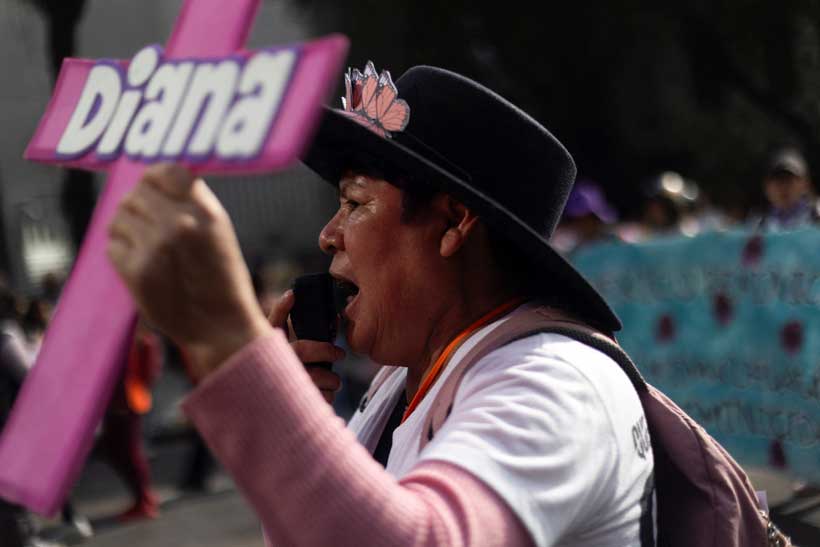
Femicide does not, in fact, occur suddenly without warning signs. Global research has shown a consistent pattern: threats, injuries, social isolation, and even domestic violence reports that are not followed up on. This is further reinforced by the fact that in many cases, the victim had already shown these patterns, but there was no system for cross-sector reporting, and the state only responds after a life has been lost. This is the major loophole that keeps femicide repeating in the same pattern. This crisis reflects the weakness and failure of a country’s law that cannot serve as a shield of protection for its citizens, especially women. In Mexico, for instance, femicide is recognized as a separate category of crime, but weak legal implementation keeps the number of women murdered there persistently high. Slow court proceedings, police lacking gender sensitivity, and a culture of impunity reduce legal protection to mere text without meaningful power.
A similar situation is also felt in South Africa, which is a country notorious for gender-based violence, even holding the highest rate on the continent. Although the country launched the Purple Profile Picture (PFP) Campaign as a symbolic form of solidarity in response to femicide, the use of this symbol cannot replace the urgency of improving the legal system and structure that often fails to save women before it is too late. Without structural reform that prioritizes women’s safety, the law will continue to lag behind the escalating violence. UN data proves that 60% of femicides are committed by someone close to the victim; therefore, law enforcement must be directed not just at punishing perpetrators but at saving women before the risk turns into death.
The Need for Systemic, Not Just Symbolic, Prevention Strategies
The viral campaign in several countries, particularly South Africa, the Purple Profile Picture (PFP), certainly plays a role in building public awareness, and that is important. However, a symbol alone cannot replace the state’s strategies or policies. Therefore, what we need is systemic prevention that works before the victim is murdered, not just solidarity after the tragedy has occurred. This systemic prevention can begin with the provision of integrated public services. The state needs to provide responsive emergency hotlines, safe and adequate shelters, and even 24-hour specialized gender police units operating with high standards of care regarding this issue.
Many femicide cases originate from threats that are ignored by the public and authorities. If initial violence reports were handled decisively and with a risk-based mechanism, the potential for murder could be curtailed. Good examples are seen in several countries, such as Oslo, which has begun using risk-based policing algorithms based on previous police reports. The result is that preventive intervention can be carried out before fatal violence occurs. Furthermore, the education and health systems should also be involved. Teachers, health workers, and social workers need to be trained to recognize the signs of femicide risk, which can then be disseminated for systemic prevention efforts.
The Still-Rooted Normalization of Patriarchal Culture
However, regardless of the forms of systemic prevention that can be implemented as mentioned above, no policy will be effective if the source of the problem remains entrenched. That root is the culture that still places women as the party who must accept, bear the blame, remain silent for the family’s sake, or forgive violence that is considered “normal.” This is the main structural root that makes femicide difficult to eradicate. Patriarchy works not only through institutions but also through social norms that regulate daily behavior, such as who is allowed to speak, who is trusted, and who is considered worthy of being saved.
In Indonesian society itself, pressure from family to “save face” often makes it difficult for women to leave dangerous relationships. In South Africa, the legacy of violence, economic inequality, and aggressive masculinity norms play a major role in the high rate of women’s murder. Meanwhile, Mexico faces a deeply rooted culture of “machismo,” complicating efforts to change social norms. When violence is considered a private matter, the state loses the social legitimacy to intervene.
Considering this crucial situation, cultural change cannot be achieved with short-term campaigns. It requires knowledge and awareness about gender from an early age, the involvement of men in anti-violence movements, and the state’s courage to push for curricula and public policies that challenge harmful patriarchal norms. The state must participate in grassroots communities, such as through women’s organizations, local advocacy institutions, and community groups, because cultural change can only happen if the community becomes the agent of change itself.
The three arguments above show that femicide is a structural failure rooted in a weak legal system, minimal systemic prevention, and the cultural normalization of patriarchy that allows violence against women to be considered commonplace. When a state chooses to respond to violence with symbolism without a tangible strategy, women’s lives will continue to be victims. If one woman is still being murdered every 10 minutes, the world is not yet safe for women, and the state has not fulfilled its obligation to ensure the security of its citizens, especially women. Femicide is not a calamity but a strategic failure that can and must be stopped. The state can only save women if it dares to move beyond visual campaigns towards firm policies, a strong prevention system, and sustainable cultural transformation. Women must no longer die in silence while the state merely watches from afar.