patience

Why the Dodgers are preaching patience with Roki Sasaki as a starter

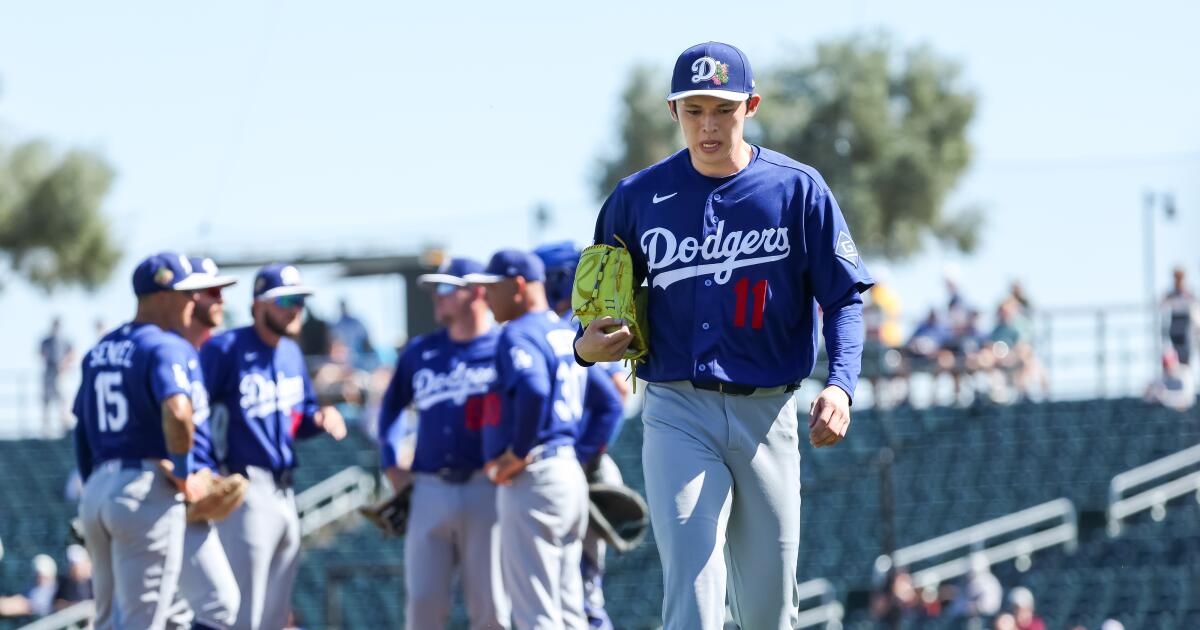
By the time Dodgers right-hander Roki Sasaki reached the blue backdrop set up in the Surprise Stadium interview room, he’d diagnosed the issue.

“I think it’s because of the two-seamer,” Sasaki said through an interpreter. “It kind of caused my forearm to pronate a little more. Also my arm slot was a little down.”

Those arm-side misses had, after three straight walks, prompted manager Dave Roberts to temporarily pull Sasaki from his most recent spring training appearance. But even though that start, marred by a wild third inning, brought Sasaki’s Cactus League ERA to 13.50, he’ll enter his Freeway Series start Monday with a spot in the regular-season rotation already secured.

Roberts has repeatedly made that point clear.

However, when asked directly if Sasaki was one of the Dodgers’ 13 best pitchers right now, Roberts gave an indirect answer: “He is going to start the season in the rotation.”

Answering why the organization has been so bullish on the decision requires zooming out.

“As we look out two, three, four, five, six years, it is imperative for us to integrate talented young players under our roster,” president of baseball operations Andrew Friedman said during an interview with The Times last week. “And that requires patience. And we have to have that even with the insanely high expectations we have.

“We have to be able to balance those two things, or there are a lot of cautionary tales of large-revenue teams who have had a run of success, and then they fall off the cliff.”

Sasaki, 24, is one of those young players the Dodgers are counting on to bridge the gap.

When Sasaki was posted by Nippon Professional Baseball’s Chiba Lotte Marines before last season, upward of 20 teams expressed their interest in the young phenom who was coming to the United States through amateur international free agency.

In his debut season, he produced a 4.72 ERA through eight starts — before an injury the Dodgers described as a right shoulder impingement sidelined him for much of the rest of the season. When Sasaki returned, it was as a reliever, a role he thrived in through the postseason.

Sasaki enters Year 2 with just 47 major-league innings under his belt, including the regular season and playoffs.

“On top of all those other things that you’re adapting to and learning, you’re also learning a new ball,” Friedman said. “Roki could really command his fastball in Japan, and right now it hasn’t been as good. So how much of that is the ball, how much of it is mindset, how much of it is delivery just getting out of whack? All of those are fair questions, but I think it speaks to, we have to have a level of grace with this and work with him to continue his development.

“Because we’ve seen it at an extremely high level, and now it’s on all of us to help him get back to that.”

NPB baseballs are slightly smaller, tackier and have higher seams than MLB baseballs. Players making the transition to MLB also have to adjust to a different strike zone, style of play and the off-the-field challenges of living in a foreign country.

The season before Sasaki signed with the Dodgers, his future teammate Yoshinobu Yamamoto and the Cubs’ Shota Imanaga set the bar high with relatively smooth transitions. But they were also coming over at later stages in their careers.

“We’re very mindful that this guy is essentially two years, three years behind Yamamoto,” Roberts said, “as far as on the progression side, the development side.”

Sasaki has shown he can be effective out of the bullpen, but pigeonholing him in a relief role at this stage of his career would be a disservice to him and the organization.

The Dodgers have identified the addition of the two-seamer as a development that could help Sasaki stick as a major-league starter.

“It’s our job as coaches to get a player to understand the value of having a ball bear in and get in on right-hand hitters to keep them off the outside part of the plate,” Roberts said. “There’s a little bit of trying to pronate too much — trying to make the ball move, versus trusting his grip and his throw. But that’s a coach’s responsibility to [figure out,] how do we get him there, along with him feeling comfortable.”

The Dodgers have decided that, at least for now, the best setting for that growth is the major leagues. Across the industry, there’s an understanding that the gap between Triple-A and the big leagues is bigger than ever. That makes evaluating players in Triple-A all the more difficult.

“He’s not close to a finished product,” Roberts said. “But he’s 24. … You could look at a team that would potentially sign a veteran, turnkey starter, but we’ve got to get him to cut his teeth and deal with some things. That’s part of the growth.”
Source link

Saudi FM warns Iran that patience in Gulf not ‘unlimited’ amid attacks | US-Israel war on Iran News

Saudi Arabia’s Foreign Minister warns Iran that regional neighbours have ‘significant’ capabilities with which to respond to Tehran’s aggression.

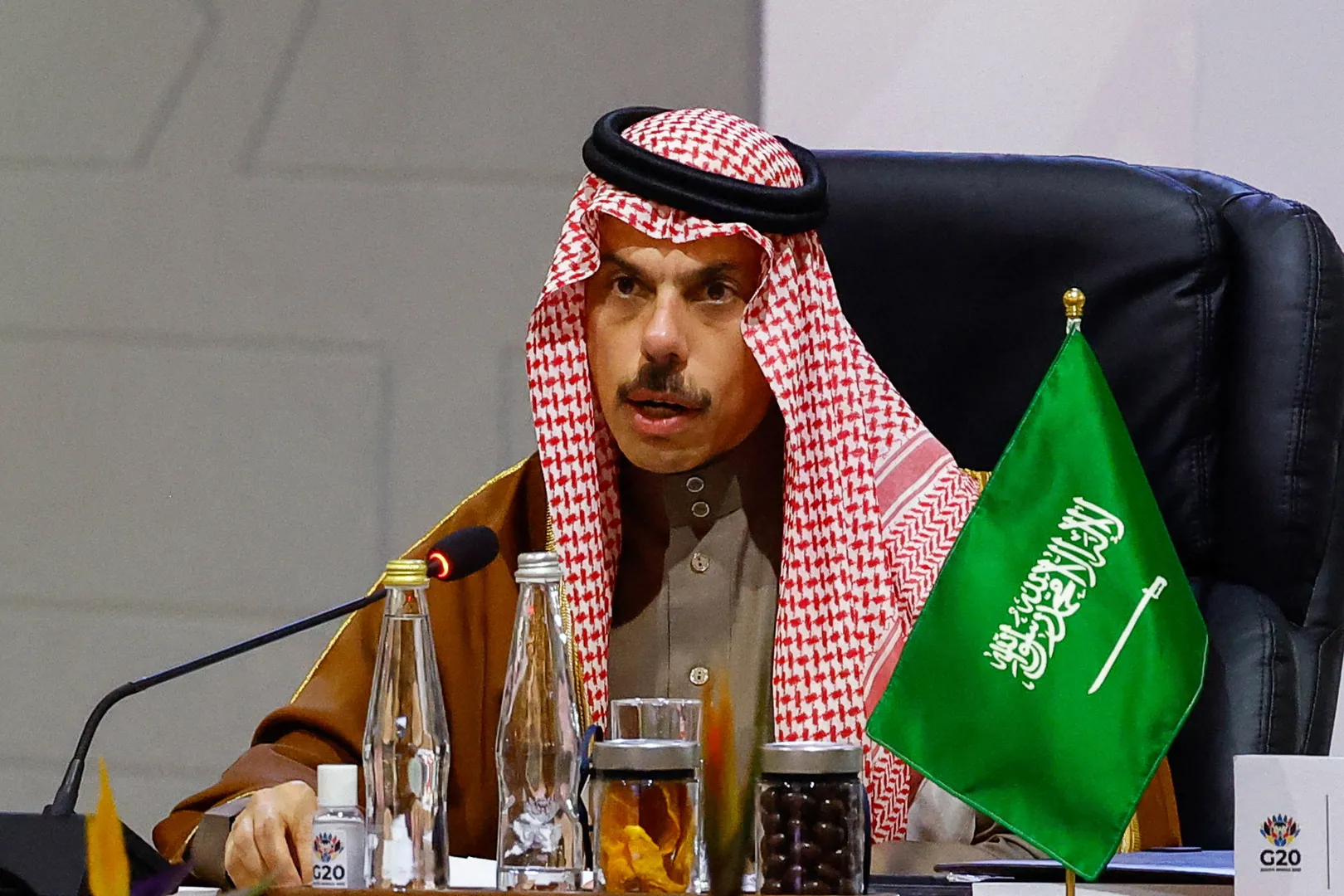
Saudi Arabia’s Foreign Minister Prince Faisal bin Farhan Al Saud has warned Iran that tolerance of its attacks on his country and those of neighbouring Gulf states is limited, calling on Tehran to immediately “recalculate” its strategy.

Warning that Saudi Arabia and other Gulf states have “very significant capacities and capabilities” that could be drawn on should they “choose to do so”, the foreign minister told a news conference early on Thursday that Iran had carefully planned its strategy for striking regional neighbours, despite denials from Tehran’s diplomats.

Recommended Stories

list of 4 itemsend of list

“The level of accuracy in some of this targeting – you can see it in our neighbours as well as the kingdom – indicates that this is something that was premeditated, preplanned, preorganised and well thought out,” Prince Faisal said.

“I’m not going to lay out what would and would not precipitate a defensive action by the Kingdom [of Saudi Arabia] because I think that is not a wise approach to signal to the Iranians,” the foreign minister continued.

“But I think it’s important for the Iranians to understand that the kingdom, but also its partners who have been attacked and beyond, have very significant capacities and capabilities that they could bring to bear should they choose to do so,” he said.

“The patience that is being exhibited is not unlimited. Do they [the Iranians] have a day, two, a week? I’m not going to telegraph that,” he added.

“I would hope they understand the message of the meeting today and recalculate quickly and stop attacking their neighbours. But I am doubtful they have that wisdom.”

Prince Faisal’s warning followed a meeting of foreign ministers from Arab and Islamic countries in the Saudi capital earlier in the day to discuss the expanding war in the region, which on Wednesday saw Iranian attacks on Gulf energy sites, including Qatar’s Ras Laffan gas facility, where significant damage was reported, and the United Arab Emirates’ Habshan ⁠ gas facility.

Qatar’s Ministry of Foreign Affairs expressed its “strong condemnation and denunciation of the blatant Iranian attack targeting Ras Laffan Industrial City”, located 80km (50 miles) northeast of the Qatari capital Doha, which is the world’s largest liquefied natural gas (LNG) production facility, producing some 20 percent of the world’s LNG supply.

Iran’s Islamic Revolutionary Guard Corps (IRGC) had warned earlier that oil and gas facilities in Qatar, Saudi Arabia and the UAE would face retaliation for an Israeli strike on Iran’s South Pars gasfield.

Iranian state media reported that facilities linked to the country’s huge offshore South Pars field – located off the coast of southern Iran’s Bushehr province – had come under attack.

Saudi Arabia’s Ministry of Defence also said on Wednesday that its air defences had intercepted four Iranian ballistic missiles that targeted Riyadh and two launched towards the country’s eastern region.

Air defences in the UAE dealt with 13 ballistic missiles and 27 drones, according to the country’s Defence Ministry, while operations ⁠were ⁠suspended at the Habshan ⁠gas facility as authorities responded to ⁠incidents caused by fallen debris after the successful interception of a ‌missile.

The Saudi foreign minister also told the news conference on Thursday that while the war will end one day, it will take much longer to restore relations with Iran as trust “has completely been shattered” due to Tehran’s tactics of targeting its neighbours.

“We know for a fact that Iran has been building this strategy over the last decade and beyond,” Prince Faisal said.

“This is not something that is a reaction to an evolving circumstance where Iran is improvising. This has been built into their war planning: targeting their neighbours and using that to try and put pressure on the international community,” he said.

“So when this war eventually ends, in order for there to be any rebuilding of trust, it will take a long time. And I have to tell you, if Iran doesn’t stop … immediately, I think there will be almost nothing that can re-establish that trust,” he added.

Source link

Iran’s strategic patience tactic failed, what comes next could be far worse | US-Israel war on Iran

For years, Iran’s leaders believed time was on their side.

After the United States withdrew from the 2015 nuclear agreement, known as the Joint Comprehensive Plan of Action (JCPOA), Tehran effectively adopted what later came to be described as a “strategic patience” approach. Rather than immediately counter-escalating, Iran chose to endure economic pressure while waiting to see whether diplomacy could be revived.

The logic behind the strategy was simple: eventually, Washington would recognise that confrontation with Iran was against its own interests.

Today, that assumption lies shattered.

The collapse of diplomacy and the outbreak of war have forced Iran’s leadership to confront a painful reality: their belief that the US would ultimately act rationally may have been a profound miscalculation.

If Iran survives the current conflict, the lessons Iranian leaders draw from this moment may motivate them to pursue a nuclear deterrent.

The strategy of waiting

After the first Trump administration withdrew from the JCPOA and launched its “maximum pressure” campaign in 2018, Tehran initially avoided major counter-escalation. For nearly a year, it largely remained within the deal’s limits, hoping the other signatories, particularly Europeans, could preserve the agreement and deliver on the promised economic benefits despite US sanctions.

When that failed, Tehran began gradually increasing its nuclear activities by expanding enrichment and reducing compliance step by step while still avoiding a decisive break.

The pace accelerated after Iran’s conservative-dominated parliament passed a law mandating a significant increase in nuclear activities, in the wake of the assassination of top nuclear scientist Mohsen Fakhrizadeh. The shift was reinforced further by the 2021 election of conservative President Ebrahim Raisi.

The ultimate goal was to rebuild negotiating leverage, as Tehran believed that broader geopolitical and regional trends were gradually shifting in its favour. From its perspective, China’s rise, Russia’s growing assertiveness, and widening fractures within the Western alliance suggested that Washington’s ability to isolate Iran indefinitely might weaken over time.

At the same time, Iran pursued a strategy of reducing tensions with its neighbours, seeking improved relations with Gulf states that had previously supported the US “maximum pressure” campaign. By the early 2020s, many Gulf Cooperation Council countries had begun prioritising engagement and de-escalation with Iran, culminating in moves such as the 2023 Saudi-Iran rapprochement brokered by China.

Against this backdrop, even as tensions rose, Tehran continued to pursue diplomacy. Years of negotiations with the Biden administration aimed at restoring the JCPOA ultimately produced no agreement. Subsequent diplomatic efforts under Trump’s second presidency also collapsed.

Underlying this approach was a fundamental assumption: that the US ultimately preferred stability to war. Iranian officials believed Washington would eventually conclude that diplomacy, rather than endless pressure or a major war, was the most realistic and least costly path forward.

The joint US-Israeli assault on Iran has now exposed how deeply flawed that assumption was.

The return of deterrence

While Tehran based its strategy on mistaken beliefs about the rationality of US foreign policy, Washington, too, is misreading the situation.

For years, advocates of the maximum pressure campaign argued that sustained economic and military pressure would eventually fracture Iran internally. Some predicted that war would trigger widespread unrest and even the collapse of the regime.

So far, none of those predictions has materialised.

Despite the enormous strain on Iranian society, there have been no signs of regime disintegration. Instead, Iran’s political base — and in many cases broader segments of society — has rallied in the face of external attack.

Furthermore, Iran spent years reinforcing its deterrence capabilities. This involved expanding and diversifying its ballistic missile, cruise missile and drone programmes and developing multiple delivery systems designed to penetrate sophisticated air defences. Iranian planners also drew lessons from the direct exchanges with Israel in 2024 and the June 2025 war, improving targeting accuracy and coordination across different weapons systems.

The focus shifted towards preparing for a prolonged war of attrition: firing fewer but more precise strikes over time while attempting to degrade enemy radar and air defence systems.

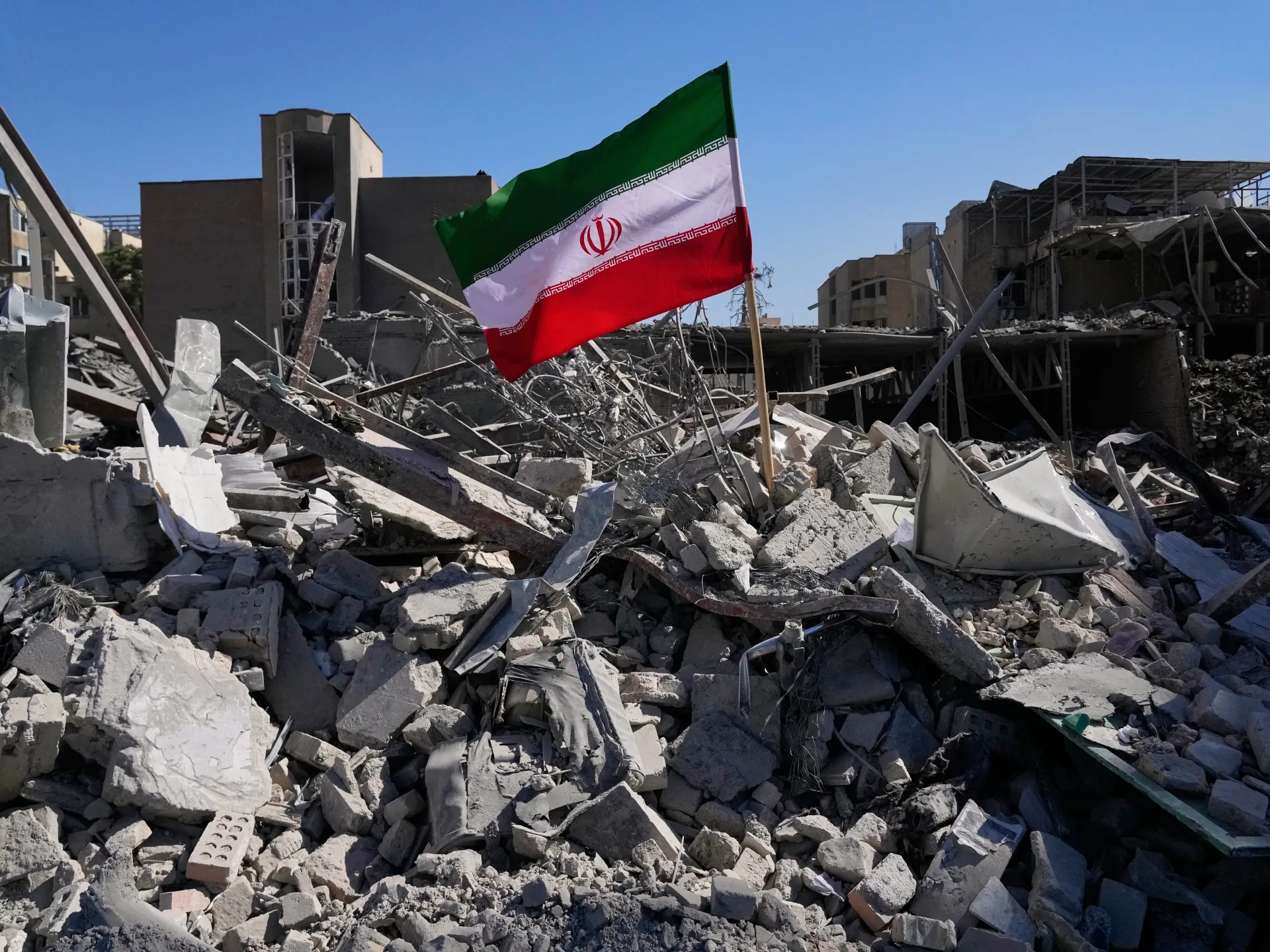
We now see the results of this work. Iran has been able to inflict significant damage on its adversaries. Retaliatory attacks have killed seven Americans and 11 Israelis, placing a growing strain on US and Israeli missile defence systems, as interceptors are steadily depleted.

Iranian missile and drone strikes have hit targets across the region, including high-value military infrastructure such as radar installations. The closure of the Strait of Hormuz has sent global energy markets into turmoil.

Apart from the immense cost of war, the US decision to launch the attack on Iran may have another unintended consequence: a radical shift in Iranian strategy.

For decades, Supreme Leader Ali Khamenei maintained a longstanding religious prohibition on nuclear weapons. His assassination on the first day of the war may now motivate the new civilian and military leadership of the country to rethink its nuclear strategy.

There may now be fewer ideological reservations about pursuing nuclear weapons. The logic is simple: if diplomacy cannot deliver sanctions relief or permanently remove the threat of war, nuclear deterrence may appear to be the only viable alternative.

Iran’s actions in this conflict suggest that many leaders now see patience and diplomacy as strategic mistakes. These include the unprecedented scale of Iranian missile and drone attacks across the region, the targeting of US partners and critical infrastructure, and political decisions at home that signal a harder line, most notably the appointment of Mojtaba Khamenei as supreme leader.

The choice of Khamenei’s son breaks a longstanding taboo in a system founded on the rejection of hereditary rule and reflects a leadership increasingly prepared to abandon previous restraints.

If a more zero-sum logic of deterrence takes hold across the region, replacing dialogue as the organising principle of security, the Middle East may enter a far more dangerous era in which nuclear weapons are viewed as the ultimate form of deterrence and nuclear proliferation can no longer be stopped.

The views expressed in this article are the author’s own and do not necessarily reflect Al Jazeera’s editorial stance.

Source link