Oxford

‘It’s magical’: London’s iconic Oxford Street goes vehicle-free | Retail News

London, United Kingdom – “It’s magical,” says biology teacher Muneera Alfadhel from under her umbrella.

In fact, it is a characteristically rainy, grey day in London, but the weather is doing nothing to dampen her mood. She is among the first to walk down the middle of the iconic Oxford Street following its pedestrianisation.

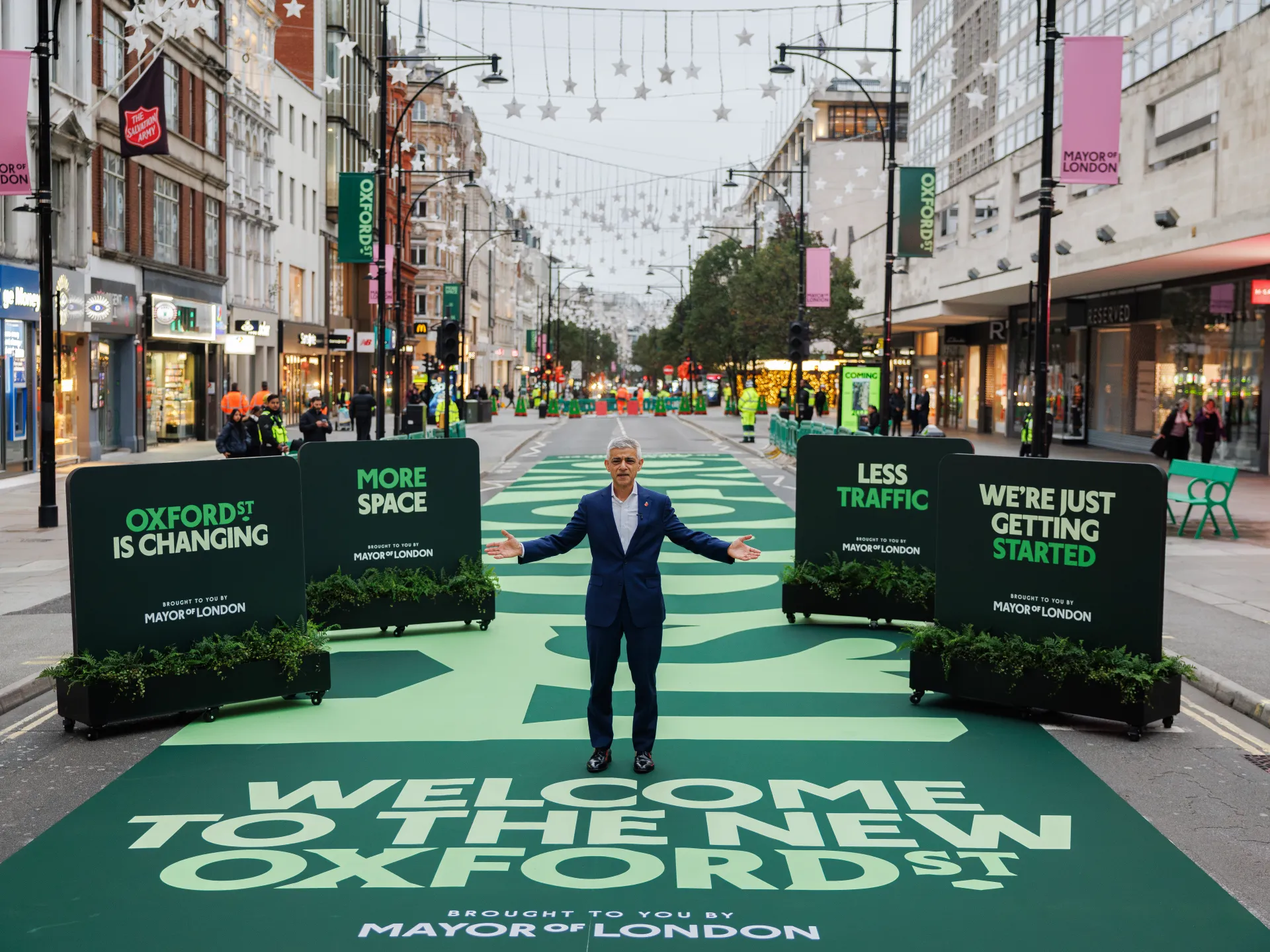
For generations, shoppers have bustled along Oxford Street next to bikes, cars, black cabs and red double-decker buses. But on Monday, from Great Portland Street to Orchard Street, the road is now a pedestrian-only zone.

On Monday morning, by force of habit, most pedestrians are still sticking to the pavement. Mark Arbouine, a forensic scientist out for a stroll, is one of the few breaking ranks: “I saw there was no traffic today, so I thought, why not walk in the middle of the street and take advantage of it? I just think it’s great for the environment, great for shopping. It’s just so much easier to move around the street.”

This tiny strip of real estate is big business: about 1 percent of the UK’s annual gross domestic product (GDP) is generated along this 1km (0.6 miles) stretch of street. But despite its outsized importance, Oxford Street has in recent decades been hit by lower consumer spending, as well as falling rents and footfall, which is now just 57 percent of what it was in 2006, according to New West End Company, a retail trade body.

The Greater London Authority, also known as City Hall, believes pedestrianisation could, therefore, offer a lifeline.

City Hall analysis suggests the partial pedestrianisation of Oxford Street could generate more than $109m per year and support an additional 700 jobs. Following a weekend trial in October 2025, two-thirds of businesses in the area said they had higher or similar sales figures during the pedestrianisation.

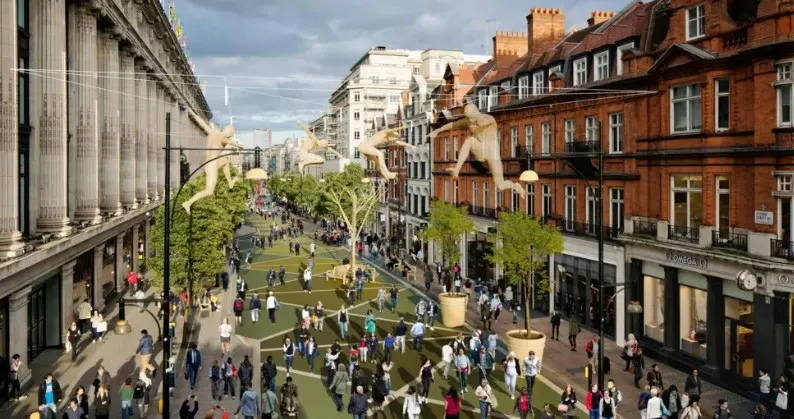
This is the first step in a multi-phase regeneration project to add two public squares, 50 trees and hundreds of public seating.

Barbara Stoll, a leading campaigner on the benefits of greener, more walkable cities, was smiling as she observed the street. The air already feels cleaner, she noted.

“It’s amazing coming here this morning. Walking down the street, it was already so uplifting that the noise is considerably lower,” she said. “People are excited. I saw people coming up from the tube and looking around. Seeing that, it’s almost like children when it’s Christmas Day.

“So I think it’s absolutely wonderful, and so needed for London.”

Residents ‘haven’t really been listened to’

On Saturday, ahead of the change, not all shoppers were convinced. A French tourist said he would avoid Oxford Street altogether if buses and cabs were no longer allowed through.

“People with disabilities who cannot walk a lot – that would be really helpful if the buses move on and they don’t discontinue [them],” a shopper told Al Jazeera.

“It would be good. Sometimes you’re tired; sometimes it’s raining.”

The pedestrianisation of Oxford Street has been years in the making, and not without controversy.

London Mayor Sadiq Khan first tried it in 2017, following a manifesto pledge. But the plan fell apart in 2018, when Westminster Council – the local government authority responsible for Oxford Street at the time – withdrew its backing, saying residents did not support it.

Following a public consultation, Khan created the Oxford Street Development Corporation, taking responsibility for the street away from local officials and transferring it to the Greater London Authority and Transport for London.

With this second, successful attempt at pedestrianisation, doubts from local authorities have not gone away.

Residents are not being listened to, said Councillor Tim Barnes, the deputy leader and cabinet member for growth and planning for the City of Westminster.

“There has been a communication process with residents, but it’s been pretty much one way. Mostly, they are being told what’s going to happen to them and how it’s going to happen; what the format of the process is going to be in future. But realistically, those who know the street best haven’t really been listened to.”

He believes the economic benefits are overstated and do not consider the impact of displacing bus routes from a major road to the surrounding, smaller streets. That fear is shared by resident Nerma Cridge, who said London’s West End will become “completely unliveable, too crowded and too noisy at night”.

“We think all of this should be done in a much more productive relationship with communities,” she told Al Jazeera over the phone.

‘People just take back the space’

Concerns over the change will fade once residents see the real-world results in the coming months, Stoll believes.

“Examples from across Europe and the world, where such projects have already happened, prove that this only makes life better overall for local residents,” she said.

“Retail gets a boost. More people linger, more people come to the street, more people spend money in the shops, and even local shop vacancies reduce. The local air pollution significantly reduces, and as activity increases, people just take back the space.”

The Oxford Street Development Corporation will be testing and reviewing the results of the pedestrianisation in the coming months, and reviewing its findings early next year. Transitioning the rest of Oxford Street into a permanent, traffic-free public space is expected to go ahead by the end of next year.

Ahead of mayoral elections in 2028, the pedestrianisation could be one of the last major initiatives that Sadiq Khan signs off. A landmark project that will also become his legacy.

Source link

Cyclists and e-bike riders brazenly ignore Sadiq Khan’s ‘pedestrian-only’ Oxford Street just hours after ban begins

CYCLISTS have been seen brazenly ignoring Sadiq Khan’s ‘pedestrian-only’ zone on Oxford Street just hours after the ban came into force.

As of today a one-kilometre stretch of the world-famous London street is now free from cars and buses prior to being fully pedestrianised.

Cyclist riding on a pavement, as pedestrianisation of Oxford Street commences Credit: LNP
Security guards were seen trying to get cyclists to funnel around Credit: LNP

The entire section between Selfridges near the Marble Arch end and Great Portland Street (including Oxford Circus) is the first to be impacted – with the festive period just around the corner.

Transport for London (TFL) has confirmed that e-bikes, pedal bikes, and e-scooters will no longer be allowed to go through the area but instead will be funnelled to surrounding routes.

However, cyclists were filmed whizzing through the green bollards installed just last night and designed to stop traffic.

A team of security guards was seen trying to wave down commuters, delivery drivers and e-bike renters and get them to dismount.

GALE WARNING

Brits face more 70mph winds after 2 killed in storms – as new warnings issued


‘MURDER’ RIDDLE

Cops hunt two mystery men after dog walker, 64, ‘attacked’ in quiet woods

Cyclists ignore newly pedestrianised Oxford Street just hours after the ban was introduced Credit: BBC London
Signs tell cyclists that they have to dismount and walk their bike Credit: Getty
Oxford Street in central London the day before it was pedestrianised Credit: Alamy Live News.
Cars, buses, taxis and bicycles can no longer travel along much of Oxford Street

One member of the public said it was “absolutely pandemonium” last night as buses kept coming up to the new obstructive bollards.

The road will be closed to all traffic between 7am and midnight every day of the week.

Exceptions have been made for deliveries, which can be made from midnight to 7am, and for emergency vehicles – which retain access at all times. 

But many Londoners have bemoaned the fact that the surrounding area will be gridlocked due to the changes.

As the busy festive period gets underway, others have voiced their concerns over how shoppers will carry their hauls in the lead up to Christmas.

One local councillor described the plan as a “disaster for local people” – and accused London Mayor Sadiq Khan of pushing it through to meet an “arbitrary deadline”.

Cllr Tim Barnes, Westminster City Council Deputy Leader, said: “We’re extremely disappointed that MHCLG have ignored legitimate concerns about the impact this scheme will have on central London.

“London deserves a world class shopping district but I’m worried we’re heading for an unmanaged mess.”

Oxford Street is closed to traffic from this morning
Britain’s busiest high street will no longer be the same Credit: Alamy

He added: “It’s going to be very difficult for people with accessibility issues to get to the street. There is no step free access from Oxford Circus Tube.”

It comes after it was revealed that Christmas shoppers heading down Britain’s busiest high street will now be scanned with facial recognition.

The technology is expected to be installed in December, just in time for the busy festive shopping period.

Today’s pedestrianisation of this stretch of road has repeatedly been described as the “first phase” – but it has faced criticism.

Sean Lane, 43, a cabbie for ten years driving down Oxford Street, said he was particularly concerned about disabled passengers and parents with prams.

He told The Times: “It’s gonna create gridlock. I just can’t understand it. You can see how wide the pavements are.

“There’s more than enough room for everybody. Even if you made it one lane, a one-way road, at least we can come along.”

Paul Fisher, a Conservative Westminster councillor, fears for the postcard view of the high street during the Christmas period but also on a year-round basis.

He said: “Why do people go to Oxford Street? They don’t just go to shop, they go for the experience, for the iconic buses and taxis.

“Many tourists shop on Oxford Street because of the iconic view you get … that vision will be lost forever.”

Traffic can still flow north and south along Regent Street at the Oxford Circus junction.

Pedestrians can cross at the junction and the plan is for traffic signals to be re-phased for the changes.

Traffic can also cross the pedestrianised zone on these four other routes: Duke Street (northbound), Davies Street/Stratford Place (both directions for local access), Vere Street/New Bond Street (southbound only) and Holles Street (northbound only).

Private cars have been barred for years but now all motorised traffic, including buses and black cabs, as well as bicycles, will be kept away.

London Mayor Khan has hailed the move as “a truly momentous occasion for the capital“.

The pedestrianisation of Oxford Street has been tried for years but remains controversial.

And although the traffic may have been stopped, the initial works scheme is not expected to be completed until spring next year.

The closure is part of a £150m phased plan to revive the area with “mini parks” and more than 50 trees, benches, lighting and public art.

It is hoped the plans will encourage bars and restaurants to move in alongside the shops to create a feel similar to the Rue de Rivoli in Paris or La Rambla in Barcelona.

Source link

Exact date Oxford Street will be pedestrianised in the run-up to Christmas is revealed

OXFORD Street is set to be pedestrianised in the run-up to the Christmas period – and it’s sooner than expected.

Once pedestrianisation is complete, all vehicles and bikes will be blocked from accessing the world-famous street.

Illustration of London's pedestrianized Oxford Street with people, trees, and large hanging sculptures.
The street’s closure comes following years of consultations with members of the public Credit: Mayor of London
Illustration of a crowded Oxford Street pedestrian zone, with colorful pavement designs.
The pedestrianisation of London’s Oxford Street is set to go ahead following official final approval by Sadiq Khan Credit: Mayor of London

The London Mayor has revealed the date which all cars, buses and taxis are set to disappear from one of the capital’s most recognisable streets.

On October 26, a one-kilometre stretch of the road will become vehicle-free as a “transition-phase” prior to being fully pedestrianised.

The entire section between Selfridges near the Marble Arch end and Great Portland Street (including Oxford Circus) will be the first to be impacted – with buses rerouted and cars set to be banned.

Transport for London (TFL) has also confirmed that e-bikes, pedal bikes, and e-scooters will no longer be allowed to go through the area.

HOL NO

Major European strikes to hit TOMORROW across 33 airports


DOUBLE BLOW

Major UK airport hikes parking charges by £3 AND makes time limits even shorter

Sadiq Khan announced: “Following strong support from Londoners and businesses, I’m excited to see my bold vision for Oxford Street really coming to life next month as we start going traffic-free, just in time for the busy Christmas shopping period.”

The transition phase comes as works still need to be carried out to sort out any potential problems, including relocating bus stops and changing the direction of travel in some areas.

Sections of Oxford Street will also be transformed with new planters and seating areas to replace traffic lanes.

However, Westminster Council said there was still a “long list of unanswered questions about how it will work” and questioned whether traffic would be pushed to small streets nearby as a result.

Councillor Tim Barnes, deputy leader of Westminster City Council and cabinet member for growth and planning, added: “If this is going to be the ‘greener, better and more prosperous’ success that the Mayor has promised, then issues around access, air pollution, street cleaning and public safety, need answers urgently.”

The project to make part of Oxford Street traffic- free follows two public consultations in 2025 and 2026.

Following support, TFL has been working alongside the Oxford Street Development Corporation (OSDC) to regenerate London’s most famous street.

Source link