offensive

Chargers’ growing offensive line issues threaten to derail season

Justin Herbert could glimpse at the Chargers’ “See the lighting, Feel the thunder” branding above the field-level suites as his offensive linemen pulled him up on the SoFi Stadium turf.

Herbert certainly felt the thunder against the Texans. The NFL’s top defense recorded 26 pressures as it swarmed through the Chargers’ offensive line en route to a 20-16 win Saturday.

And Herbert saw the lightning, best represented by second-string defensive end Derek Barnett’s back-to-back sacks to halt the Chargers’ first drive of the second half.

The latter of Barnett’s takedowns — part of the Texans’ five sacks and eight tackles for loss — came when he spun past Bobby Hart and brought down Herbert for a seven-yard loss.

  • Share via

Sam Farmer breaks down what went wrong for the Chargers in their 20-16 loss to the Houston Texans on Saturday.

“I mean, it’s just football,” Hart said when asked if he was dwelling on Barnett’s pair of sacks or losing a one-on-one against Texans defensive end Danielle Hunter in the first quarter that left Herbert grimacing and favoring his surgically repaired left hand.

Hart added: “People make plays — defenders, guys, catch the ball. Quarterbacks might have some throws that you want back. It’s just a part of the football game.”

Coach Jim Harbaugh said he pulled Hart in the third quarter because the 31-year-old was “having trouble getting in the rhythm.”

Austin Deculus replaced Hart and Trevor Penning temporarily replaced Mekhi Becton Jr. at right guard for a drive, creating the Chargers’ 24th offensive line combination of the season. But in a game previewing the quality of defenses the Chargers could face in the postseason, the offensive line — hit hard by the losses of Rashawn Slater and Joe Alt to injury — struggled to adequately protect Herbert.

“Just too many mistakes,” right tackle Trey Pipkins III said. “Whatever it was — sacks and untimely situations — we started really slow.”

Chargers quarterback Justin Herbert walks on the field during the second half of a 20-16 loss to the Houston Texans.

Chargers quarterback Justin Herbert walks on the field during the second half of a 20-16 loss to the Houston Texans at SoFi Stadium on Sunday.

(Eric Thayer / Los Angeles Times)

The Chargers trailed 14-3 at halftime, punting in each of its first four drives. Herbert, who had 236 passing yards along with a touchdown and an interception, capitalized on Houston penalties and standout plays to extend drives.

Late in the third quarter, Texans defensive lineman Sheldon Rankins burst past left guard Zion Johnson, and then swiftly ran by center Bradley Bozeman in help protection and grabbed Herbert by the waist. Instead of falling to the ground for the sack — a potential sixth overall — Herbert connected with wide receiver Quentin Johnston for the first down.

Moments later, rookie running back Omarion Hampton scored on a five-yard run to make it a four-point game. Outside of the touchdown run, the Chargers’ run game was close to non-existent. Herbert had a team-leading 37 rushing yards, 28 coming on a single run.

Hampton had just 29 yards on 14 carries for a career-low 2.1 yards per carry. The Texans’ downhill attack gave up just 74 rushing yards, the second fewest Houston has given up this season.

“We just shot ourselves in the foot,” said Johnson, who along with Bozeman has appeared in all of the Chargers’ line combinations. “It starts with us up front. We’ve got to protect [Herbert] better. We got to execute better in the run game. There’s too many missed opportunities.”

The Texans revealed the extent of the Chargers’ offensive line weaknesses. With the wild-card playoffs two weeks away, will they be able to figure out their protection issues?

“Learn from it,” Harbaugh said. “Some of the things that happened today, clean up, and use those to be better tomorrow.”

Source link

UNSC condemns Rwanda, M23 rebels for offensive in eastern DR Congo | Paul Kagame News

The United Nations Security Council (UNSC) has condemned Rwanda for backing a rebel offensive in eastern Democratic Republic of the Congo and urged it to withdraw its forces and stop supporting the M23 armed group.

The UNSC unanimously adopted the resolution on Friday, and also extended the UN peacekeeping mission in the DRC, known as MONUSCO, for a year. This came despite Rwanda’s repeated denials – contrary to overwhelming evidence – of involvement in a conflict that has intensified as a United States-brokered peace deal unravels.

Recommended Stories

list of 3 itemsend of list

The UNSC said M23’s seizure of the strategic city of Uvira “risks destabilizing the whole region, gravely endangers civilian populations and imperils ongoing peace efforts”.

“M23 must immediately withdraw at least 75km (47 miles) from Uvira and return to compliance with all of its obligations undertaken in the Framework Agreement,” said Jennifer Locetta, a US representative to the UN.

M23 captured Uvira in the South Kivu Province on December 10, less than a week after the DRC and Rwandan presidents met US President Donald Trump in Washington and committed to a peace agreement.

“It is an amazing day: great day for Africa, great day for the world and for these two countries. And they have so much to be proud of,” Trump crowed, as fighting quickly undermined the White House spectacle.

One Uvira resident, Feza Mariam, told Al Jazeera in recent days: “We don’t know anything about the political process they are talking about.

“The only thing we need is peace. Anyone able to provide us with peace is welcome here. For the rest, we as citizens, we don’t care about it.”

The M23 group claimed on Wednesday it was withdrawing from the city following international backlash, but the DRC government dismissed this as a “staged” pullback, saying M23 forces remain deployed there.

US Secretary of State Marco Rubio acknowledged on Friday that commitments under the Washington accord were “not being met” but said his government had now signed agreements it could “hold people to”.

The US earlier warned it would use available tools against those undermining the peace deal, with US officials estimating between 5,000 and 7,000 Rwandan soldiers were operating in eastern DRC as of early December.

The US had previously sanctioned Rwandan cabinet ministers earlier this year, and the DRC later led calls to expand those sanctions after the seizure of Uvira.

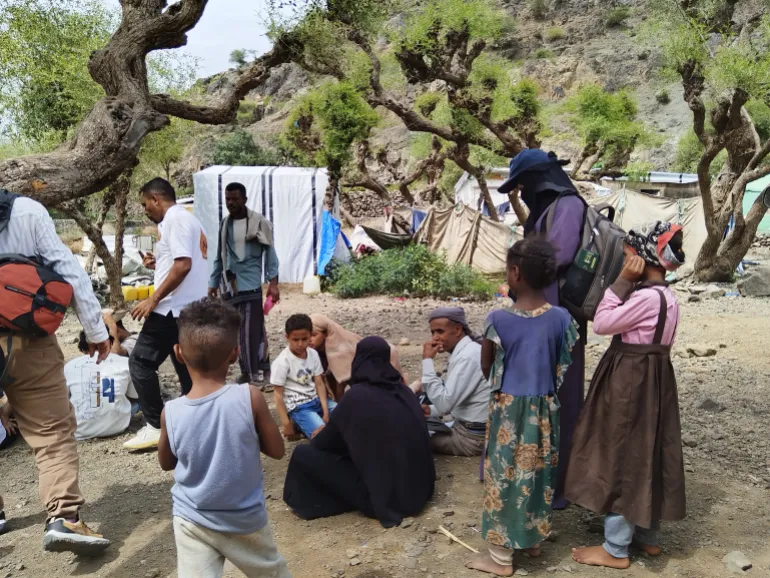
The fighting has triggered a major humanitarian emergency, with more than 84,000 people fleeing into Burundi since early December, according to the UN refugee agency, which said the country has reached a “critical point” as refugees arrive exhausted and traumatised. They join approximately 200,000 others who had already sought refuge in the country.

Regional officials say more than 400 civilians have been killed in recent violence in the city.

The seizure of Uvira, located directly across Lake Tanganyika from Burundi’s largest city, Bujumbura, has raised fears of broader regional spillover. The city was the last major foothold in South Kivu for the DRC government and the Wazalendo, which are DRC-allied militias, after M23 captured the provincial capital, Bukavu, in February.

Rwanda has consistently denied backing M23, despite assessments by UN experts and the international community. In a February interview with CNN, Rwandan President Paul Kagame said he did not know whether his country’s troops were in the DRC, despite being commander-in-chief of the armed forces.

Rwanda implicitly acknowledged a presence in eastern DRC in February 2024, when it rejected a US call to withdraw troops and surface-to-air missile systems, saying it had adjusted its posture for self-defence.

Rwanda maintains that its security concerns are driven by the presence of the Democratic Forces for the Liberation of Rwanda, a militia composed largely of Hutus who fled to the DRC after participating in the 1994 genocide that killed approximately 800,000 Tutsis and moderate Hutus.

Kigali views the group as an existential threat and accuses the DRC government of supporting it.

The broader conflict in the mineral-rich eastern DRC, where more than 100 armed groups operate, has displaced more than seven million people, creating one of the world’s worst humanitarian crises.

Source link

Rams’ Puka Nacua apologizes for offensive gesture on livestream

Rams wide receiver Puka Nacua apologized for performing a gesture “antisemitic in nature” during a livestream, stating he originally had no idea it “perpetuated harmful stereotypes against Jewish people.”

“I deeply apologize to anyone who was offended by my actions as I do not stand for any form of racism, bigotry or hate of another group of people,” Nacua wrote in a post on Instagram.

Nacua made the gesture while appearing on a livestream with Adin Ross and N3on. The livestreamers suggested he perform the gesture the next time he celebrated after scoring a touchdown.

“There is no place in this world for Antisemitism as well as other forms of prejudice or hostility towards the Jewish people and people of any religion, ethnicity, or race,” the Rams said in a statement.

The NFL also released a statement: “The NFL strongly condemns all forms of discrimination and derogatory behavior directed towards any group or individual. The continuing rise of antisemitism must be addressed across the world, and the NFL will continue to stand with our partners in this fight. Hatred has no place in our sport or society.”

Nacua’s gesture came on the same livestream in which he also criticized NFL referees, calling them “the worst” and claiming many probably get a thrill making bad calls on national television during games.

Source link