European agriculture seen as main obstacle to EU–Mercosur trade deal

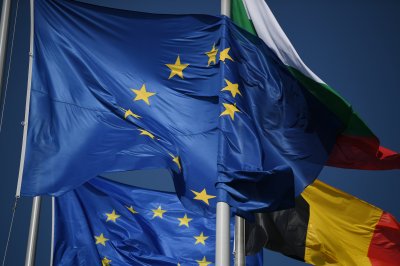
The pause of a trade agreement between the European Union and Mercosur exposes deep internal divisions within Europe over agriculture and trade liberalization. Photo by Patrick Seeger/EPA-EFE
BUENOS AIRES, Jan. 23 (UPI) — The trade agreement between the European Union and the Mercosur, hailed as one of the most significant economic accords in decades, entered an unexpected political pause this week, exposing deep internal divisions within Europe over agriculture and trade liberalization.
Just four days after the deal was signed in Asuncion, the European Parliament voted to submit the text to review by the Court of Justice of the European Union, a move that effectively halts the start of the ratification process.
The decision interrupts the path of a treaty designed to create the world’s largest free trade area, encompassing nearly 700 million consumers, after almost 25 years of negotiations. It also highlights tensions inside the European bloc that extend well beyond legal scrutiny or tariff schedules.
At the heart of the delay is not a technical objection but a structural conflict. Broad sectors of European agriculture fear that greater market access for Mercosur, which includes Brazil, Argentina, Paraguay and Uruguay, will erode their competitiveness in an increasingly regulated environment. The concern cuts across products and countries, affecting much of Europe’s farming sector.
The discontent is closely linked to the European Green Deal, which imposes strict environmental, sanitary and traceability standards on EU producers, significantly raising production costs. Farmers argue that South American exporters are not subject to the same requirements.
Economist Maximiliano Ramírez, a former Argentine undersecretary for macroeconomic programming, told UPI that European farmers see the agreement as creating an uneven playing field.
“The core argument is that the deal generates unfair competition. It allows products from Mercosur to enter the EU without bearing the same environmental and sanitary costs,” Ramírez said. “They do not see it as free trade, but as a transfer of market share toward producers operating under looser rules, which threatens the profitability of mid-sized farmers in countries like France or Ireland.”
France has emerged as the main axis of resistance, where agriculture carries not only economic weight but also strong symbolic and political value. Opposition, however, extends beyond Paris. Ireland and Austria have taken firm positions to protect their meat industries, while Italy has hardened its stance under the banner of food sovereignty.
According to Ramírez, the shared fear is that an influx of South American commodities could undermine regional value chains. “That would push down domestic prices to levels that European subsidy systems cannot sustain indefinitely,” he said.
Former Argentine undersecretary for agricultural markets Javier Preciado Patiño agreed that pricing is at the core of the dispute.
“Food products from Mercosur would enter the market at more competitive prices than European goods,” he told UPI.
Beef, poultry, dairy products and corn from South America could gain market share due to lower costs, he said, despite safeguards included in the agreement to limit volumes.
“That is why European producers are protesting. They know they could be pushed out of the market,” he added.
From Uruguay, foreign trade specialist Gonzalo Oleggini said the resistance is fueled by misinformation about the agreement’s real impact.
“No quota will bankrupt European industry,” Oleggini told UPI. “The beef quota of 99,000 tons, for example, equals about 220 grams per European citizen per year. It is hard to argue that this would destroy an entire sector.”
Oleggini linked the opposition to domestic politics, particularly the approach of elections in France.
“The issue is being used internally, amplifying fears that are far removed from what would actually happen once the agreement enters into force,” he said.
Ramírez argued that the deal follows a logic of productive specialization. Clear winners would be Mercosur’s agro-industrial complex and, on the European side, high value-added manufacturing, especially the automotive and capital goods sectors led by Germany.
On the losing end, he said, would be European family farmers and, within Mercosur, small and medium-sized industries that would lose tariff protection against European technology.
“It is a model that reinforces each bloc’s strengths but deepens relative deindustrialization in our region,” he warned.
For Argentina, the delay undermines trade predictability. Ramírez noted that the agreement offered not only tariff reductions, but also an institutional framework to navigate increasingly strict EU regulations, such as the EU Deforestation Regulation.
“Without that umbrella, our exports remain exposed to unilateral decisions from Brussels, which can impose ‘green’ barriers at its discretion,” he said, adding that uncertainty could stall long-term investment projects aimed at the European market and increase reliance on volatile Asian demand.
Preciado Patiño noted that nearly a quarter-century of negotiations reflects deeper issues.
“The obstacles have more to do with geopolitics than with trade itself,” he said, pointing to the EU’s Common Agricultural Policy, which treats farming as a social and moral pillar of the European project.
“It is an almost untouchable sector. Mercosur, as a largely agri-food exporter, is seen as a disruptive force,” he said.
That sensitivity spans major economies such as Germany, France, Italy and Ireland, and extends into Eastern Europe, where countries like Poland retain strong agricultural profiles.
“The lack of true complementarity between the two regions has consistently stalled this agreement,” Preciado Patiño said.
The political paradox became evident when, just days after the signing, the European Parliament voted by a narrow 334-324 margin to seek judicial review, a scenario previously anticipated by French President Emmanuel Macron.
“It is a way of buying time, with the risk that the agreement ultimately collapses,” Preciado Patiño warned.
While Europe delays its decision, Mercosur countries are moving forward with their internal ratification processes. Argentine President Javier Milei has submitted the text to Congress for debate during extraordinary sessions scheduled for February, while Paraguayan President Santiago Peña announced that the agreement will be sent to parliament for consideration next week.