
First government flight for UK nationals due to leave Middle East tonight
Some British nationals are being invited to board the flight from the capital of Oman later on Wednesday.
Source link
Some British nationals are being invited to board the flight from the capital of Oman later on Wednesday.
Source link
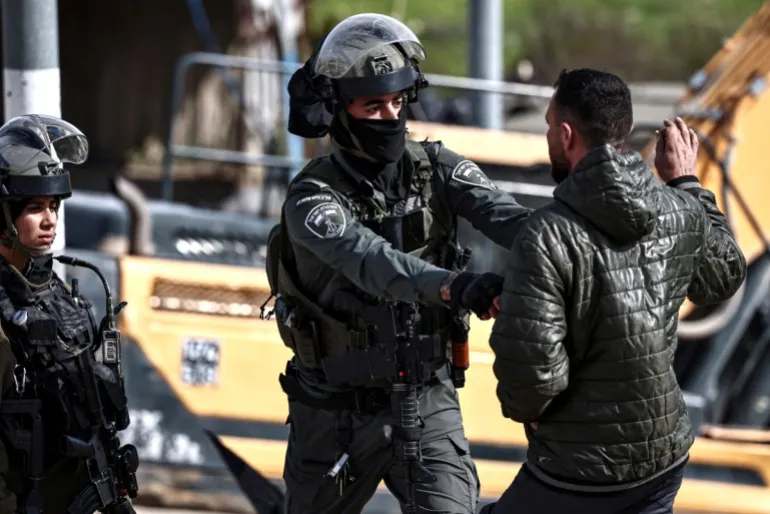
Thousands of Western nationals joined the Israeli military amid its genocidal war in Gaza, raising questions over international legal accountability for foreign nationals implicated in alleged war crimes against Palestinians.
More than 50,000 soldiers in the Israeli military hold at least one other citizenship, with a majority of them holding US or European passports, information obtained by the Israeli NGO Hatzlacha through Israel’s Freedom of Information Law has revealed.
list of 4 itemsend of list
Since October 7, 2023, Israel’s genocidal war on Gaza has killed at least 72,061 people in military actions that have been dubbed war crimes and crimes against humanity by rights groups.
Rights organisations around the world have been trying to identify and prosecute foreign nationals, many of whom have posted videos of their abuse on social media, for their involvement in war crimes, particularly in Gaza.
So, what does the first such data reveal about the Israeli military? And what could be the legal implications for dual-national soldiers?

At least 12,135 soldiers enlisted in the Israeli military hold United States passports, topping the list by a huge margin. That is in addition to 1,207 soldiers who possess another passport in addition to their US and Israeli ones.
The data – shared with Al Jazeera by Israeli lawyer Elad Man, who serves as the legal counsel for Hatzlacha – shows that 6,127 French nationals serve in the Israeli military.
The Israeli military, which shared such data for the first time, noted that soldiers holding multiple citizenships are counted more than once in the breakdown.
The numbers show service members enlisted in the military as of March 2025, 17 months into Israel’s devastating war in Gaza.
Russia stands at third, with 5,067 nationals serving in the Israeli military, followed by 3,901 Ukrainians and 1,668 Germans.
The data revealed that 1,686 soldiers in the military held dual British-Israeli citizenship, in addition to 383 other soldiers who held another passport in addition to their British and Israeli ones.
South Africa, which brought a case of genocide against Israel at the International Court of Justice (ICJ), also had 589 of its citizens serving in the Israeli military ranks.
Furthermore, 1,686 soldiers hold Brazilian citizenship, 609 Argentine, 505 Canadian, 112 Colombian, and 181 Mexican, in addition to their Israeli nationality.
Israel’s military comprises an estimated 169,000 active personnel and 465,000 reservists – of whom nearly eight percent hold dual or multiple citizenships.
Ilias Bantekas, a professor of transnational law at Hamad Bin Khalifa University in Qatar, told Al Jazeera that “war crimes incur criminal liability under international law, irrespective of what the law of nationality says”.
Otherwise, Nazi Germans, whose law allowed and obliged them to commit atrocities, would incur no liability, Bantekas added. “Dual nationality is immaterial to criminal liability,” he said.
However, the major issue in prosecuting the accused “is getting [them] on your territory and putting them before a court”, he noted.
Bantekas also added that there is no difference in the question of liability between native soldiers and those of dual nationalities.
Dual nationals, in fact, “may in addition be liable under laws that prevent military service in foreign conflicts or joining armies of other nations”, the professor said.
Prosecuting foreign nationals has been “pretty much the norm”, he noted.
“Think of Nazi Germans tried by Allied war crimes tribunals after World War II, Japanese officers tried by US military courts, and crimes committed during the Bosnian conflict where alleged offenders were tried by various courts in Europe,” Bantekas told Al Jazeera.
Last May, the United Kingdom’s Foreign Office said that allegations of war crimes should be submitted to the Metropolitan Police.
“The UK recognises the right of British dual nationals to serve in the legitimately recognised armed forces of the country of their other nationality,” it said. “Allegations of war crimes should be submitted to the Met Police for investigation.”

Nationals with dual or multiple citizenships have not yet been arrested for committing war crimes in Gaza. But rights groups, including lawyers, are trying to get them prosecuted.
In the UK last April, the Gaza-based Palestinian Centre for Human Rights (PCHR) and the UK-based Public Interest Law Centre (PILC) filed a 240-page report to the Metropolitan Police.
Accusations against the 10 British individuals, whose names have not been publicly disclosed, include murder, forcible transfer of people, and attacks on humanitarian personnel, between October 2023 and May 2024.
In September last year, a case was filed in Germany against a 25-year-old soldier, born and raised in Munich, for participating in the killing of Palestinian civilians in Gaza, by PCHR, the European Center for Constitutional and Human Rights (ECCHR), Al-Haq, and the Al Mezan Center for Human Rights.
The sniper, with shootings documented near Gaza’s al-Quds and Nasser hospitals between November 2023 and March 2024, was a member of a unit known as “Refaim”, “ghost” in Hebrew.
Legal proceedings against members of the same unit are also under way in France, Italy, South Africa, and Belgium.
The Belgian public prosecutor’s office also opened a judicial investigation last October into a 21-year-old Belgian-Israeli citizen, a member of Refaim.
The mandatory military service law in Israel exempts dual nationals residing abroad, making the enlistment a voluntary act, an important distinction when such crimes are tried in foreign courts. Lawyers have reportedly noted that the voluntary nature of the soldiers’ service makes them more liable for alleged crimes.

South Africa brought its case to the ICJ in December 2023, arguing that Israel’s war in Gaza violates the 1948 United Nations Convention on the Prevention and Punishment of the Crime of Genocide.
While a final ruling could take years, the ICJ issued provisional measures in January 2024 ordering Israel to take steps to prevent acts of genocide in Gaza and to allow unimpeded access for humanitarian aid. But Israel has continued curb the supply of aid into Gaza in violation of the ICJ interim order.
Under the 1948 Genocide Convention, countries that are party to the treaty have a binding obligation to prevent and punish genocide. Countries can investigate and prosecute individuals who may have committed or been complicit in this crime.
In March last year, the International Centre of Justice for Palestinians (ICJP) announced the “Global 195” campaign to hold Israeli and dual-national individuals accountable for war crimes and crimes against humanity in Gaza.
The coalition aims to work simultaneously within multiple jurisdictions to apply for private arrest warrants and initiate legal proceedings against those implicated, including the Israeli military members and the entire Israeli military and political command in its scope.
For countries that are parties to the Rome Statute of the International Criminal Court (ICC), there is an additional layer, where the ICC can assert its jurisdiction. Palestine has been a state party since 2015.
The State of Palestine is recognised as a sovereign nation by 157 of the 193 UN member states, representing 81 percent of the international community. Most recently, it has been recognised by France, Belgium, Canada, Australia, and the UK.
A foreign national, whose country considers Palestine a “friendly state”, would also be vulnerable to prosecution for participating in the Israeli military’s war crimes in Gaza.

The Hind Rajab Foundation – named to honour a five-year-old Palestinian girl whose killing by Israeli soldiers on January 29, 2024 became emblematic of Israel’s genocide in Gaza – has been amassing troves of data with identifiable information about Israeli soldiers.
The Belgium-based foundation is the force behind an international effort for accountability over war crimes in Gaza – and has since filed several cases, including a landmark challenge targeting 1,000 Israeli soldiers.
The foundation identified numerous individuals with dual citizenship, including 12 from France, 12 from the US, four from Canada, three from the UK, and two from the Netherlands, in the complaint.
The foundation has scoured TikTok, Instagram, and YouTube, where the Israeli soldiers boast about atrocities in Gaza, to collect information on the soldiers. It has been using those pieces of evidence to pursue the trail of the accused for war crimes.
“We are in possession of many more profiles of dual nationals beyond the 1,000 soldiers named in our complaint to the ICC. We will be pursuing legal action against all of them in the national courts of their respective countries,” the foundation had said in October 2024. “Impunity must end, everywhere.”
The Hind Rajab Foundation says it pursues criminal accountability for Israeli war criminals, from those who planned and ordered operations to those who executed them, including foreign nationals who have participated in or financed these crimes.
Its founder, Dyab Abou Jahjah, was also threatened by Israeli Minister of Diaspora Affairs Amichai Chikli, who told him to “watch your pager” in a post on X, an allusion to deadly attacks on Hezbollah members’ communication systems in September 2024. At least 12 people were killed and more than 3,000 people were wounded when thousands of pagers were detonated by Israeli operatives during those attacks.
In January last year, a complaint filed by the Hind Rajab Foundation led to a Brazilian judge ordering an investigation into an Israeli soldier vacationing in the country. The soldier had to flee, prompting the Israeli military to order all troops who participated in combat to conceal their identities.
“Criminal liability under international law cannot be dissolved by time bars. It extends forever, and no statute of limitations is applicable,” said Bantekas of Hamad Bin Khalifa University.
However, prosecuting Israeli military members “is practically difficult for two reasons”, he said, noting the difficulty of obtaining firsthand evidence and the wariness of national prosecutors who may fear political or other repercussions.
“If public opinion and political opinion in Europe shifts far more in favour of Palestine than it is now, then national prosecutions will feel more at ease to initiate prosecutions,” he told Al Jazeera.