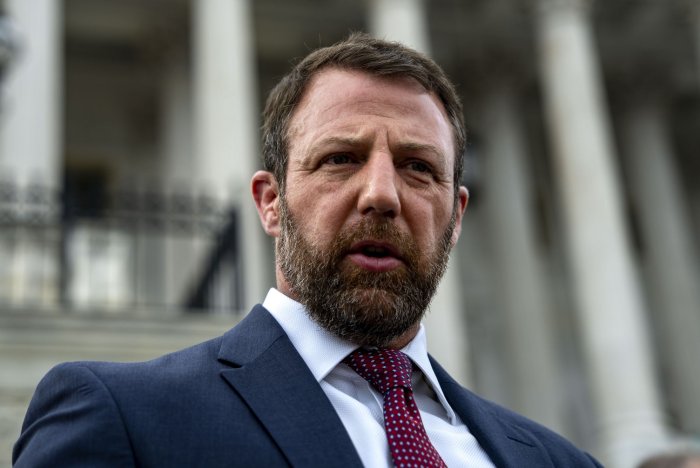
Mike Johnson

Massie: 100 Republicans likely to vote for release of Epstein files

Nov. 16 (UPI) — Rep. Thomas Massie said as many as 100 Republicans may vote to release files related to convicted sex offender Jeffery Epstein, amid a last-ditch effort by the White House to stall their release.

Massie, R-Ky., said Sunday on ABC News’ This Week that at least 100 Republicans will join Democrats in the House and vote this week for the rest of the Epstein documents to be released.

President Donald Trump this week also ordered the Department of Justice to investigate Democrats and their supporters whose names appear in the files after more than 20,000 documents related to Epstein were released by Congress.

With newly sworn in Rep. Adelita Grijalva, D-Ariz., there were enough members of the House to sign a discharge petition forcing a vote on whether to force the Department of Justice to release all of the files it has on Epstein — over the objections of Trump, House Speaker Mike Johnson, R-La., and other Republicans in Congress.

Massie cautioned that while there are ways to push the Senate to vote on the bill, the chamber does not have a discharge petition-like method to force a vote over the objection of the majority leader. If the bill passes both houses of Congress, Trump still would have to sign it.

But Massie also noted that Trump’s order to the Department of Justice could potentially delay some part of the documents from being released, regardless of what Congress does.

“If they have ongoing investigations in certain areas, those documents can’t be released,” he said. “So, this might be a big smokescreen, these investigations, to open a bunch of them to, as a last-ditch effort to prevent the release of the Epstein files.”

Trump has fought the release of the files, at least partially because of widespread speculation that he figures prominently in them over of his years-long friendship with Epstein.

Despite the president’s claims that “Jeffery Epstein and I had a very bad relationship for many years,” they were close for more than a decade before the friendship went south.

“This is a hoax put out by the Democrats and a couple, a few Republicans have gone along with it because they’re weak and ineffective,” Trump said about the Democrats push for the release of the files.

Trump directed Attorney General Pam Bondi and the FBI to investigate alleged Epstein ties to former President Bill Clinton and other Democrats whose names appear in the files.

Bondi said last week that she would pursue the investigation with “urgency and integrity to deliver answers to the American people.”

Bondi announced that Manhattan U.S. Attorney Jay Clayton will lead the investigation just days after the House Oversight Committee released tens of thousands of emails released by Epstein’s estate, which documented his ties to friends and associates over a decade.

The emails made several direct references to Trump, Clinton and prominent media figures, Hollywood personalities and high-ranking politicians.

Source link

Trump withdraws support for Marjorie Taylor Greene, calls her ‘wacky’

Nov. 15 (UPI) — President Donald Trump has withdrawn his support from one of his past closest allies, U.S. Rep. Marjorie Taylor Greene of Georgia, calling her “wacky.”

Greene, who has served in a Republican-dominated House district in northwest Georgia since January 2021, has sided with Democrats on two issues — enhanced tax credits for the Affordable Care Act, known as Obamacare, and the release of Department of Justice files involving convicted sex offender Jeffrey Epstein, including Trump’s relationship with him.

In a lengthy post on Truth Social on Friday night, Trump announced that he is “withdrawing my support and Endorsement of “Congresswoman” Marjorie Taylor Greene, of the Great State of Georgia.”

In a 115-word sentence that highlights his achievements since retaking office, “over the past two weeks … all I see ‘Wacky’ Marjorie do is COMPLAIN, COMPLAIN, COMPLAIN!”

Greene quickly responded on X on Friday night, saying in a post that “Trump just attacked me and lied about me.”

Trump noted why Greene is upset with him.

“It seemed to all begin when I sent her a Poll stating that she should not run for Senator, or Governor, she was at 12%, and didn’t have a chance (unless, of course, she had my Endorsement — which she wasn’t about to get!,” Trump wrote.

He also said that Greene was upset that he has not communicated with her.

“She has told many people that she is upset that I don’t return her phone calls anymore, but with 219 Congressmen/women, 53 U.S. Senators, 24 Cabinet Members, almost 200 Countries, and an otherwise normal life to lead, I can’t take a ranting Lunatic’s call every day,” he wrote. “She has gone Far Left, even doing The View, with their Low IQ Republican hating Anchors.”

Greene posted a screenshot of texts she had sent Trump about the Epstein investigation, noting that she had not “called him at all, but I did send these text messages today. Apparently this is what sent him over the edge. The Epstein files.”

Trump said he would support a candidate against her in the congressional primary next year.

“I understand that wonderful, Conservative people are thinking about primarying Marjorie in her District of Georgia, that they too are fed up with her and her antics and, if the right person runs, they will have my Complete and Unyielding Support,” Trump said.

Greene was reelected in 2024, capturing more than 64% of her district’s vote after 65% in 2022 and 75% in 2020. The district includes parts of Chattanooga, Tenn., and Atlanta metro area.

“I have supported President Trump with too much of my precious time, too much of my own money, and fought harder for him even when almost all other Republicans turned their back and denounced him,” she wrote. “But I don’t worship or serve Donald Trump. I worship God, Jesus is my savior, and I serve my district GA14 and the American people.”

“I remain the same today as I’ve always been and I will continue to pray this administration will be successful because the American people desperately deserve what they voted for. For me, I remain America First and America Only!!!”

Epstein files

Greene has joined three other House Republicans in signing a discharge petition for the release of documents related to investigations into pedophile and sex trafficker Jeffrey Epstein.

There are the necessary 218 votes and House Speaker Mike Johnson, R-La., has scheduled a vote for next week, but the bill will still need be approved by the Senate, which will require at least 60 votes, as well as Trump’s signature.

Greene wrote “of course he’s coming after me hard to make an example to scare all the other Republicans before next weeks vote to release the Epstein files. It’s astonishing really how hard he’s fighting to stop the Epstein files from coming out that he actually goes to this level.”

“But really most Americans wish he would fight this hard to help the forgotten men and women of America who are fed up with foreign wars and foreign causes, are going broke trying to feed their families, and are losing hope of ever achieving the American dream. That’s what I voted for,” she added.

Epstein, who had sexual relationships with girls and young women, and trafficked them to other men, was friends with Trump.

“Releasing the Epstein files is the easiest thing in the world,” Greene told Politico on Friday, before Trump’s post.

“Just release it all, let the American people sort through every bit of it, and, you know, support the victims. That’s just like the most common sense, easiest thing in the world. But to spend any effort trying to stop it … just doesn’t make sense to me,” she said.

Government shutdown

Trump posted Wednesday on Truth Social that “only a very bad, or stupid, Republican would fall into that trap. There should be no deflections to Epstein or anything else, and any Republicans involved should be focused only on opening up our Country, and fixing the massive damage caused by the Democrats!”

Democrats launched the 43-day government shutdown after Republicans refused to include an extension of the subsidies in bills to reopen the government — a position that Greene broke with her party in support of. Healthcare was the core a federal government shutdown that lasted 43 days.

Greene had been critical of Trump and her party for promising to at least discuss, if not vote, on extending enhanced subsidies for people who buy health insurance through an Affordable Care Act (ACA) marketplace.

The shutdown ended Wednesday night when Trump signed legislation to fund the government through January, with the subsidies still set to expire at the end of the year.

“It’s insanely the wrong direction to go,” Greene said. “The five-alarm fire is healthcare and affordability for Americans. And that’s where the focus should be.”

Greene noted during the shutdown that her adult children are enrolled in health insurance plans through the ACA marketplace and that their premiums are set to double if the federal subsidies expire.

Greene also has blamed Republicans’ election losses earlier this month on going against Trump’s initial “America First” agenda.

“This is me wanting my party to do something, to win and do something good for the American people,” Greene told Politico.

“It’s not me going against, it’s me pushing my party to say, this is what we need to be doing Not only is it the right thing to do for America, but if you want to win the midterms, this is what we need to be doing, deliver for Americans if we want them to send us back in 2026.”


Source link

Trump signs stopgap funding to end shutdown after narrow House OK

Nov. 12 (UPI) — President Donald Trump late Wednesday signed legislation to reopen the federal government, resuming programs and again paying millions of workers, blaming Democrats for the longest shutdown in history at 43 days.

The new stopgap bill will fund the government through Jan. 30, and provide a full year of funding for the Supplemental Nutrition Assistance Program and veterans programs. Furloughed employees are expected to return to report on Thursday.

The U.S. House, convening for the first time in two months, approved legislation sent two days earlier by the Senate. Most Democrats and Republicans have been on opposite sides on enhanced health insurance subsidies through the Affordable Care Act.

At 8:21 p.m., the House voted 222-209 to send the stopgap funding bill to the president. The outcome wasn’t strictly along party lines with six Democrats voting yes and two Republicans voting no. There were two not voting and two vacancies.

Two hours later, Trump appeared in the Oval Office with U.S. House Speaker Mike Johnson, Senate Majority Leader John Thune — both Republicans — as well as other House members. Also, financial industry leaders, whom he dined with earlier at the White House, watched the signing.

“I just want to tell the American people, you should not forget this when we come up to midterms and other things,” Trump said about elections in 2026 for the House and Senate. “Don’t forget what they’ve done to our country.”

In the public ceremony, Trump blasted the Affordable Care Act as “Obama madness,” bragged about the record-high stock market and spoke about gas prices around $2.50 a gallon. He didn’t take any questions from reporters.

Trump wants Obamacare to be scrapped.

“We’ll work on something having to do with healthcare,” said Trump, who hasn’t been able to find a replacement since first being president in 2017. “We can do a lot better.”

He has proposed bypassing providers with direct payment to users, who then could purchase their own plans.

“I’m calling today for insurance companies not to be paid,” Trump said, “but for this massive amount of money to be given directly to the people.” Basic Medicare is administered by the government rather than companies.

The House had been out of session since Sept. 19, when it passed the first version of a continuing resolution to temporarily fund the government. The Senate held 14 votes on the same legislation, but failed to reach the 60-vote supermajority needed to pass it.

The House originally approved the spending bill on a majority vote, but the Senate needed 60 votes and approval was held up in finding enough Democrats to agree to legislation that doesn’t guarantee enhanced health insurance subsidies starting Jan. 1.

The GOP holds a 53-47 edge.

Trump again on Wednesday night called for an end to the filibuster, saying “if we had the filibuster terminated, this would never happen again.”

Most Republicans have opposed this “nuclear option,” because Democrats could use it when they are in power.

After the House Rules Committee advanced the Senate bill Tuesday night, the full chamber convened at 4:08 p.m., and began debate for one hour at 4:36 p.m. The bill advanced 213-209.

The GOP has a 219-214 advantage, with Democrat Adelita Grijalvi having been sworn in when the House convened. She was elected Sept. 23. There are two vacancies.

Government reopens

At least 670,000 federal employees furloughed will return to work and roughly 730,000 essential workers, including air traffic control workers, will be paid, according to the Bipartisan Policy Center.

The White House’s Office of Management and Budget furloughed workers will return on Thursday.

“Agencies should take all necessary steps to ensure that offices open in a prompt and orderly manner on November 13, 2025,” the memorandum released Wednesday night reads.

Essential workers had to work without pay, including air traffic control personnel. This resulted in several thousand flights being canceled.

Government programs also will resume, including 42 million people receiving monthly payments from the Supplemental Nutrition Assistance Program. For the first time in history, November money wasn’t sent electronically.

“For 40 days, hardworking Americans have endured flight cancellations, missed paychecks and empty dinner tables – all because Democrats closed the government,” Johnson posted on X with a video before the vote.

“It was foolish, pointless, cruel and entirely avoidable. Republicans have been working every day to get the government reopened for the American people, and today we should finally be able to overcome the Democrats and accomplish our mission.”

Divided on insurance subsidies

The program, which became known as Obamacare, was approved in 2010 during Barack Obama’s presidency. A record 25 million were enrolled this year.

The credits were enhanced in 2021 by the American Rescue Plan Act during the pandemic and extended one year later through 2015. They increased the amount of financial assistance, expanded eligibility and capped the percentage of household income for the benchmark silver plan.

Eight senators who caucus with the Democrats voted Monday in favor of the new bill on Tuesday night, allowing the chamber to pass it with a vote of 60-40.

The Senate broke the impasse over the weekend after Republicans agreed to hold a separate vote on ACA tax credits in December.

On Wednesday night, Johnson told reporters that Republicans are “pulling together the best ideas that we think can, in the quickest fashion, bring premiums down.”

And that includes working with Democrats.

“I sent a note to Hakeem Jeffries and I said, ‘Look, we would love to do this in a bipartisan fashion,’ you know, and he and I exchanged texts yesterday about that.”

Democrats focus on healthcare

Jeffries unsuccessfully attempted a three-year extension of Obamacare by a discharge petition. There would be a vote if the minority party can secure support for a majority of the chamber — a total of 218 signatures. But there are only 214 Democrats and there wasn’t sufficient GOP backing.

“Affordable Care Act tax credits were extended by three years in the Inflation Reduction Act,” Jeffries said outside the Capitol before the House convened. “The legislation that we will introduce in the context of the discharge petition will provide that level of certainty to working-class Americans who are on the verge of seeing their premiums, copays and deductibles skyrocket in some cases, experiencing increases of $1,000 or $2,000 per year.”

Jeffries said Democrats will continue to fight on healthcae.

“We’ll continue to fight for the principle that in this great country, the wealthiest country in the history of the world, healthcare can’t simply be a privilege available only to the well-off, the wealthy and the well-connected.

“Healthcare must be a right available to every single American. And that’s the fight that House Democrats will continue to wage for the American people.”

Colorado Rep. Jeff Hurd said he wanted to extend the enhanced premium tax credits for time to work on “the underlying drivers that are pushing up those health care costs to begin with.”

Workers union wants healthcare addresses

The American Federation of State, County and Municipal Employees, with 1.4 million members, called on Congress to help Americans afford health insurance.

“AFSCME members have been clear from the start of this shutdown: we need to lower health care costs and fund public services,” AFSCME President Lee Saunders said in a statement to UPI.

“Unfortunately, this administration and the Project 2025 ideologues in Congress refused to come to the table to address the healthcare crisis gripping families across the country. We applaud all of the leaders in Congress who stood up and sounded the alarm about the massive insurance premium hikes affecting millions of Americans.

“The fight to protect families from these increases is far from over. Now that the government is reopening, we’re calling on members of Congress to keep their promise and hold a vote to extend the Affordable Care Act tax credits. Working families cannot afford to wait any longer to lower health care costs.”

Provision on suing DOJ

The legislation includes funds for eight senators to sue the Department of Justice for obtaining their phone records during an investigation when Joe Biden was president.

Rather than removing the provision and returning it to the Senate, Johnson said he plans to have separate legislation next week.

“I was very angry about it,” Johnson said. “I was, and a lot of my members called me and said, ‘Did you know about it?’ We had no idea. That was dropped in at the last minute. And I did not appreciate that, nor did most of the House members. Many of them were very – are very angry about that.”

Democrats also opposed the provision.

“What makes this corruption so staggering is that the payout is specifically designed to go to eight senators whose phone records were lawfully subpoenaed under due process by the Department of Justice,” Rep. Rosa DeLauro, the top Democrat on the House Appropriations panel, wrote in a statement.

She accused the senators of voting “to shove taxpayer dollars into their own pockets — $500,000 for each time their records were inspected.”

Daniel Haynes contributed to this report.

President Donald Trump speaks to members of the media during a swearing in ceremony for Sergio Gor, the new U.S. Ambassador to India, in the Oval Office of the White House on Monday. Photo by Craig Hudson/UPI | License Photo

Source link

House narrowly approves stopgap funding to end shutdown

Nov. 12 (UPI) — The U.S. House, convening for the first time in two months on Wednesday, approved legislation sent two days earlier by the Senate to reopen the federal government, resuming programs and paying millions of workers.

President Donald Trump plans to sign the legislation, ending the longest shutdown in history at 43 days.

The House originally approved a spending bill in September on a majority vote, but the Senate needed 60 days and approval was held up in finding enough Democrats to agree to legislation that doesn’t guarantee enhanced health insurance subsidies starting Jan. 1.

At 8:21 p.m., the House voted 222-209 to send the stopgap funding bill to the president. The outcome wasn’t strictly along party lines with six Democrats voting yes and two Republicans voting no. There were two not voting and two vacancies.

The White House said Trump would sign the legislation on camera at 9:45 p.m. from the Oval Office. He earlier attended a private dinner at the White House with financial industry leaders.

“I’ll abide by the deal,” he said earlier Monday. “The deal is very good.”

His signature means at least 670,000 federal employees furloughed will return to work and roughly 730,000 essential workers, including air traffic control workers, will be paid, according to the Bipartisan Policy Center.

Government programs will resume, including 42 million people receiving monthly payments from the Supplemental Nutrition Assistance Program. For the first time in history, November money wasn’t sent electronically.

After the House Rules Committee advanced the Senate bill Tuesday night, the full chamber convened at 4:08 p.m., and began debate for one hour at 4:36 p.m.

The bill advanced 213-209.

The GOP has a 219-214 advantage, with Democrat Adelita Grijalvi having been sworn in when the House convened. She was elected Sept. 23.

“For 40 days, hardworking Americans have endured flight cancellations, missed paychecks and empty dinner tables – all because Democrats closed the government,” Johnson posted on X with a video before the vote.

“It was foolish, pointless, cruel and entirely avoidable. Republicans have been working every day to get the government reopened for the American people, and today we should finally be able to overcome the Democrats and accomplish our mission.”

A provision was stripped from the House version regarding funds for eight senators to sue the Department of Justice for obtaining their phone records during an investigation when Joe Biden was president.

“House Republicans are introducing standalone legislation to repeal this provision that was included by the Senate in the government funding bill,” Johnson posted on X on Wednesday afternoon. “We are putting this legislation on the fast-track suspension calendar in the House for next week.”

Democrats have opposed the provision.

“What makes this corruption so staggering is that the payout is specifically designed to go to eight senators whose phone records were lawfully subpoenaed under due process by the Department of Justice,” Rep. Rosa DeLauro, the top Democrat on the House Appropriations panel, wrote in a statement.
She accused the senators of voting “to shove taxpayer dollars into their own pockets — $500,000 for each time their records were inspected.”

The House had been out of session since Sept. 19, when it passed the first version of a continuing resolution to temporarily fund the government. The Senate held 14 votes on the same legislation, but failed to reach the 60-vote supermajority needed to pass it.

A majority of Democrats in the Senate voted against the legislation, seeking to tie the funding bill to a renewal of enhanced Affordable Care Act tax subsidies set to expire in the new year.

The Senate broke the impasse over the weekend after Republicans agreed to hold a separate vote on ACA tax credits. Unnamed sources told ABC News that Republicans promised to hold a vote on the issue in December, though House Speaker Mike Johnson has yet to commit to voting on any ACA measure passed by the Senate.

The credits were enhanced in 2021 by the American Rescue Plan Act during the pandemic and extended one year later through 2015. They increased the amount of financial assistance, expanded eligibility and capped the percentage of household income for the benchmark silver plan.

Eight senators who caucus with the Democrats voted Monday in favor of the new bill on Tuesday night, allowing the chamber to pass it with a vote of 60-40.

The new stopgap bill will fund the government through Jan. 30, provide a full year of funding for the Supplemental Nutrition Assistance Program and veterans programs.

Democrats criticized the bill.

“As Democrats, we’re committed to addressing this affordability crisis. That’s what this fight has been all about,” House Minority Leader Hakeem Jeffries said outside the Capitol before the House convened. “We’ll continue this fight to fix our broken healthcare system.

“We’ll continue to fight for the principle that in this great country, the wealthiest country in the history of the world, healthcare can’t simply be a privilege available only to the well-off, the wealthy and the well-connected.

“Healthcare must be a right available to every single American. And that’s the fight that House Democrats will continue to wage for the American people.”

Jeffries unsuccessfully attempted a three-year extension of Obamacare by a discharge petition. There would be a vote if the minority party can secure support for a majority of the chamber — a total of 218 signatures. But there are only 214 Democrats and there wasn’t sufficient GOP backing.

“Affordable Care Act tax credits were extended by three years in the Inflation Reduction Act,” Jeffries said. “The legislation that we will introduce in the context of the discharge petition will provide that level of certainty to working-class Americans who are on the verge of seeing their premiums, copays and deductibles skyrocket in some cases, experiencing increases of $1,000 or $2,000 per year.”

Colorado Rep. Jeff Hurd said he wanted to extend the enhanced premium tax credits for time to work on “the underlying drivers that are pushing up those health care costs to begin with.”

The American Federation of State, County and Municipal Employees, with 1.4 million members, called on Congress to help Americans afford health insurance.

“AFSCME members have been clear from the start of this shutdown: we need to lower health care costs and fund public services,” AFSCME President Lee Saunders said in a statement to UPI.

“Unfortunately, this administration and the Project 2025 ideologues in Congress refused to come to the table to address the healthcare crisis gripping families across the country. We applaud all of the leaders in Congress who stood up and sounded the alarm about the massive insurance premium hikes affecting millions of Americans.

“The fight to protect families from these increases is far from over. Now that the government is reopening, we’re calling on members of Congress to keep their promise and hold a vote to extend the Affordable Care Act tax credits. Working families cannot afford to wait any longer to lower health care costs.”

President Donald Trump speaks to members of the media during a swearing in ceremony for Sergio Gor, the new U.S. Ambassador to India, in the Oval Office of the White House on Monday. Photo by Craig Hudson/UPI | License Photo

Source link

Adelita Grijalva sworn in as House member 2 months after election

Nov. 12 (UPI) — Adelita Grijalva was sworn in Wednesday afternoon on the floor of the House of Representatives by Speaker Mike Johnson after the Democrat was elected two months ago in Arizona.

Immediately after the ceremony, she became the 218th House member to sign the discharge petition, the bare minimum to approve a floor vote on legislation compelling the federal government to release the case files of Jeffrey Epstein.

Grijalva, 55, won a special election Sept. 23 to fill the vacant 7th Congressional District seat after Rep. Raul Grijalva, her father and fellow Democrat, died March 13. Six days later, Democrat Gov. Katie Hobbs ordered dates for the primary and general election.

Democrats now hold 214 House seats to the Republicans’ 2019, with two still vacant.

Wednesday’s ceremony occurred before the scheduled House vote on the Senate-approved measure to fund the federal government so that it can reopen after being shut down for a record 43 days.

Johnson didn’t swear her in while the House was on an extended recess that started Sept. 19 and lasted until Wednesday amid the federal government shutdown.

“What is most concerning is not what this administration has done, but what the majority in this body has failed to do: Hold Trump accountable as a coequal branch of government that we are,” Grijalva told House members.

Grijalva said the delay deprived 813,000 people in southern Arizona of her support while the shutdown endured.

Grijalva didn’t have a working office phone, an office budget or the ability to use government systems. She also couldn’t open office in her southern Arizona district.

“This is an abuse of power,” she said. “One individual should not be able to unilaterally obstruct the swearing in of a duly elected member of Congress for political reasons.”

Johnson earlier said he would swear in Grijalva when the House reconvened, which spurred federal lawsuits accusing the House speaker of delaying the matter.

John was accused of delaying the swearing in so the petition wouldn’t have enough votes to look at the Department of Justice investigation of the financier and convicted sex offender involving minors who committed suicide while jailed in New York City and was awaiting a federal trial on other charges.

Johnson told reporters Wednesday night that the House will vote next week on whether to force the release of documents. He said he would bypass the seven-day waiting period and instead “we’re going to put that on the floor for a full vote next week, as soon as we get back.”

The petition has signatures from all Democrats and four Republicans.

Democratic Rep. Ro Khanna of California told reporters Wednesday night: “I believe we’re going to get 40, 50 Republicans voting with us on the release. And if we get that kind of overwhelming vote, that’s going to push the Senate and it’s going to push for a release of the files from the Justice Department.”

Khanna and Republican Thomas Massie of Kentucky introduced the Epstein Files Transparency Act in July.

Grijalva signed it with two Epstein survivors watching in the gallery.

“Just this morning, House Democrats released more emails showing that Trump knew more about Epstein’s abuses than he previously acknowledged,” she said. “It’s about time for Congress to restore its role as a check and balance on this administration and fight for we, the American people.

She added: “Justice cannot wait another day.”

The House earlier released more than 33,000 pages of files from the Epstein case that were redacted only to protect the names of witnesses and block information related to child abuse.

The petition must pass the Republican-controlled Senate before making it to President Donald Trump‘s desk.

Johnson has said the delay in swearing in Grijalva had nothing to do with the Epstein files, which the House Oversight and Government Reform Committee has been investigating.

House Democrats said Johnson could have called a pro forma session of the House to swear in Grijalva and said he had done so earlier this year to swear in two Republican representatives, The Hill reported.

One vacant seat in Tennessee leans Republican and will be filled by a special election in December, according to CNN.

Another vacancy in Texas has two Democrats as the final two candidates in a runoff election that will be held in January.

Source link

Senate plans series of votes to end record shutdown

Nov. 10 (UPI) — The U.S. Senate plans a series of votes Monday night to try to end the record-long shutdown as House Speaker Mike Johnson called representatives to return to Washington to be there when a bill reaches them.

Earlier, Senate Majority Leader John Thune of South Dakota said they were in a “holding pattern.”

Late Monday afternoon, the GOP’s whip office told CNN a vote would begin after 5 p.m. p.m. John Barrasso of Wyoming mobilizec members for key votes. A GOP aide confirmed the plans to CBS News.

On Sept. 19, the House approved short-gap spending legislation along party lines 217-213 that doesn’t include healthcare subsidies next year through the Affordable Care Act, known as Obamacare. Only a majority is needed in the House, but the Senate needs 60 votes in the 100-member chamber.

The Senate is scheduled to go into recess Tuesday for Veterans Day and was seeking to conclude business before then.

Thune said the American people “have suffered for long enough,” and other senators were reasonably optimistic.

“It’s very close,” said Sen. Mike Rounds, who also serves South Dakota. “We’ll work our way through a couple of issues.”

“I’m optimistic, yeah,” Florida Sen. Rick Scott said. “People want to, you know, they want to get — they want to go home.”

Sen. Rand Paul of Kentucky is the only Republican to vote against past funding bills. He wants hemp farming in the agriculture appropriations bill in exchange for allowing the legislation to move quickly. The Senate plans to vote on the amendment.

“If Rand wants to plant his flag and hold the government shut down for over hemp in Kentucky, take that fight on. I think he’ll lose that one pretty hard,” said Sen. Markwayne Mullin of Oklahoma, noting that another senator wants an amendment to withhold pay from members during government shutdowns.

Monday marked the 41st day of the United States’ longest-running government shutdown, which started Oct. 1. It beat the previous longest shutdown of 35 days, which took place in 2018 and 2019 during President Donald Trump‘s first term.

Despite the pending vote, Johnson further pushed against the Democrats’ battle to extend health insurance subsidies. The Senate would vote separately on the subsidies next month.

“There’ll be long days and long nights here for the foreseeable future to make up for all this lost time that was imposed upon us,” Johnson told reporters.

Senators held a procedural vote Sunday in which seven Democrats and one Independent joined Republicans to narrowly advance a funding measure 60-40.

In exchange for the Democrats’ votes, Republicans agreed to hold a vote in the future on extending Obamacare subsidies.

There are more steps to take before senators hold an official vote on legislation to fund the government through January, including a measure on how long the chamber will debate.

All but a few Democrats have voted 14 times against the House stopgap measure out of concerns over a lack of an extension to the ACA tax credits, set to expire end of December. More than 20 million U.S. citizens currently rely the ACA on for health insurance.

“The American people have now awoken to Trump’s healthcare crisis,” Senate Democratic leader Chuck Schumer of New York said.

“Healthcare is once again at the forefront of people’s minds,” Schumer said on the Senate floor. “People now see that premiums are about to skyrocket. They’re terrified about how they’re going to pay for their insurance.”

The new measure would reverse all shutdown-related job layoffs, guarantee federal worker pay during the shutdown, establish a specific budget process and fund the Supplemental Nutrition Assistance Program through September.

Johnson said he will give a 36-hour notice before any House votes, but did not offer a specific timeline.

The speaker, who has kept the lower chamber out of session since late September, indicated that a vote could occur as early as this week.

Any bill passed by both chambers will require a signature by Trump to become law. Trump said he intends to sign the legislation.

“Well, it depends what deal we’re talking about, but if it’s the deal I heard about … they want to change the deal a little bit, but I would say so,” Trump told CNN’s Kaitlan Collins in the Oval Office.

“I think, based on everything I’m hearing, they haven’t changed anything, and we have support from enough Democrats, and we’re going to be opening up our country. It’s too bad it was closed, but we’ll be opening up our country very quickly.”

That includes adhering to a provision that would reverse layoffs of federal workers his administration pushed during the shutdown.

In the House, Johnson plans to swear in Adelita Grijalva of Arizona when the members return, according to a CNN source.

Grijalva was elected Sept 23, but Johnson refused to swear her in until Senate Democrats agreed to reopen the government.

Once Grijalva is sworn in, she is expected to become the 218th signature necessary to bypass leadership and force a vote on compelling the release of files in the Jeffrey Epstein sex-abuse case.

Minority Leader Hakeem Jeffries said Monday that House Democrats would continue to oppose the spending bill that advanced in the Senate this weekend.

“As House Democrats, we know we’re on the right side of this fight, the right side of the American people, and we’re not going to support partisan Republican spending bill that continues to gut the health care of the American people, and we’re going to continue the fight to extend the Affordable Care Act tax credits,” he said at a news conference.

Furloughed federal workers line up as Jose Andres’ World Central Kitchen’s Relief Team sets up a free meal distribution site in Washington, D.C., on Monday. Photo by Bonnie Cash/UPI | License Photo

Source link

U.S. Senate convenes on 34th day of shutdown

Nov. 3 (UPI) — The U.S. Senate reconvened Monday afternoon for a possible funding bill as the federal government shutdown moved one day closer to a record 35 days, set in 2019 during President Donald Trump‘s first term.

There have been 13 unsuccessful procedural votes on a House-passed continuing resolution, which would fund the government through Nov. 21.

The Senate convened at 3 p.m. after last meeting on Thursday. The House hasn’t been in session since Sept. 19. The government shut down on Oct. 1.

Senate Majority Leader John Thune told reporters Monday that he is “optimistic” but not necessarily “confident” senators from both parties will reach a deal to reopen the government this week.

“Based on sort of my gut of how things operate, I think we’re getting close to an off-ramp. But this is unlike any other government shutdown in terms of the way Democrats reacted to it,” he said.

Thune hopes to have an agreement this week because the Senate is scheduled to be in recess next week for Veterans Day.

“There were a lot of conversations over the weekend and hopefully that will bring about the desired result,” Thine said. “But you know, if we don’t start seeing some progress or some evidence of that by at least the middle of this week, it’s hard to see how we would finish anything by the end of the week. And I think that would be the objective here, to try and get something that we could send back to the House that would open up the government.”

Thune said he is agreeable to extending the resolution until January.

Speaker Mike Johnson said Monday that GOP leaders are discussing ways to deal with the expiration date of the continuing resolution that passed the House 217-212 on Sept. 19.

The House only needs a majority to pass legislation.

In the Senate, they have failed to reach the required 60 votes. The Republicans have a 53-47 advantage.

Trump has called for Senate Republicans to “get rid of the filibuster” to allow them to pass the stopgap funding bill with a simple majority. The so-called “nuclear option” would eliminate the need for the 60-vote supermajority typically required to pass legislation in the upper chamber.

Thune said he’s against invoking the nuclear option for fear Democrats would use it as a precedent and take advantage of it when they control the Senate in the future.

In fact, he said Monday that there’s not enough support among his colleagues on scrapping the filibuster.

“The votes aren’t there,” Thune told reporters.

The Trump administration opposes negotiating with Democrats on healthcare until the government reopens. The Democrats don’t want to approve any funding bill until subsidies for the Affordable Care Act, known as Obamacare, are extended into next year.

“Our position has been very clear,” one White House official told CNN. “The clean CR [continuing resolution] needs to be passed, and then there’s room for talks after that.”

The White House is calling it a “Democratic shutdown” on its website and social media.

A bipartisan quartet of House lawmakers released a “statement of principles” Monday for an extension of Obamacare subsidies for two years and an income cap for eligibility, Politico reported. It was by Republican Reps. Don Bacon of Nebraska and Jeff Hurd of Colorado, and Democratic Reps. Tom Suozzi of New York and Josh Gottheimer of New Jersey.

House Minority Leader Hakeem Jeffries of New York said lawmakers have been on a “taxpayer-funded vacation” instead of negotiating and Trump was at his home in Florida, including hosting a $1 million-per-play campaign fundraising dinner.

“What’s Donald Trump been doing this weekend? He was on the golf course, spitting in the face of the American people with his inaction and his indifference,” Jeffries said.

Only essential personnel are working and without pay. That includes air traffic controllers. Flights have been delayed at airports throughout the nation. At last 670,000 federal employees have been furloughed and roughly 730,000 working without pay. In past shutdowns, workers off the job received back pay.

“There is a level of risk that gets injected into the system when we have a controller that’s doing two jobs instead of one,” Transportation Secretary Sean Duffy said Sunday on ABC News’ This Week. “We will delay, we will cancel, any kind of flight across the national airspace to make sure people are safe.”

Flights are being spaced out to handle the diminished staff.

From Friday morning until Sunday night, 98 Federal Aviation Administration facilities reported a “staffing trigger” in which air traffic controllers had to alter operations to keep the airspace safe.

FlightAware reported 5,890 total delays involving U.S. airports on Sunday. The delays aren’t only related to air traffic control issues.

Source link