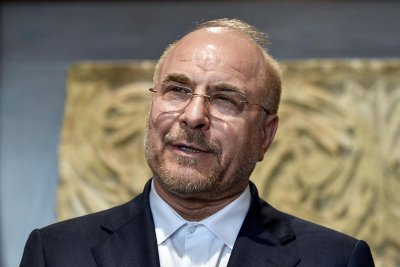
Speaker of the Parliament of Iran Mohammad Bagher Ghalibaf speaks during a news conference in Beirut, Lebanon, on October 12, 2024. File Photo by Wael Hamzeh/EPA
March 29 (UPI) — Iran’s parliament speaker, Mohammad Bagher Ghalibaf, issued a warning Saturday against a possible ground troop invasion as the U.S. military sends more troops to the region.
Ghalibaf made the comments in a message marking 30 days since the start of the war. The United States and Israel began strikes on Iran on Feb. 28 in their efforts to diminish the country’s nuclear weapons program.
Ghalibaf accused the United States of secretly planning a ground invasion of Iran. On Saturday, two U.S. ships arrived in the region carrying 3,500 U.S. service members as well as fighter jets, transport aircraft, amphibious assault vessels and other tactical assets. More troops were expected, U.S. Central Command said.
“The enemy publicly sends messages of negotiation while secretly planning a ground invasion — unaware that our men are waiting for American troops to enter on the ground, ready to unleash devastation upon them and punish their regional allies,” Ghalibaf said, as reported by CNN.
Last week, the Trump administration proposed a 15-point peace plan with Iran. President Donald Trump also ordered a 10-day halt on strikes against Iranian energy sites, though Israel carried out its own attacks on energy sites Friday.
Secretary of State Marco Rubiosaid Friday that Iran had not responded to the peace proposal.
“The United States speaks of its aspirations, presenting what it failed to achieve in war as a 15-point list to pursue through diplomacy,” Ghalibaf said.
“As long as the Americans seek Iran’s surrender, the answer of your sons remains clear: ‘Far be it from us to accept humiliation.'”
Ghalibaf’s message came in the wake of a Saturday report by The Washington Post that the Defense Department has drawn up plans for a weeks-long ground operation in Iran. Officials told The Post the plan isn’t considered a full-scale ground invasion, but would involve Special Operations forces and infantry troops.
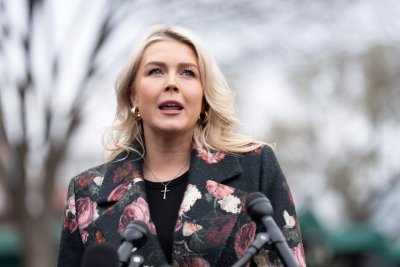
White House press secretary Karoline Leavitt issued a statement in response to the possibility of ground troops in Iran.
“It’s the job of the Pentagon to make preparations in order to give the commander in chief maximum optionality,” she said. “It does not mean the president has made a decision.”
Iran has launched attacks on Israeli and other U.S. allies in the Persian Gulf region, including one Sunday on a military camp in Kuwait, which killed 10 Kuwaiti service members. The army said it detected 14 ballistic missiles and 12 hostile drones in Kuwaiti airspace over the previous 24 hours. Since the start of the war, it has monitored more than 300 ballistic missiles, 2 cruise missiles and more than 600 hostile drones.
Meanwhile, Israeli officials said emergency officials were working on a large fire that broke out at a hazardous materials factory at the Neot Hovav industrial complex, The Guardian reported. The Israeli military blamed “a weapon fragment or interceptor fragment” for the damage and fire.
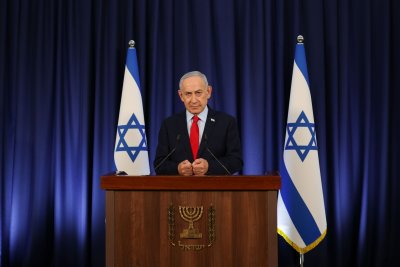
March 20 (UPI) — Prime Minister Benjamin Netanyahu said Thursday that Israel “acted alone” in striking Iran’s South Pars gas field, an attack that escalated the war in the Middle East and prompted President Donald Trump to declare that the U.S. ally would not target the site again.
Israel attacked the South Pars field on Wednesday. In retaliation, Iran targeted major Persian Gulf energy facilities of U.S. allies, causing damage to Qatar’s Ras Laffan Industrial City and the United Arab Emirates’ Bab gas field.
The tit-for-tat strikes have edged the region closer to all-out war while soaring the price of oil, leading Trump to state the United States had known nothing of Israel’s plans before it struck the South Pars gas field and to threaten Iran if it attacked Qatar again. He also said Israel would not attack Iranian energy infrastructure unless Iran attacked Qatar again.
Trump’s comments and his administration’s rationale for entering the war have come under scrutiny after reporting challenged his claim that Washington had no prior knowledge of the South Pars attack, while critics accused the United States of being lured into the war by Israel.
Speaking to reporters in English on Thursday, Netanyahu mostly backed Trump’s account, saying “Israel acted alone against the Asaluyeh gas compound,” using the name of the nearby Iranian port and industrial complex that is often used as a shorthand for the gas field.
He did not directly address whether Trump or the United States knew of the attack beforehand, but pivoted to state that further attacks would not occur, as the American president had ordered.
“President Trump asked us to hold off on future attacks, and we’re holding off,” he said.
The press conference was held following reporting, including by CNN, citing U.S. and Israeli officials who said the attack had been conducted in coordination with the United States.
It was also held as accusations mount that the United States was dragged into the war by Israel. After the United States launched initial attacks with Israel on Feb. 28, Secretary of State Marco Rubiotold reporters that it was a preemptive strike to reduce U.S. casualties and deaths because they knew Israel was going to strike Iran and believed Tehran would retaliate against American forces.
The Trump administration has attempted to thwart the notion that Israel forced the United States into war, with officials repeatedly stating that Trump’s decision to attack was not influenced by others.
Netanyahu echoed this sentiment.
“Does anyone really think that someone can tell President Trump what to do? Come on,” he said. “President Trump always makes his decision on what he thinks is good for America, and may I add, I think what is also good for future generations.”
March 19 (UPI) — The FBI is investigating Joe Kent, who resigned this week as the counterterrorism director in protest over the war with Iran, over allegations that he leaked classified information, according to reports, while Trump administration officials attack his credibility.
Kent resigned Tuesday as director of the National Counterterrorism Center, a position to which the MAGA supporter and far-right conspiracy theorist with ties to White nationalist groups was nominated in early 2025 by President Donald Trump, stating that “Iran posed no imminent threat to our nation.”
“I cannot in good conscience support the ongoing war in Iran,” he said.
The FBI investigation into Kent predates his resignation, unidentified sources told Semafor, the first to report on the development. The New York Times, NewsNation and others have since corroborated that story.
Kent is the first senior Trump administration official to resign over the war that has divided Republicans and supporters of the president, who campaigned on ending conflicts while warning Americans that if the Democrats were to return to the White House, the United States would be lured into a war with Iran.
Little information about the allegations against Kent was known. The revelations of the investigation come as the White House was attempting to undermine and dismiss the man Trump had repeatedly called “a Great American Hero” for his service as a soldier, Green Beret and CIA officer.
In his resignation letter, Kent argued that Trump was pulled into the war by Israel, claiming the Middle Eastern country had deployed a disinformation campaign to convince Americans that Iran posed an imminent threat to the United States.
Trump told reporters on Tuesday that he thought of Kent as a “nice guy” who was “very weak on security.”
“I didn’t know him well, but I thought he seemed like a pretty nice guy. But when I read his statement I realized that it’s a good thing that he’s out because he said that Iran was not a threat. Iran was a threat.”
White House press secretary Karoline Leavitt refuted the allegation as “insulting and laughable.” Speaking to reporters Wednesday, she attempted to distance Trump from Kent, saying he has not been involved with the president’s intelligence briefings for several months and has not been seen at the White House “for quite some time.”
“The president feels it is deeply disappointing that after the president gave him an opportunity in this administration to serve the American people that he would resign with a letter filled with falsehoods — accusing the president of the United States of being controlled by a foreign country.”
The war began late last month after the United States and Israel attacked Iran. Secretary of State Marco Rubiohas said that the U.S. attack on Iran was preemptive. He said they knew Israel was going to attack Iran, which would result in Iran attacking U.S. bases and allies in the region.
The U.S. attack was intended to preempt an Iranian response, he said.
March 17 (UPI) — U.S. Secretary of State Marco Rubio has designated a Jewish Iranian-American imprisoned for nearly a year in Iran as wrongfully detained, according to his family.
Kamran Hekmati, a jeweler and longtime resident of Great Neck, N.Y., was detained by Iranian authorities at Tehran’s Imam Khomeini International Airport on May 17, according to the Bring Kamran Home website.
He was in the country for a family matter, and was detained while attempting to return to the United States. The website states he was formally arrested on July 28, less than two weeks after the United States bombed Iran’s nuclear facilities.
His family told UPI in a statement that they were notified on Monday of Rubio’s designation, an official recognition that the United States believes Hekmati is being held in Iran on false charges.
“We are so grateful to President [Donald] Trump and Secretary Rubio for their designation of Kamran Hekmati as a wrongful detainee,” Shohreh Nowfar, Hekmati’s cousin, said in a statement provided to UPI by Global Reach, a U.S. nonprofit that advocates for Americans imprisoned abroad.
“It reassures us that our government has our back in the effort to get Kamran home safely.”
UPI has contacted the State Department for comment and confirmation. Its Office of the Special Presidential Envoy for Hostage Affairs becomes involved once an American citizen is determined to be wrongfully detained.
Hekmati emigrated to the United States following the 1979 revolution.
According to his website, Hekmati was charged with allegedly visiting Israel within the last 10 years based on photos found on his phone of a trip he took to the country for his son’s bar mitzvah. He was sentenced to two years in Iran’s notorious Evin Prison. Advocates said the trip took place 13 years ago.
Hekmati was detained amid growing tensions between the allies, the United States and Israel, and Iran. Iranian authorities formally charged him two weeks after the Trump administration bombed Iran’s nuclear facilities.
He was again charged by Iran in December as tensions rose in the Middle East. Tehran authorities accuse him of meeting with agents of Mossad, Israel’s intelligence agency.
He is reportedly a bladder cancer survivor but requires regular medical testing and preventive medical procedures to guard against its recurrence.
“Kamran appears to be caught up in Iran’s traditional approach of detaining Americans to obtain political concessions from the U.S.,” his advocacy website states.
The announcement comes months after Reps. Tom Suozzi, a Democrat, and Claudia Tenney, a Republican, both from New York, urged Rubio in an early December letter to secure Hekmati’s release and to designate him as wrongfully detained.
Rubio designated Iran a state sponsor of wrongful detention on Feb. 27, a day before the United States and Israel launched their ongoing war with Tehran.
Iranian-American journalist Reza Valizadeh — arrested by Iran’s elite Islamic Revolutionary Guard Corps in September 2024 and sentenced to 10 years in prison — was also officially designated as wrongfully detained in May.
Nowfar told UPI that the wrongfully detained designation made clear “that the senior-most people in the White House know that Kamran, Reza and the others are being held by the Iranians and conveyed to the Iranians that they will be held accountable for their safety.”
The pet did a neat trick: Before a room filled with heads of state from across Latin America, Little Marco spoke Spanish.
His owner — well, his soul’s owner at least— grinned and joked, “I think he’s better in Spanish” than in English. Following President Trump, it was Pentagon Pete’s turn to tease Little Marco.
“I only speak American,” Secretary of Defense Hegseth cracked. The auditorium stayed quiet save for Secretary of State Marco Rubio, who meekly protested, “I only speak Cuban.”
Trump gave him a pat on the back. Good boy, Marco.
The exchange, which happened over a weekend dominated by the war with Iran, was brief yet said so much about the times Latinos live in. Rubio, the most powerful Latino politician in U.S. history, might as well have been to Trump and Hegseth the Chihuahua that says “Yo quiero Taco Bell.” The man who has played an oversized role in pushing a president who campaigned against costly foreign wars and chaotic regime changes to do both was brought back down to an undignified size.
Little Marco indeed.
Here’s a reminder that no matter how high and mighty you get in Trump’s White House, a Latino is still an exotic “other.”
Tokenizing someone is always an ugly thing — yet Rubio deserves no tears. He has made a career out of wearing his latinidad like a shiny guayabera when convenient, long casting himself as the boy-faced exception to the corrupt, ineffectual Latino politician archetype. That stance has fueled a 27-year career — Florida speaker of the House, U.S. senator, former presidential candidate, secretary of State and national security advisor. That has made many conservatives and more than a few Latinos feel he’s not just capable of a strong White House run but that he could even win were he to do so.
All it cost Rubio was his morals and backbone. All he had to do was roll over.
We Latinos deserve better — and yet we kind of don’t.
The story liberals and conservatives have always told about America’s largest minority is that we would irrevocably change the United States — the former group maintained it would be for the better, the latter insisted we would cause this country’s downfall. Rubio proves that at our worst, Latinos show that in our rush to assimilate and be embraced, we often become the worst kind of Americans.
Secretary of State Marco Rubio speaks as President Trump during a NATO summit in June in the Hague.
(Brendan Smialowski / Pool Photo)
We’re the ones whom the American psyche sees as perpetual invaders, yet we sign up by the thousands for the Border Patrol, Immigration and Customs Enforcement and other agencies in Trump’s deportation Leviathan. Even as Trump slimed Latinos during his first term and his years out of office, an increasing number of us warmed up to him — surely, he was referring to other Latinos — until Trump captured more of our votes in 2024 than any Republican presidential candidate ever.
It takes a certain type of person to go from child of Cuban immigrants — the favorite son of an exile community that transformed Miami from a retiree haven into one of the capitals of Latin America — to tell European leaders last month that they and the United States “opened our doors to an unprecedented wave of mass migration that threatens the cohesion of our societies, the continuity of our culture, and the future of our people.”
It takes the worst kind of Latino.
I called Rubio a vendido in a previous columna after he cheered on the extrajudicial capture of Venezuelan despot Nicolás Maduro. He’s definitely still a sellout — what else to call someone who once fiercely opposed Trump but now sidles up to him like a cockapoo? But the most pathetic part about Rubio’s rise is that his followers see him as the culmination of the long-held dreams of Latinos that things would become better for our ancestral Latin American countries and ourselves once one of us was charge.
Alas, no. He’s living up to a realpolitik maxim attributed to various Latin American caudillos: For my friends, everything; for my enemies, the law.
Strongmen like El Salvador and Argentina presidents Nayib Bukele and Javier Milei get coddled and receive foreign aid; college students on study visas who criticize the Trump administration get nabbed by la migra. Rubio is overseeing a foreign policy that currently has the U.S. dictating how Venezuela will be governed, is bombing Iran like the country was a game of Pachinko and is slowly choking Cuba into collapse. He’s the unholy child of Bush-era neoconservativism and MAGA — and Rubio is just getting started.
That’s how he set himself up to be used as Latino punch line by Trump and Hegseth. The setting: the inaugural meeting at a Trump golf course near Miami of the Shield of the Americas, a coalition of Western Hemisphere countries ostensibly assembled to fight drug cartels. It resembled one of those lesser super-groups in the Marvel Cinematic Universe — you got Costa Rica instead of Mexico, Bolivia instead of Brazil. The group even has a crappy logo. You know how unserious the confab was when Trump’s point person for this is Kristi Noem, whom he literally had just fired as Homeland Security secretary.
After Trump rambled through a short speech, it was Rubio’s time to offer remarks. Here was a chance for the secretary of State, the man the Atlantic recently called “bright and well spoken,” to channel his inner Simón Bolivar or José Martí. The secretary of State thanked everyone present in English, but not before praising Trump for his “bold leadership” and bragging that the president is “one of the most historic figures in American history.”
Then Rubio looked back at his beaming master.
President Trump signs a proclamation committing to countering cartel criminal activity at the Shield of the Americas Summit on Saturday at Trump National Doral Miami in Doral, Fla.
(Rebecca Blackwell / Associated Press)
“You all right if I — “ he began before Trump cut him off with a magnanimous, “Sure. Please.”
That’s when Little Marco spoke in flawless Spanish. Rubio’s comments weren’t much different from what he said in English, save his remark that what they all planned to do by following Trump “will make future generations grateful for the work we are doing today.”
That last statement sums up Rubio. For centuries, Latin America has yearned for prosperity and peace free from American interference. This hope has fueled revolutions, music, film, culture and all the best things the region has produced only to have U.S.-backed tyrants crush those movements.
That’s the torch Rubio now proudly carries.
“All my life I’ve been in a hurry to get to my future,” he wrote in his 2013 memoir, “American Son.” Rubio’s future is now. And our present — not just Latinos, but all Americans — is worse because of it.