In a busy opening period, neither side could really establish an early foothold on the game.
Cliftonville went close midway through the half when Jonny Addis’ low free-kick from just outside the penalty area brushed the outside of the side netting on its way past.
As the Reds began to gain some form of dominance, Rory Hale’s inch-perfect through ball sent Brian Healy clear of the Dungannon rearguard but Danny Wallace recovered superbly to poke the ball behind for a corner at full stretch.
Dungannon posed little threat to the Cliftonville goal in the opening 45 minutes with Gael Bigirimana’s long-range shot straight at Reds keeper PJ Morrison.
The Swifts first clear-cut opening of the game came just after the hour mark when Dillon’s pinpoint ball from midfield sent full-back Shea Gordon clear behind the Cliftonville defence, but his shot lacked conviction and Morrison was able to save with his outstretched foot.
At the other end, Rory Hale created half a yard of space before finding Liam McStravick with a pass, but the attacker’s tame shot was always straight at Declan Dunne.
Dungannon spurned another big opening late on as Gordon once again got himself into an advanced position and when his initial shocked was saved by Morrison, the ball bounced up but substitute Andrew Mitchell could only loop his header onto the top of the net.
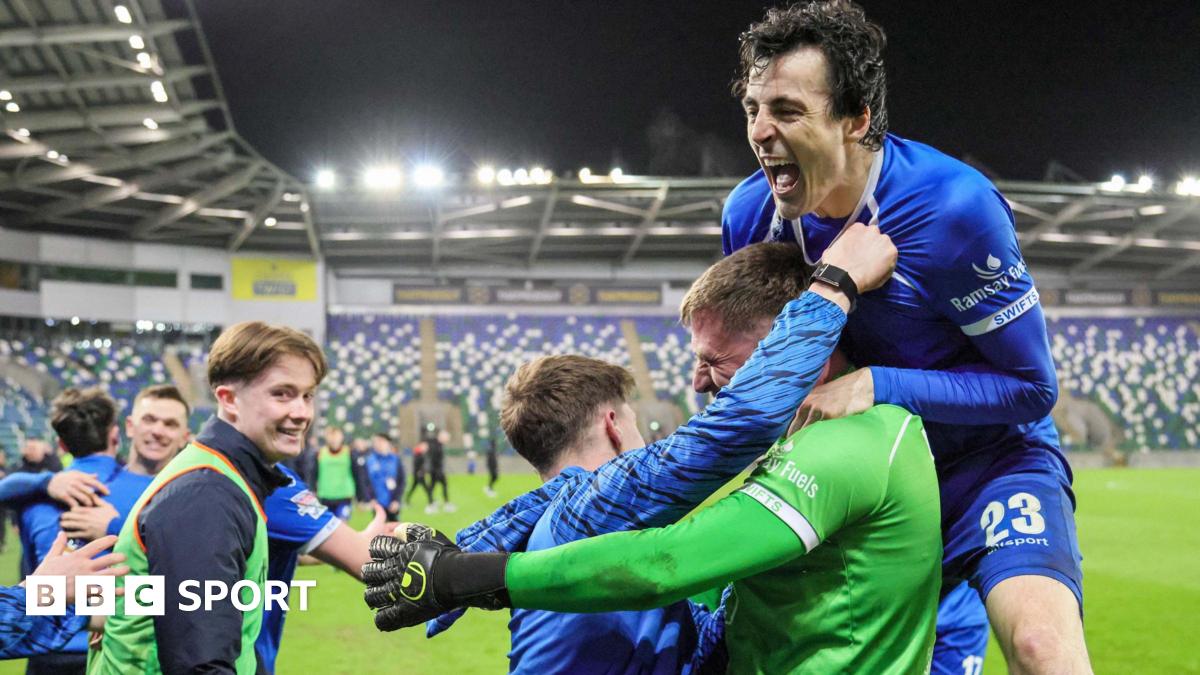
Rodney McAree’s side enjoyed their best spell at the start of extra-time and were rewarded on 98 minutes when Mitchell cut the ball back from the right-hand side of the penalty area into the path of the in-rushing Kealan Dillon, who smashed a shot high into the net past Morrison.
Cliftonville had penalty appeals waved away in the second period of extra time after referee Morrison adjudged that Cahal McGinty had blocked Keevan Hawthorne’s low cross with his body rather than a hand.
But there was one final twist in stoppage time at the end of extra time as Hawthorne’s corner was bundled home at the near post via a combination of Joe Sheridan and defender Danny Wallace with what proved the last action of the game.
In the penalty shootout, Dungannon scored all four of their penalties while Sheridan saw his effort saved and Wilson dragged his effort wide of the post.
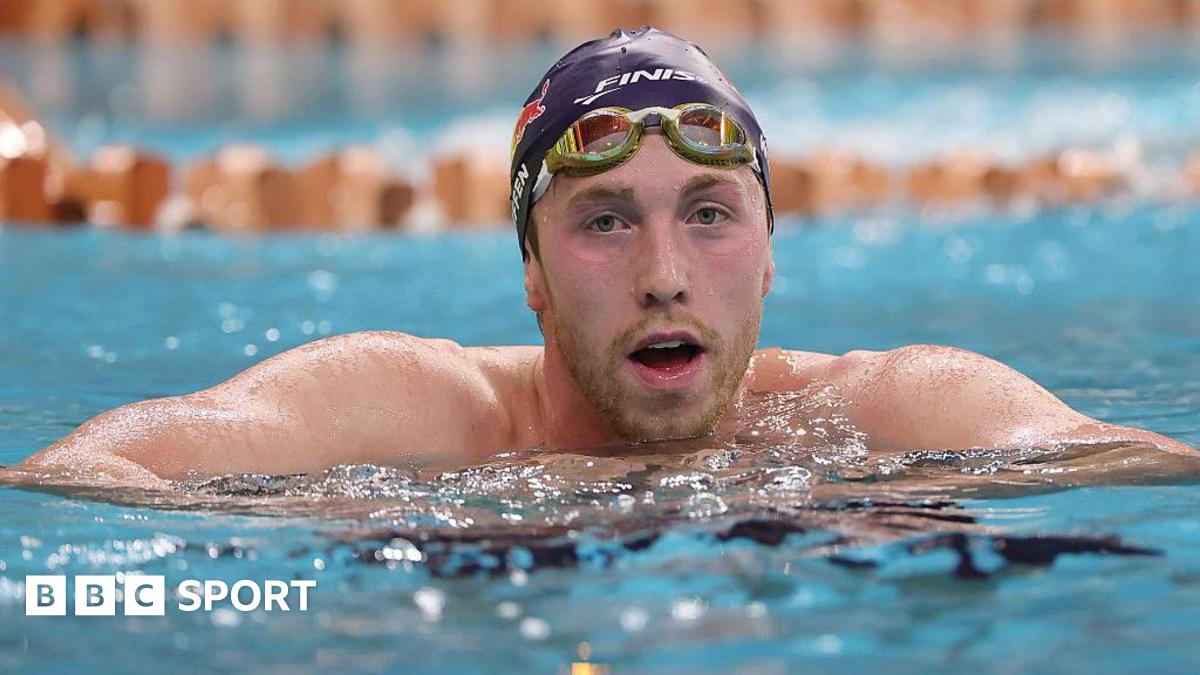
Wiffen said he is expecting “to swim the best ever so I don’t have to make a decision” across the 200m, 400m, 800m and 1500m events he will be competing in, despite his recent lack of competitive action.
He outlined his goals as swimming the 400m around 4.33 seconds, the 800m below 7.42 seconds and the 1500m under 14.40 to assess whether his time spent in California has been successful.
The County Armagh man also cited Dublin as a potential future base if he does decide to move, but emphasised that doing so would be heavily dependant on his performances in Bangor.
“If I’m around those times, under or around PB, then that’s great. That obviously means the training is working, and if it doesn’t work then I [have to figure out] what I’m going do after,” he added.
“I’m thinking of coming back to Dublin if it doesn’t go well, but, we have to see. If I swim lights out in Bangor, then my decisions obviously can’t have been made.”
Wiffen also explained the main differences he has encounter between training in England and in the US, where they use yardage instead of metres.
“The training is just quite different and, even though I don’t swim a lot of yards, I just think being in America is fun. There’s quite a lot of distractions, and it’s a good lifestyle but, it’s not the same as what Loughborough was like,” he said.
“[It was] all about grind, very similar weather to Ireland and I love swimming in the rain and when the weather is dull. When you’re in the sun everything becomes a lot harder and the motivation becomes a lot harder.
“When I’m swimming in California, my motivation is I’m with a really good training group and everybody’s pushing each other, where as in Loughborough, I feel like it was more self-motivation, I was getting there because I wanted to win.
“I wanted to do all these things where I feel like another group is kind of pushing me to swim fast, which I like, but I think I want a bit of the self-motivation back, so we’ll have to see how the next week goes.”
FOR Dermot Kennedy’s third album, he wanted to explore both the beauty and burden of a successful music career.
The award-winning Irish singer might headline huge arenas but he has always had his feet firmly on the ground, valuing a normal life, privacy and simple things such as walking in his local woods — the theme of his new record.
Sign up for the Showbiz newsletter
Thank you!
Dermot Kennedy says a lot of songs from his new album, The Weight of the Woods, carry a ‘vulnerability’ he has not previously shownCredit: SuppliedKennedy says it’s better for him to ‘sit back and let the music do the work’Credit: Supplied
He says: “I feel I’m at a sweet spot, because I can play The O2 in London but I can walk around all day and no one really knows who I am.
“Having a career in music is a blessing. It’s the most amazing thing, but at the same time, there are certain challenges that come with it. It tests relationships and tests your own resolve, it’s a pressure. And I wanted to write about that.”
The pull of nature as a place to reset became more powerful to the singer as he found success — both his previous collections, Without Fear (2019) and Sonder (2022), topped the album chart.
“With a career in music, you’re not anonymous, you’re constantly moving from city to city,” he explains.
“Being somewhere where you can only see trees in every direction has become more and more important to me, and more powerful. Where I live is quite remote, and that’s the way I want to be.”
This recurring woodland imagery reflects a sense of calm and nostalgia to Kennedy, and the cover of his new album, The Weight Of The Woods, features the singer in a woodland setting.
As we chat in his central London record label offices, he’s signing a huge pile of his new CDs.
“It’s a great album cover,” he says smiling. “Even signing these all morning, I’m not sick of looking at it yet.”
A standout on Kennedy’s new record is the track Sycamore, a gorgeous introspective ode to home and identity.
“The Irish landscape has always been important to me,” he says. “Where we took the picture for the album still resonates. It’s a big part of how I’m inspired.”
Working with producer Gabe Simon — who produced Noah Kahan’s 2022 breakthrough album, Stick Season — Kennedy made The Weight Of The Woods in Ireland, Nashville and Norway.
He says: “Sycamore is lush and smooth, which felt different for me. It was the first song we made when Gabe came over — there’s a sycamore tree right in front of my house that’s become a kind of talisman in my life. It felt like a lovely way to start.
“A lot of these songs carry a vulnerability I haven’t shown before, and that felt important, because you can’t pretend you’re 100 per cent all the time. It’s just not true.”
This shift shows a new confidence, one that allows him to do things his own way.
“Generally, I’m a quiet person, so on previous albums I wasn’t the loudest in the room whereas with this one, I have the confidence to shout for it and take my time.
“It’s taken this long to get to a point where I know what I want — what I need and what’s authentic.”
The Weight Of The Woods reflects a stage in his life where Kennedy feels more secure, more at home and more fully himself. Now married with a baby daughter, his perspective has shifted in ways he struggles to fully articulate.
“How has fatherhood changed me?” he ponders. “It’s hard to sum up, I can’t explain it in a couple of minutes.
“It just means the world to me and gives you a completely new perspective on life.
“It makes you realise there are more important things than chasing goals in music.
“The best thing I can do now is make music that moves me and try to live in a way that feels like the purest version of who I am. It becomes the centre of everything.
“Fatherhood has given me more confidence, but also a different kind of fragility, making me more emotionally open.
“A lot of these songs carry a vulnerability that I haven’t shown in my music before, and that’s important.”
Musically, Kennedy feels the album has a strong Irishness, though it was not a deliberate concept.
Honest is a track that feels especially personal, as it directly references where he is from in Ireland.
He says: The first lyric is about Kilteel [near Rathcoole, Co Dublin] which is an important part of where I’m from. It’s a more personal record so I needed to tell the story of where I’m from.”
He reflects on the pull of home: “Sometimes when you’re trying to have a career in music, people assume they need to move away and live somewhere else.
“But in Ireland we have one of the richest musical landscapes in the world, you know? So, it’s nice to be a part of that.
“And it’s the most Irish-sounding track. I played the bodhran [a traditional Irish frame drum] on it, the drum you hear at the beginning, and there’s also a tin whistle. It all came together very naturally so these songs feel dynamic to me and they’re really going to work live.”
Wasted is a favourite of Kennedy’s on the record. Inspired by US singer and producer Dijon, he says: “It felt like it had that excited, upbeat energy without being pop. It felt real in the room and exciting.”
Then there’s The Only Time I Prayed, which explores the singer’s relationship with faith.
“I’ve got songs like Glory, and lyrics about the devil, but I’d consider myself definitely agnostic. I believe in otherworldly things but I’m not a practising Catholic.
“Still, when things get difficult, people pray — regardless of faith. It comes from desperation, and I find that fascinating. Sometimes I even feel envious of people with a strong faith.”
The singer says it has taken time for him to discover what he truly wants, needs, and feels is authenticCredit: Supplied
Another highlight on the record is Funeral, a stunning track about letting go of the past to move forward.
“I just wanted that song to be about ditching any difficult stuff I’ve been through,” he says.
“Songwriters spend an awful lot of time wallowing in the past and I wanted it to feel triumphant — moving forward into something more positive.
“It felt good and the vocal carries an energy which is always a fun thing on a song.”
On this third album, Kennedy feels more confident, self-assured and clearer about what is authentic to him.
He says: “It’s less inhibition and less stress — not poring over every decision. So confidence showed up in quite a carefree, exciting way.”
It was important to Kennedy that the album was stripped back and imperfect to add to the studio atmosphere.
“Musically, if you listen closely, there are lots of imperfections, little noises other artists or producers might take out,” he says.
“You can hear someone talking, a chair creaking. It puts me back in that room, and I don’t want to lose that.”
That same approach mirrors a wider creative release: “I feel like I’ve let go massively, which is a good thing.”
That sense of letting go has also reshaped how he defines success.
“Any pressure that came with the second album was internal, applied by myself,” he says. “I don’t think being competitive puts me in the best place to be the best artist I can be. I’m pretty sure it doesn’t.
“Tracking streams or records isn’t success to me. With this record, it was just lovely to get back to a place where I really enjoyed making the music, the visual world around it, and playing the songs.
“Don’t get me wrong, I still want lots of people to hear it, but I feel like I’ve already succeeded with this project.
“If it reaches a ton of people, that’s fantastic, but I had a beautiful time making it, and that’s everything.
“When you chase numbers and all that stuff, it’s all quite surface level and not very fulfilling in the end.
“I don’t think trying too hard is the move. It’s important to work hard and promote things, but being overly try-hard isn’t appealing.
“It’s better to sit back and let the music do the work. By letting go — stepping back from social media and putting the music first — it feels more likely to set my career up the way I want it.”
Live performance remains central to Kennedy’s identity. He feels he has built his career the “old-fashioned way” by playing rooms and winning audiences over.
He says: “Nowadays, there’s so many ways that someone can forge a career. You can blow up on the internet or go viral. For me, it’s never really been like that.
“It’s been more about getting people into a room. I think I can play in such a way that they might want to come back and see it again next time.”
“For me, when I dreamed about having a career in music, all I thought about was playing in big, beautiful theatres. So playing live is an important part of what I do.”
Even as he now fills large venues, Kennedy is keen to preserve a sense of intimacy within those spaces.
He explains: “We’re going to do it differently. There are lots of ways you can use tech in a live show. You can run tracks for things like horns and production, but then the whole show ends up on track and can feel like elevated karaoke.
“You can come off stage feeling like you haven’t really achieved much. So, with this tour, we’ve got rid of the click track and any backing tracks. It’s about keeping it real and letting the performance have more freedom.
“We’re getting rid of any kind of bells and whistles, and it’s just fun. I could start a song at any tempo, I could be feeling a certain way that ends up being a faster version with more energy, or we could pull it right back.
“You go to a live show for the energy, and I think it’s far easier to tap into that special place if you don’t have that stuff.”
Kennedy is also more careful about looking after his voice when he tours
“I try not to do more than two nights in a row, because it compromises the rest of the tour. It means I can walk on stage excited, instead of just hoping I get through it.”
It’s part of a wider shift in how he approaches performance. “It’s a process as well, working with vocal coaches and stuff. I run a lot more now, because you need that lung capacity. I’m not sure about other people’s experience touring, but it feels like a sport sometimes.”
That mindset has also made him more aware of the level required to sustain a major live career — something he saw first-hand watching Taylor Swift live.
Kennedy on stage in the US earlier this monthCredit: Getty
“Well, I saw her at the venue I’m playing this summer, and it was inspiring.” he says. “I saw Travis, her fiancé, talking about her fitness regime and just how she’s operating at a kind of scary level.
“I find that really inspiring, because it makes you realise this is a very high level of what we do — you have to take it seriously. When someone is that on top of their game, it’s just incredibly motivating.”
“The show is, what, three hours long? It was wild to see. And honestly, it was just cool to be in Dublin and see people so excited by those songs.
“What really struck me was that it was just her songs. You realise this is someone who started out just writing songs, and now it’s millions of people all over the world.
“But it doesn’t feel like some manufactured pop machine. It just feels like someone who writes songs, and that’s what makes it so powerful.”
The album The Weight Of The Woods is out on April 3.
Dermot Kennedy’s The Weight Of The Woods is out on April 3Credit: supplied
March 17 (UPI) — President Donald Trump hosted Irish Prime Minister Micheál Martin at the White House on Tuesday during their annual St. Patrick’s Day visit.
Taoiseach Martin thanked the president for “affirming the tremendous bonds” between the two countries at the Oval Office.
Trump said there is a “tremendous trade relationship” between Ireland and the United States.
“We have a tremendous trade relationship with Ireland, and we’ll keep it that way. I think it’s going to be expanded very quickly,” Trump said. “Probably they want to talk a little bit about tariffs, but I won’t mention that – you might want to be discussing that a little bit.”
Vice President JD Vance also hosted a breakfast in honor of Martin at the vice president’s residence in the U.S. Naval Observatory in Washington, D.C.
A reporter asked Trump what his message was to Irish people who are paying high energy prices because of the war with Iran.
“I have a lot of friends from Ireland, they’re very happy that I’m getting rid of … a nuclear power, a nuclear terrorist,” Trump said. “And as soon as that war is over, which will be soon, your prices are going to drop like a rock. You watch.”
Martin said the connection between the two countries is important.
“The Irish have helped to build America,” he said. “We’re very proud of that connection, and we think you hosting us here in the White House is affirmation to all the Irish-Americans out there and to our diaspora in this country for what they’ve contributed to America.”
He also said he wants to develop a legal path for migration between the two countries.
Some Irish politicians have boycotted the trip.
Sinn Féin President Mary-Lou McDonald and Northern Ireland First Minister Michelle O’Neill are boycotting the St Patrick’s Day events in the United States because of the Trump administration’s policies in Gaza, the BBC reported.
Revelers wearing green cheer as the St. Patrick’s Day Parade marches through Fifth Avenue in New York City on March 17, 2026. Photo by John Angelillo/UPI | License Photo
If David Nihill was a philosopher, his credo might be “I digress, therefore I am.”
Instead, Nihill is a comedian. Kind of. “I don’t know if I think of myself in those terms,” says Nihill, whose “Cultural Appreciation” special has 2.5 million views on YouTube. “I wouldn’t even call mine comedy specials.”
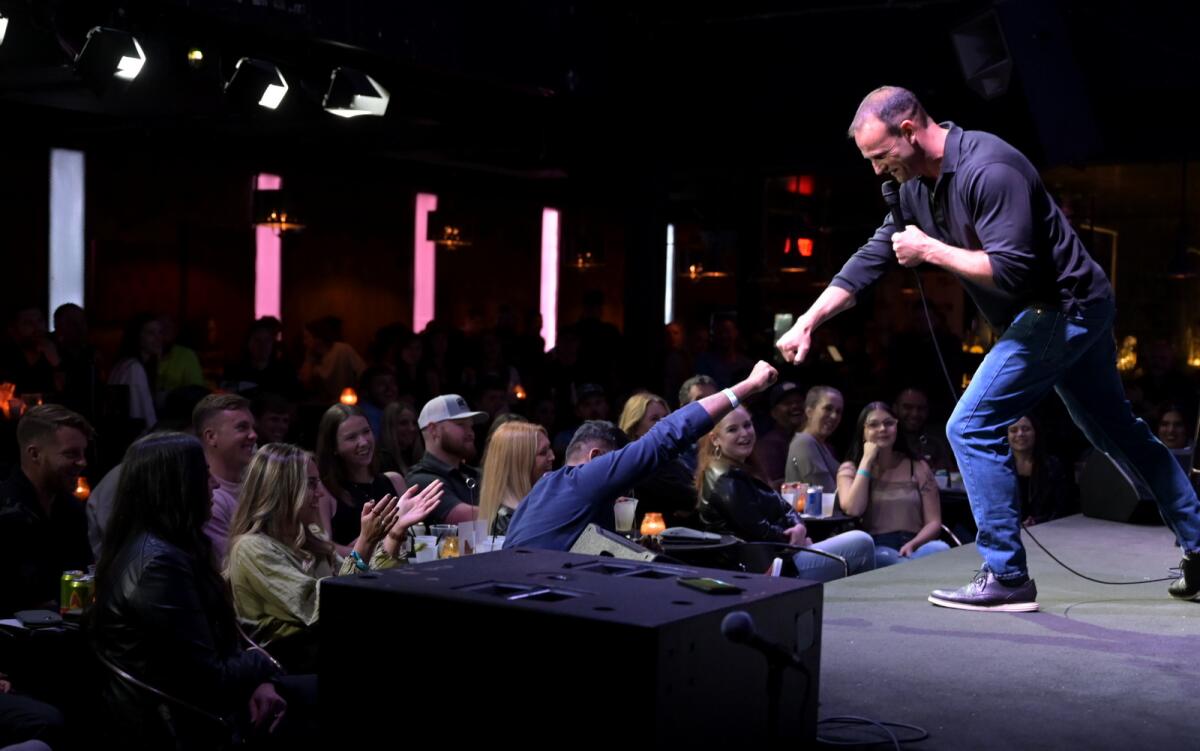
Nihill is a conversational storyteller who rarely even moves on stage. “I don’t know how to do performance,” he says, “but I do know how to talk.”
His current show, “Taking Tangents,” which takes him to Irvine, Pasadena and Los Angeles from March 13 to 17, is a wide-ranging collection of tales, with some material shifting from show to show. We’ll come back to it, but first, a few tangents.
Growing up in Ireland, Nihill, 47, struggled to learn, hampered by dyslexia — “I came in the lowest five percentile in the whole country of Ireland for spelling, and I didn’t even spell my name right on the test” — and an aversion to math. He was made to feel inferior because of his difficulties. “I was 100% in the ‘I am a moron’ category,” he says.
Nihill was shoved into a vocational program and most of his friends dropped out of school. He stayed in, but even when his father offered to buy him a Super Nintendo for certain math scores, Nihill fell short. His father bought it for him anyway, he says, “but I sold it and bought myself a motorcycle even though I was 15 and not legally old enough to drive.”
He finished high school and became a poorly paid, overworked apprentice electrician. That was enough to motivate him to go to college; there, he figured out how his brain worked and how to learn. He even developed a passion for reading: His last show, “Shelf Life,” wove in dozens of book recommendations.
During our conversation via video after a New York show, I’d ask one question, then follow Nihill as he ambled through his personal history. He started with a story about jumping off a cliff in Greece and shattering his leg — a part of “Tangents” — then going to Australia, before he stumbled into a master’s degree studying business back in Ireland (despite botching his application). A new friend there took him to his first-ever comedy show in Glasgow — there are even tangents within his digressions — before getting him a job with Enterprise Ireland, the government’s investment fund to boost Irish business overseas. That landed him in San Francisco, part of the “Cultural Appreciation” special. He left to pursue business opportunities in Mexico but, due to a hurricane, somehow ended up in Chile, spent a year wandering north toward America, and then scored an internship in Colombia.
Nihill is a conversational storyteller who rarely even moves on stage. “I don’t know how to do performance,” he says, “but I do know how to talk.”
(Jim McCambridge)
Eventually, Nihill’s story works its way to his current career, which began by accident. “It was never a dream or a goal,” he says. A friend in San Francisco had suffered a spinal cord injury and Nihill wanted to run a fundraiser, but dreaded public speaking.
That leads to a minor diversion, back to a college public speaking course in which Nihill was so terrified that he got drunk before his presentation and introduced himself “as an exchange student from Southern Yemen.”
In San Francisco, he started doing live comedy to overcome that fear. Meanwhile, his business background led him to see an opportunity and he created FunnyBizz, a company and conference where comedians help teach business leaders, like Kevin Harrington of “As Seen on TV,” how to use humor to communicate. The business bankrolled Nihill’s early days in comedy.
While Nihill has lived in America for years, most recently in Los Angeles, he remains passionately Irish, which shapes his shows in several ways.
In Ireland, “your nature is to just default to funny stories.”
He says American stand-up is about taking a topic and making it funny, aspiring for a five-minute joke-filled late night TV spot. Irish comedians say, “This thing happened to me and I think that’s funny. Let me just repeat it.”
The new show is named after “tangents” so that Nihill can go down different rabbit holes each night if he wants. “My head is always doing 60 different things,” he says, and he loves keeping his storytelling “free form and unfiltered,” whether he’s in a pub or on stage (or, apparently, in an interview).
The new show’s subjects will be familiar to Nihill’s fans: his parents, his foolish behavior (there are drunken college-age antics in a story that somehow eventually weaves in White House press secretary Karoline Leavitt) and Irish culture. “There are few countries that punch above their weight in social justice and social impact,” he says, and he always looks to draw connections with other cultures around the world. But the observations and connections he draws are new.
In New York, he added a bit about how 35% of Jamaicans have some Irish roots, quipping “imagine how fast they’d be without that” (in a nod to legendary sprinters like Usain Bolt). But for Nihill, that joke only works if it’s couched within the larger context of the cross-cultural connections, including the fact that Jamaican-born political activist Marcus Garvey drew upon the Irish independence movement for inspiration.
“There has to be some social value to doing it,” he says, although he’s quick to add his comedy isn’t overtly political. “My dad’s a teacher and that lives inside of me. Humor can be the ultimate tool for social activism. I am deliberately getting people to expand their minds in understanding these connections. I want comedy that makes everyone feel good and maybe learn something.”
Nihill on stage at Hollywood Improv.
(Jim McCambridge)
That “feel good” part is central: While he discusses his mother’s death from cancer last year, he leaves out a beautiful but poignant part of their final days together. “I’m deliberately avoiding that,” he says, because he wants to maintain an upbeat mood.
He digresses to tell me the story, however, and it’s literally longer than this entire article’s word count. “A very long answer to a very short question,” he admits, before swerving into a tale about back when his father had overstayed his visa in New York — it involves his dad being interviewed on CNN, getting into a bar fight and avoiding deportation because the immigration officer hailed from County Cork and Nihill’s dad burst into a song from there, earning him a six-month visa extension. The humanity of that scene “in contrast to a 5-year-old being dragged off to a detention center” may end up in a future Nihill show.
Nihill loves sharing the stories that come from observing and listening to people but says he doesn’t love the spotlight, which, he admits, makes comedy an odd career choice. He says he prefers telling stories to just a few people.
“With comedy, the best part for me is that before a show I eat half a chocolate bar and I leave the other half in the hotel room,” he says. “After the show, I get to finish it. That’s true happiness.”
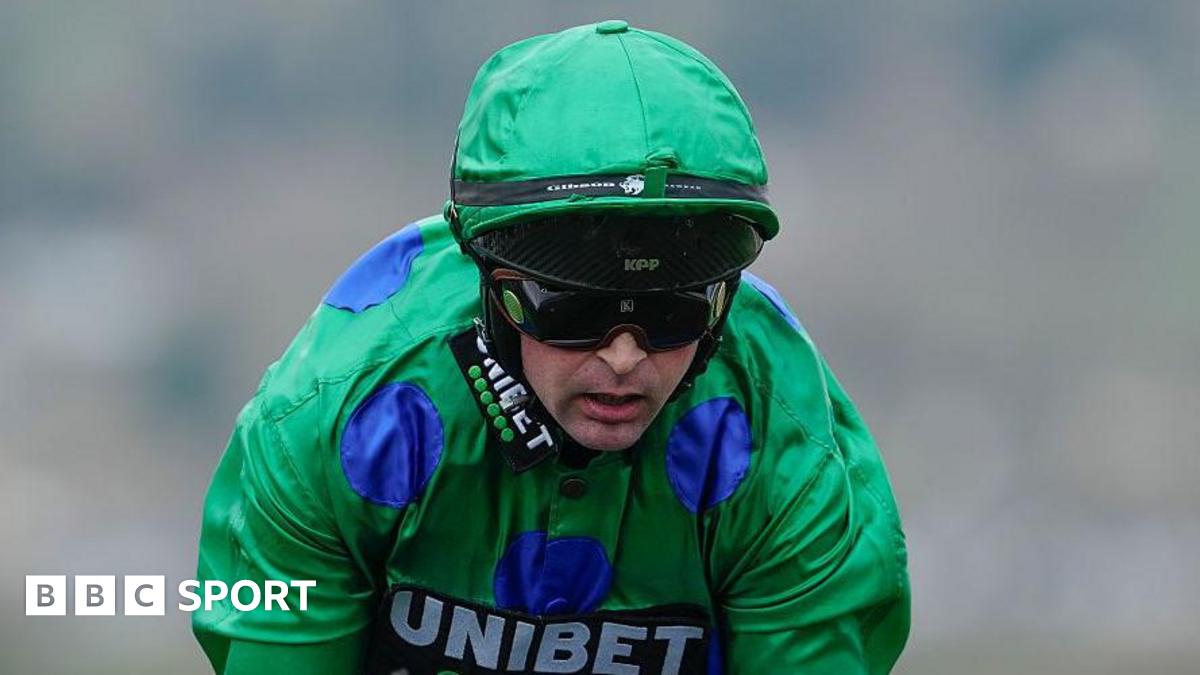
After first accusing De Boinville of being “abusive”, Queally told The Racing Post, external on Wednesday he had received “repeated racist abuse” from his rival.
The Irishman, riding I’ll Sort That, and De Boinville on Act Of Innocence could be seen exchanging words at the start line, but the Englishman denies any wrongdoing.
De Boinville told BBC Radio 5 Sports Extra on Thursday: “It is an ongoing investigation.
“The stewards are gathering all the evidence they can from all the video footage.
“From my point of view, I deny all the allegations against me.
“I can categorically say there weren’t any racial slurs or anything like that. Let’s let it play out.”
Queally, 37, appeared to topple off his horse before Wednesday’s race started and had to be checked over by a doctor. He was given the all-clear to race, along with Ballyfad, who was kicked pre-race and assessed by a vet in a chaotic few minutes.
A number of false starts to the planned rolling start meant the horses were moved to a standing start at the tape – leaving jockeys jostling for position.
After the race, Queally, who finished fifth, was interviewed by ITV Racing before entering the weight room.
He said: “Being abused by an English rider, Nico de Boinville, not very nice.
“I am an amateur, coming over here and riding in front of my kids. Horrific.”
When informed of Queally’s comments about a difficult start to the race, De Boinville responded: “Maybe he should look in the mirror.”
Legendary jockey AP McCoy said Queally has “as much right to be there as anyone”, while Ruby Walsh said the start system “hasn’t worked for 20 years”.
Walsh told ITV: “It’s 2026. How has nobody devised a tape that rolls in front of the horses?
“The tape should have been in front of them when they went on to the track and it should be moved in front of the horses.
“We can send missiles after fighter planes in the Gulf, but nobody can design a rolling flyaway tape. That’s the joke.”
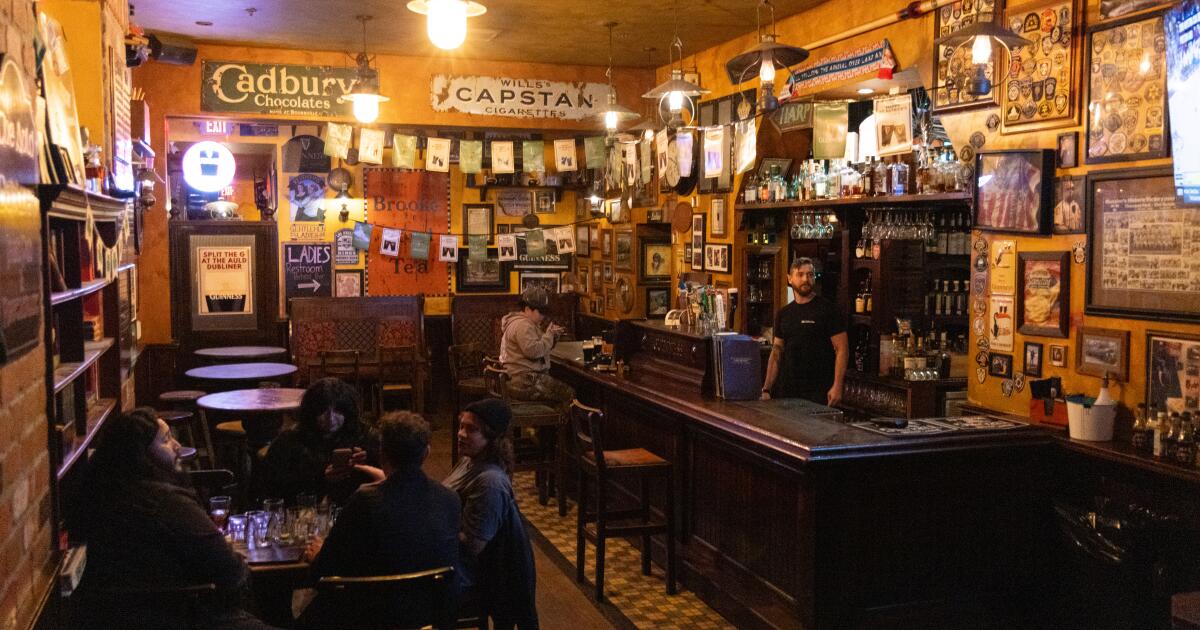
In 1936, Irish Bostonian entertainment lawyer Tom Bergin founded L.A.’s first Irish pub, the Old Horseshoe Tavern, on Wilshire Boulevard. The bar was later renamed in his honor and relocated to its current Tudor Revival-style building off Fairfax Avenue in 1949.
The tavern claims to have introduced Irish coffee to the U.S. — though some argue that San Francisco’s Buena Vista Cafe holds that title. Either way, Tom Bergin’s is one of the oldest bars in continuous operation in L.A. and boasts the second-oldest liquor license in the city. And its Irish coffee is still one of the best you’ll find.
Today, L.A.’s Irish pub tradition extends to Santa Monica, Long Beach and Woodland Hills, with many founded by Irish immigrants seeking to bring a bit of their homeland to the West Coast in the form of Guinness pints, corned beef and cabbage and traditional Irish folk music.
Whether you’re celebrating St. Patrick’s Day or just looking for somewhere to split the G, here are 13 Irish pubs to check out in L.A. — Danielle Dorsey