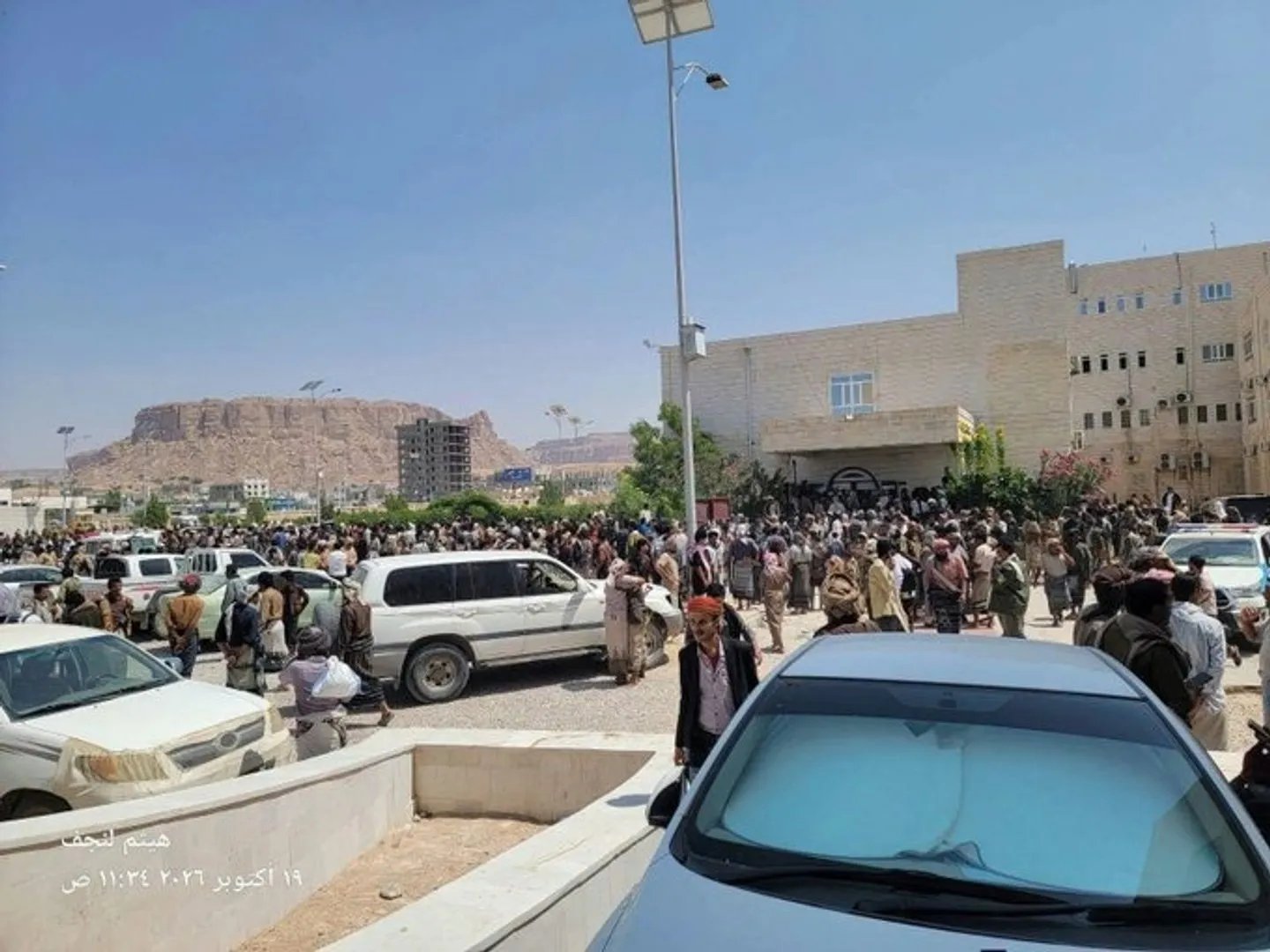
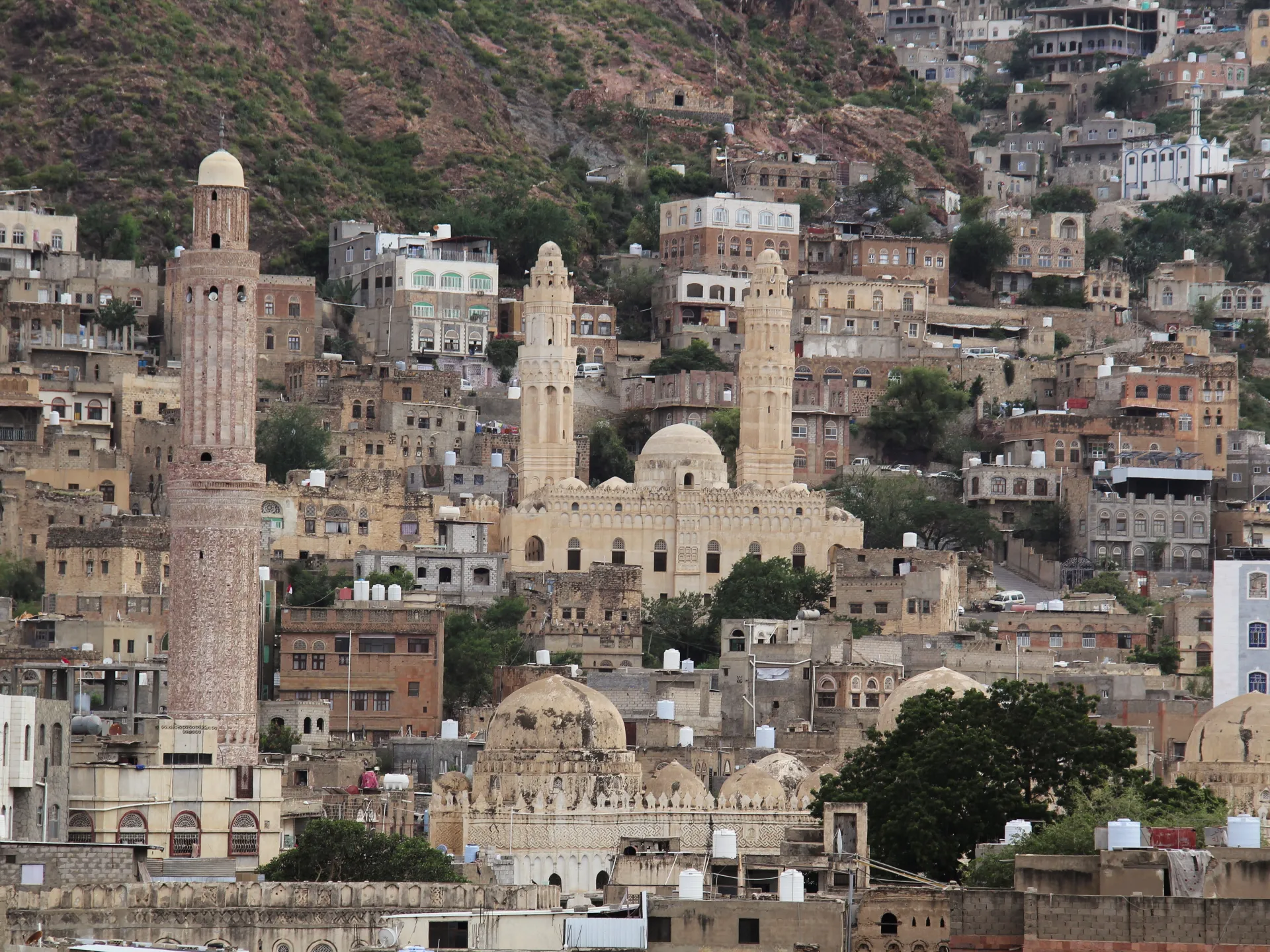
An armed student rallies in support of the Houthi-imposed naval embargo against Saudi Arabia in Sanaa, Yemen, Wednesday. Hundreds of students gathered at Sanaa University to support the move. Photo by Yahya Arhab/EPA
July 23 (UPI) — The Houthis in Yemen claimed responsibility for two attacks on Saudi oil tankers in the Red Sea with missiles and drones.
The Iran-backed Houthis, who have been fighting for control of Yemen, claimed on Wednesday that they had hit the Encelia and the Layla oil tankers, which they said were violating their blockade of Saudi ships. They had announced the blockade on Monday.
Saudi Arabia’s transportation authority confirmed the attack on the Encelia in a statement. It said there was a fire on board but the crew were all safe. It didn’t mention the Layla.
Houthi military spokesperson Yahya Saree said the group promised to continue naval operations and would continue “enforcing the ‘siege for a siege’ equation,” the BBC reported.
The Houthis claimed they had also forced “10 ships to retreat and return.” That claim could not be independently verified, The Times said, but at least six vessels reversed course in the Red Sea on Monday and Tuesday after the Houthis warned shipping companies to avoid Saudi ports, according to Kpler, a maritime data company. It was not clear if those ships were part of the Houthis’ claims.
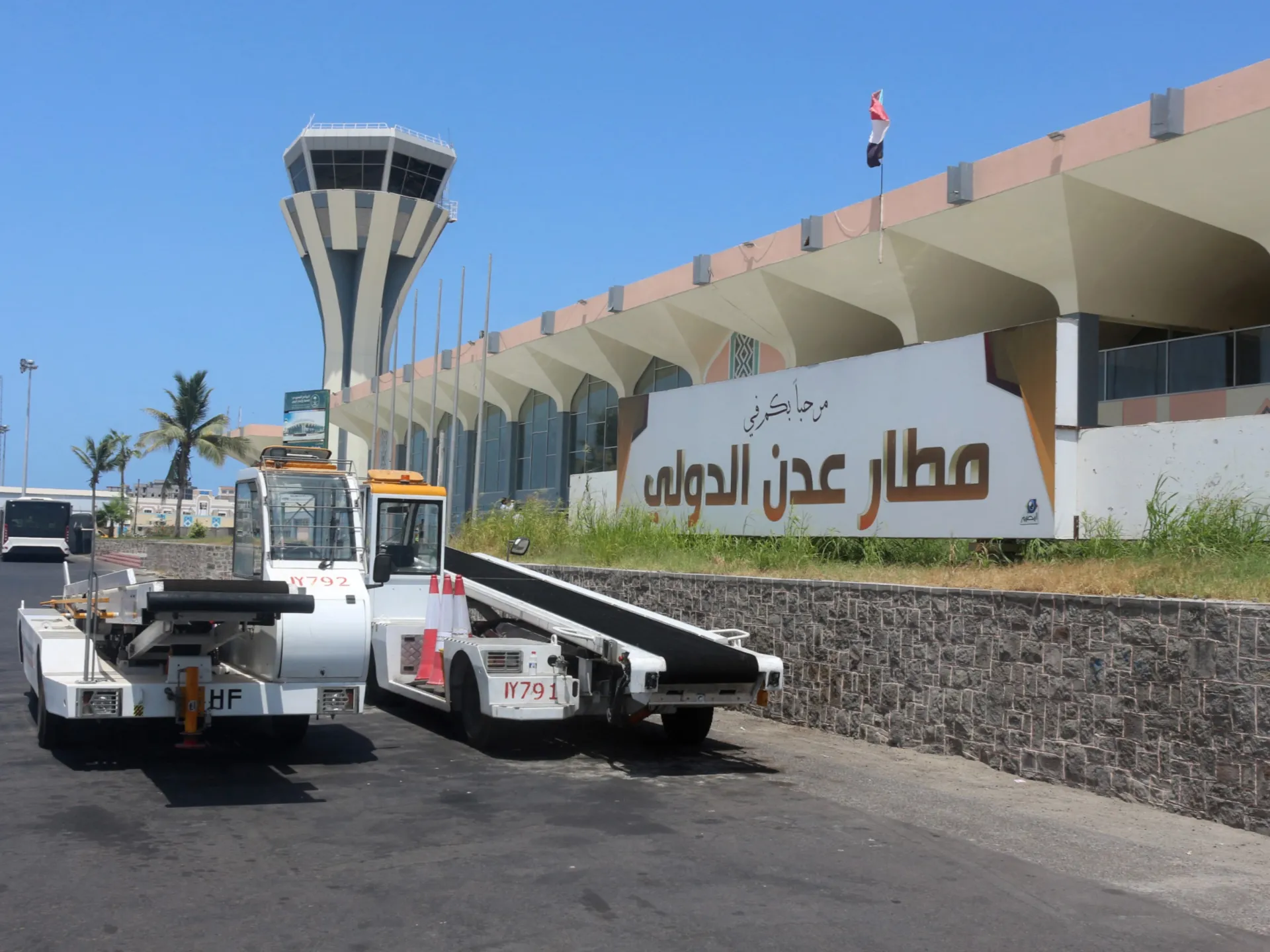
The Saudis and the Houthis have been in an effective cease-fire since 2022. But last week, tensions flared when the Houthis accused the Saudis of striking the airport in Yemen’s capital Sanaa. The spat came from a dispute when an Iranian plane had tried to land at the airport.
The Houthis then attacked the Abha airport in Saudi Arabia.
When the Houthis announced the “maritime embargo,” they didn’t give many details. But a media official said they would close the Bab al-Mandab Strait. That strait is on the other side of the Arabian Peninsula from the Strait of Hormuz. It’s the gateway between the Arabian Sea and the Red Sea, and blockades of both straits would cut off Saudi Arabia ships entirely.
The United States and Iran continued to trade attacks for the 12th consecutive night after the cease-fire between the two countries ended.
Astronaut Buzz Aldrin walks on the surface of the Moon during the Apollo 11 mission on July 20, 1969. Photo by NASA/UPI | License Photo
The United States continued to hit Iran for a 12th consecutive night early on Thursday, and Iran retaliated, striking targets across the Gulf, particularly in Kuwait and Jordan.
Iran’s Islamic Revolutionary Guard Corps (IRGC) said on Thursday that an explosion set a tanker ablaze in the Strait of Hormuz after it attempted to navigate the southern route off the coast of Oman.
Here is a recap of what happened on Wednesday night and Thursday.
Where did the US attack Iran?
US Central Command (CENTCOM) said at 02:30 GMT on Thursday that it concluded the latest round of strikes against Iran.
It targeted Iranian military targets, including maritime capabilities, missile and drone storage facilities, coastal surveillance sites and air defence assets, CENTCOM said, without specifying what areas in Iran were struck.
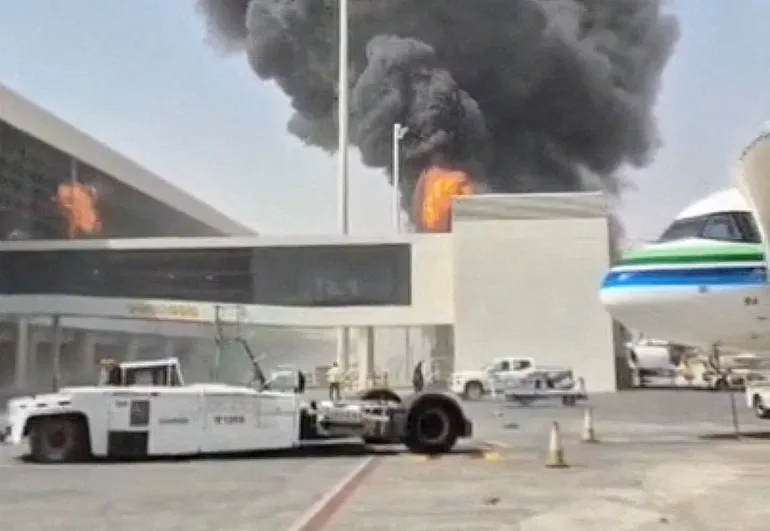
A local official told the Mehr news agency that US missiles struck the area around a passenger terminal in Shalamcheh, a western city near the Iraqi border. Two people were killed in the attack, the deputy governor of Iran’s Khuzestan province told the state broadcaster IRIB on Thursday. Local media also reported that 11 people were injured.
Al Jazeera’s Tohid Assidi reported from Iranian capital Tehran that overnight strikes targeted at least three cities in the southwestern province of Khuzestan. This included the city of Ramshir, where an asphalt facility was reported to have been targeted.
In Hormozgan province, explosions were heard in the city of Sirik, which overlooks the Strait of Hormuz, Assidi reported.
He added that the governor confirmed an overnight attack in Bushehr on a power substation near the city’s nuclear power plant. This resulted in a few hours of power outage in the city.
IRIB also reported that explosions were heard in Iran’s Jask.
The Tasnim news agency reported that a US missile hit a location on the outskirts of the city of Andimeshk.
Two naval search and rescue vessels were hit and seriously damaged in a US attack on Iran’s Hormozgan, the ISNA news agency reported, citing the province’s Ports and Maritime Administration.
Where did Iran hit back?
Kuwait
The IRGC claimed attacks on US assets in Kuwait on Thursday.
It said it had “attacked and destroyed a large warehouse of military equipment, a Patriot missile defence system, and a hangar of American MQ9 drones” at Ali Al Salem airbase.
Addressing the Kuwaiti people, the IRGC insisted that it was the US, not Iran, that had “violated your territorial integrity and sovereignty”.
It said its attacks were aimed at US bases, territory it described as beyond the control of Kuwait’s own border guards.
“So it is America that has violated your territorial integrity and sovereignty, not us. We are attacking lands occupied by the American army, an army that knows nothing but crime,” the IRGC said.
Jordan
Later on Thursday, the IRGC claimed attacks on US assets in Jordan, saying it had “destroyed a radar of the American THAAD missile defence system with lightning strikes”.
“A Patriot system and a C-RAM radar were also targeted and destroyed, and the fuel tanks of the American base were set on fire,” it said.
The IRGC added that “a large helicopter equipment warehouse and a helicopter repair and maintenance shed were also set on fire and destroyed”.
Addressing the Jordanian people, it insisted that its actions did not violate Jordanian sovereignty, arguing that the US military presence infringes on local authority and that targeting US forces was a legal and necessary response.
What happened in the Strait of Hormuz and the Red Sea?
The IRGC said an explosion set a tanker on fire in the Strait of Hormuz.
In a statement carried by Iranian media, it said two other vessels quickly turned back following the explosion.
The IRGC claimed the three ships were acting under US orders and had “intended to pass through the mine-laid route south of the Strait of Hormuz”.
“The powerful IRGC Navy emphasises that the Strait of Hormuz is under our control and that as long as America’s evil deeds in the region continue, it is completely closed and no oil tanker will enter or exit [the strait],” it warned.
“Any ship that is deceived by America and intends to pass through without coordination with the Islamic Republic of Iran will suffer the same fate.”
The UK Maritime Trade Operations Centre said a ship was targeted 70 nautical miles (130km) off the Saudi coast, causing a fire on board. There was no mention of casualties among the crew.
The Houthis, meanwhile, claimed a major operation against two Saudi oil tankers in the Red Sea, called the Encelia and the Layla. The Saudi SPA news agency confirmed the Encelia was hit.
The Houthis said they targeted those two tankers with cruise and ballistic missiles as well as drones, causing huge balls of fire and devastation.
The Houthis framed the attack as part of a tit-for-tat campaign against Saudi Arabia. They are calling it a “siege-for-siege”. They said it has been 12 years since Saudi Arabia has been imposing a siege on the Yemeni people, and that it is now time for Yemen and the Houthis to respond in kind. Riyadh has rejected Houthi claims that it had besieged Yemen.
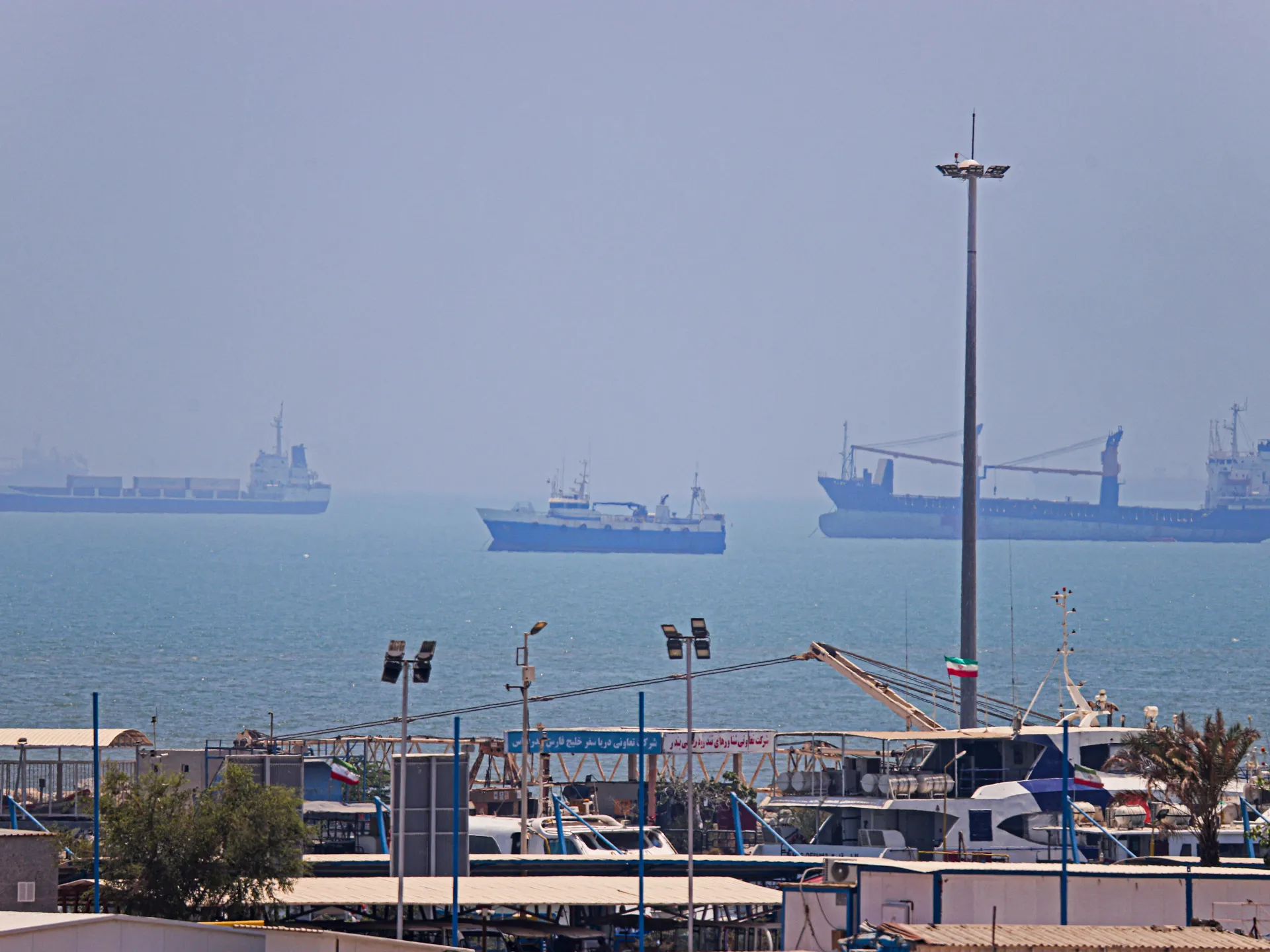
Before the war, roughly 15 million barrels of Gulf oil passed through the Strait of Hormuz every day, as roughly a fifth of the world’s traded oil moved through the maritime chokepoint in peacetime.
ADVERTISEMENT
ADVERTISEMENT
With the channel still largely closed and prices elevated, at least seven major pipeline projects are now under construction, in planning or under discussion to push supplies out through the Red Sea, the Suez Canal and the Gulf of Oman instead, according to Gulf officials, energy companies and market analysts.
With the Iran war reignited this month, Brent crude is trading again at around $93 a barrel at the time of writing, well above the roughly $72 it fetched after June’s short-lived truce, and the US benchmark WTI has also risen to roughly $90 a barrel.
Depending so heavily on the Strait of Hormuz “is no longer a prudent long-term strategy,” said Victoria Grabenwöger, a senior researcher at the data firm Kpler.
Two escape valves already exist, and both are close to their limits.
Saudi Arabia’s East-West pipeline, built in the 1980s when Tehran threatened shipping during the Iran-Iraq war, carries crude from the Abqaiq complex to Yanbu on the Red Sea, where tankers head south towards the Arabian Sea or north to the Suez Canal.
Meanwhile, the UAE has been channelling more oil to Fujairah, its port on the Gulf of Oman about 145 kilometres south of the Strait of Hormuz.
Together the two links had a spare capacity of some 3.5 to 5.5 million barrels a day before the war, according to the US Energy Information Administration, and both now run close to full representing around 6.5 million barrels a day.
Abu Dhabi’s state oil company is also racing to finish a project it began before the war.
Its $3 billion (€2.6bn), 300-kilometre pipeline to Fujairah, laid alongside an existing line, is designed to lift deliveries by over 1.2 million barrels a day and is roughly half built, according to Kpler, which expects the official early-2027 completion target to slip to mid-2027 because the port itself must be expanded.
Even that timetable, the firm argues, only became conceivable because of the blockade.
Red Sea relief, Red Sea risk
The Red Sea route has vulnerabilities of its own, and this week served as a reminder.
Yemen’s Iran-backed Houthi rebels, who declared a blockade on Saudi-linked shipping in retaliation for the kingdom’s blockade of Yemen and an attack on Sanaa’s airport, said on Thursday they had attacked two Saudi tankers, the Encelia and the Layla, setting both on fire.
Saudi state media reported a blaze at the bow of the Encelia with no casualties, while the UK Maritime Trade Operations centre reported a tanker struck by “an unknown projectile” southwest of Al Shuqaiq.
The Iran-backed group has disrupted the Bab el-Mandeb Strait before, a maritime chokepoint carrying about 12% of world trade, and a Houthi drone strike forced the East-West pipeline itself to shut back in 2019.
Iraq’s $60 billion bet on Washington
Nowhere is the scramble more urgent than in Iraq, which draws about 90% of state revenues from oil exports and has had to cut output because of its dependence on the Strait of Hormuz.
Prime Minister Ali al-Zaidi returned from Washington last week with 48 agreements signed with American firms, spanning energy, healthcare and technology and worth more than $60 billion, according to Reuters, including tie-ups involving ExxonMobil, Shell, Halliburton, KBR and GE Vernova.
The centrepiece is a deal with Syria to rebuild the long-dormant pipeline running from the Kirkuk fields to the Mediterranean port of Baniyas, a project Iraqi state media says Chevron will execute and which the US State Department, welcoming the plan, called “a critical energy corridor” with an initial capacity of 2 million barrels a day.
Baghdad is also weighing a line from Basra to Jordan’s Aqaba.
Washington’s ambassador to Turkey, Tom Barrack, predicted the agreements would render the Strait of Hormuz “an afterthought”.
“The Yemeni armed forces have carried out a significant military operation targeting two Saudi oil tankers that violated the ban imposed by the armed forces in the Red Sea,” the Houthis claimed on Telegram. “The operation involved a number of ballistic and cruise missiles, as well as drones. Thanks to God’s help, the strikes were accurate and caused a large fire on both vessels.”
بيان القوات المسلحة اليمنية بشأن استهداف سفينتين نفطيتين سعوديتين خالفتا قرار الحظر في البحر الأحمر ما أدى إلى نشوب حريق كبير فيهما، واجبار 10 سفن على التراجع والعودة – 22 يوليو 2026م pic.twitter.com/S5ijNZYaV7
TWZ cannot independently verify the Houthi claim. However, in a post on X, UKMTO stated that a master of an oil tanker “reports being struck by an unknown projectile which has caused a fire onboard that the crew are currently fighting.”
The incident took place 70NM southwest of Al Shuqaiq, Saudi Arabia, the organization added. “There are no reported casualties and no environmental impact. Authorities are investigating. Vessels are advised to transit with caution and report any suspicious activity to UKMTO.”
The increasing tensions on the BAM come as U.S. President Donald Trump threatened to destroy Iranian bridges and power plants each time Iran hits a ship transiting the Strait of Hormuz, which has been a major flashpoint of tit-for-tat exchanges of fire. Trump also threatened that he will retaliate for the deaths of three U.S. Army soldiers during a July 17 attack on Muwaffaq Salti Air Base (MSAB) in Jordan. He made those statements at a dignified transfer ceremony for the soldiers, plus one killed in Iraq, at Dover Air Force Base in Delaware today.
The incident in the Red Sea took place a day after the U.S. Navy warned that the Houthis had moved weapons near the BAM.
“Recent Houthi statements indicated a readiness to target shipping (specifically Saudi-affiliated) if directed,” the Navy’s Joint Maritime Information Center (JMIC) warned on Tuesday. “According to regional reporting, Iran has instructed the Houthis to stand ready to close the Red Sea oil route should the United States strike Iranian power infrastructure.”
“Sources close to the group stated that the Houthis have completed preparations to attack shipping, including the deployment of missiles and drones positioned near Bab al-Mandeb.”
The Houthis have also “told shipping companies not to load or discharge cargo at Saudi Arabian ports or they may be targeted, according to an email the group sent to companies,” Reuters reported.
The Houthis are gearing up for potential anti ship missile launches, releasing footage that appears to show their Asef anti-ship ballistic missile (ASBM) as they continue to threaten commercial shipping linked to Saudi Arabia.
As we have frequently detailed, a Houthi blockade of the BAM threatens to add further pressure on oil exports from the Middle East, already drastically affected by the Iranian closure of the Strait of Hormuz and the resumption of the U.S. blockade on Iranian ports. Saudi Arabia has diverted millions of barrels of oil per day through pipelines to its Yanbu port on the Red Sea in an effort to minimize the energy shortages due to the hostilities in the Persian Gulf. This also raised the specter of the U.S. having to get as involved as it did during the previous Houthi campaign against shipping that ended last September, which could pull resources away from Iranian-focused operations.
Before the attack claim, global trade intelligence firm Kpler pointed out on X that while traffic continues through both straits, “operational confidence remains under pressure.”
“Traffic declined sharply across both chokepoints on 21 July, with Strait of Hormuz crossings down 31% day-on-day to nine vessels and Bab al-Mandeb down 34% to 29 amid a worsening security backdrop,” Kpler added. “Four confirmed vessel U-turns near the Gulf of Aden suggest operators are becoming more cautious following Houthi threats against Saudi-linked shipping. At the same time, confirmed maritime attacks continue around the Strait of Hormuz, reinforcing concerns that uncertainty across both regional chokepoints could reshape routing decisions, increase freight costs and sustain higher geopolitical risk premiums for energy markets.”
Dual chokepoint risks deepen
Shipping continues through both the Strait of Hormuz and Bab el Mandeb, but operational confidence remains under pressure. Traffic declined sharply across both chokepoints on 21 July, with Strait of Hormuz crossings down 31% day-on-day to nine… pic.twitter.com/D7dmCRffcv
As noted earlier in this piece, Trump visited Dover Air Force Base to take part in the dignified transfer ceremony honoring Lt. Tyler James Feehan, 25, of Hawaii, Pvt. Isabella Gonzales, 19, of Texas, Sgt. Angel Rampersad, 28, of New York and Sgt. Michael Emmanuel Swinton, 30, of North Carolina.
Today, we honor four American heroes who made the ultimate sacrifice in service to our nation.
May God hold them in His eternal embrace and comfort their grieving families, and may God forever… pic.twitter.com/P5NA59ltAU
— Rapid Response 47 (@RapidResponse47) July 22, 2026
Feehan, Gonzales and Rampersad were killed during the July 17 Iranian barrage of MSAB. U.S. Central Command (CENTCOM) previously announced Rampersad as missing, but her status was updated to a Duty Status–Whereabouts Unknown and she is believed to be deceased.
Swinton was killed during a controlled detonation of a downed One-Way Unmanned Aerial System on July 19, 2026, at Erbil Air Base, Iraq.
— Rapid Response 47 (@RapidResponse47) July 22, 2026
Speaking to reporters, Trump said his administration would share the results of the investigation into the MSAB attack and vowed that Iran would “pay a big price.”
Those comments followed an earlier statement the president posted on Truth Social vowing to target key infrastructure sites each time Iran strikes a ship transiting the Strait of Hormuz.
“From this point forward, any time the Islamic Republic of Iran shoots at a ship in the Strait of Hormuz, whether it be by Missile, Rocket, Drone, or any other device or weapon, the United States will bomb and destroy ONE BRIDGE OR POWER PLANT, including those located next to, or in, the Capital City of Tehran,” Trump proclaimed.
Not surprisingly, Iranian officials reacted to Trump’s comments by issuing their own threats in response.
“Iran will retaliate against regional infrastructure and energy facilities with American interests if the United States strikes any Iranian bridge or power plant, responding directly to a new threat from US President Donald Trump,” the Islamic Revolutionary Guard Corps (IRGC)-connected Tasnim news agency stated on X.
A military source said Iran will retaliate against regional infrastructure and energy facilities with American interests if the United States struck any Iranian bridge or power plant, responding directly to a new threat from US President Donald Trump. pic.twitter.com/a8MIFqxktx
Earlier on Wednesday, Jordanian officials said the country was once again targeted by Iran.
“An official military source at the General Command of the Jordanian Armed Forces—Arab Army stated that air defense systems detected six missiles coming from Iranian territory targeting the Kingdom’s territory today, and engaged them immediately upon their entry into Jordanian airspace,” the Jordanian military stated on X. “Air defenses intercepted and shot down four missiles, while the other two fell in two remote, uninhabited areas, without causing any casualties or material damage.”
“The Kingdom’s airspace is under continuous operational monitoring, and the Armed Forces will deal with any aerial threat targeting Jordanian territory according to the applicable rules of engagement, in a manner that ensures the protection of the Kingdom’s sovereignty and the safety of its citizens,” officials added.
The situation in Jordan is so intense that the U.S. Embassy in Amman issued a security alert.
“President Trump, Secretary of State Rubio, and the Department of State have no higher priority than the safety and security of American citizens,” the embassy cautioned on X. “We remind U.S. citizens that Iran has attacked civilian and critical infrastructure across the Middle East, including hotels, airports, diplomatic facilities, and other civilian locations.”
Security Alert: U.S. Embassy Jordan July 22
President Trump, Secretary of State Rubio, and the Department of State have no higher priority than the safety and security of American citizens. We remind U.S. citizens that Iran has attacked civilian and critical infrastructure… pic.twitter.com/UOihlptEwp
— U.S. Embassy Amman (@USEmbassyJordan) July 22, 2026
Over the course of the past 12 days, Iran has lobbed missiles and drones at several Arab nations, taking particular aim at U.S. military installations.
Satellite imagery continues to emerge on social media purporting to show damage at these bases. The images below claim to show a 117-FPS radar at Al-Jaber Air Base in Kuwait destroyed by an Iranian barrage. While the image clearly shows what appears to be a radome destroyed, TWZ cannot independently verify the date, location or provenance of the imagery. CENTCOM, which does not talk about battle damage, declined comment.
Imagery has also emerged purporting to show that U.S. Air Force aerial refueling tankers and other aircraft have evacuated Al Udeid Air Base in Qatar, the largest American base in the region. Again, we cannot confirm the details and CENTCOM, which also does not typically talk about the movements of assets, declined comment.
However, Axios reported last week that the Trump administration “notified Israel it is sending dozens more refueling planes to the country ahead of a potential expansion of military operations against Iran.”
“Israeli officials say the U.S. wants to send several dozen more refueling planes in the coming days, bringing the number of planes to the same level it had at the beginning of the war,” Axios added. “Israeli officials say the U.S. military prefers operating the refueling planes from Ben Gurion Airport, because other air bases in the region are more exposed to Iranian attacks and less safe for U.S. planes. At the moment, the Iranians are still deterred from launching attacks on Israel, because it will likely trigger a massive retaliation.”
The U.S. still sits ready to conduct long-range bomber strikes from bases in the U.S. and the U.K.
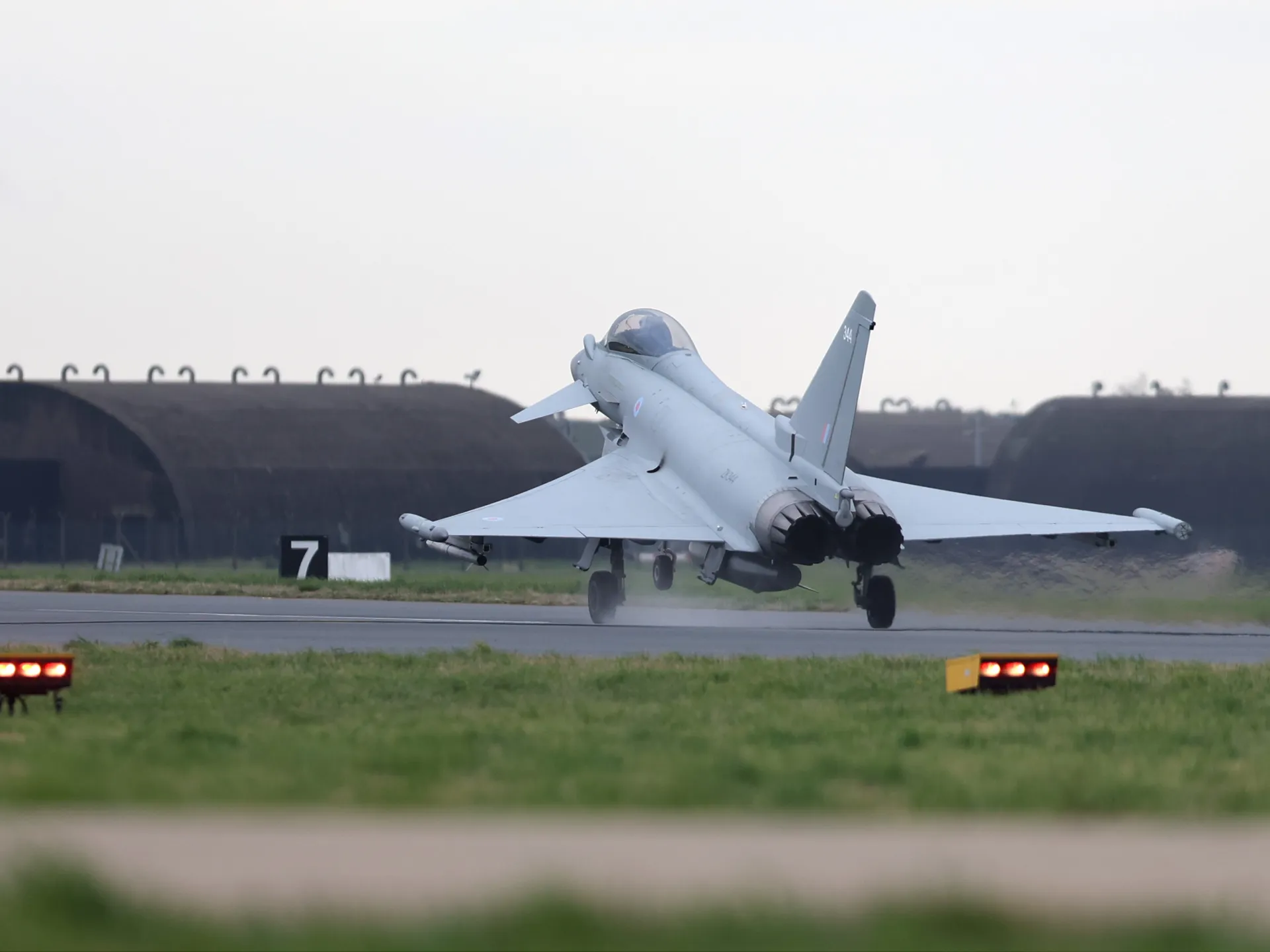
There were recent unconfirmed claims by open-source trackers that B-1B Lancer bombers out of RAF Fairford in England took part in yesterday’s attacks on Iran. Again, we cannot verify that and CENTCOM declined comment.
Overnight, B-1B “Lancer” bombers flying from RAF Fairford (EGVA) conducted strikes in Iran as the US ramps up operations again. Although 2 bombers launched, it appears it was pre-planned that only 1 of them would… pic.twitter.com/Q7Ic3Ahqk3
However, Israel’s KAN news outlet claimed that “Israel has been informed by the United States that it intends to escalate attacks on Iran in the coming days and to carry out attacks using heavy bombers for the first time in the current escalation.”
In addition, other U.S. Air Force assets – including EA-37B Compass Call electronic warfare jets – appear headed to the region, according to online flight trackers. While we don’t know for sure these jets will actually head to the Middle East, it could be another sign of the U.S. bolstering assets ahead of an increase in intensity of attacks, which have been largely focused over the past 12 days on Iranian coastal targets.
Amid these rising tensions with Iran, the Houthis have now apparently raised the stakes and it will be absolutely critical to keep the BAM open as the world already sits on the razor’s edge of a full-on energy crisis.
UPDATE: 7:17 PM EDT –
CENTCOM announced a new round of attacks on Iran.
“At 5:30 p.m. ET today, U.S. forces began launching more strikes against Iranian military targets at the Commander in Chief’s direction,” the command stated on X. “The mission will continue to further degrade Iran’s ability to threaten civilian mariners and commercial vessels transiting regional waters.”
At 5:30 p.m. ET today, U.S. forces began launching more strikes against Iranian military targets at the Commander in Chief’s direction. The mission will continue to further degrade Iran’s ability to threaten civilian mariners and commercial vessels transiting regional waters.
Claimed attacks come days after Houthis announced naval embargo on Saudi vessels.
Yemen’s Iran-aligned Houthis have claimed an attack on two Saudi oil tankers transiting through the Red Sea.
“We targeted two Saudi oil tankers, named ENCELA and LAYLIA, for their violation of the blockade decision issued by the armed forces,” Houthi military spokesperson Yahya Saree said on Wednesday.
Recommended Stories
list of 3 itemsend of list
Saree added that the attacks were carried out, “using a number of ballistic and cruise missiles, as well as drones”, and led to fires on the ships.
The Houthis, officially known as Ansar Allah, had also forced “nearly ten ships… to abandon their routes, and turn back”, Saree said.
Saudi Arabia has not commented on the claims, but the United Kingdom Maritime Trade Operations (UKMTO) centre said it had received reports that a tanker has been struck.
“The master of a tanker reports being struck by an unknown projectile which has caused a fire onboard that the crew are currently fighting,” UKMTO, which monitors shipping in the region, said.
Yemen’s Houthi group, which has fought the Yemeni government and a Saudi-led coalition that backs it for more than a decade, imposed a maritime blockade on Saudi Arabia on July 20. That followed some of the worst violence Yemen has seen for four years, after the Yemeni government bombed the Houthi-controlled Sanaa airport to stop an Iranian plane from landing.
The Houthis said the declaration of the maritime embargo on Saudi Arabia was “based on the equation of ‘an eye for an eye’ and affirmed “the right of our great people to respond to the blockade with a blockade”.
The group, which seized Sanaa in 2014, accused Saudi leaders of imposing “an unjust and oppressive siege” for nearly 12 years, “plundering our resources and imposing a comprehensive blockade on our ports and airports by land, sea, and air”.
“The Saudis feel that they can instigate a popular uprising against the Houthis using these economic strangulation methods,” Hussain al-Bukhaiti, a journalist based in Sanaa told Al Jazeera.
Riyadh has rejected claims that it was imposing a siege on the Yemeni people, and the group’s critics point out that they have rejected a proposal from Jordan to resume flights between Amman and Sanaa.
“The ultimate goal for Ansar Allah’s naval blockade against the Saudis, is to force Riyadh to lift its embargo on the ports and airports controlled by the Houthis,” al-Bukhaiti said.
Amid the disruption in shipping through the Strait of Hormuz due to the US-Israel war on Iran, Saudi Arabia has been attempting to facilitate oil flow through alternative routes through the Red Sea and the Bab al-Mandeb Strait. But that route is now under threat from the Houthis.
The Houthis disrupted global commerce when they began attacking ships around the Bab al-Mandeb after the launch of Israel’s genocidal war on Gaza in October 2023. The attacks ended with the announcement of a “ceasefire” in Gaza in October 2025.
“The people who are questioning if the Houthis can successfully do a blockade against the Saudis should remember, how successfully the Houthis closed access to the Red Sea for the Israeli ports, which in fact resulted in the closure of Eilat port in southern Israel,” said al-Bukhaiti. “Eventually the Americans had to do a deal with the Houthis, with mediation from Oman,” he added, referring to a May 2025 agreement.
The Bab al-Mandeb chokepoint connecting the Red Sea to the Gulf of Aden is one of the world’s most important shipping routes, including for oil exports.
Between Yemen to the northeast and Djibouti and Eritrea in the Horn of Africa to the southwest, the strait is just 29km (18 miles) wide at its narrowest point, limiting traffic to two channels for inbound and outbound vessels using the Suez Canal.
In 2024, about 4.1 billion barrels of crude oil and refined petroleum products passed through the strait – about 5 percent of the global total.
With the Strait of Hormuz effectively closed since Israel and the US launched their war on Iran in late February, shutting down Bab al-Mandeb as well could block 25 percent of the world’s oil and gas supply.
The Houthi declaration that they intend to block Saudi shipping and vessels bound for Saudi ports in the Red Sea is not another act of revolutionary theatre. It is Iran’s latest attempt to test Saudi Arabia’s strategic patience through one of its most capable regional proxies. That is a dangerous gamble because Riyadh has spent nearly a decade avoiding the wider regional war that Tehran increasingly appears determined to provoke.
Saudi restraint has never reflected military weakness. It has been a deliberate strategic choice intended to preserve regional stability while enabling the kingdom to focus on its historic economic transformation. Unable to compete with Saudi Arabia’s regional trajectory through conventional means, Iran has increasingly turned to proxy warfare, maritime coercion, and economic intimidation.
The Houthis have become the principal instrument of that strategy.
By threatening shipping in both the Strait of Hormuz and Bab al-Mandeb, Tehran seeks to pressure Saudi Arabia from its eastern and western maritime gateways while raising the cost of regional stability. The objective is not military victory but economic disruption: undermining investor confidence, threatening energy exports, and projecting instability onto the Middle East’s largest economy.
That strategy carries consequences far beyond the region. Saudi Arabia remains the world’s largest crude oil exporter, OPEC’s leading producer, and the only country with sufficient spare production capacity to stabilise global energy markets during periods of crisis – as it did during the first phase of the Iran war through its 7 million barrels per day East West Pipeline. Sustained disruption of Saudi exports would ripple through international shipping, insurance markets, inflation, and the global economy.
Iran tried to prepare for the present escalation by attempting to restore the Tehran-Sana’a air bridge. The flights were never simply about reconnecting two capitals. They would have provided a direct logistical corridor through which operational planning advisers, missile specialists, drone technicians, and intelligence officers could rotate into Houthi-controlled territory. Such an air corridor would have allowed Tehran to transfer not only equipment but also operational expertise and command capability.
This explains why the Royal Saudi Air Force (RSAF) strike on Sana’a International Airport carried significance beyond denying a specific aircraft permission to land. The objective was to prevent Iran from establishing a permanent logistical architecture capable of sustaining a more sophisticated proxy campaign against Saudi Arabia’s maritime and economic interests.
It is clear Tehran’s calculations increasingly rely on outdated assumptions about Saudi military capability. The Saudi-led Joint Forces Command (JFC) bears little resemblance to the force that first entered Yemen a decade ago. Years of hard learnt lessons from past mistakes and operational experience have transformed it into an integrated coalition built around persistent intelligence, fused command-and-control, precision strikes, air missile defence, and cyber operations.
Rather than functioning as separate military combatant commands, these capabilities now operate as a single decision-making architecture capable of compressing the time between intelligence collection and operational execution.
That transformation extends beyond the Saudi armed forces alone. The Saudi-led JFC now includes more than 650,000 personnel drawn from Saudi Arabia and allied Yemeni, Pakistani, Sudanese, and limited but symbolic GCC formations operating within a unified operational framework. Its principal advantage lies not simply in numbers but in its ability to synchronise military effects across multiple domains while maintaining operational tempo and centralised escalation control.
The JFC maturity became unmistakable during RSAF’s campaign that restored control over southern Yemen in less than a week in January. Built upon an advanced command and control (C2) fused architecture that supports persistent intelligence, electronic warfare, precision targeting, and synchronised manoeuvre, has demonstrated a level of operational sequencing and command integration unseen in earlier phases of the war.
The same C2 maturity was evident during Iran’s coordinated missile and drone attacks launched from Iranian territory and allied formations in Iraq, when RSAF executed synchronised precision strikes across multiple theatres while maintaining centralised escalation control.
The broader consequences extended beyond the battlefield. Saudi operational performance helped create the conditions under which Pakistan was able to broker an unofficial ceasefire between the Saudis and Iranians while reinforcing a new deterrence equation in which further direct Iranian military pressure carried significantly greater operational and political risk. Tehran’s subsequent caution reflected not diplomacy alone but recognition that the kingdom had entered a fundamentally different stage of military maturity.
None of this means the Houthis cannot impose costs. Their missiles, drones, maritime attacks, and psychological operations remain capable of generating disruption disproportionate to their size. But disruption is fundamentally different from sustaining a prolonged confrontation against an opponent possessing overwhelming advantages in intelligence, air power, maritime control, and operational endurance.
Every escalation therefore increases the likelihood of a comprehensive Saudi response. Such a campaign would not simply target missile launchers or drone facilities. It would seek to dismantle the command-and-control networks, logistics infrastructure, communications systems, intelligence apparatus, and operational support that enable Houthi military operations.
This is why the current trajectory is so dangerous.
Saudi Arabia has consistently demonstrated that it prefers stability to confrontation because its overriding strategic priority remains economic transformation and long-term national development. But no state can indefinitely tolerate an Iranian-backed proxy threatening its economy, energy infrastructure, and maritime lifelines.
Ultimately, the Houthis are not testing Saudi military capability. Years of operational adaptation have already answered that question. They are testing Saudi Arabia’s strategic patience.
History suggests that even the greatest strategic patience has limits. If Tehran continues using the Houthis as an instrument of coercion against the kingdom, Riyadh may conclude that the costs of restraint have exceeded the costs of decisive action. If that moment arrives, the campaign that follows will bear little resemblance to the Yemen war of a decade ago. It will reflect years of coalition integration through an elaborate C6ISR architecture to be strategically prepared for such a war. Iran, and the Houthis, may then regret testing the limits of Saudi Arabia’s strategic patience.
The views expressed in this article are the author’s own and do not necessarily reflect Al Jazeera’s editorial stance.
Yemen’s Iran-backed Houthi rebels have announced a maritime blockade on Saudi Arabia after the two sides traded fire last week for the first time in years. Observers have described the announcement as a “significant military move” that threatens global trade.
Mojtaba Khamenei says Trump’s signature is ‘worthless’ and that ‘bullying’ is a core element of US foreign policy.
Published On 18 Jul 202618 Jul 2026
Iran’s supreme leader has warned that the United States will suffer “unforgettable lessons” at the hands of Tehran and its regional allies, accusing the US of repeatedly violating the memorandum of understanding (MoU) between the two countries.
A written statement attributed to Mojtaba Khamenei was read out on state television on Saturday, in which the supreme leader said Washington’s breaches of last month’s MoU showed that President Donald Trump’s signature was “utterly worthless and invalid”.
Recommended Stories
list of 3 itemsend of list
“The repeated breach of agreements by the Great Satan vis-a-vis the accord has once again proven to all that the signature of the President of America is now utterly worthless and invalid, and that bullying, hegemonism and savagery are inseparable components of the American creed and doctrine,” the statement read.
“Now that the American enemy is seeking to foment war and suffer heavier costs and further humiliation, it should know that the dear nation of Iran and the Resistance Front hold unforgettable lessons for it,” it added.
The US dramatically escalated its attacks on Iran this week by targeting civilian infrastructure, including bridges, railway lines and water desalination plants.
Tehran has responded by successfully striking civilian infrastructure in Kuwait, with authorities there urging everyone to ration electricity.
The US-Israeli war on Iran, which began in February, is seen as existential by the country’s senior leadership.
Tehran has shown no sign of caving to the increasing demands from the Trump administration, as regional countries continue to push for an end to the conflict behind the scenes.
Khamenei said the US has “revealed its true face,” exposing its “deceitfulness, irrationality, unreliability and wickedness”.
He called on Iranians to trust the leadership to protect the country, urging people to remain “vigilant” and “active” as the fighting grinds on.
Reports have surfaced in recent days that the Houthis in Yemen could close the Bab al-Mandeb gateway to the Red Sea in support of their crucial ally Iran. That would further destabilise global energy markets, increase inflation and apply additional pressure on Trump to halt attacks.
The war is deeply unpopular in the US and has inflicted economic harm on Americans.
The MoU mediated by Qatar and Pakistan and signed last month aimed to create the conditions to bring the war to a permanent end.
However, Tehran and Washington have since declared the accord “over” after accusing each other of violating it.
In recent weeks, there have been renewed tensions in Yemen. Attacks by the Houthi group – which has controlled Sanaa and large parts of northern Yemen since 2014 – have coincided with controversy prompted by the arrival of an Iranian plane at Sanaa airport and renewed concern over navigation in the Red Sea.
This comes in the context of a stalled peace process and the failure to reach an agreement on de-escalation mechanisms.
Recommended Stories
list of 2 itemsend of list
In this climate, movements on the front lines appear to be an attempt by the Houthis to exert pressure and to test the limits of the response of the internationally recognised government, its ally, Saudi Arabia, and the international community at large.
So far, these developments do not point to a decision to launch a broad military confrontation, but they show that the truce announced in 2022 can no longer contain the conflict.
From Hays to Al-Jawf: Limited clashes and tribal mobilisation
The Hays district in Hodeidah governorate near the port of Hodeidah on the Red Sea has been one of the main flashpoints in recent weeks.
On July 5, Houthi rebels attacked government forces’ positions using mortar shells, drones and sniper fire. According to medical and military sources cited by Al Jazeera, 16 government soldiers were killed in the attack and 22 others were wounded. The Houthis did not announce their casualty toll or provide a detailed account of how the clashes began.
Hays is of particular importance because it has remained relatively calm since the truce, and because its location is close to the coast and shipping lanes.
The tensions are not confined to Hodeidah. Marib, Taiz and al-Dhale have also witnessed varying levels of military mobilisation.
In al-Jawf, the picture is different. A tribal disturbance was triggered by a dispute over a house in Sanaa and then turned into a test of the Houthis’ influence and their relationship with the tribes. Sheikh Hamad bin Rashid bin Fadgham al-Hazmi intervened in the dispute, per tribal custom, but was detained by the Houthis.
This turned discontent into an anti-Houthi tribal movement, which is accompanied by calls for a “tribal nakaf”, a traditional call for mobilisation and support, alongside the “al-Rayyan sit-ins”, temporary tribal gatherings to rally supporters.
This development points to how developments in the battlefield are causing tensions in the tribal and social sphere.
Al-Jawf lies near Marib and within a sensitive military and tribal zone, and any prolonged unrest there could open an additional pressure front on the Houthis and complicate their calculations in one of the most important fronts of Yemen’s northeast.
Tensions have also extended to the Red Sea. On July 5, the British military said that a cargo ship had come under attack off the coast of Hodeidah, which did not result in any injuries. No one claimed responsibility, but the incident took place near an area under Houthi control and at a time when the group has renewed its threats regarding navigation.
The attack highlights the continuing risks ships face in transiting in the vicinity of Hodeidah and Bab al-Mandab, one of the world’s busiest straits.
Sanaa airport tensions and a frozen prisoner exchange deal
Tensions between Yemen’s internationally recognised government and the Houthis havе not been confined to the battlefield. On July 3, an Iranian aircraft arrived at Sanaa airport to pick up a Houthi delegation to attend the funeral of the late Iranian Supreme Leader Ayatollah Ali Khamenei.
A week later, the internationally recognised government announced that Iran had submitted a request to operate a Mahan Air flight from Tehran to Sanaa to return the Houthi delegation. It rejected the request and proposed returning the individuals on an aircraft chartered by Yemenia Airways.
In response, some Houthi leaders insisted on the continuation of Mahan Air flights to Sanaa, presenting them as part of their right to operate the airport and open direct routes with the outside world. Thus, the dispute went beyond a single flight to the issue of managing an international airport and airspace outside government institutions, and the resulting struggle over sovereignty and de facto recognition of Houthi authority over the entry point.
Saudi Arabia is also affected by the dispute. The operation of a direct route between Sanaa and Tehran would affect the security and political arrangements that accompanied the reopening of the airport during the truce. Riyadh views the expansion of airport traffic outside an agreement as a factor that strengthens the Houthis’ relationship with Iran near the kingdom’s southern border. Therefore, its position is linked to keeping flights within declared arrangements while continuing to operate the national carrier.
Another issue that has heated up in the past few days is a long-negotiated prisoner and detainee exchange deal, which has stalled.
On July 10, Hadi Haig, head of the government negotiating team on the prisoners and abductees file, announced that the team had received notification from the International Committee of the Red Cross and the office of the United Nations envoy that the Houthis have refused to implement the agreement on its scheduled date and have postponed it indefinitely.
In response, the head of the Houthis’ Prisoners Affairs Committee, Abdulqader al-Murtada, blamed the government side for the delay, accusing it of failing to abide by the terms of the agreement and of refusing to add names to the agreed list.
The deal includes more than 1,600 detainees and requires field arrangements and an air bridge under the supervision of the International Committee of the Red Cross. Regardless of each side’s responsibility, the postponement places the negotiation track before a new test and confirms the continued use of humanitarian files as tools of political and military pressure.
Regional tension and the limits of confrontation
Regional developments have directly impacted Yemen. The US-Israel war on Iran and tensions between the Houthis and Saudi Arabia have reduced the ability of Yemeni parties to control escalation and increased the influence of external calculations on the course of the conflict.
This has given the Houthis greater room for political and military manoeuvre, while the government has struggled to assert its sovereign presence.
Saudi Arabia wants to contain the Houthi threat while preserving the gains of de-escalation. The Houthis, for their part, are betting on combining military action with pressure over the airport, prisoners, and navigation files to extract broader recognition of their authority and their direct relationship with Iran.
These developments reflect the fragility of the de-escalation process and the growing political and military pressures.
Limited clashes and mobilisation are likely to continue, with each side using the leverage it possesses to apply pressure. So far, there is no evidence of a decision to engage in a full-scale confrontation, but repeated attacks and faltering negotiations could end the state of relative calm that has persisted since 2022.
The risk of confrontation will remain as long as the root causes of the war remain unresolved, and as long as the parties use weapons to impose their vision and improve their political fortunes.
Yemeni government officials say the Houthis launched a surprise offensive targeting army barracks in southern Hodeidah as fighting intensifies across western Yemen.
The renewed clashes come as both sides seek to regain territory and strengthen control over the strategic Red Sea coast.
BEIRUT — Israel and Iran traded fire on Monday, all but derailing a brittle two-month ceasefire that had largely stopped the fighting in the U.S and Israel’s assault on Iran.
The tit-for-tat attacks between the two sides threaten to widen the scope of a conflict that has already killed and wounded thousands, displaced more than a million people and rattled economies across the globe — even while embroiling the U.S. in a war with no clear off-ramp.
“Israel and Iran must immediately stop ‘shooting.’ ” wrote President Trump early Monday on his social media platform, Truth Social.
Later, he wrote, “Both sides, Israel and Iran, are looking to do an immediate CEASEFIRE!”
“Final negotiations on ‘Peace’ are proceeding, subject to ignorance or stupidity getting in its way. The Blockade will remain in place, and in full force and effect, until a ‘Final Deal’ is reached. Things should move quickly.”
The latest escalation came after Israel attacked the suburbs of Lebanon’s capital Beirut on Sunday in what it said was a targeted strike against Hezbollah, an Iran-supported paramilitary faction and political party.
In recent days, Iran conditioned a ceasefire agreement with Israel and the U.S. on a cessation of hostilities across all fronts, including Lebanon, threatening it would respond to any Israeli action on the Lebanese capital. Israel rejects linking both battlefields, and insists on having a free hand to attack Hezbollah.
A number of U.S.-brokered ceasefires between the Lebanese and Israeli governments — but without Hezbollah involvement — failed to stop most of the fighting, with Israeli warplanes pounding wide swaths of Lebanon’s south while Hezbollah launched drones and missiles on northern Israel. Nevertheless, the Lebanese government has rejected being included in Iran’s negotiations with the U.S.
By Sunday night, Iran’s threats came to pass with several waves of Iranian ballistic missiles, which caused no injuries and were the first Tehran had fired at Israel since a ceasefire took hold in April. Iran’s military said the fusillade was a warning. But Israel said it would retaliate.
President Trump initially downplayed the Iranian attack on Sunday, saying in an interview with the Financial Times Iran’s barrage was “not going to have any impact on the deal.”
“We’ll see how it ends up. But they [the Iranian strikes on Israel] were attacks that did not kick at all,” he said.
“The deal may make it on its own merit, or not, but this will not have any effect on it.”
Trump also told the Axios news site he would talk to Israeli Prime Minister Benjamin Netanyahu to stop him retaliating against Iran’s barrage.
He also told the Financial Times that Netanyahu “won’t have any choice” but to accept the deal Trump negotiates with Iran.
“I call the shots. I call all the shots. He [Netanyahu] doesn’t call the shots,” Trump said.
Yet by the early morning on Monday, dozens of Israeli warplanes were striking western and central Iran. They hit a petrochemical complex in Mahshahr in southwestern Iran, and waged extensive strikes on “strategic defense systems,” according to Israeli military statements, in what observers said was a prelude to a wider offensive. Residents in Tehran, Isfahan, Tabriz and Shiraz reported powerful explosions.
The Israeli military said in a statement it expected several days of fighting with Iran but was prepared for a prolonged campaign. It said the strikes on Iran were conducted by Israel on its own, but that they had been done in “full coordination” with U.S. Central Command, which also helped in intercepting Iranian missiles launched at Israel.
But that distinction appeared to matter little to Iran’s foreign ministry spokesperson, Esmail Baghaei, who said in a press conference on Monday that the U.S held direct responsibility for recent ceasefire violations and Israel’s action “cannot be looked at in isolation from the U.S.”
“No one believes the Israeli regime would take any action without coordination with the United States,” he said.
“The U.S. bears responsibility for the Israeli regime’s aggression, and it will also be responsible for the consequences of any escalation in tensions.”
Iran launched additional barrages throughout Monday, targeting Israeli airbases in Nevatim and Tel Nof and a petrochemical plant in Haifa, according to a statement from Iran’s Revolutionary Guard Corps. It added Israel was engaging in “a dangerous game by targeting civilian and oil infrastructure — a game that will now encompass all regional energy targets, with global economic consequences resting on America.”
The renewed hostilities also saw Yemen’s Houthis — who receive support from Iran and Hezbollah, and are part of a regional network of Iran-backed factions — enter the fray with a pair of ballistic missiles lobbed at Israel. The Israeli military said one of the missiles was intercepted; the second fell short of Israel.
Houthi spokesman Brig. Gen. Yahya Sarea confirmed the attack in a televised statement on Monday, and said Israeli maritime navigation in the Red Sea would be targeted.
During the Gaza war, the Houthis attacked commercial shipping in the Red Sea — including ships with no link to Israel — to pressure Israel into lifting its blockade on the enclave.
But, unlike Hezbollah, which attacked Israel on March 2, three days after the U.S. and Israeli campaign on Iran, the Houthis had refrained from helping their ally, until Monday.
Their involvement now raises the specter of another squeeze on energy markets already beleaguered by closures on the Strait of Hormuz. Since the U.S.-Israeli assault, the Red Sea has acted as the main alternative conduit for energy supplies, especially for those from Saudi Arabia. If the Houthis closed the Bab Al-Mandab Strait, it would all but paralyze commercial flows.
Oil prices spiked in the wake of the exchanges, with Brent Crude rising 5% to hit $98 a barrel.