haunted

Tudor town’s famous cobbled street with historic buildings and ‘haunted’ hotel

The medieval town boasts cobbled streets, Tudor architecture and rich history – including the reportedly ‘haunted’ Inn that dates all the way back to 1420

Preserved precisely as it was during mediaeval times, this picture-perfect town boasts a rich history, which is vividly displayed through its stunning architecture.

Nestled in East Sussex, Rye is a hilltop town featuring cobbled streets, charming buildings and a deeply-rooted history. Many buildings remain untouched to preserve their original character, serving as key attractions for the town’s tourism and heritage.

Just two hours from London, this scenic destination isn’t quite a seaside location, but it’s near enough to provide the perfect stopping point between your journeys to the coast.

Indeed, over the years the town has shifted further inland, due to changing coastlines, and whilst no longer on the waterfront, it was once home to a bustling port, now reclaimed by nature.

During mediaeval times, when the town was firmly established with its layout and architecture, it served as a major seaport and ‘cinque port’, which helped to protect against French invasions.

Today it provides the ideal day trip with independent shops, boutique hotels, delicious food spots, and historical landmarks.

Mermaid Street

This charming high street in Rye is frequently described as one of the most attractive in the entire country, with beautifully constructed buildings positioned along a delightful cobbled lane.

One visitor said on TripAdvisor: “A very quaint cobblestone street from the early mediaeval times; some of the buildings were outstanding and well worth a visit and walk up the hill.”

Another visitor commented: “Mermaid Street was definitely one of the highlights of our trip to Rye, and I recommend you set aside at least half an hour to explore this stunning street and take some great photos.”

This charming lane features timber-framed houses from centuries past, many of which enjoy protected status to preserve their historical significance.

Several of the properties, for instance, display plaques bearing distinctive names, including The House with Two Front Doors and The House Opposite, and tourists frequently stop to take photographs outside them.

Whilst it remains a picturesque, Instagram-worthy spot today, it was previously quite the opposite, regarded as one of the town’s most deprived areas. An 1891 census showed it had a notorious reputation as a rat-infested street where more than 70 children crammed into cramped homes, generating a chaotic environment in the locale.

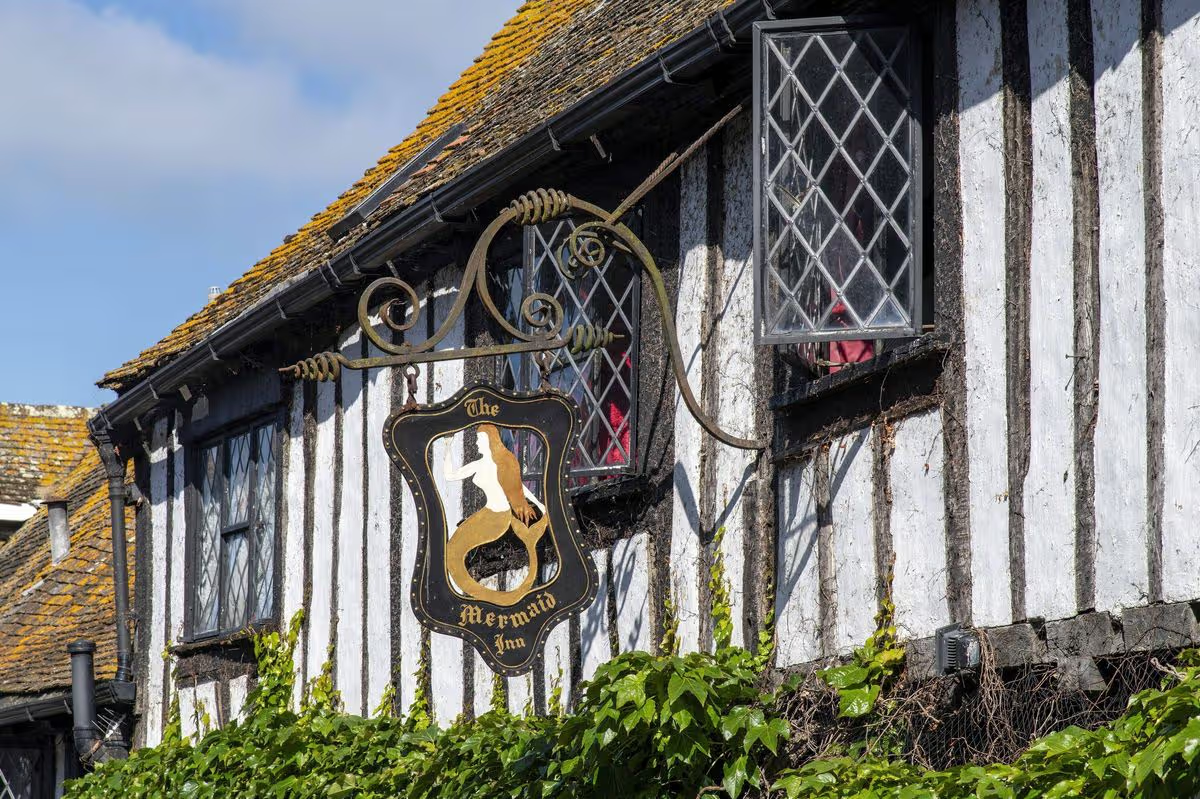
Situated at the very centre of the road, and believed to have given the street its name, is the Mermaid Inn, a hotel that’s been described as one of Britain’s most haunted.

Haunted Hotel

Spanning more than 600 years, this establishment, which offers bed and breakfast accommodation, is a genuine historical treasure, complete with spine-chilling tales to match.

The Mermaid Inn boasts cellars originating from 1156, whilst the structure itself dates to 1420, providing an authentic step back in time for guests and day-trippers alike.

With its sloping ceilings, creaking floorboards and labyrinth of staircases, the building is brimming with character and has been modernised to accommodate an excellent restaurant and two bars, alongside a spacious patio.

For visitors not planning an overnight stay, exploring indoors remains an option. Fortunately, on the final Sunday of each month the proprietor provides a guided tour through the historic rooms as you journey back through the centuries.

After visiting the hotel, one guest said: “We have stayed at the Mermaid Inn a few times before and have never been disappointed. If you go to Rye, you really have to stay at The Mermaid.

“As soon as you walk into this place, you feel the atmosphere of its history, a real step back in time, a time to leave the fast pace of life behind as you enjoy this wonderful place, a feeling of privilege of actually staying there.”

Yet it has a reputation of another kind entirely, thanks to its considerable age, having witnessed countless visitors pass through its doors, while others seemingly refuse to depart, as their spirits linger on.

Multiple rooms are believed to harbour various ghosts, each with their own unique tales, and some guests actively request these particular rooms for precisely that reason.

Take Room 19, the Hawkhurst room, where a guest once reported encountering a gentleman perched on her bed, dressed in period attire. Meanwhile, Room 1 is haunted by a lady in white, or grey, who prefers to sit in a chair beside the fireplace – her favoured haunting location.

In fact, their website catalogues every spectre said to inhabit its premises and the tales that have evolved over time as guests continue to report eerie encounters during their stay. One such instance is tied to room 10, with Fleur De Lys.

The website reveals: “Several years ago, a bank manager and his wife were awakened to find a man walking through their bathroom wall and across the centre of the room. They were so frightened that they spent the rest of the night downstairs in one of the lounges and made the porter bring all their luggage downstairs, plus their clothes.”
Source link

Picturesque ravine walk ‘haunted by demon dog’ where legend says victims crushed to death

This countryside spot is steeped in folklore about a monstrous Barghest that legends claim crushed victims – making for an atmospheric hiking spot

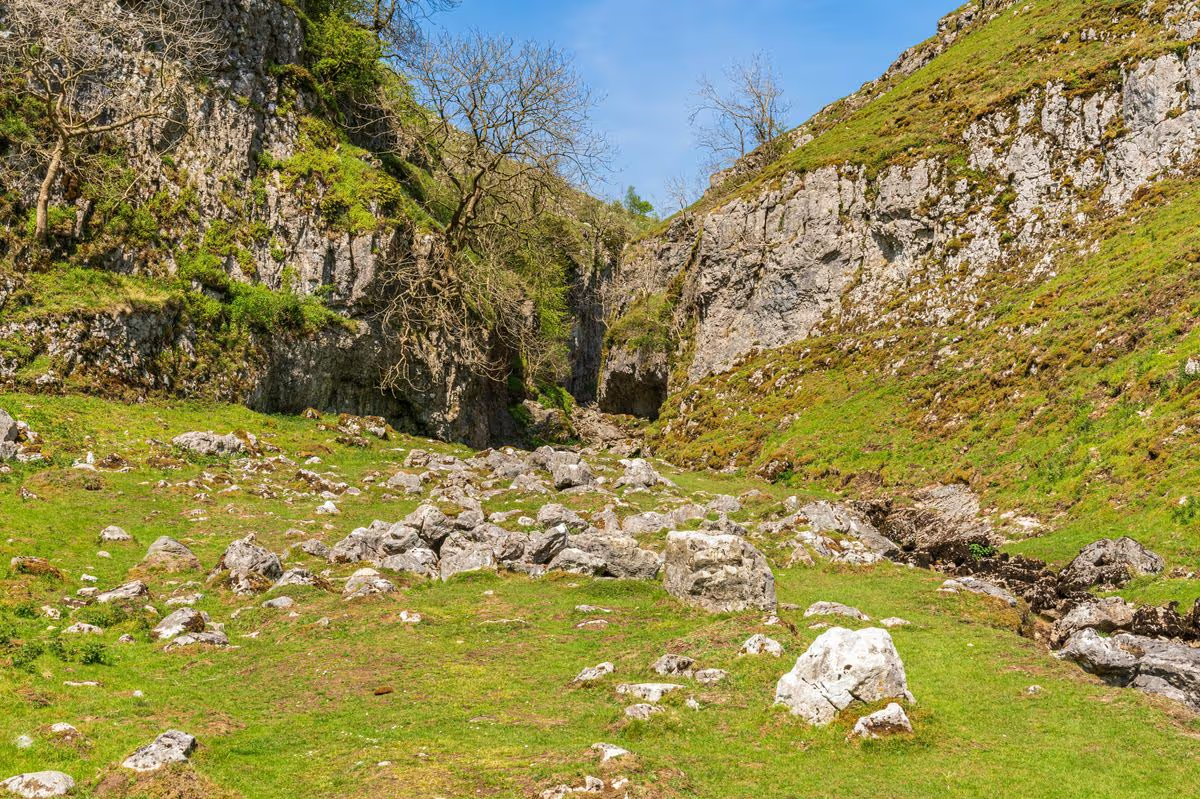
Nestled within an abandoned mining region, hidden away in the Wharfedale valley of the Yorkshire Dales, lies a collapsed limestone ravine, brimming with historical tales, folklore and even a potentially terrifying resident.

Unless you’re aware of its existence, the enigmatic cavern is virtually invisible from view, concealed just off the roadside, making it a genuine secret treasure for ramblers.

Troller’s Gill is a legendary location beloved by keen walkers who venture to the region hoping to witness its splendour, as it packs considerable natural beauty into a compact trail.

The difficulty level for the path is fairly moderate, largely due to a handful of sections requiring scrambling, with a total distance of 2.6 km. It’s a trek that typically takes around one hour and can therefore be combined with any other walking or exploration activities you’ve planned during your stay in the Dales.

Save on the best holiday cottages in Yorkshire

This article contains affiliate links, we will receive a commission on any sales we generate from it. Learn more
Sykes cottages

From £31 per night

Sykes Cottages

See the deals

Famous for its dramatic landscapes, historic cities, hearty food, and rich cultural heritage Yorkshire is just waiting to be explored. Sykes Cottages has a large number of properties to choose from with prices from £31 per night.

To access this captivating destination, you can leave your vehicle on New Road, where parking is free, before discovering this luminous green treasure.

Upon arrival, you’ll understand why it’s such a frequently discussed location and observe its rocky brook, which seems to emerge from nowhere.

Approximately a 15-minute stroll from where you’ve parked, you’ll spot a disused mine, the former operations of Gill Heads Mine, which has remained dormant since the early 1980s.

The entrance features a substantial gate with rockfall partially obstructing it, and visitors are strongly advised against entering the mine itself due to potential hazards, including potholes and collapse risks.

Legends and myths

Since its existence began, Trollers Gill has been cloaked in mystery but there’s one talethat particularly stands out from the rest. The location is thought to have been haunted by a Barghest, a massive hound with large luminous eyes.

According to ancient folklore, encountering the creature was far from fortunate but rather a harbinger of death, as those who crossed paths with the fearsome beast were frequently crushed to death or ripped apart, tales suggest.

One legend recounts the story of a man, John Lambert of Skirethorns, who bragged in a local pub about what he’d do to the enormous hound, which involved ‘giving it a good thrashing’ if he were to ever come across it. However, legend has it, he encountered the dog on his journey home, and it fatally crushed him.

John Henry Dixon from Grassington may have been the first individual to document such tales when he contributed a poem to a book published in 1827, William Hone’s Table Book.

In the ballad he describes a courageous man who ventures out to visit the Gill hoping to summon the mighty Barghest.

As he entered the gorge, he sensed the spirit of the stream warning him to turn back, but he disregarded it. He drew a protective magic circle around himself “with charms unblest”.

In his brief tale, the stream swelled and thundered, accompanied by a powerful wind, sweeping down the valley. He glimpsed the enormous shadow of the growling dog, its eyes illuminating the gorge walls.

The ferocious creature launched itself at the man and seized him as its next victim, dragging him to the valley floor, where his remains were subsequently discovered.

Various mythical creatures and supernatural entities have been reported inhabiting the ravine, which quite literally takes its name from trolls. It’s believed that Trollers’ Gill originates from ‘Troll’s Valley’, drawing from the Scandinavian tongue of those who made this area their home.

Their traditions and legends indicate that the term ‘troll’ encompasses any supernatural creatures, ranging from hulking giants to goblins, and naturally ‘trolls dwelling beneath the bridge’.

Meanwhile, the term ‘trolldom’ was understood to signify witchcraft and therefore implies the name stems from the notion of the valley being cursed, enchanted or inhabited by otherworldly beings.

Source link

‘Haunted’ Tudor castle where peacocks roam the beautiful grounds

Believed to be one of the country’s most haunted houses, the stunning castle offers guided tours, grade I listed gardens and even bed and breakfast stays

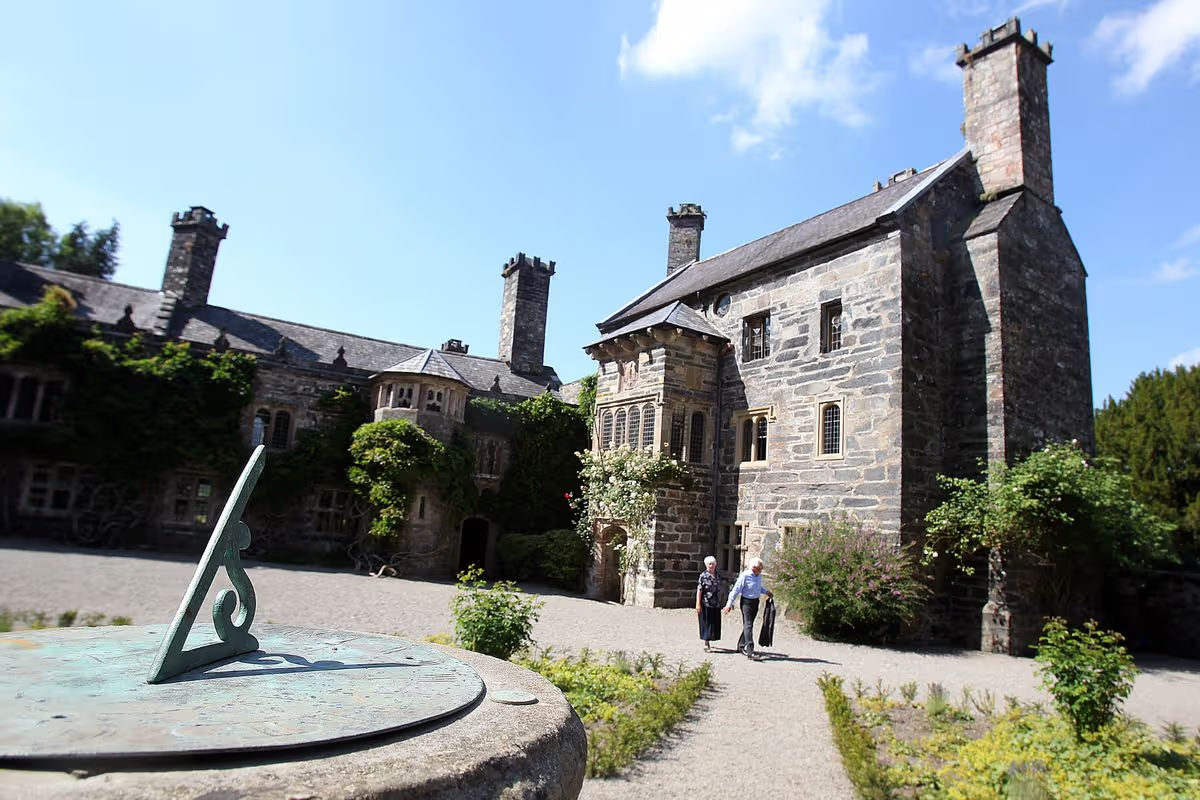
A genuine reflection of Wales‘s magnificent historic landmarks, this castle certainly deserves its place amongst the ‘must-visit’ destinations topping everyone’s travel lists.

Nestled peacefully in the stunning Conwy Valley, the castle sits within the foothills of Snowdonia and is frequently described as one of Britain’s finest Tudor houses.

Fortunately for visitors, the impressive Gwydir Castle welcomes the public from April to September three days weekly to discover its splendour through guided tours.

Originally built as the grand ancestral residence of the influential Wynn family, it was first built in the 15th century. Today it holds grade I listed status after previously falling into a state of disrepair.

While the castle is celebrated for its beautiful peacocks wandering the grounds, it’s equally notorious for its eerie ambience.

Gwydir is thought to be amongst Wales’s most haunted properties, though this hasn’t deterred royal visits over the years, with King Charles making a return in July 2018, then as Prince of Wales, two decades after his earlier visit.

Best holiday cottage deals in Wales

This article contains affiliate links, we will receive a commission on any sales we generate from it. Learn more
Sykes Cottages

From £35 per night

Sykes Cottages

See the deals

Wales is renowned for its stunning mountains, picturesque coastline and rich Celtic history. Sykes has a wide and varied collection of holiday cottages, houses and apartments across the country. Prices start from £35 per night with current deals.

Restoration

By 1994, the property had languished in a derelict state for years and desperately needed some serious attention, which was provided by its new owners, Peter Welford and Judy Corbett.

Though restoring this historic building has been far from straightforward, it’s a project to which they have essentially devoted their lives.

The restoration remains an ongoing endeavour, but the achievements so far have been remarkable, with the project funded almost entirely from their own pockets, apart from a modest grant from Cadw.

The work has been methodical yet painstaking, carried out with such dedication and devotion by its custodians that visitors can now appreciate the results.

This remarkable journey included repurchasing what was legitimately theirs and returning it to where it truly belonged – crucial architectural elements from the original dining room.

The fireplaces, wood panelling, and doorframes were removed and transported overseas after being purchased by William Randolph Hearst, the renowned newspaper tycoon.

Yet in 1995 they discovered Gwydir’s missing dining room features, languishing in a storage facility unused by the Metropolitan Museum in New York.

Following extensive negotiations and 75 years in America, they were finally restored to their rightful place at Gwydir Castle. To commemorate this restoration triumph, the Dining Room wing was officially reopened by King Charles himself in 1998, whilst he served as Prince of Wales.

Present day

Visitors aren’t limited to simply exploring the grounds – they can actually lodge in its magnificent accommodation, which provides a bed and breakfast service. What’s more, the property can also be booked for weddings and special occasions.

What truly enables visitors to fully appreciate the venue, however, is through its guided tours, which are available for groups of 15 people or more.

The attraction opens between 11am and 4pm, and is currently welcoming day-trippers at an entry fee of £12 for adults and £5 for children.

One recent guest described their visit to the castle on TripAdvisor, writing: “Without doubt anyone visiting this castle would be amazed by the history of the site and the surrounding grade I listed gardens beautifully kept.

“They also have beautiful peacocks roaming free all around the castle and are fantastic to watch.”

Another visitor said: “Absolutely fabulous! Highly recommend. The house is lovely, and the gardens are terrific. The period furniture throughout the house is beautiful. A lovely revisit of a special holiday after so many years.”

Those passionate about horticulture will delight in the outdoor areas, which hold the prestigious distinction of being among Wales’ only grade I listed gardens, effortlessly combining influences from the Renaissance, Tudor, and Stuart eras. During their visit, nature lovers can spot yew trees, Cedars of Lebanon, and wisteria alongside numerous elegantly crafted fountains scattered throughout.

A further visitor added: “This beautifully restored 17th-century castle is a hidden gem that deserves to be much better known. The house and gardens are magical. They also have holiday accommodation, but it is a perfect day-visit.”

Source link

I stayed the night in ‘haunted’ castle after all other visitors left – it was unforgettable

Leeds Castle in Kent is said to be haunted by two black dogs and the ghost of a woman in a flowing dress – but this luxury overnight stay in Catherine of Aragon’s former home was worth every penny

There’s something that feels slightly forbidden about strolling through the grounds of a castle after dark when all the day-trippers have departed. The ambience is somewhat spine-tingling, but it genuinely gives you a flavour of what existence must have been like within the walls of these enormous estates in centuries past.

That’s certainly how I felt during my overnight stay at Leeds Castle in Kent, frequently dubbed the Castle of Queens owing to the numerous female rulers who made it their residence. Its somewhat puzzling name derives from Saxon leader Led or Leed, who established the foundations for what would evolve into Leeds Castle, constructing a timber structure on two islands in the centre of the River Len.

This modest wooden dwelling was eventually superseded by a stone stronghold, and through the centuries it expanded into the magnificent castle that subsequently became the residence of Henry VIII’s first spouse, Catherine of Aragon. Yet with that illustrious heritage comes stories of hauntings, the most well-known local myth being spectral encounters with two black dogs, believed to be linked to a previous occupant supposedly involved in witchcraft.

There are also accounts of a phantom in a long flowing dress roaming through the chambers. However, I’m pleased to report that no such spirits disturbed my slumber, and I managed to achieve a solid eight hours of rest in a comfortable four-poster bed.

Our accommodation was situated in the Stable Courtyard, and alongside a beautiful canopied bed, it featured a soaking tub, lake views, and a minibar filled with local delicacies. Certainly worth risking a ghostly encounter for.

Leeds Castle also provides accommodation in its Maiden’s Tower, formerly home to Catherine of Aragon’s ladies-in-waiting, as well as cottages and riverside lodges positioned at the water’s edge. Throughout the day, guests can explore the castle and grounds, and you’ll notice plenty of families braving the elements and enjoying strolls through the magnificently landscaped gardens, but once the gates shut, the ambience becomes tranquil and peaceful.

That evening, we dined at the Castle View restaurant. Located just across the river from the castle, it boasts a vast floor-to-ceiling window that enables you to admire it illuminated at night.

There’s an outdoor terrace which I imagine is stunning during the summer months as you’d be able to watch the sunset whilst dining. The restaurant’s menu features simple, comforting classics with an emphasis on seasonal ingredients and locally-sourced produce.

We were drawn to everything from fish and chips to homemade pies, with my husband ultimately selecting a ribeye steak – which was ‘perfectly’ medium rare in his opinion – whilst I went for the special of cod with chorizo and a butterbean stew. The fish was beautifully flaky and delicate, complementing the robust beans perfectly.

We also sampled a bottle of Pinot Noir from Wildshark Vineyard, located just a few minutes from the castle. My previous encounters with English wine haven’t always been positive, and I’m still resentful about an extortionately-priced bottle that resembled fizzy vinegar, but this red wine may have won me over.

It was velvety, packed with fruity notes, and crucially, I didn’t suffer my typical red wine headache despite consuming half the bottle.

Following a comfortable, spectre-free evening, we tucked into breakfast in the restaurant, which offers a respectable continental buffet alongside hot dishes including a full English and eggs royale. Upon checking out, guests are still welcome to explore the castle for the remainder of the day, so we packed up the car and wrapped up warm to venture out for a wander.

Whilst the castle dates back centuries, its final private owner was Lady Olive Baillie, who is credited with restoring much of the historic property in the 1920s. She also transformed it into somewhat of a party destination, with the elite of transatlantic society, politics, and culture amongst its notable guests.

From Winston Churchill to Charlie Chaplin, numerous famous faces have resided here. Enthusiasts of vintage fashion and style will relish exploring Lady Baillie’s rooms where items from her beaded gowns to chic 1920s shoes and record player are displayed. If you’re a fan of Downton Abbey, you’ll certainly recognise those vibes.

Returning to the grounds, we attempted, and became lost in, the hedge maze. In my defence, it was drizzling with rain, and I likely would have had more patience on a sunny day.

Admitting defeat, we instead visited the birds of prey centre, which featured stunning owls and eagles, and discovered some entertaining family-friendly activities such as adventure playgrounds. There’s even an artificial beach where children can construct sandcastles.

Once again, definitely one for the summer to-do list. And with a 9-hole golf course overlooking the castle, it’s remarkable how much there is to do just moments from your room.

Spending the night at Leeds Castle is truly a memorable experience. It’s rare to find yourself waking up within the grounds of a historic castle, and an overnight stay makes you feel connected to its rich past.

The castle’s team are exceptional, from the warm reception at arrival to the prompt, friendly restaurant staff and knowledgeable guides who patiently shared the building’s fascinating story – it’s evident the castle is being brilliantly cared for in its current chapter.

Rooms at the Stable Courtyard start from £134 per night. For more information and to make a reservation, visit leeds-castle.com.

Source link