gender equality

Purple Profile Picture Campaign Insufficient to Tackle Patriarchy and Femicide

There is truly no safe place for women when patriarchy is normalized as a culture and violence is silenced as a family matter in their own country. A United Nations (UN) report shows that every 10 minutes, a woman is murdered by her own partner or family member. These facts and figures reflect a structural crisis that is still being ignored by many countries. This issue is no longer just about criminality; rather, it indicates a failure in security governance, a failure of protection policies for women, and ultimately, a state failure to break the cycle of gender-based violence. Viewing this phenomenon, it can be assessed that femicide must be understood as a national and international strategic issue that requires a systemic state response, not just symbolic campaigns like the use of the Purple Profile Picture (PFP) that recently became popular in South Africa. Therefore, the author will highlight an analysis of three arguments, namely the failure of the legal structure, the need for a structured prevention strategy, and the cultural normalization that allows violence against women to persist.

Failure of the Legal Structure Due to Half-Hearted Enforcement

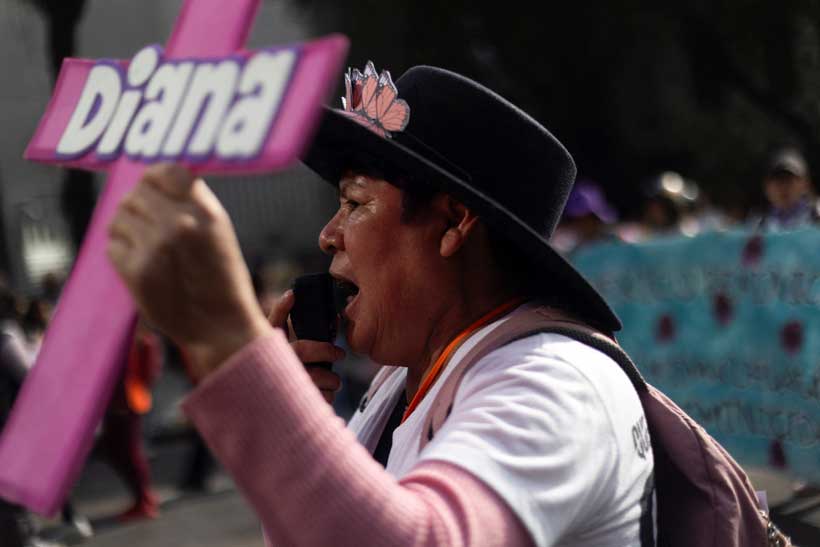
Femicide does not, in fact, occur suddenly without warning signs. Global research has shown a consistent pattern: threats, injuries, social isolation, and even domestic violence reports that are not followed up on. This is further reinforced by the fact that in many cases, the victim had already shown these patterns, but there was no system for cross-sector reporting, and the state only responds after a life has been lost. This is the major loophole that keeps femicide repeating in the same pattern. This crisis reflects the weakness and failure of a country’s law that cannot serve as a shield of protection for its citizens, especially women. In Mexico, for instance, femicide is recognized as a separate category of crime, but weak legal implementation keeps the number of women murdered there persistently high. Slow court proceedings, police lacking gender sensitivity, and a culture of impunity reduce legal protection to mere text without meaningful power.

A similar situation is also felt in South Africa, which is a country notorious for gender-based violence, even holding the highest rate on the continent. Although the country launched the Purple Profile Picture (PFP) Campaign as a symbolic form of solidarity in response to femicide, the use of this symbol cannot replace the urgency of improving the legal system and structure that often fails to save women before it is too late. Without structural reform that prioritizes women’s safety, the law will continue to lag behind the escalating violence. UN data proves that 60% of femicides are committed by someone close to the victim; therefore, law enforcement must be directed not just at punishing perpetrators but at saving women before the risk turns into death.

The Need for Systemic, Not Just Symbolic, Prevention Strategies

The viral campaign in several countries, particularly South Africa, the Purple Profile Picture (PFP), certainly plays a role in building public awareness, and that is important. However, a symbol alone cannot replace the state’s strategies or policies. Therefore, what we need is systemic prevention that works before the victim is murdered, not just solidarity after the tragedy has occurred. This systemic prevention can begin with the provision of integrated public services. The state needs to provide responsive emergency hotlines, safe and adequate shelters, and even 24-hour specialized gender police units operating with high standards of care regarding this issue.

Many femicide cases originate from threats that are ignored by the public and authorities. If initial violence reports were handled decisively and with a risk-based mechanism, the potential for murder could be curtailed. Good examples are seen in several countries, such as Oslo, which has begun using risk-based policing algorithms based on previous police reports. The result is that preventive intervention can be carried out before fatal violence occurs. Furthermore, the education and health systems should also be involved. Teachers, health workers, and social workers need to be trained to recognize the signs of femicide risk, which can then be disseminated for systemic prevention efforts.

The Still-Rooted Normalization of Patriarchal Culture

However, regardless of the forms of systemic prevention that can be implemented as mentioned above, no policy will be effective if the source of the problem remains entrenched. That root is the culture that still places women as the party who must accept, bear the blame, remain silent for the family’s sake, or forgive violence that is considered “normal.” This is the main structural root that makes femicide difficult to eradicate. Patriarchy works not only through institutions but also through social norms that regulate daily behavior, such as who is allowed to speak, who is trusted, and who is considered worthy of being saved.

In Indonesian society itself, pressure from family to “save face” often makes it difficult for women to leave dangerous relationships. In South Africa, the legacy of violence, economic inequality, and aggressive masculinity norms play a major role in the high rate of women’s murder. Meanwhile, Mexico faces a deeply rooted culture of “machismo,” complicating efforts to change social norms. When violence is considered a private matter, the state loses the social legitimacy to intervene.

Considering this crucial situation, cultural change cannot be achieved with short-term campaigns. It requires knowledge and awareness about gender from an early age, the involvement of men in anti-violence movements, and the state’s courage to push for curricula and public policies that challenge harmful patriarchal norms. The state must participate in grassroots communities, such as through women’s organizations, local advocacy institutions, and community groups, because cultural change can only happen if the community becomes the agent of change itself.

The three arguments above show that femicide is a structural failure rooted in a weak legal system, minimal systemic prevention, and the cultural normalization of patriarchy that allows violence against women to be considered commonplace. When a state chooses to respond to violence with symbolism without a tangible strategy, women’s lives will continue to be victims. If one woman is still being murdered every 10 minutes, the world is not yet safe for women, and the state has not fulfilled its obligation to ensure the security of its citizens, especially women. Femicide is not a calamity but a strategic failure that can and must be stopped. The state can only save women if it dares to move beyond visual campaigns towards firm policies, a strong prevention system, and sustainable cultural transformation. Women must no longer die in silence while the state merely watches from afar.

Source link

Seats Are Not Enough — Patriarchy Must Be Dismantled

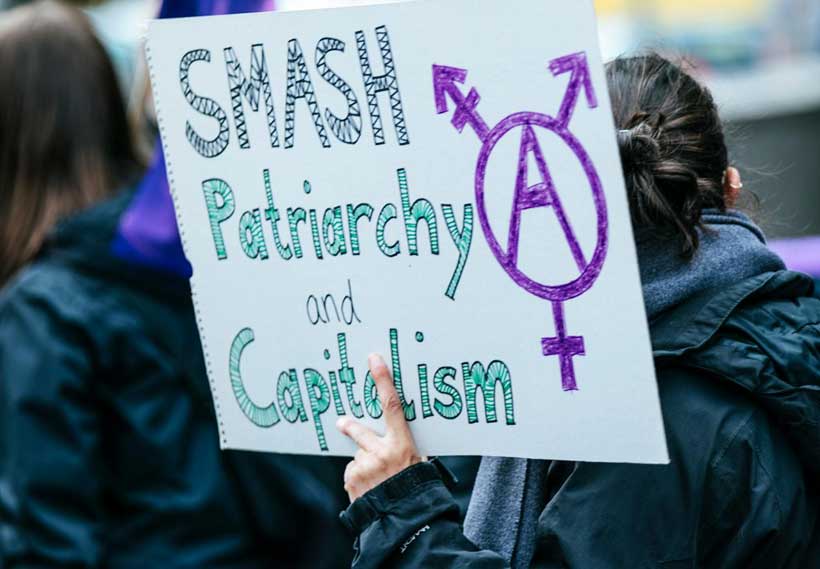
For centuries, women and girls have been told to wait their turn, to negotiate harder, to adjust to the structures that exclude them. Yet patriarchy does not negotiate — it dominates, silences, and systematically excludes. It is not a misunderstanding to be resolved; it is a system of power that must be dismantled. That is why only radical feminism — clear-eyed, structural, and unapologetic — will do.

Patriarchy: The Architecture of Exclusion

Patriarchy is not merely a set of discriminatory attitudes or isolated cases of male dominance. It is an entrenched social, political, and economic system that determines who holds power, who has access to resources, and whose voices are deemed legitimate. It functions through our laws, our institutions, our workplaces, our cultures, and even our languages.

Patriarchy is a pervasive system of power relations that privileges men and disadvantages women across all spheres of life. It is, in essence, the invisible architecture of exclusion — replicated in every structure where decision-making and authority are concentrated.

Gender parity is dismal. These are not natural outcomes — they are deliberate designs of a patriarchal order. As the feminist theorist Sylvia Walby has written, “Patriarchy is a system of social structures and practices in which men dominate, oppress and exploit women.” It is not accidental; it is organized.

Why Radical Feminism, Not Reformism

Radical feminism is often misunderstood as extreme or even militant. But the “radical” in radical feminism comes from the Latin radix — meaning “root.” It seeks to address the root causes of women’s oppression, not just its symptoms. It is not about hatred of men, but about dismantling a social order that privileges them.

As defined by Encyclopaedia Britannica, “Radical feminism is a branch of feminism that calls for a radical reordering of society to eliminate male supremacy in all social and economic contexts.” It does not seek accommodation within existing patriarchal systems — it seeks transformation.

Liberal or reformist feminism, by contrast, focuses on achieving equality within existing systems through legal reforms or representation. Radical feminism argues that those systems themselves were built on women’s exclusion and cannot deliver equality without being rebuilt. The tables where women are asked to “take a seat” were designed for patriarchal advantage. As the sociologist bell hooks observed, “Patriarchy has no gender.” Even well-intentioned reforms can reproduce male-centric hierarchies if they do not interrogate the system itself.

Why Seats Are Not Enough

“Seats at the table” has become a slogan for inclusion. Yet the table itself — its design, ownership, and purpose — often remains unchallenged. When patriarchal institutions invite women to participate, they often do so on patriarchal terms: speak, but not too loudly; lead, but not too differently; succeed, but without questioning the structure.

True justice demands new tables — not invitations to the old ones. This is why radical feminists argue for structural transformation rather than symbolic inclusion. As feminist scholar Catharine MacKinnon argues, “The law sees and treats women the way men see and treat women.” Unless the very rules of governance and culture change, participation risks being tokenistic.

Structural change means rethinking governance, redistributing resources, redesigning work, and redefining value itself. It means:

  • Parity by design: Mandating 50:50 representation in political, economic, and corporate decision-making — not as aspiration but as institutional requirement.
  • Redistributive budgets: Allocating national resources to care work, reproductive health, and social protection as core infrastructure, not “social spending.”
  • Structural accountability: Requiring gender impact assessments, independent oversight, and enforcement mechanisms with legal consequence.
  • Re-working work: Recognizing unpaid and care work as economic labor, restructuring work environments, and protecting caregivers from economic penalty.
  • Reimagining safety: Addressing gender-based violence not only as individual crime but as a systemic failure of justice and security.

These are not abstractions. They are the precise recommendations emerging from feminist economists and policymakers who argue that equality cannot exist in a world built on unequal foundations.

Intersectionality: The Lens of Reality

Radical feminism today also insists on intersectionality — a term coined by Kimberlé Crenshaw — to address how patriarchy intersects with race, class, sexuality, disability, and other systems of power. The experiences of a wealthy white woman in a boardroom are not the same as those of a rural African woman displaced by war or climate crisis.

Any transformative feminist politics must therefore center those who face the compounded weight of patriarchy. True liberation cannot come from the top down; it must be built from the margins inward. As Crenshaw explains, “If you can’t see a problem, you can’t fix it.”

For global South feminist movements — from Tigray to Gaza, from Sudan to Afghanistan — this perspective is essential. Patriarchy is often reinforced by militarism, religious authoritarianism, and neo-colonial economic models that disproportionately harm women. Radical feminism, in its truest sense, must be anti-patriarchal, anti-racist, and anti-imperialist at once.

Dismantling the System, Not Decorating It

Critics often ask if radical feminism is “too idealistic.” Yet history shows that every major gain for women — from the vote, to reproductive rights, to anti-violence laws — began with demands once deemed radical. The urgent need for radical feminism today lies in its refusal to normalize injustice and its insistence that power itself must be redefined.

The truth is that patriarchy adapts. It learns to wear progressive language while maintaining control. Corporate feminism, where “empowerment” is reduced to branding campaigns, is patriarchy in new clothes. Radical feminism cuts through that illusion. It understands that as long as patriarchal logic defines leadership, value, and success, women’s liberation will remain incomplete.

Conclusion: No Justice Without Dismantling Patriarchy

Liberation for women and girls does not begin with waiting for inclusion — it begins with dismantling exclusion. Patriarchy cannot coexist with justice, just as domination cannot coexist with equality.

To call oneself a radical feminist is to recognize that the personal is political, and that politics must be rebuilt from the ground up. It is to refuse the comfort of partial justice.

Seats at tables built on our exclusion are not enough. New tables — designed by and for women, where equality is not granted but owned — are the only way forward.

Because justice cannot coexist with patriarchy. And patriarchy, finally, must fall.

Source link

#MeToo’s Digital Blind Spot: The Women the Movement Left Behind

This article discusses the important issues underlying the #MeToo movement that has spread across the globe. On the one hand, the #MeToo movement has succeeded in gaining cross-border support for victims of sexual harassment, so that victims do not feel alone and have the courage to speak out. However, the #MeToo movement has not yet fully succeeded in reaching all groups. This article will explore why this massive online campaign has not truly reached those who need it most: victims without internet access, without digital devices, or who are technologically illiterate. As a result, they remain unable to voice their experiences of abuse and receive the support they need.

The #MeToo movement has indeed succeeded in changing the way we view, understand, and even produce new regulations in many countries.  This demonstrates the power of the internet.  However, the reality is that millions of victims living in villages, remote areas, or from poor families still feel alone. This is why this article will discuss the three main obstacles that have prevented #MeToo from being fully successful: limited digital access, inequality in technological capabilities and security, and weak direct activism in the field.

In my opinion, #MeToo is still far from successful. Success in changing laws has not been followed by success in helping those with proven limitations.  These three main reasons will be discussed in more detail in this article. #MeToo was initially successful because it spread quickly on the internet.  Platforms such as Twitter can connect people from all over the world. That’s amazing! However, this initial success mainly occurred in developed countries that have cheap and fast internet. This means that the movement reached more wealthy, educated people living in big cities. This shows that the movement was biased from the start because it only focused on issues faced by internet-savvy people. This was also evident when #MeToo, which had been around since 2006, only went viral and spread worldwide when Hollywood actresses started using #MeToo on social media in 2017.

Access barriers directly undermine the success of #MeToo. The movement fails to reach all those affected by abuse who live in villages, in conflict areas, and those who are technologically illiterate and lack financial resources. It is not only these disparities that set them apart, but also the lack of support and justice that is part of this difference.  Victims without a signal, without a cell phone, or without data do not have the tools to know their rights. This situation is a very common problem for many people.

This failure results in “solidarity poverty.” According to a study by Amalia, A. R., Raodah, P., & Wardani, N. K. (2024), “In low- and middle-income countries, 300 million fewer women than men use mobile internet.” This shows that the issue of access is not only a geographical problem but also an economic and gender issue.  Because they lack the ability to speak out, the #MeToo movement does not truly represent all victims, but only those who have the privilege of being connected.

In addition, there is also a gap in digital literacy and security that will become a second barrier preventing victims from successfully participating in the #MeToo movement. Victims who are technologically illiterate do not know how to use social media safely and anonymously. Furthermore, they lack knowledge about how to store digital evidence so that it is not lost. They do not understand privacy regulations, the dangers of doxing (spreading personal data), or cyber attacks. This ignorance causes them to fear speaking out even more than they fear the perpetrators.

In many countries, this issue is made more difficult by the threat of retaliation through legislation (e.g., defamation laws/cybercrime laws) that can be used against victims and lead to revictimization (ICJ, 2023). When victims speak without legal representation or digital literacy, they risk being perceived as lying. Victims in large cities have better digital safety nets than those in remote areas. This is why “Solidarity with Quotas” emerged. Only those who are digitally literate and financially secure can speak up, while others remain silent out of fear.

Due to these limitations, the #MeToo movement around the world has been dominated by issues occurring in large offices, elite campuses, or among public figures.  In line with the criticism expressed by PUSAD Paramadina, the #MeToo movement in Indonesia is considered to have not yet reached a wider audience, as the discussion is still limited to those who are literate in social media and come from the middle to upper classes (Kartika, 2019). This criticism is not only relevant in Indonesia, but also in many other countries.

However, the problems with the #MeToo movement are not limited to the internet.  The failure of activism to change offline behavior is also a weakness. Solidarity on the internet can indeed raise donations and spread information, but it often fails to translate this momentum into equitable direct assistance.  The digital resources and extraordinary public attention received by this movement have not been wisely allocated to the areas most in need. This shows that digital activism often focuses only on the most popular topics but has no real impact on the most vulnerable victims.

Despite the large number of new laws passed as a result of #MeToo, integrated service centers, shelters, and legal services are still concentrated in capital cities or large cities.  Victims who are not within reach of these services must face significant distances and costs to obtain justice. This situation shows that inequality in access to protection is still deeply rooted.  This is in line with research published by Jurnal Perempuan (2024), which states that Online Gender-Based Violence (KBGO) is not an anomaly, but a continuation of gender-based violence that has been entrenched for centuries in patriarchal systems. Therefore, gender inequality will only persist in the real world if the struggle is only carried out in the online realm and is not balanced with the provision of real services for victims.

Three major issues hindering the success of the #MeToo movement are limited access, limited digital capabilities, and a lack of direct participation in the field. This shows that a digital struggle without real interaction risks losing sight of its main goal: justice for all victims, not just those connected to the virtual world.

The world has been changed by the #MeToo movement. However, the world it has changed is one that is connected to the internet.  Millions of other women continue to struggle in silence, in places where there is no signal and no courage.  Meanwhile, some people still cannot access it. This movement has raised awareness around the world, but there are still people who are left behind, hindered by digital poverty and the gap between those who have access to technology and those who do not.  Digital justice should not be limited to viral hashtags or phone screens. In truth, solidarity is not just about thousands of posts or supportive comments. Rather, it comes from the courage to step into the real world, listen to those who are unheard, and ensure that protection is available for both those who can reach the network and those left behind. Because true justice does not require popularity to be seen, and true solidarity is measured by how far we collaborate with those who are most silent, not by how much we speak.

Source link