HE IS the working class boy from Wales who conquered Hollywood as Sir Elton John in Rocketman.
She’s the Louisiana-born Baywatch actress whose reality TV family want to be the nextKardashians.
Taron Egerton and Brooks Nader have become showbusiness’s hottest coupleCredit: BackGridBut Taron’s inner circle is sounding the alarm on the pair’s relatonshipCredit: SplashThe chaotic circus of Brooks’s life could derail Taron’s acting career, it is fearedCredit: Getty
But behind the steamy snogs, Taron’s inner circle is sounding the alarm.
For I can reveal, that the 36-year-old Kingsman heartthrob’s prestige acting career could be spectacularly derailed by the chaotic circus of Brooks’s life, and her ferociously protective, camera-hungry family.
As my insider warned: “This could all end in disaster. He doesn’t know what he has gotten himself into. She will eat him alive.”
But it is not just one Nader Taron has to contend with.
She also has a brood of high-flying sisters who all live together in Manhattan and keep a watchful eye on their big sis.
Dubbed the “Wannabe Kardashians”, Brooks and her photogenic sisters – Sarah Jane, Grace Ann, and Mary Holland – became smash hit reality stars when their show launched last year on Disney+.
If his relationship with Brooks hits a speedbump, Taron won’t just be dealing with a private heartbreak – he’ll be dealing with the wrath of the sisters and a Hulu camera crew capturing every excruciating detail.
As one insider summarised the situation: “Who knows if this is happily ever after. But it could spectacularly backfire for Taron if things get messy. The Nader sisters are brutal and unafraid to play dirty to protect their own.”
The Louisiana-raised siblings swapped the country for the bright lights of New York and Los Angeles, and they absolutely do not take prisoners.
In the first season of their show, which quickly became a guilty pleasure for millions of viewers, the sisters famously tore shreds into Brooks’s exes.
This could all end in disaster. He doesn’t know what he has gotten himself into. She will eat him alive
Insider
They had choice, cutting words for her former husband, advertising executive Billy Haire, whom she divorced in 2024, with Brook herself saying she married him “for rent purposes”.
When she was asked on a chat show what she thought about her ex remarrying, Brooks remarked: “Which ex?”
But the sisters saved their unfiltered venom for her Dancing With the Stars partner and ex-boyfriend, Gleb Savchenko.
The pair met when they were partnered on the dance show, and sister Grace Ann revealed they hit it right from the off.
Brooks and her protective, camera-hungry sisters have been dubbed the ‘Wannabe Kardashians’Credit: Instagram/BrooksNaderThe Kingsman heartthrob could be dealing with the wrath of her sisters and a camera crew capturing every detail if his relationship to Brooks hits a speedbumpCredit: Alamy
‘Highly dangerous tightrope’
She explained in eye-watering detail: “I can tell you firsthand, every time I visited Brooks’ trailer, the trailer was shaking — every single time.”
But Brooks’s whirlwind fling with the Russian dancer imploded months later, but made great reality television.
The sisters discovered he had left his phone in their flat and quickly went about searching the device while being filmed for the series.
Brooks said they were “shocked” by what they found. She said on the episode: “All these screenshots of my boobs. What the f— is this? There’s like a million girls in here. This is a week ago.”
She then found a contact labeled “Threesome girl, Joshua Tree,” and broke down in tears.
Gleb vehemently denied the allegations, but the truth hardly mattered once the Nader sisters went to war.
They cornered him both on-screen and off, acting as Brooks’s personal attack dogs.
Brooks later admitted that watching herself “crying on the bathroom floor” over the split was the hardest part of filming the show,
But she also issued a chilling warning to anyone who might doubt her family’s investigative skills, proudly claiming: “My sisters are my sources.”
With these glamorous private investigators, any misstep Taron makes is guaranteed to end up in the next season.
Reality television thrives on conflict, and the Nader sisters know exactly how to deliver it
Insider
This is exactly why Hollywood insiders are so nervous for the Welsh actor. A-list directors and prestige studios often shy away from actors embroiled in reality TV circus acts.
My insider added: “By aligning himself with a star whose life, heartbreak, and family drama are filmed for public consumption, Taron is stepping onto a highly dangerous tightrope. Reality television thrives on conflict, and the Nader sisters know exactly how to deliver it.”
But he does not seem deterred. The pair have been painting California red over the last week, looking thoroughly besotted with one another.
Since The Sun revealed earlier this week that they were dating, they’ve been spotted holding hands outside luxury steakhouses and grabbing intimate drinks at Shutters on the Beach.
Yet, as the romance heats up, there are dark whispers in Hollywood, with some questioning the authenticity of the sudden pairing.
A more cynical insider even suggested that the highly photographed romance might be a well-orchestrated PR stunt designed to mutually boost their profiles.
‘Extremely ambitious’
Taron, despite his undeniable talent, has slipped off the radar slightly since his meteoric run with Rocketman and the Apple TV+ prison drama Black Bird.
Meanwhile, Brooks is “extremely ambitious” and “desperate” to cement her burgeoning reality TV empire.
Still a source told The Sun, Taron is “very keen” on the swimwear model, but this highly public romance is a stark departure from his roots.
Born in Birkenhead but raised in the quiet seaside town of Aberystwyth, small-town boy Taron has until now kept his private life discreet.
Taron, above with Elton John, had his meteoric run with Rocketman and is said to be ‘very keen’ on the swimwear modelCredit: Instagram
When he burst onto the scene as a council estate rebel turned superspy in Kingsman: The Secret Service, he was praised for his grounded nature.
He dated assistant director Emily Thomas for six years, keeping the romance strictly low-key and away from red carpets before they quietly parted ways.
However, the famously cheeky star hasn’t been entirely mute about his romantic preferences or his prowess as a boyfriend in past interviews.
Speaking to Andy Cohen, Taron confessed he wasn’t looking for a specific body type, laughing as he admitted his actual preference.
He joked “I’m probably more of an a** man… I’ve got a big butt. Quite a big round butt. When we’re walking away hand-in-hand as a couple, it’s not going to look right [if she doesn’t]. It won’t work.”
He even doubled down while reading thirsty fan tweets online during a promotional tour, cheekily declaring to the camera, “I’m quite proud of my a**, actually.”
And when he does fall for someone, he falls incredibly hard.
Recalling a romantic gesture for his ex, Emily, he once revealed, “When my girlfriend and I first got together, I took her to Claridge’s hotel in London, and I had them deliver a necklace to the room.”
He has confidently described himself in the past as an “attentive, thorough, enthusiastic” lover.
But all the attentive enthusiasm in the world might not be enough to shield him from the Nader family.
Brooks is ‘desperate’ to cement her burgeoning reality TV empireCredit: Getty
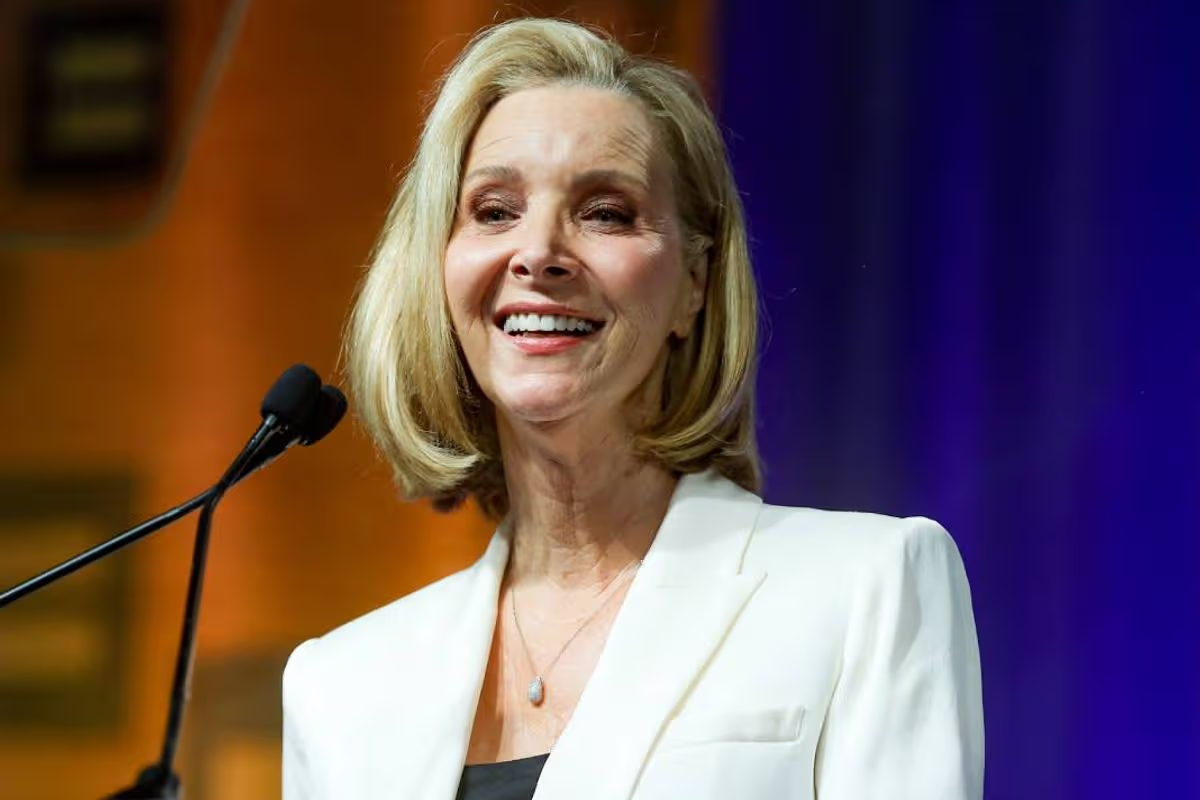
One of which is the third and final season of The Comeback which revolves around the turbulent career of sitcom star Valerie Cherish (played by Lisa Kudrow).
12 years after series two, Valerie takes on a new sitcom written by AI in a bid to try and salvage her dwindling career but it’s not exactly plain sailing.
Of course, Kudrow is famed for portraying Phoebe Buffay in the unforgettable 1990s comedy Friends but The Comeback’s co-creator Michael Patrick King insists she’s “a lot more than Phoebe”.
Opening up to Reach Plc, King, who is best known for directing Sex And The City, shared: “First of all, the thing I really want to say about Lisa Kudrow is she’s a brilliant writer.
“You know she’s a brilliant actress. All you have to do is look at the contrast between Phoebe and Valerie and you can see her amazing range.
“She’s a very, very, very good writer. She has a scientific mind. She has a degree from Vassar [College] in biology.
“So she’s a lot more than Phoebe. And what’s great about working with her is she’s smart and hilarious and discerning. Very, very discerning.”
Kudrow recently spoke to CBS Sunday Morning about the reason why she’s still happy to be known for Friends, despite the show ending in 2004.
She said: “I never went through that period of ‘no I don’t want to talk about Friends. I have to move on, I want to play other characters and no, you have to know me from -’.
“No, no, that’s fine. Because Friends gave me everything.
“It just did. And I loved being Phoebe. I loved the whole experience and I don’t need to move away from it.
“I had done independent films and played different characters and, whether you’ve seen it or not, that’s fine.
“And it’s fine if all you know I’ve ever done with Friends, how could I not be OK with that?”
Monica’s apartment in Friends has been remade – and you can spend the night thereCredit: AIRBNBThe famous purple walls are exactly the same as the one in the hit TV showCredit: Unknown
Guests walk into the main living room which is replica of the iconic Friend’s flat including the same artwork, sofas and lamps.
Make sure to try out the keyboard, complete with a picture of Ross on it.
The open plan kitchen on the left includes similar styles as well as the main table and exposed brick walls.
On each side of the TV are also doors to both bedrooms, although these are in a more generic style rather than looking like Monica’s and Rachel’s.
It sleeps up to eight people, with two bedrooms each having a double bed and 2 bunk beds, although a cot can also be requested.
Something it has that Monica’s apartment didn’t is a private garden terrace with sofas and table football.
There are also Friends games including Wheel of Mayhem and Trivia games to try out while in the flat.
A tiny ‘Central Perk’ bar has even been installed on the ground floor, with comfy sofas and similar artwork.
And when you want to leave, you can check out the famous yellow picture frame on the door, which featured in the final ever scene of the series.
People on social media have been raving about the unusual Airbnb.
One said: “This is so amazing omg. Bucket list for sure.”
Another agreed: “Omg one ticket to France please.”
A third wrote: “The picture of Ross on the keyboard has me wheezing.”
The holiday home is near La Rochelle, which is less than an hour away.
The kitchen is made to look just like the apartment as wellCredit: Getty – ContributorEverything from the blue cupboards to the exposed brick have been includedCredit: AIRbnbThere is even a mini Central Perk on the ground floorCredit: AIRBNB
Stays start from £552 for a two night minimum stay, which works out to around £35 each a night if staying as a group of eight.
And if you want to do something exciting outside of the house there is the Futuroscope de Poitiers theme park (named one of the best in Europe) just 45 minutes away.
If you don’t want to go that far, there was The Friends Experience in London where you can pose in some of the iconic sets, although future dates are yet to be announced.
Keeping and maintaining friends as an adult is hard, especiallywith the demands of life, travel and work. In volunteering, I encounter more people like myself, which is nice, but sometimes it’s difficult to participate without a lot of commitment to the organizations. I’m wanting to explore smaller, intimate groups to build community with people who I share similar values with. I’m interested in self-growth, psychology, games, mindfulness and yoga. I loved the L.A. Times story “Awaken your inner child at this welcoming collage club for adults” and I would love to know about similar activities. Thanks! —Marlen I.
Looking for things to do in L.A.? Ask us your questions and our expert guides will share highly specific recommendations.
Here’s what we suggest:
Marlen, I couldn’t agree more. As we get older, it can feel more and more difficult to sustain friendships, especially in Los Angeles, where people live so far apart and have busy lives. This struggle is exactly why so many social clubs have been sprouting up in L.A. over the last few years. From board game clubs to junk journaling meetups, there’s so many different ways to connect and maybe try something new. I’ve compiled a list of social clubs and community spaces that I think you’ll enjoy.
Since you’re already familiar with Art+Mind Studios, you should definitely check out Junk Journal Club. Junk journaling is essentially a craft practice that combines elements of collaging, journaling and scrapbooking. With the rise of junk journaling content on social media, the once solo pastime has turned into a lively social scene. Junk Journal Club, dubbed “the original junk journal club,” hosts monthly meetups, which can be found on its Instagram page. When my colleague Malia Mendez went to an event recently, people told her that attending Junk Journal Club “has made befriending strangers easy,” and many of them stay in touch.
Another craft-centered event that’s worth exploring is the Crafters Clubhouse, which founder Victoria Ansah calls “a creative third space for adult makers.” She hosts monthly arts and crafts workshops including activities like scrapbooking, punch needle embroidery and clay art.
Given that you’re interested in yoga and mindfulness, you may like WalkGood LA, a community-centered wellness organization that hosts a variety of activities including a run club and accessible yoga classes. During the pandemic, I found solace in attending their weekly yoga classes called BreatheGood. The outdoor sessions take place every first Sunday at Kenneth Hahn State Recreation Area and feature free chiropractic adjustments and healthy food vendors. The vibe of the intergenerational event feels warm and welcoming. All you have to do is show up with your yoga mat. The organization also hosts various classes including yoga, breath work, mindful meditation, mat Pilates and step aerobics at their studio, the WalkGood Yard, in Arlington Heights.
Another social club I recommend is Love, Peace & Spades, which my friend Kevin Clark started in 2022, to create a space where people could play the card game with others. With music provided by a live DJ, the monthly game night feels like being at a family cookout. Spades can be extremely intimidating to start as a beginner playing with pros. But don’t worry. Love, Peace & Spades has instructors who can teach you how to play.
If you’re interested in chess, L.A. Chess Club is “an event with the laid-back ease of a chill game night and all the social and romantic possibility of a night out on the town,” according to Times contributor Martine Thompson, who wrote a story about the event. At the weekly gathering, which features a food vendor, cocktails, tattoo artists and DJs, you can “competitively play chess, learn the game, meet new friends or mingle as a single person,” Thompson shares. Another fun event is RummiKlub, a monthly Rummikub game night that takes place in elevated, design-forward spaces across the city.
L.A. also has several fun creative venues that regularly bring people together, such as Junior High, a nonprofit art gallery and inclusive gathering space that hosts artist showcases, comedy nights, pottery workshops and more. There’s also Nina in Atwater, which holds a variety of gatherings including a monthly series that focuses on mindfulness called “Be Here Now: Simple Tools for an Everyday Nervous System Reset.”
I hope that these suggestions are a good starting point for finding the group, or several groups, that are an ideal fit for you. Just by putting yourself out there and being open, you are bound to build and find community. Best of luck on your journey!
TIMOTHÉE Chalamet’s painful Oscars experience was made worse by love rival Travis Scott cheering for Michael B. Jordan, a source close to the star told The U.S. Sun.
Chalamet endured a brutal Academy Awards, from being roasted by host Conan O’Brien to missing out on a career-defining award.
Sign up for the Showbiz newsletter
Thank you!
Chalamet endured a difficult awards season, leaving the BAFTAs and Oscars empty handedCredit: APChalamet was forced to take a series of jibes from Oscars host Conan O’Brien following his recent controversial comments about the artsCredit: GettyThe U.S. Sun understands Chalamet was reportedly upset at Travis Scott for openly cheering on rival Michael B. JordanCredit: Getty
O’Brien targeted the Willy Wonka actor over his scathing remarks about opera and ballet, which had sparked global criticism and threatens to end his partnership with Cartier.
Chalamet said last month in a CNN town hall with Matthew McConaughey that “no one cares” about either artform, with one Academy insider labelling him as “arrogant.”
The night, however, reportedly worsened when controversial rapper Scott — girlfriend Kylie Jenner’s ex and father of her two children — openly supported Jordan, who beat Chalamet in the Best Actor category.
The insider said the 30-year-old was “shaken” after Marty Supreme failed to win any of its nine nominations.
While he was happy for Jordan, who impressed judges with his dual role in Sinners, Chalamet struggled to hide his disappointment, and his tension with Scott reportedly hit an “all-time low.”
“Travis’s support for Michael B. Jordan was seen as a direct snub, and it’s clear he has little respect for Timothée’s talent,” the source said. “While he isn’t confrontational, their relationship has grown colder than ever.”
Another source also told The U.S. Sun that the couple even walked out of the Oscars ceremony for an hour, leaving seat fillers in their spot.
Most read in Entertainment
People close to him said he leaned heavily on Jenner for comfort, appearing so reliant that she sometimes seemed overwhelmed.
It has been a dispiriting awards season for Chalamet.
Last month at the 2026 BAFTA Film Awards in London, he was nominated for Best Actor for Marty Supreme but lost to Robert Aramayo for his performance in I Swear.
Marty Supreme, which tells the true story of a table tennis player in the 1940s, went home empty-handed despite nine nominations.
Sources said Chalamet left the BAFTA ceremony visibly deflated, struggling to enjoy himself despite efforts from Jenner and his friends.
“Going home with nothing in London deeply bruised his ego, though he will certainly learn from the experiences of the last few months.
“He never truly settled into the vibe of the ceremony; his mood was tense and stressed, and he struggled to enjoy himself.”
It wasn’t just host O’Brien laughing at him, either.
Another roast came from Alexandre Singh, who accepted the award for Best Short Film (a tie between The Singers and Two People Exchanging Saliva) and addressed Chalamet’s ballet comments.
“Maybe it takes ten years’ time, but we can change people’s lives through art, through creativity — through theatre and ballet — and also cinema,” Singh said after collecting his award.
The insider said the energy throughout the night was tense, with Jenner’s behavior described as almost maternal.
“The atmosphere was strange for everyone involved. Kylie has become his primary safe space, to the point where those around him feel she is essentially babysitting him.
What did Timothee Chalamet say about ballet and opera? Oscars controversy explained
Timothée Chalamet has sparked a heated cultural debate following comments made at a CNN and Variety Town Hall on February 21, 2026.
Speaking alongside Matthew McConaughey about needing “draws” to pull in an audience to his movies, Chalamet made harsh comments about industries he claimed feel forced to stay afloat.
“I don’t want to be working in ballet or opera… where it’s like, ‘Hey, keep this thing alive, even though no one cares about this anymore,’” he said.
The remarks mirror sentiments Chalamet expressed as early as 2019 during a promotional event for The King, where he labeled the disciplines “dying art forms.”
The Royal Ballet and Opera issued a formal rebuttal, emphasizing that these art forms do not exist in isolation but rather “inform, inspire, and elevate” the broader cultural landscape, including the film industry itself.
“It is a bizarre dynamic; while she seems to embrace her influence over him, it often feels like she is acting as a maternal figure rather than a partner, which many find frustrating to witness.”
Sources said the Oscars provided Chalamet a reality check when he faced fellow nominees Jordan and Brazilian actor Wagner Moura.
Friends have advised him to adopt a more mature public persona, projecting confidence rather than appearing like a “young boy with a high school girlfriend.”
“The gap in maturity was obvious,” the insider said. “He’s been told multiple times he needs to project more maturity to be taken seriously as a leading man.”
Chalamet now plans to put the disappointment behind him by going on vacation, attending some NBA games, and “reconnecting with himself” before returning to work.
Chalamet and Kylie Jenner attended the Vanity Fair afterparty but it’s claimed he left earlyCredit: EPA
ROB Reiner’s friends held back tears at the Oscars as the ceremony honored the late director and his wife, Michele Singer Reiner, after their tragic deaths.
The couple died in December 2025 after being brutally attacked in their Los Angeles home, and their son, Nick Reiner, is the primary suspect in their murders.
Sign up for the Showbiz newsletter
Thank you!
Rob Reiner’s famous friends held back tears at the Oscars as the ceremony honored the late director and his wife, Michele Singer ReinerCredit: Instagram/michelereinerBilly Crystal gave a speech honoring the late couple Sunday nightCredit: ABCRob and his wife received a special tribute from longtime friend Billy CrystalCredit: GettyRob and his wife Michele died on December 14, 2025Credit: ABC
Hollywood was shocked by the loss of Rob, 78, and Michele, 70, and it was expected that there would be a special tribute to them at the 98th Academy Awards held at the Dolby Theatre at Ovation Hollywood on Sunday.
Rob famously rewrote the ending of When Harry Met Sally after meeting his wife, Michele, while shooting the film.
“I first met Rob Reiner in 1975. When I was cast as his best friend in an episode of All in the Family,” Billy’s began in his tribute.
“Rob said, it was fun playing your best friend, why don’t we keep it going. And it was a thrill to see him evolve from a great comic actor to a master storyteller.
“His first film was This Is Spinal Tap. You could stop right there … The comedy was turned up to an 11.”
Billy went on to discuss Rob’s other iconic films, including Stand By Me.
“Audiences then lined up to see his funny, charming films, so he gave them misery!” Billy continued.
Most read in Entertainment
“My friend Rob’s movies will last for lifetimes. Because they were about what makes us laugh and cry and what we aspire to be, far better in his eyes, far kinder, far funnier, far more human.”
“And when Michele Singer entered his life, they were unstoppable. A gifted photographer, she not only produced films with Rob, but it was her energy that had them working tirelessly to fight social injustice in the country that they both loved.
“Rob and Michele Reiner became the driving force in the landmark decision for marriage equality across the United States. And their loss is immeasurable.”
He said Rob told him several times that “it meant everything to him that his work meant something to you.”
“And for us, who had the privilege of working with and knowing him and loving him, all we can say is, ‘Buddy, what fun we had storming the castle.”
Billy’s speech concluded with several actors joining him on stage, including Kathy Bates, Demi Moore and Mandy Patinkin.
More late stars honored at the Oscars
Diane Keaton was also honored at the Oscars’ In Memoriam tribute.
Rachel McAdams, who starred alongside the late actress in The Family Stone, took the stage to honor Diane.
“For over 50 years, luminous on screen and indelible in life, believe me when I say there isn’t an actress of my generation who is not inspired by and enthralled with her absolute singularity,” she said.
“She wore so many hats, literally and figuratively, actress, artist, author, activist, but no hat more important to her than being a mother to her two children.
“She meant so much to so many of us. I remember she used to sing this old Girl Scout song on set, which is just so her: ‘Make new friends, but keep the old. One is silver, and the other is gold. A circle is round, it has no end. That’s how long I’ll be your friend.’
“And so to our friend, Diane Keaton, celebrating a life in silver and gold, a legend with no end.”
Diane, a four-time Academy Award nominee, died in October 2025 of bacterial pneumonia.
Other stars were honored during the In memoriam segment, including Robert Duvall, known for his roles in The Godfather and Apocalypse Now, Robert Redford, known for All the President’s Men and The Sting and Catherine O’Hara, known for her role in Home Alone and Schitt’s Creek.
“She made us laugh until we cried,” Rachel said of Catherine at the Oscars.
Diane Keaton died in October 2025 of bacterial pneumoniaCredit: Getty ImagesCatherine O’Hara died in January 2026 at the age of 71 after being rushed to the hospital while having difficulty breathingCredit: REUTERSRobert Duvall, known for his role in The Godfather, died at the age of 95 in February 2026Credit: AFP via Getty Images
The death of Rob Reiner
Corey Feldman, who portrayed Teddy Duchamp in Stand by Me, was reportedly not asked to participate in the tribute to Rob, despite being one of the main characters alongside Jerry and Wil.
A source recently told the Daily Mail that Corey was “devastated” by the apparent snub and “wanted nothing more than to honor Rob.”
In January, Rob was subtly recognized at the Golden Globes by host Nikki Glaser, who ended the show wearing a Spinal Tap cap, a reference to the filmmaker’s 1984 film, This Is Spinal Tap.
The comedian also closed the ceremony, saying, “This one went to 11. Thank you, guys, for an amazing night,” a reference to the movie’s famous moments between Rob and co-star Christopher Guest.
Rob and Michele allegedly had their throats slit while lying in bed, and Nick, who had been diagnosed with schizophrenia and was battling a drug addiction, has been charged with their murders.
The incident occurred hours after the trio attended Conan O’Brien’s holiday party, where Rob and Nick had an explosive fight about Nick’s behavior.
Last month, Conan O’Brien, host of the 98th Academy Awards, broke his silence about the tragedy during a sit-down with The New Yorker.
“I knew Rob and Michele, and then increasingly got closer and closer to them, and I was seeing them a lot,” the talk show host said.
“My wife and I were seeing them a lot, and they were so — they were just such lovely people.
Most Awarded Oscar Winners of All Time
Best Director:
John Ford — 4 wins
The Informer (1935)
The Grapes of Wrath (1940)
How Green Was My Valley (1941)
The Quiet Man (1952)
Frank Capra — 3 wins
It Happened One Night (1934)
Mr. Deeds Goes to Town (1936)
You Can’t Take It with You (1938)
William Wyler —3 wins
Mrs. Miniver (1942)
The Best Years of Our Lives (1946)
Ben-Hur (1959)
Best Actor in a Leading Role:
Daniel Day‑Lewis — 3 wins (most in history)
My Left Foot (1989)
There Will Be Blood (2007)
Lincoln (2012)
A slew of actors are tied in second place having won 2 Oscars, including: Marlon Brando, Tom Hanks, Dustin Hoffman, Sean Penn, Anthony Hopkins, and more.
Best Actress in a Leading Role:
Katharine Hepburn — 4 wins
Morning Glory (1933)
Guess Who’s Coming to Dinner (1967)
The Lion in Winter (1968)
On Golden Pond (1981)
Frances McDormand — 3 wins
Fargo (1996)
Three Billboards Outside Ebbing, Missouri (2017)
Nomadland (2020)
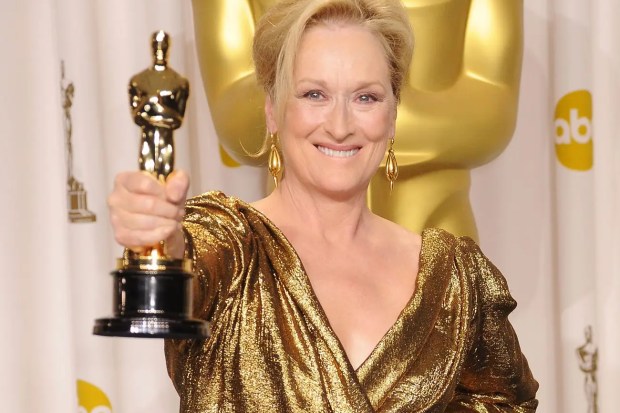
Meryl Streep — 3 wins (two lead, one supporting)
Kramer vs. Kramer (1979) — Supporting Actress
Sophie’s Choice (1982) — Lead Actress
The Iron Lady (2011) — Lead Actress
Best Actor in a Supporting Role:
Walter Brennan — 3 wins
Come and Get It (1936)
Kentucky (1938)
The Westerner (1940)
Many actors are tied for the second place honor with 2 nominations, including: Michael Caine, Denzel Washington, Gene Hackman, Jack Nicholson, Christoph Waltz, and Mahershala Ali.
Best Actress in a Supporting Role:
Dianne Wiest —2 wins
Hannah and Her Sisters (1986)
Bullets Over Broadway (1994)
Shelley Winters — 2 wins
The Diary of Anne Frank (1959)
A Patch of Blue (1965)
Maggie Smith — 2 wins
The Prime of Miss Jean Brodie (1969) — Lead Actress
California Suite (1978) — Supporting Actress
“And to have that experience of saying goodnight to somebody and having them leave and then find out the next day that they’re gone. … I think I was in shock for quite a while afterward. I mean, there’s no other word for it. It’s just very — it’s so awful. It’s just so awful.”
Conan also admitted that it was still “hard for me to comprehend” what happened to his friends.
The U.S. Sun exclusively revealed that Nick could inherit his family’s $196million fortune even if he’s found guilty of his parents’ deaths.
This would be the case if Nick is found legally insane, which, by California law, would still entitle him to the inheritance.
Nick has been charged with two counts of first-degree murder and faces a maximum sentence of life in prison if convicted.
Rob and Michele were murdered in their Los Angeles home in December 2025Credit: GettyTheir son, Nick, was accused of their killings and has been charged with has been charged with two counts of first-degree murderCredit: Instagram/romyreinerNick pleaded not guilty to the murders in court earlier this weekCredit: Getty