Grammy-nominated jazz vocalists Samara Joy and Dee Dee Bridgewater share intergenerational wisdom
As is always the case, the Grammys this year will be dominated by pop, rap, country and rock. But the best races often lie in the less mainstream genres. Take best jazz vocal album, where Samara Joy, Dee Dee Bridgewater and Bill Charlap, Michael Mayo, Terri Lyne Carrington and Christie Dashiell and Nicole Zuraitis are competing for the honor.
The highly impressive group reflects the current state of jazz, where both young guns and veterans are combining to bring the music to a new swell of fans. To talk about the present state of jazz, The Times brought together 26-year-old Joy and 75-year-old Bridgewater. What followed is an incredible conversation on politics, race, equality and mutual fandom.
You both have had Grammy success. But is it still just as thrilling to be nominated?
Dee Dee Bridgewater: I can speak on that because I haven’t been nominated in years. And yeah, it’s a thrill when you’re nominated and you haven’t been and you’ve done something that your peers think is Grammy worthy. I don’t know about Samara, but for me, I don’t do any of my recorded projects with the intention of getting a Grammy nomination, which seems to be the goal of a lot of younger artists. So that me doing something that I just was trying to chronicle and because of this work that Bill and I have been doing off and on for the last few years, it’s like the icing on the cake. It’s wonderful.
Samara Joy: Agreed, when I say I’m just grateful to be here, like in this space, being able to talk about this in this way, I mean it. It wasn’t the intention behind making the music that I love to make with the people I love to make it with. And when kids come up to me and they say, “Because of you, now my goal is to be a Grammy winner.” I’m like, “You’ve already strayed way off course. We need to come back.” And realize that the accolades and the awards and the acknowledgment is beautiful because it’s coming from your peers and we’re celebrating each other. It’s amazing, it’s exciting, it’s wonderful. I’m grateful for it. But at the same time, the other 364 days of the year, we’re working and we’re touring and we’re performing because we love it. And it’s with the intention of seeing what else we can learn and express and finding new ways to do that. I’m grateful to be in the conversation, but also I’m using it even more as an opportunity to thank the people who support us and who listen to the music and who come to the concerts to say that that’s what I love. So, the fact that people have connected with it enough to acknowledge it on such a high level is amazing, but the love of it never goes away.
Bridgewater: Yes, I agree with that, Samara. When I do my work, because I like to call myself an artist who flies under the radar, I’m basically out there trying to bring joy to people. With the music that I do, I try to change up the projects depending on what is going on in the world or depending on what I’m thinking about and feeling about society and just trying to make a connection with people and be a conduit for the people and speak through the songs, things that I think will bring them joy or get them to think about some things that they are not wanting to say out loud. So, that’s what I’m doing right now. Then with my music, what I’m trying to do is bring more attention to women in jazz. For the last few years, aside from my occasional concerts with Bill [Charlap], I have been working with women. I have created a band. I call it We Exist! We are doing socially conscious music, some protest songs, and that is what I’m taking around the world. Generally, people come up to me and say, “Thank you so much for saying these things for us. We need to hear this.” My concern at my older age, now that I’m in my golden years, is the state of society and the world and this political crisis that we are in. So, I’m trying to speak about this in a way that people can hear it without getting on some kind of political bandstand and speaking in that way. I think that the world is in danger politically and I think our democracy is in danger. That’s my concern and that’s what I’m trying to do through my music. Also, I want people to see more women in the jazz space, and I think as an elder it’s almost an obligation of mine to lead that front and present this and present this image. I get many women that come up and say, “Thank you so much for doing this for women.” So, that’s where my head is right now.
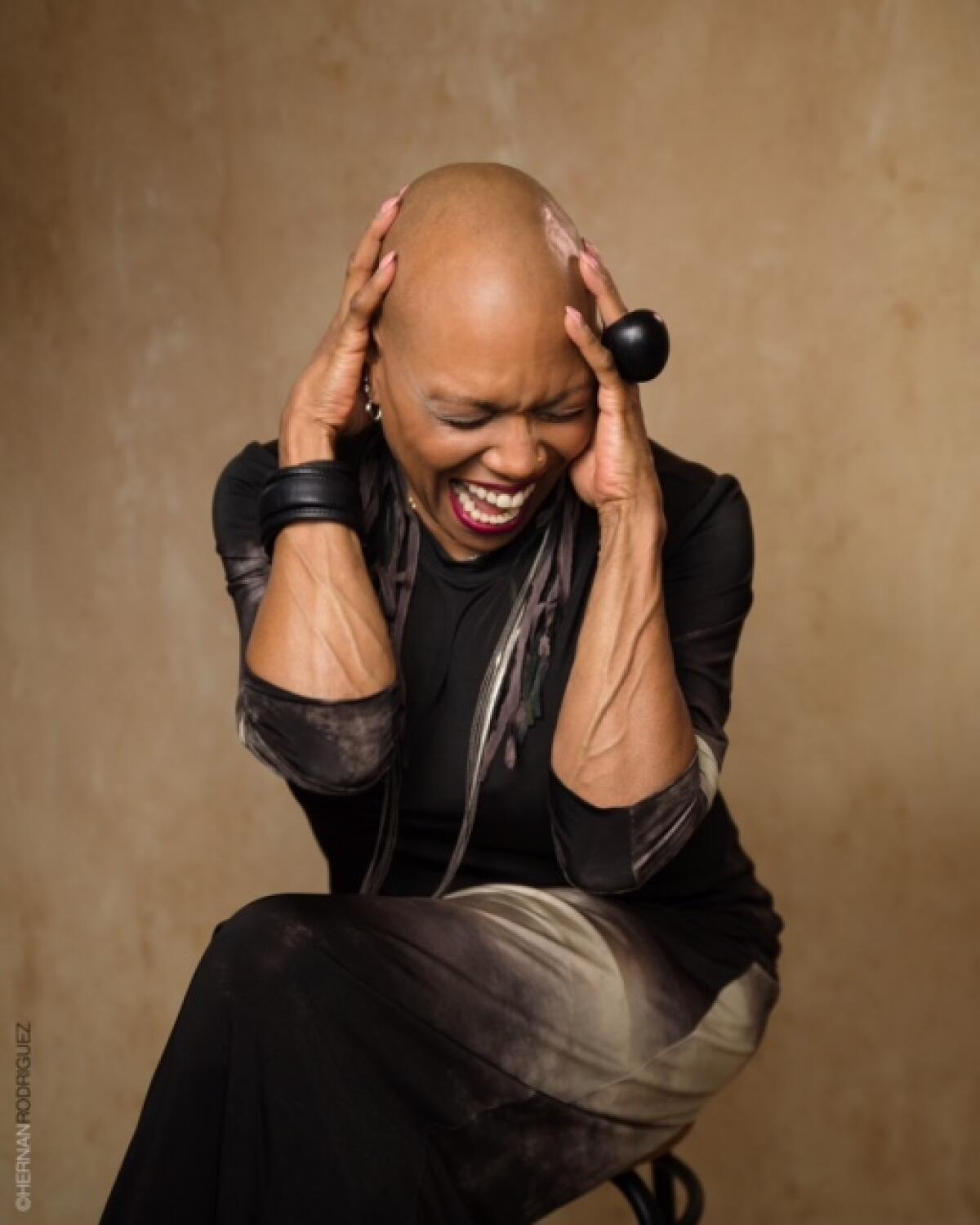
Dee Dee Bridgewater
(Hernan Rodriguez)
How exciting is it to see that, of the jazz vocal nominees, four of the five are women?
Bridgewater: Yeah, and isn’t that wonderful? But I can say this, for vocal jazz, it usually is women. This has been the place where we have been allowed to shine as vocalists. It’s been for many, many years, the only place where we’re allowed to shine. So, when you get female instrumentalists besides Terri Lyne [Carrington] because Terri Lyne broke through in a period of when there were not a lot of jazz drummers, so that she worked with Herbie [Hancock] and she worked with Wayne [Shorter]. They gave her a platform that most women are not granted. Of course, also, one has to be extremely talented. And Terri Lyne can stand beside any man and hold her own and outdo many men. That’s not the point. The point is that she had that opportunity. They gave her that opportunity and then she’s been able to pay it forward. But to see instrumentalists like Lakecia Benjamin who has really come to the forefront as an alto saxophonist and to see her get Grammy nominations, that’s something that, for me, is huge.
Samara, talk about what you’re seeing in the scene today in terms of gender disparity and overall vibe.
Joy: I’ve had the opportunity to play with some amazing ones. I went to the Vanguard a few weeks ago and sat in with [Christian] McBride and Savannah Harris was on drums. I played with Alexandra Ridout, who is an incredible trumpet player as well. Although I understand the disparity in the current time and throughout history, I also understand that I might be living through a privileged time where I just kind of see women around me everywhere. So, I don’t understand what it’s like to be without it on the scene. I can read about the fact that maybe at a time saxophone was taking precedence over jazz vocals or with each era, there’s a new focus. But I guess on the scene now I’m proud to be able to see all of these wonderful women composers and instrumentalists stepping to the forefront.
Both of you have made music that is very uplifting as well. In these difficult times, music is something that can lift the spirits and bring people together. For each of you talk about making music that uplifts because there are so many great jazz standards that have the point of lifting up the world.
Bridgewater: I’m here in town at Birdland with Bill Charlap and we are doing songs from the American Songbook primarily and Duke Ellington. It has nothing to do with anything that’s going on today, politically speaking. Last night was our first show and the audience just loved it. So, there is that side that one can take. And I’ve been very apolitical. It’s just since the two Trump administrations and the Gaza war that happened and some other things that I’ve seen going on outside of the United States that have really incensed me that I felt the need to speak out in the way that I am, you know. But it is wonderful to go to a show and have people come to see a show and be able to completely lose themselves and be outside of what is going on for that span of time that they are with the artists. For the other side, when I do these socially conscious songs, people come and say, “Oh my God, thank you. I needed to hear that. I needed to hear someone.” Because my point at the end of my show is I say, “We the people have the power, we can’t forget that. We are the people that can motivate the change and protect our democracy because we see democracy being chipped away around the world.” I grew up in an era where there was a distinct difference between Black and white and I was not able to be served when I would go to sit at a lunch counter as a little Black girl. So, I’ve experienced both sides. My awareness is different than Samara’s and I feel the alarms. The alarm bells are just ringing for me. But when I come back and I do a show with Bill, sometimes it’s difficult for me to get into these sweet, innocent songs because they don’t have the gravitas that I’m experiencing doing a Nina Simone song like “Mississippi Goddam.” For me, artistically speaking, it’s been interesting to find a balance. Samara, you do these beautiful songs with that stunning voice of yours. Your take is totally different. And you’ve grown up in another era.
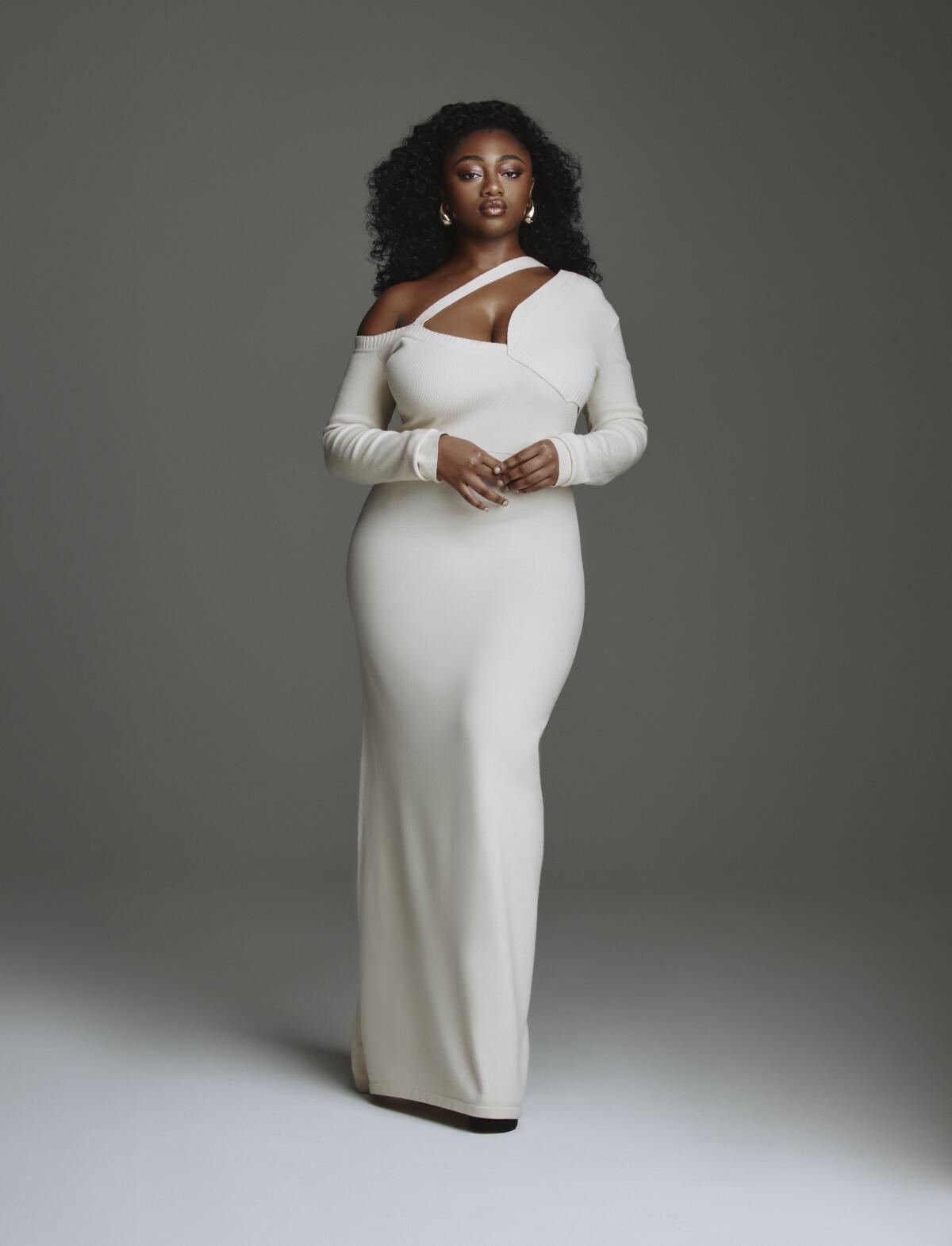
Joy: This is the first time in my life that I have not only been aware of what’s happening in the world but also feel compelled. Like, I have a responsibility to do something about it because I’ve never been so aware of what is happening around me as I am right now. I don’t know if that’s a good thing or bad thing but I just feel like, ”OK, I’m an adult and this is the world that I live in and I have a responsibility as one of the people living in this world to not only do something about it right now but do something for the next generation of people who are going to have to live in the world that results in what we do right now.” It’s scary. I don’t know how people do it, especially because it’s not as difficult right now. It’s not as difficult for me to say something that might have been for an Abbey Lincoln or Nina Simone or whoever. I’m also living in a sort of luxury in that way that I don’t have to speak out and be the only one who is doing so and then be proven right later. In that way, I’m like, “I have to because of all these women who have gone before me, who made that difference and who stood and didn’t get appreciated or thanked for it in the moment, have made it so that the world that I live in now, as crazy as it is, I’m able to have a platform in the first place and be able to lead some sort of charge — or at least spread some sort of message so that the world that we’re building for the ones who come later. It’s not just about me right now, it’s all interconnected.” It feels a little heavy, a little scary. I’m still trying to figure out where my voice fits.
Bridgewater: You know what, honey, I get that. When I was your age, I honestly was not at all concerned about politics and what was going on. I was concerned about my Blackness because I’ve experienced our people being named four different times. When I was a little girl, I was colored, then I was Negro, and when they said Black, I was incensed because your hair is black. Our skin is brown. But I understand where you’re coming from because you are coming up in a different time. And you are just beginning to navigate all of the politics, so you’re going to probably go through a similar kind of thing that I went through when I was young, and I concentrated on just writing my music and things that spoke to me. You’re fine where you are and you’re going to learn to navigate all of this in time and what I would hope for you is that you don’t feel a weight. We’re all going to feel this heaviness because of the situation that we’re in but as an artist, I want you to feel free to discover and do the things that you feel in your spirit and not feel led to do something because it’s what’s going on around you. You’ve got to continue to stay true to yourself, which you’ve been doing, which is wonderful. I’m at a different stage in my life. I’m in the last quarter of my life. I’m 75 and I’ve been through all of this stuff. I feel like I’m at a place where if I want to say something instead of not like I’ve done in the past, I’m going to speak my mind. I want to say this to Samara and I’ve said this to her before. But I am so proud of you and what you are doing. And you have a voice that the gods have blessed you with, Samara. At my age to be in the same space with you for the Grammys, I am so tickled. I love you so dearly. I truly do, and you know that. The times that we’ve been on stage together, it’s been wonderful for me. I want you to know that there are people who are your elders who, besides loving you like we do, we depend on you, Samara. You have been able to enter the space and bring jazz to the world in a way that we were not.
Joy: I love you too. I’m sitting here thinking about one of the first times I got the chance to see you perform at Blue Note. I was there with my professor at the time. I was so nervous, but I’m so honored to know you. I’m so honored to have loved you from afar and now get the chance to love you up close and honor you and appreciate you and shower you just as you have showered me.
If you were going to do one song together at the Grammys, what would you want to do?
Joy: “I Wish I Knew How it Would Feel to be Free,” [Nina Simone].
Bridgewater: That’s in my repertoire. I do that. That would be a great one, Samara. I’m on board. We would tear it up.