FEMA

Trump is taking longer to approve disaster aid and denying Democratic states more frequently

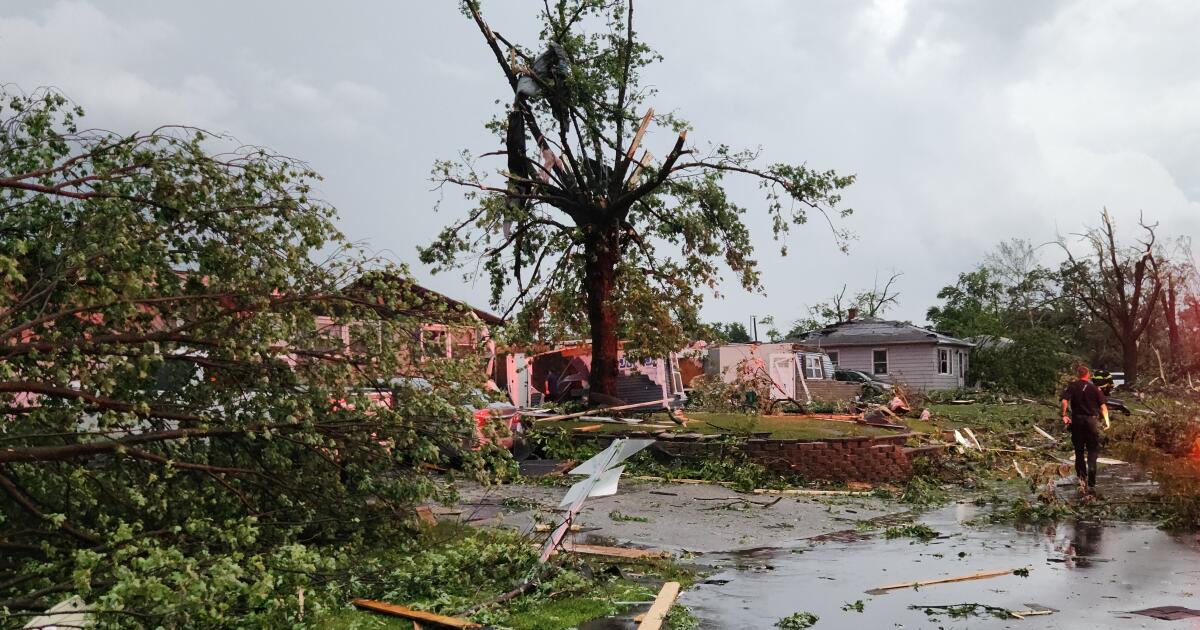
When major disasters strike, Americans are routinely waiting weeks — or even months — to receive presidential approval for aid. And if they live in a state that didn’t support President Trump, chances are greater that aid will be denied.

Since taking office last year, Trump has approved about 65 requests for major disaster declarations and denied more than two dozen others from states, tribes or territories seeking federal financial assistance following hurricanes, tornadoes, storms, floods and fires.

Trump has taken longer on average to approve disaster requests than any other president, according to an Associated Press analysis of data dating back to 1989, when a federal law setting new parameters for disaster determinations was implemented. And no other president has such a disparity in denials between states that supported him politically and those that did not.

The delays and denials come as Trump’s administration contemplates a makeover of the Federal Emergency Management Agency, which administers disaster aid. Major disaster declarations are intended for events that are beyond the resources of state and local governments.

Trump is saying yes to Republicans more than Democrats

During his second term, Trump has denied a greater percentage of disaster requests than any president dating to 1989. Those denials have not been evenly distributed among states.

Trump has approved 80% of the disaster requests from Republican governors but only about 60% from Democratic governors, according to the AP’s analysis of FEMA data.

The discrepancy is even more apparent when analyzing major disaster declarations based on presidential elections. Trump has approved more than three-fourths of the requests from states that voted for him in the 2024 election but less than half the requests from states that did not. Although there are federal criteria for disaster aid, decisions ultimately are at the president’s discretion.

A batch of denials earlier this month included four Democratic states — Massachusetts, New Jersey, New York and Rhode Island — seeking federal aid for a February snowstorm.

“The President’s denial is part of a pattern of extreme partisanship as he tries to shift a heavier economic burden onto blue states. Disaster aid should be merit-based, not politicized,” Rhode Island’s Democratic U.S. Senate and House members said in a joint statement.

White House spokesperson Abigail Jackson said in a statement that “there is no politicization to the President’s decisions on disaster relief.”

During his first term, Trump actually approved a greater share of requests from states that had opposed him than those that supported him.

Yet no other president had such a wide partisan divide in disaster declarations as currently exists under Trump. Obama approved 87% of the disaster requests from Democratic governors during his second term and 79% from Republican governors, but Obama’s approval rate was identical for states that voted for and against him.

When requests are denied, individuals, insurers and local governments are left to shoulder the costs themselves.

Trump is waiting longer to declare disasters

Since Trump assumed office last year, it’s taken him an average of a month and a half to approve major disaster declarations after receiving a request from the governor or chief executive of a state, territory or tribe, the AP found. Because it can take several weeks after a disaster for officials to inspect the damage and submit a request, the total wait time often has exceeded two months.

By comparison, Trump approved major disaster requests in an average of about three weeks during his first term, a pace similar to President Joe Biden. Their predecessors — Presidents Barack Obama, George W. Bush, Clinton and George H.W. Bush — all had average disaster approval times of less than two weeks.

All presidents have taken longer to approve some requests. But that’s become the norm in Trump’s second term. Of Trump’s approvals, 70% have taken at least a month — up from about one-quarter of requests during Trump’s first term and Biden’s administration, and fewer than 10% under their predecessors.

Jackson said that Trump conducts a more thorough review than any administration before him, “ensuring American tax dollars are used appropriately and efficiently by the states to supplement — not substitute — their obligation to respond to and recover from disasters.”

The longer the approval process takes, the longer people must wait to receive federal aid for daily living expenses, temporary lodging and home repairs. Delays in major disaster declarations also can hamper recovery efforts by local officials uncertain whether they will receive federal reimbursement for cleaning up debris and rebuilding infrastructure.

FEMA nominee is pledging faster decisions

FEMA has had four different temporary leaders since Trump took office in January 2025. One of those, Cameron Hamilton, is awaiting Senate confirmation as the agency’s permanent director.

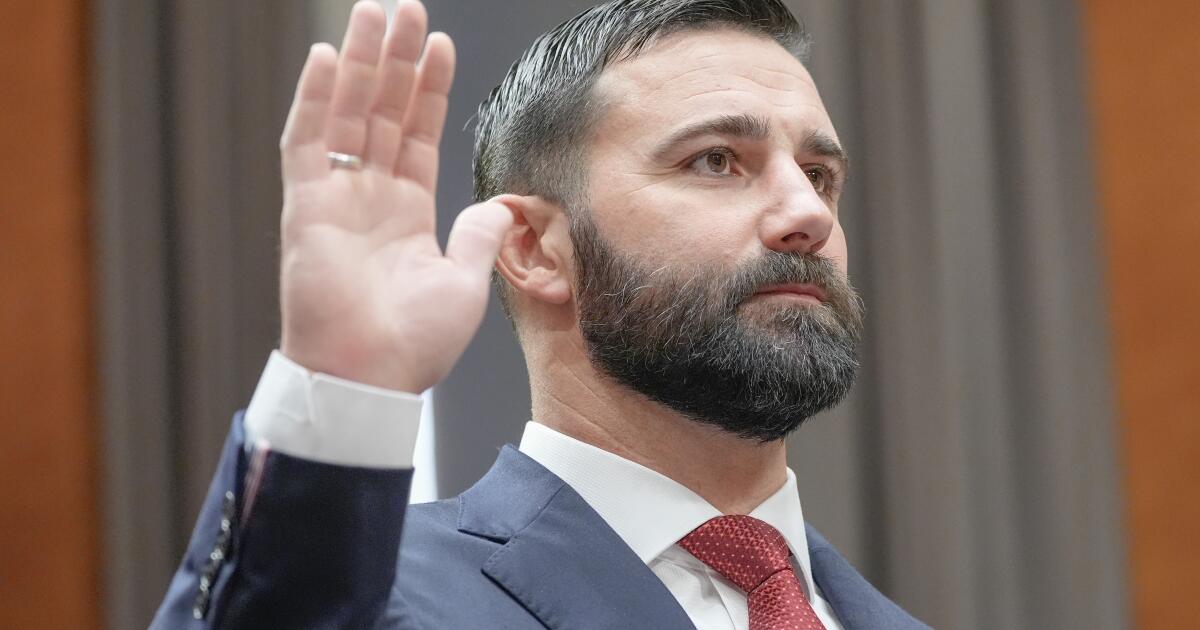
During a Senate committee hearing last month, Hamilton said he would try to speed up disaster declaration decisions and reimbursements. He also pledged to ensure that FEMA is objective, fair and reasonable in reviewing disaster declaration requests and making recommendations to the president.

Hamilton, a former Navy SEAL, had been fired as FEMA’s acting director in May 2025 after publicly disagreeing with Trump’s idea of dismantling the agency. His reemergence signals that Trump now may support changes to FEMA instead of an outright elimination of the agency.

Panel’s recommendations could lead to more denials

A council appointed by Trump has recommended a series of changes to FEMA that would shift greater responsibility to states, potentially reducing the number of major disaster declarations and the amount of federal money paid out.

The council suggested revised criteria to qualify for presidential declarations, including a prerequisite of annual minimum expenditures by states, territories and tribes.

Another recommendation, which would require congressional approval, would reduce the federal government’s share of the disaster aid from a minimum of 75% to 50% of the costs, leaving state and local governments more to cover. For governments approved for assistance, federal funding could get there quicker — within 30 days of a federal disaster declaration, instead of waiting months or years for reimbursements that are based on proof of expenditures.

For individuals, the council recommended consolidating several different types of aid into one payment targeted for those whose homes are uninhabitable.

Lieb and Wildeman write for the Associated Press.
Source link

Official who claimed to have teleported to Waffle House fired at FEMA

June 26 (UPI) — A Federal Emergency Management Agency official who claims he was once teleported to a Waffle House has been ousted from the agency, unnamed sources familiar with the situation told media outlets Friday.

Gregg Phillips, who was appointed to lead the Office of Response and Recovery in December, was asked to vacate his position because of concerns about how he’s publicly perceived, anonymous sources told The New York Times, The Washington Post and CNN.

Phillips, the associate administrator for FEMA’s Office of Response and Recovery, posted on social media in April doubling down on his teleportation claim. He said it really happened and that it is connected to his Christianity.

“God will not be mocked,” Phillips posted on Truth Social. “People can debate me. Question me. Even ridicule what they don’t understand.”

He clarified that it happened while he was heavily medicated during cancer treatment.

“The word ‘teleportation’ was not mine,” Phillips posted on Truth Social. “It was used by someone else in the conversation reaching for language to describe something with no easy name. The more accurate biblical terms are ‘translated’ or ‘transported’ — not new ideas for people of faith.”

The Department of Homeland Security confirmed Thursday that Phillips is leaving the agency, saying he is taking leave for personal reasons. But sources told CNN the departure was not by his choice.

New DHS leadership was tired of his public image and clashes with department leadership, the sources said. David Arnold, a senior official who left FEMA earlier this year, will fill in as an acting leader of the Office of Response and Recovery.

The office has more than 1,000 employees and a budget of nearly $300 million. It’s critical to the mission of responding to disasters.

Phillips was known as a conspiracy theorist, particularly concerning election fraud. He said millions of noncitizens had voted in the 2016 election. Trump also boosted those claims.

Some agency staff were unhappy with his ouster, saying he wanted to help improve the agency.

“He showed interest in preserving the mission of the agency and helping us serve citizens,” one current agency official told The Post.

Another agency official told The Post that Phillips was one of the only political appointees who supported staff and would push back against leadership such as former Homeland Security Secretary Kristi Noem or Karen Evans, who briefly led FEMA.

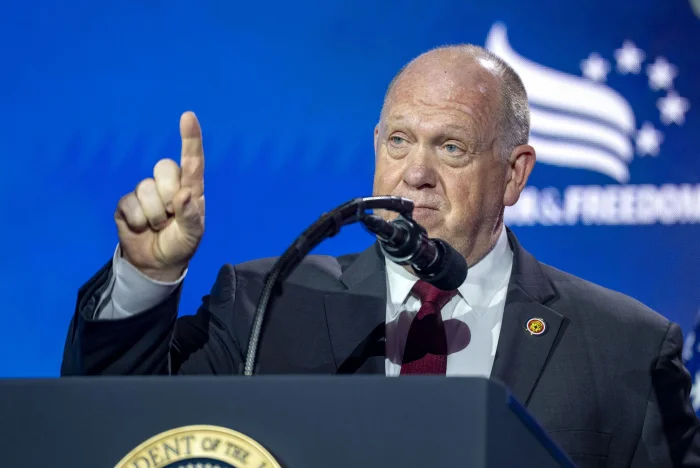
White House Border Czar Tom Homan speaks during the Faith and Freedom Coalition 2026 Road to Majority Policy Conference at the Washington Hilton on Friday. Photo by Bonnie Cash/UPI | License Photo

Source link

Trump’s pick to lead FEMA pledges to be ‘fair and reasonable’ in assessing aid requests

Cameron Hamilton, President Trump’s nominee to lead the Federal Emergency Management Agency, pledged to senators Wednesday to be “fair and reasonable” in assessing requests for disaster aid as he seeks to run an agency roiled by the administration’s threats to dismantle it.

Hamilton appeared before the Senate Committee on Homeland Security and Governmental Affairs at a hearing where lawmakers assessed a group of 10 nominees for administration posts.

“My focus will be to ensure that FEMA is objective, is fair and reasonable, follows the law, and is consistent” in how it reviews disaster declaration requests, Hamilton told Michigan Sen. Gary Peters, the top Democrat on the committee. Peters had asked about partisanship in granting major disaster declarations.

Hamilton had a brief tenure as FEMA’s temporary leader early last year but was ousted after defending the agency’s existence. At a House hearing in May 2025, he said he did not “believe it is in the best interest of the American people to eliminate” FEMA. He was fired the next day.

His nomination comes as the Republican administration has increasingly signaled it is backing away from promises to dismantle an agency that the president has heavily criticized.

If confirmed, he would be FEMA’s first permanent administrator in Trump’s second term. He will need to lead FEMA through what is expected to be a busy summer disaster season, while answering to Trump, who is likely to expect major changes after a council he appointed recommended sweeping moves at the agency that is part of the Department of Homeland Security.

Hamilton distanced himself from some FEMA controversies

Nominees did not give opening statements, but Hamilton received the bulk of lawmakers’ questions while appearing with four others in the first half of the hearing.

His answers suggested a departure from some of the more aggressive policies considered and enacted during Kristi Noem’s turbulent leadership at DHS. FEMA’s workforce has been worn down by mass staff departures, policies that hamstrung operations and a protracted DHS shutdown.

Hamilton expressed faith in the FEMA staff and praised the recent opening of 350 positions to counteract some of the cuts. He said that if confirmed by the Senate, he would do what he could to speed up disaster declaration decisions and reimbursements to states, tribes and territories.

“We owe you answers, I think, much faster,” he told Sen. Josh Hawley (R-Mo), adding that many FEMA processes needed to be simplified.

Hamilton disavowed a recommendation he included in an April 2025 memo to quadruple the threshold of financial damages a state needed to prove to receive FEMA public assistance. He also noted the importance of resilience funding, despite halting billions in resilience grants during his previous tenure.

Republican and Democratic senators at the hearing expressed support for FEMA’s mission, despite Trump’s early threats to eliminate it. “I think what your agency does is hugely important,” Hawley told Hamilton.

But multiple Democrats echoed Peters’ concern that Trump was approving far more disaster declaration requests from Republican states than Democratic ones.

Of the state disaster declaration requests Trump answered through the end of May, he approved about 82% from states that voted for him in the last election and 44% from states that voted for Democrat Kamala Harris, according to an analysis of public FEMA data by Andrew Rumbach, senior fellow at the nonpartisan think tank Urban Institute.

Hamilton, a former Navy SEAL, has never worked as a state or local emergency manager and has publicly criticized FEMA in the past. He has held positions at DHS and the State Department related to emergency response.

No senator questioned Hamilton’s suitability for the position.

Federal law requires the FEMA administrator to have “a demonstrated ability in and knowledge of emergency management and homeland security” and at least five years of “executive leadership and management experience.”

Criticism over hearing format

Peters criticized the committee chairman, Sen. Rand Paul (R-Ky.), for scheduling so many nominees at once, saying that made it more difficult for senators to properly screen them.

“The lineup today severely limits our ability to have transparency for the American public,” Peters said. He noted that Hamilton was among two nominees whose FBI background investigations were not yet complete, and that two others had not submitted their financial disclosure reports.

Others who appeared included Trump’s pick for deputy director of the Office of Management and Budget, Hal Duncan, and administrator of the Transportation Security Administration, David Cummins.

Paul said the committee would only vote on the nominees when their financial and background checks were complete.

Source link