Fellowship

HumAngle Kickstarts Fellowship for 90 Community Journalists and Advocacy Actors in Northern Nigeria

HumAngle Foundation officially commenced the Strengthening Community Journalism and Human Rights Advocacy (SCOJA) Fellowship with workshops in Kaduna and Jos, Plateau State, Nigeria, on Nov. 10, bringing together community journalists and human rights advocates to enhance skills in ethical storytelling and evidence-driven reporting.

The third batch of the training commenced on Monday, Nov. 17, in Maiduguri, Borno State. 

Supported by the Embassy of the Kingdom of the Netherlands in Nigeria, the fellowship aims to build the capacity of community journalists and advocates across northern Nigeria.

A total of 90 fellows from nine states — North West (Kaduna and Kano), North Central (Benue, Niger, Plateau, Nasarawa), and North East (Borno, Adamawa, Yobe) — have been selected

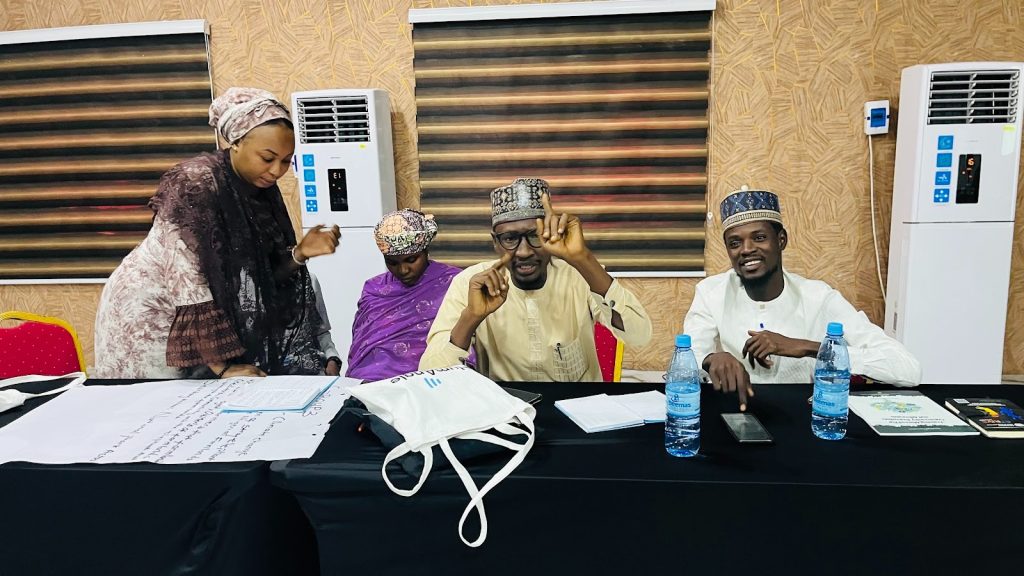
Fellows interacting during a group task. Photo: Abubakar Muktar Abba/HumAngle

On the first day of the workshop in Maiduguri, Jos, and Kaduna, the fellows were introduced to HumAngle’s newly developed Standards of Journalism Excellence and Advocacy guide. The guide covers conflict-sensitive reporting, accountability, countering disinformation, digital safety, and solutions journalism. 

According to Abdussamad Ahmad, HumAngle’s Security & Policy Analyst, the manual was designed to support journalists and advocates working in conflict-affected regions where ethical clarity and accuracy are critical. 

The workshops also examined the role of community journalists, who often serve as the first witnesses to social issues and crises within their localities. Their proximity to affected populations positions them to capture realities that shape public understanding. Other sessions focused on data-driven storytelling, mapping community challenges, and identifying collaborative solutions.

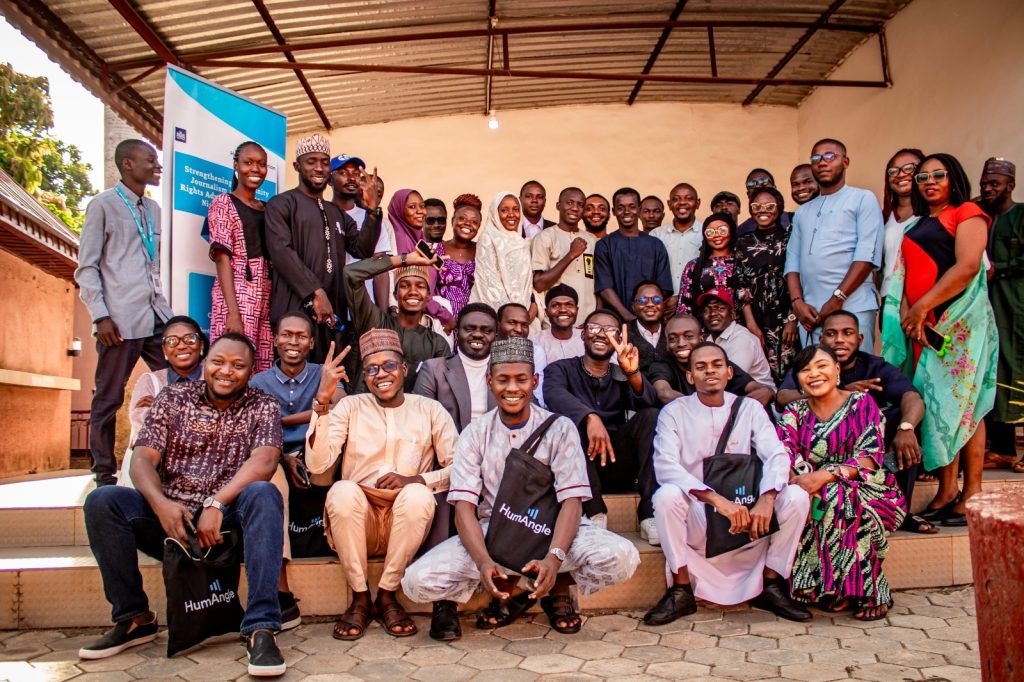
Some of the SCOJA Fellows in the North East. Photo: Abubakar Muktar Abba/HumAngle

Hassana Danyerwa, Founder of the FeelNHeal Initiative, said she found the sessions valuable. “We all need emotional hygiene, not just for our bias but also for our ego,” she said.

Through her initiative, Hassana provides psychosocial support to communities and individuals, and noted that the session reinforced the importance of maintaining emotional balance when reporting sensitive issues.

Building on this, fellows also reflected on the broader difficulties of reporting in environments shaped by insecurity, misinformation, and public mistrust. Facilitators encouraged them to approach their work with precision, empathy, and a strong commitment to verification, particularly when documenting the experiences of vulnerable groups.

As the North East workshop continues, sessions for North Central and North West fellows concluded on Nov. 13, marking the completion of training for these regions.

The inaugural SCOJA Fellowship cohort features participants from a wide range of local media and advocacy organisations, including WikkiTimes, The Middle Belt Reporters, and Voice of Arewa, among others.

Over the next six months, fellows will report on issues within their communities and execute targeted community advocacy projects. They are also expected to share their learnings within their local organisations, further amplifying the impact of the fellowship.

The HumAngle Foundation has launched the Strengthening Community Journalism and Human Rights Advocacy (SCOJA) Fellowship with initial workshops in Kaduna, Jos, and Maiduguri, Nigeria. Supported by the Dutch Embassy in Nigeria, the fellowship aims to empower 90 journalists and advocates from nine northern states with skills in evidence-driven reporting and ethical storytelling. The training highlights HumAngle’s Standards of Journalism Excellence and Advocacy guide, covering topics such as conflict-sensitive reporting and digital safety.

The workshops focus on the critical role of community journalists as key witnesses to local issues. They include sessions on data storytelling and emotional hygiene, highlighting the challenges of reporting in conflict-prone regions. Participants from local media and advocacy organizations will conduct community advocacy projects for six months, sharing their skills to enhance local journalism practices.
Source link

Fellows Reflect as HumAngle Concludes Inaugural SCOJA Fellowship Workshops in Northern Nigeria 

Huzaifa Abubakar has spent years leading community dialogues on food security and malnutrition, working to support families whose lives have been shaped by conflict and neglect in northeastern Nigeria. Yet, despite his experience, he often felt unprepared for what awaited him in the field.

As Team Lead of the Scaling Up Nutrition Youth Network Nigeria in Borno State, Huzaifa said he regularly engages with individuals who have experienced deep trauma. But he lacked guidance on how to safely navigate conflict-affected areas or engage survivors in ways that honoured their experiences.

That changed after he spent three days at the capacity-building workshop for the inaugural cohort of the Strengthening Community Journalism and Human Rights Advocacy (SCOJA) Fellowship by HumAngle Foundation in Maiduguri, Borno State. 

“I am now equipped to interact with vulnerable people and survivors ethically and sensibly,” he said. “The session on trauma-sensitive reporting stood out for me; still, the whole training was an eye-opener.”

Huzaifa is one of 90 community journalists and local advocacy actors selected for the SCOJA Fellowship, held with support from the Embassy of the Netherlands in Nigeria. The fellows are drawn from nine states across three regions — North West (Kaduna and Kano), North Central (Benue, Niger, Plateau, Nasarawa), and North East (Borno, Adamawa, Yobe).

The six-month fellowship aims to equip participants with skills and knowledge that will improve how they engage, document, and support grassroots issues and initiatives. 

A cross-section of SCOJA Fellows from the North Central, as well as Adamawa and Yobe, during their workshop in Jos, Plateau State. Photo: Vangawa Bolgent

Abdussamad Ahmad, HumAngle’s Security and Policy Analyst, who has coordinated the workshops in the North East and North Central, reminded fellows that their work places them at the earliest point of contact with communities. 

“You remain society’s first responders; your proximity to ordinary people gives you both responsibility and a rare advantage, the ability to shape public understanding with clarity, empathy, and discipline,” he said.

He urged them to cultivate habits of verification, ethical judgment, and emotional awareness, especially when engaging people coping with displacement, loss, or trauma.

The training also featured role-playing exercises and report-writing activities, giving participants space to practise trauma-sensitive engagement, field reporting, and ethical storytelling in realistic scenarios. These hands-on sessions helped fellows translate the concepts learned into practical skills they can immediately apply in their work.

“It was an engaging and insightful session, and I admire how he shared his experiences for us to learn from,” said Mohammed Alamin from Borno Radio Television (BRTV), referring to a session on digital and field safety, which was facilitated by Abdulkareem Haruna, HumAngle’s former Editor for the Lake Chad. 

HumAngle’s former Lake Chad Editor, Abdulkareem Haruna, leading a session on digital and field safety at the workshop in Maiduguri. Photo: Abubakar Muktar Abba/HumAngle

Abbas Usman, a reporter for PharmaSahel, a local platform reporting on health issues in Borno, said he now feels better prepared to identify and report misinformation, malinformation, disinformation, and fake news. 

Another SCOJA Fellow, Nathaniel Ishaya, a radio producer and presenter from SMK Radio in Maiduguri, added, “The HumAngle training is an eye-opener; it teaches us about many things we are only now discovering in journalism. Although I studied journalism, this is the first time I got this firsthand.”

SCOJA Fellows from the North West during their workshop in Kaduna. Photo: HumAngle

The recently concluded workshops, held between Nov. 10 – 19 in Jos (Plateau State), Kaduna, and Maiduguri (Borno State), mark the first phase of the programme. The next stage will involve fieldwork, during which fellows are expected to implement community projects, document local issues, and work with their organisations to pursue practical solutions rooted in human dignity and accountability. They will also share their learnings with colleagues to broaden the fellowship’s impact.

During this period, HumAngle will continue to support the fellows with resources and mentorship to strengthen their work at the grassroots level.

Huzaifa Abubakar, the team lead of Scaling Up Nutrition Youth Network Nigeria in Borno State, attended a capacity-building workshop by HumAngle Foundation on community journalism and human rights advocacy.

The workshop, part of the SCOJA Fellowship supported by the Embassy of the Netherlands, equipped him with skills to ethically engage trauma survivors. The fellowship includes 90 participants from nine states across Nigeria’s northern regions, focusing on enhancing grassroots-level engagement and reporting skills.

HumAngle’s security analyst, Abdussamad Ahmad, emphasized the fellows’ role as society’s first responders, advocating for ethical practices and emotional awareness. The workshop involved practical exercises in trauma-sensitive reporting and ethical storytelling, well-received by participants. The program’s first phase concluded with workshops in November, with the next phase involving community projects and fieldwork supported by HumAngle’s resources and mentorship.

Source link

HumAngle Fellowship Alumni Among 15 Selected for MFWA-DPIJ Fellowship 

Obidah Habila Albert, an alumnus of the third cohort of HumAngle’s Accountability Fellowship, is among the 15 Nigerian journalists selected for the Digital Public Infrastructure Journalism (DPIJ) Fellowship, which will run from October 2025 to April 2026. 

After receiving over 200 applications, 45 candidates were shortlisted, and 15 finalists emerged from 14 media organisations, including The Guardian Newspaper, Premium Times, Foundation for Investigative Journalism, and TheCable.

Organised by the Ghana-based Media Foundation for West Africa (MFWA) in partnership with Co-Develop, the fellowship is a flagship initiative that aims to strengthen public awareness and participation through journalism, promoting the adoption of Digital Public Infrastructures (DPIs) and Digital Public Goods and Services (DPGS).

Obidah, who is excited about his selection, said he applied for the opportunity because it aligns with his curiosity about technology’s impact on everyday life and how their stories could be more effectively documented.

“By the end of the programme, I want to understand DPI and DPGs better and tell stories about them. I hope my stories will drive conversations and help more people and policymakers in Nigeria and beyond to pay attention and take action,” he said. 

During his fellowship with HumAngle, Obidah reported extensively on conflict and peacebuilding efforts in Nigeria’s North East, as well as the rising cost-of-living crisis affecting vulnerable communities. His experience, he said, deepened his commitment to reporting stories that highlight the human dimensions of development and policy issues.

According to Sulemana Braimah, Executive Director of MFWA, the DPIJ Fellowship is a strategic investment in shaping informed media narratives around inclusive design, implementation, and the uptake of DPI development in areas such as policy, governance, and utility. 

The selected fellows and their newsrooms will receive grants to support reporting projects, as well as editorial mentorship, training, and access to resources on DPIs and DPGS. Each fellow is expected to produce at least six original stories before the end of the fellowship on issues relating to inclusive digital identification, digital payments, data exchange, and other digital safety issues. Fellows will also join a growing network of alumni across West Africa.

Last year, HumAngle’s Investigations Editor, Ibrahim Adeyemi, was selected for the West Africa cohort of the same fellowship, where he produced several stories exploring the intersection of DPIs and national security.

Obidah Habila Albert, a journalist and alumnus of HumAngle’s Accountability Fellowship, has been selected as one of 15 Nigerian journalists for the Digital Public Infrastructure Journalism (DPIJ) Fellowship from October 2025 to April 2026. The fellowship, organized by the Media Foundation for West Africa in partnership with Co-Develop, aims to enhance public awareness and engagement through journalism, focusing on Digital Public Infrastructures and Digital Public Goods and Services.

Obidah expressed enthusiasm for learning and documenting technology’s impact on everyday life. Throughout the fellowship, fellows will receive grants, mentorship, and resources to produce at least six original stories on digital issues, joining a network of West African alumni. The initiative also supports inclusive approaches in policy and governance, as highlighted by previous fellow Ibrahim Adeyemi, who explored DPIs and national security.

Source link