Houthis Claim Saudi F-15 Kill Over Yemen
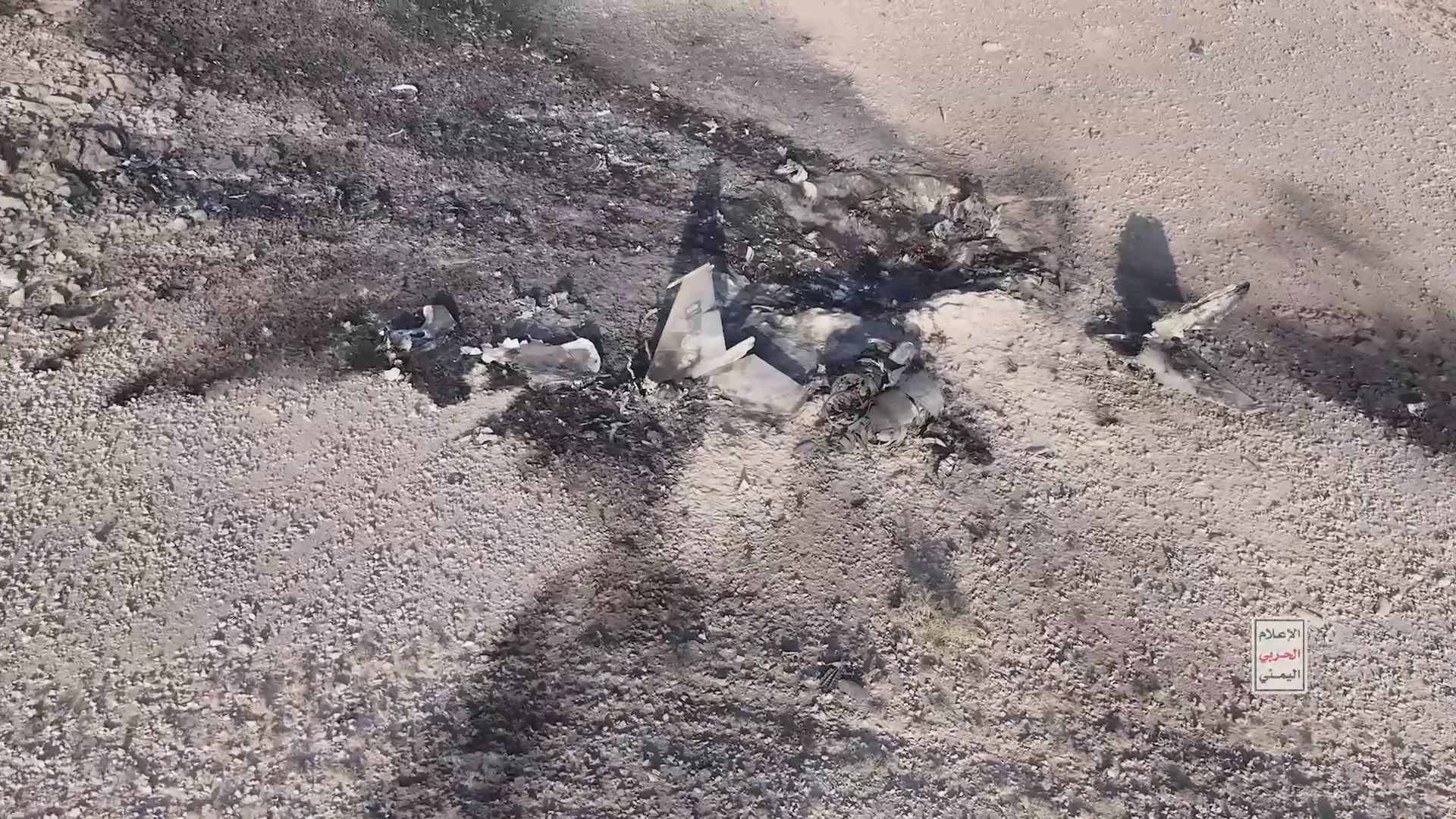
Yemen’s Houthi movement, formally known as Ansar Allah, has released imagery that it says shows the downing of a Royal Saudi Air Force F-15 fighter over Marib governorate. The material includes photos of the wreckage of an F-15 on the ground. At this stage, the fate of the two crew members is unclear. The incident comes amid a major escalation in fighting between Saudi Arabia and the Iran-aligned Houthi movement.
A video of what Ansar Allah says is the successful shootdown of the F-15 shows the typical ground-based forward-looking infrared (FLIR) systems we have seen in use by air defenses in Yemen previously, and, more recently, in Iran.
After a period of relative calm following the 2022 truce, fighting has intensified in recent weeks, with Houthi forces making significant advances against Saudi-backed Yemeni government positions, including around the strategically important coastal areas of Marib and Taiz. The group has also stepped up missile and drone attacks against southern Saudi Arabia, targeting military and energy infrastructure while strangling the kingdom’s ability to move oil through the Red Sea. The Houthis have further declared the Bab el-Mandeb closed to Saudi oil traffic, directly challenging one of Riyadh’s key energy-export routes.


Prior to the release of imagery, earlier today the Houthi military spokesman Brig. Gen. Yahya Saree claimed that Houthi forces had shot down a Saudi F-15 while it was conducting operations in support of Saudi-backed forces in Marib. Saree said the aircraft was engaged by a locally manufactured surface-to-air missile, although he did not identify the weapon. Reuters likewise reported that the Houthis had claimed the shootdown but that the claim had not been independently verified.
Saree also claimed that Houthi air defenses subsequently engaged formations of Saudi F-15s and Eurofighter Typhoons that entered the area while attempting to locate the downed aircraft. According to the Houthi account, those aircraft were forced to withdraw. That portion of the claim has likewise not been independently verified.
Saudi Arabia has not, at the time of writing, publicly acknowledged the loss of an F-15. Reuters reported that the Saudi-led campaign had intensified considerably in recent days, with Saudi aircraft striking targets across Yemen while the Houthis have launched missiles and drones toward Saudi territory.
The aircraft appears to be an F-15SA, the most advanced variant of the Eagle operated by the Royal Saudi Air Force. Specifically, it appears to be tail number 5539, assigned to the 55th Squadron based at King Khalid Air Base.


The Royal Saudi Air Force received 84 of the new-build F-15SA. Meanwhile, the 68-strong fleet of earlier F-15S aircraft has been upgraded locally to a similar standard, also known as F-15SR (for Saudi Retrofit). Aircraft 5539 is understood to be among the latter.
The reported shootdown highlights the continuing threat posed by Houthi air defenses, which have proven considerably more capable and difficult to suppress than their improvised appearance might suggest.
As TWZ has previously detailed, the Houthi air-defense network includes mobile surface-to-air missile systems, repurposed infrared-guided R-73 and R-27 air-to-air missiles, and Iranian-derived systems such as the Saqr/358.

Of particular concern is the group’s use of passive infrared sensors for detection, tracking, and missile cueing. Unlike conventional fire-control radars, these sensors do not provide an aircraft’s electronic-warfare systems with an early warning that it has been detected or targeted. TWZ has noted that this combination of mobility and passive sensing can create a difficult problem even for highly sophisticated combat aircraft, with the Houthis having previously demonstrated the ability to threaten U.S. crewed and uncrewed aircraft.
That capability does not mean that Houthi air defenses constitute a conventional, integrated air defense network comparable to those operated by major state militaries. However, they can still be effective through a combination of concealment, mobility, passive detection, unconventional employment of missiles, and the difficult operating environment over Yemen.
Previous Saudi aircraft losses attributed to Houthi air defenses during the Yemen war from 2015 to 2022 include several helicopters, fixed-wing aircraft, and drones. Total Saudi losses to all causes in the conflict amount to around a dozen helicopters, five jets, and as many as 30 drones. A Saudi F-15 crashed in the Red Sea at the start of the war in 2015 and Eagles were also reportedly engaged and damaged by Houthi surface-to-air missiles in 2018, although they returned safely.
Video footage that emerged in 2021 shows Saudi troops on the ground watching an F-15 swoop in a relatively low level to knock down a Houthi Qasef-series suicide drone:

Saudi F-15 shooting down a Houthi Qasef-2K
In the past, Houthi forces have come close to engaging U.S. F-35s and have repeatedly demonstrated an ability to bring down MQ-9 Reaper drones. If the Saudi F-15 loss is ultimately confirmed, determining precisely how the aircraft was detected, tracked, engaged, and hit could therefore provide valuable insight into how this unusual air defense architecture is being employed against Saudi and other combat aircraft.
As we discussed at the time, the clear risk posed by Houthi air defenses is likely the main factor behind Saudi employment of a Chinese-made short-range ballistic missile (SRBM) in the current fighting with Yemen.
The timing of the reported shootdown is also notable. It comes amid a sharp escalation in the conflict, with Saudi Arabia conducting air operations against Houthi positions in Yemen and Ansar Allah launching missiles and drones toward targets inside Saudi Arabia. Reuters reported that the Houthis had attacked the Saudi Red Sea port of Yanbu and a southern airbase at Khamis Mushait, while Riyadh has reported intercepting Houthi drones.
The F-15 incident also follows a separate confrontation over an alleged Houthi drone attack near Mecca. Saudi authorities said their air defenses intercepted and destroyed a Houthi drone south of Mecca before it entered the restricted airspace over the city. The Houthis denied targeting the holy city.
Meanwhile, there are reports that U.S. officials met representatives of the Houthis in Oman over the weekend, with the Houthis apparently telling the U.S. officials that they had no intention of attacking American vessels and that they remained committed to the 2025 ceasefire with the United States unless they stepped in on behalf of Saudi Arabia. The Kingdom reportedly requested exactly this in recent weeks but was denied.
For the moment, the most that can be established from the available imagery is that a Saudi F-15 was destroyed, with Ansar Allah claiming responsibility.
This is a developing story and will be updated as additional imagery, official statements, or other independently verifiable information becomes available.
Contact the author: thomas@thewarzone.com