end

Without Luka Doncic, Lakers come up short against the Thunder

In the eyes of Lakers coach JJ Redick, every team his group faces is a test. Still, many wondered if the Lakers’ litmus test would come from facing the defending champion Oklahoma City Thunder on Monday night.

Even with All-Star and league most valuable player Shai Gilgeous-Alexander out with a strained abdominal, the Thunder are still a problem for most of the league. And the Lakers had to play OKC with their own MVP candidate, Luka Doncic, sitting out for the second straight game with a left hamstring strain.

In the end, the Thunder had seven players score in double figures and pulled out a 119-110 win over the Lakers at Crypto.com Arena.

The Lakers (32-19) had six players score in double figures, but it wasn’t enough.

LeBron James had 22 points, 10 assists and six rebounds, Marcus Smart had 19 points, Austin Reaves 16 off the bench, Jake LaRavia 14 and Rui Hachimura and Jaxon Hayes both had 12 points.

Reaves gave the Lakers a 99-98 lead on a drive to the basket in the fourth quarter.

But the Thunder just kept coming back, taking a 109-101 lead by outscoring the Lakers 11-2.

The Lakers, too, kept fighting back, getting to within 113-110 on a Hachimura basket.

But Jalen Williams, who had 23 points in his return to the lineup, kept scoring for the Thunder, making a field goal, two free throws with 35.9 seconds left and two more with 20.9 seconds left that sealed the game.

Thunder guard Kenrich Williams is double teamed by Luke Kennard and Jarred Vanderbilt in the first half.

Thunder guard Kenrich Williams is double teamed by Luke Kennard and Jarred Vanderbilt in the first half.

(Gina Ferazzi / Los Angeles Times)

Reaves provided the fans with a big-time highlight, driving down the lane and throwing down a two-handed dunk on Jaylin Williams and Aaron Wiggins to end the first quarter.

The Lakers had 20 turnovers the last time they played at Oklahoma City in a game L.A. got down by as much as 37 points before losing by 29.

So, one point of emphasis for the Lakers was taking care of the basketball and then playing a high level of basketball despite the opponent.

“For our group, it felt like it’s good to see where we’re at every single night,” Redick said.

His team spent the entire first half climbing out of a hole.

The Lakers were down by just one at the end of the first quarter, but quickly got down 52-38 early in the second quarter.

But behind a James dunk over Chet Holmgren, the Lakers got to within two points in the second, drawing cheers from the fans.

But the Lakers couldn’t keep up that momentum, going down 67-58 at the half.

Then in the third quarter, the Lakers got rolling and opened an eight-point lead behind a strong defense and good offense.

But again, the Thunder didn’t stop playing hard, coming back to open a 93-91 lead at the end of the third quarter on an Alex Caruso three-pointer.

Source link

5 Oscar-nominated editors break down their films’ most pivotal scenes

This season’s Oscar nominees for film editing have one thing in common: coping with trauma. The Envelope invited editors from each film to break down a pivotal scene that showcased their craft.

‘F1’

"F1" builds momentum for its underdog tale with an intricately constructed racing montage.

“F1” builds momentum for its underdog tale with an intricately constructed racing montage.

(Warner Bros. Pictures)

Editor: Stephen Mirrione
Scene: The montage in which Brad Pitt’s washed-up racer Sonny Hayes begins his winning streak through a momentum-building Grand Prix swing.

“There were more than a dozen structural versions of how we were getting through this story,” said Oscar winner Mirrione (“Traffic”). The three-minute, high-octane montage benefited from 5,000 hours of footage, captured with 20 cameras around the tracks. It was treated like a massive puzzle, with the racing order moved around for maximum impact. The key was seamlessly integrating in-camera footage with broadcast footage from actual races that offered happy accidents such as rain and a crash. “At one point, it was more focused on rookie driver Joshua [Damson Idris],” added Mirrione. “But then we realized that Sonny was more interesting, visually, in terms of his arc about dealing with the trauma of his near-fatal crash. And then once we saw it in context, it was not just about the two of them and their rivalry but also the team coalescing around Sonny.”

‘Marty Supreme’

A dinner in "Marty Supreme," starring Timothée Chalamet as Marty Mauser, leads to a startling flashback.

A dinner in “Marty Supreme,” starring Timothée Chalamet as Marty Mauser, leads to a startling flashback.

(A24)

Editors: Ronald Bronstein, Josh Safdie
Scene: The jarring dinner scene/Holocaust flashback introducing nasty businessman Milton Rockwell (Kevin O’Leary)

In this scene from the 1950s-set psychological drama, we get a glimpse of Marty’s (Timothée Chalamet) motivation for his obsessive pursuit of table tennis: Jewish pride and survival instinct. “The adversarial impulse of the Rockwell dinner scene involves several characters, each with a distinct subjective agenda,” said Bronstein. “The act of cutting the scene [with close-ups and extreme close-ups] became inseparable from its sensations and emotions.” Yet Bronstein pushed it to extremes with the bizarre Auschwitz flashback involving Marty’s dinner guest, Béla (Géza Röhrig). Thanks to his table tennis prowess, Béla disarms bombs for the Nazis in the woods. But when he discovers a beehive, he shares the honey with his fellow prisoners by smearing it over his body. “That’s like a carrot on a rope that’s hanging in front of me at all times, and when I get to the end of that exchange, I’m allowed to break free and go into an entirely new set of tools, which are much more expressive,” added Bronstein.

‘One Battle After Another’

Leonardo DiCaprio as Bob Ferguson, nearing the conclusion of "One Battle After Another's" climactic car chase.

Leonardo DiCaprio as Bob Ferguson, nearing the conclusion of “One Battle After Another’s” climactic car chase.

(Warner Bros. Pictures)

Editor: Andy Jurgensen
Scene: The climactic roller-coaster car chase

Jurgensen assembled the best VistaVision car chase in history for Paul Thomas Anderson‘s turbulent father-daughter actioner. That’s where teenage Willa (Chase Infiniti) becomes the hero by outsmarting and killing the hired muscle (John Hoogenakker), who chases her up and down the rolling hills followed closely by Willa’s flummoxed ex-revolutionary dad, Bob (Leonardo DiCaprio). Shot at shaky high speeds, the scene actually took shape as a result of the unique San Diego location called the Texas Dip, which looks epic in the 8 perf/35mm horizontal format. The Hitchcockian cross-cutting among the three cars, favoring Willa’s POV, was achieved with close-ups from rearview and side mirrors. The layering of the propulsive soundscape and Jonny Greenwood’s percussive score completed the adrenaline rush. But the tender father-daughter reunion at the end required reshooting. “The moment Bob pulled up to the crash site, when we first did the scene, he ran over to her right away, and they embraced,” Jurgensen recalled. “When we watched the dailies, it just didn’t feel authentic. So we reshot it with more meat: Willa second-guessing everybody and Bob having to earn her trust by proving his identity with the secret code.”

‘Sentimental Value’

Renate Reinsve's Nora plays a part in her father's new film in "Sentimental Value."

Renate Reinsve’s Nora plays a part in her father’s new film in “Sentimental Value.”

(Kaspar Tuxen Andersen)

Editor: Olivier Bugge Coutté
Scene: Actor Nora Borg’s (Renate Reinsve) early stage fright breakdown

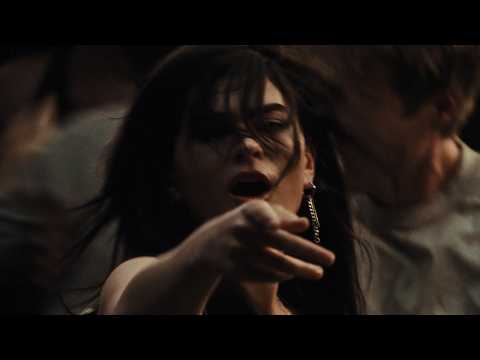
Joachim Trier’s family drama finds Nora confronting the Borgs’ generational trauma when she reunites with her estranged director father, Gustav (Stellan Skarsgård). After an opening montage on the layered history of their Oslo home, which Nora once wrote about in a school essay, our introduction to the adult Nora is conveyed by the chaos and humor of her panic attack before a performance. But finding this arresting sequence first required trimming a very long setup of patrons entering the theater and sitting down, and the camera discovering Nora, frozen in fear, in the back of the dark stage. “It was so boring,” Coutté insisted. “But here we’re starting right on Nora’s face. Where are we? Has she become an actress? And then you slowly understand. There are no rules; just rhythm.”

‘Sinners’

Jayme Lawson performs "Pale, Pale Moon" in a pivotal scene from "Sinners."

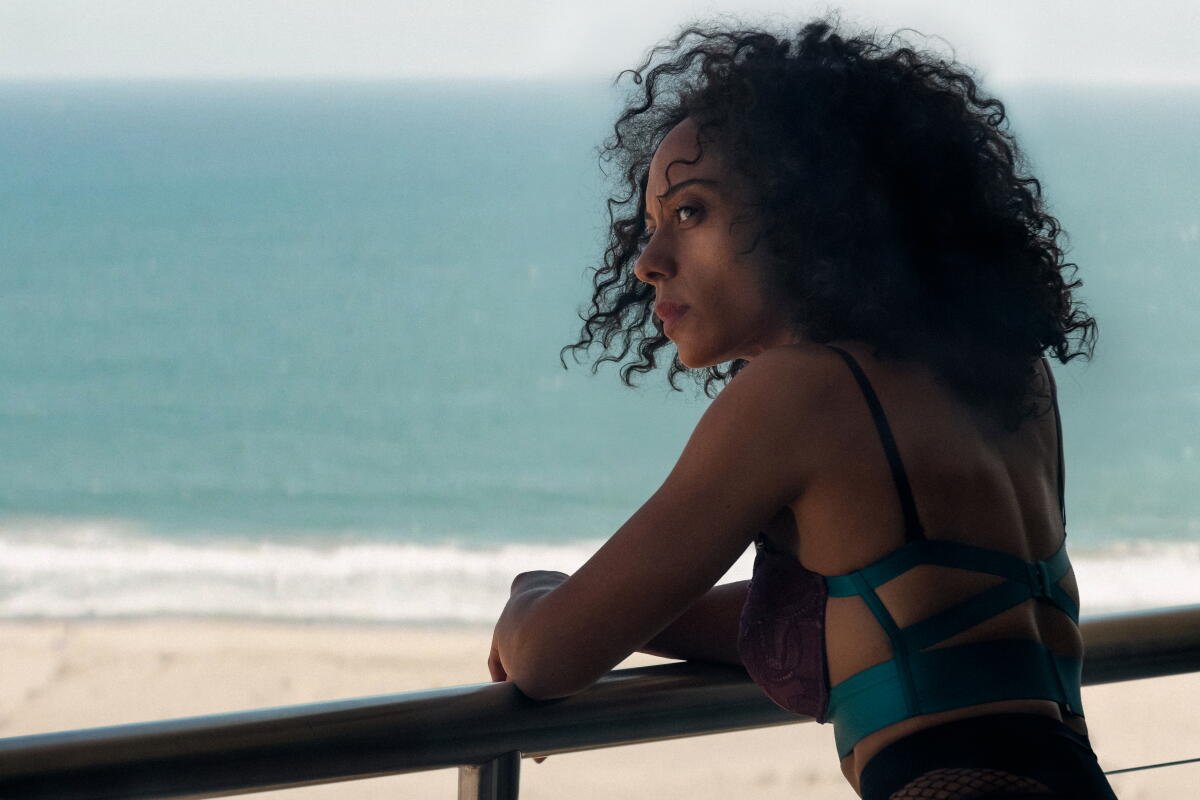
Jayme Lawson performs “Pale, Pale Moon” in a pivotal scene from “Sinners.”

(Warner Bros. Pictures)

Editor: Michael P. Shawver
Scene: Pearline’s (Jayme Lawson) violence-inducing “Pale, Pale Moon” performance

In Ryan Coogler’s Imax spectacle, where the blues collides with vampires, the monstrous transformation commences with Pearline’s siren call: “Pale, Pale Moon.” This was Shawver’s boldest sequence, cross-cutting her mesmerizing performance with the rhythmic crowd stomping, the brutal beating of a card cheater and newbie vampire Mary (Hailee Steinfeld) seducing and murdering Stack (Michael B. Jordan). “When this was first cut together, it was about three or four times as long as the actual song that had been recorded and performed,” explained Shawver. “And so Ryan watched it and he liked what he saw, but he wanted to cut it to the length of the song. That first moment I wondered if I was the right editor, but that fear and anxiety gives you a bit of freedom to find those spiritual connections that built to this climax at the end. It was really just about Ryan’s ability to engage audiences on a personal level and unlock those things and find the ways that they can go together.”

Source link

Democrats demand ‘dramatic changes’ for ICE regarding masks, cameras, warrants

Democrats are threatening to block funding for the Homeland Security Department when it expires in two weeks unless there are “dramatic changes” and “real accountability” for U.S. Immigration and Customs Enforcement and other law enforcement agencies carrying out President Trump’s campaign of federal immigration enforcement in Minnesota and across the country.

Congress is discussing potential new rules for ICE and U.S. Customs and Border Protection after officers shot and killed two people in Minneapolis in January. Senate Democratic leader Chuck Schumer and House Democratic leader Hakeem Jeffries reiterated their party’s demands on Wednesday, with Schumer telling reporters that Congress must “rein in ICE in very serious ways, and end the violence.”

Democrats are “drawing a line in the sand” as Republicans need their votes to continue the funding, Jeffries said.

The negotiations come amid some bipartisan sentiment that Congress should step in to de-escalate tensions over the enforcement operations that have rocked Minnesota and other states. But finding real agreement in such a short time will be difficult, if not “an impossibility,” Senate Majority Leader John Thune (R-S.D.) said Tuesday.

Trump last week agreed to a Democratic request that funding for Homeland Security be separated from a larger spending bill and extended at current levels for two weeks while the two parties discuss possible requirements for the federal agents. House Speaker Mike Johnson (R-La.) said this weekend that he was at the White House when Trump spoke with Schumer and that they were “on the path to get agreement.”

But it’s unclear whether the president or enough congressional Republicans will agree to any of the Democrats’ larger demands that the officers unmask and identify themselves, obtain judicial warrants in certain cases and work with local authorities, among other asks. Republicans have already pushed back.

And House GOP lawmakers are demanding that some of their own priorities be added to the Homeland Security spending bill, including legislation that would require proof of citizenship before Americans register to vote. Sen. Lindsey Graham of South Carolina and other Republican senators are pushing for restrictions on sanctuary cities that they say don’t do enough to crack down on illegal immigration. There’s no clear definition of sanctuary jurisdictions, but the term is generally applied to state and local governments that limit cooperation with federal immigration authorities.

It’s also uncertain whether Democrats who are furious over the Trump administration’s increasingly aggressive immigration enforcement operations would be willing to compromise.

“Republicans need to get serious,” Schumer, a New York Democrat, said, adding that they will propose “tough, strong legislation” in the next day.

A look at Democrats’ demands and what Republicans are saying about them:

Agreement on body cameras

Republicans say they are open to officer-worn body cameras, a change that was already in the underlying Homeland Security spending bill. Homeland Security Secretary Kristi Noem backed that up on Monday when she ordered body-worn cameras to be issued to every DHS officer on the ground in Minneapolis, including those from ICE. She said the policy would expand nationwide as funding becomes available.

The bill already directed $20 million to outfit immigration enforcement agents with body-worn cameras.

Gil Kerlikowske, who served as commissioner of U.S. Customs and Border Protection from 2014 to 2017, said that most agents are “very supportive” of cameras because they could help exonerate officers. But he added that complex questions remain, including when footage should be released and when cameras must be activated.

“When do you turn it on? And if you got into a problem and didn’t have it on, are you going to be disciplined? It’s really pretty complex,” he said.

Schumer said Tuesday that the body cameras “need to stay on.”

Disagreement on masking

As videos and photos of aggressive immigration tactics and high-profile shootings circulate nationwide, agents covering their faces with masks has become a flash point. Democrats argue that removing the masks would increase accountability. Republicans warn it could expose agents to harassment and threats.

“State law enforcement, local folks don’t do it,” said Rep. Bennie Thompson, the top Democrat on the Committee for Homeland Security. “I mean, what’s so special about an ICE law enforcement agency that they have to wear a mask?”

But Republicans appear unlikely to agree.

“Unlike your local law enforcement in your hometown, ICE agents are being doxed and targeted. We have evidence of that,” Johnson said on Tuesday. He added that if you “unmask them and you put all their identifying information on their uniform, they will obviously be targeted.”

Immigration officers are already required to identify themselves “as soon as it is practical and safe to do so,” according to federal regulations. ICE officials insist those rules are being followed.

Critics, however, question how closely officers adhere to the regulations.

“We just see routinely that that’s not happening,” said Nithya Nathan Pineau, a policy attorney with the Immigrant Legal Resource Center.

Judicial vs. administrative warrants

Democrats have also demanded stricter use of judicial warrants and an end to roving patrols of agents who are targeting people in the streets and in their homes. Schumer said Tuesday that they want “arrest warrants and an end to racial profiling.”

Most immigration arrests are carried out under administrative warrants, internal documents issued by immigration authorities that authorize the arrest of a specific person but do not permit officers to forcibly enter private homes or other nonpublic spaces without consent. Traditionally, only warrants signed by judges carry that authority.

But an internal ICE memo obtained by the Associated Press last month authorizes ICE officers to use force to enter a residence based solely on a more narrow administrative warrant to arrest someone with a final order of removal, a move that advocates say collides with 4th Amendment protections.

Democrats have not made clear how broadly they want judicial warrants used. Jeffries of New York said that Democrats want to see “an end to the targeting of sensitive locations like houses of worship, schools and hospitals.”

Johnson said Tuesday that Democrats are trying to “add an entirely new layer” by seeking warrants signed by a judge rather than the administrative warrants that are signed by the department. “We can’t do that,” he said.

The speaker has said that an end to roving patrols is a potential area of agreement, but he did not give details.

Code of conduct and more accountability

Democrats have also called for a uniform code of conduct for all ICE and federal agents similar to that for state and local law enforcement officers.

Federal officials blocked state investigators from accessing evidence after Renee Good was shot and killed by an ICE agent on Jan. 7. Gov. Tim Walz, a Democrat, demanded that the state be allowed to take part, saying that it would be “very difficult for Minnesotans” to accept that an investigation excluding the state could be fair.

Hoping for a miracle

Any deal Democrats strike on the Department of Homeland Security is unlikely to satisfy everyone in the party. Rep. Ayanna Pressley of Massachusetts said she would never support an agreement that didn’t require unmasking.

“I ran for Congress in 2018 on abolish ICE,” Pressley said. “My position has not changed.”

Thune, of South Dakota, has repeatedly said it’s an “impossibility” to negotiate and pass something so complicated in two weeks. He said any talks should be between Democrats and Trump.

“I don’t think it’s very realistic,” Thune said Tuesday about finding quick agreement. “But there’s always miracles, right?”

Jalonick and Cappelletti write for the Associated Press. AP writer Rebecca Santana contributed to this report.

Source link

Why Sundance is the best launchpad for Oscar documentaries

As the Sundance Film Festival winds down its final edition in Park City, Utah, this week, ahead of its move to Boulder, Colo., next year, its sway over the nonfiction field at the Oscars remains as steady as ever. All five current Academy Award nominees for documentary feature premiered at last year’s festival, with Sundance films winning the category six times over the last decade.

“Sundance has been a kick-starter for my entire career,” says Ryan White, director of “Come See Me in the Good Light,” his fourth film to premiere at the festival. The intimate portrait of Colorado poet laureate Andrea Gibson, who faces a terminal diagnosis with a spirit of resilience, needed the boost. “The lead words are poetry and cancer, and it’s a character-driven film about a non-binary person,” White says. “It wasn’t the easiest film to get off the ground.” A similar challenge could apply to other nominees, including “Mr. Nobody vs. Putin” and “Cutting Through Rocks,” which focus on everyday individuals taking on oppressive systems in Russia and Iran, respectively. “There are the types of films that can get lost because they’re not about a celebrity, and they don’t have these marquee descriptors. Sundance does such an amazing job of discovering these diamonds.”

Andrea Gibson, left, and Megan Falley in “Come See Me in the Good Light.”

Andrea Gibson, left, and Megan Falley in “Come See Me in the Good Light.”

The exposure at the start of the film festival season “gives you that one-year runway that allows you to play festivals all year long,” says White, who was back at Sundance to celebrate the end of an era. He also knows the pain of not making the cut. “My first two films didn’t get into Sundance, and then my third one did. I’m always telling young filmmakers to use the Sundance rejection as fuel.”

A festival berth was strong motivation for “Mr. Nobody” filmmaker David Borenstein, who collaborated with his subject, a schoolteacher near the Ural Mountains named Pavel (“Pasha”) Talankin, as he quietly documented Russian propaganda efforts to rally his young students around the war in Ukraine. “That was the goal the entire time making this film,” says the director, an American based in Copenhagen. “I never thought once about anything after Sundance.” When the Danish Film Institute submitted his film as the country’s entry for the international feature Oscar, he had a new goal. “We were the last to start campaigning because we didn’t have a streamer behind us.”

Borenstein interrupted a family vacation in the Dominican Republic to return to Sundance for meetings and figure out next steps. “Forget winning or losing,” he says. “You have six weeks where you have a voice, where Pasha has a voice. How do you use it?” Talankin, who fled his home — first for Turkey, then the Czech Republic — is, for the moment, no longer “Mr. Nobody,” but as Borenstein notes, “He sacrificed his whole life to do this.”

Iranian American filmmakers Mohammadreza Eyni and Sara Khaki were well into the eight-year production of “Cutting Through Rocks” when they became recipients of a 2020 Sundance Documentary Fund grant. “The timing was perfect and we really, really, really needed that support,” says Khaki, joining Eyni on a video conversation from Park City, where their film won the Grand Jury Prize in the world cinema category last year. “Sundance is something beyond only the festival for us,” Eyni says. “It’s more about persistence as a filmmaker and the cinematic approach to the stories and sense of community.”

“Cutting Through Rocks” follows Sara Shahverdi, the first woman elected to the council of her northwestern Iranian village, as she challenges the practice of child marriage and other patriarchal norms and empowers young women by showing them how to ride motorbikes, as she does herself. The message of resistance feels relevant worldwide, but most urgently in Iran, where estimates of deaths during recent protests top 30,000 people. “We want small stories and anecdotes to remind us that we can bring change,” Eyni says, “even when it’s tough, even when it seems impossible.” Although the film is the first documentary from Iran to be nominated for an Oscar, the news has been hard to share there because of the government’s weeks-long internet blackout.

“We are experiencing a lot of complex emotions,” Eyni says.

Sara Shahverdi, the subject of Oscar-nominated documentary feature "Cutting Through Rocks."

Sara Shahverdi, the subject of Oscar-nominated documentary feature “Cutting Through Rocks.”

(Gandom Films)

Sundance thrives on exactly those kinds of feelings. The dramatic premiere of “Come See Me in the Good Light” was, for its filmmaker, “The best night of my entire career.” What began as a film about the end of Gibson’s life quickly became a story about the joy of a life well-lived, experienced alongside the charismatic subject’s wife, poet Megan Falley. When White broke the news about the film’s acceptance, “Andrea was so emotional saying, ‘You’re telling me if I survive for six more weeks, I might see this movie?’” he recalls. And they did.

“I think people fell in love with Andrea during the course of that film, but they probably assumed that Andrea had passed away, and they were about to see a card at the end of the film,” White continues. Then Gibson walked up. “It was like a rock star rising from the ashes. You could literally feel the theater vibrating.”

Source link

High school basketball: Ethan Hill helps lift Brentwood past Crossroads

Brentwood’s Ethan Hill was so sick before Monday night’s basketball game against Crossroads that he searched for an open urgent care to give him an IV.

By the game’s end, when Brentwood came back from an 11-point deficit to defeat rival Crossroads 70-60, the 6-foot-7 Hill was using all of his final energy to dance with the delirious student section that got loud and boisterous and helped inspire the Eagles’ rally.

“I feel horrible,” Hill said as he rested on the floor of the team room afterward blowing his noise. “I’m so fatigued.”

Somehow, he played the entire fourth quarter and made five consecutive free throws to help hand Crossroads its first Gold Coast League loss.

One hero for Brentwood was junior guard AJ Okoh. He finished with 24 points. Crossroads (14-11, 5-1) could not stop him from driving in the second half.

“One of the best point guards in the country,” Brentwood coach Ryan Bailey said. “He doesn’t back down from anyone.”

Brentwood (22-3, 4-1) lost to Crossroads 72-56 on Jan. 9 in one of its worst performances of the season. This time, the Eagles, in front of their home crowd, were determined not to let their former player, Shalen Sheppard, get out of the gym with a win.

The emotions twice resulted in technical fouls against Brentwood players for taunting. At the end of the game when the buzzer sounded, officials ejected Sheppard and Brentwood’s Ryan Howard when they got into a little wrestling match. Crossroads, which starts four sophomores, received 16 points from Evan Willis and 14 from Sheppard.

Brentwood fell behind 32-23 at halftime. That caused Bailey to give a fiery halftime talk.

“I was proud how they fought,” Bailey said. “We had a little halftime speech and they responded and the home crowd was phenomenal.”

Augustus Sugarman aided the comeback with two three-pointers and two free throws in the fourth quarter. There were seven lead changes to start the fourth quarter until Brentwood pulled away.

Source link