When it comes to romantic comedies, it’s not where it’s going — that’s a foregone conclusion — but how it gets there. The way the central couple navigates the twists, turns, roadblocks and unforced errors that entangle their budding relationship is the beating heart of these films. It’s what sets each one apart and delivers its entertainment value. That’s the test: pass or fail.
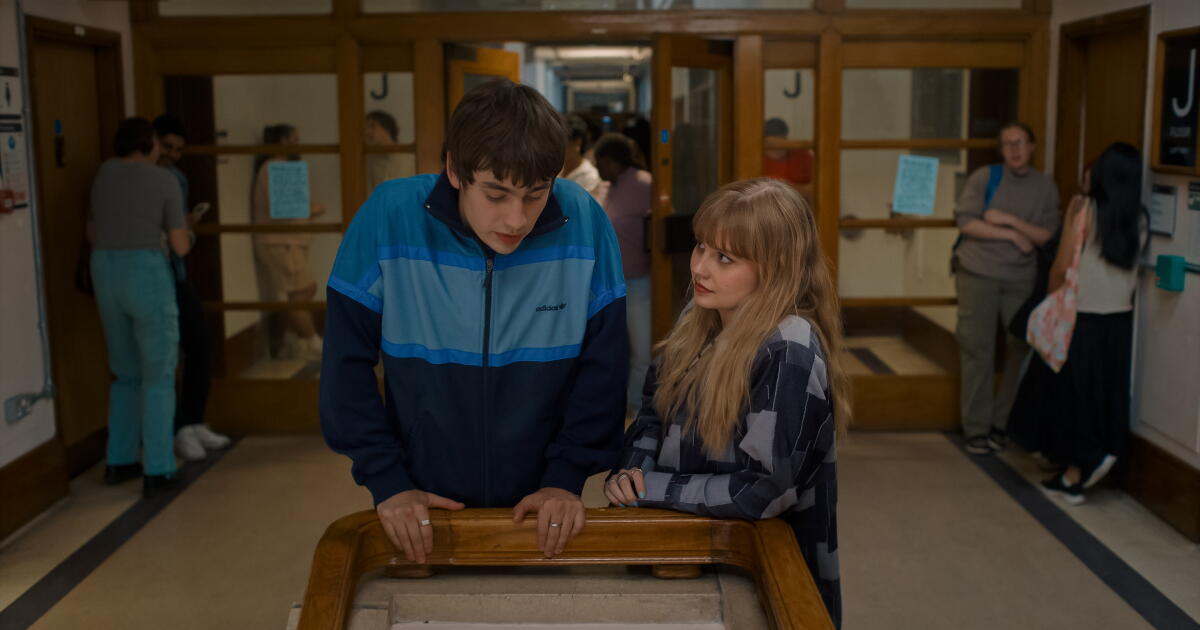
Which brings us to “Finding Emily,” a sweet new entry from Working Title Films, the producer of such gold-standard rom-coms as “Four Weddings and a Funeral,” “Notting Hill” and “Love Actually.” It may not be destined for a place alongside those favorites, but “Emily” has a wonky charisma all its own that just might satisfy fans of those British charmers.
Or not.
That’s because the film’s journey, which follows Owen, a struggling musician (Spike Fearn) searching for his vanished dream girl with a hand from a cynical psychology student (Angourie Rice), may not feel quite captivating or propulsive enough to carry its pie-in-the-sky story to its inevitable finale. As someone behind me at the end of the film’s screening said, “Well, that plane took a while to land.” I can’t fully disagree.
Fortunately, the movie, inventively directed by first-time feature helmer Alicia MacDonald, is anchored by a pair of winning performances by Fearn (“Alien: Romulus,”“Ella McCay”) and Rice (2024’s “Mean Girls” musical). Their quirky, endearing moments and oddball chemistry often patch over — or at least divert us from — the contrivances and bits of filler in Rachel Hirons’ busy script.
Owen, who works as a sound engineer at the Manchester City University student union, falls headfirst for an enchanting redhead (wearing fairy wings, no less) named Emily (Sadie Soverall), whom he meets at a party. But when he tries to text her the next day, he realizes the number she gave him is missing a digit. Was that on purpose or an accident?
No matter, Owen is obsessed with finding her, even if he doesn’t know her last name and there are 318 Emilys in the campus directory. A false lead misdirects him to one of those women, Emily Raine (Rice), a psych major writing her thesis on the “self-sabotaging madness” of romance. It’s a theory clearly waiting to be blown to smithereens.
Their meet-cute develops into an offbeat friendship when the “wrong Emily” (is she really?) offers to help lovestruck Owen track down the “right Emily” (is she really?), secretly using him as a real-life case study to nail her dissertation. If she succeeds, the Iowa transplant will be able to secure the work visa she needs to stay in her adopted England.
It’s a device that adds to the character’s urgency, if not her likability. Though in true rom-com fashion, this Emily is appealing in other required ways — and is also adorable. The plot kicks into high gear when, again to fuel her thesis, she deviously provides Owen with a contact list of every Emily in the college database and suggests he mass-email them to locate the elusive, fairy-winged Emily.
This goes all kinds of wrong, setting off a viral brouhaha and turning the hapless Owen into an unwitting pariah. The loud-and-proud gang of Emilys brands him a stalker and a “toxic incel” (as well as the jauntier “Email Guy”). The mania is compounded by Owen’s stab at damage control when he appears on a campus podcast hosted by a savvy button-pusher (Nadia Parkes, pitch-perfect), unaware the show is going out live on video. Oh, and none of this results in a response from his desired Emily.
Amusing and brightly satirical as this turn of events is, it begins to feel more like a tempest in a teapot than the sustainable story engine Hirons was aiming for.
The film hits its predictable highs and lows as the mismatched Owen and Emily get closer and romantic complications mount. The search for “Fairy Emily” yields some anticlimactic results.
Still, there’s a kind of hip, comfort food aspect to the entire enterprise that keeps it an easy, if slightly cluttered and overlong watch. (See plane-landing comment.) MacDonald makes superb use of the story’s Manchester backdrop. The city’s vibrant neighborhoods and residents, along with its dynamic music scene, practically form their own character.
The vivid, at times overly kinetic supporting cast includes Prasanna Puwanarajah as Emily’s egotistical psych professor, Timothy Innes as her oblivious crush and Cora Kirk as her supportive, strong-willed flatmate; Jack Riddiford and Isabella Laughland as Owen’s brother and his better half; and Kat Ronney as a take-no-prisoners student body president — also named Emily. Minnie Driver is sadly underused as the school’s detached dean.
So does “Finding Emily” pass the aforementioned rom-com test? Flaws aside, it’s ultimately a pleasant enough way to beat the heat, grab a few laughs, take in a fine soundtrack and find yourself in some good company. But even if your name happens to be Emily, you won’t be fully swept away.
‘Finding Emily’
Rated: PG-13, for sexual references, language, some crude material and drug references
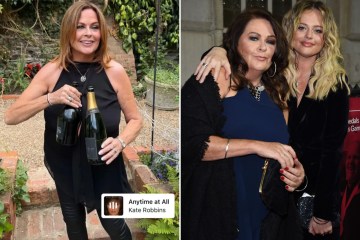
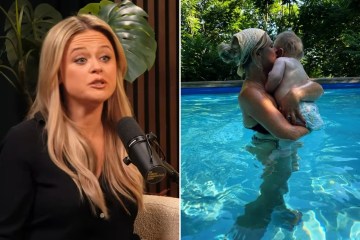
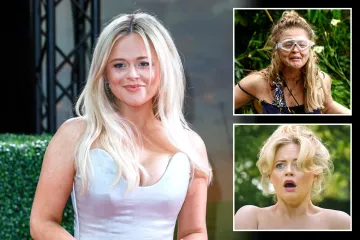
EMILY Atack has shared a behind the scenes look at her “beautifully chaotic” family wedding held in her garden.
The Rivals actress tied the knot with Alistair Gardner in an intimate ceremony over the weekend at her home in Bedfordshire.
Emily Atack has shared a look at her wedding with husband Alistair GardnerCredit: George Gottlieb / @GeorgeOnABoatThe Rivals star shared a look at her stunning bespoke wedding dressCredit: George Gottlieb / @GeorgeOnABoat
As the blushing bride continues to bask in her happiness, she’s taken to her Instagram to give her fans a sneak peek into the big day.
She looked incredible in a tailored bespoke wedding gown as she took to her feed to thank the designer.
Sign up for the Showbiz newsletter
Thank you!
In a series of photos, Emily appeared to be the picture of happiness as she wowed in her dress, complete with high-shoulders, lace detailing and of course, a veil.
The 36-year-old penned: “A moment for the dress.. The biggest thank you ever to Caroline at @eveliebridal and @josephinescottlondon @avenuebyjosephinescott.. beautiful detailing.
She looked stunning on her big dayCredit: avenuebyjosephinescott/InstagramEmily shared a series of pictures on her InstagramCredit: avenuebyjosephinescott/Instagram
“Tailored bespoke by @kulitabespoke and shoes by @charlottemillsshoes.”
The happy couple had a McDonald’s van parked up outside their home as the date was etched on the top of it.
It also got a personalised touch with “Mr and Mrs Garner” written on it as McFlurry’s were served to their guests.
The bride and groom posed in front of the van as they enjoyed a smooch.
They had their own personalised McDonald’s vanCredit: InstagramMcFlurry’s were being served from the vanCredit: Instagram
Emily wrote: “Gifted the most amazing van for the day. Let’s face it. It’s all you want after about 23 glasses of champagne.”
The couple opted for two personalised cakes which included a showstopper with realistic looking figurines of Emily, Alistair and their two-year-old son Barney.
The trio are surrounded by plenty of greenery to replicate the forest theme of the garden wedding.
A second cake looked like something straight of Bridgerton, complete with a pink base, ruffled blue and white icing and adorned with pretty flowers.
The happy couple had a beautiful personalised cake with animated cake toppersCredit: InstagramThey had a second beautiful cakeCredit: Instagram
The final personalised touched included an ‘E & A’ wooden cake topper.
Emily’s long-time pal Mario did the catering for the big day as she shared a snap of him serving up the delicious looking food.
The Inbetweeners icon said: “I really hope you are bollocking me about something mental I’ve done here @mariogdigiorgi.
“15 years of friendship and feeding us the most insane food.”
Her longtime pal Mario did the catering for the weddingCredit: InstagramEmily’s sister Martha called the wedding “beautifully chaotic”Credit: Instagram
Her sister Martha took to her own stories to recall the wedding as she ran around after her nephew.
Sharing a photo of herself in a pretty Summery dress with Barney, she penned: “Maid of honour duty #52: Chase sticky nephew around the garden.
Martha also called it “our beautifully chaotic family garden wedding.”
Emily announced yesterday that she was a married woman as she told her followers on the social media platform.
“Yesterday we officially got married among close family and friends. It was absolutely perfect,” Emily wrote on Instagram.
“I can’t believe we get to do all that again in a few weeks time. Christ, we have fun don’t we @dralistairgarner.”
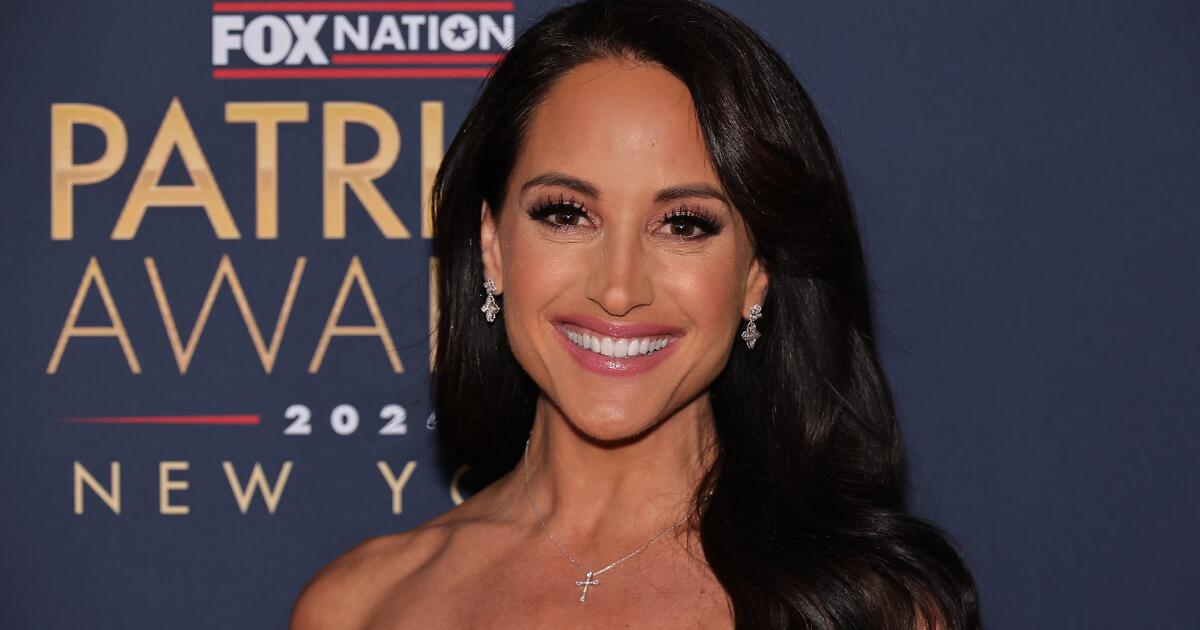
Fox News co-host Emily Compagno is jumping from the network’s daytime chatfest “Outnumbered” to join “The Five,” the most-watched program on cable news.
The conservative-leaning news network announced Monday that Compagno will fill the seat vacated last year by Jeanine Pirro, who left “The Five” in May to join the Trump administration as interim U.S. Attorney for the District of Columbia before her Senate confirmation three months later.
Compagno will be on daily starting Sept. 8 alongside fellow co-hosts Greg Gutfeld, Dana Perino and Jesse Watters. Jessica Tarlov and Harold Ford Jr. rotate their appearances in the lone liberal seat on the program.
“Emily is a highly accomplished host whose energy and talent have made her a standout across FOX News Media, and we are thrilled to officially welcome her to the show,” Fox News Media Chief Executive Suzanne Scott said in a statement.
Compagno’s chair on “Outnumbered” will have guest co-hosts after she departs the program.
“The Five” has been a ratings juggernaut for Fox News in recent years, scoring audience levels that rival live viewing for hit broadcast network shows. In the second quarter of this year, “The Five” averaged 3.6 million viewers according to Nielsen, capturing more than 64% of the cable news viewing audience in the 5 p.m. Eastern hour.
Before joining Fox News as a contributor in 2018, Compagno practiced law in criminal defense and civil litigation and later served as a federal managing attorney and Acting Director at the Social Security Administration.
She also served as a Senior Judge Judicial Extern for the late Hon. John T. Noonan at the U.S. Court of Appeals for the Ninth Circuit.
A native of the San Francisco Bay Area, Compagno served as captain of the cheerleading squad for the NFL’s Raiders when they played in her hometown before moving to Las Vegas. She served as an ambassador for the league overseas, visiting U.S. troops in Iraq and Kuwait on a USO tour.
She is also the author of “Under His Wings: How Faith on the Front Lines Has Protected American Troops,” which was released on the network’s publishing imprint FOX News Books and debuted at No. 1 on the New York Times bestseller list.
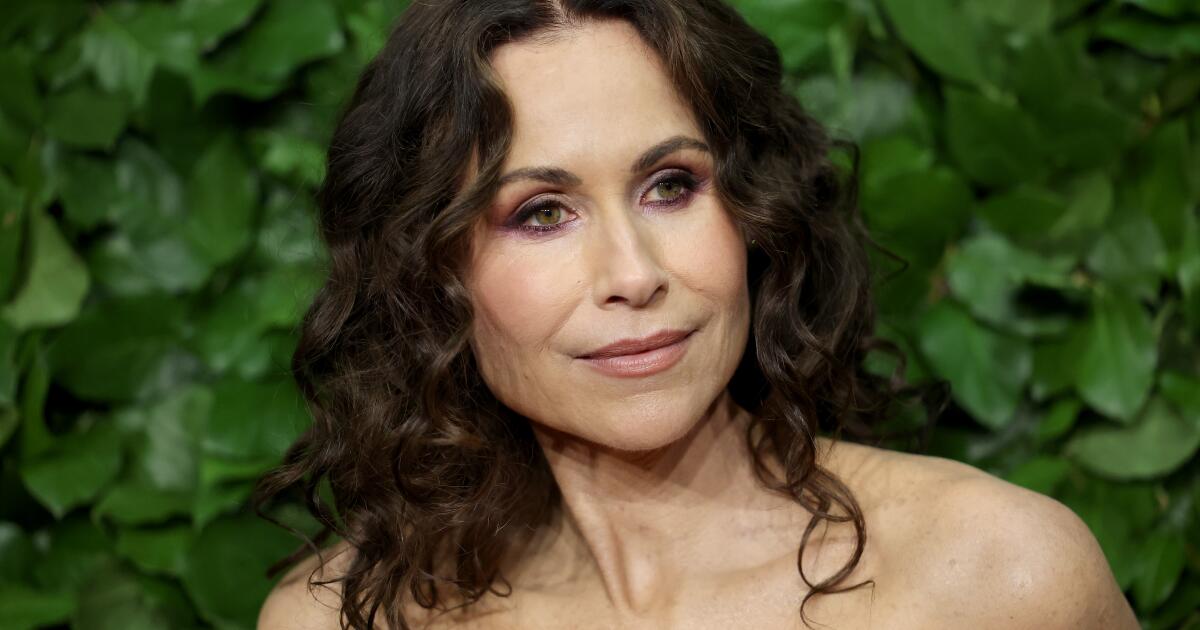
Minnie Driver’s Paris adventures went awry this week when she was involved in a car accident that she’s describing as a frightening close call.
On Thursday, the actor — who has posted a series of “Paris Update” videos for her fans over the last two months while filming the sixth season of “Emily in Paris” — updated fans with a video posted to Instagram in which she appeared in a neck brace and recounted a harrowing close call. “Paris update is that I am actually back in London,” the video began.
“I got into a really bad car accident a few days ago with my friend Ben, and we somehow walked out of it,” she said. “Well, we didn’t walk out of it. We crawled out of it, but we did get out of it alive.”
Driver said the accident wasn’t their fault, and that they were cruising down a country road in the middle of France when another vehicle failed to stop at an intersection.
“We just T-boned it,” she said. “I’m fine. I’ve got a sprained neck, and I’m really in shock and sort of cry all the time, but I’m going to heal.”
According to Deadline, production on “Emily in Paris” will continue as planned aside from one scene involving Driver that had to be rescheduled. She plans to return to her role as Princess Jane when she recovers.
“The reason that I’m not dead, honestly, is the car that we were driving,” she continued in her update, adding that 360-degree airbags in the “tiny Kia” she was riding in saved their lives. “The fact that the entire car didn’t just concertina and crush us is down to the design of that car, which is frankly astonishing.”
Driver assured her followers that the video wasn’t a car ad — “Can you imagine if that’s what I was doing?” — but the actor appeared grateful and wanted to give due credit, all with her sense of humor still intact.
“I’m a mini driver, pun intended. I need to celebrate the car that saved us, because we’ve got families and people who love us, and I am so grateful to be alive,” she said. “So, Kia, you are a baller car company.”
In the spirit of Zeus’ law to be generous toward guests, I’m honored to welcome classics professor Emily Wilson to the land of film criticism. As she’s recently learned, it’s an adventure that sails smack into islands of musky internet trolls and clashes with cinematic and literary titans like Christopher Nolan and Joyce Carol Oates.
Nolan credits the opening line of Wilson’s 2017 translation of Homer’s “The Odyssey” — “Tell me about a complicated man” — as partly inspiring his adaptation of the ancient epic, which, nearly a month into its release, is soldiering toward a billion-dollar box office gross. Symbiotically, Wilson’s edition is now the No. 2 bestselling book in the country. That Wilson’s incendiary essay in the London Review of Books revealed she doesn’t think much of Nolan’s blockbuster struck some as hubris, including Oates, who took to social media to decry the scholar’s “tone of dismissal” and “haughty superiority.”
If you haven’t been following the controversy, Wilson felt that Nolan had flattened the saga by mostly erasing the Greek gods and Odysseus’ wit, lust and thorny contradictions. Oates likened the tone of Wilson’s critique to the “crude language of MAGA folks.” In short: Wilson snuck a 2,700-year-old poem through the gates of mainstream taste — and after that victory, her arrogance left her marooned.
Sounds familiar if you’ve read Homer. Less so if you’ve only seen the film. Wilson is right that Nolan’s movie lacks Odysseus’ egomaniacal brilliance.
I’m here to play peacemaker. Wilson adores Odysseus so much that she has his bow tattooed on her right leg. Frankly, Nolan doesn’t seem to like the wily, libidinous and violent trickster-veteran of the poem — half Rhett Butler, half Rambo in “First Blood” — as much as Wilson or I do. Because if he did, that Odysseus would be onscreen.
But having seen his movie twice, it’s obvious that Nolan is less interested in Wilson’s first line than her fifth: “Tell the old story for our modern times.” That, he’s done. His take on Homer is, as I wrote in my original review, “a moralistic ‘Oppenheimer’ prequel.” For the record, I like it anyway.
Film critics and translators start work in the same place. Step one: What is the artist’s intent? Wilson considered the entirety of Homer’s tale and decided the right word for polytropos was “complicated.” I weighed what Nolan chose to protect, tweak and abandon in his own version and concluded that he wanted to make an action-tragedy about societal decline.
Movies must be measured against their own ambitions. A stoner comedy can’t be graded like a Shakespearean drama (and vice versa). Here’s where Wilson runs aground. She wants to allow Nolan creative freedom, knowing that the Greek playwrights rebooted figures like Odysseus and Medea just like Marvel treats Spider-Man. There’s even a spinoff of the original poem in which Odysseus has kids with Circe.
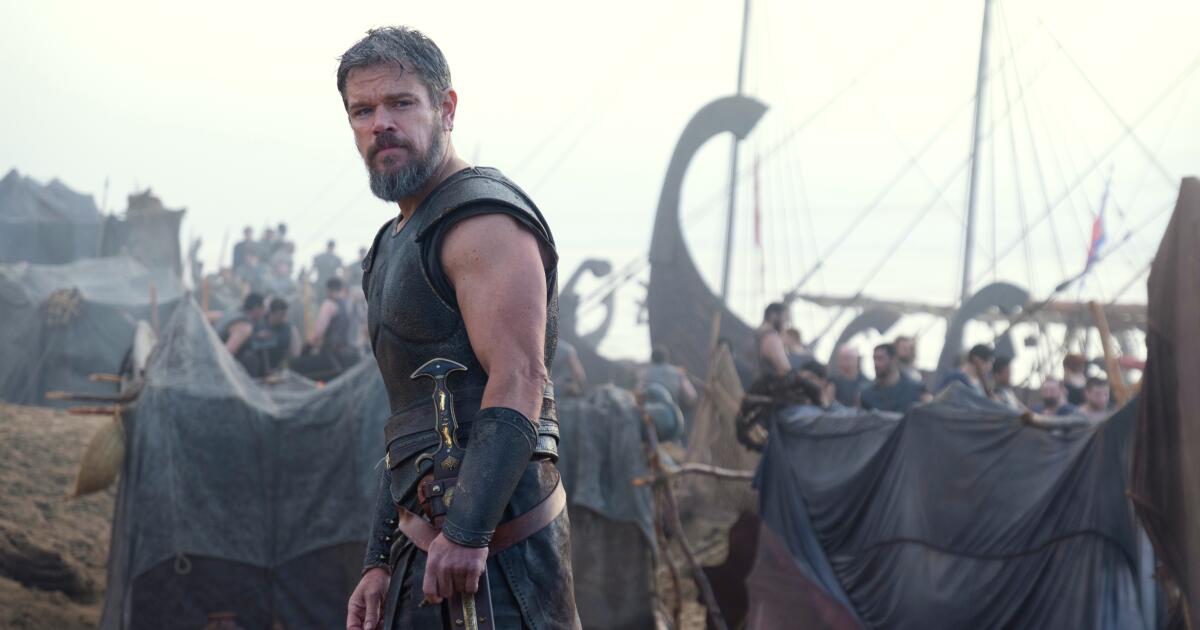
Yet, storytellers have to protect the core of their characters. Medea must be angry, Spider-Man must be helpful and Odysseus, dang it, must have swagger. Damon doesn’t.
This is why Wilson deserves empathy even if she can’t bring herself to grant Nolan the same grace. As a professor of classics at the University of Pennsylvania, she’ll be on the front line of academics condemned to unteach Nolan’s heavily altered screenplay to students who will arrive quoting it chapter and verse. For decades to come, high school kids — probably even a few high school teachers — are just going to pop in his Blu-ray and call it a day.
Nolan does hit his target, eventually. Yet his script wobbles. He’s made a movie about Odysseus’ remorse for inventing the Trojan horse without a crucial scene: the moment he invents it. We see Odysseus silently stroll the beach outside Troy, but not the pride he must have felt running back to base to pitch an idea that will finish the war and let his allies go home. The emotional arc Nolan wants to trace should start there. The beat’s absence is confounding since Odysseus also needs to appear clever (and never does).
This is what it means to measure a film against its ambitions. Only after we accept that Nolan is solely interested in human mistakes can we gauge his disregard for the Greek gods. I dig that choice — it’s bold — yet still think he flubs it by not replacing the magical powers of Charlize Theron’s Calypso and Zendaya’s Athena with, say, a personality. What a waste of two terrific actors. It’s no wonder Oates stuck up for him. Her novel “Blonde” also stripped the agency from love goddess Marilyn Monroe and its own 2022 movie adaptation launched a thousand hot takes.
There will never be a faithful modern film version of “The Odyssey.” No, not even whatever AI slop Elon Musk claims he’s green-lighted, a project I’m sure will come to fruition as fast as his any-year-now claim that he’s landing on Mars.
The issue isn’t just the poem’s length. It’s that today’s audiences have zero stomach for happy endings about horrible wrongs. We can barely rationalize the slaughter of the suitors. No one wants to watch Homer’s gory scene after that, when Telemachus cruelly orders a dozen enslaved girls to clean up the mess and then executes them too.
Only a seven-and-a-half hour Italian miniseries produced by Dino de Laurentiis in 1968 dares mention that second bloodbath and even in that, the women are hung offscreen after we’ve been assured (fictitiously) that the maids tried to kill them first. (Side note: Dino’s Penelope, played by the mighty Irene Papas, is my favorite.)
Previous movie adaptations of “The Odyssey” soft-pedal or ignore the hero’s postwar PTSD. You catch a glimpse of it in the two-part NBC special from 1997 in which Armand Assante’s Odysseus rescues a Trojan toddler. But mainly, he spends more time hot-tubbing with Vanessa Williams’ Calypso.
That’s not a knock. The ’90s “Odyssey” is as tacky as Caesars Palace but Assante’s smooth-talking horndog is closer to my ideal Odysseus than Damon’s neutered mope. He sleeps with both Calypso and Circe and still earns his tender reunion with Penelope by choosing her beloved wrinkles over those gods’ immortal perfection. (For what it’s worth, Oates is a fan of it too. Wilson has yet to comment.)
Only the two most recent versions — Nolan’s and Uberto Pasolini’s 2024 “The Return,” starring a sinewy Ralph Fiennes — center on Odysseus’ culpability for the carnage of the Trojan War. Damon’s Odysseus is numbed by the massacre of Troy’s civilians; Fiennes’ hates himself for leading the best men of Ithaca to their death, gutting his own community in the heedless destruction of another. I’m tempted to diagnose the current gloom as the result of our own post-9/11 forever wars.
The 21st century has seen enough genocide for Homer to compose a hundred sequels. Only those stubbornly ignorant to the human cost of actual combat would be psyched to bring on more of it. (Just ask the veterans in my family how they feel things are going in Iran.) At the end of “The Return,” when Fiennes stands entrail-smeared before his beloved Penelope, she recoils from the horror of the battlefield brought right into their home.
That interpretation has its flaws too. The middle stretch has a concocted outdoor chase sequence that feels like a clumsy campground slasher. Wilson applauded its “stylish sparseness.” Fair enough. I’d still love to invite her and Nolan and even Oates to a banquet of wine and roasted fowl and have a blast agreeing to disagree. No weapons allowed.
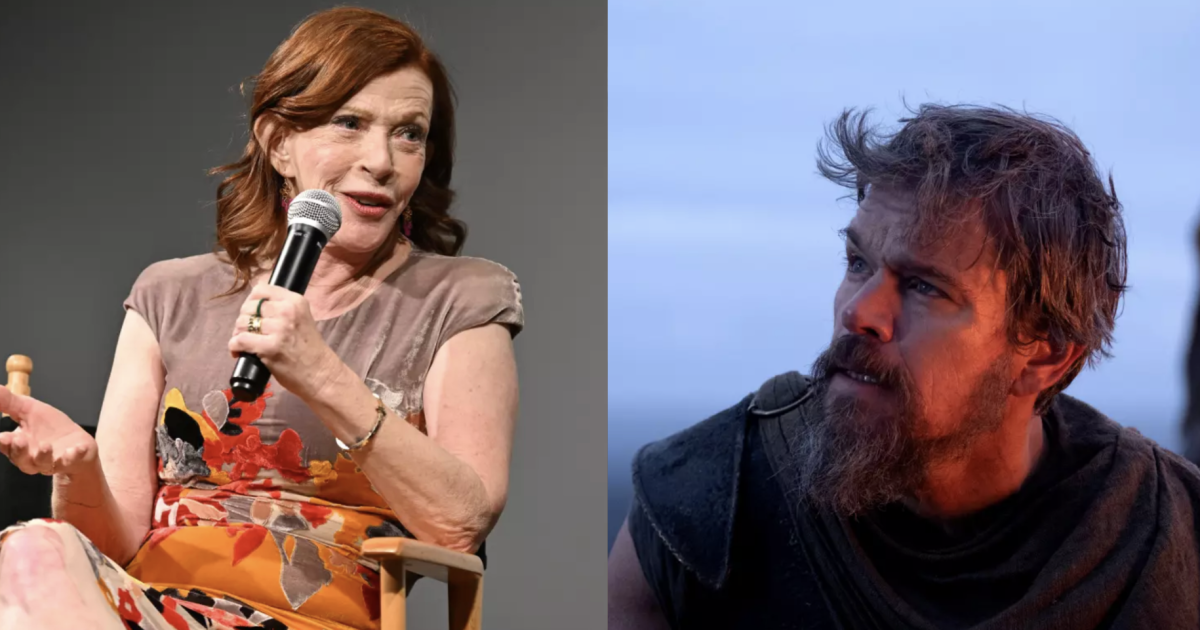
In a book nerd battle that’s become so epic, even The Onion has satirized the saga, acclaimed author Susan Orlean has grabbed the mic, and Emily Wilson is admitting she has one regret in her review of “The Odyssey.”
Earlier this week, Joyce Carol Oates panned Wilson’s critique of Christopher Nolan’s big-screen adaptation, and now acclaimed author and journalist Susan Orlean has entered the chat.
“I loved The Odyssey (saw it twice) and love any piece of art that gets people talking and reading and thinking,” she posted on Threads on Thursday. “Emily Wilson is being a bit of a jerk.”
Choice words from Orlean, but she knows a thing or two about film adaptations: her 1998 book “The Orchid Thief” inspired Spike Jonze’s 2002 film “Adaptation” starring Nicolas Cage and Meryl Streep (who played Orlean), and her 1998 article “Life’s Swell” was brought to screen as “Blue Crush,” also in 2002.
“Why can’t things be the things they are and if they’re different from their source material that’s their new form and their own thing and I SAY THIS FROM EXPERIENCE,” she added in a separate post.
The ire stems from a biting 4,200-word takedown of “The Odyssey” penned by classicist Wilson, who translated Homer’s poem in 2017.
In early interviews discussing the film, Nolan referenced Wilson’s translation, which subsequently skyrocketed in sales. A representative for Audible told The Times on Wednesday that, year over year, purchases of Wilson’s “Odyssey” translation were up by more than 600% across Audible’s U.S., U.K. and Canadian marketplaces.
Wilson’s review, published in the London Review of Books, essentially dubbed Nolan’s film a dud for academics with taste and a blockbuster hit for virgins who like special effects that go “Boom!”
“Nolan’s Odyssey lacks many of the elements that make the poem great. It has nothing convincing to say about time, memory, history, war, or about the relationship between one warrior’s glorious return and the lives of his family, adversaries, comrades, friends and neighbours,” she wrote. “It lacks psychological, emotional, political and ethical depth. Its narrative structure is gimmicky. The writing is abysmal. None of the characters has convincing motivation for their actions or words. There are no sex scenes, and all the food looks horrible.”
Pulitzer Prize finalist Oates, like Orlean, is also team Nolan. “Her tone of dismissal & haughty superiority strike a sour note,” Oates said of Wilson’s review in a post on X. Oates added that rather than Wilson disagreeing with “interpretations of Homer in a collegial manner,” she benefited from Nolan’s film and then attacked it.
Wilson’s review went so viral it crashed the London Review of Books website for a few hours on Monday. On the heels of the missive’s publication, Wilson posted on Bluesky that an earlier draft of the essay was actually more cutting than the version that went live.
“Was I too mean? Or not mean enough? I went through my first draft and tried to take out the snark,” she wrote. “To quote the great poet: ‘Though much is taken, much remains… That which we are, we are.’”
She added in the same thread: “The oddest thing about the response to this essay is people who say it’s ‘personal’. You can disagree about some or all of it! I may well be wrong! But it’s not ‘personal’ to analyze a film or other work of art, even negatively. Criticism is more than ‘Hurray!’ or ‘Hiss!’”
One criticism Wilson admits she regrets in retrospect is her take on Nolan’s race-neutral casting. In the review she wrote that while the casting launched a culture war, it wasn’t actually progressive. She likened the characters portrayed by Zendaya, Lupita Nyong’o, Himesh Patel, Corey Antonio Hawkins and Travis Scott to “versions of the Black best friend, whose only role in the drama is to provide aid to the white protagonist.”
On Bluesky, she wrote, “In this piece, I regret the paragraph about the uses of the POC actors – who are all great, but IMO under-utilized (and why couldn‘t Himesh Patel be Odysseus instead?) I still think the film largely wastes its strong cast, but I framed it badly.”
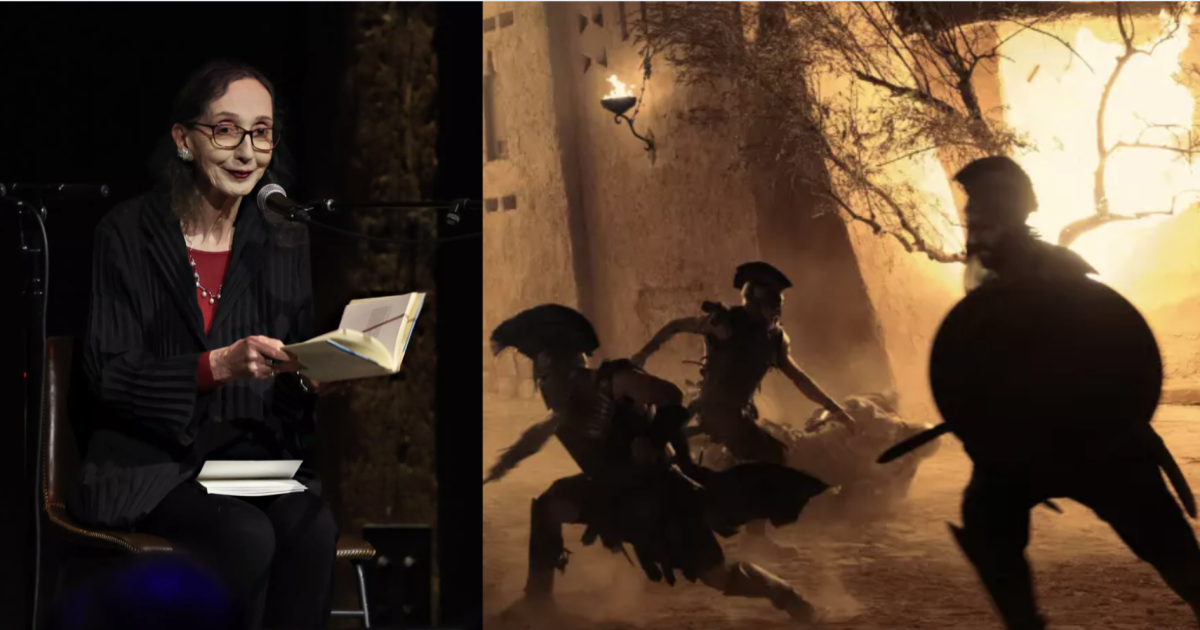
Days after a classicist who translated Homer’s “The Odyssey” in 2017 eviscerated the Christopher Nolan film based on the poem, Joyce Carol Oates has entered the debate.
She’s Team Nolan.
The National Book Award-winning author is known for her (sometimes controversial) hot takes on social media, and on Wednesday, she stepped up to the plate in opposition of translator Emily Wilson’s brutal takedown of Nolan’s big-screen adaptation of “The Odyssey.” Nolan had previously said Wilson’s translation inspired him in making the film. But Wilson wrote that she would be ashamed to have written any part of the script.
“Her tone of dismissal & haughty superiority strike a sour note,” Oates said of Wilson’s review in a post on X. “Rather than disagreeing with interpretations of Homer in a collegial manner, this person, who has benefited enormously from Nolan’s film, speaks in the crude language of MAGA folks attacking someone with ideas that differ from hers.”
Wilson’s biting missive, published in the London Review of Books this week, went so viral that it reportedly crashed the outlet’s website for a few hours Monday. The British American classicist’s take on the film was especially notable because, last fall, Nolan quoted Wilson’s translation when telling Empire magazine why he was drawn to the story. “I think it’s the Emily Wilson translation that begins, ‘Tell me about a complicated man,’” he said.
Wilson’s version of “The Odyssey” subsequently spiked in sales. A representative for Audible told The Times on Wednesday that, year over year, purchases of Wilson’s “Odyssey” translation were up by more than 600% across Audible’s U.S., U.K. and Canadian marketplaces. Daily global title sales rose nearly sixfold during the week the movie premiered. And in the nine days following wide release, daily global sales averaged around 20 times more than the rate before the premiere, showing sustained demand for Wilson’s translation.
Oates, who penned the Pulitzer Prize-nominated “Blonde,” said that, within the world of translators, Wilson’s review “seems all the more surprising since all translations are, presumably, subjective & not equivalent to the original text.”
“One would expect a translator, of all people, beholden to a text, in service to a text, to be just a wee bit more thoughtful & respectful of others who are acting in good faith just as (she would claim) she is,” Oates wrote.
In separate posts on the social platform, Oates said she highly recommended Nolan’s adaption and that she wasn’t a fan of Wilson’s translation. “What I’d read of Emily Wilson’s translation was not for me,” she wrote, adding that she assumes it was “deliberately written to appeal to an audience comfortable with YA (young adult) directness & spareness of vocabulary — that is, with the intention of being marketable, adopted by high school classes.
“With a more poetic, elevated speech, you are naturally limiting your audience,” continued the author, who further noted that there was nothing wrong with a direct, commercial approach. “Why not profit from a classic work not protected by copyright?”
In the viral review by Wilson, who also translated Seneca and Euripides, as well as Homer’s “Iliad,” she likened Nolan’s nearly three-hour epic to Peter Jackson’s “Lord of the Rings” trilogy and “Game of Thrones.”
Her sharpest critiques were aimed at Nolan’s rendering of Homer’s female characters, of which she said there were more than in his other films “thanks to the source material” but that, in contrast to the poem, none of them “had much to say.” Wilson said Nolan’s race-neutral casting was essentially a wash as “[m]ost of the non-white actors — Zendaya, Lupita Nyong’o, Himesh Patel, Corey Antonio Hawkins, Travis Scott — play versions of the Black best friend, whose only role in the drama is to provide aid to the white protagonist.”
And don’t get her started on the whole point of the poem — the cost of war — of which Wilson quipped, “We are not shown that war or killing are bad, only that good men sometimes feel bad about it — a very different point.”
Emily Wilson, whose translation of Homer’s “The Odyssey” published in 2017 served as inspiration to Christopher Nolan when crafting his blockbuster adaptation of the nearly 2,800-year-old poem, has some thoughts on the film.
In a biting missive for the London Review of Books, the British American classicist dissected Nolan’s work with a scalpel so sharp that he may need to borrow some of Matt Damon’s armor to read it all the way through. Last fall, the acclaimed director quoted Wilson’s translation when telling Empire magazine why he was drawn to the story. “I think it’s the Emily Wilson translation that begins, ‘Tell me about a complicated man,’” he said. “The genius of the character, the cleverness, the inventiveness of him, that was a huge part of what interested me. He’s not just a soldier. He’s an amazing strategist, a very wily person.”
Wilson, although admittedly “humbled” by the nod from the filmmaker, wrote: “But I would be ashamed to have written any part of this script.”
A professor of classical studies at the University of Pennsylvania, Wilson has also translated Seneca and Euripides, as well as Homer’s “Iliad.” In her takedown of the film, she likens Nolan’s nearly three-hour epic to Peter Jackson’s “Lord of the Rings” trilogy and “Game of Thrones” and says that, by the end, she “almost expected everyone to break into Elvish.”
Earlier this month, The Times’ film critic, Amy Nicholson, wrote that “Nolan has sacrificed Odysseus himself to serve his own needs, scrapping the character’s prickly personality to Trojan-horse a message about how empires collapse. … Aghast at the ways of men, he’s dug his own Circe-like fingers into Homer to manipulate the tale into a moralistic ‘Oppenheimer’ prequel.”
Wilson appears to share the sentiment.
“Unlike some of Nolan’s other films,” she wrote, “‘The Odyssey’ is not boring, thanks to the source material, which is impossible to mess up entirely. It’s a family-friendly audiovisual spectacle, like an elaborate Fourth of July fireworks display — and with about the same level of narrative and emotional depth.”
When casting was announced for the film, it was no surprise that culture wars broke out over the choice of Oscar-winning actor Lupita Nyong’o to play Helen of Troy, with Elon Musk leading the charge.
Nolan responded, telling the Telegraph earlier this month before the film hit theaters, “These conversations that happen before people see the film — they’re always irrelevant, because no one having them knows what the film actually is yet.”
According to Wilson, Nolan’s race-neutral casting had “nothing progressive about it.”
“Most of the non-white actors — Zendaya, Lupita Nyong’o, Himesh Patel, Corey Antonio Hawkins, Travis Scott — play versions of the Black best friend, whose only role in the drama is to provide aid to the white protagonist,” she wrote.
Wilson zeroes in on the portrayal of Homer’s female characters in another major critique: “There are more female characters than in most Nolan movies, thanks to the source material. But none of them has much to say, in contrast to the [characterizations] in the poem.”
Where Charlize Theron’s Calypso ought to have been angry, funny, skilled in rhetoric and libidinous, according to Wilson, she’s “an unpaid therapist.” On Anne Hathaway’s Penelope, Wilson writes that the script “gives her nothing to do except yearn for Matt Damon, for reasons unknown.” And Zendaya’s Athena “turns out to be a vulnerable victim of war, or perhaps a projection of Odysseus’ conscience — not a scheming and bloodthirsty war goddess.”
And then there’s the human cost of war — the central theme of the film, and one that Wilson says contradicts Homer’s poem.
“The representation of Odysseus as a reluctant warlord makes a nonsense of the movie’s imagined world,” she writes. “We are not shown that war or killing are bad, only that good men sometimes feel bad about it — a very different point. Any serious depiction of violence, ancient or modern, must show the perspectives of the victims as well as the perpetrators, and the Homeric poems easily clear the bar — but Nolan doesn’t.
“The film asks us both to be horrified at war and to celebrate the action-movie sequences in which the reluctant warrior finally gets his hands on his bow and the blood starts flowing.”
Since Nolan announced “The Odyssey” back in December 2024, various versions of the poem have been in high demand at bookshops and libraries — especially the only English version written by a woman: Wilson’s 2017 translation. Louise Brockett, spokeswoman and head of communications at W.W. Norton, told USA Today that domestic sales of Wilson’s translation surpassed a million copies this year.
Concluding her critique of Nolan’s “Odyssey,” Wilson says the release of the movie is “still an event to celebrate.”
“In what we are told is the streaming era, this epic is bringing audiences back to cinemas. In what we are told is a time of declining literacy and the ‘death of the humanities,’ translations of The Odyssey, including mine, are flying off the shelves.”
Nolan spent $250 million making “The Odyssey,” and on opening weekend the film brought in a total of $264.1 million worldwide, according to studio estimates.
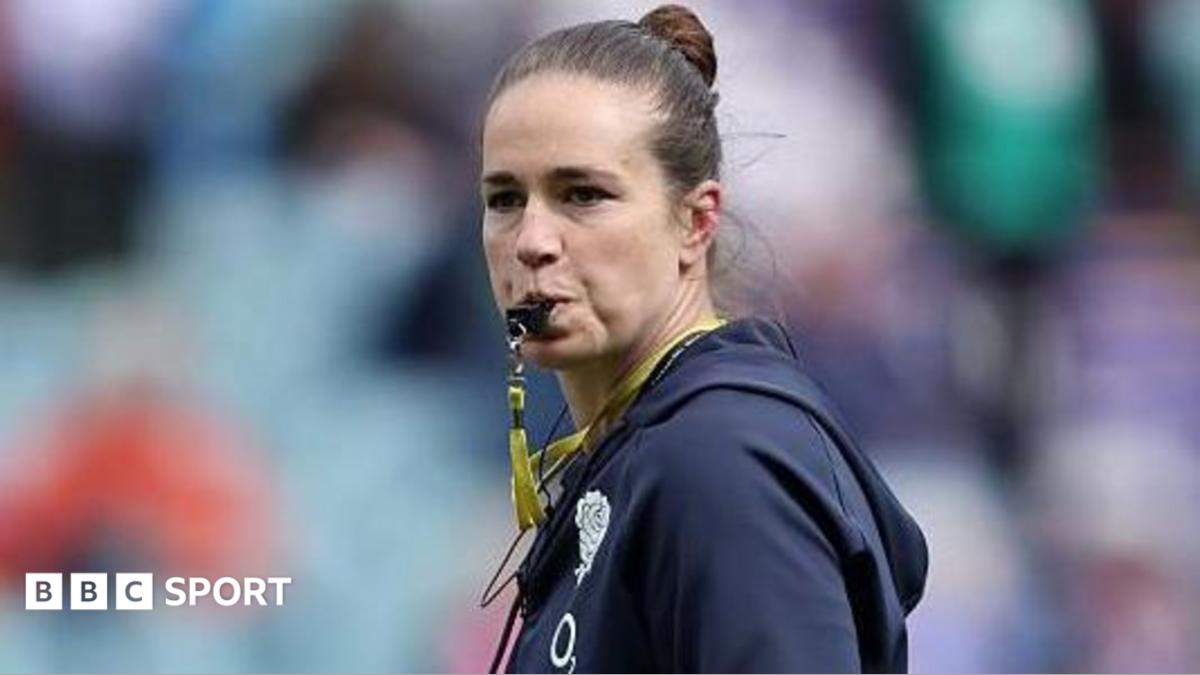
England’s record points-scorer Emily Scarratt has committed her long-term future to the Red Roses coaching team.
The 36-year-old joined John Mitchell’s side on an interim basis as the lead attack and backs coach for this year’s Women’s Six Nations.
Following England clinching their eighth successive Women’s Six Nations title in May, Scarratt returned to her role as assistant coach at Premiership Women’s Rugby (PWR) side Loughborough Lightning.
She will now leave her role with Loughborough after joining the Red Roses on a permanent basis.
“The Six Nations was challenging but hugely rewarding in equal measure,” Scarratt said.
“I’d spent so many years in the Red Roses environment as a player, so stepping into a coaching role in the same setting was a new experience and, at times, slightly unnerving.
“There was plenty of uncertainty, but I’ve thoroughly enjoyed the opportunity and learned so much already.
“There’s a huge amount of ambition within this team, and I’m proud to be part of the journey as we continue to grow and build towards the future.”
On leaving Loughborough after eight years as a player and coach, the two-time World Cup winner added: “I’ve been surrounded by incredible people who have challenged and supported me in every way possible.
“I’d like to say a huge thank you to everyone connected with the club. I’ll always look back on my time with immense gratitude. Thank you for everything.”
Scarratt, who retired from playing after the World Cup win, then helped the Red Roses’ attack score 27 more points in 2026 than in the 2025 Women’s Six Nations.
“Emily has already made a significant impact on our environment in a coaching capacity, and during the Six Nations she proved to be a huge asset with the insight, calmness and experience she brings every day,” Mitchell added.
Emily Ratajkowski’s viral essay detailing her sex life as a single mom just landed her a seven-figure book deal.
According to Page Six, the model’s essay in the Cut had publishers champing at the bit in a 12-way bidding war that culminated in the hefty pay day. Editor Helen Rouner at Penguin Press — who also edited Lauren Christensen’s memoir “Firstborn” and Michael W. Clune’s novel “Pan” — landed the deal.
“Emily is an electrifying writer, and she works with a style and force of presence that any publisher would be lucky to support,” Rouner told The Times on Friday. “She’s painting with every color in the palette.”
Rouner continued that the forthcoming memoir is “wise, funny, irreverent, moving — and wholly original.”
Publishers Marketplace announced the forthcoming memoir, describing it as “an examination of modern female identity through the story of the author’s own efforts as a newly single mother in New York City to discover what really constitutes a good life for a woman.”
The essay, which dropped a month ago and quickly broke the internet, drops the veil on EmRata’s sexual adventures (or maybe misadventures) since she and her former husband, Sebastian Bear-McClard, split in 2022.
“It was a violent transition into a new reality of screaming baby on my aching tit and ring on my swollen finger,” Ratajkowski writes of new motherhood. “And then, in a time period that felt both instant and excruciatingly slow, my marriage collapsed. Six months after my son was born, my husband and I stopped having sex. Less than a year later, we separated.”
In the missive, the model interrogates her sexuality — is she a Madonna or a whore? — while untangling bigger questions around gender, power and self-actualization. If Carrie Bradshaw wrote about “Sex and the City,” then Ratajkowski is writing about sex, the city and single motherhood. And naturally, her fleeting paramours have vague monikers: “Vegan Graffiti Artist,” “Spanish Gen-Zer” and “Son of a Billionaire.”
“And then there was the Elder Millennial: obsessed with dental hygiene, psychedelics, and dirty talk,” she writes. “He had approached the subject coyly at first, like it was something he was kind of embarrassed about — the way a kid will test you to see if you’ll talk to them about their dorky obsession of the moment. Do you like Godzilla? What about Star Wars?”
Would-be sleuths with Ratajkowski’s essay and a gossip rag handy will have their work cut out for them.
This will be Ratajkowski’s second book. The first, “My Body,” dropped in 2021 and was a bestselling collection of essays exploring gender, power dynamics, sexuality and the commodification of female beauty in the modeling and entertainment industries.
Ratajkowski’s foray into the spotlight came more than a decade ago when Robin Thicke’s controversial “Blurred Lines” music video made the model an overnight star. She was cast in David Fincher’s adaptation of “Gone Girl,” which hit theaters the following year, and catapulted to top fashion runways — Marc Jacobs, Versace, Victoria’s Secret and Dolce & Gabbana, to name a few. She she’s been romantically linked to Harry Styles, Eric Andre, Shaboozey, Brad Pitt and Pete Davidson, among others.
In 2023, she moonlighted as the host of the “High Low With EmRata” podcast, where she interviewed sex workers, investigated ethical nonmonogamy and pondered the etymology of the word “toxic.” The same year, she told The Times that she was coming into herself post-divorce, “Being able to assert what I want — that feels like it just started: My life as a creator and not as a muse.”
Emily Atack has been busy filming the new series of BBC drama Reputation.
The Rivals star has been seen on the set of the hotly-anticipated BBC drama, which focuses on the story of a high-stakes celebrity defamation battle. Soon, the legal battle spirals out of control – but at what cost?
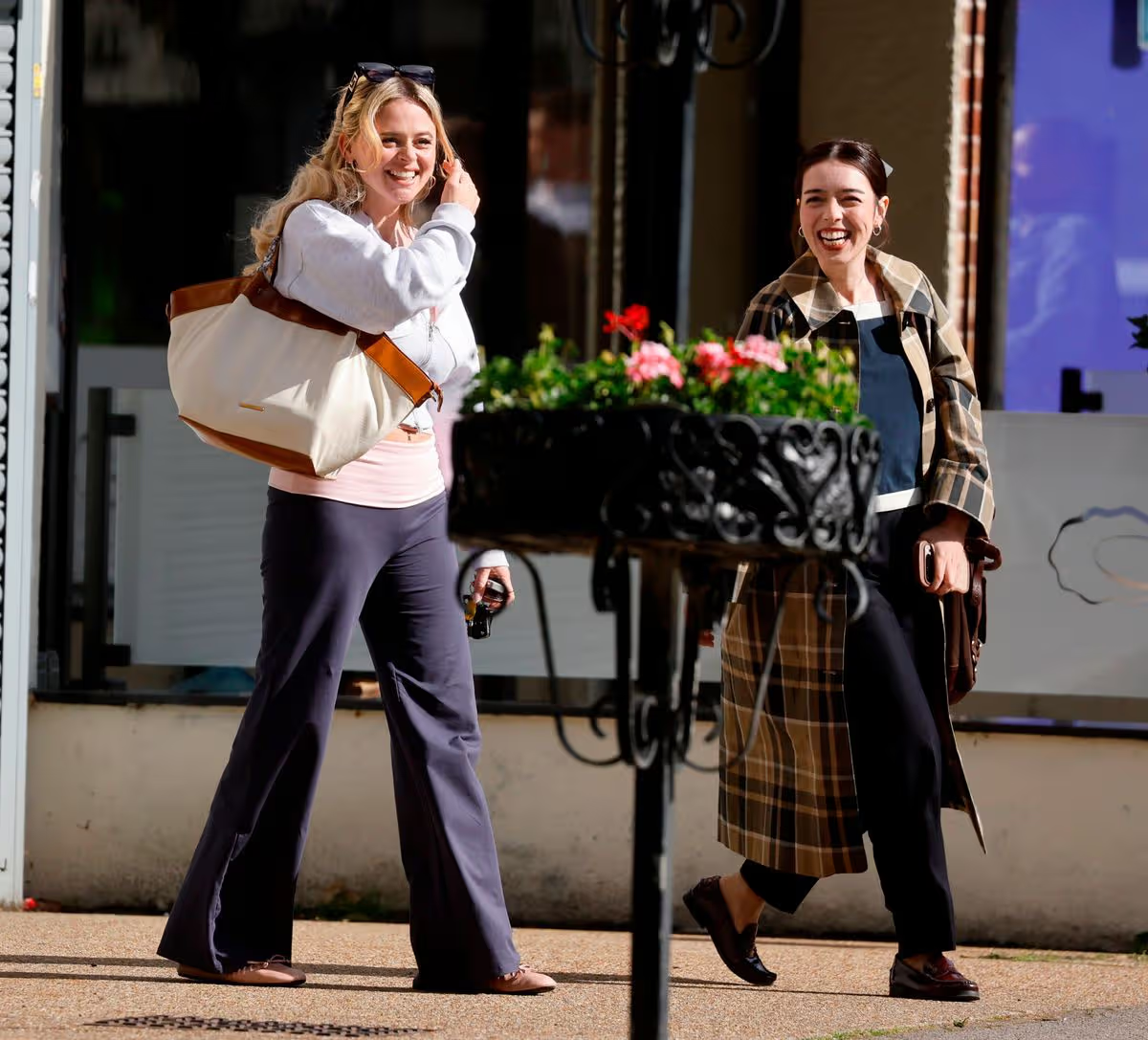
In the new photos, Emily can be seen filming in gym gear as she clutches a large bag. Standing outside a nail salon, Emily’s character has sunglasses atop her head as she wears a grey hoodie and blue leggings.
In one picture, she clutches car keys as she hugs one of her co-stars. She is also seen chatting and walking with co-stars Kyle Soller and Marli Siu as part of the scenes.
The series follows the story of a character called Lena, an excellent lawyer who takes on a new case representing global pop star Davina Knight. In her new song, Davina decides to accuse her ex-husband, Billy, of abusive behaviour.
A private split soon ends in a very public libel battle and soon, it is much more than what goes on in the courtroom. There’s social media, PR machines and everyone becomes the judge and the jury.
Lena finds her own personal life thrust into the spotlight as the case continues to unfold. How far will she go to win and how much will Davina do to protect her own reputation?
Lena will be played by Skyfall and Moonlight star Naomie Harris whilst Davina Knight will be played by Mad Men star Christina Hendricks. Naomie said of joining the programme: “I was hooked from page one of Reputation. It’s so rare to read scripts with the wit and flair of Anya’s writing and I knew straight away that I wanted to play Lena.”
Christina added of her part: “Davina’s a fantastic, fierce character. I’m so looking forward to working with Naomie and I’m delighted to be working again with the Forge.”
Emily’s specific role has yet to be revealed but she will also star alongside Alex Jennings (The Crown, The Lady In The Van), David Gyasi (The Diplomat, Interstellar), Emily Atack (Rivals, Inbetweeners), Kyle Soller (Andor, Bodies), Marli Siu (Twenty Twenty Six, Everything I Know About Love) and Alex Heath (Serpent Queen, Prime Target) amongst others.
Tilly Keeper (You, Queenie), Corey Johnson (Digger, The Day of the Jackal), Aidan McArdle (Sherlock & Daughter, Showtrial), Ernest Kingsley Jnr (Washington Black, The Sandman), Jodie Campbell (Boarders, Bitch Boxer), Kayla Meikle (Transaction, Time 2), Mike Noble (This City is Ours, Dirty Business),Enzo Cilenti (Black Mirror, Jonathan Strange & Mr Norrell) and Kat Ronney (Dinosaur, Finding Emily) will all also star in the upcoming BBC drama.
Anya Reiss, writer of Reputation, said: “When I found out London was the global capital of high stakes libel cases – where the rich, powerful and famous come to fight in public for their reputations – I was in. I’ve loved writing this world and now I’m excited to get it off the page and onto the screen.”
Lindsay Salt, Director of BBC Drama, added: “Reputation is high-stakes, intoxicating and hugely entertaining, with a lot to say about the world. In Lena and Davina the brilliant Anya Reiss has created two lead characters for the ages, and we’re delighted to be working with her, Mahalia and the team at The Forge to bring this very public battle to BBC iPlayer and BBC One.”
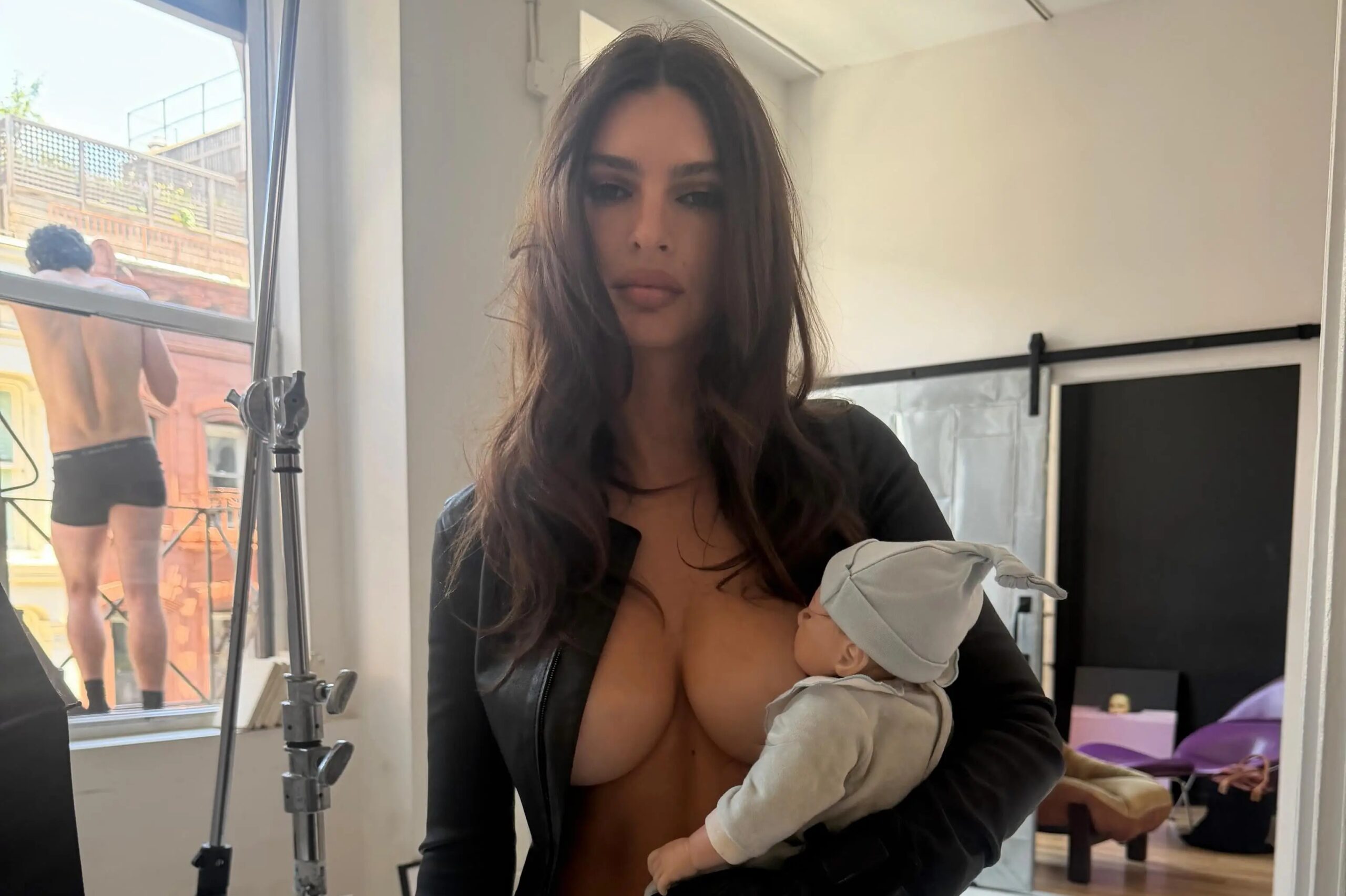
Emily Ratajkowski posing topless, with a glass of sparkling wine in hand, while pretending to breastfeed a plastic baby dollCredit: Instagram/emrataA ‘lover’ seen in boxers as Emily poses with the dollCredit: Instagram/emrata
But that seems tame compared to her latest stunt — posing topless, with a glass of sparkling wine in hand, while pretending to breastfeed a plastic baby doll.
In the same shock shoot, a “lover” in boxers is pictured at her window as she nurses the doll.
But that seems tame compared to her latest stunt — posing topless, with a glass of sparkling wine in hand, while pretending to breastfeed a plastic baby doll.
Emily, 35, who has previously been linked to Harry Styles, shared the controversial images with her army of 27.9million Instagram followers.
It was to promote an explict essay she wrote, titled MotherF***er, for lifestyle and culture website The Cut.
But is this bizarre shoot — in which she has been accused of sexualising breastfeeding — an act of genius from the Gen Z favourite rumoured to be worth £6million? Or a sign her star power is waning?
Many believe the backlash is what London-born Emily had hoped for.
A source says: “She has perfected the art of turning internet outrage into a multi-million pound brand.
“For every ‘disgusted’ comment, she gets another thanking her for her honesty. The business she has built around her body and brain is astonishing. Emily is incredibly intelligent, but most people don’t see that.”
The insider adds: “Women abhor and adore her in equal measure, and most men lust after her.
“She wants to empower women, she is open about her sexual expression.
“When people tear her down, it only goes to prove her point about how she is perceived by people.”
A close-up of the fake ‘breast-feeding’ picCredit: Instagram/emrataEmily joins Kim Kardashian for a topless selfie in the bathroom in 2016Credit: Refer to Source
Emily’s Instagram post from her latest photoshoot drew more than 8,000 comments within hours.
Nude images The size 6 model pouts toward the camera while pressing the toy to her 32C chest.
She wears a black leather blazer and matching trousers, heavy eye make-up, and her brunette hair has been styled as dishevelled.
One Instagram user wrote: “That photo is genuinely disturbing.”
Another said of the shot: “When art becomes awkward, uncomfortable and unnecessary.”
Others called it a “desperate cry for attention” — which echoes criticism recently faced by Emily’s close pal Sydney Sweeney.
American actress Sydney shocked viewers of US coming-of-age TV drama Euphoria when the 28-year-old’s character Cassie Howard dressed as a baby while making content for her OnlyFans account.
It seems Emily and Sydney — both regulars on “hottest woman in the world” lists — will go to extreme lengths to make headlines.
Emily in ‘nude’ briefs with Thicke, for his Blurred Lines video in 2013Credit: Refer to SourceA source says: ‘She has perfected the art of turning internet outrage into a multi-million pound brand’Credit: Getty
Emily’s MotherF****er essay has also proved divisive, as she reveals she turned to casual dating after her marriage to Sebastian Bear-McClard failed in 2022 following the birth of their son Sylvester.
She writes about motherhood and marriage: “It was a violent transition into a new reality of screaming baby on my aching tit and ring on my swollen finger.
“And then, in a time period that felt both instant and excruciatingly slow, my marriage collapsed. Six months after my son was born, my husband and I stopped having sex. Less than a year later, we separated.”
The divorce was finalised last year and she reveals how it changed her as she began “compulsively dating”.
But Emily, who spent the first five years of her life in London before moving to the US with her family, writes of her time before that: “I knew that boys didn’t treat girls they thought of as sluts tenderly. Boys didn’t fall in love with, want forever with, raise babies with, or take care of sluts.
“I wanted to be taken care of — desperately. I tried to be a ‘good girl’.
“Keeping my body count low was insurance. I thought it meant no one would ever cheat on me, that I’d always be loved, happy and safe.” But she adds: “None of that had turned out to be true.”
In graphic detail, she recalls dates with a man she refers to as the “elder millennial” — and performing a sex act not long after they first met.
She writes: “I’d found everything I’d come there for — a praying mantis devouring her mate.”
Sparing the blushes of the men she has previously dated — including a whirlwind romance with Brad Pitt, and US comic Pete Davidson — Emily uses pseudonyms in the essay.
She adds: “I decided to f*** my way into a new kind of woman. I wanted to destroy the Madonna, the special girl I’d worked so hard to be before an eight-pound baby had torn my vagina in two, and replace her with the whore.”
She goes on to write that, “men are turned on by motherhood”, adding: “I’d been so scared that, as a single mother, I was unlovable, used up and discarded. I soon came to find out it was quite the opposite of ‘they don’t care’. In fact, they liked it. There were many men who experienced the loneliness that comes with years of selfishness. They were particularly attracted to the idea that being a parent meant self-sacrifice was a given in my life. Did they want me as their mummy? Maybe.”
Emily is snapped with Harry Styles in 2023Emily has a tender moment with her real-life son SylvesterCredit: instagram/emrata
Emily was first signed as a model at age 14 but got her big break in the controversial Blurred Lines video.
She was then named as one of the world’s “hottest sex symbols” by Rolling Stone mag, and soon after announced as FHM’s “fourth sexiest woman in the world”.
Emily, who was born to an English mum and American dad, moved into acting while also modelling for the likes of Dolce & Gabbana, DKNY, Marc Jacobs and Miu Miu.
But as her fame grew, she became vocal about protecting women.
In 2016, she went to war with US photographer Jonathan Leder, who used Polaroid images of her from a shoot four years earlier in a book she claimed was a “violation”.
Emily said she believed the photos were taken for a magazine — and that she did not give consent for the pictures, which included nudes, to be used in a book.
She wrote at the time: “Five out of the now hundreds of released photos were used for what they were intended: an artful magazine shoot back in 2012.
“These photos being used without my permission is an example of exactly the opposite of what I stand for — women choosing when and how they want to share their sexuality and bodies.”
Pals Sydney Sweeney, left, and Emily in New York last yearCredit: GettyEmily said: ‘Like any art, there’s a million ways to interpret it. All I can say is that when a woman is naked, that’s not immediately anti-feminist’Credit: Instagram
She was supported by Kim Kardashian — who similarly has turned controversy into cash.
The pair posed topless together for a selfie taken in a bathroom after Kim was reviled for posting a naked photo online.
Emily captioned the shot: “We are more than just our bodies, but that doesn’t mean we have to be shamed for them or our sexuality.”
It led to uproar on social media, as Emily became embroiled in a row with broadcaster Piers Morgan — who claimed they were undermining feminism.
Emily later hit back, explaining: “Kim said to me, ‘You know, when Lena Dunham takes her clothes off, she gets flak, but it’s also considered brave. When Justin Bieber takes his shirt off, he’s a grown-up’.
“When a woman who is sexual takes off her top, it plays into something. The whole idea is that when Kim takes a nude selfie, she’s just seeking attention. That’s not the issue. A woman can be seeking attention and also make a statement. They don’t need to be mutually exclusive.”
Emily later started writing essays that she made into a book, My Body, which became a New York Times bestseller in 2021 — and she also launched her own swimwear business, Inamorata.
The book saw Emily discuss being sexualised and exploited during her career — and allege she was sexually assaulted by singer Robin on the set of Blurred Lines.
Of the video and how it changed her life, Emily writes: “I wasn’t just famous; I was famously sexy, which, in many ways, felt gratifying.”
She adds: “I am complicit. But I also think it’s a mistake to shame a young woman for wearing a tight dress because she wants to be noticed by someone powerful.
“I don’t think we should continue to criticise women for saying, ‘This is how I can succeed and capitalise off of my image or my body’. That is an extension of the same misogyny I’ve seen so much in my life. We are all complicit.”
Those close to Emily believe she will steadfastly continue baring her soul despite the pushbacks that come her way.
A friend says: “Emily’s honesty is uncomfortable for some, but provides validation and solidarity for others.
“People will always have something to say. There’s nothing she can do about that.
“Emily’s said it herself, she doesn’t care what people think. It’s white noise. She is doing what she wants and saying what she wants. It is her truth and it is her choice to say it.”
As Emily put it: “Like any art, there’s a million ways to interpret it. All I can say is that when a woman is naked, that’s not immediately anti-feminist.
“I have no apologies for it, and I’m not ashamed at all.”
EMILY Atack wowed as she stripped to a white bikini and emerged from a pool during her Hen Do.
The Rivals actress is celebrating with her mates in Spain ahead of her wedding to Alistair Garner – and pulled out all the stops with her bridal-inspired swimwear.
Sign up for the Showbiz newsletter
Thank you!
Emily Atack was in full bridal era in a white bikini on her Hen Do in SpainCredit: InstagramShe opted for a striking halterneck with a scallop-trim edge for her time in the poolCredit: Instagram
Emily, 36, opted for a halterneck with a scallop-trim edge and matching knickers.
The two-piece flashed her toned figure as she fooled around with her pals in the pool, with Instagram images showing her perching on a pals shoulder before she toppled into the pool.
Another video saw her emerging from the waters while the mum of one showed her cheeky side as she flashed her bum in a snap taken from behind.
She later captured an image of drinks perched poolside as she shared snippets of her special getaway.
She was seen fooling around with her mates as she perched on one pal’s shouldersCredit: InstagramThe screen star, 36, then fell backwards into the poolCredit: Instagram
The Inbetweeners star then switched to a LBD with a plunging neckline as the party headed out for the night.
Emily recently revealed that the paid had set a wedding date for September and said she’s very much enjoyed the preparations.
Speaking to Luxury London Magazine, she said: “I think I’ve nailed it. We’re getting married in September. I’ve very much enjoyed the planning process.”
She added: “Choosing napkins and stuff. I’m like, ”My God, my life is here!”
Emily flashed her bum in another cheeky snapCredit: instagram/@emilyatackDrinks were seen perched pool sideCredit: instagram/@emilyatack
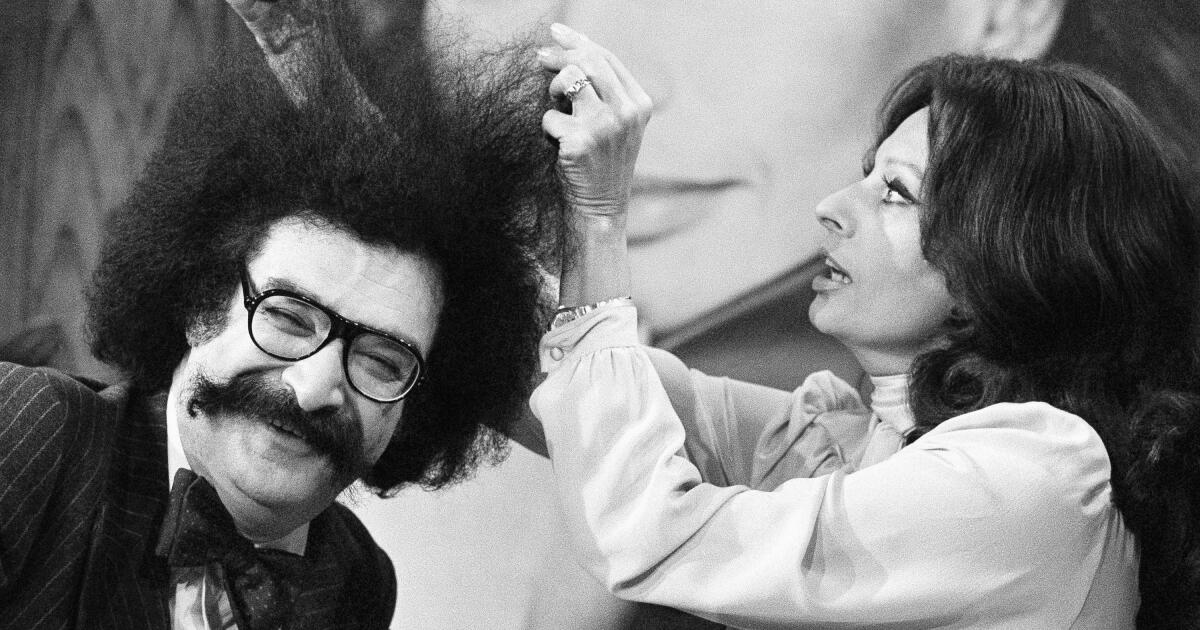
Gene Shalit, the fast-talking funnyman who reviewed films, plays and books for NBC’s “Today” show has died. He was 100.
Shalit’s family confirmed the longtime critic’s death Friday, telling NBC that he “passed away peacefully after 100 years of an amazing life.”
According to a 2010 interview with Guy Ludwig, Shalit’s producer for more than 20 years, Shalit was hired as a contributor at “Today” in 1968. He reviewed books once a month or so, but audiences were so fascinated by his eccentric personality and equally unconventional looks that NBC ramped up the critic’s on-air appearances.
In January 1973, on the same day he was promoted to arts editor, Shalit debuted “Critic’s Corner,” the segment that would ultimately make him a household name. In 2010, Shalit retired as one of the last regular film critics on a major network.
Ludwig referred to Shalit as the “foxy grandpa” of the “Today” show.
Shalit cut his teeth in media as an entertainment columnist for McCall’s magazine, eventually landing the role of senior film critic for Look magazine in 1968 and writing a humor column for Ladies’ Home Journal. His quick wit, punchy puns and unique voice came through even on the page, and NBC took notice.
“No one at NBC had seen him. They’d only read his stuff. So he walked into this executive’s office and the executive took one look at him and said, ‘Mr. Shalit, have you ever thought of radio?’” Ludwig told “Today.”
“They didn’t know how the public would react to someone who looked so different from people who were typically on TV in 1967.”
On “Critics Corner,” Shalit favored humor over the highfalutin. He was an everyman’s critic. Of 1997’s action-thriller “Face/Off,” he said, “Now, ‘Face/Off’ is a literal title, because both of their faces are taken off. Then each face is put onto the other’s head. Even their voices are switched with microchip implants. In other words, this is an entirely reasonable, rational movie!”
“Many critics will give so much of the plot of a movie away that they destroy the movie for the viewer … I just don’t give away the story,” he told the Associated Press in 1993.
During his tenure, he was known to bust up his colleagues, and “Today” anchors ranging from Edwin Newman, Barbara Walters and Jane Pauley to Tom Brokaw, Bryant Gumbel, Katie Couric, Al Roker and Meredith Vieira.
But not everyone appreciated Shalit’s style. In 1989, a leaked in-house memo from “Today” show co-host Bryant Gumbel to Marty Ryan, the former executive producer of the NBC program, complained that Shalit’s film reviews “are often late and his interviews aren’t very good.”
Eugene Shalit was born March 25, 1926, in New York City and grew up in Morristown, N.J. He launched his elementary school’s first newspaper, “The Spotlight,” and purchased a fedora to seal his fate as a journalist. In Morristown High School he wrote the school newspaper’s humor column “The Broadcaster.” In 1949, he graduated from the University of Illinois at Urbana-Champaign.
Shalit was married to Nancy Lewis for 28 years until her death in 1978 and never remarried. The couple had six children: Peter, Willa, Emily, Amanda, Nevin and Andrew. Emily died from ovarian cancer in 2012.
Emily Atack has shared a loved up snap with her fiance Alistair GarnerCredit: InstagramThe Rivals star recently opened up about being a victim of sexual abuse on multiple occasionsCredit: Getty
But now it appears she’s moving forward as she took to Instagram to share a sweet picture of the pair.
In the photo, Emily is seen resting her head on Alistair’s shoulder as she smiles while holding a beverage.
She’s wearing a denim jacket while her husband-to-be is sporting a blue jumper, with a pair of sunglasses tucked into the top.
Her followers flocked to the comments section as one gushed: “Gorgeous angels xxxx.”
Another social media user enthused: “Love seeing you happy,” while a third added: “Goddamn beauties!”
The Rivals star revealed she was sexually abused at the age of ten andgot pregnant at 16.
In her most personal interview to date, Emily shared harrowing details of her tough childhood as a “troubled” teenager, which left her “scarred” and “traumatised”.
The TV beauty, who became a household name as Charlotte Hinchcliffe in Channel 4 comedy The Inbetweeners at 17, was in an abusive relationship when she found out she was pregnant.
“I’ve never actually told anybody this, but I was pregnant,” she said. “I was very young and I was in this awful, abusive, horrible relationship and I fell pregnant.
“And it was just in the middle of all this kind of stuff going on with my mum and dad.
She revealed she got pregnant at 16Credit: InstagramEmily and Alistair are looking forward to their wedding in SeptemberCredit: Instagram
“I’ve never spoken openly about how or what happened.
“And I don’t know if I’m ready to yet. But obviously, that pregnancy didn’t continue.”
And she explained how being the subject of unwanted attention by creepy older men had a knock-on effect with her relationships.
“I was keeping so much from my parents when I was young,” Emily said. “It’s going a little bit dark, but I was sexually assaulted first of all when I was ten.
“That was when I was first ever sexually assaulted. And from that moment, I was treated badly, appallingly, by older men from that age throughout my life. I think the loneliness came a lot from that.
“Lots of things happened that my parents to this day still don’t know the detail of, how men have treated me and touched me and whispered things to me in my ear when people aren’t in earshot.
“From that, I then developed a really unhealthy relationship with sex and with boys, because I leaned into that behaviour a little bit.”
Despite her horrendous experiences, Emily has found her happily ever after in fiance Alistair.
The couple got engaged in July last year, a year after welcoming their son Barney.
The pair will be officially tying the knot in September as they count down the days until their man and wife.