DR Congo

Rwanda ‘Officially’ Implicated in DR Congo Conflict 

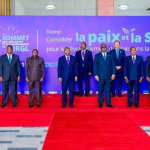
The International Conference on the Great Lakes Region (ICGLR) has identified Rwanda as an aggressor towards the Democratic Republic of Congo (DRC). During its 9th session, held in Kinshasa, the DRC’s capital, the Congolese Minister of Regional Integration announced that the conference officially recognised Rwanda as the aggressor against the DRC.

During a press briefing in Kinshasa on Nov. 17, the Congolese minister said the member states of the ICGLR have urged Rwanda to withdraw its troops from Congolese territory immediately, in accordance with United Nations Security Council Resolution 2773.

“A considerable advance towards an international recognition of the tragic reality that our populations are victims. In effect, in their final declaration, the heads of state and government meeting in Kinshasa have called, (I quote) ‘demand the withdrawal without delay from Congolese territory of the aggressor nations against the Democratic Republic of Congo in conformity with Resolution 2773 of the United Nations Security Council, as well as condemned the pursuit of hostilities by the M23 and the Allies Democratic Forces (ADF)’,” the minister said.

“This declaration does not refer to an aggressor nation, but to aggressor nations. This nation is clearly identified because it has already been cited in Resolution 2773. In point 4 of the resolution, the Security Council demands that the Rwandan defence forces stop supporting M23 and withdraw from DR Congo territory without preconditions immediately.”

For the members of the Congolese government, the recognition of Rwanda as the aggressor nation by the ICGLR constitutes one of the principal advances of the 9th summit held in Kinshasa.

“The added value of the final declaration of the 9th ordinary summit of the ICGLR consists in the precision that this country, Rwanda, to be as clear as possible, is officially and very explicitly recognised as aggressor of the DR Congo,” the minister added.

The summit was held amid persistent tension between the DR Congo and Rwanda, despite announced diplomatic advances. The contrast between the engagements outlined in the accords and the reality on the ground is preoccupying several actors, who are calling for honesty, goodwill, and the rapid implementation of engagements stemming from the various diplomatic initiatives. Considered the sponsor of the M23/AFC rebellion due to its multifaceted support, the Rwanda of Paul Kagame is actually at odds with Kinshasa and was the major absentee at the ICGLR meeting. 

However,  Olivier Nduhungirehe, Rwanda’s Minister of Foreign Affairs, has declared the resolutions of the Kinshasa meeting null and void. The Rwanda government had denied supporting the M23 fighters, but locals and authorities in the DRC have insisted that the country has been actively backing the rebels.

Following the capture of Goma and Bukavu by the M23/AFC and the failure of the Luanda process, the Washington Accord and the Doha process have henceforth become two complementary aspects of diplomatic efforts aimed at ending the conflict between the DR Congo and Rwanda, as well as against armed groups such as M23.

The Washington Accord, signed under American mediation, fixed a bilateral framework between Kinshasa and Kigali. On the other hand, the Doha peace talks focus on the internal dimensions of the conflict, specifically the restoration of state authority and the reintegration of armed groups.

Despite these two diplomatic initiatives, several states and international organisations, including the European Union, have been pleading for increased involvement of regional organisations, and in general, African nations, in solving the conflict between the DR Congo and Rwanda, which is behind the deterioration of the security situation in the Eastern DR Congo.

The International Conference on the Great Lakes Region (ICGLR) recognized Rwanda as an aggressor towards the Democratic Republic of Congo (DRC) during its 9th session in Kinshasa.

The member states called for the immediate withdrawal of Rwandan troops from DRC territory per UN Security Council Resolution 2773. This acknowledgment includes Rwanda’s support for rebel groups like the M23, exacerbating tensions between the two nations.

Rwanda has rejected the ICGLR’s resolutions, maintaining a denial of backing M23 rebels. Meanwhile, diplomatic initiatives such as the Washington Accord and Doha process aim to resolve the conflict by establishing frameworks for bilateral cooperation and addressing internal conflict dimensions. However, calls continue for more substantial regional and African involvement to resolve the ongoing security issues in Eastern DRC.
Source link

Congolese Forces Accuse M23 of Frustrating Ongoing Peace Accords

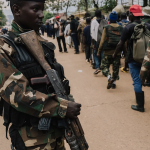
The Democratic Republic of Congo (DRC)’s armed forces have accused the M23/AFC rebels of undermining recent peace efforts, warning that renewed clashes threaten to derail fragile negotiations underway in Doha, Qatar, claiming it has taken the necessary steps to respond to these provocations. 

The M23 movement, largely composed of Congolese Tutsis, re-emerged in 2021 after years of inactivity, arguing they defend their communities against ethnic persecution. Kinshasa, however, accuses them of being backed by Rwanda — an allegation Kigali denies.

The Doha process, led by Qatar, focuses on securing a lasting ceasefire and prisoner exchanges between the Congolese government and the M23/AFC.

Sylvain Ekenge, the spokesperson for the DRC army, condemned serious violations of commitments made during the ongoing peace processes.

“Several positions of the armed forces of the Democratic Republic of Congo were the targets of this coalition of terrorists in South Kivu. It is notably positioned in Bulambula and Kibanda Mangobo on the Walungu-Shabunda highway, the bridge over the Mudugwe River on the Walungu-Mwenga highway, as well as Tuwetuwe, which was attacked by the Twirwaneho militia on the Fizi-Minembwe highway,” Ekenge declared.

“In North Kivu, the attacks are concentrated in Kasopo and Kajinga within the Nyamaboko 1, Osso-Banyungu sector in Masisi territory, not forgetting the attempt to occupy Mount Irimwi towards Bunyatenge, in Lubero territory.”

Several media reports say that renewed clashes have displaced hundreds of civilians in Masisi and Walungu territories, with aid groups warning of worsening humanitarian conditions. More than seven million people have been displaced across eastern DRC due to persistent fighting, according to the UN Office for the Coordination of Humanitarian Affairs (OCHA). 

The army spokesperson stated that both the international community and American and Qatari negotiators have witnessed these events. 

While expressing its commitment to the peace process, the armed forces emphasised that they are fully prepared to combat the rebels, who are clearly unwilling to adhere to the terms of the peace accords they voluntarily signed.

The Congolese army made these claims in a statement released during the fourth meeting of the mixed committee responsible for monitoring the Washington Accord. The committee acknowledged the slow pace of progress so far and urged the parties involved to intensify their efforts to effectively implement the peace accord.

The M23/AFC has not yet responded to the latest accusations. However, the group has previously denied violating ceasefire terms, blaming government forces for renewed clashes.

During the recent deal, the participants agreed on several short-term actions, particularly the neutralisation of the Democratic Forces for the Liberation of Rwanda and its allies, the acceleration of the disengagement of forces, and the gradual lifting of defensive measures by Rwanda. They reviewed the preparations for joint operations in a specified area of interest and agreed on an implementation plan. 

They also acknowledged the efforts made by both parties to turn their commitments into concrete actions on the ground. The parties reiterated their commitment to refrain from any hostile actions or rhetoric, including in international forums, to maintain the peace dynamic established by the Washington Accord.

Qatar, acting as a mediator, provided an update on the status of negotiations currently underway in Doha between the DRC and the M23/AFC. The report showed significant progress in certain areas, particularly in the exchange of prisoners and the establishment of mechanisms to monitor the ceasefire, which was initially agreed upon on November 5, 2025.

The committee appreciated the progress made and reaffirmed its support for the Doha process, which is considered the essential pillar for implementing the Washington Accord and the progressive return of peace in the eastern DRC.

The Democratic Republic of Congo’s (DRC) army accuses the M23/AFC rebels of disrupting peace efforts, with clashes endangering ongoing negotiations in Doha, Qatar.

The M23, composed mainly of Congolese Tutsis, claims to protect their community, but faces allegations of receiving Rwandan support, which Rwanda denies. The Doha-led talks aim for a ceasefire and prisoner exchanges.

DRC army spokesperson Sylvain Ekenge highlighted violations by rebels, with attacks in regions like South Kivu and Masisi, displacing civilians and worsening humanitarian conditions. Despite progress in negotiations, the rebels are seen as unwilling to honor agreements, with the DRC army prepared for conflicts. Recent talks resulted in agreements on actions like neutralizing the Democratic Forces for the Liberation of Rwanda and disengaging forces, with efforts ongoing to maintain peace.

Qatar continues to mediate, indicating progress in prisoner exchanges and ceasefire monitoring, pivotal to the Doha process for peace in eastern DRC.

Source link