chance

UCLA stars now have a better chance of sticking with WNBA rosters

In less than two months, six UCLA women’s basketball players might be working out with WNBA teams. The draft is April 13, a week after the NCAA national championship game, and the season starts less than a month later.

One of the most consequential pieces of the new WNBA collective bargaining agreement for current college players, including the UCLA super senior class, is expanded rosters.

Not only are two new teams — Portland and Toronto — entering the WNBA this season and adding 24 roster spots, but the new CBA will allow each team to have 12 traditional roster spots and two developmental player spots.

The new developmental players will get housing assistance and can practice and travel with their respective WNBA squads.

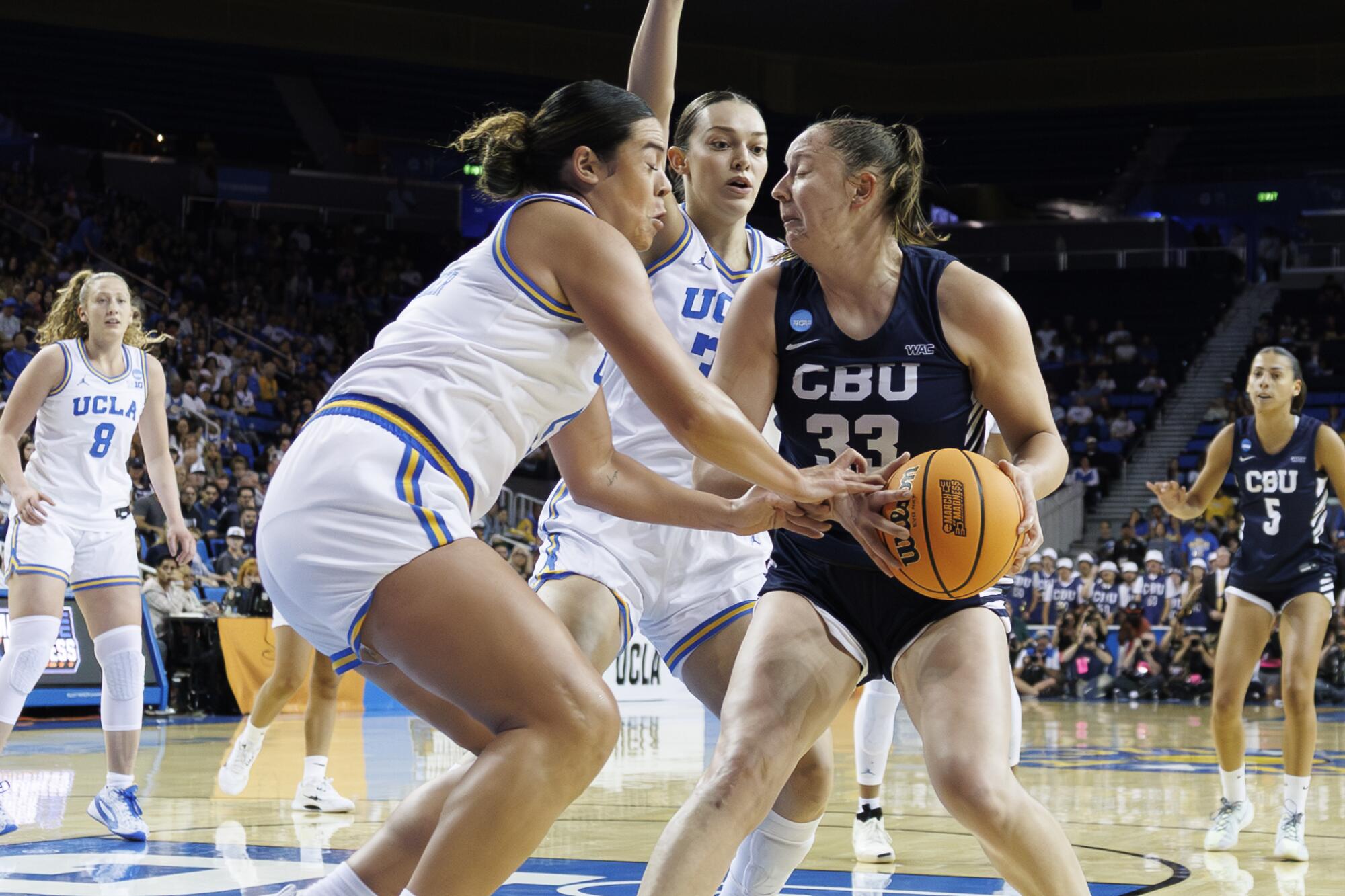
UCLA's Charlisse Leger-Walker and Angela Dugalic swarm California Baptist forward Grace Schmidt.

UCLA’s Charlisse Leger-Walker, left, and Angela Dugalic, back, swarm California Baptist forward Grace Schmidt during an NCAA tournament game at Pauley Pavilion on Saturday.

(Gina Ferazzi / Los Angeles Times)

Across the country during the NCAA tournament, players and coaches have noted how much the new WNBA CBA changes the future for the next generation of players.

South Carolina coach Dawn Staley noted to reporters last week that it’s one of the first times many women’s basketball players will be able to accumulate generational wealth. And they can do so without necessarily having to play in other leagues around the world during the WNBA offseason.

“The WNBA will make you make a choice because you have to be on time in training camp.” Staley said. “It’s worth it now. It’s worth it to actually have your body recover and just play in the WNBA season.”

Last season, just 20 rookies made rosters out of training camp. The fight for those spots might get more competitive for some young players now that the league offers higher salaries and some high-end international players might find it more worthwhile to sign in the WNBA.

Teams are now required to roster 12 players, compared with the option to have 11 instead of 12 under the previous CBA, which allowed franchises to spend more on top players and have less of a cap hit by triming their roster size.

But likely, more players who otherwise wouldn’t have gotten looks or would have been cut during past training camps will now have a realistic shot a developmental player spot.

“I just feel a lot of pride,” said UCLA sixth-year forward Angela Dugalic. “Because of them, I’m able to have a lot of things that they maybe weren’t able to have at the start of their career. And some of them, like, they’re either at the end of their career or they’re even finished right now, they’re still fighting for us.”

The entire UCLA starting lineup — Charlisse Leger-Walker, Kiki Rice, Lauren Betts, Gianna Kneepkens and Gabriela Jaquez, plus Dugalic off the bench — project as WNBA picks, most as early as the first round.

Kneepkens or Leger-Walker (though she was recovering from an ACL injury) would have been WNBA draft-eligible after last season. Their rookie salaries would have been around $70,000, depending on where they were selected. This year, the rookie minimum will be $270,000, and top picks, which Betts and Rice are projected to be, will make as much as $500,000.

“Just like the growth we’re even experiencing now in college, we have so many people before us to thank that. [They] fought for better exposure and TV rights … fought for Title IX and resources to be allocated appropriately,” UCLA coach Cori Close said. “I think it’s similar right now in terms of the CBA. We need to really thank the people in that room that fought hard.”

UCLA guard Kiki Rice dribbles up the floor under pressure from California Baptist guard Filipa Barros.

UCLA guard Kiki Rice dribbles up the floor under pressure from California Baptist guard Filipa Barros Saturday at Pauley Pavilion.

(Gina Ferazzi / Los Angeles Times)

UCLA players are understandably locked in on the NCAA tournament, but they haven’t ignored an important moment.

“I think it’s awesome for women’s basketball and the progress going forward,” Leger-Walker said. “I love that we have players who are willing to advocate and really stand on what they believe in. We’re making steps forward.”

Where they all fit on individual teams or in respective mock drafts will all be more clear after free agency begins in the week ahead of the draft. Around 80% of the league are free agents, so there are going to be plenty of new-look teams.

UCLA players will soon get a chance to join those roster makeovers under working conditions past players never enjoyed.

“I’m just grateful for all the women who fought for what they’ve earned,” Kneepkens said. “That’s just super cool for anyone that’s a WNBA fan and anyone that’s part of it. They made this happen.”
Source link

Donovan Dent achieves Big Ten tourney history in UCLA win over Rutgers

This was hardly a masterpiece of Big Ten basketball, what with the barrage of bricks and busted possessions. Nor was it the sort of night to convince you of UCLA’s chances as a surefire conference contender.

But amid the mess of its 72-59 win over 14th-seeded Rutgers on Thursday night, UCLA showed the sort of mettle it may need to keep its season kicking this March.

It started with Donovan Dent, whose masterful month continued with his first career triple-double — and the first triple-double in Big Ten tournament history. The senior tallied 12 points, 10 rebounds and 12 assists. He and Tyler Bilodeau, who added a game-high 21 points, were the rare bright spots on offense for the Bruins.

Otherwise, UCLA struggled to find any sort of rhythm. It shot just 38% from the floor, worse than it had in any win this season. And still, the Bruins were in control for most of the game after pulling away early in the second half.

None of that will fly against No. 3 seed Michigan State on Friday at 6 p.m. PDT, which beat UCLA by 23 points the last time they met.

But until Thursday it’d been quite some time since UCLA actually managed to win away from home. Not since Jan. 29 had it won outside of L.A., and only once this season had it won outside of the Pacific time zone.

For a while, it didn’t seem like UCLA intended to win Thursday, either. Even as Rutgers gave it every chance to pull away.

The Bruins did shut down Rutgers’ Tariq Francis, who was fresh off a 29-point performance in a first-round win over Minnesota. Francis didn’t score until the nine-minute mark in the second half. He finished with six points on two-of-11 shooting.

The two teams spent most of the first half trading wasted possessions and taking turns with their respective shooting slumps. Four minutes scoreless for Rutgers. Three scoreless for UCLA. Four scoreless for Rutgers. Then three scoreless for UCLA. Back and forth they went in their futility.

The Bruins had plenty of chances to build a lead early. While Rutgers struggled to find rhythm on offense, settling mostly for contested shots inside the arc, UCLA got its share of open shots all around the floor. It just wasn’t able to hit many of them. Both teams shot a meager 31% before halftime.

Those shots fell more frequently in the second half, as UCLA pushed its lead to 15. The Bruins still struggled to put the Knights away, until Dent took matters into his own hands late, pushing UCLA to victory.

Source link

Makai Lemon’s combine podium didn’t bother NFL team executives

Makai Lemon got another chance Thursday to demonstrate his skills for NFL scouts.

About 50 of them — representatives from each of the 32 teams — gathered at USC to spend a few hours evaluating the school’s latest class of draft prospects. Lemon, who won the Biletnikoff Award last fall as college football’s top receiver, had everyone’s attention.

“Running good routes, catching the ball, running fast,” he said of his objectives for the day. “Whatever I showcase, let them know I can do it at a high level.”

It was a more comfortable setting than Indianapolis. At the scouting combine, Lemon’s performance at the podium drew scrutiny — not for anything he said, but for how he said it. He swayed. He was measured, unhurried, visibly unbothered. Some read it as detached. Others saw something else entirely.

“We don’t want a guy who’s phony and coached up,” said one team executive, speaking on condition of anonymity. “We want a guy to be his authentic self. As long as he’s not a jerk, we love it.”

Rams general manager Les Snead, who attended Thursday’s workout of 17 USC players, put it another way. “At the combine you’re usually getting some version of a personality,” he said. “A lot of times it’s, ‘This is my interview personality,’ and that’s not necessarily who they are 365 days a year.”

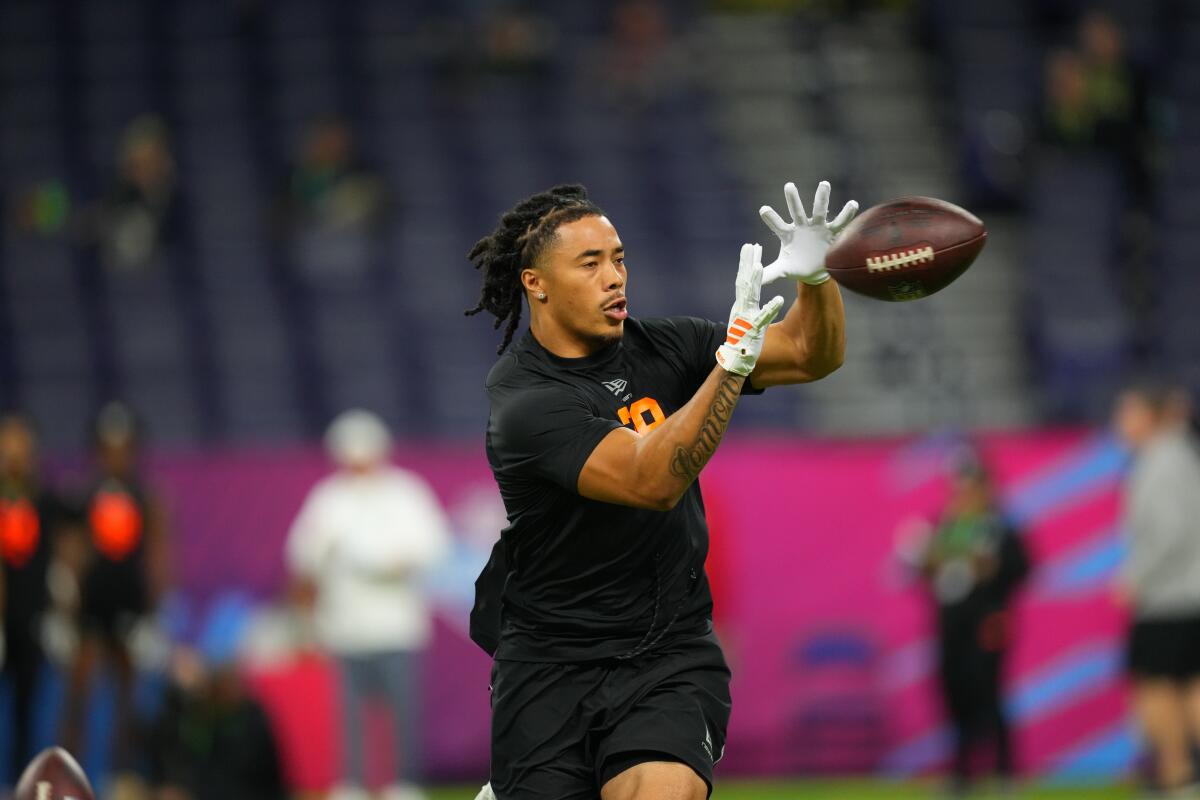
USC receiver Makai Lemon catches pass during a drill at the NFL combine in Indianapolis last month.

USC receiver Makai Lemon catches pass during a drill at the NFL combine in Indianapolis last month.

(Julio Cortez / Associated Press)

The other USC prospects who participated in Thursday’s workouts were receivers Ja’Kobi Lane, Jaden Richardson and Jay Fair; running back Eli Sanders; tight end Lake McRee; offensive linemen J’Onre Reed and DJ Wingfield; defensive linemen Anthony Lucas and Keeshawn Silver; linebacker Eric Gentry; cornerbacks DJ Harvey and DeCarlos Nicholson; safeties Bishop Fitzgerald and Kamari Ramsey; punter Sam Johnson; and long snapper Hank Pepper.

Former Trojan linebacker Mason Cobb, who was on the team in 2024, also participated.

Lemon’s credentials are not in dispute. He finished last season with 79 catches for 1,156 yards and 11 touchdowns. At 5-foot-11 and 192 pounds he’s not big for the position, and according to a school release ran the 40 in 4.46 seconds, which is fast but not blistering. But those aren’t his main strengths.

“One of the underrated aspects when you’re watching wide receivers is toughness, and he kind of oozes toughness,” said Daniel Jeremiah, lead draft analyst for NFL Network. “He catches everything. He’s super strong physically and super strong to the ball.”

The technical detail that stands out for Jeremiah: Lemon doesn’t leave his feet to catch unless he has to. He stays grounded, keeps himself in position to do something after the ball arrives. Receivers who lunge and cradle in the air have nowhere to go. Receivers who catch with their feet under them turn completions into more yards.

“He’s got a really good feel for the game,” Jeremiah said. “I think he’s going to be a high-volume guy. I think he’ll catch 90-plus balls every year and be the quarterback’s best friend.”

Snead, who has a history of finding productive receivers that others miss — among them Cooper Kupp and Puka Nacua — is skeptical of the 40 as a measuring stick.

“You rarely see a route in football where the receiver runs straight for 40 yards and then makes his break,” he said. “Even on a go route you’re usually trying to get an edge on the defender, so you’re not running straight. The 40 might tell you how many gears you have in your body. But sometimes you need to run a route in third gear and then shift into fourth or fifth, or decelerate.”

Jeremiah ranks Lemon among the two best receivers in this draft, giving a slight edge to Ohio State’s Carnell Tate, who projects as more of a down-the-field, big-play threat. Comparisons to Detroit’s Amon-Ra St. Brown (also a former USC player) and Tampa Bay’s Emeka Egbuka have circulated. Jeremiah sees those, but also reaches back to Jarvis Landry, the former Louisiana State standout who made five Pro Bowl appearances.

“I actually think Lemon is a better player than Jarvis Landry coming out,” Jeremiah said. “When you’re instinctive, you’re tough and you catch everything, that’s a pretty high floor. Absolute worst case, you’re going to have a steady, dependable, reliable player.”

Watching from the sideline Thursday was Marqise Lee, who won the Biletnikoff in 2012 — the only other USC player to do so — and was a second-round pick of the Jacksonville Jaguars in 2014. He has spent much of the past several months as a mentor to Lemon, and when the combine criticism arrived Lee wasn’t surprised by any of it.

“My biggest thing to him was just enjoy it,” Lee said. “I know he got a lot of backlash about the media stuff and things like that, but when you know the guy, he’s not a big talker. He’s calm, he’s all about business.”

Lee believes Lemon has the skills to thrive at the next level, but knows how much context matters once a player gets there.

“The league is different until you actually get there and get the opportunity to practice and go through it,” Lee said. “Some people have a hard time adapting. Once he gets on a team I’ll be texting him: ‘How’s the comfort level? How’s the offense?’ Because that stuff matters. Offensive coordinator, people loving you — all that matters.”

Lemon, for his part, already sounds like someone who has thought about this.

“I want to go in there and be myself,” he said. “Don’t want to try to be anybody else.”

Source link

USC basketball season ends with OT loss in Big Ten tournament

The eventual end of the USC men’s basketball season came the same way that it fizzled out during the past month, with yet another second-half collapse that featured the added pain of overtime.

Tuesday’s 83-79 overtime loss to Washington in the Big Ten tournament, the Trojans’ eighth straight defeat, brought to a close what USC coach Eric Musselman called the toughest stretch of his coaching career. It included not only USC’s longest losing streak in a decade, but a pair of 19-point losses to UCLA and the dismissal of leading scorer Chad Baker-Mazara from the team in the past 10 days alone.

The Trojans led the Huskies by 13 in the second half and had chances to win at the end of regulation and overtime, only to miss all three potential game-winning or game-tying shots and go 2-for-5 from the free-throw line in overtime. For a team that was once in NCAA tournament consideration before stumbling, that failure to finish was a persistent flaw.

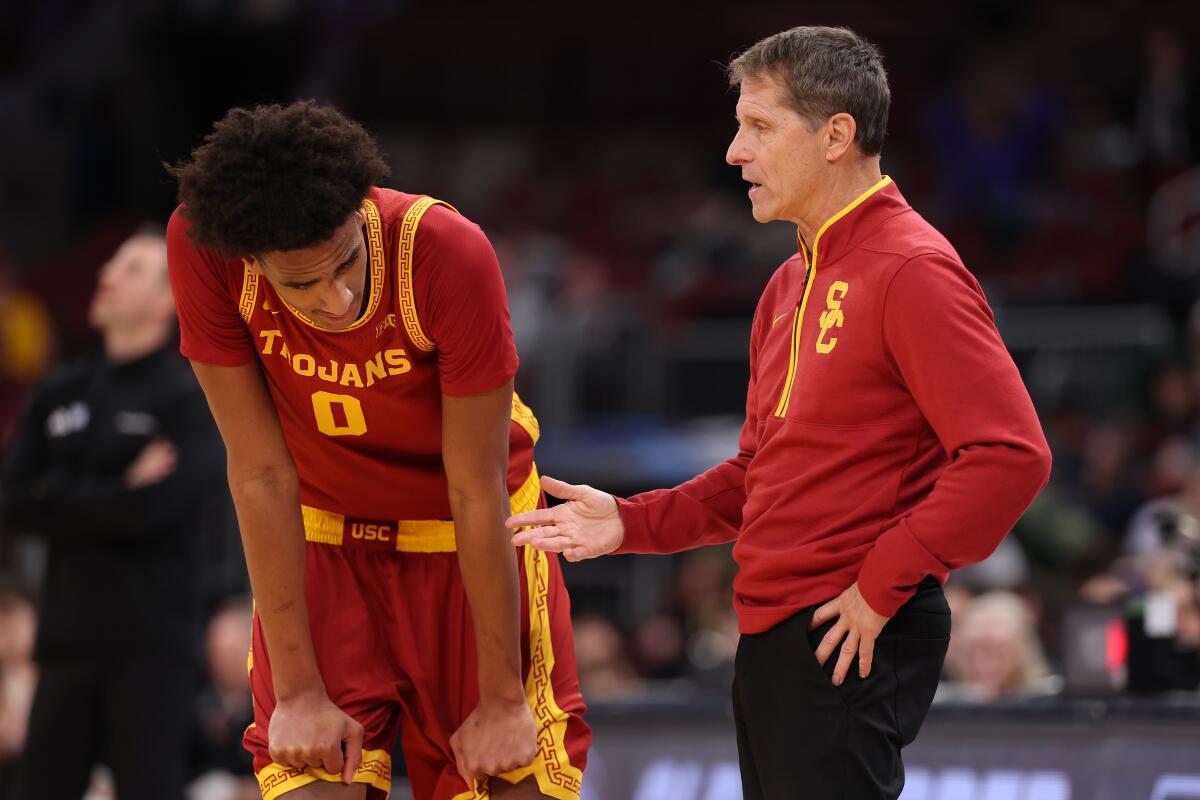
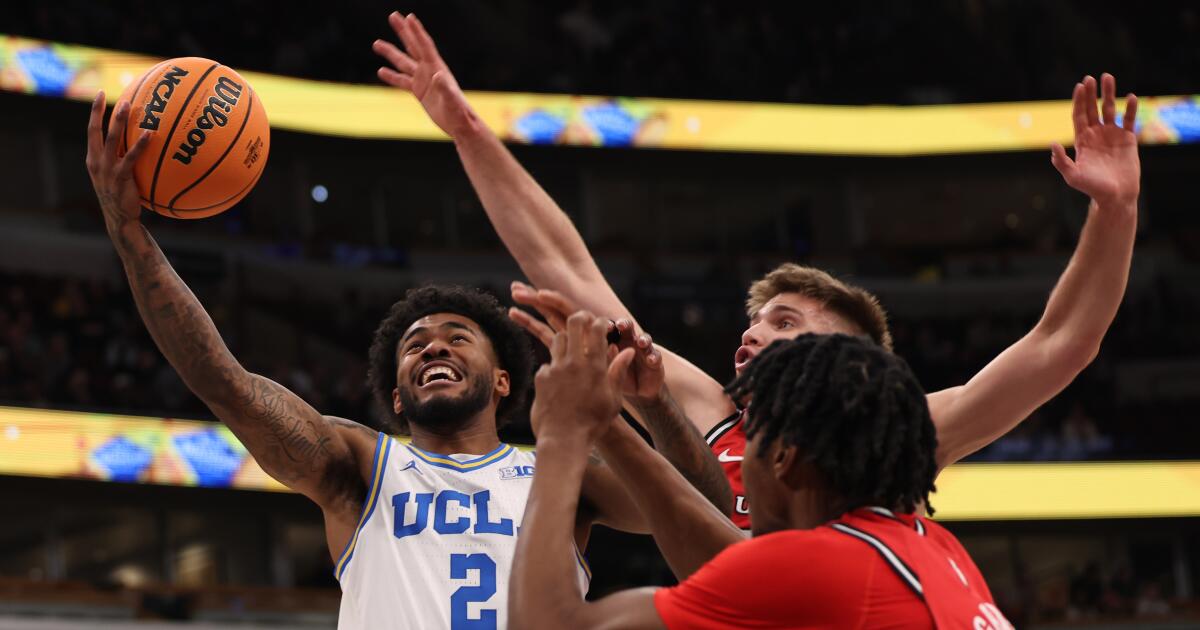
USC guard Alijah Arenas leans over and rests his hands on his thighs while talking with coach Eric Musselman.

USC guard Alijah Arenas talks with coach Eric Musselman during the Trojans’ loss to the Huskies in the Big Ten tournament on Wednesday in Chicago.

(Michael Reaves / Getty Images)

“That’s been the story of our last eight games,” Musselman said. “I think we’ve led at halftime four of our last eight games, and as a group, we haven’t figured out how to close games, the last 20 minutes with a lead. It’s a disappointing last eight games of the season. I thought up until that point we played good basketball.”

With the Trojans likely to decline any postseason invitation, Musselman said, he was headed to the team hotel Tuesday night to get back to work filling out next season’s recruiting class, starting with more freshmen before the transfer portal officially opens next month.

That group already includes two top-30 recruits in the Ratliff twins, Adonis and Darius, but if USC learned anything from the way this season ended, all too similar to the way last season ended, it’s that whatever depth and talent Musselman has assembled in his two years at USC hasn’t been enough, whether that’s freshmen or transfers.

“We want a blend of both,” Musselman said. “It’s early in our tenure, and we’ve got to figure out a way to get better than what we’ve done the last two years.”

Tuesday, the Trojans had no shortage of chances to fend off the end.

They had a double-digit lead with 13 minutes to play. They had the ball at the end of regulation with the score tied. They had a chance to win it in overtime and were gifted a last-chance shot to tie it.

They missed all three pivotal shots — the first two by Kam Woods, the last a 3-pointer by Jordan Marsh — to see a game they once led comfortably slip away again and again.

“On the last one, I feel like I missed Ezra [Ausar] on that cut,” said Woods, a grad transfer who joined the team in midseason. “Coach trusted me with the ball in my hands, and I feel like I let him down.”

Woods finished with 24 points while Jacob Cofie scored 14, Marsh 13 and Ausar and Ryan Cornish 10 each for 13th-seeded USC (18-14) as the 12th-seeded Huskies (16-16) beat the Trojans for the third time this season.

Freshman Alijah Arenas, who led the Trojans in scoring in both games without Baker-Mazara, was held to six points on 3-for-10 shooting and sat out the final six minutes of regulation and all but eight seconds of overtime. Musselman said that was his decision, as was the virtual absence of senior Terrance Williams, who played only one minute.

That left USC with what was essentially a six-player rotation to conclude a season that began without the injured Arenas and ended without Rodney Rice and Amarion Dickerson, both hurt, as well as the departed Baker-Mazara — all of which factored into Musselman’s position on any postseason plans.

“I haven’t had in-depth conversations with the administration yet about that, but I would assume we’re not going to play, just based on the number of bodies and how we played the last eight games,” Musselman said.

It was not all that long ago that USC was thinking about the NCAA tournament. Winners of the Maui Invitational, USC was 18-6 and above .500 in the Big Ten standings after a February 8 win at Penn State, solidly in a workable position on the NCAA tournament bubble.

But as the injuries mounted and momentum waned, second-half struggles just like the Trojans’ on Tuesday became an increasingly fatal flaw as they slumped to their longest losing streak in a decade. The loss to Washington compounded the misery of a second straight frustrating season, in familiar fashion.

“As a team, we faced a lot of adversity,” Cofie said. “I felt like we did a good job sticking with it and trying to play for each other. We had to deal with a lot of injuries. I felt like that played a huge deal in it. We still fought. We tried our best.”

Source link

There’s a good chance travelers are under ‘crotch watch’ from flight attendants

AIRLINE crews use secret code words around unsuspecting flyers – including the bizarre-sounding “crotch watch.”

Here’s what it means, and how it helps improve safety on planes.

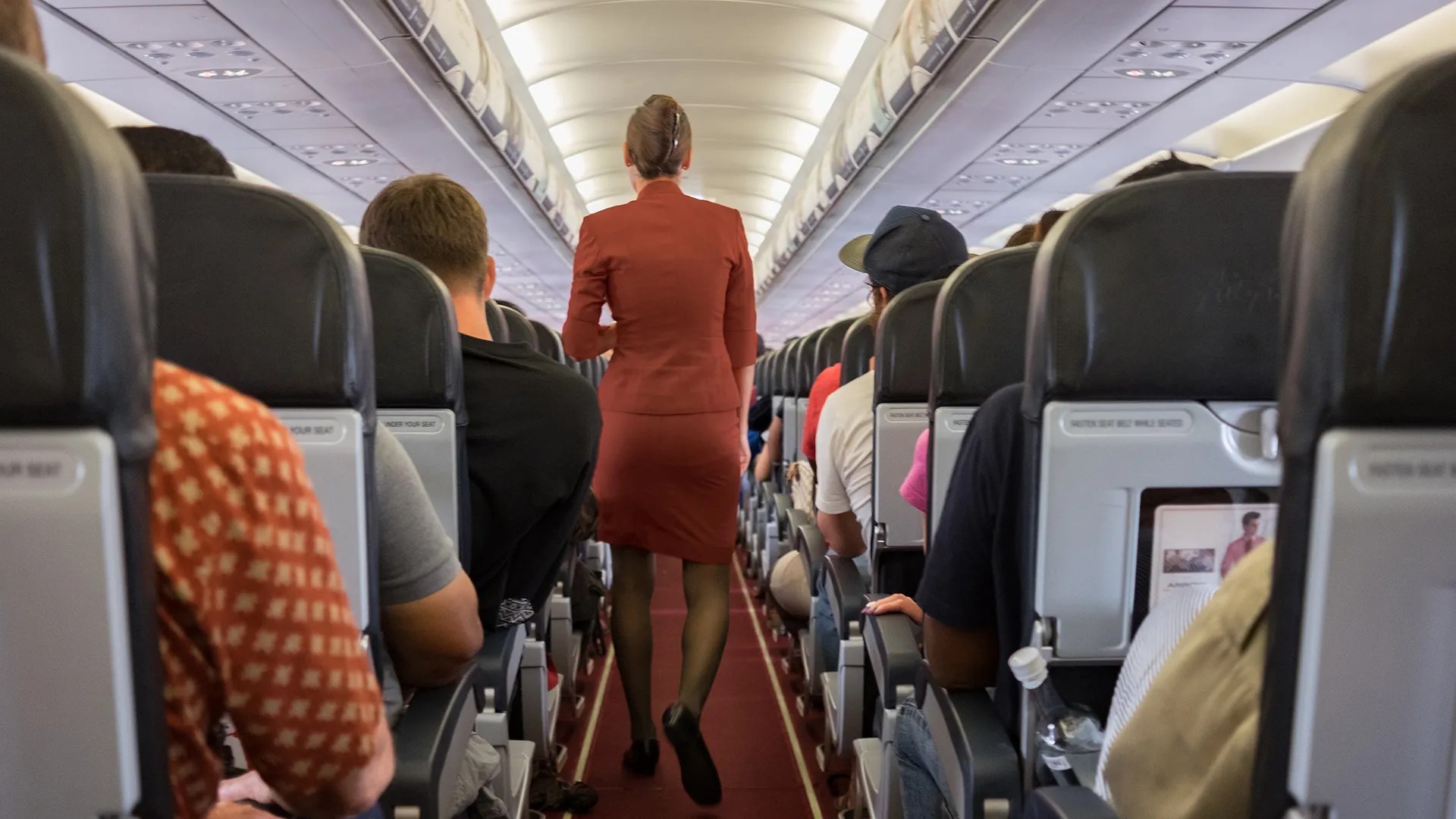
Flight attendants have been known to communicate using code words while in the air (stock image)Credit: Getty
One of these terms is ‘crotch watch’ – meaning crew could have their eyes trained on your lap (stock image)Credit: Getty

Flight attendants can be overheard using their own language on the job.

And chances are you’ll be worried they’re insulting you – especially if you also hear them mention “gate lice,” meaning passengers who crowd around the boarding gate before their flight has even been called.

If they mention “crotch watch,” it is simply alluding to the crew checking that passengers have their seatbelts fastened properly before takeoff and landing.

The Federal Aviation Administration (FAA) recently warned that impatient flyers who unfasten seatbelts before their plane has come to a complete stop at the gate could get hit with $37,000 fines.

Its rule applies during the taxi, takeoff, and landing stages – until the aircraft has safely reached the gate and the illuminated seatbelt sign has been turned off.

The regulation dates back to the 1970s, and was imposed for safety reasons.

Another odd term you might hear is “blue juice.”

This refers to the cleaning liquid used to flush the contents of the plane’s bathrooms.

Other terms, such as ABP, translate to “able-bodied passengers.”

Flight attendants on ‘crotch watch’ are ensuring all passengers have seatbelts fastened when necessary (stock image)Credit: Getty

Secret cabin crew codes

Pax – means passengers.

Used in a sentence, it may be: “We have 20 pax on board.”

Gate lice – this term refers to over-eager passengers who gather around the gate before boarding has even been announced.

Briefing – it means crew may be meeting for the first time and discuss the flight ahead.

ABP – translates to able bodied passengers.”

These are individuals that the crew seek out just in case of an emergency.

Runners – Runners are those who sprint from one connecting flight to another because their first flight was late.

Spinner – this term relates to somebody who turns up late without an assigned seat.

Crew dub them ‘spinners’ as they usually look flustered as they search for a seat and space in the overhead lockers.

Sin bin – We may have all been stuck on a plane as we watch others take off.

This is known as the ‘sin bin’ which is the area the plan has to wait in to allow room for another aircraft to pass through.

Source link

Disney movie songs animated in ASL headed to Disney+

New animated sequences of songs from “Encanto,” “Frozen 2” and “Moana 2” are headed to Disney+.

Disney Animation announced Wednesday that “Songs in Sign Language,” comprised of three musical numbers from recent Disney movies newly reimagined in American Sign Language, will debut April 27 in honor of National Deaf History Month.

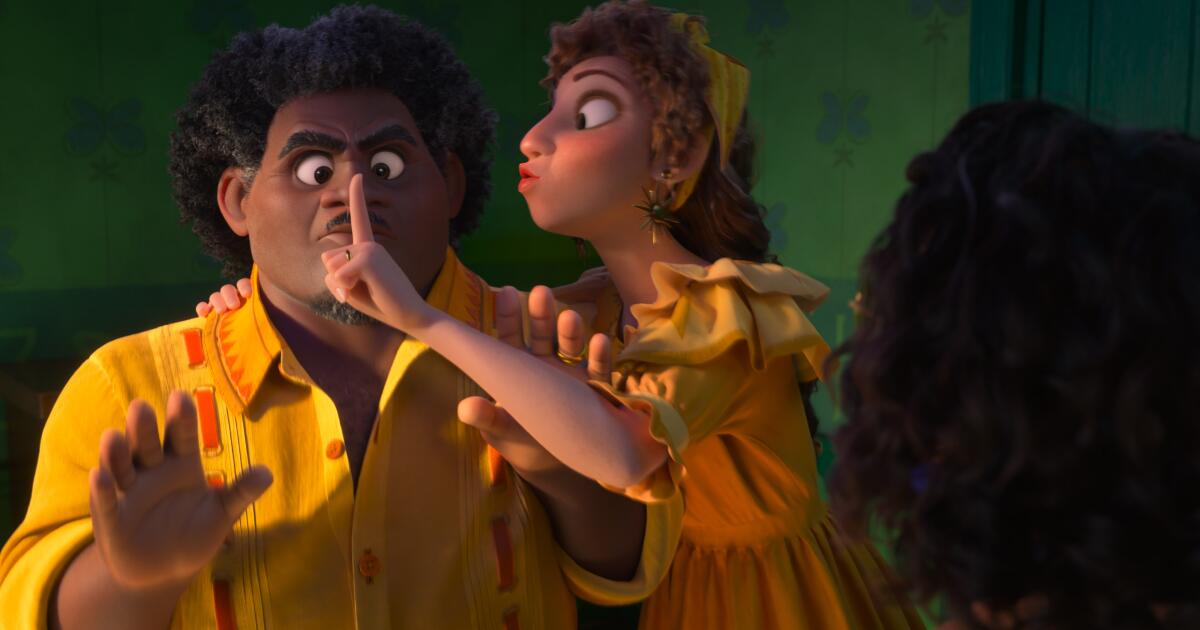
Directed by veteran Disney animator Hyrum Osmond, “Songs in Sign Language” will feature fresh animation for “Encanto’schart-topperWe Don’t Talk About Bruno,” “Frozen 2’s” poignant ballad “The Next Right Thing” and “Moana 2’s” anthem “Beyond.” Produced by Heather Blodget and Christina Chen, the new versions of these songs were created in collaboration with L.A.-based theater company Deaf West Theatre.

“In the majority of cases, we created entirely new animation,” Osmond said in a press statement. “There were a lot of adjustments that we had to do within the animation to be true to the original intention.”

Deaf West Theatre artistic director DJ Kurs, sign language reference choreographer Catalene Sacchetti and a group of eight performers from Deaf West worked together to craft and choreograph the ASL version of the musical numbers for “Songs in Sign Language.” The creatives focused on being true to the concepts and emotion of the songs rather than direct translations of the lyrics.

Kurs said his team jumped at the chance to collaborate and integrate ASL into “the fabric of Disney storytelling.”

“Disney stories are the universal language of childhood,” Kurs said in a statement. “The chance to bring our language into that world was a historic opportunity to reach a global audience. Working on this project was very emotional. For so long, we have known and loved the artistic medium of Disney Animation. Here, the art form was adapting to us. I hope this unlocks possibilities in the minds and hearts of Deaf children, and that this all leads to more down the road.”

Osmond, who led a team of more than 20 animators on this project, said animation was the perfect medium to showcase sign language, which he described as “one of the most beautiful ways of communication on Earth.” The director, whose father is deaf, also saw this project as an opportunity to connect with the Deaf community.

“Growing up, I never learned sign language, and that barrier prevented me from really connecting with my dad,” Osmond said. “This reimagining of Disney Animation musical numbers helps bring down barriers and allows us to connect in a special way with our audiences in the Deaf community. I’m grateful that the Studio got behind making something so impactful.”

Source link

Trump threw some elbows in his speech, but hardly beat back his critics

Capitalizing on a grand stage Tuesday night, President Trump delivered a State of the Union speech laced with political broadsides blaming Democrats for the nation’s problems, including on immigration and the economy, and heaping praise on himself and his administration for ushering in “a turnaround for the ages.”

He did not mention that after a year of his holding the White House and his party controlling both chambers of Congress, many Americans remain displeased and financially frustrated, with increasing numbers blaming Trump, according to polling.

The speech was heavy on partisan attacks, but light on any real acknowledgment of — or proposed path out of — the mounting political tensions that are roiling the nation under his leadership and threatening his party’s chances of retaining power in the upcoming midterms.

“President Trump’s State of the Union address was deeply disconnected from the lived reality of most Americans and profoundly insulting to the immigrant communities who strengthen and sustain this country every day,” Angelica Salas, executive director of the Coalition for Humane Immigrant Rights of Los Angeles, said in a statement. “While working families struggle with rising costs, threats to civil liberties, and attacks on fundamental rights, the Trump Administration continues to choose distortion over truth and division over unity.”

Time and again, Trump criticized the Democrats in the room — for not taking his bait and applauding as he waxed on about his immigration agenda, for not agreeing with his pronouncements against transgender athletes, for not being sufficiently adulatory toward members of the U.S. men’s hockey team for winning gold at the recent Winter Olympics.

“These people are crazy,” Trump said of Democrats, after they wouldn’t agree with his comments on transgender athletes. “You should be ashamed of yourself,” he said after they wouldn’t clap for his remarks about “illegal aliens.”

The speech went over well with many Republicans.

“Last Night, President Trump gave the BEST and LONGEST State of the Union speech in history because of ALL the many wins he had to tout,” House Speaker Mike Johnson (R-La.) wrote on X. “In one year, we have REVERSED the damage we inherited from Biden and the Democrats and we are delivering for the American people.”

Democrats watched sedately, or with barely obscured disdain, with brief scoffs and a few vocal rebuttals. But in their remarks afterward, they slammed Trump for ignoring Americans’ mounting displeasure with his agenda.

Senate Minority Leader Chuck Schumer (D-N.Y.) called the speech “Trump’s state of delusion.”

“For nearly two hours, the president inflated his ego, rewrote reality, and offered zero solutions to the problems American families are struggling with every day,” Schumer said.

House Minority Leader Hakeem Jeffries (D-N.Y.) said the speech was “riddled with dirty rotten lies.”

Many other Democrats also bristled over Trump’s rose-colored depiction of the nation as thriving, the economy as “roaring.”

Trump repeatedly mentioned his campaign to crack down on illegal immigration and his administration’s success in reducing border crossings. But he made no mention of one of the largest scandals of his first year in office — the killings of U.S. citizens Renee Nicole Good and Alex Pretti by federal immigration agents in Minneapolis — or the cratering public support for his immigration campaign overall.

He mentioned bombing Iran’s nuclear sites last year and said negotiations against future weapons development are ongoing. But he didn’t explain why the Pentagon has led a buildup of U.S. aircraft and warships in the Middle East, or address mounting concerns that he is preparing to take the nation to war.

He spoke of bringing down healthcare costs through several unproven programs, such as his “TrumpRx” prescription platform, but didn’t mention that under his party’s “Big, Beautiful Bill” and its cuts to Obamacare subsidies, millions of Americans are facing increased healthcare costs.

He talked about violent crime declining under his administration, a trend any president would claim as a success. But he skipped over the fact that the declines are a clear continuation of sharp drops under the Biden administration — the same drops he had vociferously denied during his 2024 campaign.

Every president treats the State of the Union as a chance to highlight their wins, less a venue for mulling over controversies or losses. It is a time-honored tradition, but also political theater — a chance for a president to project strength no matter the headwinds they are facing, as Trump did over and over again in his nearly two-hour speech.

But as many Democrats noted, his assessment also conflicted with the sentiments of many Americans, in poll after poll.

“The truth is that the State of our Union does not feel strong for everyone,” said Sen. Alex Padilla (D-Calif.) in his Spanish-language rebuttal to the speech. “Not when the costs of rent, food and electricity keep rising. Not when Republicans raise our medical costs to fund tax cuts for billionaires. And definitely not when federal agents — armed and masked — terrorize our communities by targeting people because of the color of their skin or for speaking Spanish — including immigrants with legal status and citizens.”

Minneapolis and other parts of the nation have been beset by poorly trained federal forces waging immigration round-ups that have left communities in fear and American citizens detained and even dead in the streets. Anger over those tactics has dominated the political discussion for months. In his speech, Trump never addressed the Minneapolis campaign head-on.

For months, Trump has also rattled key U.S. allies, including North Atlantic Treaty Organization partners, by repeatedly demanding that the United States be given Greenland, a territory of Denmark. He couched the stunning breach of diplomatic norms as a necessity given sweeping U.S. security concerns in the region. But in his speech, he made no mention of his demands or those concerns.

And while Trump asserted the “state of the union is strong,” he gave little explanation for why he has repeatedly denigrated and targeted the cornerstones of its federal system.

In the last year, Trump has cast himself and the executive office as all powerful; a substantial swath of the federal judiciary as “radical left” lunatics; the nation’s state-controlled voting system as corrupt and unreliable; and many Democrats and other political opponents as illegitimate or even criminal.

He has repeatedly asserted the power to reject decisions and reallocate federal spending by Congress, rewrite by executive fiat the Constitution and core rights within it such as birthright citizenship, and command or coerce states and a vast swath of civil society — including universities and law firms — to align with him politically or face devastating financial losses, including by demanding unprecedented mid-decade redistricting by red states to better his chances of Republican victory in the midterms.

Trump has tried to assert his will on the Federal Reserve, which is designed to independently lead the nation’s economy, and called Federal Reserve Chair Jerome H. Powell “incompetent” — which can’t be a good sign for the nation’s economy, no matter how you parse it.

As Trump walked out of the room Tuesday night having addressed few of those unprecedented moves, Republicans showered him with praise — with some telling him he’d just delivered the best State of the Union ever.

Many Democrats, meanwhile, wondered which union the president had been describing.

Source link