Attorney

Swalwell suit alleges abuse of power in Trump official’s mortgage probes

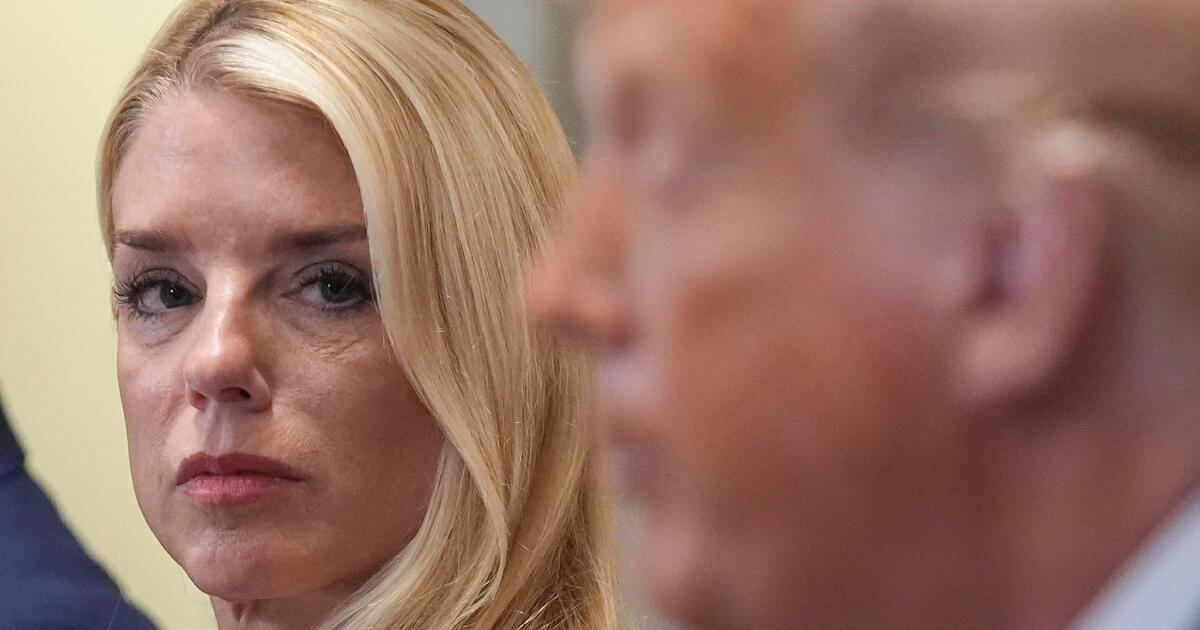
In a fiery rebuttal to allegations he’d criminally misrepresented facts in his mortgage documents, Rep. Eric Swalwell (D-Dublin) sued Federal Housing Finance Agency Director Bill Pulte on Tuesday — accusing him of criminally misusing government databases to baselessly target President Trump’s political opponents.

“Pulte has abused his position by scouring databases at Fannie Mae and Freddie Mac — two government-sponsored enterprises — for the private mortgage records of several prominent Democrats,” attorneys for Swalwell wrote in a federal lawsuit filed in Washington, D.C. “He then used those records to concoct fanciful allegations of mortgage fraud, which he referred to the Department of Justice for prosecution.”

They said Pulte launched his attack on Swalwell at a particularly inopportune time, just as Swalwell was launching his campaign for California governor.

Pulte’s attack, Swalwell’s attorneys wrote, “was not only a gross mischaracterization of reality” but “a gross abuse of power that violated the law,” infringing on Swalwell’s free speech rights to criticize the president without fear of reprisal, and violating the Privacy Act of 1974, which they said bars federal officials from “leveraging their access to citizens’ private information as a tool for harming their political opponents.”

Pulte, the FHFA and the White House did not immediately respond to requests for comment Wednesday.

Pulte has previously defended his work probing mortgage documents of prominent Democrats, saying no one is above the law. His referrals have exclusively targeted Democrats, despite reporting on Republicans taking similar actions on their mortgages.

Swalwell’s lawsuit is the latest counterpunch to Pulte’s campaign, and part of mounting scrutiny over its unprecedented nature and unorthodox methods — not just from targets of his probes but from other investigators, too, according to one witness.

In addition to Swalwell, Pulte has referred mortgage fraud allegations to the Justice Department against Sen. Adam Schiff (D-Calif.), New York Atty. Gen. Letitia James and Federal Reserve Governor Lisa Cook, who have all denied wrongdoing and suggested the allegations amount to little more than political retribution.

James was criminally charged by an inexperienced, loyalist federal prosecutor specially appointed by Trump in Virginia, though a judge has since thrown out that case on the grounds that the prosecutor, Lindsey Halligan, was illegally appointed. The judge also threw out a case against former FBI Director James Comey, another Trump opponent.

Cook’s attorneys slammed Pulte in a letter to the Justice Department, writing that his “decision to use the FHFA to selectively — and publicly — investigate and target the President’s designated political enemies gives rise to the unmistakable impression that he has been improperly coordinating with the White House to manufacture flimsy predicates to launch these probes.”

Schiff also has lambasted Trump and Pulte for their targeting of him and other Democrats, and cheered the tossing of the cases against James and Comey, calling it “a triumph of the rule of law.”

In recent days, federal prosecutors in Maryland — where Schiff’s case is being investigated — have also started asking questions about the actions of Pulte and other Trump officials, according to Christine Bish, a Sacramento-area real estate agent and Republican congressional candidate who was summoned to Maryland to answer questions in the matter last week.

Pulte has alleged that Schiff broke the law by claiming primary residence for mortgages in both Maryland and California. Schiff has said he never broke any law and was always forthcoming with his mortgage lenders.

Bish has been investigating Schiff’s mortgage records since 2020, and had repeatedly submitted documents about Schiff to the federal government — first to the Office of Congressional Ethics, then earlier this year to an FHFA tip line and to the FBI, she told The Times.

When Trump subsequently posted one of Schiff’s mortgage documents to his Truth Social platform, Bish said she believed it was one she had submitted to the FHFA and FBI, because it was highlighted exactly as she had highlighted it. Then, she saw she had missed a call from Pulte, and was later asked by Pulte’s staff to email Pulte “the full file” she had worked up on Schiff.

“They wanted to make sure that I had sent the whole file,” Bish said.

Bish said she was subsequently interviewed via Google Meet on Oct. 22 by someone from the FHFA inspector general’s office and an FBI agent. She then got a subpoena in the mail that she interpreted as requiring her to be in Maryland last week. There, she was interviewed again, for about an hour, by the same official from the inspector general’s office and another FBI agent, she said — and was surprised their questions seemed more focused on her communications with people in the federal government than on Schiff.

“They wanted to know if I had been talking to anybody else,” she said. “You know, what did I communicate? Who did I communicate with?”

Schiff’s office declined to comment. However, Schiff’s attorney has previously told Justice Department officials that there was “ample basis” for them to launch an investigation into Pulte and his campaign targeting Trump’s opponents, calling it a “highly irregular” and “sordid” effort.

The acting FHFA inspector general at the time Bish was first contacted, Joe Allen, has since been fired, which has also raised questions.

On Nov. 19, Rep. Robert Garcia (D-Long Beach) — the ranking Democrat on the House Oversight and Government Reform Committee — wrote a letter to Pulte denouncing his probes as politically motivated, questioning Allen’s dismissal and demanding documentation from Pulte, including any communications he has had with the White House.

Swalwell’s attorneys wrote in Tuesday’s lawsuit that he never claimed primary residence in both California and Washington, D.C., as alleged, and had not broken any laws.

They accused Pulte of orchestrating a coordinated effort to spread the allegations against Swalwell via a vast network of conservative influencers, which they said had “harmed [Swalwell’s] reputation at a critical juncture in his career: the very moment when he had planned to announce his campaign for Governor of California.”

They said the “widespread publication of information about the home where his wife and young children reside” had also “exposed him to heightened security risks and caused him significant anguish and distress.”

Swalwell said in a statement that Pulte has “combed through private records of political opponents” to “silence them,” which shouldn’t be allowed.

“There’s a reason the First Amendment — the freedom of speech — comes before all others,” he said.

Source link

Some DACA recipients have been arrested in Trump’s immigration crackdown

Yaakub Vijandre was preparing to go to work as a mechanic when six vehicles appeared outside his Dallas-area home. Federal agents jumped out, one pointed a weapon at him, and they took him into custody.

Vijandre is a recipient of Deferred Action for Childhood Arrivals, the Obama-era program that has shielded hundreds of thousands of people from deportation since 2012 if they were brought to the United States as children and generally stayed out of trouble. The Trump administration said it targeted Vijandre over social media posts. The freelance videographer and pro-Palestinian activist described his early October arrest to his attorneys, who relayed the information to reporters.

His arrest and several others this year signal a change in how the U.S. is handling DACA recipients as President Trump’s administration reshapes immigration policy more broadly. The change comes as immigrants have face increased vetting, including of their social media, when they apply for visas, green cards, citizenship, or to request the release of their children from federal custody. The administration also has sought to deport foreign students for participating in pro-Palestinian activism.

DACA was created to shield recipients, commonly referred to as “Dreamers,” from immigration arrests and deportation. It also allows them to legally work in the U.S. Recipients reapply every two years. Previously if their status was in jeopardy, they would receive a warning and would still have a chance to fight it before immigration officers detained them and began efforts to deport them.

In response to questions about any changes, Homeland Security spokesperson Tricia McLaughlin issued a statement saying that people “who claim to be recipients of Deferred Action for Childhood Arrivals (DACA) are not automatically protected from deportations. DACA does not confer any form of legal status in this country.” DACA recipients can lose status “for a number of reasons, including if they’ve committed a crime,” she said.

McLaughlin also claimed in a statement that Vijandre made social media posts “glorifying terrorism,” including one she said celebrated Abu Musab al-Zarqawi, Al Qaeda’s leader in Iraq who was killed in a U.S. strike in 2006.

An attorney for Vijandre, Chris Godshall-Bennett, said Vijandre’s social media activity is “clearly” protected speech. He also said the government has not provided details about the specific posts in court documents.

Vijandre is among about 20 DACA recipients who have been arrested or detained by immigration authorities since Trump took office in January, according to Home is Here, a campaign created by pro-DACA advocacy groups. The administration is seeking to end his DACA status, which could result in his being deported to the Philippines, a home he has not visited since his family came to the U.S. in 2001, when he was 14.

DACA survived the first Trump administration’s attempt to rescind the program when the Supreme Court ruled in 2020 that the administration did not take the proper steps to end it.

There have been other attempts to end the program or place restrictions on recipients.

This year, the 5th Circuit Court of Appeals issued a ruling that would deny work permits for DACA recipients who live in Texas. The Trump administration recently presented its plans to a federal judge who is determining how it will work.

The administration also has issued new restrictions on commercial driver’s licenses that would prevent DACA recipients and some other immigrants from getting them. Last year, 19 Republican states stripped DACA recipients’ access to health insurance under the Affordable Care Act. And the number of states where immigrant students can qualify for in-state tuition has dwindled since the Justice Department began suing states this year.

“This administration might not be trying to end DACA altogether the way that they did the first time around, but they are chipping away at it,” said Juliana Macedo do Nascimento, spokesperson for United We Dream, which is part of Home is Here, the coalition keeping track of public cases of DACA recipients who have been detained.

Detained DACA recipients question their arrests

Catalina “Xóchitl” Santiago Santiago, a 28-year-old activist from El Paso, was arrested in August despite showing immigration officers a valid work permit obtained through DACA.

Days later, federal officers arrested Paulo Cesar Gamez Lira as the 28-year-old father was arriving at his El Paso home with his children following a doctor’s appointment. Agents dislocated his shoulder, according to his attorneys.

Both Santiago and Gamez Lira were held for over a month while their attorneys petitioned for their release.

Marisa Ong, an attorney for Santiago and Gamez Lira, said the government failed to notify either of her clients of any intention to terminate their DACA status.

“DACA recipients have a constitutionally protected interest in their continued liberty,” Ong said, adding that “the government cannot take away that liberty without providing some valid reason.”

DACA recipients can lose their status if they are convicted of a felony, significant misdemeanors like those involving harming others, driving under the influence or drug distribution, or three or more misdemeanors. They can also lose their status if they pose a threat to national security or public safety.

DHS claimed in a statement that Santiago was previously charged with trespassing, possession of narcotics and drug paraphernalia and that Gamez Lira was previously arrested for marijuana possession.

Ong said that when attorneys sought their release “the government presented no evidence of any past misconduct by either individual.”

Vijandre, the Dallas-area man who was arrested in October, remains in a Georgia detention facility. His attorneys say he received notice two weeks before his arrest that the government planned to terminate his DACA status but that he wasn’t given a chance to fight it.

“I think that the administration has drawn a very clear line and at least for right now, between citizen and noncitizens, and their goal is to remove as many noncitizens from the country as possible and to make it as difficult as possible for noncitizens to enter the country,” Godshall-Bennett, Vijandre’s attorney, said.

Gonzalez writes for the Associated Press.

Source link

An L.A. man was detained in an immigration raid. No one knows where he is

No one seems to know what happened to Vicente Ventura Aguilar.

A witness told his brother and attorneys that the 44-year-old Mexican immigrant, who doesn’t have lawful immigration status, was taken into custody by immigration authorities on Oct. 7 in SouthLos Angeles and suffered a medical emergency.

But it’s been more than six weeks since then, and Ventura Aguilar’s family still hasn’t heard from him.

The Department of Homeland Security said 73 people from Mexico were arrested in the Los Angeles area between Oct. 7 and 8.

“None of them were Ventura Aguilar,” said Tricia McLaughlin, the assistant Homeland Security public affairs secretary.

“For the record, illegal aliens in detention have access to phones to contact family members and attorneys,” she added.

McLaughlin did not answer questions about what the agency did to determine whether Ventura Aguilar had ever been in its custody, such as checking for anyone with the same date of birth, variations of his name, or identifying detainees who received medical attention near the California border around Oct. 8.

Lindsay Toczylowski, co-founder of the Immigrant Defenders Law Center who is representing Ventura Aguilar’s family, said DHS never responded to her inquiries about him.

The family of Vicente Ventura Aguilar, 44

The family of Vicente Ventura Aguilar, 44, says he has been missing since Oct. 7 when a friend saw him arrested by federal immigration agents in Los Angeles. Homeland Security officials say he was never in their custody.

(Family of Vicente Ventura Aguilar)

“There’s only one agency that has answers,” she said. “Their refusal to provide this family with answers, their refusal to provide his attorneys with answers, says something about the lack of care and the cruelty of the moment right now for DHS.”

His family and lawyers checked with local hospitals and the Mexican consulate without success. They enlisted help from the office of Rep. Sydney Kamlager-Dove (D-Los Angeles), whose staff called the Los Angeles and San Diego county medical examiner’s offices. Neither had someone matching his name or description.

The Los Angeles Police Department also told Kamlager-Dove’s office that he isn’t in their system. His brother, Felipe Aguilar, said the family filed a missing person’s report with LAPD on Nov. 7.

“We’re sad and worried,” Felipe Aguilar said. “He’s my brother and we miss him here at home. He’s a very good person. We only hope to God that he’s alive.”

Felipe Aguilar said his brother, who has lived in the U.S. for around 17 years, left home around 8:15 a.m. on Oct. 7 to catch the bus for an interview for a sanitation job when he ran into friends on the corner near a local liquor store. He had his phone but had left his wallet at home.

One of those friends told Felipe Aguilar and his lawyers that he and Ventura Aguilar were detained by immigration agents and then held at B-18, a temporary holding facility at the federal building in downtown Los Angeles.

The friend was deported the next day to Tijuana. He spoke to the family in a phone call from Mexico.

Detainees at B-18 have limited access to phones and lawyers. Immigrants don’t usually turn up in the Immigration and Customs Enforcement online locator system until they’ve arrived at a long-term detention facility.

According to Felipe Aguilar and Toczylowski, the friend said Ventura Aguilar began to shake, went unconscious and fell to the ground while shackled on Oct. 8 at a facility near the border. The impact caused his face to bleed.

The friend said that facility staff called for an ambulance and moved the other detainees to a different room. Toczylowski said that was the last time anyone saw Ventura Aguilar.

She said the rapid timeline between when Ventura Aguilar was arrested to when he disappeared is emblematic of what she views as a broad lack of due process for people in government custody under the Trump administration and shows that “we don’t know who’s being deported from the United States.”

Felipe Aguilar said he called his brother’s cell phone after hearing about the arrests but it went straight to voicemail.

Felipe Aguilar said that while his brother is generally healthy, he saw a cardiologist a couple years ago about chest pain. He was on prescribed medication and his condition had improved.

His family and lawyers said Ventura Aguilar might have given immigration agents a fake name when he was arrested. Some detained people offer up a wrong name or alias, and that would explain why he never showed up in Homeland Security records. Toczylowski said federal agents sometimes misspell the name of the person they are booking into custody.

The family of Vicente Ventura Aguilar, 44

Vicente Ventura Aguilar, who has been missing since Oct. 7, had lived in the United States for 17 years, his family said.

(Family of Vicente Ventura Aguilar)

But she said the agency should make a significant attempt to search for him, such as by using biometric data or his photo.

“To me, that’s another symptom of the chaos of the immigration enforcement system as it’s happening right now,” she said of the issues with accurately identifying detainees. “And it’s what happens when you are indiscriminately, racially profiling people and picking them up off the street and holding them in conditions that are substandard, and then deporting people without due process. Mistakes get made. Right now, what we want to know is what mistakes were made here, and where is Vicente now?”

Surveillance footage from a nearby business reviewed by MS NOW shows Ventura Aguilar on the sidewalk five minutes before masked agents begin making arrests in South Los Angeles. The footage doesn’t show him being arrested, but two witnesses told the outlet that they saw agents handcuff Ventura Aguilar and place him in a van.

In a letter sent to DHS leaders Friday, Kamlager-Dove asked what steps DHS has taken to determine whether anyone matching Ventura Aguilar’s identifiers was detained last month and whether the agency has documented any medical events or hospital transports involving people taken into custody around Oct. 7-8.

“Given the length of time since Mr. Ventura Aguilar’s disappearance and the credible concern that he may have been misidentified, injured, or otherwise unaccounted for during the enforcement action, I urgently request that DHS and ICE conduct an immediate and comprehensive review” by Nov. 29, Kamlager-Dove wrote in her letter.

Kamlager-Dove said her most common immigration requests from constituents are for help with visas and passports.

“Never in all the years did I expect to get a call about someone who has completely disappeared off the face of the earth, and also never did I think that I would find myself not just calling ICE and Border Patrol but checking hospitals, checking with LAPD and checking morgues to find a constituent,” she said. “It’s horrifying and it’s completely dystopian.”

She said families across Los Angeles deserve answers and need to know whether something similar could happen to them.

“Who else is missing?” she said.

Source link

D.A. moves to drop charges against Torrance officers in 2018 shooting

Los Angeles County prosecutors moved to drop manslaughter charges Friday against two Torrance police officers who shot and killed a Black man in 2018, attempting to end a seven-year saga that saw the case rejected and then reexamined by three different district attorneys.

Matthew Concannon and Anthony Chavez were indicted in 2023 for the shooting death of Christopher Deandre Mitchell, a 23-year-old car theft suspect who was in possession of an air rifle at the time he was killed.

Michael Gennaco, a special prosecutor hired earlier this year by Dist. Atty. Nathan Hochman to review the case, filed a motion to dismiss charges late Thursday, saying he did not believe prosecutors could prove voluntary manslaughter at trial. Attorneys for the officers filed a joint motion in agreement, they said in court Friday.

But in a surprising move, Los Angeles County Superior Court Judge Sam Ohta declined to rule on the motion Friday, because the case is currently under the jurisdiction of the California Supreme Court. Concannon’s attorneys had previously filed a writ of habeas corpus after Ohta rejected a motion to dismiss the charges.

“I am not going to rule on this because it would be inappropriate for me to do that at this point. The Supreme Court has to tell us its decision,” Ohta said.

One of Concannon’s attorneys, Matthew Murphy, said he felt Ohta was punishing the defendants for exercising their right to challenge Ohta’s prior ruling. Ohta slapped that argument down, pointing out it was the defense team who put the case before the California Supreme Court.

Ohta signaled he wouldn’t decide the motion until the case was withdrawn from the Supreme Court, and even then, he would need time to review the filings.

Ohta said he was “surprised” that the motion was filed at 3 p.m. on Thursday, giving him little time to digest it ahead of Friday’s 8:30 a.m. appearance.

“It’s going to be a lot of work. I’m not just going to orally say yes go ahead and dismiss the case, case dismissed,” the judge said.

Murphy said he would move to withdraw the habeas filing.

Chavez and Concannon were among those investigated in 2021 when the district attorney’s office uncovered a thread of racist text messages sent by members of the Torrance Police Department. The Times has never seen evidence that either of the two officers sent racist messages, but the scandal infuriated community activists, who have long called for them to face justice for killing Mitchell.

Jeff Lewis, a civil attorney for Concannon, said his client “never sent or replied to any racist messages.”

The shooting incident occurred when officers approached Mitchell while he was seated in the car in a Ralph’s parking lot. They said they spotted what was later revealed to be a “break barrel air rifle” between his legs.

Concannon told authorities he saw Mitchell reaching for what he believed to be a real firearm and opened fire, according to the district attorney’s office. Chavez fired two rounds immediately after. The two officers then retreated and waited for backup.

Nearly 30 minutes elapsed before anyone checked on Mitchell, who was then pronounced dead of gunshot wounds, according to court records.

Concannon and Chavez were initially cleared of all wrongdoing by then-Dist. Atty. Jackie Lacey. But when George Gascón swept into office on a police accountability platform and ousted Lacey in 2020, he hired a special prosecutor to reexamine several cases Lacey declined to prosecute, including Mitchell’s death.

But Lawrence Middleton, the special prosecutor brought on by Gascón, did not obtain an indictment in the case until 2023, more than two years after he had been hired to reconsider charges in shootings by police.

The statute of limitations for involuntary manslaughter, an easier case to prove than the voluntary manslaughter charges that Middleton brought, expired in late 2021. Concerns about the timeline Middleton would face to pursue the cases Gascón targeted were raised almost immediately after he joined the D.A.’s office.

Middleton appeared in the courtroom Friday morning and sat beside Mitchell’s mother and a number of activists who have long monitored the trial. All declined to comment.

Middleton previously argued the officers “created the jeopardy that led to the shooting,” by needlessly confronting Mitchell when he was not a threat and had no means of escaping arrest as the car was parked facing a wall, according to grand jury transcripts. But Ohta disallowed that evidence after a hearing in late 2023. The shooting happened in 2018, two years before a change in California law modified the threshold by which fatal uses of force are judged.

Hochman fired Middleton shortly after ousting Gascón in the 2024 election cycle, a move which drew praise from one of Concannon’s attorneys at the time. Gennaco was hired a short time later. He also declined to comment on Ohta’s refusal to rule on the dismissal motion.

In an interview, Hochman said that while he did not believe the officers were “innocent” he also did not think prosecutors could meet the legal bar needed to prove voluntary manslaughter. He said Gascón and Middleton bungled the case.

Hochman questioned Middleton’s attempt to argue that the officers executed the arrest of Mitchell so poorly that they caused the situation that required the use of deadly force.

That evidence of so-called “officer-created jeopardy” was deemed inadmissible by Ohta last year.

The evidence might have been admissible under a change in California law passed in 2020, which lowered the standard for charging officers in fatal use-of-force cases, but it did not apply retroactively, Hochman said.

“These are difficult cases. The fact that they’re difficult doesn’t mean we won’t bring them when they are appropriate,” Hochman said. “I’d say we probably spent hundreds of hours on the 12 seconds that were involved in the case.”

Hochman would not say directly if he believed the officers should have been charged with involuntary manslaughter.

“What we’re saying is this would have been a potential charge for the grand jury to consider. I can’t tell you how the grand jury would have come out on it,” he said. “It certainly would have been something that was up for consideration.”

Chavez is no longer employed by the Torrance Police Department. Concannon remains on administrative leave. An agency spokesman declined to comment.

In the 2021 scandal, The Times uncovered messages that were replete with racial slurs and descriptions of violence against Black men and members of the LGBTQ+ community.

In one string of messages, officers used the N-word to describe Mitchell’s relatives and joked about what would happen after Concannon and Chavez’s names were made public.

“Gun cleaning Party at my house when they release my name??” one officer asked, according to a summary of the text messages made public in a 2022 court filing, which redacted the names of the officers sending the messages.

“Yes absolutely let’s all just post in your yard with lawn chairs in a [firing] squad,” another replied.

Lewis said in a letter to The Times that Concannon was “never a part of any text thread where an N-word was used to describe Mitchell’s family.”

Concannon and Chavez are the last officers connected to the scandal with pending cases.

Cody Weldin and Christopher Tomsic — whose criminal case led to the exposure of the scandal — struck a plea deal earlier this year to vandalism charges for spray painting a swastika on a car towed from a crime scene.

David Chandler, another officer investigated as part of the scandal, pleaded no contest earlier this month to assault charges for shooting a Black suspect in the back. Chandler will eventually see his case dismissed under the terms of the agreement.

All three officers had to give up their rights to be peace officers in California under the terms of their plea deals.

The Torrance Police Department and the California Attorney General’s office entered into an “enforceable” agreement to reform earlier this year.

Source link

Pras Michel gets 14-year sentence for illegal Obama donations

Grammy-winning rapper Prakazrel “Pras” Michel of the Fugees was sentenced Thursday to 14 years in prison for a case in which he was convicted of illegally funneling millions of dollars in foreign contributions to then-President Obama’s 2012 reelection campaign.

Michel, 52, declined to address the court before U.S. District Judge Colleen Kollar-Kotelly sentenced him.

In April 2023, a federal jury convicted Michel of 10 counts, including conspiracy and acting as an unregistered agent of a foreign government. The trial in Washington, D.C., included testimony from actor Leonardo DiCaprio and former Atty. Gen. Jeff Sessions.

Justice Department prosecutors said federal sentencing guidelines recommended a life sentence for Michel, whom they said “betrayed his country for money” and “lied unapologetically and unrelentingly to carry out his schemes.”

“His sentence should reflect the breadth and depth of his crimes, his indifference to the risks to his country, and the magnitude of his greed,” they wrote.

Defense attorney Peter Zeidenberg said his client’s 14-year sentence is “completely disproportionate to the offense.” Michel will appeal his conviction and sentence, according to his lawyer.

Zeidenberg had recommended a three-year sentence. A life sentence would be an “absurdly high” punishment for Michel given that it is typically reserved for deadly terrorists and drug cartel leaders, Michel’s attorneys said in a court filing.

“The Government’s position is one that would cause Inspector Javert to recoil and, if anything, simply illustrates just how easily the Guidelines can be manipulated to produce absurd results, and how poorly equipped they are, at least on this occasion, to determine a fair and just sentence,” they wrote.

Michel, a Brooklyn native whose parents immigrated to the U.S. from Haiti, was a founding member of the Fugees along with childhood friends Lauryn Hill and Wyclef Jean. Their hip-hop band won two Grammy Awards and sold tens of millions of albums.

Michel obtained more than $120 million from Malaysian billionaire Low Taek Jho — also known as Jho Low — and steered some of that money through straw donors to Obama’s campaign.

Michel also tried to end a Justice Department investigation of Low, tampered with two witnesses and perjured himself at trial, prosecutors said.

Low, who has lived in China, was one of the primary financiers of “The Wolf of Wall Street,” a movie starring DiCaprio. Low is a fugitive but has maintained his innocence.

“Low’s motivation for giving Mr. Michel money to donate was not so that he could achieve some policy objective. Instead, Low simply wanted to obtain a photograph with himself and then-President Obama,” Michel’s attorneys wrote.

In August 2024, the judge rejected Michel’s request for a new trial based in part on his defense attorney’s use of a generative AI program during his closing of the trial’s arguments. The judge said that and other trial errors didn’t amount to a serious miscarriage of justice.

Kunzelman writes for the Associated Press.

Source link

Judge to proceed with contempt probe after U.S. flew migrants to El Salvador prison

A federal judge said Wednesday he plans to move ahead quickly on a contempt investigation of the Trump administration for failing to turn around planes carrying Venezuelan migrants to El Salvador in March.

U.S. District Judge James Boasberg in Washington said a ruling Friday by the U.S. Court of Appeals for the District of Columbia Circuit gave him the authority to proceed with the inquiry, which will determine whether there is sufficient evidence to refer the matter for prosecution. He asked attorneys to identify witnesses and offer plans for how to conduct the probe by Monday and said he’d like to start any hearings on Dec. 1.

The judge has previously warned he could seek to have officials in the administration prosecuted.

On March 15, Boasberg ordered the aircraft carrying accused gang members to return to the U.S., but they landed instead in El Salvador, where the migrants were held at a notorious prison.

“I am authorized to proceed just as I intended to do in April seven months ago,” the judge said during a hearing Wednesday. He added later, “I certainly intend to find out what happened on that day.”

Boasberg said having witnesses testify under oath appeared to be the best way to conduct the contempt probe, but he also suggested the government could provide written declarations to explain who gave orders to “defy” his ruling. He suggested one witness: a former U.S. Justice Department attorney who filed a whistleblower complaint that claims a top official in the department suggested the Trump administration might have to ignore court orders as it prepared to deport Venezuelan migrants it accused of being gang members.

The Trump administration has denied any violation, saying the judge’s directive to return the planes was made verbally in court but not included in his written order. Justice Department attorney Tiberius Davis told Boasberg the government objected to further contempt proceedings.

Boasberg previously found probable cause to hold the Trump administration in criminal contempt of court. The ruling marked a dramatic battle between the judicial and executive branches of government, but a divided three-judge appeals court panel later sided with the administration and threw out the finding. The two judges in the majority were appointed by President Trump.

On Friday, a larger panel of judges on the D.C. Circuit said the earlier ruling by their colleagues did not bar Boasberg from moving ahead with his contempt probe. Boasberg’s contempt finding was a “measured and essential response,” Judges Cornelia Pillard, Robert Wilkins and Bradley Garcia wrote.

“Obedience to court orders is vital to the ability of the judiciary to fulfill its constitutionally appointed role,” they wrote. “Judicial orders are not suggestions; they are binding commands that the Executive Branch, no less than any other party, must obey.”

The Trump administration invoked an 18th-century wartime law to send the migrants, whom it accused of membership in a Venezuelan gang, to a mega-prison in El Salvador known as the Terrorism Confinement Center, or CECOT. It argued that American courts could not order them freed.

In June, Boasberg ruled the Trump administration must give some of the migrants a chance to challenge their deportations, saying they hadn’t been able to formally contest the removals or allegations that they were members of Tren de Aragua.

The judge wrote that “significant evidence” had surfaced indicating that many of the migrants were not connected to the gang “and thus were languishing in a foreign prison on flimsy, even frivolous, accusations.”

More than 200 migrants were later released back to Venezuela in a prisoner swap with the U.S.

Their attorneys want Boasberg to issue another order requiring the administration to explain how it will give at least 137 of the men a chance to challenge their gang designation under the Alien Enemies Act.

The men are in danger in Venezuela and fear talking to attorneys, who have been able to contact about 30 of them, but they “overwhelmingly” want to pursue their cases, Lee Gelernt, an attorney with the American Civil Liberties Union, said Wednesday.

Davis said it may be hard to take the men into custody again given tensions between the U.S. and the government of Venezuelan President Nicolas Maduro.

Boasberg did not immediately rule on the matter.

Thanawala writes for the Associated Press.

Source link

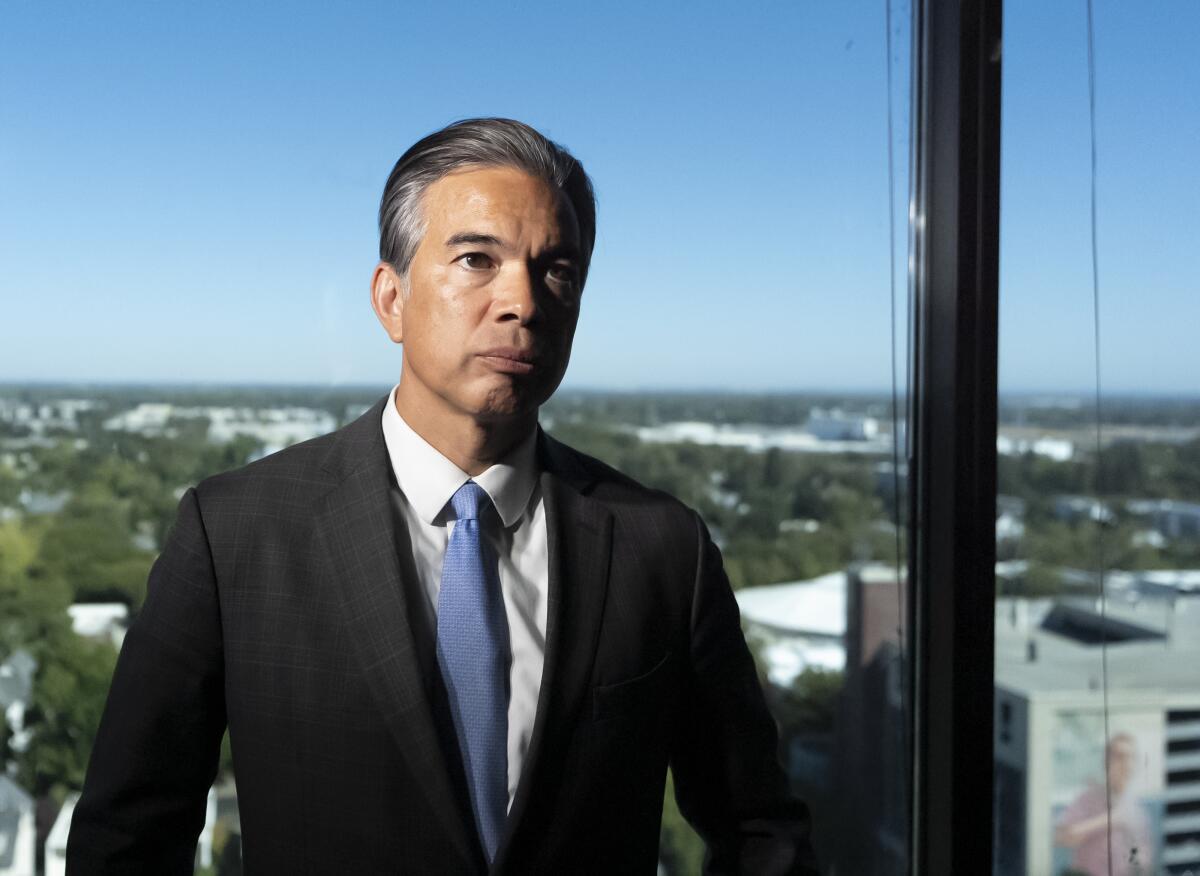
Bonta spent nearly half a million on lawyers. His consultant explains

California Atty. Gen. Rob Bonta spent nearly half a million dollars in campaign funds last year on personal attorneys to represent him as he spoke to federal investigators about alleged corruption in Oakland.

Bonta paid about $468,000 to law firm Wilson Sonsini Goodrich & Rosati last year from his 2026 reelection campaign, according to campaign finance disclosures filed with the state.

Bonta political consultant Dan Newman said the attorney general was approached by federal investigators because he was viewed as a “possible victim” in the alleged corruption case involving a former Oakland mayor and Bay Area business owners.

Newman said “the sole role was to assist by providing information that would be helpful to the investigation.”

“This was all completed in 2024, over a year ago, and the AG’s involvement is over,” Newman said.

Bonta’s payments to the legal team were first reported by Sacramento’s KCRA-TV.

The U.S. Department of Justice in January charged former Oakland Mayor Sheng Thao in an alleged bribery scheme involving local businesspeople David Trung Duong and Andy Hung Duong.

Thao ran for Oakland mayor in 2022 and was recalled from office by city voters in 2024 after growing voter frustration over crime and the city’s budget woes. She was arrested in early 2025 by the FBI.

According to the indictment, Thao, then a mayoral candidate, engaged in a quid pro quo scheme with the Duong brothers in which she promised to take official actions as the mayor to help their recycling and modular homes businesses.

The Duong brothers and Thao have pleaded not guilty.

The San Jose Mercury News reported in January 2025 that campaign finance regulators had also been closely scrutinizing Andy Duong. The Duong family viewed Bonta as a political ally, according to the newspaper.

Gov. Gavin Newsom in 2021 selected Bonta, then an Assembly member representing the Oakland area, as the attorney general to serve the remaining term of Xavier Becerra, whom President Biden nominated to become the U.S. Health and Human Services secretary.

Bonta has emerged as a key player in California’s battle against President Trump, filing dozens of lawsuits against the Trump administration.

Bonta eventually returned $155,000 in campaign contributions from the Duong family after the federal investigation became public, according to multiple news reports.

Newman, Bonta’s consultant, said that the attorney general was ultimately found not to be a victim in the case. When asked why so much money was spent on attorneys, he said that multiple lawyers worked over a period of several months.

A representative for the U.S. attorney’s office declined to comment on Newman’s assertions.

Source link

Porsha Williams ‘verbally assaulted’ on flight home, attorney says

Porsha Williams of “The Real Housewives of Atlanta” appears to have gotten a mouthful from a woman on her flight back to Georgia from Las Vegas on Sunday night, her lawyer says.

The Atlanta Police Department said Tuesday that it had investigated the incident, then handed off victim and witness statements to the FBI. It didn’t identify Williams specifically.

“Upon arrival, officers made contact with two females who may have been involved in the dispute,” the department said in a statement on its website. “Preliminary investigation indicated that both parties may have been involved in a verbal dispute that reportedly escalated into a physical dispute during an inbound flight to Atlanta.”

Now, the real housewife’s attorney, Joe Habachy, did identify his client specifically, saying in a statement, “Ms. Williams was verbally assaulted by an irate and unhinged passenger without provocation. The passenger then proceeded to make false allegations that were in direct conflict with observations from several eyewitnesses.”

The women were separated “on the scene,” according to police, and both parties were interviewed by officers.

Williams had been at the BravoCon 2025 fan fest in Las Vegas before she was videotaped walking with the officers who met her at Hartsfield-Jackson Atlanta International Airport. TMZ posted the video Monday. A Delta spokesperson told that site that both women had been spoken to on the plane as well as at the airport.

“FBI Atlanta is aware of the incident on the flight,” a representative for that office said in a statement Tuesday. “It is unknown at this time if federal charges will apply.”

But attorney Habachy said that’s par for the course when something happens on a plane. “[F]ederal authorities are required to conduct an investigation involving all parties to determine what, if any, offenses occurred,” he said, adding that Williams intended to cooperate with law enforcement “to whatever extent necessary.”

She is confident the other passenger ultimately will be charged, he said.

Source link

Chicago day-care worker detained by immigration agents released after community support

A Chicago day-care center employee who was detained by immigration agents at work as children were being dropped off last week has been released, according to her attorney.

Diana Santillana Galeano was detained Nov. 5 at the Rayito de Sol Spanish Immersion Early Learning Center on the north side of Chicago. A video showed officers struggling with her as they walked out the front door. Her attorneys said in a statement Thursday that she was released from a detention center in Indiana on Wednesday night.

“We are thrilled that Ms. Santillana was released, and has been able to return home to Chicago where she belongs,” attorney Charlie Wysong said in the statement. “We will continue to pursue her immigration claims to stay in the United States. We are grateful to her community for the outpouring of support over these difficult days, and ask that her privacy be respected while she rests and recovers from this ordeal.”

Her case reflects the Trump administration’s increasingly aggressive enforcement tactics. But her detention at a day care was unusual even under “Operation Midway Blitz,” which has resulted in more than 3,000 immigration arrests in the Chicago area since early September. Agents have rappelled from a Black Hawk helicopter in a middle-of-the-night apartment building raid, appeared with overwhelming force in recreational areas and launched tear gas amid protests.

“I am so grateful to everyone who has advocated on my behalf, and on behalf of the countless others who have experienced similar trauma over recent months in the Chicago area,” Santillana Galeano said in the same statement. “I love our community and the children I teach, and I can’t wait to see them again.”

The Department of Homeland Security said last week that the woman, who is from Colombia, entered the U.S. illegally in June 2023 but obtained authorization to work under the Biden administration. The department denied that the day care was targeted.

Source link

Court denies Rose Bowl restraining order pausing UCLA move

A Los Angeles County Superior Court judge on Wednesday denied a request from the Rose Bowl Operating Co. and the City of Pasadena seeking a temporary restraining order in their attempt to keep UCLA football games at the Rose Bowl, saying those entities had not demonstrated an emergency that would necessitate such an action.

Judge James C. Chalfant said previous cases in which the New York Yankees, New York Jets and Minnesota Twins were barred from moving games did not apply to this situation because those teams were scheduled to play in a matter of days or weeks and UCLA’s next scheduled game at the Rose Bowl after its home season finale against Washington on Nov. 22 isn’t until the fall of 2026.

The judge also said there was no indication that the Rose Bowl or Pasadena would suffer imminent financial harm because a contract to construct a field-level club in one end zone had not been signed.

The legal saga is far from over. Chalfant suggested the plaintiffs’ attorneys seek discovery information regarding the school’s discussions with SoFi Stadium and file a motion for a preliminary injunction.

Nima Mohebbi, an attorney representing the Rose Bowl Operating Co. and the City of Pasadena, said he had filed a public records request in an attempt to gather information about those discussions and was pleased with the judge’s statements.

“Even though he found that there was no immediate emergency,” Mohebbi said, “he made very clear in a lot of his statements that there’s irreparable harm, that UCLA has an obligation to play at the Rose Bowl through 2044 and we’re very confident in our facts of this case. So I think all in, we feel very, very good.”

After the hearing ended, Mary Osako, vice chancellor of strategic communications, said in a statement that “the court’s ruling speaks for itself. As we have said, while we continue to evaluate the long-term arrangement or UCLA football home games, no decision has been made.”

UCLA has played its home football games at the Rose Bowl since 1982. In 2014, Janet Napolitano, president of the University of California system, signed a long-term lease amendment that did not include an opt-out clause in exchange for the stadium committing to make nearly $200 million in improvements through the issue of public bonds. When the judge asked attorneys representing UCLA if they intended to terminate the agreement, they shook their heads in denial.

But Mohebbi accused UCLA of participating in a shell game in which it had furtively explored options for moving to SoFi Stadium.

“What they really want is to have a back-room discussion where they can offer some certain amount of money and pay the city off without having to account for this publicly,” Mohebbi said. “… UCLA has not only attempted to terminate [the contract], they have indicated in no uncertain terms that they are terminating.”

After Jordan McCrary, an attorney representing UCLA, contended that his counterparts in the dispute refused to engage with the school in resolution discussions, Mohebbi said, “there’s nothing to talk about. They have an obligation — we’re not negotiating a way out of this agreement.”

McCrary disputed Mohebbi’s contention that UCLA attorneys had signaled an intention to leave the Rose Bowl through direct conversations between counsel, saying “we believe they were settlement negotiations and we don’t believe they’re admissible” in future court proceedings.

When a UCLA attorney contended during the roughly 80-minute court session that the school’s relationship with the Rose Bowl was breaking down, Chalfant said, “I don’t know why UCLA can’t just show up and play football at the Rose Bowl. You don’t need to talk to them at all.”

Chalfant said he did not agree with the UCLA attorneys’ contention that the Rose Bowl lease amounted to a personal services contract for which specific performance — essentially an order compelling the Bruins to remain tenants — was not available. The judge said specific performance could be available in a situation involving an actual breach or an anticipatory breach of the contract.

Rose Bowl officials have filed litigation intended to compel the Bruins to honor a lease that runs through the 2043 season, saying that monetary damages would not be enough to offset the loss of their anchor tenant.

They are also seeking to prevent the case from being settled through arbitration.

“I know UCLA really wants to have this out of the public sphere,” Mohebbi said, “but the reality is this is a public interest case and there are issues here that absolutely require this case to be in a public forum.

“We’re talking about two public entities. This is not the Rams, or this is not the Lakers. This is a public institution playing with public money going up against another public institution that relies on this other public institution to protect its own taxpayers from dipping into the general fund that goes to things like police services, fire services. I mean, God forbid there’s a fire like the Eaton fire this last year that we’re not going to be able to even cover the bond payments through the general reserves.”

Source link

Jeremy Renner denies filmmaker Yi Zhou’s misconduct allegations

Jeremy Renner, a star in the “Avengers” universe and the HBO series “Mayor of Kingstown,” is facing allegations of misconduct from filmmaker Yi Zhou.

In an extensive series of posts on Instagram last week Zhou alleges that beginning in June Renner sent “a string of unwanted / unsolicited pornographic images.” After a relationship over calls and text, according to Zhou, “The first physical encounter was not consensual. … Later interactions became consensual, yet the earlier incident remained deeply distressing.” Another post claims that Renner “threatened to call immigration/ICE on me,” which left her “shocked and frightened.”

A representative for Renner responded to a request for comment Sunday by saying, “The accusations being made by this individual are totally inaccurate and untrue.”

Many of Zhou’s Instagram posts, which include images of supposed messages between the two of them and what appear to be candid, personal photos of the actor, added the hashtag “#CancelJeremyRenner.”

Zhou, born in China and based in Los Angeles, has directed two films, the documentary “Masters of Cinema: Chronicles of Disney” and the animated “Stardust Future,” which she says Renner participated in and then refused to promote.

People reported that Renner’s attorney, Marty Singer, sent Zhou a cease-and-desist letter to prevent further “salacious lies” on Friday. A message to Singer’s office Sunday was not immediately returned.

In one of her posts, Zhou wrote of her motivation for speaking out. “My intention is not retaliation but transparency,” she said. “I have the right to protect my professional reputation, to set boundaries, and to correct misinformation when selective reporting distorts the facts.” She posted a cease-and-desist letter she purportedly emailed to Renner on Instagram asking him to stop “any form of verbal abuse, yelling or intimidation.”

In a 2025 interview with the Guardian promoting his memoir “My Last Breath,” which chronicles the 2023 accident involving an industrial snowcat that nearly killed him, Renner denied previous allegations of misconduct — substance abuse and a verbal threat — that came out in a custody dispute with his ex-wife Sonni Pacheco over their daughter, Ava.

“Being accused of things you’ve not done, right? That doesn’t feel good to anybody,” Renner said. “It certainly doesn’t feel good when you’re a celebrity and it’s known to everybody.”


Source link