US leaving oil-for-security approach, not Middle East: Envoy Tom Barrack | Military News
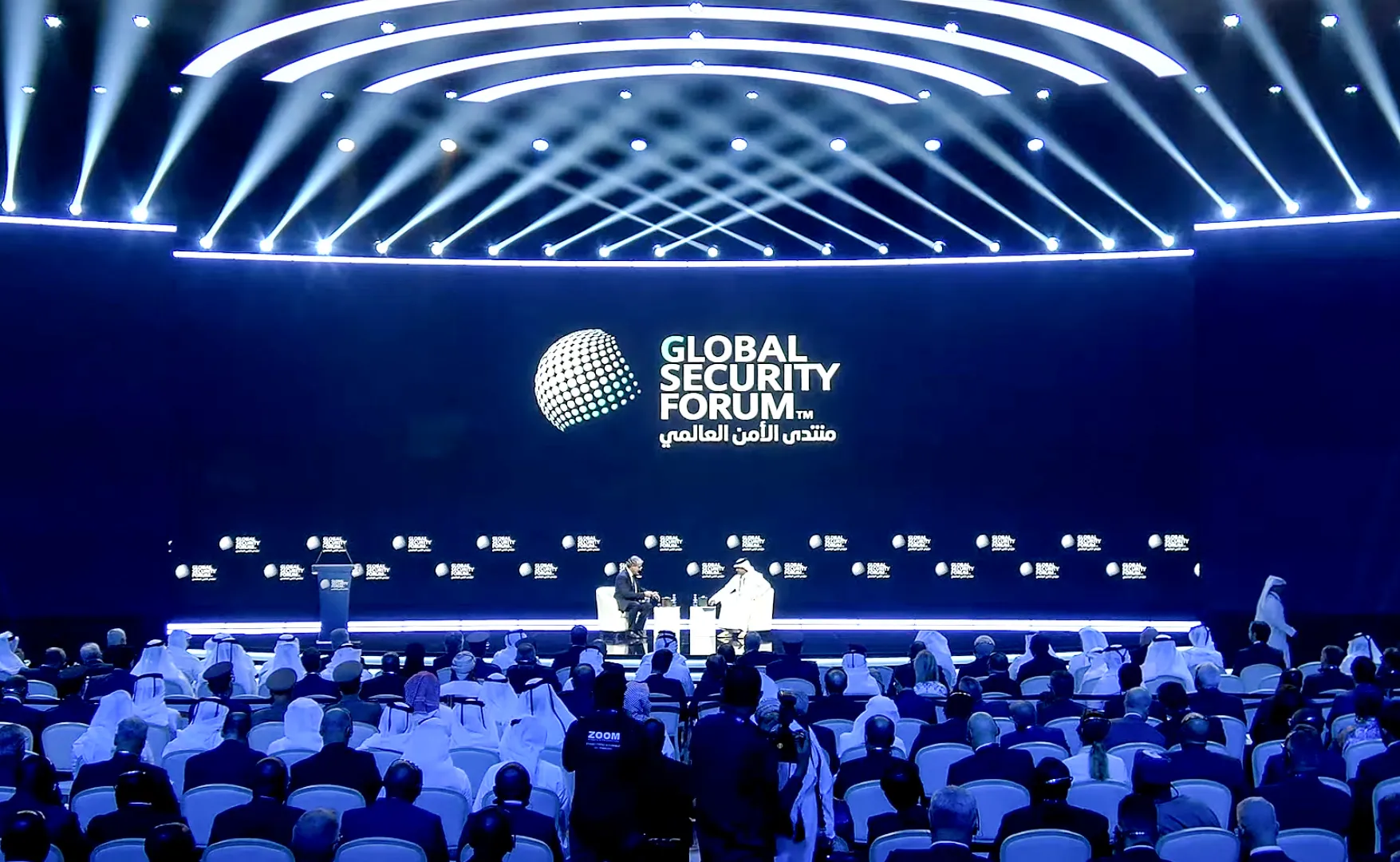
Doha, Qatar — The United States is moving away from its traditional security-for-oil relationship with the Middle East and no longer seeks to dominate the region, senior US diplomat Tom Barrack has said.
However, it was not abandoning the Middle East, he added, speaking at the Global Security Forum in Doha on Tuesday — but rather reassessing its role, after years of attempts to reshape governments across the region.
Recommended Stories
list of 3 itemsend of list
“The US no longer wants to own,” said Barrack, who serves as US Ambassador to Turkiye and Special Envoy for Syria. “The bargain is not to control, but to not leave. We’re not leaving.”
Barrack acknowledged that regional countries were increasingly recognising the limits of US involvement.
“Everybody is saying: OK, I can’t rely on America to solve all my problems,” he said.
Barrack questioned the effectiveness of previous interventions, saying that the US had been involved in 23 regime changes across the wider Middle East.
“Every time we try and intervene, change the person or the regime, it seems to have been a mistake,” he said.
His comments come as Washington and Tehran try to negotiate an end to the US-Israeli war on Iran that has destabilised the region and disrupted global energy supplies.
Political analyst Luciano Zaccara described Barrack as probably “the most realistic of Trump’s allies” in his assessment of US involvement in the Middle East.
He told Al Jazeera that Barrack had effectively acknowledged that regime change, one of Trump’s stated objectives in the war on Iran, was unlikely to succeed.
Zaccara said Barrack’s reference to regime changes in the Middle East was an acknowledgement “that what the US has been doing in the region has not been working, regardless of which administration it was”.
According to Zaccara, Barrack had stopped just short of suggesting that Trump needed to retreat from “the maximalist demands” he had made of Iran.
US-Iran negotiations ongoing
Qatar says negotiations between Tehran and Washington are continuing despite growing fears of renewed fighting.
Ministry of Foreign Affairs spokesperson Majed al-Ansari, speaking separately at the Global Security Forum, said mediators were continuing to exchange messages between the warring parties, with regional partners involved in efforts to reach a deal.
“We are working between the parties, continuing our job as mediator with our partners and others in the region,” he said.
Al-Ansari said the lack of public information about the negotiations should not be interpreted as a lack of progress.
“The fact that we’re not hearing about it is a good sign that we’re doing our job properly,” he said.
The diplomatic efforts come as Iran’s seven-day proposal to end the war remains on the table, with the US yet to give its response.
The plan envisages reopening the Strait of Hormuz and resuming nuclear negotiations in exchange for US concessions, including lifting the naval blockade on Iranian ports and easing economic sanctions on Tehran.
Analyst Negar Mortazavi said the diplomatic door remained open, but negotiations were stalled over the terms and sequencing of an agreement.
“Tehran wants to end the war, but it is not prepared to surrender under military or economic pressure,” she told Al Jazeera on the sidelines of the forum in Doha.
The Strait of Hormuz remains a major flashpoint, with attacks on commercial shipping raising concerns over global energy supplies. Before the US-Israeli war on Iran, one-fifth of the world’s oil and gas supplies transited through the strait.
Mortazavi said the escalation was part of Tehran’s strategy to maintain leverage against Washington despite its military disadvantages.
“Iran’s leverage has diminished but has not disappeared,” she said. “Moving tankers is not the same as restoring safe, predictable and normal maritime traffic.”
According to Mortazavi, Tehran wants to increase the economic and political costs of the war for Trump, while signalling to future US administrations that military action against Iran carries consequences.
But she warned that continued escalation posed serious risks to Iran and the wider region.
“Ultimately, neither military escalation nor economic pressure is likely to produce Iranian capitulation,” she said.
Fighting in Yemen
Qatar’s Ministry of Foreign Affairs spokesperson also reaffirmed Doha’s support for Riyadh in the fighting against Yemen’s Houthi armed group, saying it backed Saudi Arabia in “defending their sovereignty against this attack”.
Fighting intensified in September after the Houthis seized areas along Yemen’s Red Sea coast, including the port city of Mocha. In response, forces loyal to Yemen’s internationally recognised government launched an offensive, dubbed “Dawn of Yemen”, on October 4, backed by Saudi air strikes.
The Houthis have retaliated with missile and drone attacks on Saudi airports, oil facilities and military installations. Strikes on Riyadh’s King Khalid international airport earlier this month killed at least 14 people and wounded hundreds.