


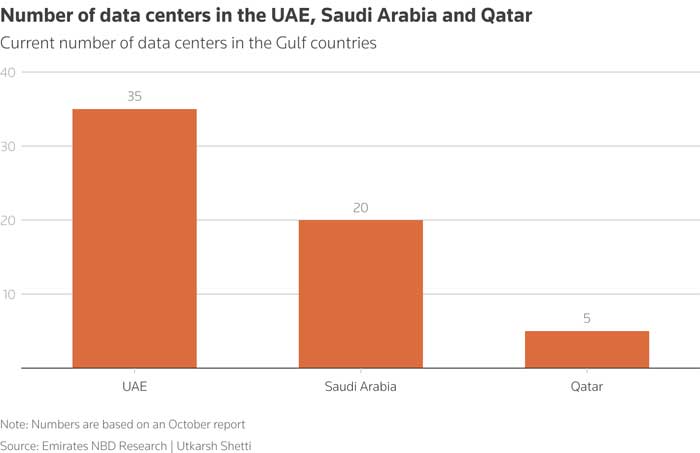
Qatar is trying to catch up in the artificial intelligence (AI) race in the Gulf, relying on its low-cost energy and financial resources. The country is launching Qai, supported by its sovereign wealth fund and a joint venture with Brookfield, marking a significant step into the AI sector. This move is part of a broader aim for the Gulf region to diversify its economies away from oil reliance, similar to investments made by Saudi Arabia and the United Arab Emirates (UAE).


Despite its energy advantages, Qatar faces several challenges in becoming a significant player in AI. These include the need to adopt Western data governance practices, secure advanced chips that are subject to U. S. export controls, and attract skilled talent in a competitive market. Analysts emphasize that overcoming these obstacles, rather than just having financial resources, will be crucial for success in the AI field.
The launch of Qai comes at a time of rising demand for AI infrastructure as companies seek efficiency and cost cuts. Analysts believe that Qatar’s low electricity costs could provide a competitive edge, helping to manage high energy needs in a hot climate. The region’s energy efficiency ratings show that Qatar could grow significantly in the AI market if it maintains affordable power and develops its infrastructure.


Currently, Qatar has a few data centers compared to its neighbors, with plans to increase capacity considerably. The UAE aims to build a large AI campus, while Qatar would need to reach significant milestones, such as achieving 500 megawatts by 2029, to improve its standing. Compliance with strict U. S. rules on chip usage will also be essential for Qai to obtain advanced processors.
Analysts highlight Qatar as a late entrant in the AI race compared to established players like Saudi Arabia and the UAE. While it has certain advantages, its neighbors are better positioned in terms of scale and volume.
With information from Reuters