


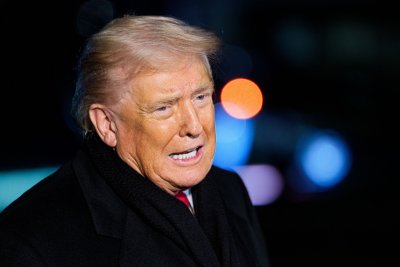
SEOUL, Jan. 27 (UPI) — South Korea will dispatch a delegation of senior trade and industry officials to Washington after U.S. President Donald Trump announced a sharp increase in tariffs on Korean goods, the Ministry of Trade, Industry and Resources said Tuesday.
Trade Minister Yeo Han-koo and Industry Minister Kim Jung-kwan will travel to the United States to meet their counterparts for talks on the tariff hike, the ministry said in a press release.
The decision was made at an emergency interagency meeting chaired by presidential chief of staff for policy Kim Yong-beom, convened hours after Trump’s surprise announcement on social media.
Trump said he was raising his so-called “reciprocal” tariffs on South Korea from 15% to 25%, accusing Seoul’s National Assembly of failing to act quickly enough to implement a bilateral trade deal finalized late last year.
“South Korea’s Legislature is not living up to its Deal with the United States,” Trump wrote earlier Tuesday on his Truth Social platform.
He said the higher tariffs would apply to automobiles, lumber, pharmaceuticals and other goods covered by the agreement.
The legislation to implement the deal was submitted to the National Assembly by the ruling Democratic Party in November but has yet to be passed.
Kim, who is currently in Canada, will travel to Washington as soon as his schedule allows to meet with U.S. Commerce Secretary Howard Lutnick, according to the ministry. Yeo will depart from Seoul to hold talks with U.S. Trade Representative Jamieson Greer.
Trump and South Korean President Lee Jae Myung finalized trade negotiations on the sidelines of the Asia-Pacific Economic Cooperation forum in Gyeongju on Oct. 29.
The two sides released a fact sheet in November detailing the terms of the deal, under which Trump’s tariffs on South Korean goods, including automobiles, would be reduced from 25% to 15%.
In exchange for the lower tariffs, South Korea pledged to invest $350 billion in the United States, including $150 billion in the U.S. shipbuilding sector and $200 billion for strategic industries under a memorandum of understanding to be signed by the two governments.
The fact sheet also formalized Washington’s approval of Seoul’s long-sought plan to build nuclear-powered submarines, a capability South Korean officials have framed as part of broader industrial and security cooperation with the United States.
The tariff move comes amid a dispute involving a South Korean regulatory probe into Coupang, a U.S.-listed e-commerce company, following a large-scale data breach.
On Friday, South Korean Prime Minister Kim Min-seok said he addressed the matter directly in talks with U.S. Vice President JD Vance, stressing that American firms had not been unfairly targeted.
“I made it clear that there has been no discriminatory treatment against U.S. companies,” Kim told Korean correspondents in Washington, D.C.
Following Tuesday’s emergency meeting, South Korea’s presidential office said it would react “calmly” to the announced tariff increase.
“Since the tariff increase will only take effect after administrative procedures such as publication in the Federal Register, the Korean government plans to calmly respond while conveying its commitment to implementing the tariff agreement to the U.S. side,” presidential spokeswoman Kang Yu-jung said in a written briefing.
South Korean stocks initially fell on the tariff news, with the benchmark KOSPI dropping by 0.84% in the first 15 minutes of trading before reversing early losses to gain 2.73% and close at an all-time high of 5,084.85.