

Since I started DJing nearly a decade ago, it’s been a dream of mine to DJ at a music festival, a place where music lovers of all walks of life converge. So when I got the opportunity to spin at Coachella, the country’s festival of all festivals, I was over the moon.
This was my second time playing at Coachella with Party in My Living Room, a house party concert series founded by Inglewood native Yannick “Thurz” Koffi in 2015. The activation, designed to look like an actual living room with couches and artwork, was a collaboration with GV Black, a group promoting “Black, Indigenous, and People of Color (BIPOC) to be seen at the festival.” For the last four years, Koffi has been inviting DJs and musicians (Ty Dolla Sign, P-Lo, Kamaiyah and Isaiah Rashad, to name a few) to perform at the pop-up, which has quickly become a popular side quest for festivalgoers. So when Koffi asked me to be a part of the stacked lineup during Weekend 1, I was honored.


After preparing my set for weeks, the moment had finally come for me to spin on Sunday afternoon. I soaked up the entire weekend experience — from the celebrity-packed artist compound to the exclusive pop-ups (Redbull Mirage and the Soho House hideout) and the free dining. Here’s a peak behind the curtain from an artist’s perspective and what I learned about DJing at the festival.

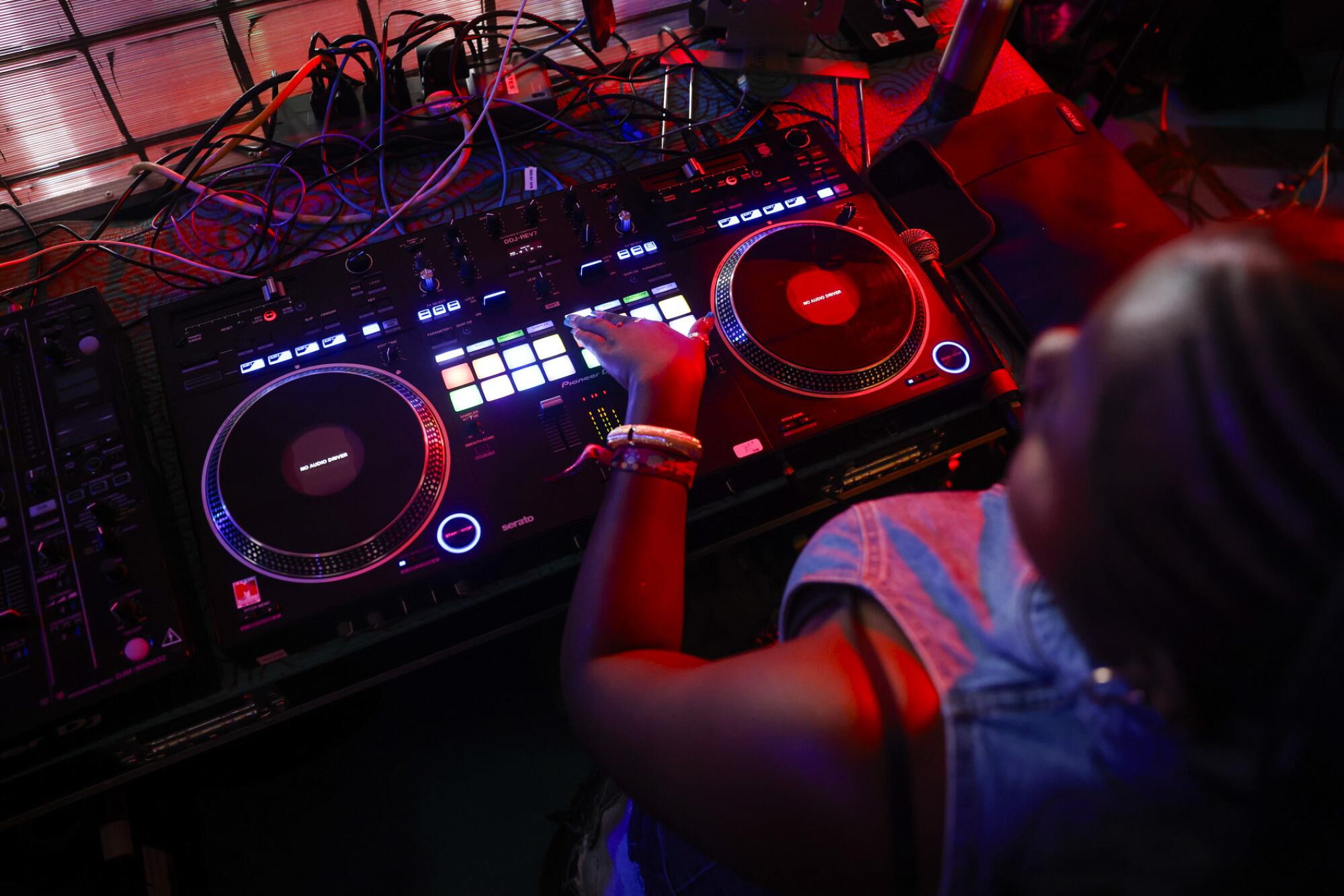
Kailyn Hype played house, hip-hop, jersey club, baile funk and other genres during her high-energy DJ set at Coachella.
(Kayla Bartkowski / Los Angeles Times)
1. Spinning at a daytime desert festival is much different than at a bar
I was in charge of kicking off the activation on the final day of Coachella Weekend 1, which is an underrated job because it means that you get to set the tone for the day.
If I were spinning at a bar, club or flea market, I’d likely ease into my set with more chill songs before getting into bangers. But this was a festival and the crowd was ready to party, so I didn’t waste any of my 45-minute set. (My set was initially scheduled for one hour, but it was cut due to a sound check delay.) However, I left the big hip-hop tracks for the other DJs to play, which is a common DJ courtesy.
With songs like “Tonight” by Pink Pantheress, “Am I Wrong” by Anderson.Paak, “Brighter Days” by Cajmere, “Nissan Altima” by Doechii and several high-energy remixes that I found on Bandcamp, my set was everything I’d hoped for: fun, joyful and liberating. The crowd and I jumped up and down, threw up our hands, sang and danced together. And even if they didn’t know the words to a particular track, they were still open to all of it, which is one of the best feelings you can get as a DJ.
2. The artist wristband was my golden ticket — to a glorious buffet
With so many delicious food vendors like Villa’s Tacos, Prince Street Pizza, Happy Ice and El Moro, I knew that I was going to be eating good at Coachella. What I didn’t expect is for there to be free catering for folks with artist wristbands, like myself. After making my way through the artist compound, past the golf carts that transported performers and celebrities (I spotted Teyana Taylor and Damson Idris) and along a plant-filled pathway, I made it to the elaborate dining area. Inside the room, which was draped with colorful curtains with guitars attached to them, I felt like a kid at a buffet. There were poke bowls, a sandwich station, pizza, steak, ice cream sundae and even a “wrap station,” so you could take your food to go.
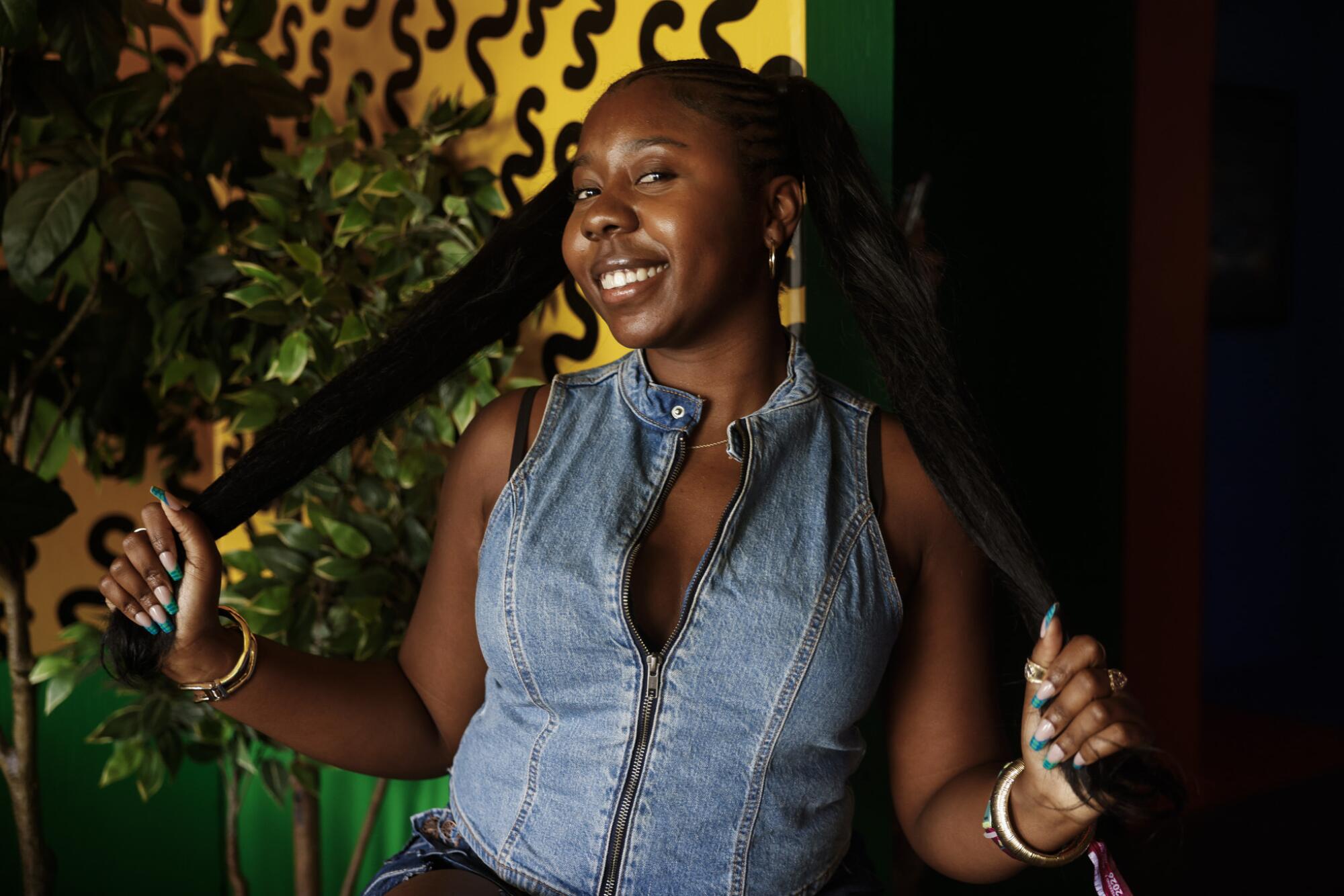
“Since I started DJing nearly a decade ago, it’s been a dream of mine to DJ at a music festival,” says Kailyn Brown.
(Kayla Bartkowski / Los Angeles Times)
3. But even if you have an artist wristband, long lines are inescapable
At any major event, be it a music festival or sports game, lines are to be expected. But I’d be lying if I didn’t admit that I expected the bathroom lines in the artist compound — an exclusive backstage area for artists and their crews — to be shorter. I quickly realized that the lines were unavoidable and if I really needed to go, it was usually faster to go to the porta-potties in the general admission or VIP areas.
4. I found respite at exclusive lounges
After running around the festival for hours, it was nice to be able to take a break from the heat in stylish, exclusive areas like the Red Bull Mirage and Soho House’s hideout.
Red Bull invited me to check out their three-story social hub and hospitality destination at Coachella, which included a Nobu omakase dinner on the top floor. Overlooking the Quasar stage, it offered the perfect spot to sip on the energy drink company’s signature cocktails (the Paloma was my favorite) and watch energetic DJ sets from artists like David Guetta, Fatboy Slim and Pawsa. It’s also where “Love Island USA” Season 7 favorite Olandria was serving Red bull mocktails — and looks — from behind the bar.
While Red Bull Mirage provided day club vibes, the energy at the Soho House hideout was a bit more laid-back. Located inside a luxurious air-conditioned tent near the main Coachella stage, invited guests and Soho House members with VIP passes could order from the bespoke bar, grab a bite (e.g., burgers, fries and maki rolls) and enjoy music from a live DJ.

Founded by Inglewood native Yannick “Thurz” Koffi in 2015, Party in My Living Room is a house party concert series.
(Kayla Bartkowski / Los Angeles Times)
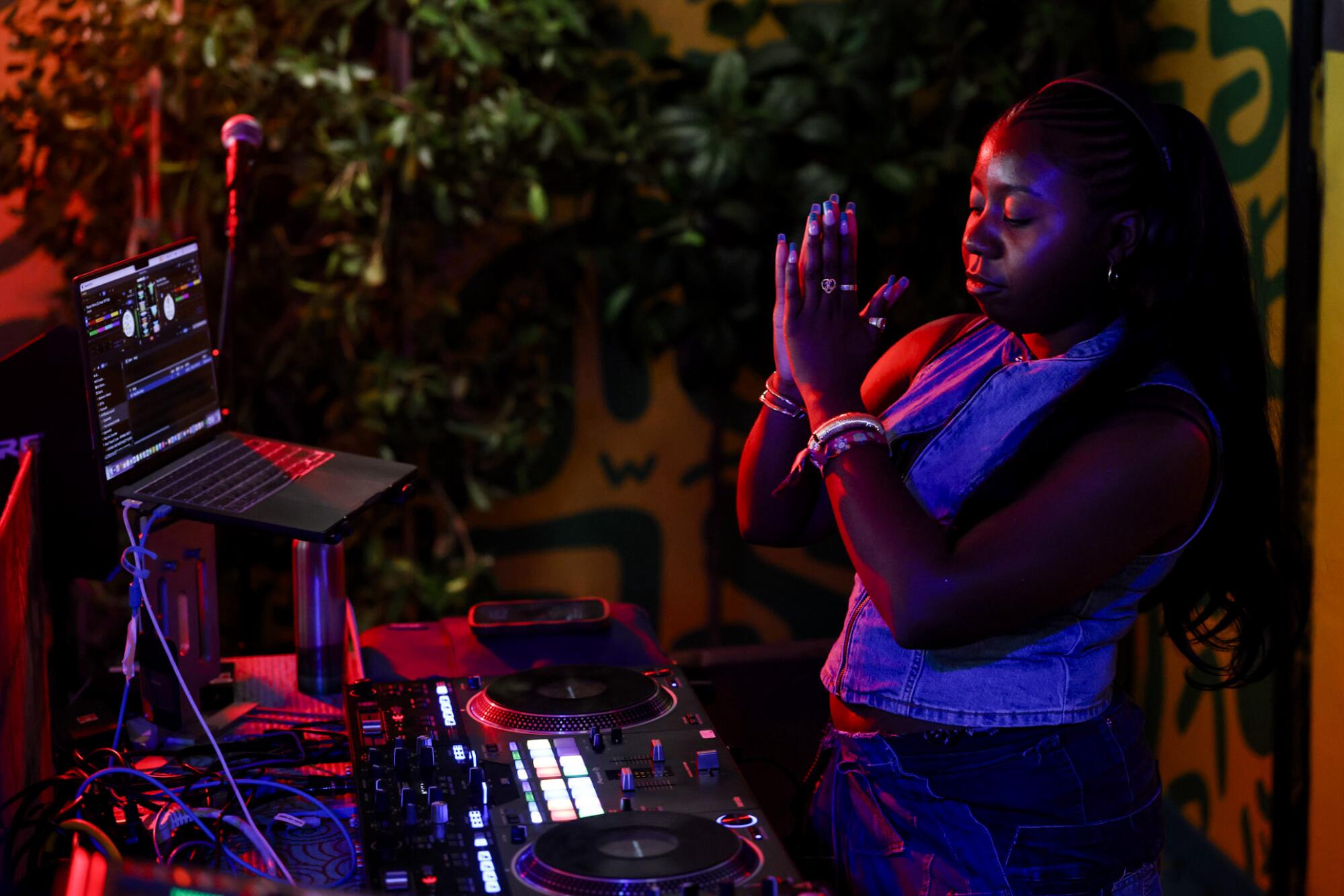
With an artist pass in tow, Kailyn Brown explored the artist lounge, dining hall and other exclusive areas at the music festival.
(Kayla Bartkowski / Los Angeles Times)
5. Music festivals can be a lot, but there’s a reason we keep coming back
After I was finished with my set, several people came up to thank me including one man, a Mexico-based artist named Memo Wright, who drew a live sketch of me spinning, which made my day. Even some of my Times colleagues took a break from reporting to stop by and say hello.
As I drove back home from the desert the following morning, I reflected on why I love music festivals so much and have been attending them since I was 16. Though events like Coachella get a bad rap for being expensive, crowded and uncomfortable (yes, it’s hot and dusty), this experience reminded me why people keep coming back — for the love of music and being able to commune with others who are just as obsessed with it as you are.