


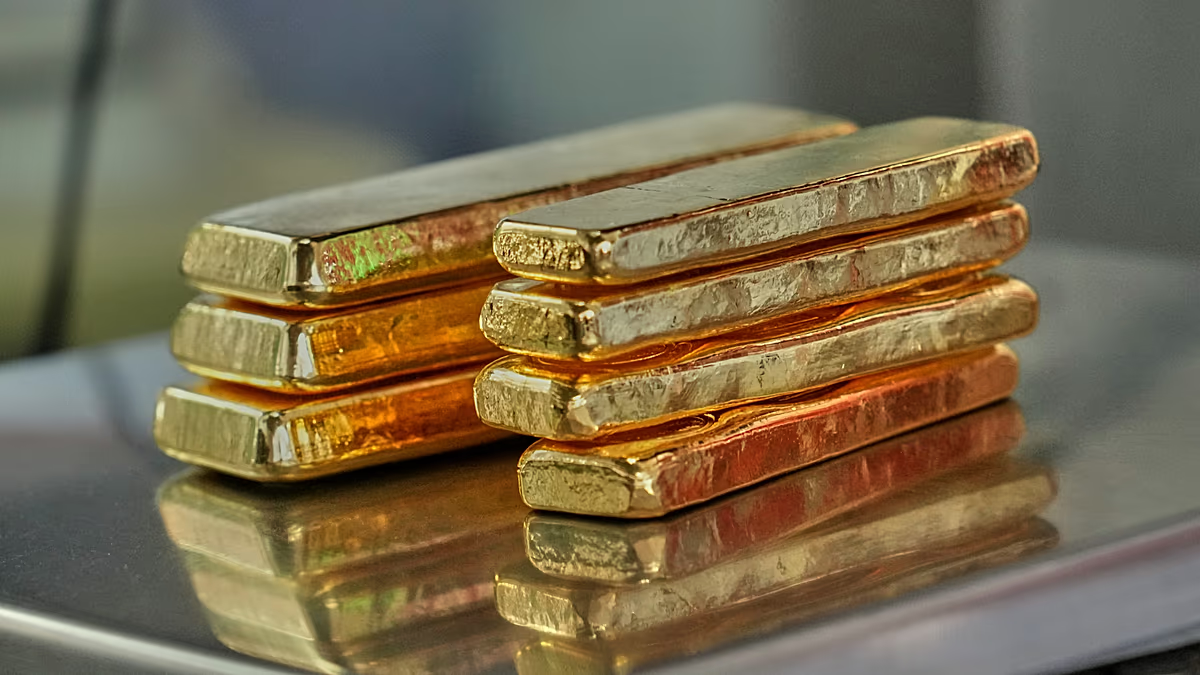
Gold has risen more than 20% since the start of the year, surpassing the significant $5,500 milestone this week.
The precious metal’s rally, seen alongside a lift in commodities such as silver and platinum, is driven by a number of interlinking factors — including geopolitical tensions, rising government debt, and an uncertain outlook for interest rates and inflation.
Gold’s appeal is linked to the narrative that it is a safe haven asset, acting as a “hedge against inflation”. It typically increases in value when the dollar declines, it’s easily sold, and it’s also a tangible, finite commodity.
These factors are significant at a time when questions are being raised about the dollar, as well as fiat currencies like the Japanese yen. As government debt rises, so do fears around inflation and fiscal stability.
In the US, incendiary policies from the Trump administration are increasing market jitters around the health of the economy, prompting what some analysts view as a “sell America” trade. In recent weeks, the president has threatened to conquer Greenland, hinted at US intervention in Iran, sought to influence policy at the Federal Reserve, and launched an attack on Venezuela. To top that off, he’s also threatened more tariffs on trading partners, bringing back a well-worn tactic from 2025.
Although analysts argue that the dollar will not be unseated as the world’s reserve currency anytime soon, it seems investors are diversifying away from the greenback. The US’ next moves remain uncertain, and no one wants to be caught in the crosshairs. As an alternative to fiat currencies, gold may seem like a strong portfolio option.
“Investors previously bought US Treasuries as they were viewed as being quite risk-free. But especially because of the way that some wealth has been weaponised, certain countries are becoming more careful about how they allocate their capital,” said Simon Popple, managing director at Brookville Capital. “The dollar debasement helps the gold price,” he told Euronews.
Even so, Popple and other analysts stress that a major factor lifting the bullion price is far less complicated. As gold continues to make headlines, investors are caught up in the momentum, sparking a buying frenzy.
“People are naturally drawn to things they see moving and they’ve seen gold have an astonishing rally,” said Chris Beauchamp, chief market analyst at IG. “It’s bound to lead to an ignition of interest.”
He added that while gold has beneficial investment properties, the metal’s ability to hold its value is overstated, particularly in the short term. Gold’s position in the market notably shifted after former US president Richard Nixon decided to end direct dollar convertibility to gold in 1971. Put simply, countries no longer fixed their currencies to a specified amount of the precious metal.
“The gold standard is still invoked to suggest the metal is some kind of totemic asset we should have because it’s a fixed store of value. It’s not,” concluded Beauchamp.
Kenneth Lamont, a principal in Morningstar’s Manager Research Department, reiterated this message, also drawing comparisons between gold and crypto. While both are limited in supply, they are both “incredibly volatile”, he stressed.
“If you’re using either crypto or gold to buy something, it might be 30% less from one day to the next. It’s not actually a good store of value in the short term.”
While gold is much more established than bitcoin, and it has historically performed well over the long term, analysts stress that the unpredictability of both assets means the death knell is not yet ringing for fiat currencies.
Whether bullion’s price will continue to climb in the immediate future is a guessing game. Even so, given the precarious nature of global politics, it seems the metal may still have further to run.