


Video has emerged that is said to show a Russian-made Mi-28NE Havoc attack helicopter flying over the Iranian capital Tehran. Last week, pictures had also appeared online that looked to show at least one Mi-28NE in Iran. The arrival of Havocs in Iran might also point to the delivery of weapons and other materiel from Russia, or plans to do so soon, amid a new spike in geopolitical friction between the Middle Eastern country and the United States.
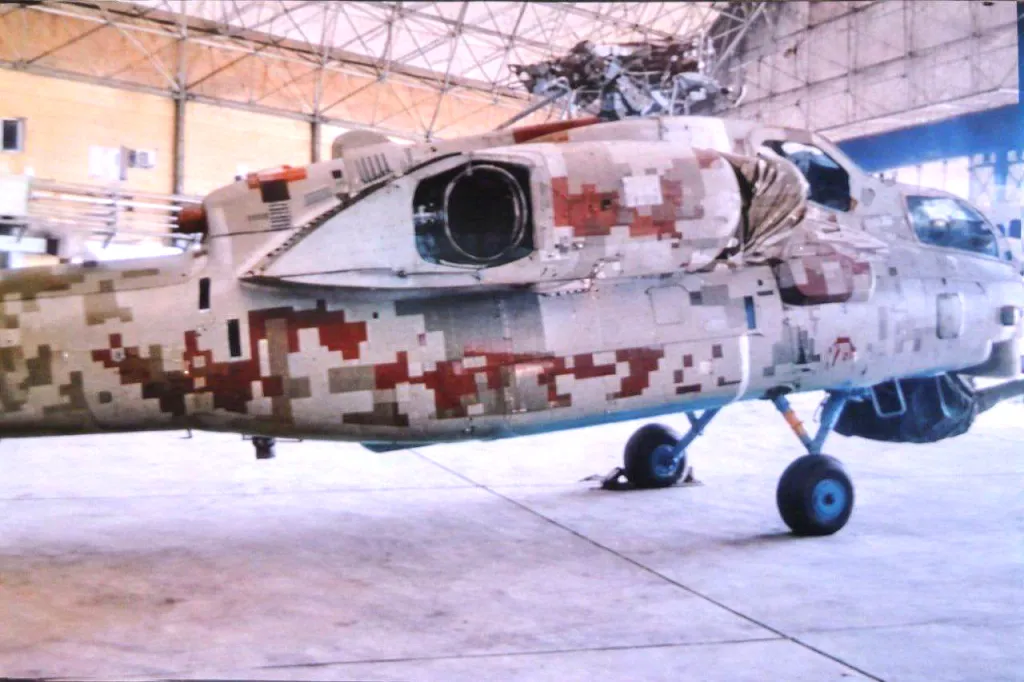
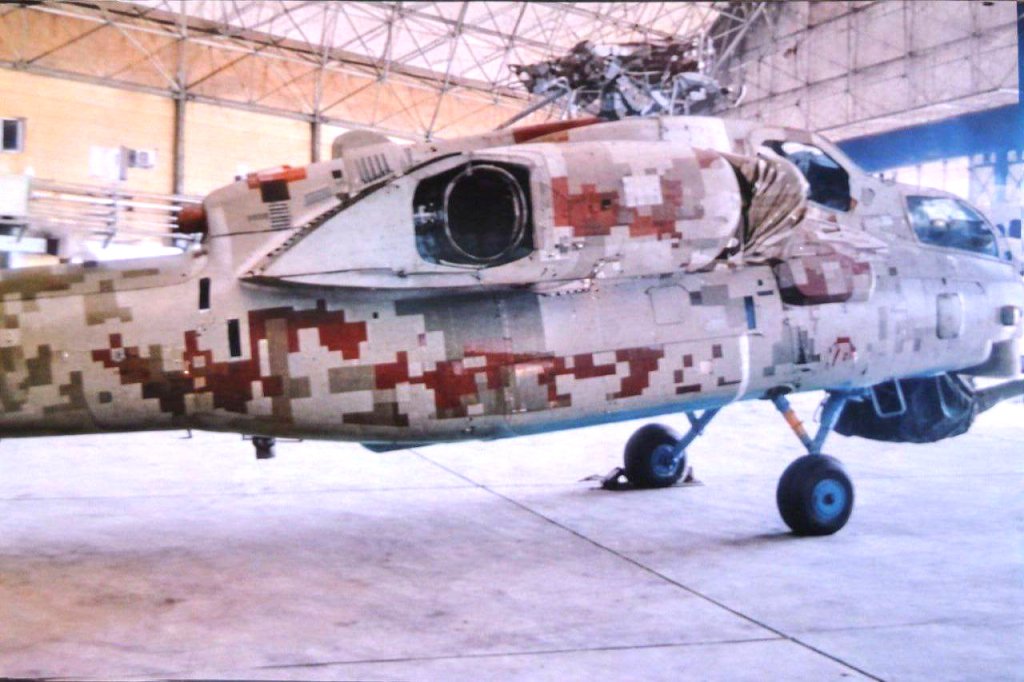
TWZ has not been able to independently confirm where and when the footage in question, seen in the social media post above, was taken. However, the pictures that began circulating online last week look to have taken at a hangar belonging to Iran’s Pars Aerospace Services Company (PASC). Situated at Mehrabad International Airport in Tehran, PASC is tied to Iran’s powerful Islamic Revolutionary Guard Corps (IRGC) and is subject to sanctions in the United States and other Western countries.

In addition, on January 3, Iranian journalist Mohamad Taheri wrote “Inshallah you have a good military service,” according to a machine translation of a Persian-language post on X, which included a stock picture of an Mi-28 wearing a two-tone desert camouflage scheme. Taheri has been associated with Iran’s quasi-official Tasnim News Agency. Tasnim was among the first to report on a possible Iranian acquisition of Havocs, as well as Su-35 Flanker fighters and Yak-130 jet trainers, all the way back in 2023. The Yak-130s appeared in Iran that same year. There had been talk of a batch of Su-35s originally built for Egypt, but that were never delivered, being sent instead to the Iranians. However, at least some of those jets appeared instead in Algeria last year.
The two-seat Mi-28 traces back to before the fall of the Soviet Union, with the original variant making its first flight in the 1980s. The project was shelved in the 1990s and then subsequently revived. The first version to enter actual operational service was the Mi-28N in the late 2000s. Russia subsequently introduced an NE export version, different subvariants of which have been delivered to foreign customers in the past. A further upgraded NM variant for the Russian military was also developed in the 2010s, but has been slow to enter operational service. You can read more about the Mi-28 family in this past TWZ feature.
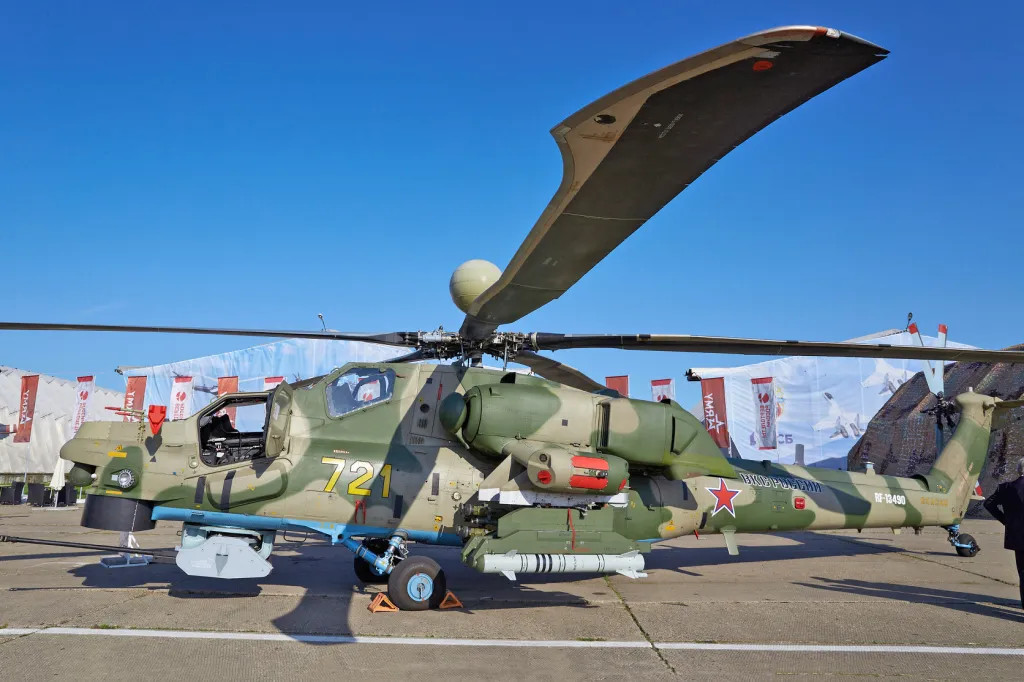


Mi-28s are armed with a 30mm automatic cannon in a turret under the nose and can carry various munitions, including anti-tank guided missiles and unguided rockets, on four pylons, two on each of a pair of stub wings on either side of the fuselage. The default sensor suite on the Mi-28N includes a mast radar and a turreted infrared video camera under the nose.
The exact configuration of any Mi-28s for Iran, and how many the country may have ordered in total, is unclear. The recently emerged video is too low quality to see any fine details, though it does appear to be fitted with a mast-mounted radar that has been lacking on certain other export versions of the Havoc. The still pictures show a partially disassembled helicopter, which also makes it very difficult to assess the overall configuration. The images do not offer a clear view of the nose, either, where various sensors, as well as the turreted main gun, are located.
Russian Helicopters, the main helicopter conglomerate in Russia today, also notably unveiled a further improved NE variation in 2018 that was said to incorporate lessons learned from the conflict in Syria. This included a directional infrared countermeasure system to provided add defense against incoming heat-seeking missiles, as well as other survivability improvements. It had new engine air filters, a particularly desirable feature for operations in desert environments, and a digital camouflage scheme, as well. The Mi-28 seen in the pictures that emerged last week looks to have the air filters, though they are covered by tarps, and has a digital paint job.
New Mi-28s in any configuration would be a notable addition to the Iranian arsenal. The main attack helicopter in service in Iran today is the AH-1J International Cobra, which the country first acquired during the reign of the Shah. The Islamic Republic has made some upgrades to its AH-1 fleet since the 1970s, with the resulting helicopters variously referred to as Toufans or Panha 2091s. However, at their core, these are American-made helicopters that are increasingly difficult for the current regime in Tehran to sustain. The Havoc is more survivable overall and can carry a greater weapons load, as well.


IR Iran unveils Toufan 2 helicopter (upgraded Cobra)
If Iran’s Mi-28s feature the infrared sensor turret and the mast-mounted radar, the helicopters could offer an even greater boost in capability, even at night or in poor weather. That, in turn, could be valuable for responding to any kind of foreign ground incursion in the future, or to internal threats to the regime. At the same time, when an Iranian Havoc fleet might reach a level of real operational capability, and how well the country is able to sustain the helicopters going forward, remains to be seen. Moscow’s own demands in relation to the war in Ukraine have created additional challenges for foreign operators of Russian-made helicopters and other materiel.
As noted, the appearance of Mi-28s in Iran could also reflect larger deliveries of weapons and other materiel from Russia, or the potential for that to occur in the near future. In January, online flight tracking data showed at least five flights by Il-76 airlifters from Russia to Iran, which could have been carrying Havocs or other cargo. Those aircraft could also have been bringing cargo back to Russia from Iran, or carrying payloads both ways. Ties between Moscow and Tehran have grown, in general, in recent years, as Russia has found itself increasingly isolated globally over the ongoing conflict in Ukraine. There has been much talk of Iran receiving exchanges in kind for its support to the Russian war effort.
In addition, since the end of the 12 Day War with Israel, Iran has been looking to bolster various ends of its depleted arsenal. There have been reports that Iran has also been seeking new air defense systems from China, another country the regime in Tehran has been working to expand its ties with. China reportedly continues to be an important source of materials to support Iranian missile programs, as well.
The Mi-28 imagery has come amid the backdrop of a new surge in geopolitical friction with the United States. Just today, American authorities announced that an F-35 Joint Strike Fighter flying from the aircraft carrier USS Abraham Lincoln in the Arabian Sea shot down an Iranian drone that had “aggressively approached” the ship. U.S. officials also accused the IRGC of harassing a U.S.-flagged merchant vessel transiting the Strait of Hormuz.
All of this follows a major build-up of U.S. military forces in the region for weeks now, together with a steady stream of reports that U.S. President Donald Trump is considering new strikes on Iran, at least in part in retaliation for that country’s violent crackdown on nationwide protests last month. Trump has also expressed interest in finding a negotiated arrangement of some kind with Tehran, with reports that American and Iranian officials could meet as early as Friday in Turkey.
When it comes to Mi-28s for Iran, evidence is growing that at least one of the helicopters has now been delivered, and more details may now continue to emerge.
Contact the author: joe@twz.com