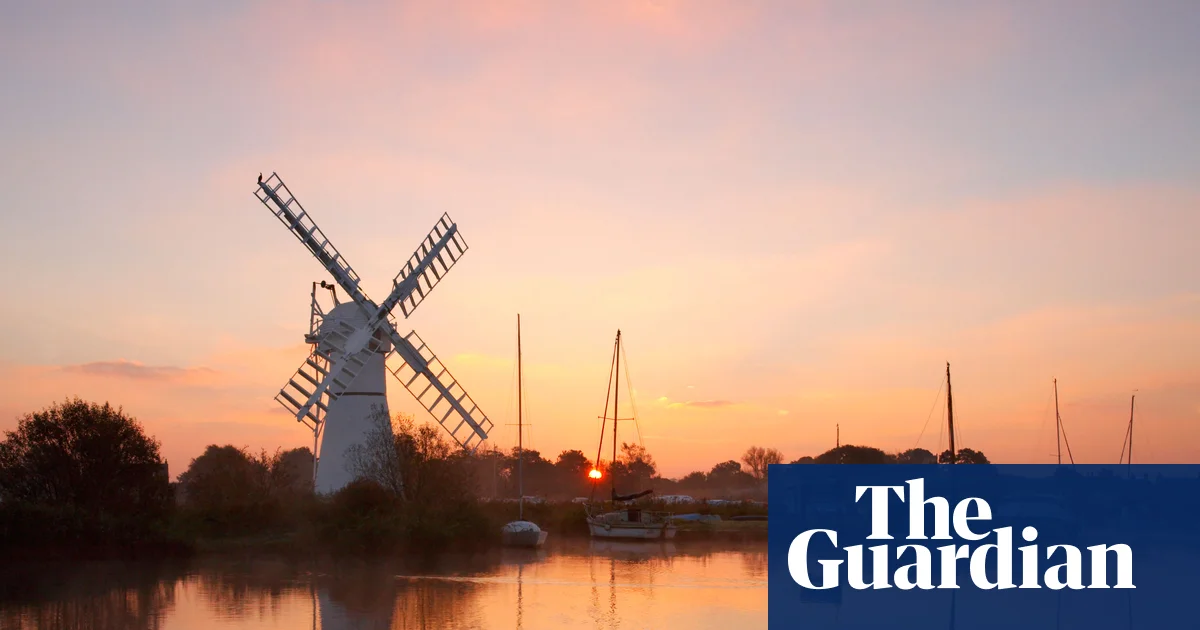
This year marks the 75th anniversary of the Peak District national park – the first designated national park in the UK. That number has grown to 15 across the UK, alongside more than 200 national nature reserves, which are designed to protect specific landscapes and habitats. Whether it’s boating through the Norfolk Broads national park, birdwatching on Lindisfarne national nature reserve, or camping in the Cairngorms, we’d love to hear about your favourite things to do and places to visit in our national parks and reserves.
The best tip of the week, chosen by Tom Hall of Lonely Planetwins a £200 voucher to stay at a Coolstays property – the company has more than 3,000 worldwide. The best tips will appear in the Guardian Travel section and website.
Keep your tip to about 100 words
If you have a relevant photo, do send it in – but it’s your words we will be judgingfor the competition.
We’re sorry, but for legal reasons you must be a UK resident to enter this competition.
The competition closes on Monday 9 March at 10am GMT
Your responses, which can be anonymous, are secure as the form is encrypted and only the Guardian has access to your contributions. We will only use the data you provide us for the purpose of the feature and we will delete any personal data when we no longer require it for this purpose. For alternative ways to get in touch securely please see our tips guide.
If you’re having trouble using the form click here. Read terms of service here and privacy policy here.
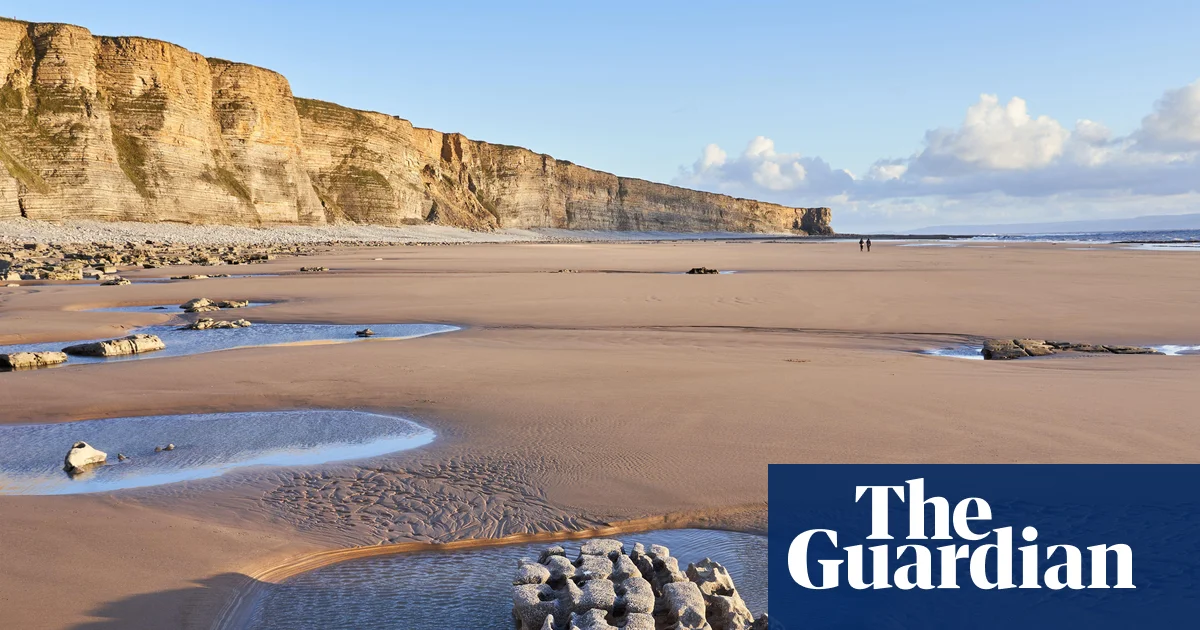
Winning tip: fossils and soaring cliffs near Cardiff
I’m a fan of the lesser-known beaches along the dramatic and rugged Glamorgan Heritage coastline; Wick, Monknash and Nash Point. One of my favourite routes requires a scenic hike across fields and a precipitous scramble down Cwm Bach ladder. The reward is a gorgeous expanse of rocky beach with only the occasional distant naturist and huge stepped cliffs absolutely full of fossils, including some enormous ammonites. The nearby ancient Plough & Harrow feels like a step back in time and you’re being served beer in someone’s living room. P Thomas
Profile
Readers’ tips: send a tip for a chance to win a £200 voucher for a Coolstays break
Show
Guardian Travel readers’ tips
Every week we ask our readers for recommendations from their travels. A selection of tips will be featured online and may appear in print. To enter the latest competition visit the readers’ tips homepage
–
A magical swimming spot in Pembrokeshire
The Witches’ Cauldron. Photograph: Andrew Kearton/Alamy
Last July on the hottest day of the year my friend took me to the slightly hidden Witches’ Cauldron in Moylegrove. This is a collapsed cave where you can swim in water that glows magical emerald green in the sun. You can swim straight from the cave out to sea. It’s a bit of a scramble down on foot from the Pembrokeshire Coast Path, or you can access it by sea kayak through tunnels from the sea. Check that it’s accessible though, as sometimes it’s closed to protect local seals. Anna
Eryri’s most enchanting castle
The ruins of Castell y Bere boast wonderful views of the north Wales mountains. Photograph: Paul Weston/Alamy
North Wales is famous for its castles: Conwy, Caernarfon and Harlech are lauded and filled with visitors, year-round. But forget these Anglo-Saxon fleshpots and seek out Castell y Bere. Located near Tywyn, in the south of Gwynedd, this stronghold of medieval Welsh ruler Llywelyn ap Iorwerth (Llywelyn the Great) stands on an impressive, windswept crag, surrounded by flat, fertile estuarine pastures. Looking over this land you can sense the herds of cattle that once roamed here and fed the people. The atmosphere of history is pervasive, almost crushing. If you go there, tread lightly and don’t stay too long, lest its magic be ruined for others. Ian Statham
A petrified forest in Ceredigion
The remains of a petrified forest can be seen at Borth. Photograph: Dannie Evans/Alamy
The submerged forest of tree stumps between Ynyslas and Borth is incredible. The stumps of oak, pine, birch, willow and hazel are up to 5,000 years old and were preserved in peat. I like to walk down the beach to touch them and imagine how the world was all those years ago. Michael Gale
A slice of Bangor
Returning to Gwynedd where my dad grew up feels like a homecoming of sorts. A trip to Jones’ Pizza in Bangor after a journey on the marvellous North Wales mainline train fills hungry stomachs. It’s good value, bustling, and a pillar of community and student life. I like to take a scenic walk along the Menai Strait and wonder at both Thomas Telford’s Menai Bridge, built in 1826, and Britannia Bridge, before moseying around Caernarfon’s monthly Saturday craft fair and dried flower shop Herbariwm, and following the medieval castle’s walls, which snake around the town. Flora
A north coast cycle to Llandudno
The Prestatyn to Llandudno route runs for 18 miles. Photograph: DGD Images/Alamy
Not considering myself a serious cyclist, I found the 18-mile Prestatyn to Llandudno route to be a brilliant entry-level cycle ride. It’s almost all off-road, along national cycle network paths by the coast, so you can just focus on the beautiful north Wales coastline without worrying about cars or maps or anything else. There are plenty of lovely places to stop along the way to refuel and admire the view. Towards the end it gets pretty steep but you’re rewarded with beautiful views and the best chippy supper from Barnacles, which has a dedicated vegan menu. You can either cycle back again or take your bike on the train. Esther
A forest garden near Dolgellau
Cadair Idris from Coed y Brenin. Photograph: Henry Ciechanowicz/Alamy
Mountain bikers flock to Coed y Brenin, a few miles north of Dolgellau. After all, it’s the UK’s first purpose-built mountain biking centre. Few pause at the quietly enchanting Forest Garden though. Tucked away from the main trails, it offers a slower, more contemplative side of the forest. After slipping into disrepair in the early 2000s, it has been carefully restored. Redwoods, the tallest trees here, now rise above moss-covered boulders and a lively stream that swells into cascades after rain. Douglas firs from the 1920s stand alongside larch, spruce and pine from wetter corners of the world. Part of the circular trail is all-access, making this woodland retreat open to everyone – and it’s free entry. Alina Congreve
A wild iron age site, Ynys Môn (Anglesey)
Tŷ Mawr Hut Circles. Photograph: David Lyons/Alamy
Tŷ Mawr Hut Circles on the slopes of Holyhead Mountain is a true under-the-radar treasure. More than just a fascinating archaeological site, it’s a beautifully preserved glimpse into iron age life – and an unbeatable picnic spot, with sweeping views. Visit year-round, but late summer is especially magical when the hillside glows with vibrant purple heather. It feels peaceful, wild and wonderfully untouched. From here, continue your walk towards the dramatic South Stack lighthouse, where the cliffs plunge into the sea. With a bit of luck, you might even spot seals bobbing below or puffins nesting. Tatiana Campo
Artistic inspiration in Tenby and Cardiff
A painting of Tenby by Gwen John, circa 1900. Photograph: incamerastock/Alamy
The tiny but fascinating Tenby Museum and Art Gallery, housed in a Grade II-listed building in Pembrokeshire, is the oldest independent museum in Wales, having been established in 1878. As well as featuring geology, local history and culture, it is home to several intriguing works by Gwen and Augustus John, famous sibling artists who spent their childhoods in Tenby. Appetite whet, from there travel to Cardiff where a major retrospective of Gwen John, Strange Beauties, is running until 28 June at the National Museum. Adrian Brodkin
Welsh graveyards are special. From austere chapel burial grounds with their glass-domed immortelles to remote churchyards with Welsh-language inscriptions cut deeply into local slate, every village has something to see and something to teach you about life in the local community. Some recent discoveries of mine include Cefn Golau Cholera Cemetery, isolated on a windswept hill high above Tredegar (just south of the Bannau Brycheiniog national park) for fear of contagion from the dead; and the ancient circular-walled churchyard of St Baglan’s, Llanfaglan, set in a field overlooking the mouth of the Menai Strait just west of Caernarfon – a truly peaceful and magical place. Emma Halstead