TSA

Senate approves funding for TSA and most of Homeland Security, but not immigration enforcement

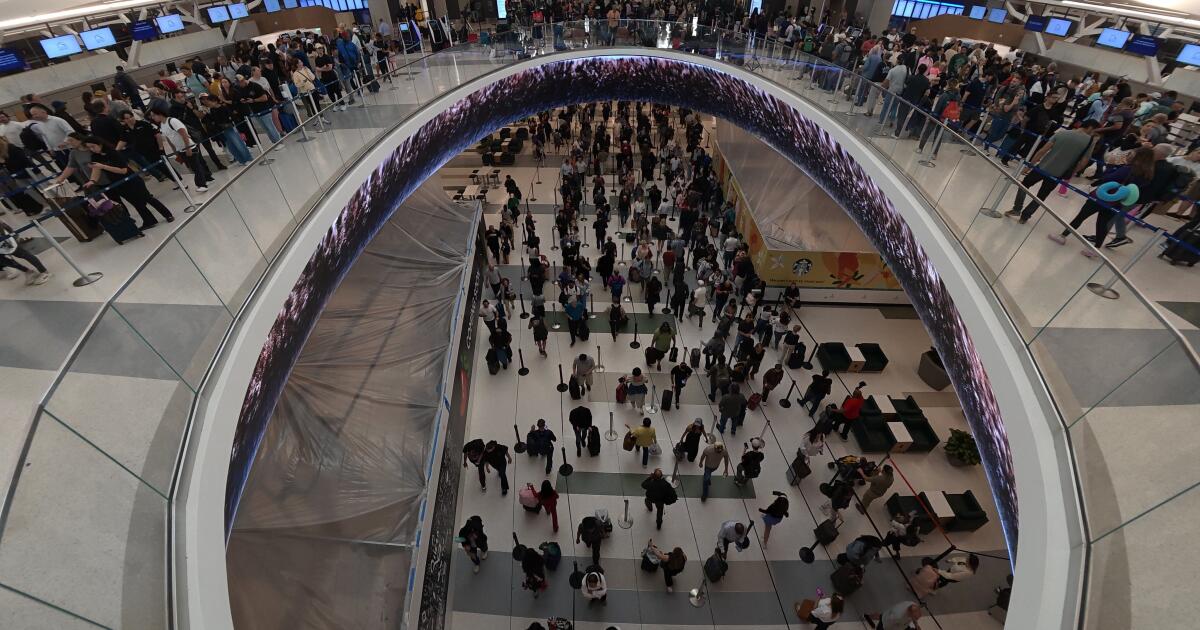
The Senate early Friday morning approved Homeland Security funds to pay Transportation Security Administration agents and most other agencies, but not the immigration enforcement operations at the heart of the budget impasse that has jammed airports, disrupted travel and imposed financial hardship on workers.

The deal, which the Senate approved unanimously without a roll call, next goes to the House, which is expected to consider it Friday.

“We can get at least a lot of the government opened up again and then we’ll go from there,” said Senate Majority Leader John Thune, R-S.D. “Obviously, we’ll still have some work ahead of us.”

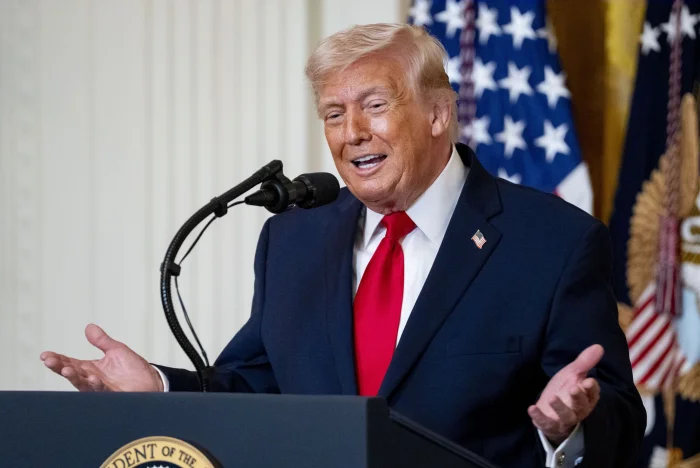
With pressure mounting to resolve the 42-day stalemate over funding for the Department of Homeland Security, the endgame emerged in the final hours before TSA workers miss another paycheck Friday. President Donald Trump said he would sign an order to immediately pay the TSA agents, saying he wanted to quickly stop the “Chaos at the Airports.” The deal did not include any of the restraints Democrats have demanded as they sought to rein in Trump’s mass deportation agenda.

Senate Democratic Leader Chuck Schumer said the outcome could have been reached weeks ago, and vowed that his party would continue fighting to ensure Trump’s “rogue” immigration operation “does not get more funding without serious reform.”

What’s in and out of the funding package

Senators worked through the night on the deal that would fund much of the rest of the department, including the Federal Emergency Management Agency, the Coast Guard and TSA, but without funding for Immigration and Customs Enforcement. Customs was funded, but Border Protection was not.

The package puts no new limits on immigration enforcement, which has remained largely uninterrupted by the shutdown. The GOP’s big tax cuts bill that Trump signed into law last year funneled billions in extra funds to DHS, including $75 billion for ICE operations, ensuring the immigration officers are still being paid despite the lapse.

Next steps in the House, where Speaker Mike Johnson, R-La., holds a slim majority, are uncertain. Passage will almost certainly require bipartisan support, as lawmakers on the left and right flanks revolt.

Conservative Republicans have panned their own party’s proposals, demanding full funding for immigration operations. Many have vowed to ensure ICE has the resources it needs in the next budget package to carry out Trump’s agenda.

“We will fully fund ICE. That is what this fight is about,” Sen. Eric Schmitt, R-Mo., said as he tried to offer legislation to fund the agency. “The border is closing. The next task is deportation.”

On-again, off-again talks collapsed

Earlier Thursday, Thune announced he had given a “last and final” offer to the Democrats. But as the day dragged on, action stalled out.

Democrats argued the GOP proposals have not gone far enough at putting guardrails on officers from ICE, Customs and Border Protection, and other federal agencies who are engaged in the immigration sweeps, particularly after the deaths of two Americans protesting the actions in Minneapolis.

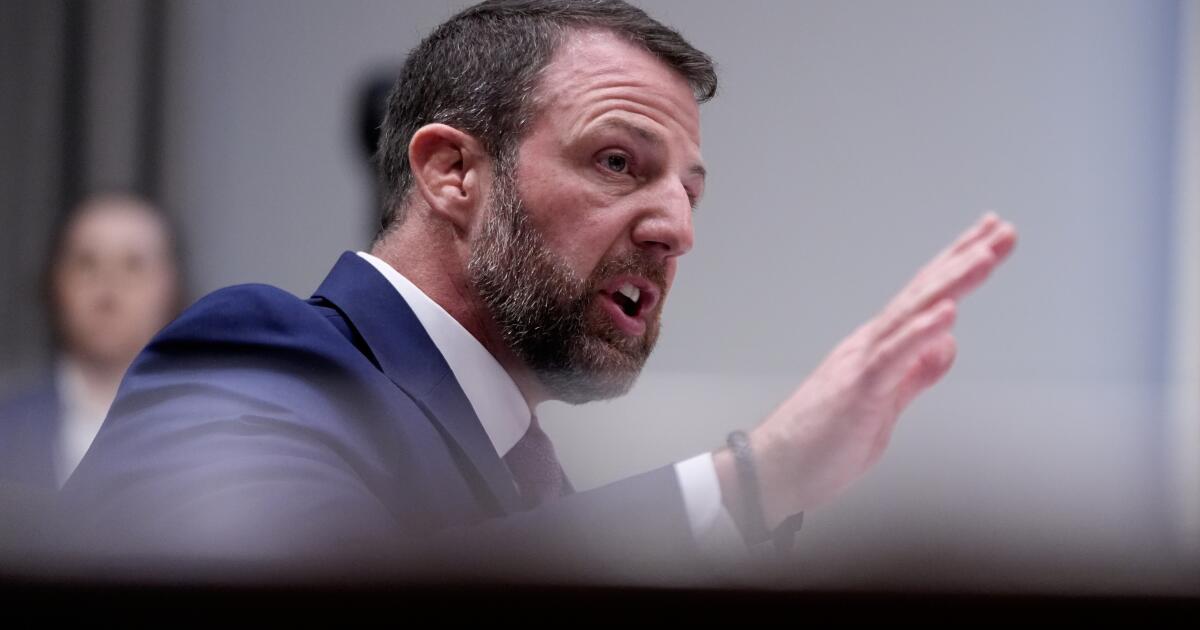
They want federal agents to wear identification, remove their face masks and refrain from conducting raids around schools, churches or other sensitive places. Democrats have also pushed for an end of administrative warrants, insisting that judges sign off before agents search people’s homes or private spaces — something new Homeland Security Secretary Markwayne Mullin has said he is open to considering.

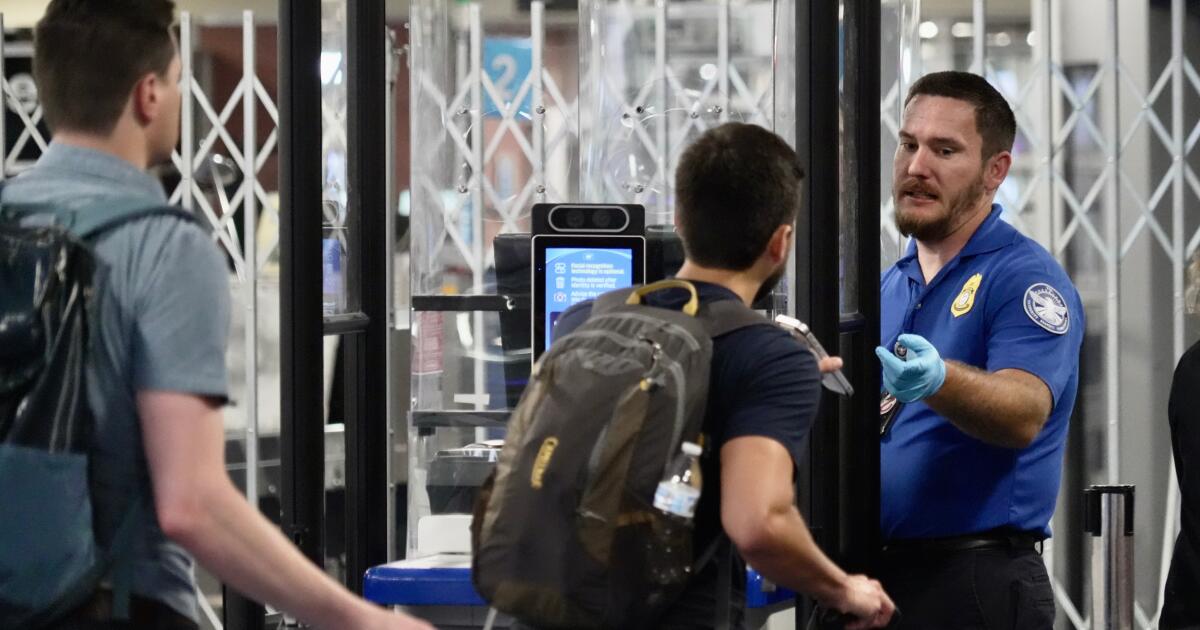
Trump had largely left the issue to Congress, but warned he was ready to take action, threatening to send the National Guard to airports in addition to his deployment of ICE agents who are now checking travelers’ IDs.

The White House had floated the extraordinary move of invoking a national emergency to pay the TSA agents, a politically and legally fraught approach. Instead, Trump’s order would pay TSA agents using money from his 2025 tax bill, according to a senior administration official who spoke on condition of anonymity because they weren’t authorized to discuss it publicly.

If the Senate package is approved by the House and signed it into law, the action Trump announced to pay TSA agents may be temporary or unneeded.

Airport lines grow as TSA workers endure hardships

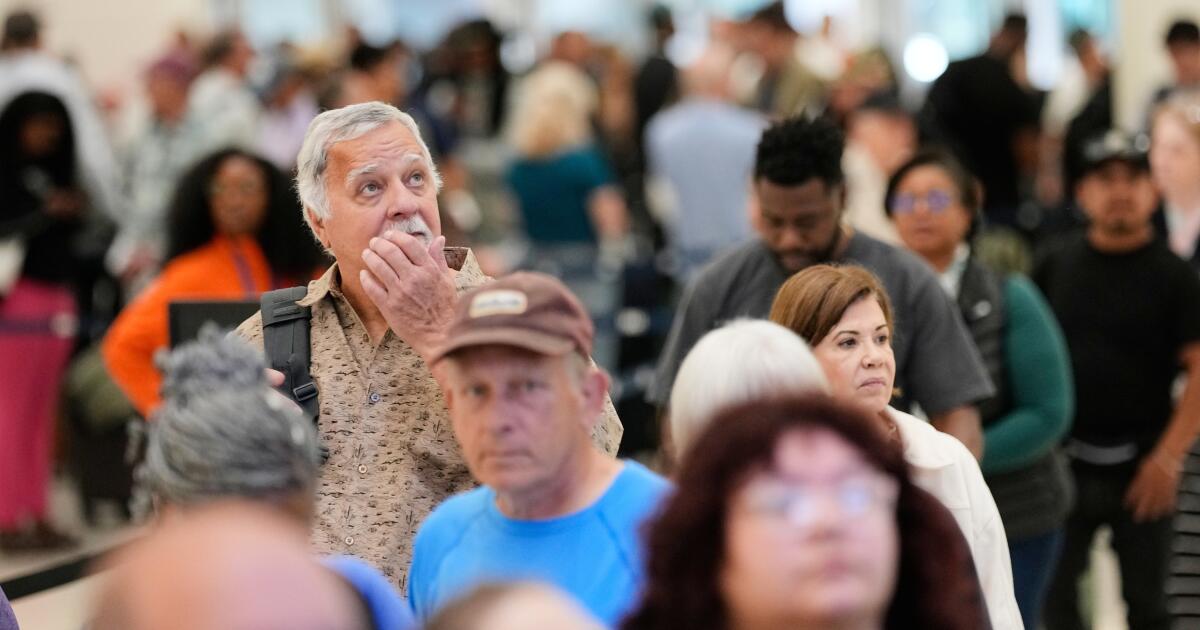
The funding shutdown has resulted in travel delays and even warnings of airport closures as TSA workers missing paychecks stop coming to work.

Multiple airports are experiencing greater than 40% callout rates of TSA workers and nearly 500 of the agency’s nearly 50,000 transportation security officers have quit during the shutdown. Nationwide on Wednesday, more than 11% of the TSA employees on the schedule missed work, according to DHS. That is more than 3,120 callouts.

Everett Kelley, the president of the American Federation of Government Employees, said the union is grateful the TSA workers will be paid, but said Congress must stay in session to pass a deal “that funds DHS, pays all DHS workers, and keeps these vital agencies running.”

At George Bush Intercontinental Airport in Houston, Melissa Gates said she would not make her flight to Baton Rouge, Louisiana, after waiting more than 2½ hours and still not reaching the security checkpoint. She said no other flights were available until Friday.

“I should have just driven, right?” Gates said. “Five hours would have been hilarious next to this.”

Associated Press writers Joey Cappelletti, Kevin Freking, Rebecca Santana, Collin Binkley and Ben Finley in Washington, Lekan Oyekanmi in Houston, Wyatte Grantham-Philips in New York, Rio Yamat in Las Vegas, Russ Bynum in Savannah, Georgia, and Gabriela Aoun Angueira in San Diego contributed to this report.

Mascaro and Jalonick write for the Associated Press.
Source link

Trump says he will sign an emergency order to pay TSA agents

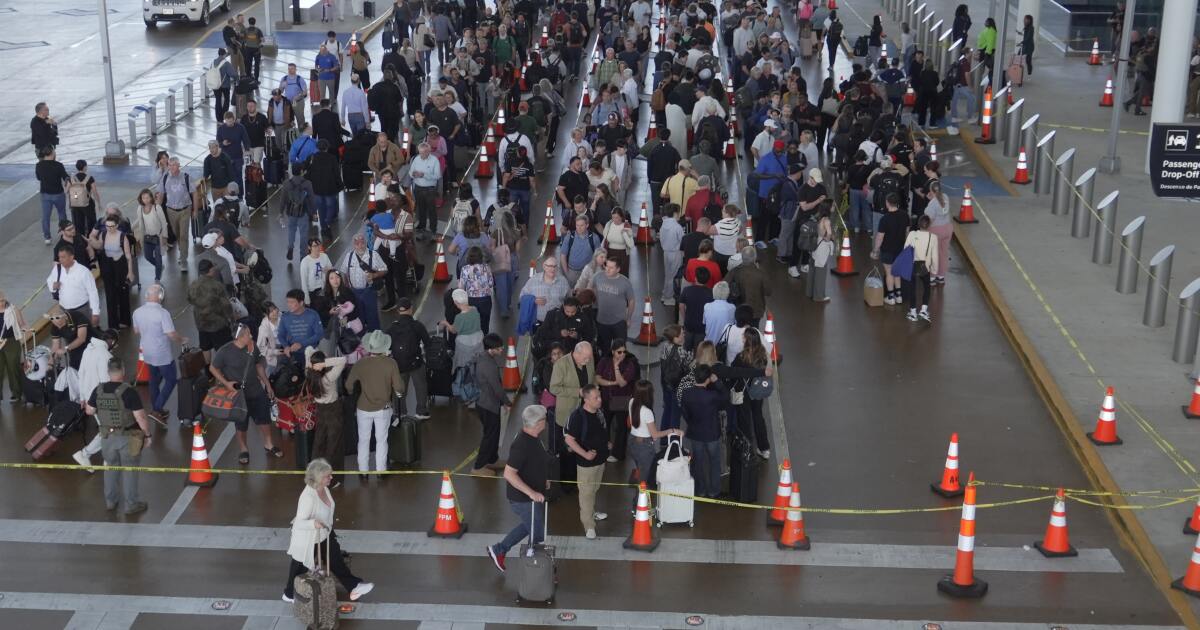
President Trump said Thursday he would sign an order instructing the Homeland Security secretary to immediately pay Transportation Security Administration agents as Congress struggled to reach a deal to end a budget impasse that has jammed airports and left workers without paychecks.

Trump announced his decision in a social media post saying he wanted to quickly stop the “Chaos at the Airports.”

“It is not an easy thing to do, but I am going to do it!” the president posted.

With pressure mounting, the White House had floated the extraordinary move of invoking a national emergency to pay TSA agents, while senators were reviewing a “last and final” offer from Republicans to Democrats to end the funding impasse at the Department of Homeland Security.

Details of the president’s plan were not immediately available, but a national emergency declaration would be politically fraught and almost certain to face legal challenges. Instead, the president may simply be shifting money from other sources.

Democrats have been refusing to fund Homeland Security as they seek changes to rein in Trump’s immigration enforcement operations. The Senate came to a standstill and senators, ready to leave town for their own spring break, had prepared to stay all night to reach a deal.

“The president is doing absolutely the right thing,” said Sen. John Barrasso (R-Wyo.), the GOP whip. “The TSA agents are going to be paid.”

Sen. Susan Collins (R-Maine), the chair of the Appropriations Committee, has said there is funding elsewhere that can be legally used to pay the TSA as well as the Coast Guard without declaring a national emergency.

The funding shutdown, now in its 41st day, has resulted in travel delays, missed paychecks and even warnings of airport closures. TSA workers are coming up on their second missed payday Friday, with thousands refusing to show up for work.

Multiple airports are experiencing greater than 40% callout rates of TSA workers and nearly 500 of its nearly 50,000 transportation security officers have now quit during the shutdown. Nationwide on Wednesday, more than 11% of the TSA employees on the schedule missed work, according to DHS. That is more than 3,120 callouts.

Trump, who has largely left the issue to Congress to resolve, had warned he was ready to take action, even threatening to send the National Guard to airports, in addition to his deployment of ICE agents who are now checking travelers’ IDs — a development drawing concerns. The White House has been considering a menu of options.

“They need to end this shutdown immediately or we’ll have to take drastic measures,” Trump said during a morning Cabinet meeting at the White House.

At George Bush Intercontinental Airport in Houston, Melissa Gates said she would not make her flight to Baton Rouge, Louisiana, after waiting more than 2½ hours and still not reaching the security checkpoint. She said no other flights were available until Friday.

“I should have just driven, right?” Gates said. “Five hours would have been hilarious next to this.”

A ‘last and final’ offer on the table

Earlier Thursday, Senate Majority Leader John Thune (R-S.D.) announced he had given the final offer to Democrats.

Thune did not disclose details of the new framework, but he said that it picked up on what had been the Republican offer over the weekend, before talks with the White House and Democrats had broken off.

“Enough is enough,” he said.

But as senators retreated to privately discuss the new plan, the action stalled out.

Democrats argue the GOP proposals have not gone far enough at putting guardrails on officers from ICE, Customs and Border Protection and other federal agencies that are engaged in the immigration sweeps, particularly after the deaths of two Americans protesting the actions in Minneapolis.

They want federal agents to wear identification, remove their face masks and refrain from conducting raids around schools, churches or other sensitive places. Democrats have also pushed for an end of administrative warrants, insisting that judges sign off before agents search people’s homes or private spaces.

Senate Democratic leader Chuck Schumer of New York said they needed to see real changes. “We’ve been talking about ICE reforms from day one,” he said.

Any deal will almost certainly need to involve a compromise as lawmakers on the left and right flanks revolt. Conservative Republicans have panned their own GOP proposals, demanding full funding for immigration operations and skeptical of the promise from leaders that they would address Trump’s proof-of-citizenship voting bill in a subsequent legislative package.

Republicans said after a private lunch meeting that there were other options to shift money than invoking the national emergency.

The GOP’s big tax cuts bill that Trump signed into law last year funneled billions to DHS, including $75 billion for ICE operations, ensuring the money is flowing for his immigration and deportation agenda even with the funding shutdown. ICE and other immigration officers are still being paid.

Republicans say the Trump administration has already made strides to meet Democrats’ demands, particularly after swearing in former Oklahoma Sen. Markwayne Mullin as the new homeland security secretary to replace Kristi Noem. He has given a nod to the need for the judicial warrants for searches.

Airport lines grow as TSA workers endure hardships

“This is a dire situation,” the acting TSA administrator, Ha Nguyen McNeill, testified at a House hearing Wednesday.

She described the multiple hardships facing unpaid TSA workers — piling-up bills and eviction notices, even plasma donations to make ends meet — and warned of potential airport closures if more employees refuse to come to work.

“At this point, we have to look at all options on the table,” she said.

McNeil also said TSA officers working at the nation’s airports had experienced a more than 500% increase in the frequency of assaults since the shutdown began.

“This is unacceptable,” McNeill said.

Source link

Record airport wait times for passengers, but no deal to end shutdown

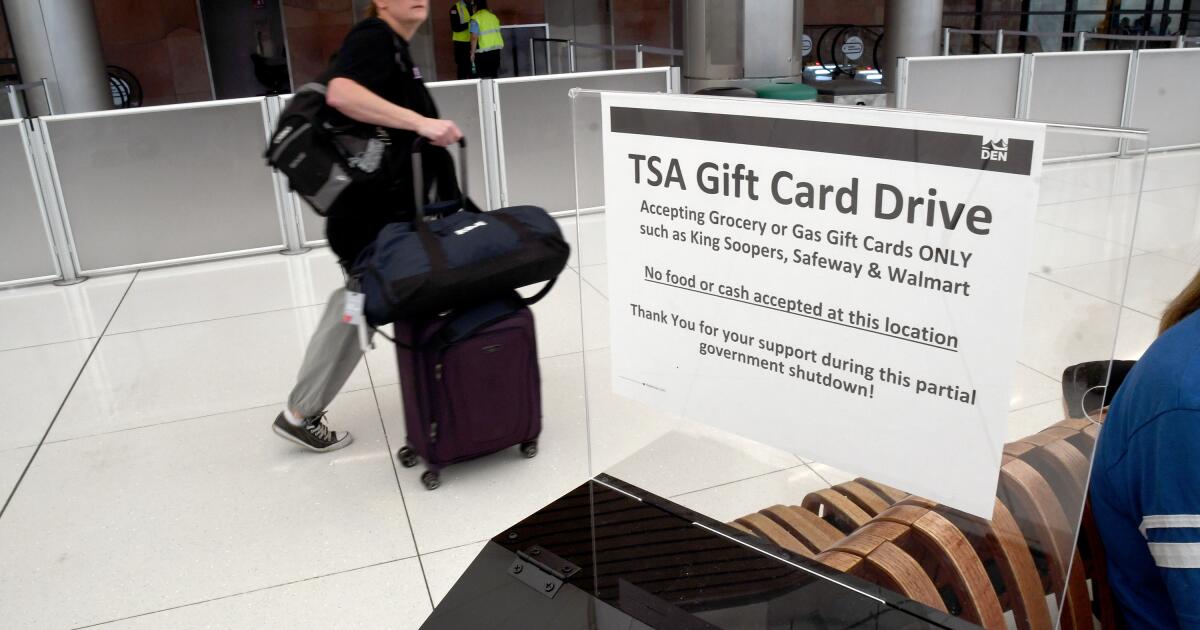
The Transportation Security Administration may have to shut down operations at some airports as travelers are experiencing record wait times, the agency’s acting head said Wednesday, as the latest offer to end a funding impasse and put restraints on President Trump’s mass deportation agenda met fierce resistance in Congress.

The TSA’s Ha Nguyen McNeill described the mounting hardships facing unpaid airport workers — bills and eviction notices piling up and even plasma donations to make ends meet — and warned that lawmakers must ensure “this never happens again.”

“This is a dire situation,” she testified at a House hearing, warning of potential airport closures. “At this point, we have to look at all options on the table. And that does require us to, at some point, make very difficult choices as to which airports we might try to keep open and which ones we might have to shut down as our callout rates increase.”

Yet on the 40th day of the standoff involving the Department of Homeland Security, there was no easy way out in sight. Neither Republican senators, who made the latest offer, nor Democrats, who are demanding more changes in immigration enforcement, appeared closer to a compromise.

Trump, who initially appeared to have given his nod to the deal, has declined to lend it his full support or put his political weight behind making sure it is approved.

Top officials at agencies under the Homeland Security umbrella spoke for more than three hours before the House Homeland Security Committee about the potential risks of security lapses unless the partial government shutdown comes to an end.

A deal teeters on collapse

Homeland Security has gone without routine funding since mid-February. Democrats are insisting on changes to the Trump administration’s immigration enforcement and mass deportation operations after the killings of two U.S. citizens in Minneapolis by federal officers during protests.

The latest proposal would fund most of Homeland Security except for the enforcement and removal operations of U.S. Immigration and Customs Enforcement that have been central to the debate. The plan would cover other aspects of ICE as well as Customs and Border Protection.

Although the offer added some new restraints on immigration officers, including the use of body cameras, it excluded other policies that Democrats have demanded.

Senate Democratic leader Chuck Schumer of New York said they needed to see real changes. House Democratic leader Hakeem Jeffries of New York pressed for “bold” changes at ICE.

Republican leaders said Democrats are putting the country at risk.

“They know this is crazy,” said House Speaker Mike Johnson (R-La.).

But conservative Republicans also panned the proposal, demanding full funding for immigration operations and skeptical of the promise from GOP leaders that they would address Trump’s proof-of-citizenship voting bill in a subsequent legislative package.

Airport lines grow as TSA workers endure hardships

McNeill, the acting TSA administrator, told lawmakers that multiple airports are experiencing greater than 40% callout rates and more than 480 transportation security officers have quit during the shutdown.

She cited the growing financial strain on the TSA workforce.

“Some are sleeping in their cars, selling their blood and plasma, and taking on second jobs to make ends meet, all while being expected to perform at the highest level when in uniform to protect the traveling public,” she said.

McNeil also said TSA officers working at the nation’s airports have experienced a more than 500% increase in the frequency of assaults since the shutdown began.

“This is unacceptable and it will not be tolerated,” she said.

The top executive overseeing Houston’s airport said security lines that left travelers waiting four hours or more could get longer if the political impasse was not soon settled.

Lines that twist and turn across multiple floors at George Bush Intercontinental Airport have been the result of TSA being able to staff only one-third to half the usual number of checkpoint lines, said Jim Szczesniak, aviation director for Houston’s airport system.

Trump’s decision to send ICE agents to the airports risks inflaming the situation, lawmakers have said. Video of federal officers detaining a crying woman at San Francisco International Airport drew outrage Monday from local officials, although it was unrelated to Trump’s order to deploy immigration officers.

FEMA also at risk

The Federal Emergency Management Agency’s Disaster Relief Fund is “rapidly depleting,” Victoria Barton, a FEMA external affairs official, told lawmakers.

FEMA is able to continue its disaster response and recovery work as long as that fund has money, and about 10,000 of its disaster workers continue to be paid through it.

Mascaro and Freking write for the Associated Press. AP writers Wyatte Grantham-Philips in New York, Rio Yamat in Las Vegas, Russ Bynum in Houston and Gabriela Aoun Angueira in San Diego contributed to this report.
Source link

Acting TSA leader: Officers sleeping in cars, selling plasma

March 25 (UPI) — Ha Nguyen McNeill, acting administrator for Transportation Security Administration, said Wednesday that TSA agents are struggling during the shutdown.

She made the comments during a hearing before the House Committee on Homeland Security amid funding issues for the Department of Homeland Security.

“Officers are reportedly sleeping in their cars at airports to save gas money, selling their blood and plasma, and taking on second and third jobs to make ends meet, all while expected to perform at the highest level when in uniform to protect the traveling public,” she said in her opening statement to the committee.

“Many have received eviction notices, lost their childcare, missed bill payments and been charged late fees, damaged their credit, defaulted on loans, and have been unable to even qualify for a loan to help ease the financial burden during the shutdown.”

According to TSAcareer.com, the starting base salary for officers is $34,454. The average is $46,000-$55,000 with locality adjustments.

Officials from TSA, the Coast Guard, the Federal Emergency Management Administration and the Cybersecurity Infrastructure and Security Agency said their readiness has been severely hurt by the partial government shutdown.

McNeill testified that 480 officers have quit the TSA since their pay stopped Feb. 14 and that the agency will not be able to replace them before visitors begin arriving for the World Cup in June.

She said officers spend four to six months in training before working at checkpoints, while the World Cup games begin in 80 days.

“Even if TSA were to hire new officers upon conclusion of the DHS shutdown, those officers would not be able to work on the checkpoints until well after the World Cup has concluded,” she said. “We are facing a potential perfect storm of severe staffing shortages and an influx of millions of passengers at our airports.”

On Tuesday, Senate Republicans said President Donald Trump was on board with their plan to reopen the Department of Homeland Security.

On Wednesday, Sen. Lindsey Graham, R-S.C., said he will “expeditiously move” to write the reconciliation process for the new Republican-led measure that will bypass the filibuster even without the 60 votes needed.

“The purpose of the second reconciliation bill is to make sure there is adequate funding to secure our homeland and to support our men and women in the military who are fighting so bravely,” Graham said in a statement.

Senate Democratic leader Chuck Schumer, D-N.Y., said on the Senate floor that “this morning, Democrats sent Republicans our counteroffer on legislation to reopen DHS, pay TSA workers, while at the same time, rein in [Immigration and Customs Enforcement] with common sense guardrails.”

“Our offer is a reasonable, good-faith proposal that contains some of the very same asks Democrats have been talking about now for months,” he said.

Schumer also noted that the ICE reforms are not new or surprise demands.

First lady Melania Trump speaks during the Fostering the Future Together Global Coalition Summit roundtable event in the East Room of the White House on Wednesday. Photo by Bonnie Cash/UPI | License Photo

Source link

TSA officers share how they’re scraping by without pay

A woman in Indiana who put off dental surgery because she doesn’t know if she can afford the copay. A Florida couple with young children who are depleting their savings. A grandmother in Idaho who plans to sell her car to pay the rent.

They are among about 50,000 Transportation Security Administration officers expecting to receive another $0 paycheck this week. A dispute in Congress over funding the Department of Homeland Security has held up their salaries since mid-February. With monthly bills coming due, many of these federal employees, who screen passengers and luggage at airports across the U.S., are making difficult choices about how to make ends meet.

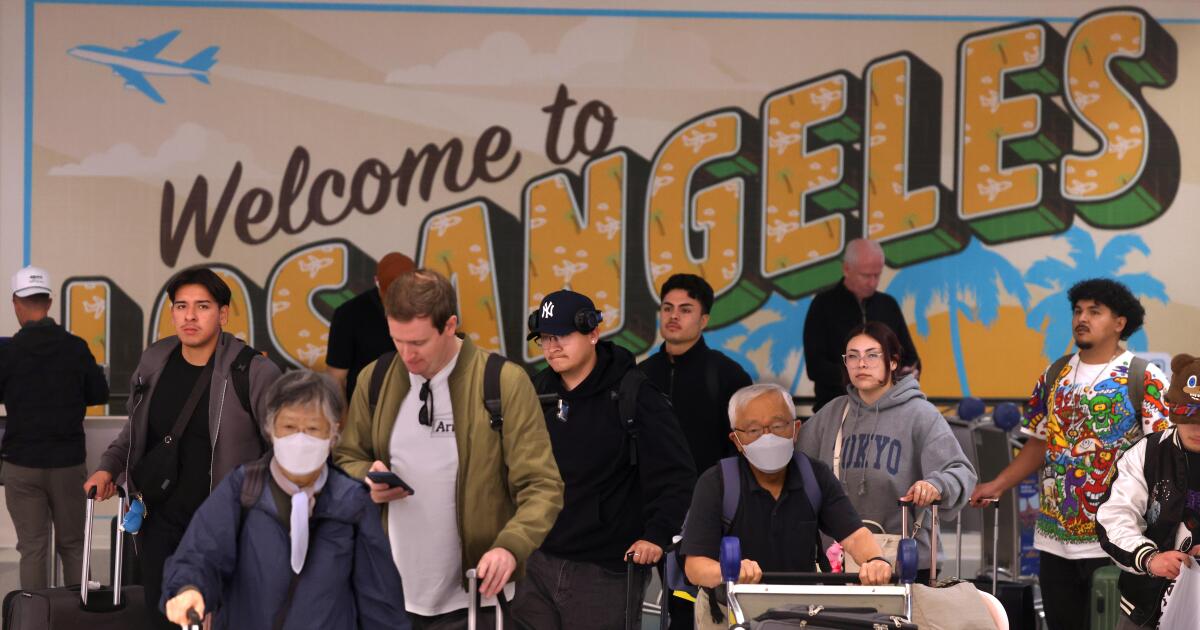
High absentee rates at some major airports have produced long lines and frustrated passengers at understaffed security checkpoints. Union leaders and federal officials say empty gas tanks, child care expenses and the threat of eviction keep more screeners from showing up the longer the shutdown continues. At last count, more than 455 had quit instead of weathering the ongoing uncertainty, according to DHS.

“Stop asking me about the long lines. Ask me if somebody’s gonna eat today,” Hydrick Thomas, president of the national American Federation of Government Employees union council that represents TSA employees, told reporters Tuesday.

Indiana TSA agent turns to food pantry for groceries

Before starting her shift at Indianapolis International Airport on Monday, Taylor Desert stopped at a food bank for meat, eggs, vegetables and dairy products.

“I never thought I would be in a position where, working for the federal government, I would need to go to a food bank to supplement my groceries,” she said as she loaded bags into her car.

Desert, who has been a TSA officer for seven years, said her last full paycheck came on Feb. 14, the day the shutdown started.

She had some savings to draw on despite a record 43-day shutdown last fall but put some personal plans on pause.

For example, Desert needs to get her wisdom teeth removed but says the TSA isn’t approving time off during the shutdown. She also worries about costs from the surgery not covered by insurance.

Wednesday was the 39th day of the DHS funding lapse. If it goes another 21 days, Desert said she would seek another job.

“I don’t want to have to spend my entire savings just to afford to keep living,” she said.

Florida TSA couple worry about their young children

Oksana Kelly, 38, and her husband, Deron, 37, both work as TSA agents at Orlando International Airport. They have two young children and don’t know how they will keep supporting their family without any income coming in.

Kelly said they’re dipping into savings for now, but it’s running dry. If the shutdown persists, they will ask relatives for help or take out a loan, which she worries would put them deeper in debt.

Her husband has worked as a DoorDash delivery driver in his spare time since the shutdown in October and November. He’s considered resigning from the TSA to put the couple on more stable financial footing.

“It’s very mentally exhausting,” said Kelly, who is an organizer for the labor union representing TSA workers across central and northern Florida. “How do we even decide between being able to feed our kids or come to work?”

Kelly said strangers might criticize the couple for “putting all eggs in one basket” since both choose to work for the TSA for the past decade.

“All we want is to pay our bills and get the pay we deserve,” she said.

A veteran officer in Idaho fears homelessness

Rebecca Wolf cries every day. She tries to hide it from her grandchildren, ages 11 and 6.

“They don’t understand why grandma’s crying,” Wolf said. “I try not to cry in front of them, but sometimes it’s just too much.”

The 53-year-old TSA officer and union leader in Boise, Idaho, joined the agency soon after its creation in the wake of the Sept. 11 attacks. She was homeless at the time but turned her situation around with steady work and the benefits of federal employment.

Now, Wolf can’t help but dwell on where she was 24 years ago. “I don’t want to be in that position again,” she said.

Her Feb. 28 paycheck amounted to $13.53, sending her “into a spiral right away.”

With no savings to fall back on, she is preparing to sell her car to cover her rent due in a week. She calls nonprofits daily seeking rental assistance, but hasn’t had any luck.

Supporting six family members — four children and two grandchildren — has always been challenging, but the repeated shutdowns have made it nearly unsustainable.

Wolf, who serves as president of AFGE TSA Local 1127, is hesitant to walk away from both the job that turned her life around and her role advocating for fellow officers.

“I worked hard to get to where I am now, and the thought I might lose it all scares me,” she said, her voice breaking as she tried to stifle the sound of weeping.

Massachusetts agent digs into savings to get by

Mike Gayzagian, a TSA officer at Boston’s Logan International Airport, says long stretches without pay have become enough of a “new normal” that he’s prepared for them.

The 56-year-old says he has a financial cushion of about six months to tap but that his situation is “an exception to the rule.”

“The majority live paycheck to paycheck and don’t have those kinds of reserves available,” said Gayzagian, who is president of his local TSA union chapter.

It shouldn’t be this way for federal workers, he said.

“The financial situation adds an additional burden to what is already a stressful job,” Gayzagian said. “I didn’t go into public service to make a lot of money. I went into public service because it has a certain stability and reliability and predictability that other jobs don’t have.”

A father in Utah leaves TSA

Robert Echeverria quit his job as a TSA agent at Utah’s Salt Lake City International Airport about two weeks into the current shutdown.

The 45-year-old, who has a wife and three children, counted five government shutdowns in the nine years he worked for the agency. The toughest was last year’s record shutdown that ended in mid-November around the start of the holiday season.

Echeverria said his family skipped Christmas and took months to recover financially. He began looking for a new job in February when it became clear Congress was headed for another budget battle.

“Emotionally I was already distraught,” Echeverria said last week. “We were barely recovering from the last shutdown.”

He now works for the department that manages the airports in Utah’s capital. Leaving federal service “was a hard decision for me,” Echeverria said.

“I really believed in the mission of the TSA,” he said. “We took an oath, and it was a way for me to give back to the country that gave me so much.”

He’s still based at Salt Lake City International, where his 20-year-old daughter works as a TSA agent, and says that seeing his former colleagues struggling is difficult.

“They all feel betrayed by their government because they’re showing up to work,” Echeverria said. “They’re there, but they feel that the government doesn’t care for them,” he said.

Marcelo, Lamy and Yamat write for the Associated Press. Marcelo reported from New York, Lamy reported from Indianapolis and Yamat reported from Las Vegas.
Source link

Senate ready to confirm Mullin to Homeland Security as TSA standoff deepens

The Senate is on track to confirm Markwayne Mullin as Department of Homeland Security secretary, President Trump’s nominee to take over the embattled department after firing Kristi Noem amid a public backlash over the administration’s immigration enforcement and mass deportation operations.

Mullin, a Republican senator from Oklahoma known for his close friendship with Trump, has tried to present himself as a steady hand, saying that his goal as secretary would be to get the department off the front page of the news. But Mullin tangled with Republican Sen. Rand Paul of Kentucky, the chairman of the Homeland Security Committee, who questioned Mullin’s character and temperament during last week’s combative confirmation hearing.

Senators advanced Mullin’s nomination on Sunday during a rare weekend session on a largely party-line vote, and confirmation is expected late Monday.

He would take the helm of the department at a difficult time. The department’s routine funding has been shut down, leading to long waits at U.S. airports during the busy spring break travel season, as Democrats demand changes in immigration enforcement operations after the deaths of two U.S. citizens during protests this year in Minneapolis.

Trump announced over the weekend he’s ordering immigration officers to help Transportation Security Administration agents, which lawmakers and others warned could escalate tensions at crowded airports.
Although the senator comes to the position after more than a dozen years in Congress, and with the management experience of running an expanding family plumbing business in Oklahoma, he has not been seen as a key force in immigration issues.

A former mixed martial arts fighter and collegiate wrestler who has led early-morning workout sessions in the members-only House gym, he became close with members of both parties and is often seen as a negotiator in partisan Washington.

It is his loyalty to Trump that landed him the job, and he’s not expected to sway from the president’s approach. Mullin was a strong supporter of Trump’s immigration agenda and ICE officers before being tapped for the Homeland Security job.

“I can have different opinions with everybody in this room, but as secretary of homeland I’ll be protecting everybody,” Mullin said during his confirmation hearing.

Santana writes for the Associated Press.

Source link

For airline travelers, the shutdown answer is simple: Pay TSA officers

Regardless of politics or destination, American air travelers are unified by one desire: It’s time to pay Transportation Security Administration employees.

“Everybody got bills they have to pay, and it’s horrible,” said Patrice Clark, whose trip to Las Vegas began Saturday with a nearly four-hour wait in a security line at Dallas Fort Worth International Airport. “Times are hard for everybody at this point. Working and not getting paid and gas prices are extremely high — like everybody needs their money. They need to pay them.”

TSA officers haven’t gotten a paycheck since the Department of Homeland Security partly shut down on Feb. 14. Democrats balked at funding the agency, demanding changes to immigration enforcement by federal agents after the shooting deaths of Alex Pretti and Renee Good in Minneapolis.

Some travelers arrive 4 hours early

Christian Childress is a private flight attendant, so when he is working, he doesn’t wait in TSA lines. But he frequently goes through a checkpoint when flying commercial to get to his job.

Childress, who lives in Redwood City in Northern California, said shutdown effects have been “hit or miss” thus far. He came to the Atlanta airport nearly three hours before his 1:30 p.m. Saturday flight to Nashville for a leisure trip. Some passengers have been arriving even earlier in Atlanta — the world’s busiest airport — worried about missing flights.

“Issue No. 1 should be paying the people who need to get paid and keeping our air travel system secure,” Childress said. “Then they can debate whatever they want to debate about Homeland Security.”

Democrats have tried to advance legislation to fund TSA separately, but Republicans have refused, saying funding for the entire Department of Homeland Security must be approved. So the shutdown continues.

Some passengers said it is time for Democrats to relent.

“I don’t want to go between the Democrats and the Republicans, but I think the Democrats are holding everything up because they can’t get their way,” said Tyrone Williams, a retiree from the Atlanta suburb of Ellenwood. He was queued up for screening before his flight to Philadelphia on Saturday.

Atlanta’s checkpoint wait time was as high as 90 minutes Saturday morning before melting away to nothing in the afternoon on what is typically one of the slowest days of the week for air travel. Staffing shortages have forced some airports to close checkpoints at times, with wait times swinging dramatically.

ICE at airports

Concerns about long airport lines are increasingly capturing attention.

President Trump has announced plans to order Immigration and Customs Enforcement officers to take a role in airport security starting Monday, which he says will continue until Democrats agree to fund the Department of Homeland Security.

He said ICE agents would bring the administration’s immigration crackdown into the nation’s airports, arresting “all Illegal Immigrants” with a focus on those from Somalia.

“I look forward to moving ICE in on Monday, and have already told them to, “GET READY.” NO MORE WAITING, NO MORE GAMES!” Trump wrote.

Funding for the whole department failed to advance in the Senate on Friday after Democrats declined to support a bill. On Saturday, in a rare weekend session, the GOP-led Senate rejected the Democrats’ motion to take up legislation to fund TSA.

Travelers ‘grateful’ for unpaid TSA workers

The vast majority of employees at TSA are considered essential, and roughly 50,000 continue to work without pay during the funding lapse. Nationwide on Thursday, about 10% of TSA officers missed work, the department reported. Absentee rates were two or three times higher in places.

Merissa Thomas arrived in Las Vegas on Saturday after a quick trip through a checkpoint at Reagan National Airport near Washington, D.C.

“I’m so grateful for people who are willing to sacrifice a lot to make sure we’re safe,” Thomas said.

Union leaders and federal officials say TSA officers are under financial pressure. Airport screeners have spent nearly half of the last 172 days with paychecks delayed by politics — 43 days last fall during the longest government shutdown in history, four days earlier this year during a brief funding lapse, and now 37 days and counting during the current shutdown.

At least 376 officers have quit since this shutdown began, according to officials, exacerbating turnover at an agency that historically has had some of the U.S. government’s highest attrition and lowest employee morale.

“From now on I would drive wherever I have to go until they get this figured out,” said Clark, the delayed traveler. “It was horrible.”

Amy writes for the Associated Press. AP writers Collin Binkley in West Palm Beach, Fla., Ty O’Neil in Las Vegas and Mary Clare Jalonick in Washington contributed to this report.

Source link

Nonprofits, unions and airports rally to feed TSA officers

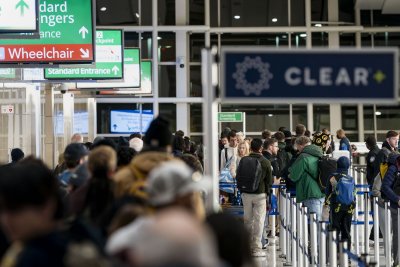
Across the country, collections are popping up to help Transportation Security Administration officers who have been without full pay for more than a month due to the partial government shutdown affecting the Department of Homeland Security.

The charity World Central Kitchen, more accustomed to feeding those in war zones and disaster areas, started providing meals to Washington, D.C.-area airports after many TSA officers missed their first full paycheck.

On Thursday, Feeding San Diego began distributing 400 boxes with pasta, beans and peanut butter as well as fresh produce such as strawberries and potatoes to affected agents near the airport after a request from TSA and the San Diego County Regional Airport Authority.

Nonprofits are stepping in to help and coordinating with airports and local TSA offices because ethics rules around giving gifts to federal employees make it difficult for those affected by the shutdown to receive help directly.

Carissa Casares from Feeding San Diego said communicating with the airport means they can better tailor their resources and response to TSA workers’ needs.

“We need to work directly with the people who have direct access to these employees and get this food to them at a time and location that is most convenient to them,” Casares said.

Sunday marks the 37th day that the Department of Homeland Security has been shut down after Democrats refused to fund Immigration and Customs Enforcement and Customs and Border Protection without changes to their operations after the killings of Alex Pretti and Renee Good in Minneapolis. Democrats this weekend tried to advance a bill to fund TSA separately, but Republicans balked, saying all of Homeland Security needed to be funded.

More than 120,000 Homeland Security employees are working without pay, including roughly 50,000 TSA officers, as negotiations between lawmakers and the White House on limits to immigration enforcement drag on.

The funding lapse comes just months after a 43-day government shutdown, the longest in the nation’s history, which caused long lines at food banks across the U.S. as more than 700,000 federal workers worked without pay.

Rules limit what help TSA officers can accept

For those wanting to help, it’s not as simple as going to the airport and giving cash or gift cards directly to TSA officers, who are prohibited from accepting gifts at screening locations, according to a Homeland Security spokesperson.

But Aaron Barker, president of the AFGE Local 554 in Georgia, said TSA officer unions don’t have the same restrictions and can accept donations to distribute to their members. Barker recommends those who want to donate look up their local union district on the AFGE website, or give through their local labor council.

“For some people it can be life or death,” said Barker. “It’s just sad and terrible that this is happening.”

Union members have told Barker they’re unable to cover utility bills or pay for their children’s medical procedures. They’ve received eviction notices or had cars repossessed, and they’re having trouble affording routine items.

“People don’t think about the things they just naturally have in their home, like toothpaste, bathroom tissue, milk, detergent, dish liquid,” he said. “I’m sure those things are a necessity for every TSA officer.”

Nonetheless, no donation can be as effective as an end to the shutdown. “The first thing they want is their paycheck,” said Barker. “The money is the most immediate need.”

Coordination between nonprofits and TSA

Operation Food Search is working closely with TSA to safely deliver food and set up a temporary pantry at St. Louis Lambert International Airport.

The Missouri hunger relief nonprofit’s chief executive, Kristen Wild, said it is the first time the group has distributed directly to TSA employees where they work.

“It removes their need to make an extra trip and drive here,” Wild said. “So we’re really excited that the airport allowed us to directly serve right there.”

They gave away just over half their 400 prepared food bags during a two-hour period last week, according to Wild. Each bag contained nearly $20 worth of nonperishables such as apple sauce, pasta, rice and beans. Rules prohibit federal employees from soliciting or accepting gifts or items of monetary value greater than $20 if the gift is related to their government position.

Wild said she thought the $20 limit might be waived since they were distributing food through airport-approved channels.

“We didn’t know for sure,” she said. “But to play it safe we just kept it right under the $20 per bag amount so there would be no challenge to it.”

Airport communities band together

Seattle-Tacoma International Airport officials were fielding PETA donations and local food banks’ pallets on Friday afternoon as they stocked their private pantry for off-shift TSA staff.

But they’ve also seen dining vendors, usually tasked with feeding hungry travelers, step up. Airport tenants have offered discounts and donated through TSA to cover entire shifts’ meals, according to airport spokesperson Perry Cooper.

“You know a lot of these people,” Cooper said. “You see faces … throughout the day as you’re wandering through. And then to realize that some of these folks are here and they’re not getting paid, you know, really tugs at your heart to think what’s a way that we can help.”

The airport community’s support adds to the roughly $6,000 they’ve received in cash and gift cards plus another $10,000 worth of food and household products, Cooper said. That includes donations from the labor union for air traffic controllers, whose jobs are unaffected by this partial shutdown but understand the strain of working without pay, as they did during last year’s full government shutdown.

More than 460 people picked up fresh produce when local nonprofit Food Lifeline brought a truckload recently, according to Cooper. Most of the attendees were TSA staff, Cooper said, though some might have been homeless. Boxes including pineapples and broccoli lined folding tables along the airport’s main drive.

Regular travelers like Musie Hidad said he thinks about the TSA agents working unpaid every time he enters through security.

“The work they are doing is serious and they aren’t getting paid for it,” said Hidad, an Amarillo, Texas, resident, who was traveling to Ohio for work. “My heart goes out to them.”

Angueira, Beaty and Pollard write for the Associated Press. AP video journalist Patrick Aftoora-Orsagos in Columbus, Ohio, contributed to this report.
Source link

Trump border advisor says ICE to deploy to U.S. airports Monday

What began as a social media post from President Trump on Saturday has grown quickly into a full-scale plan to deploy ICE agents to U.S. airports.

Amid a partial government shutdown, TSA lines have grown to be hours long at some U.S. airports, creating problems for travelers across the country. Call-out rates have started to increase at some airports, and the U.S. Department of Homeland Security said at least 376 TSA agents have quit since the partial shutdown began Feb. 14.

White House border advisor Tom Homan said that ICE plans to dispatch agents to airports as soon as Monday, and that he was working with other officials to determine where to send agents.

“It’s a work in progress,” Homan said during a Sunday appearance on CNN. “But we will be at the airports tomorrow helping TSA move those lines along.”

Homan stressed that ICE agents would provide support where possible, so that TSA staffers could better fulfill specialized positions.

“I don’t see an ICE agent looking at an X-ray machine, because they are not trained in that,” Homan said.

On Saturday, President Trump posted to social media, “If the Radical Left Democrats don’t immediately sign an agreement to let our Country, in particular, our Airports, be FREE and SAFE again, I will move our brilliant and patriotic ICE Agents to the Airports where they will do Security like no one has ever seen before.”

The pushback to the White House plans was immediate.

Rep. Bennie G. Thompson (D-Miss.), ranking member of the Committee on Homeland Security, released a statement that read, “Masked, armed police at travel checkpoints is a hallmark of dystopian movies. Now, Donald Trump is threatening to bring this tool of fascism to America. He is manufacturing chaos at airports for political leverage and trying to force Democrats to accept unaccountable secret police at security checkpoints around the country.”

Also speaking to CNN on Sunday, House Democratic Leader Hakeem Jeffries said, “The last thing that the American people need are for untrained ICE agents to be deployed at airports all across the country, potentially to brutalize or, in some instances, kill them. We’ve already seen how ICE conducts itself.”

Representatives from Los Angeles International Airport did not immediately respond to a request for comment. A spokeswoman for Orange County’s John Wayne Airport said she was not currently aware of any communication or Homeland Security guidance on the proposed plan.

A spokesperson for San Francisco International Airport said airport officials have not yet received anything specific from Homeland Security about a deployment of ICE agents. He said SFO security personnel are not part of TSA, and as a result, the airport has not had any checkpoint backups.

Source link

Trump: Send ICE to do TSA work; Musk offers to pay salaries

March 21 (UPI) — President Donald Trump threatened to send U.S. Immigrations and Customs Enforcement agents to airports to cover for the Transportation Security Administration unless Democrats agree to Republican funding plans for the Department of Homeland Security.

On Truth Social, the president posted: “If the Democrats do not allow for Just and Proper Security at our Airports, and elsewhere throughout our Country, ICE will do the job far better than ever done before! The Fascist Democrats will never protect America, but the Republicans will.”

In an earlier post, he said ICE agents at airports “will do Security like no one has ever seen before, including the immediate arrest of all Illegal Immigrants who have come into our Country, with heavy emphasis on those from Somalia, who have totally destroyed, with the approval of a corrupt Governor, Attorney General, and Congresswoman, Ilhan Omar, the once Great State of Minnesota.”

Former acting ICE Director John Sandweg told The Washington Post that the threat is being used as a punishment.

“This is again an example, it seems to me, of the president seeking to utilize ICE in a way that achieves political goals, almost as a punishment,” Sandweg said. “The operations, to me, don’t seem to be designed to focus on public safety.”

The DHS, which includes TSA, shut down on Feb. 14 because Congress couldn’t agree on a funding bill for the department. Democrats don’t want to fund it until guardrails are put on the agency, and Republicans haven’t agreed to Democrats’ demands.

Because of this, TSA workers have been working without pay for more than a month. Some are quitting or taking days off work, creating long lines at airports.

Earlier on Saturday, billionaire Elon Musk offered to pay the TSA salaries during the shutdown.

“I would like to offer to pay the salaries of TSA personnel during this funding impasse that is negatively affecting the lives of so many Americans at airports throughout the country,” Musk said on X. Axios reported that based on TSA’s headcount, it would cost him more than $40 million per week. The White House didn’t respond to Musk’s offer.

Senate Democratic Leader Chuck Schumer, D-N.Y., on Saturday told Republicans to support a Democratic bill to fund TSA. He said airport delays have reached a “boiling point.”

“If you want TSA workers to get paid, then vote yes,” Schumer said on the Senate floor.

Sen. Patty Murray, D-Wash., said in a statement that Trump should focus on his own party.

“Surely, the next thing people want after waiting hours in long TSA lines is to get wrongfully detained by ICE,” she said. “Here’s an idea: instead of sidelining TSA agents and sending ICE to harass travelers, the president should tell Republicans to stop blocking our bill to pay TSA.”

Source link

10 aviation CEO’s ask Congress to fund TSA, avert air travel chaos

March 15 (UPI) — A group of aviation CEOs sent a letter to Congress asking it to end the partial government shutdown and pay TSA, customs and air traffic controllers, as they said the overwhelming number of Americans wants them to.

Airlines for America, a trade association for passenger and cargo airlines, sent an open letter to Congress asking it to fund the Department of Homeland Security so that government employees at airports responsible for the safety of air travel receive their salaries.

This is the second time in six months that the federal government has at least been partially shutdown and follows a 43-day shutdown of nearly all of the government that was the longest in U.S. history.

The letter includes a plea to end the shutdown, on behalf of travel and shipping services that are essential to the nation, and to pass laws that guarantee air traffic controllers, customs agents and TSA agents all continue to be paid in the event of future shutdowns.

“Americans — who live in your districts and home states — are tired of long lines at airports, travel delays and flight cancellations caused by shutdown after shutdown,” the CEOs wrote in the letter. “Yet, once again, air travel is the political football amid another government shutdown.”

The CEO’s who sign the letter include those from Alaska Air, American Airlines, Atlas Air, Delta Air Lines, FedEx, JetBlue Airways, Southwest Airlines, United Airlines, UPS and Airlines for America.

The CEO’s predict that with spring break, the World Cup, America’s 250th birthday and anything else that an expected 171 million passengers will travel for in the coming months, the chaos similar during the shutdown last fall is likely to happen again.

“TSA agents just received $0 paychecks,” they wrote in the letter. “That is simply unacceptable. It’s difficult, if not impossible, to put food on the table, put gas in the car and pay rent when you are not getting paid.”

Last year’s shutdown was ended when Congress agreed to fund the government through Jan. 30, with plans to pass appropriations bills to then fund the government through the rest of the year.

Amid the Trump administration’s immigration crackdown, after the deaths of two U.S. citizens in three weeks at the hands of U.S. Customs and Border Control agents, Democrats and some Republicans in Congress held back an appropriations bill for the Department of Homeland Security.

While the agencies handling the administration controversial crackdown are under DHS, the department also is responsible for the Transportation Security Administration, which handles air travel.

Democrats have refused to vote for the funding until guardrails are put in place with the funding for the department’s immigration enforcement efforts, including limits and certain tactics and requiring officials in the field to wear body cameras.

TSA employees missed their first paycheck of the current shutdown this weekend, after Republicans refused a proposal to fund TSA, the Coast Guard, the Federal Emergency Management Agency and the Cybersecurity and Infrastructure Agency, while continuing to hold back funding for those for immigration-related agencies for further debate.

In addition asking the government to fund TSA, the CEOs asked Congress to pass the Aviation Funding Solvency Act, the Aviation Funding Stability Act and the Keep America Flying Act would guarantee that federal aviation workers get paid in the face of future government shutdowns.

President Donald Trump speaks during an event celebrating Women’s History Month in the East Room of the White House on Thursday. Photo by Bonnie Cash/UPI | License Photo

Source link

As another shutdown impacts travelers, some see privatizing TSA screening as a solution

Long security lines snaked into baggage claim areas and parking garages at some U.S. airports over the weekend, a possible indicator of more widespread travel problems as the latest government shutdown drags on.

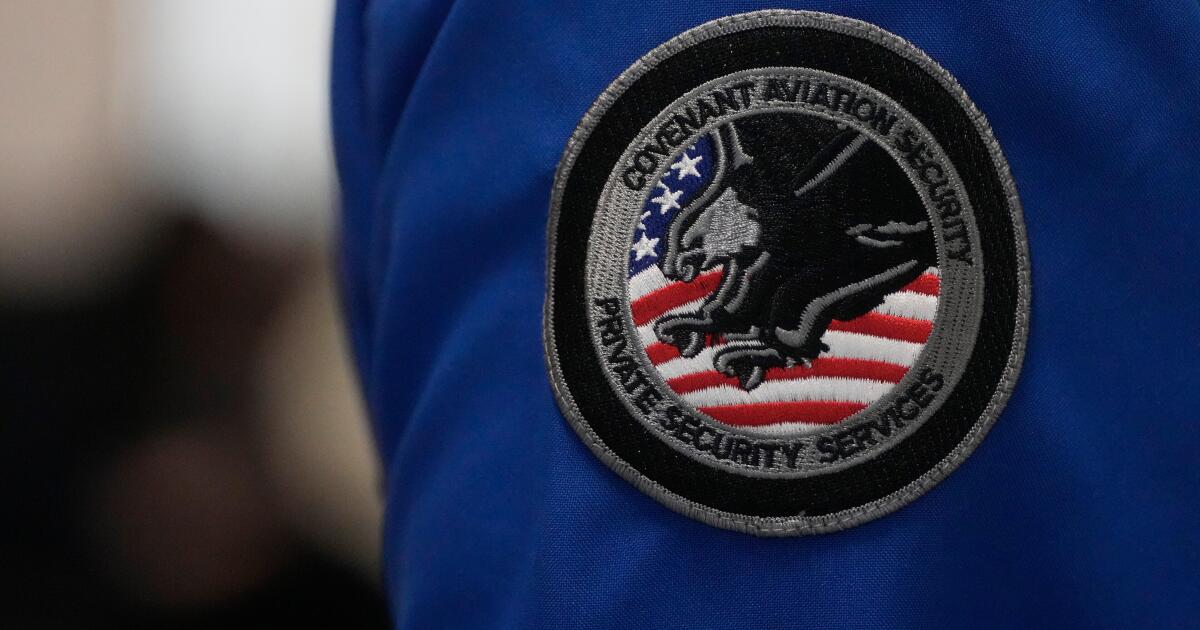
That kind of disruption, while not yet widespread, is not a concern that typically surfaces at San Francisco International Airport, the largest of nearly two dozen U.S. airports where screening checkpoints are staffed by private contractors under a little-used federal program that allows airports to outsource security screenings while maintaining TSA oversight.

Because contractors’ pay comes from a federal contract, it often continues even when the government shuts down.

“The money’s already been allocated, the payments have already been made, and that continues without interruption,” SFO spokesperson Doug Yakel told the Associated Press. “That is a very nice place to be.”

The contrast draws attention to a long-running debate in the aviation industry: Can private contractors operating under TSA oversight provide a stopgap — and shield airport security operations from the political impasses that can disrupt U.S. air travel?

Some aviation experts see the TSA screening program as a potential model for keeping security lines moving with fewer disruptions during shutdowns. At SFO, that system helped maintain screening operations during last year’s record 43-day shutdown, Yakel said.

But critics caution that privatization is not a silver bullet and could introduce new risks. The union representing federal screeners argues that moving operations to private companies could erode job protections and reduce pay and benefits for workers already facing high turnover amid demanding conditions.

How the program works

Established in 2004, TSA’s screening partnership program allows airports to use private security companies chosen by the federal government to run checkpoints while TSA retains authority over procedures and oversight. The agency says private screeners receive the same security background checks as their federal counterparts.

The program “provides needed relief to staffing shortages brought on by a government shutdown,” TSA said in a statement to AP.

In addition to SFO, other participating airports include Kansas City International Airport, Atlantic City International Airport and Orlando Sanford International Airport.

The vast majority of the nation’s roughly 400 commercial airports, meanwhile, rely on federal screening officers employed directly by TSA. During shutdowns, those workers must continue reporting for duty even though they stop getting paid — a dynamic that has historically led to higher absenteeism and slower-moving checkpoints the longer a shutdown lasts.

The current partial shutdown affects only the Department of Homeland Security, which includes TSA. Democrats in Congress refused to fund the department over objections to its immigration enforcement tactics. The lapse marks the third shutdown in less than a year to leave TSA workers temporarily without pay — and once the government reopens, to have to wait for backpay.

Those disruptions can ripple through the travel system, cascading problems across already crowded flight schedules. The strain is especially acute this time of year as airlines and airports brace for what they expect will be one of the busiest spring break travel seasons on record.

San Francisco’s airport is a ‘litmus test’

Aviation security expert Sheldon Jacobson, whose research contributed to the design of TSA PreCheck, said the program’s success at SFO, a large international airport, shows that privatization “is something that needs to be explored.”

SFO is among the top 15 busiest airports in the U.S. when measured by passenger traffic. A major hub for international travel, it is the second-busiest airport in California behind Los Angeles International Airport.

“It’s operated just as well as any other airport,” Jacobson said, adding that SFO’s multiple concourses and status as a hub for United Airlines demonstrate that even large-scale operations can be managed effectively under this model. “If SFO is the litmus test for delivering this privatized product, then many other airports can do it, too.”

Jacobson noted that most airports currently using the program are smaller, but “the scale issue should not be a limiting factor,” and he called for a broader conversation on how such options could deliver government services efficiently and benefit travelers.

“Of course TSA would have oversight. It’s not like they’re freewheeling on their own,” he said of privately contracted screeners. “We might as well use a government shutdown that affects air travel as an opportunity to begin that discussion.”

Why TSA’s union opposes the private model

The American Federation of Government Employees, which represents TSA officers, has long opposed privatization.

“We will never advocate for any privatization of any federal employees. We don’t believe that’ll work,” Johnny Jones, secretary-treasurer of the TSA union’s bargaining unit, said in a brief phone call this week.

In a blog post on its website, the union argues it could weaken accountability for aviation security — one of the reasons Congress chose to federalize airport screening after the Sept. 11 attacks.

The union also warned that private companies could face pressure to cut costs in ways that affect training, staffing levels and employee benefits. Relying on contractors, the union says, could create inconsistencies between airports if different companies operate checkpoints across the country, potentially complicating oversight of a system designed to maintain uniform national security standards.

“We have to remember the TSA was created in the wake of 9/11 when there were no security standards or very minimal security standards,” said airline industry analyst Henry Harteveldt, president of Atmosphere Research Group. “The TSA came around, they established very stringent airport screening security requirements, which exist to this day.”

Others say there are simpler ways to address the shutdown problem.

Industry groups — including the U.S. Travel Assn., Airlines for America and the American Assn. of Airport Executives — are urging Congress to pass legislation that would ensure aviation workers are paid regardless of the government’s funding status.

“Every time Washington fails to fund the government, these essential workers pay the price. So do travelers. So does the economy,” Geoff Freeman, U.S. Travel Assn.’s president, said in a statement. “That is why America’s travel industry has come together, because this workforce is too important, and the stakes are too high, for this to keep happening.”

An unintended benefit of outsourcing screeners

Republican lawmakers have pushed in recent years to dismantle the agency entirely. Last year, two GOP senators introduced the “Abolish TSA Act,” which would phase out the agency and transfer oversight to a new office charged with aviation security. Supporters of the long-shot legislation say privatized screening could be more efficient and less vulnerable to shutdowns.

TSA leadership has signaled an openness to discussion. Speaking at a House Appropriations subcommittee hearing last year, Ha Nguyen McNeill, a senior official performing the duties of TSA administrator, said “nothing is off the table” regarding potential privatization.

“If a new privatization scheme makes sense, then we’re happy to have that discussion to see what we can come up with,” McNeill said. “It’s not an all-or-nothing game.”

At SFO, officials say its screening model was adopted more than 20 years ago for reasons unrelated to government shutdowns. But with shutdowns in recent years growing longer and more disruptive, the airport says its arrangement has revealed an unintended benefit: fewer staffing disruptions at checkpoints.

“The benefits, I think, are compelling,” Harteveldt said. “The real issue is making sure that any vendor, any partner to the TSA, upholds the strict standards that TSA has established and works with TSA to ensure that screening remains efficient and finds ways to make it even better.”

Yamat writes for the Associated Press. AP video journalist Haven Daley contributed to this report from San Francisco.
Source link