Tigray

Tigray displaced families fear renewed war as hopes of returning home fade | News

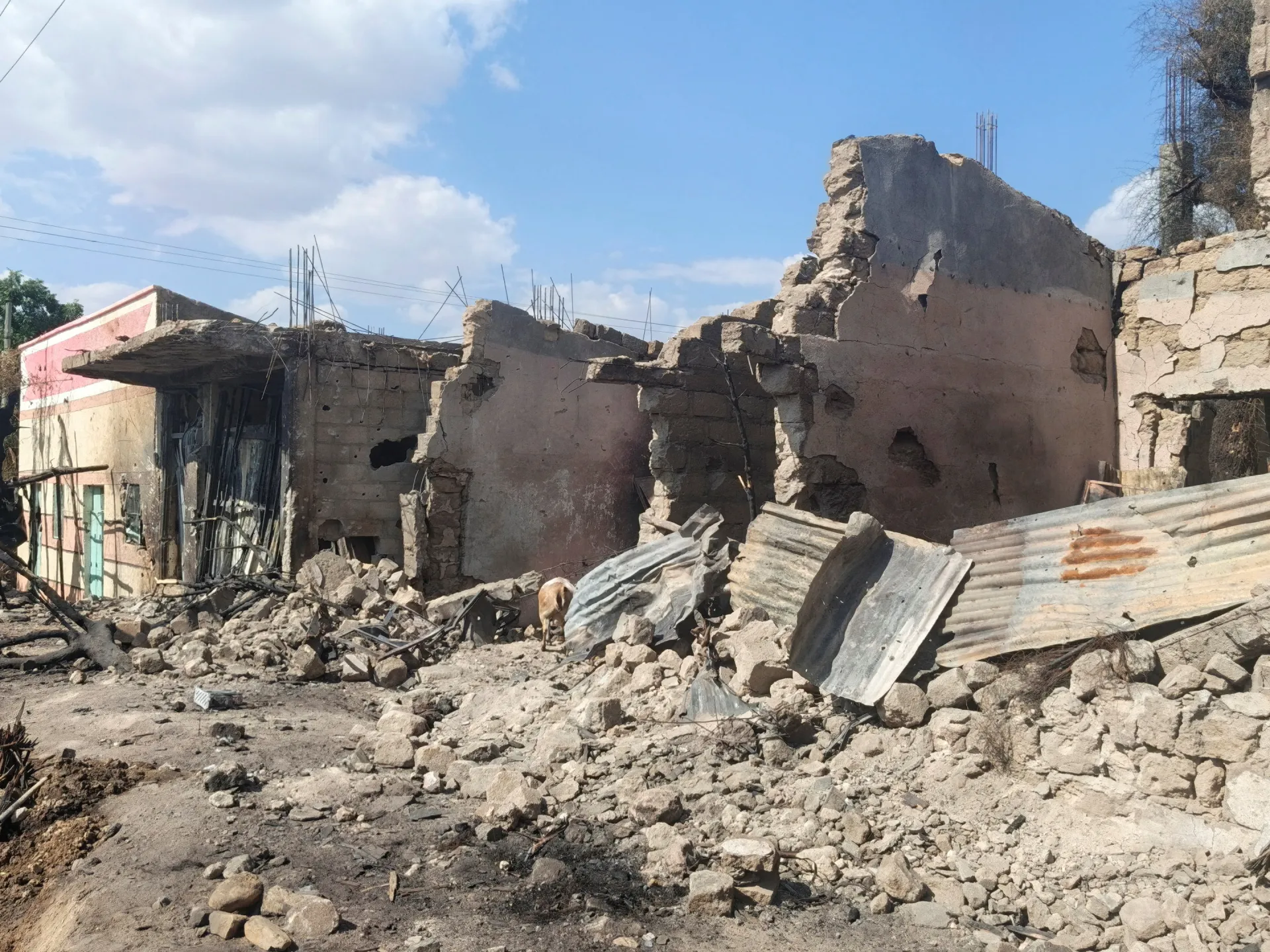
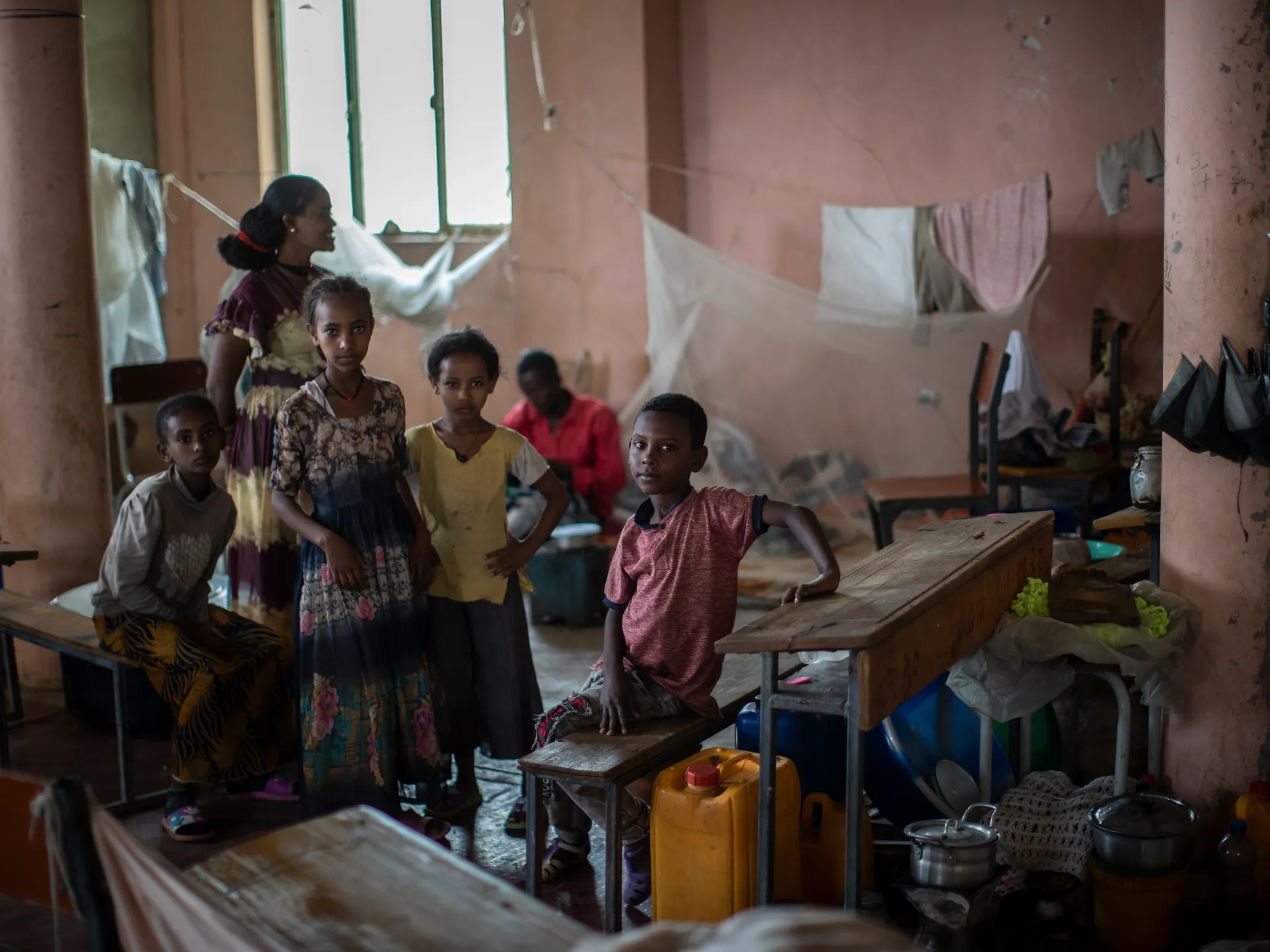
Abi Adi, Tigray, Ethiopia – Classrooms that once echoed with the voices of students have become homes for families displaced by the war in Ethiopia’s northern Tigray region.

At a former high school in Abi Adi, families who fled Western Tigray have spent years waiting to return home. Mattresses, cooking utensils and personal belongings have replaced school furniture as families share rooms originally designed for students.

What was supposed to be temporary shelter is now where children are growing up far from home.

“We thought we would stay here for a few months before returning home. It has been years now. Our children are growing up in this school, and we still don’t know when we will be able to go back,” said Tewolde, who was displaced from Setit Humera in Western Tigray.

His hopes of returning have been further undermined by renewed fighting, four years after Ethiopia’s federal government and the Tigray People’s Liberation Front (TPLF) signed an agreement to end their devastating war.

The Pretoria agreement, signed in November 2022, ended two years of war that left an estimated 500,000 people dead, including from violence, famine and the collapse of healthcare, and displaced millions. But it left major political and territorial disputes unresolved, particularly over Western Tigray, where Amhara forces took control during the war.

The area remains disputed, and the return of displaced Tigrayans has been one of the most contentious outstanding issues.

Disagreements over the withdrawal of non-federal forces, disarmament and the region’s political administration further complicated implementation. Relations between the federal government and Tigray’s authorities deteriorated, while divisions within the region deepened.

Fighting escalated on September 22, 2026. TPLF forces launched an offensive the following day and seized Mekelle’s airport. Both sides disputed responsibility for the escalation, the most serious since the 2020–2022 war.

Federal forces and allied fighters counterattacked, retaking Mekelle on October 4 as Tigrayan fighters withdrew. Fighting continued elsewhere in the region, however, underscoring the fragility of the security situation.

The federal government subsequently established a six-month caretaker administration to govern Tigray, restore public services and prepare the region for elections. But the change in regional leadership has not ended the fighting, and the underlying political disputes have remained.

In an October 8 letter published the following day, Human Rights Watch and other organisations warned the United Nations Human Rights Council that renewed hostilities threatened to undo the Pretoria agreement. They cited reports of drone strikes, mortar fire and artillery attacks, including in populated areas and near camps for internally displaced people, and called for international scrutiny of violations by all parties.

The renewed fighting has exposed how little the agreement did to resolve the heart of the conflict.

Displacement with no end in sight

For families in Abi Adi, the unresolved status of Western Tigray has meant years of uncertainty.

Many fled their homes when the war broke out in 2020 and have struggled to rebuild their lives. At the displacement site, families say they face shortages of food, clean water and essential medicines. Overcrowding has made daily life particularly difficult for children, older people and those with chronic illnesses.

Selass, an internally displaced mother of two from Humera, said the lack of affordable medicine was a constant worry.

“Sometimes, we take our children to the clinic, but the medicines they need are not available. We are told to buy them from private pharmacies, but we have no money,” she said.

For families who have already spent years away from home, renewed fighting has brought renewed fears that their displacement could become permanent.

Hospitals struggle to treat patients

The crisis has also left Tigray’s health facilities struggling with shortages of essential medicines and medical supplies.

Doctors at Ayder Referral Hospital in Mekelle, who spoke to Al Jazeera on condition of anonymity because they were not authorised to speak publicly, said the facility lacked sufficient supplies of essential medicines.

Patients were increasingly being asked to buy prescribed drugs from private pharmacies, where prices were often beyond their means.

“Patients have to go outside the hospital and buy the medicines they need from private pharmacies. But not everyone can afford them, and this makes it difficult for patients to get the treatment they need,” one doctor said.

Although humanitarian organisations have continued to provide medical assistance and some hospitals have resumed operations, significant gaps in healthcare remain.

Years of conflict have damaged health infrastructure and depleted medical supplies. The recent hostilities risk further disrupting services that have yet to recover.

Former fighters seek a way out of war

While displaced families wait to return home, thousands of former fighters are beginning the process of leaving military life behind.

On November 5, Ethiopia’s National Rehabilitation Commission said about 5,500 former Tigrayan fighters were receiving rehabilitation training at a centre in Mekelle. The programme aims to help former fighters return to civilian life through education, vocational training and employment opportunities.

Alem, a 28-year-old former fighter from Mekelle, said she wanted the chance to build a future beyond the conflict.

“I want to have a future and build a life for myself. I want to get married and have children, like any other woman. I survived the last war, and I do not want to go through the same experience again. I have spent enough time living with uncertainty. I want to leave that life behind and have the chance to plan my own future,” she said.

Atsbeha, another former fighter, joined the military in 2020, abandoning his university studies. He now hopes to return to civilian life and find work.

“I left my university studies and joined the military in 2020. But now I want to leave that life behind. I want to work, earn a living and rebuild the future I put on hold. I do not want to keep fighting. I want to have a chance to live a normal life,” he said.

But renewed fighting threatens to undermine a programme that depends on security and practical support to help former fighters make a lasting transition to civilian life.

There are also concerns about whether young people in Tigray can freely choose to remain civilians. In a September 25 statement, UN human rights chief Volker Turk condemned reports of forced recruitment by the TPLF, including of children and previously demobilised fighters. He also raised concerns about arbitrary conscription by government forces.

The allegations highlight the environment in which former fighters are trying to leave military life behind – voluntary disarmament cannot succeed if people continue to face pressure to join armed groups.

For those entering the rehabilitation programme, access to education, employment and lasting security will be essential to building a life outside the military.

In Abi Adi, displaced families are still living in classrooms. At hospitals, patients struggle to find medicines. Former fighters are trying to leave military life behind, but renewed fighting threatens to pull the region back into war.

For Selass, the years of displacement and the prospect of another war have left one wish above all others:

“We survived one war and lost almost everything. We don’t want our children to experience another one. All we want is to return home and live normally.”
Source link

Tigray resumes daily life amid fears of wider war | News

Mekelle, Ethiopia- In Mekelle, shops are reopening, and banks are resuming services, but residents remain anxious about what comes next. Ethiopian federal forces and allied fighters retook the Tigray regional capital on October 4, as renewed fighting raised fears that the region’s fragile recovery could be derailed once again.

Tigray, in northern Ethiopia, is still recovering from the 2020–2022 war between federal forces and the Tigray People’s Liberation Front (TPLF), the region’s dominant political movement. For residents, the return of fighting has brought new uncertainty over jobs, education, security and the future.

Daily life resumes, but hardship remains.

Businesses and financial services are gradually reopening in Mekelle, but many households are struggling to afford necessities. Delayed salaries have left public employees struggling to cover food, rent and school costs, while years of conflict have depleted family savings.

“Things may be reopening, but that does not mean our problems are over. We still have expenses every day, and without our salaries, it is difficult to know how we will manage,” said Gebregziabher, a public servant in Mekelle.

The funding crisis has affected the wider public sector. In March, Tigray’s interim administration said it could no longer cover monthly salaries for about 137,000 civil servants because expected federal budget transfers had not arrived. In April, the regional finance bureau reported an 8.5-billion-birr (about $52,000) funding shortfall affecting salary payments and development projects.

For many residents, the reopening of businesses offers only a partial return to normality. Without reliable incomes and greater security, everyday expenses remain difficult to manage.

Students fear losing more time

For students in Tigray, renewed fighting has revived fears of another interruption to their education. Many already lost valuable study time during the previous war and worry about falling further behind.

In Adigrat, Shewit, a grade 10 student, said uncertainty about classes and security had left him worried about his future.

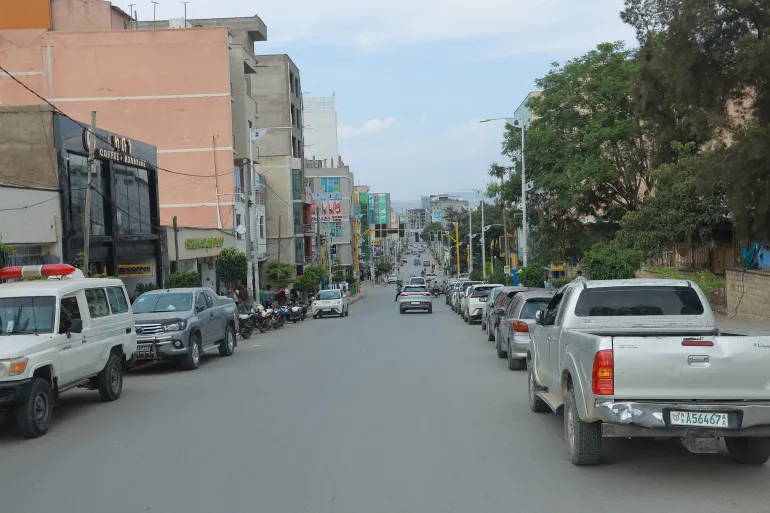
A street in Mekelle, where residents are trying to resume daily life despite economic hardship and fears of further conflict [Al Jazeera]

“I have already lost so much time because of the war. I am afraid that if our education is disrupted again, I will lose another year and fall further behind,” he said.

Some university students have left Tigray for Addis Ababa, Ethiopia’s capital, to seek transfers to other public universities. The Ministry of Education announced temporary placements at universities elsewhere in the country for students enrolled at institutions in Tigray. More than 5,000 returning students had applied by September 17–18, according to reporting on the ministry’s programme.

Abel, a third-year student at Axum University, travelled to Addis Ababa to request a transfer.

“I didn’t want to leave, but I also can’t keep putting my education on hold. I came to Addis to see if I can transfer to another university and continue my studies. I just want to finish what I started,” he said.

For students who have already lost years to conflict, the uncertainty means more than interrupted classes. It threatens to delay graduation and make an already difficult path to employment even harder.

Border communities fear a wider conflict

Near the Eritrean border, military movements and conflicting accounts of troop deployments have heightened fears that the fighting could spread beyond Tigray.

On October 8, The Associated Press reported claims by a commander allied with Ethiopia’s government that Eritrean troops had entered Adigrat earlier that week and Idaga Hamus the following day. The AP said it could not independently verify those accounts. The conflict-monitoring organisation ACLED separately reported Eritrean troops crossing the border at Zalambessa.

On October 13, Reuters reported that Ethiopian government forces had advanced into Zalambessa, citing people in contact with residents and other sources. The report said it remained unclear whether Eritrean troops or Tigrayan opposition fighters were still present in the town. The differing accounts underscored the difficulty of establishing control of individual towns as the fighting shifted.

Daily life slowly resumes in Mekelle, but delayed salaries and a lack of safety continue to weigh on residents [Al Jazeera]

The developments have unfolded amid worsening relations between Addis Ababa and Asmara. On October 8, Ethiopia’s foreign minister, Gedion Timothewos, accused Eritrea of sending troops as far as 60km (37 miles) into Ethiopian territory in several areas of Tigray and appealed to the United Nations Security Council to respond.

Eritrea has denied invading Ethiopian territory. Its government said Ethiopia’s accusations amounted to a declaration of war and called on the Security Council to take action against Ethiopia. The competing claims have raised fears that renewed fighting in Tigray could lead to a direct confrontation between the two neighbours.

Ethiopia and Eritrea fought on the same side during the 2020–2022 Tigray war, when Eritrean forces supported the federal government against the TPLF. Their deteriorating relations have added a regional dimension to the renewed conflict.

In Zalambessa, residents are watching developments with concern. One resident, who declined to be named, said the uncertainty made it difficult to know what to expect in the coming weeks.

An uncertain road ahead

On October 16, Ethiopian Prime Minister Abiy Ahmed announced a six-month caretaker administration for Tigray, tasked with restoring public services, helping displaced people return and preparing the region for elections. The announcement followed the federal forces’ takeover of Mekelle and other major towns.

The federal government says the temporary administration will help restore stability and pave the way for elected regional leadership. The TPLF has opposed the federal advance, and it remains uncertain how effectively the new administration will operate across the region.

For residents, the immediate concerns are whether salaries will be paid, schools and health facilities will function, and displaced families will be able to return safely.

In Zalambessa, Gebrehiwot said residents knew from experience what another conflict could bring.

“People are worried because we know what war means for this area. We have already suffered enough, and nobody wants to see things reach that point again,” he said.

Source link

Ethiopian forces expand control in Tigray as militia claims Eritrean losses | Conflict News

Eritrea denies troop movement inside northern Ethiopia as US calls for de-escalation.

Ethiopian forces and allied fighters say they have expanded control across Tigray and entered the historic city of Aksum, as fighting in the northern region continues.

The pro-government militia, the Tigray Peace Force (TPF), also claimed on Thursday that troops from neighbouring Eritrea have retreated towards the border.

Solomon Hailemariam, spokesperson for the TPF, said Eritrean forces had sustained significant casualties during the fighting.

But Eritrea’s Information Minister Yemane Gebremeskel rejected the claims as false in comments to local media. The extent of the reported losses could not be independently verified.

The Armed Conflict Location & Event Data Project (ACLED), an independent conflict-monitoring organisation, documented Ethiopian government forces and TPF fighters entering Aksum, while rival Tigrayan fighters remained in surrounding mountainous areas.

ACLED also reported Eritrean troops withdrawing across the border through Zalambessa, following advances by Ethiopian forces and their allies into several strategic towns.

“Ethiopian troops are on one side, and Eritrean troops are on the other,” Selam, a resident of Zalambessa whose first name was changed for security reasons, told the AFP news agency on Thursday.

AFP reported that there is no fighting now, but the town has been without power or water for a week.

“We are caught in the middle and living in deep anxiety,” Salem told the news agency.

Trading accusations

ACLED also documented Ethiopian tanks and heavy weapons moving towards the Eritrean border on Tuesday, raising concerns about a possible confrontation between the neighbouring countries.

Addis Ababa has accused Eritrea, as well as Sudan and Egypt, of backing a rebel alliance of seven groups that is fighting the government of Abiy Ahmed.

Eritrea has denied accusations that its forces entered Tigray to support the armed opposition groups, accusing Ethiopia of threatening its sovereignty.

Eritrea, which fought alongside Ethiopia’s federal army in the 2020-2022 war, severed diplomatic ties with Ethiopia over the accusations earlier this month.

Khartoum and Cairo have also denied involvement in the conflict.

The TPF supports Ethiopia’s federal government in its campaign against the Tigrayan rebels linked to the Tigray People’s Liberation Front (TPLF).

Ethiopian forces captured Tigray’s regional capital Mekelle earlier this month, and the TPLF confirmed that it had withdrawn from the city and moved its regional administration “temporarily” to another location. Government forces also retook the towns of Adwa and Adigrat from the TPLF without a fight. Further, there are reports of Ethiopian advances in the town of Rama, close to the border with Eritrea.

On Wednesday, US Secretary of State Marco Rubio called for de-escalation in a phone call with Ethiopian Prime Minister Abiy, following reports of the alleged confrontation between Ethiopian and Eritrean forces.

Rubio said the region could not tolerate more conflict, according to a statement from the US Department of State.

Source link

Ethiopia’s Tigray war: Where do the UAE and Saudi Arabia stand? | News

Addis Ababa, Ethiopia – As renewed fighting in Ethiopia’s Tigray region threatens to destabilise the Horn of Africa, public backing by the United Arab Emirates (UAE) of Ethiopia’s federal government and Saudi Arabia’s record of regional diplomacy are drawing scrutiny.

Both Gulf powers have strategic interests in the Horn of Africa, but their roles differ. The UAE has publicly backed Ethiopia’s government while Saudi Arabia has previously helped broker an Ethiopia-Eritrea rapprochement and was reported to have offered to mediate between the two countries in 2025.

The renewed fighting threatens to unravel the November 2022 Pretoria peace agreement, which ended a war between Ethiopia’s federal government and Tigrayan forces. As tensions with Eritrea add to the risks of a wider confrontation, the positions of Abu Dhabi and Riyadh offer a window into the interests of external powers in the crisis.

The UAE: Clear alignment, unproven leverage

On September 25, the UAE condemned attacks by the Tigray People’s Liberation Front (TPLF) and its allied armed groups against Ethiopian federal forces, the seizure of airports in Tigray and the escalation in the neighbouring regions of Afar and Amhara.

Sheikh Shakhboot bin Nahyan Al Nahyan, the UAE minister of state, expressed solidarity with Ethiopia’s government and people, reaffirmed support for the country’s sovereignty and territorial integrity, and called for an end to hostilities, the protection of civilians and adherence to the Pretoria Agreement.

The statement made Abu Dhabi’s public position clear: It backs Ethiopia’s federal government while calling for de-escalation and dialogue. It did not establish whether the UAE was providing military assistance or had secured commitments from the parties to end the fighting.

The UAE also has commercial interests across the Horn of Africa. Dubai Ports World (DP World) operates Berbera port in Somaliland, and a shipping route launched in 2025 connects the port with Jebel Ali in the UAE, providing an additional corridor for cargo serving inland destinations, such as Ethiopia. Landlocked since Eritrea’s independence in 1993, Ethiopia relies heavily on Djibouti for access to international trade.

These commercial links help explain Abu Dhabi’s interest in regional stability and its relationship with Addis Ababa. However, they do not establish that the UAE can influence the TPLF, persuade Eritrea to de-escalate or change Ethiopia’s military calculations.

The extent to which Abu Dhabi can use its relationship with the federal government to encourage a political response to the conflict remains unclear.

Saudi Arabia: Diplomatic experience, uncertain engagement

Saudi Arabia has yet to publicly announce its position on the latest fighting in Tigray.

The kingdom has not publicly commented on the renewed war, according to an October 1 analysis by Critical Threats, although it undertook diplomatic efforts earlier this year to reduce tensions between Ethiopia’s federal government and the TPLF.

Saudi Arabia has previously sought to mediate between Ethiopia and Eritrea. In November 2025, Chatham House reported that sources said Riyadh had offered to mediate between the two countries amid rising tensions over maritime access and regional security.

A June 2026 analysis by Germany’s SWP think tank said previous Saudi mediation efforts had failed, partly because negotiations did not address Ethiopia’s interest in the Eritrean port of Assab.

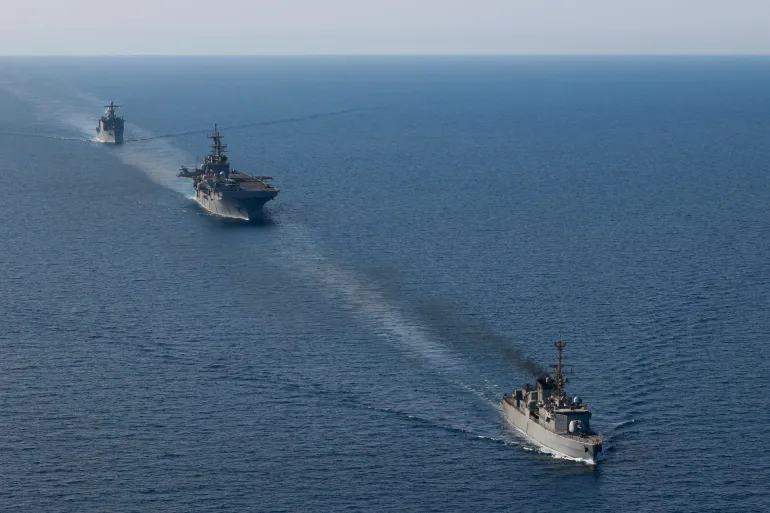
A Royal Saudi Navy frigate sails alongside US 5th Fleet ships during operations to support maritime security in the Red Sea, where rising tensions between Ethiopia and Eritrea have raised concerns about wider regional stability. [File: Reuters]
A Saudi navy frigate sails alongside US 5th Fleet ships during operations to support security in the Red Sea, where rising tensions between Ethiopia and Eritrea have raised concerns about wider regional stability [File: Reuters]

The kingdom’s broader regional alignment also matters. An August 2026 analysis by the Soufan Center described Saudi Arabia and Egypt as backing Eritrea in opposition to Ethiopia’s ambitions for Red Sea access.

This is an assessment of regional alignment, however, not evidence that Saudi Arabia is directly providing military support to Eritrea or the TPLF in the current fighting.

Saudi Arabia has a strong interest in Red Sea security, a vital corridor for international shipping and its own oil exports. Whether Riyadh will take a more public diplomatic role as tensions escalate remains unclear.

Egypt’s rivalry with Ethiopia adds to regional tensions

Egypt’s role in the crisis is shaped by its longstanding dispute with Ethiopia over the Grand Ethiopian Renaissance Dam (GERD) and its growing ties with Eritrea.

Cairo has also stressed that responsibility for the governance and security of the Red Sea rests with countries bordering the waterway, a position shared by Asmara. The issue has added to regional tensions as Ethiopia seeks reliable access to the sea.

In September, Ethiopia’s army chief, Field Marshal Birhanu Jula, accused Egypt and Sudan of supporting armed groups fighting the federal government, including the Tigray People’s Liberation Front (TPLF).

His remarks, reported by Al Jazeera on September 28, did not provide evidence substantiating the accusation. Egypt’s Foreign Ministry spokesperson, Nader Zaki, subsequently reaffirmed Cairo’s commitment to state sovereignty and non-interference, rejecting suggestions that it had departed from those principles.

He did not directly address the specific allegation of Egyptian support for the TPLF.

Egypt’s relationship with Eritrea has nevertheless become an important part of the regional picture. President Abdel Fattah el-Sisi met Eritrean President Isaias Afwerki in Cairo on June 8, 2026.

According to Egypt’s presidency, the talks covered bilateral cooperation, developments in the Horn of Africa and Red Sea security.

The two leaders also stressed the importance of coordination to maintain regional stability. The meeting highlighted closer cooperation between Cairo and Asmara, but did not establish that either country was involved in the renewed fighting in Tigray.

For Cairo, the dispute with Ethiopia extends beyond Tigray to the Nile and the balance of power in the Horn of Africa.

Its relations with Eritrea and its disagreements with Addis Ababa form part of the wider regional context, but they are not evidence of direct Egyptian involvement in the renewed conflict. Whether these regional relationships will affect the course of the fighting remains uncertain.

From Tigray to a wider regional crisis

The risks extend beyond Tigray. Ethiopia’s pursuit of maritime access has become a source of tension with Eritrea, whose Red Sea coastline includes the port of Assab. Addis Ababa argues that reliable access to the sea is a national priority while Asmara rejects any threat to its sovereignty.

Ethiopia has accused Eritrea of sending troops across the border and supporting armed groups. Eritrea denies the allegations and has called on the United Nations Security Council to intervene. The allegations remain contested, but deteriorating relations have raised the stakes of renewed fighting in northern Ethiopia.

A wider confrontation could put more civilians at risk, complicate humanitarian access and disrupt regional trade and security. It would also test whether external partners could encourage restraint without appearing to endorse either side’s military objectives.

The UAE’s close ties with Addis Ababa could provide a channel for diplomatic engagement while Saudi Arabia’s record of regional diplomacy offers a possible opening for renewed talks. However, the available public evidence does not establish that either country is currently leading an initiative to contain the crisis.

Influence must be measured by outcomes

The UAE and Saudi Arabia should not be cast as pursuing opposing strategies simply because one has publicly backed Ethiopia’s federal government while the other’s current position is less visible. Their interests and diplomatic approaches differ, but the evidence does not show that either has decisive influence over the fighting.

Their contribution should be assessed by whether they can help secure concrete steps towards de-escalation, renewed political dialogue and a reduction in tensions between Ethiopia and Eritrea. Public statements, commercial interests and past diplomatic achievements may create opportunities for engagement, but they are not substitutes for progress on the ground.

The Pretoria Agreement remains the framework for a political settlement in Tigray, yet renewed fighting underscores the difficulty of sustaining peace while underlying disputes persist. A durable settlement will depend primarily on the parties themselves. External partners could contribute by encouraging restraint and supporting credible negotiations.

For now, the UAE’s public alignment with Ethiopia and Saudi Arabia’s diplomatic record offer different potential channels for engagement. Whether either country can turn those relationships into a meaningful contribution towards de-escalation remains unresolved.

Source link