The National Trust

Britain’s first ‘smart home’ where Jurassic World filmed is spectacular Victorian estate

This spectacular Victorian mansion is Britain’s original smart home and the world’s first hydroelectric-powered building, featuring historic gardens and starred as Lockwood Manor in Jurassic World: Fallen Kingdom

Nestled within a spectacular mountain setting, this Victorian property stands as a genuine architectural trailblazer and the very first of its kind.

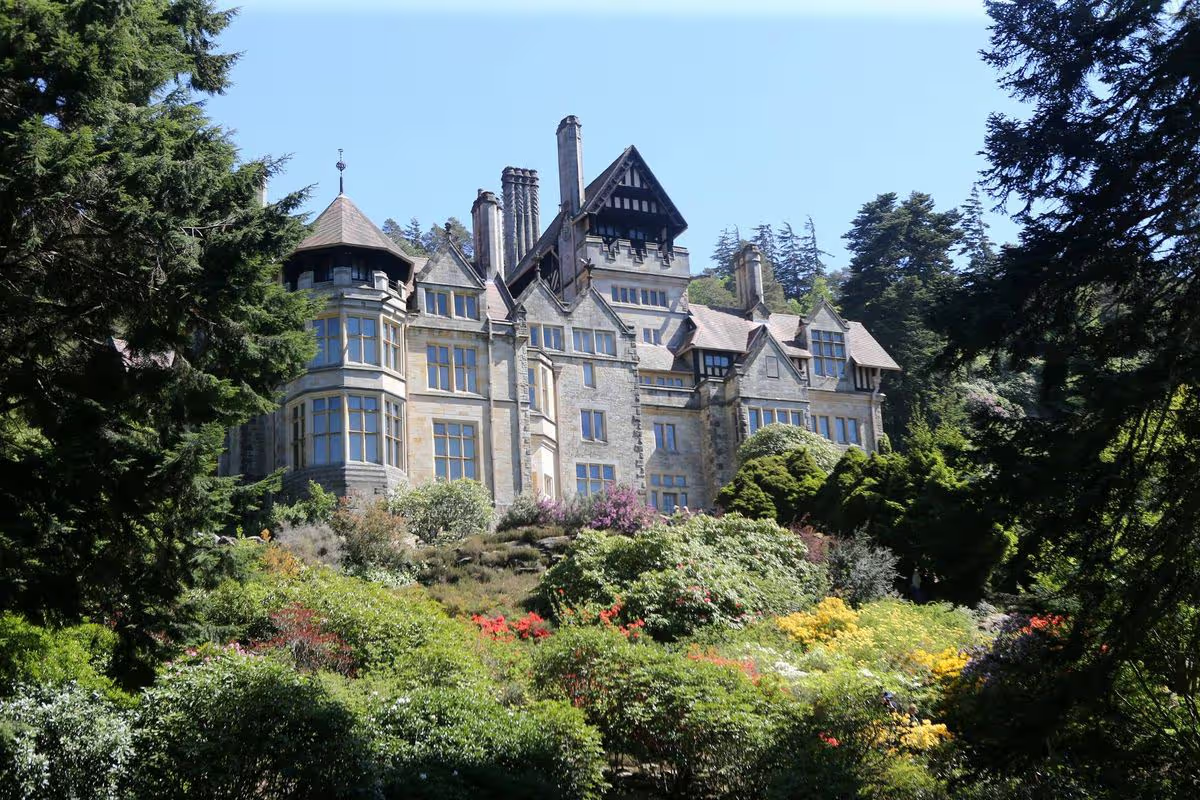
Cragside in Rothbury, Northumberland, holds the title of Britain’s original smart home, and it’s utterly magnificent. From the exterior, the enormous mansion looms over the water beneath it, all asymmetrical and striking, resembling something straight out of a film.

Its multiple pointed roofs and curved brickwork give it a distinctly Tim Burton-esque quality, and indeed, it has featured in numerous productions thanks to its remarkably distinctive beauty.

It appeared in the 2018 blockbuster hit Jurassic World: Fallen Kingdom as the location for Lockwood Manor.

Yet it’s truly the fact this was the world’s first building powered by hydroelectricity and operated by hydraulics that makes it such an extraordinary marvel. Rivers, lakes and even waterfalls all work together to power the property and its enchanting gardens.

Best Northumberland holiday cottage deals

This article contains affiliate links, we will receive a commission on any sales we generate from it. Learn more
Sykes Cottages

From £38 per night

Sykes Cottages

See the deals

Northumberland is famed for its rugged coastline, ancient castles and unspoiled natural beauty. Sykes Cottages has a range of places to stay starting from £38 per night

History

Cragside was brought to life through the vision of William and Margaret Armstrong, with William serving as an engineer and industrialist responsible for numerous groundbreaking inventions.

Meanwhile, Margaret had extensive expertise in botanical life, which inspired the creation of the gardens.

What began as simply a sporting lodge in 1863 gradually evolved into a sprawling estate, developed over three decades. The architectural masterpiece was expanded in three principal phases between 1870 and 1884 by architect Richard Norman Shaw.

It quickly evolved into a hub of groundbreaking innovation as the married couple developed their revolutionary vision for electricity and power generation.

The property operates through hydraulics in an entirely unique manner, standing as the world’s first water-powered home. It pioneered central heating, electric lighting, gravity-fed plumbing, water-driven machinery and a hydraulic lift, delivering unprecedented levels of domestic comfort.

Contributing to the property’s pioneering spirit is the electric lighting, which was installed in 1878 using carbon-arc lamps in the Gallery room.

Working alongside chemist Joseph Swan, they advanced this further in 1880 by enabling the first residential installation of incandescent lightbulbs.

Following years of refurbishment and innovation, the property eventually passed to their great-nephew, William Watson Armstrong, after he inherited it.

As they had no children, he became the rightful heir to the estate, and following their passing, the home remained with his family for two additional generations.

Walking

Due to its breathtaking setting, Cragside provides an excellent location for extensive walks across and surrounding the grounds, featuring two particularly lengthy routes – one called the Hydro-power Trail and the other Views of Cragside.

Stretching a lengthy 6.5 miles, these trails are closer to a hike than a leisurely stroll and could occupy the majority of your visit, but the estate serves as an excellent launch pad for the adventure.

The Hydro-power Trail is one that guides you past every aspect of the technology used to harness water power.

On the other hand, the Views of Cragside route offers panoramic views of the Northumberland hills and beyond. It leads you past the Formal Garden, where you can pause to appreciate the meticulously arranged flower beds.

There are signposts scattered throughout the estate directing you to various trails suitable for a range of abilities. The most family-friendly and considered easy to moderate is Nelly’s Moss, which takes up to an hour to complete.

Visiting the estate

To fully enjoy all that Cragside has to offer, there’s no need to pre-book, and parking is included in your entry fee – National Trust members excepted, naturally. Adults are charged £27.00, whilst children pay £13.50 upon entry.

Families consisting of two adults and up to three children can opt for a family ticket priced at £67.50. The site opens its doors from 11am, with the house closing at 3pm and the remaining facilities open until 4pm.

Source link

Overlooked castle crowned ‘stunning’ with ‘super detailed’ interior and Italian-style gardens

The 13th-century National Trust castle features the UK’s largest private collection of South and East Asian artefacts and Britain’s best baroque terraced gardens

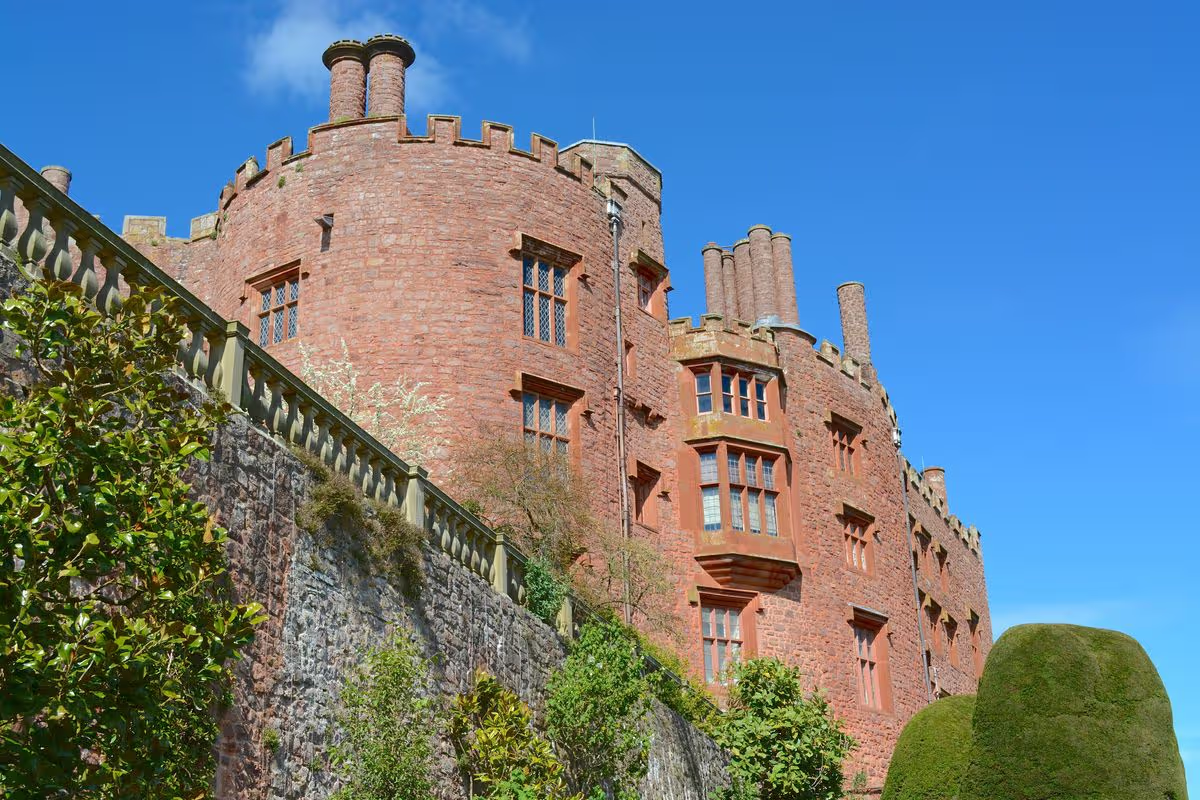
Nestled close to the English-Welsh border, in the town of Welshpool, stands a genuine fairy-tale fortress which appears straight out of a storybook and provides a vibrant splash of colour against its sprawling green backdrop.

Built in the 13th century, this mediaeval stronghold is brimming with stories and continues to evolve, much to the delight of those who visit.

For the perfect day spent appreciating historic architecture, discovering a different heritage and exploring the most spectacular of gardens, Powis Castle is the destination to seek out.

Its most recent ownership belonged to the same family, who resided in the castle from as early as the 1570s – the Herbert family. This continued until the castle and its grounds were handed over to the National Trust in 1952 by the 4th Earl of Powis.

Best holiday cottage deals in Wales

This article contains affiliate links, we will receive a commission on any sales we generate from it. Learn more
Sykes Cottages

From £35 per night

Sykes Cottages

See the deals

Wales is renowned for its stunning mountains, picturesque coastline and rich Celtic history. Sykes has a wide and varied collection of holiday cottages, houses and apartments across the country. Prices start from £35 per night with current deals.

One TripAdvisor reviewer said: “This site is stunning. I was blown away by how picturesque the place is.”

Another wrote: “This place really exceeded my expectations. The interior is super detailed and interesting, with some spectacular pieces of furniture.

“The gardens are truly beautiful on a lovely warm hillside and some stupendous giant yew trees. Has to be seen.”

History

The heritage of this fortress stretches back hundreds of years, encompassing numerous owners, as the property expanded and transformed, whilst preserving its original character throughout.

However, it all started in the 13th century when a Welsh prince, Gruffudd ap Gwenwynwyn, established some independence. When he and the remainder of his direct lineage died in 1309, leaving no male heir, the castle passed to an heiress called Hawise. She then married Sir John Charlton from Shropshire.

The fortress came under attack during this period from Hawise’s uncle, who was trying to claim the lordship he believed he was entitled to instead of her, but was unsuccessful.

In response, they chose to repair the damage and constructed two imposing drum towers on either side of the castle’s west entrance. Charlton’s descendants remarkably remained lords of Powis for more than 100 years, until no male heir could be found.

Consequently, in 1421, the castle was split between two daughters, after which the fortress entered a sharp decline, desperately needing restoration following years of abandonment. Before long, it was taken over and lovingly rebuilt before being leased to the Herbert family.

Most significantly since that time, one of the most substantial changes occurred when the Clive family introduced what is now recognised as the Clive collection. A collection teeming with South and East Asian artefacts exhibited in the castle, and the largest private collection of its kind in Britain.

Clive Collection

What makes this fortress particularly unique is its fascinating array of artefacts housed within it. Originally assembled by two generations of the Clive family, comprising Robert and his son Edward, who had wed Henrietta Herbert, the daughter of the 1st Earl of Powis.

The collection was assembled during Britain’s colonial rule of India, when these artefacts were removed from their country of origin and brought to the castle, starting in the 1800s. Today it houses more than 1,000 pieces originating from South and East Asia.

According to its website, visitors can expect to discover an extensive array of ivories, textiles, statues of Hindu deities, decorative silver and gold, weapons and ceremonial armour.

Naturally, this remarkable collection carries with it a troubling past, one which connects the castle to a proprietor who played a role in the invasion of India. Robert Clive was directly employed by the East India Company, which sent armies to both invade and subjugate India.

In doing so, they exploited the nation financially and profited from the natural resources it possessed. This contributed to establishing the British Empire’s presence within India and, consequently, secured a lifetime of riches and prosperity for Clive, which is evident in the castle’s magnificence.

Gardens

Beyond the striking castle itself, the true highlight of the estate lies in its grounds and immaculately-maintained gardens. Part of its impressive display of flowers, plants and trees is attributed to the captivating hedging that encircles the castle.

It covers up to 8,500 square metres of the estate, with the yett, tumps and top terrace contributing an extra 7,000 square metres to that figure. And with this comes some extreme-gardening methods adopted by the National Trust to guarantee it stays in impeccable condition.

To put that into perspective, it states that one skilled gardener can spend up to 10 weeks annually working at height, using a hydraulic cherry picker to trim and sculpt the towering hedges. That represents just one element of these magnificent gardens.

What makes them particularly remarkable is their Italian-influenced design dating back to 1680. The gardens at Powis Castle are regarded as the finest surviving example of a baroque terraced garden in the entire country – blending both Italian and French influences.

Without a National Trust membership, it costs £18 for entry to the castle and gardens for an adult, excluding gift aid. Meanwhile, children will be charged £9, while families can choose a family ticket for a reduced price.

It’s worth noting that ticket prices are reduced during off-peak periods of the year.

Source link

Traditional village feels like stepping back in time with fairytale castle and cobbled streets

Located an hour from London, this National Trust village features half-timbered Tudor buildings and a grand castle with world treasures

Venture just an hour from London to discover this fairytale village, transporting you backwards through time as its period buildings recreate a world from centuries past that has largely vanished today.

Chiddingstone stands as one of Britain’s finest preserved Tudor villages, making it an exceptional discovery for heritage enthusiasts and anyone seeking respite from life’s relentless pace.

The settlement is largely owned and maintained by the National Trust, helping safeguard its centuries-old structures and character which consistently attract inquisitive travellers.

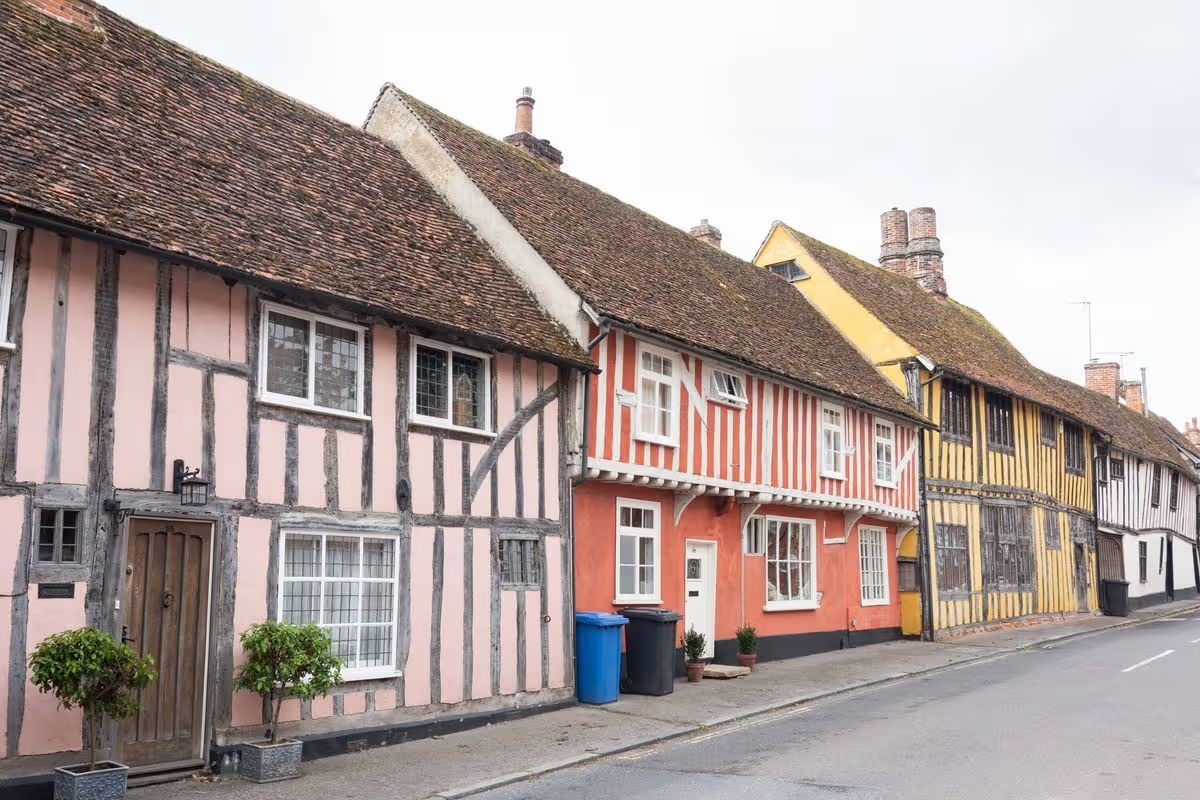
This Kent village is cherished for its unmistakably English charm and period architecture, featuring half-timbered properties with stone-hung gables and red-tiled roofs. What’s more, it boasts an impressive castle and a bustling high street, perfect for leisurely wandering.

Best UK holiday cottage deals

This article contains affiliate links, we will receive a commission on any sales we generate from it. Learn more
Sykes Cottages

From £27 per night

Sykes Cottages

See the deals

Sykes Cottages offers a wide range of handpicked holiday homes across the UK and Ireland, from cosy countryside retreats to stunning coastal escapes. Prices start from £27 per night

The castle

Whilst the castle’s exterior presents stunning architecture, typical of what you’d anticipate seeing across England, its interior offers quite the juxtaposition.

What renders the structure so distinctive is its museum, which houses collections from across the globe spanning different eras and civilisations – Japanese, Egyptian, Stuart and Jacobite and Buddhist. Everything is accessible to visitors between March and October, allowing them to experience an entire world under one roof.

Beyond its impressive collections, the venue itself is steeped in history and magnificence, as guests explore the corridors of a 16th-century residence. Within, they can admire the Great Hall, discover a Victorian kitchen, library, and servant’s hall, and delve into its fascinating past in the Streatfeild room.

Henry Streatfeild was the figure who dramatically transformed the property during the 1800s, moving away from its Tudor design to mirror that of a mediaeval fortress.

Though, it was collector Denys Eyre Bower whose stewardship of the castle witnessed it evolve into a cultural landmark, sharing his passion with visitors worldwide.

One guest commented on TripAdvisor: “What a lovely property, from the massive holdings on display throughout the home to the acres of relaxing grounds. The reception gal was quite informative upon our arrival as to the layout for our self-guided tour as well as answering our questions post-tour. Don’t miss this gem.”

This year, guests can purchase a day ticket and enjoy complimentary returns for an entire year. Current door prices are £15.25 for an adult and £10.50 for a child, with reduced rates available for those who book online beforehand.

High street and village

With its genuine half-timber Tudor structures and cobbled walkways, wandering along the high street of Chiddingstone Road feels like stepping back through the centuries. Notable highlights include a café, shop and the 15th-century pub.

The historic Chiddingstone Stores and post office, which dates back to 1453, is situated within a traditional Tudor building and continues to function as such today.

Similarly unchanged is the village pub, known as the Castle Inn, boasting a welcoming atmosphere and superb beer garden.

It retains its Grade II*-listed status with numerous original features intact, including delightful fireplaces, tiled floors, oak panelling and bars. One visitor described their experience at the Castle Inn as ‘atmospheric’.

They commented: “If you’re looking for a traditional, friendly, country pub, this is it. Clean and friendly, with everything you need on your doorstep that goes with a village pub. Highly recommend.”

The village name, Chiddingstone, is believed to originate from the enormous sandstone located outside the settlement. Whilst unconfirmed, the ‘Chidding Stone’ is thought to mark where it all started, with several folklore tales surrounding its origins.

Source link

Beautiful UK beach is ‘tropical paradise’ that’s become a ‘playground for the rich’

A charming UK beach has miles of golden sands and sheltered waters – but TikTok users have dubbed it a ‘playground for the rich’ as it has the highest seaside property prices in the whole of the UK

Discovering a peaceful, secluded beach in the UK that hasn’t been swamped by holidaymakers can be difficult, especially if you’re after golden sands, sparkling clear waters, and stunning coastal scenery.

Some of the most well-known beaches in the UK that provide these features are Porthcurno Beach in Cornwall, Bournemouth Beach in Dorset, Holkham Beach in Norfolk, and Barafundle Bay in Pembrokeshire.

Yet, one beach that remains something of a hidden gem is Studland Bay in Dorset. Unlike its busy counterparts, Bournemouth and Sandbanks, Studland Bay has succeeded in preserving its unspoilt character and is the perfect destination for a spring swim. This secret spot features an impressive four miles of immaculate sands with protected waters, all surrounded by dunes and gentle cliffs.

The bay is made up of four National Trust-managed beaches: Shell Bay, Knoll Beach, Middle Beach and South Beach. Every beach at Studland welcomes dogs, permitting them on the sands all year round, making it an excellent choice for dog owners wanting to enjoy a tranquil coastal stroll with their four-legged friends.

The beach provides views across the chalk formations of Old Harry Rocks, part of the Jurassic Coast World Heritage Site. These iconic chalk formations rise from the sea, marking the most eastern point of the Jurassic Coast.

For visitors staying in the neighbouring towns of Poole and Bournemouth, Studland Bay is under an hour away by car and provides a calm escape from the commotion of the crowded seaside resorts.

Many TikTok users have dubbed Studland Bay ‘Bournemouth’s playground for the rich’, and travel influencers are said to be completely smitten with the immaculate beaches and stunning views. Located near Sandbanks, the UK’s priciest seaside location, it’s hardly surprising that locals are venturing out to uncover hidden gems.

The average property price in Sandbanks for 2025 was a whopping £854,817, and current Rightmove listings for Sandbanks include a two-bedroom flat for £425,000, and a four-bedroom semi-detached house for over £1.5 million.

Matthew Fox, CEO of LateRooms.com, has championed the destination. “Here in the UK, many of us dream of coastal coves and hidden bays, but for years, we’ve overlooked some of our own spectacular coastal gems,” he explained.

“Studland Bay is one of those places. The beach feels almost untouched compared to more popular British beaches, and it’s a far cry from the crowded seafronts of more traditional seaside destinations. On a warm summer’s day, you could be in a tropical paradise-sweeping sandy beaches, crystal-clear waters, and stunning views over Old Harry Rocks.”

READ MORE: Latest Foreign Office travel advice for Turkey, Cyprus and EgyptREAD MORE: UK government set to start flights back from Middle East as cancellations near 10,000

He added: “It’s an area of outstanding natural beauty that allows visitors to unwind and reconnect with nature as they escape the hustle and bustle. The best time to appreciate Studland Bay and its unspoilt charm is to visit outside of the school holidays, where you can enjoy coastal walks and wildlife spotting in peace and tranquillity.”

Have a story you want to share? Email us at webtravel@reachplc.com

Source link

Stunning Welsh beach named best in in UK and will stop you in your tracks

A woman has shared her pride after a stunning Welsh beach was named the best beach in the UK by TripAdvisor – and the stunning footage shows exactly what makes it special

A stroll along the beach is a brilliant way to boost both physical and mental well-being, making it an ideal weekend activity, provided it’s not absolutely chucking it down. A Welsh woman, Sian, expressed her pride upon discovering that the beach named the best in the UK by TripAdvisor is located in her homeland.

Rhossili Bay, situated on the westernmost point of the Gower Peninsula in South Wales, consistently ranks amongst the finest beaches in the UK and Europe, and Sian believes it’s “not hard to see why”. Captioning her TikTok clip, she wrote: “Rhossili Bay has been voted TripAdvisor’s best beach in the UK. Honestly, it’s not hard to see why. Endless golden sands, wild Atlantic waves, and sunsets that stop you in your tracks.”

Sian then showcased a video montage featuring various snippets she’d captured of the stunning beach, from the entrance to the hill offering panoramic views over the beach, and a breathtaking sunset she had the fortune to witness.

In the comments section, users were swift to praise the beach as “very special,” and noted that people “don’t call it God’s country for nothing”. This nickname is often bestowed upon Wales due to its dramatic landscapes and spiritual historical significance.

Another user chimed in: “This is one of my all-time favourite places”.

Content cannot be displayed without consent

What does TripAdvisor have to say?

Many others on TripAdvisor share the same sentiment. The beach boasts an impressive 4.8 out of five rating on the site, which says: “Rhossili Bay lies at the western end of the beautiful Gower peninsula. Three miles of golden sands, iconic landscapes including Worms Head and Rhossili Down and history everywhere, from neolithic through to the more recent, including home to Edgar Evans.

“It’s a haven for walkers, with trails in all directions, including the Welsh Coastal Path. The beach welcomes dogs throughout the year, and the entire area is stunning regardless of the weather.”

“Today, the National Trust looks after two of the three miles of the beach, Rhossili Down, and most of the coastline between Rhossili and Port Eynon (26 miles of Gower coastline in total). The landscape is free. The village of Rhossili also hosts other private businesses. The car park is free to NT (National Trust) members during the day.

“Non-members are currently charged £5 per day (car). There is no overnight parking/camping. All profits from the car park go towards maintaining the area’s beauty. Please note that the toilets are owned and operated by Swansea Council.”

Public reviews also sing praises of the stunning beach. One visitor wrote: “During our trip to the Gower Peninsula, we also visited the beautiful Rhossili Bay. The stretch of beach there is rightly regarded as one of the most beautiful beaches in Wales.”

Another visitor enthused: “One of the most beautiful views you will see – in the UK or even in Europe. It is well-maintained. There are walks, but the views are reasonably accessible for those with mobility issues. Highly recommended.”

However, not everyone was smitten, with one critic labelling it as: “Pitiful, boring, uninspiring. Total waste of time and money.” But they were in the minority.

A third person recounted: “We were blessed with a warm sunny day when we arrived here for a look around. We parked in the NT car park (free with membership) and had a lovely walk along the coastal path, enjoying the fresh air and the views over the bay.

“There are walks of varying lengths, and it is well worth a visit. There are toilets and a few cafes to have a drink and some food too!”

Ensure our latest headlines always appear at the top of your Google Search by making us a Preferred Source. Click here to activate or add us as your Preferred Source in your Google search settings.

Source link

Ancient woodland filled with waterfalls, grottos and hidden ruins

The 120-acre National Trust site near Masham features 18th-century grottos, waterfalls and ruins hidden within ancient woodland on the edge of the Yorkshire Dales

In North Yorkshire, near the market town of Masham, lies an expansive woodland haven brimming with hidden gems that stretch back to the 18th century.

Hackfall Woods stands as a magnificent 120-acre expanse of ancient forest, attracting visitors with its enchanting atmosphere and stunning views. The Woodland Trust-owned site holds grade 1 listed status, owing to its 18th-century remnants and historic garden features.

Perched on the fringe of the picturesque Yorkshire Dales, Hackfall nestles within a dramatic and rugged gorge carved by the River Ure.

Following years of neglect and deterioration, the woodland has been carefully restored to its original splendour, now welcoming keen walkers and explorers across Yorkshire.

History

Whilst today Hackfall appears as an untouched wilderness, it was actually carefully crafted to achieve this wild aesthetic by a renowned landscaper in 1731.

John Aislabie bought the estate and, working with his son, reimagined it as a seemingly natural landscape dotted with decorative features for visitors to admire.

Save on the best holiday cottages in Yorkshire

This article contains affiliate links, we will receive a commission on any sales we generate from it. Learn more
Sykes cottages

From £31 per night

Sykes Cottages

See the deals

Famous for its dramatic landscapes, historic cities, hearty food, and rich cultural heritage Yorkshire is just waiting to be explored. Sykes Cottages has a large number of properties to choose from with prices from £31 per night.

The design was cleverly conceived to showcase the pre-existing panoramas and natural characteristics, amplifying the area’s inherent beauty.

Yet following their considerable efforts, Hackfall endured decades of abandonment and disrepair, before being purchased in 1932 by an owner who stripped the site of its trees. The structures had fallen into disrepair, and flooding had worn away the once-stunning water features.

In 1989, the Woodland Trust stepped in to save the site, securing it on a lease of nearly 1,000 years, with support from organisations including the Hackfall Trust and English Heritage.

Since that time, this magnificent woodland has been formally designated as a Site of Special Scientific Interest, alongside recognition as ancient semi-natural woodland.

It continues to attract visitors from throughout the country, eager to witness the waterfalls, sculptures and historic ruins.

One visitor recounted their experience on TripAdvisor, writing: “Hackfall is a beautiful and peaceful woodland brimming with nature, trees, plants, birds, wildlife, streams, ponds, castle ruins, great views on a hillside alongside the River Ure. It’s a super place for peace and quiet, for individuals, for families, suitable for all ages to explore and get away from it all.”

Wildlife

Nature enthusiasts are guaranteed a memorable experience at Hackfall, renowned for the remarkable diversity of species that inhabit the area.

From bird life to flora and insects, the woodland is bursting with biodiversity, and countless sightings have been documented here, particularly by dedicated birdwatchers.

The website showcases an extensive array of creatures visitors might encounter, from kingfishers to dippers, grey wagtails and woodpeckers. Guests can also anticipate spotting stoats, foxes, badgers, butterflies and little lemon slugs.

Access

Given the challenging landscape, featuring numerous steep footpaths, Hackfall is only suitable for those confident navigating steps and inclines, as wheelchair access isn’t available.

The woodland offers up to four entry points, with the two most frequented located at the top of the site and featuring the steepest routes.

To access these, you’ll need to start from the minor road linking Grewelthorpe to Masham. The entrance has no barriers, and as you follow the trail, you’ll quickly discover it’s a gentle gradient with a handful of steps.

Free parking is available nearby at the Woodland Trust car park, situated roughly half a mile before Grewelthorpe Village. Some walkers alternatively opt to park in the village of Masham.

Bear in mind there are no toilet facilities within the woodlands themselves, with the closest public toilets located back in Masham. While this is typical for most woodland rambles, visitors will be delighted to learn that not only are they welcome, but their dogs are too.

Source link

UK’s cheapest city for pints at £3.60 is nestled in beautiful countryside

Tbut there are still some places where you can get a drink for less than £5.

The cost of a pint continues to creep upwards. Tracking down a boozer flogging pints for under a fiver has become nearly impossible, yet certain spots still won’t leave your wallet crying.

A report from takepayments has uncovered which UK cities offer the most wallet-friendly drinking experience. The research examined 34 major UK cities against 16 affordability measures, encompassing housing, transport, wages, and discretionary spending (such as the cost of a pint).

Each location received a score out of 10 for overall affordability, identifying where Brits can enjoy the cheapest tipple.

Derby emerged as the nation’s most affordable city for a beverage, with pints priced at a mere £3.60. That’s a bargain when you fancy unwinding after a day discovering what the city has to offer – and there’s loads to see.

Situated in the East Midlands within Derbyshire and hugging the River Derwent, Derby serves as an ideal starting point for venturing into the picturesque British countryside, boasting numerous walking routes and cycling trails, reports the Express.

Among the finest is the Vicar Wood & Mackworth loop accessible from Markeaton Park. This 6.1km ramble takes roughly 90 minutes, beginning at the Mundy Playcentre car park.

Winding through farmland and parks, it’s ideal for families. There’s also Calke Abbey – a dilapidated stately home boasting sprawling gardens and a remarkable natural history collection.

Originally an Augustinian Priory, the property was acquired by Sir Henry Harpur in 1622. The estate remained in the family for generations, and from 1924 onwards, Calke was left largely untouched, though it underwent gradual modernisation.

Today, the National Trust has preserved the house much as it was, offering a fascinating glimpse into life from a bygone era.

After exploring the residence and grounds, visitors can stop by the on-site cafe and gift shop – ideal for picking up mementos.

Source link